

Settling Tank Mass Finishing Guide: Multi-Baffle Weir Design, Effluent Clarity, and Drain Hygiene
Finishing supervisors often focus all their attention on vibratory bowls, ceramic media grades, and burnishing compounds—only to watch production grind to a halt because floor drains back up with rock-hard concrete-like sludge or aluminum parts emerge coated in dull grey oxide smear. When ceramic wear dust and abraded metal swarf pour straight from a ZL circular bowl or ZXL linear trough into standard shop plumbing, heavy solids settle inside horizontal drain pipes and harden overnight. Integrating a properly sized settling tank mass finishing unit eliminates drain clogs while sustaining crisp single-pass flow-through chemistry.
The central thesis of this guide is clear: maintaining clean, consistent wet tumbling requires pairing continuous single-pass LC10/MC8/HM3/JTJ/JTS5 dosing with a multi-baffle settling tank mass finishing system that slows effluent velocity across alternating under-over weirs—capturing dense ceramic dust and metal swarf in removable sludge compartments before clarified water overflows, while enforcing shift-start drain screen brushing and strictly segregating ferrous (MC8) vs. non-ferrous (HM3) waste streams. For related guides, see our vibrating bowl deburring guide, metal discoloration after tumbling guide, and inline vibratory deburring system guide.

Why Flow-Through Mass Finishing Needs a Multi-Baffle Settling Tank
Running high-frequency ceramic triangles or resin-bonded plastic cones continuously under LC10 or HM3 spray generates steady mineral and metallic fines.
What Happens When Effluent Runs Straight Into Floor Drains
Ceramic bond dust (aluminum oxide and silicon dioxide fines) mixed with fine iron or aluminum hydroxide behaves like slow-setting mortar once velocity drops inside shop drain lines. Within weeks, unseparated slurry chokes floor trenches and forces expensive hydro-jetting shutdowns.
Why Closed Static Recirculation Causes Grey Oxide Smear
To avoid drain clogs, some shops try recirculating dirty sump water from a single open barrel back into the vibratory bowl. Within minutes, suspended aluminum and iron fines oxidize and re-deposit onto soft 6061 aluminum, brass, and titanium parts as stubborn grey smear—while dirty water cushions cutting action and glazes ceramic pores. Single-pass clean water + compound into a settling tank mass finishing separator solves both problems cleanly.
Capturing Heavy Solids Before Clarified Overflow
A multi-baffle settling tank mass finishing unit slows incoming drain water across wide cross-sections so dense mineral and metal particles sink straight to the bottom by gravity while clarified water exits quietly over the final weir.

How Multi-Baffle Weir Physics Capture Swarf and Media Dust
The secret inside an effective settling tank mass finishing unit is forced laminar path extension—not complex moving parts.
Alternating Over-Under Baffle Plates Slowing Flow Velocity
Inside a rectangular steel or polymer-lined settling tank, vertical baffle plates alternate between bottom-gapped (underflow) and top-crested (overflow) weirs. As slurry enters Compartment 1, heavy ceramic chips and coarse steel swarf drop immediately to the floor. Water then passes beneath or over successive baffles, losing turbulence at every turn so progressively finer aluminum hydroxide and resin dust settle cleanly in Compartments 2 and 3.
Sloped Cleanout Compartments and Removable Sludge Baskets
Well-engineered settling tank mass finishing units feature sloped cleanout ramps or removable perforated sludge trays in the primary inlet bay—allowing maintenance crews to scoop dense wet cake cleanly into waste drums without draining the entire tank or shoveling around awkward corners.
Sizing Tank Residence Time to Multi-Bowl Flow Rates
One small drum cannot settle effluent from three large ZL900C bowls or an L1800 divided linear trough running simultaneous spray bars. Size total tank volume and weir width generously so peak combined water flow glides slowly across each baffle rather than surging straight across the surface.
| Effluent Architecture | Flow Path & Separation | Surface Finish Impact | Maintenance Burden | Best Shop Fit |
|---|---|---|---|---|
| Multi-Baffle Settling Tank Mass Finishing | Single-pass slow weir gravity drop | Cleanest bright parts (zero smear) | Scheduled sludge scoop-out | All ZL bowls, ZXL/L1300–L1800 troughs |
| Direct Floor Drain (No Tank) | Unfiltered slurry into plumbing | Clean parts until drains back up | Severe pipe-clog hydro-jetting | Not recommended for production |
| Dirty Static Sump Recirculation | Re-pumps oxidized fines onto parts | Severe grey smear & glazed media | Frequent rework & media stripping | Avoid on aluminum, brass, & titanium |
Matching Settling Discipline to Media and Compound Chemistry
Different alloys, media types, and liquid compounds produce dramatically different sludge behavior inside a settling tank mass finishing system.
high-frequency ceramic wear fines settling rapidly inside Compartment 1 of a settling tank mass finishing tankCeramic Wear Dust vs. Lightweight Resin Plastic Fines
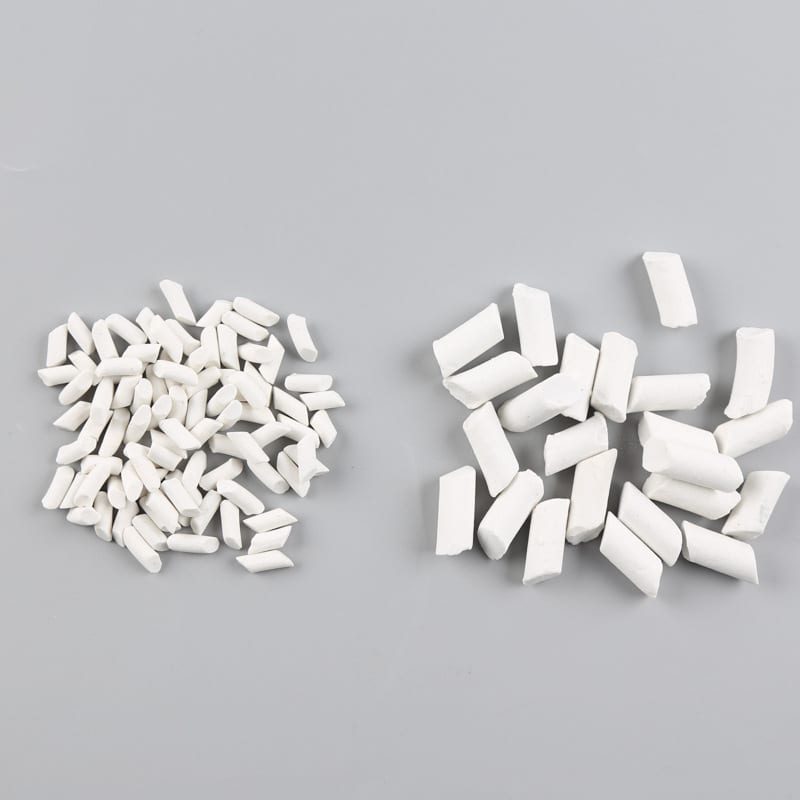
Heavy high-frequency ceramic triangles shed dense mineral dust that sinks within seconds in Compartment 1. By contrast, lightweight resin-bonded plastic cones used on 6061 aluminum and brass produce fine polymer-and-aluminum floc that stays suspended longer—making multi-stage baffles and calm overflow weirs essential so plastic dust does not carry out the exit pipe. See our ceramic grinding media guide and deburring plastic guide.

Segregating Acid Ferrous (MC8) vs. Non-Ferrous (LC10, HM3, JTJ) Streams
Never pipe heavy acid carbon-steel descaling (compound-MC8) into the same settling tank or transfer pump serving aluminum or titanium lines (compound-HM3 / JTJ50), especially if any clarified water is tested or reused for washdowns. Dedicated tanks keep iron-rich acid sludge cleanly separated from neutral non-ferrous hydroxide cake. Read our compound for aluminum guide and vibratory finishing supplies guide.

LC10, MC8, HM3, JTJ, JTS5) draining cleanly into segregated settling tank mass finishing baysControlling Foam From Oily Upstream CNC Parts
When oily stamped brackets or CNC-turned housings bypass upstream alkaline washing, machining coolants react with LC10 to build thick foam blankets atop the settling tank—carrying fine particles right over the overflow weir. Pre-degreasing oily parts keeps tank surfaces calm and clear.
Drain Screen Maintenance, Hose Routing, and Drying Integration
Even the largest settling tank mass finishing unit fails if the drain screen inside the vibratory bowl clogs first.
Shift-Start Brushing of Bottom Bowl Drain Screens
At the start of every shift, operators must brush the perforated polyurethane or stainless drain screens recessed in the bottom of ZL circular bowls and ZXL linear troughs. A blinded drain screen backs dirty liquid up inside the tub, turning free-draining flow-through into a stagnant puddle that smears aluminum and glazes stones.
Sizing Large-Diameter Gravity Drain Hoses Without Sags
Route bowl-to-tank drain hoses with continuous downward slope and generous inner diameter so heavy ceramic slurry never settles in low U-bends before reaching the settling tank. Avoid sharp 90-degree elbows that trap broken media chips.
Connecting Spray-Rinse Separation Decks and 35A / 70A Dryers
Pipe the drain pan beneath your ZL bowl's vibratory separator screen spray-rinse bar straight into the settling tank as well—capturing flushed LC10/HM3 slurry while clean rinsed parts move promptly into heated 35, 35A, 70, or 70A centrifugal spin-dryers. See our pneumatic separation screen deck guide and centrifugal dryer guide.

35/35A/70/70A class) paired with clean spray rinsing and settling tank mass finishingSludge Cleanout Schedules, Quality Control, and Troubleshooting
Proactive tank cleanout takes ten minutes on a scheduled Friday afternoon—versus hours of emergency drain augering mid-week.
Measuring Sludge Depth Before It Reaches the Weir
Once sludge accumulates past half the height of Compartment 1, cross-sectional water area shrinks, flow velocity spikes, and fine particles sweep straight over the baffles. Scoop wet sludge into lined disposal drums on a fixed calendar schedule based on active bowl hours.
Auditing Overflow Clarity and Peristaltic Dosing Stability
Inspecting overflow water clarity at the final weir gives instant feedback on upstream process health: clear-to-faintly-milky water confirms healthy settling, whereas dark grey or foamy overflow signals either a full tank needing cleanout or oily un-degreased parts entering the bowl. Pair overflow checks with weekly peristaltic pump tubing audits and Ra/Rz witness checks. Read our surface finish Ra vs Rz guide.
| Settling Tank Symptom | Likely Root Cause | Immediate Fix | Long-Term Standard |
|---|---|---|---|
| Cloudy or gritty water at final weir | Compartment 1 filled with sludge | Scoop sludge out of primary bays | Schedule cleanout before half-depth |
| Dirty water backing up in bowl | Blinded bottom bowl drain screen | Brush drain screen clear; flush hose | Brush bottom drain screens every shift start |
| Thick foam overflowing tank rim | Unwashed CNC oils entering bowl | Degrease parts upstream; rinse tub | Require alkaline pre-wash on oily batches |
| Grey smear on aluminum parts | Static sump recirculation or starved water | Switch to single-pass flow-through | Maintain continuous LC10/HM3 dosing |
| Drain hose clogging between bowl & tank | Sagging hose loop or undersized pipe | Straighten slope; clear media chips | Use wide sloped rigid/flex drain piping |
Multi-Station Plant Layouts and Environmental Compliance
Scaling from one circular bowl to a multi-machine finishing department requires planning tank placement, drum handling, and local discharge hygiene from day one.
Centralized Multi-Bowl Tanks vs. Compact Machine-Side Units
Small job shops running one ZL bowl or LLB50 centrifugal disc finisher often place a compact three-baffle settling tank mass finishing unit directly behind the machine frame. Larger facilities running banks of ZL900C bowls and L1300–L1800 divided troughs route floor-trench drains into centralized heavy-duty settling tanks sized for jib-hoist sludge bin lifting.
Handling Spent Ceramic and Metallic Cake Responsibly
Because settling tank mass finishing concentrates metal fines and mineral media dust into compact, shovelable cake, shops can dispose of or recycle spent ferrous and aluminum solids cleanly in sealed drums according to local industrial wastewater rules—keeping heavy metals out of municipal sewers.
Training Operators on Shift-Start Drain and Weir Checks
Posting a simple three-line checklist beside each settling tank—brush bowl drain screen, verify overflow clarity, and log sludge depth—prevents minor buildup from turning into mid-shift production delays.
Inspecting Tank Welds, Polymer Linings, and Valve Seals
During scheduled sludge cleanouts, inspect settling tank baffle welds, corrosion-resistant coatings, and bottom drain valves so abrasive ceramic grit or MC8 acid descaler never erodes thin sheet corners.
Sizing Overflow Piping and Air-Gap Traps to Shop Plumbing
Verify that clarified overflow exits through generous-diameter piping with proper cleanouts and air-gap traps compliant with local industrial discharge codes. Never restrict the exit weir with narrow valves that back water up into primary settling bays.
Pairing Settling Tanks With Peristaltic Dosing and Spray Rinse Bars
Consistent single-pass effluent hygiene works hand in hand with calibrated peristaltic dosing pumps and clean-water spray rinse bars over ZL separation decks. Compare platform setups in our vibratory deburring machine guide, surface finishing machinery guide, and polyurethane bowl liner replacement guide.
Validating Effluent Settling Speed During Sample Lab Trials
When qualifying a new high-frequency ceramic or resin-bonded plastic recipe on raw customer parts, observing slurry settling behavior in lab trials confirms how rapidly fines drop out and helps size multi-baffle tank capacity accurately before installation.
Documenting Waste Cake Disposal Logs for Environmental Audits
Recording weekly sludge scoop-out volumes and drum disposal dates in a simple shop log demonstrates responsible industrial wastewater stewardship during ISO and local environmental inspections.
Integrating Portable Sludge Pumps and Dewatering Drum Liners
For high-volume ZL900C and L1800 finishing lines generating substantial ceramic and iron-oxide cake every shift, staging heavy-duty drum liners inside steel disposal barrels alongside a dedicated diaphragm sludge pump keeps tank cleanouts fast, tidy, and splash-free.
Checking Settling Tank Temperature and Evaporation in Multi-Shift Rooms
In warm multi-shift finishing rooms, maintaining steady single-pass LC10 or HM3 water flow prevents stagnant settling bays from turning anaerobic or emitting stale odors over weekend shutdowns. Flushing primary bays before long holidays keeps effluent fresh and clean.
Coordinating Drain Screen Audits With Peristaltic Tubing Swaps
Pairing Friday afternoon settling-tank sludge checks with weekly peristaltic dosing-tube elasticity inspections ensures both incoming clean chemistry and outgoing effluent drainage remain balanced—eliminating sudden Monday morning grey-smear rejects on aluminum and brass batches. Keeping spare squeeze tubes, drain-screen brushes, and weir baffles stocked on-site ensures uninterrupted multi-shift effluent control.
Preventing Sump Overflows During Multi-Bowl Simultaneous Rinses
When two or three ZL circular bowls engage their separation spray-rinse bars simultaneously, peak effluent volume surges briefly into the settling tank mass finishing inlet. Designing adequate freeboard above the primary weir and spacing unload timers by a few minutes prevents sudden surges from washing settled ceramic fines over into the exit bay.
Calculating Five-Year Plumbing Savings From Proper Settling Control
Installing a properly baffled settling tank mass finishing unit eliminates recurring hydro-jetting bills, cracked concrete floor-trench repairs, and municipal surcharge fines—paying back the tank investment rapidly while protecting Ra, Rz, and bright cosmetic part finishes across every shift. Keeping primary sludge compartments below half depth, brushing bottom bowl drain screens at shift start, and segregating ferrous MC8 streams from non-ferrous HM3/JTJ50 lines ensures reliable single-pass flow-through performance year after year across multi-shift finishing departments. Sending sample parts and water-flow estimates to surface-polish.com helps size tank capacity accurately before installation, ensuring adequate residence time, clean overflow weirs, and trouble-free single-pass LC10/HM3/JTJ chemistry across multi-bowl finishing cells without floor-drain backups or dull grey oxide smear on finished parts.
Factory Capabilities & Verified Flow-Through Support
Founded in 1992, Xiamen Jin Tai Jin Grinding Technology Co.,Ltd. (SurfacePolish) engineers and manufactures 21 machine platforms backed by 24 granted Chinese IP rights and more than 200,000+ solutions across certified facilities (ISO 00726Q01571R001, CE M.2023.206.C88121, and CE M.2023.206.C88120). Alongside ZL circular bowls, ZXL/L1300–L1800 divided troughs, LLF120/LLB50 centrifugal finishers, OBD-30..100 magnetic polishers, 35/35A/70/70A dryers, media, and LC10/MC8/HM3/JTJ/JTS5 compounds, we supply matched settling tank mass finishing units and peristaltic dosing systems. Standard equipment ships in 25–35 days and custom automated lines ship in 45–60 days. Send sample raw parts to surface-polish.com for complimentary process validation. Honest boundaries apply: we do not supply municipal sewage treatment plants, chemical filter presses for electroplating baths, or dry sandblasting cabinets.
Frequently Asked Questions About Settling Tank Mass Finishing
Why is a multi-baffle settling tank required for wet mass finishing?
A multi-baffle settling tank mass finishing unit slows drain effluent across alternating over-under weirs so heavy ceramic wear dust and metallic swarf sink cleanly to the bottom—preventing concrete-like floor drain clogs while supporting clean single-pass LC10/HM3 flow-through across multi-shift production.
Can I recirculate water from a settling tank back into my vibratory bowl?
Simple gravity settling tanks remove coarse solids, but dissolved metal salts and fine sub-micron oxide haze remain suspended. For bright, smear-free finishes on aluminum, brass, and titanium, always run fresh single-pass water and LC10/HM3 compound rather than recirculating dirty sump water.
How often should a settling tank in mass finishing be cleaned out?
Clean out primary sludge compartments on a regular schedule before accumulated solids reach half the depth of Compartment 1—typically weekly or bi-weekly depending on active machine hours, ceramic cut aggressiveness, and whether resin plastic fines are present.
Why does my vibratory bowl still back up with water even with a settling tank?
A backed-up bowl almost always traces to a blinded bottom drain screen inside the tub or a sagging drain hose packed with worn media chips. Brush bottom bowl drain screens clear at the start of every shift and slope drain hoses continuously downward.
How does upstream degreasing improve settling tank mass finishing performance?
Machining coolants and stamping oils carried straight from presses react with liquid compounds to form thick foam atop settling bays, carrying fine oxide particles straight over the exit weir. An upstream alkaline wash keeps tank surfaces calm and effluent clear.
Should ferrous MC8 descaling and aluminum HM3 lines share one settling tank?
No. Keep heavy acid carbon-steel descaling (compound-MC8) strictly separated from non-ferrous aluminum and titanium lines (compound-HM3/JTJ50) with dedicated tanks, hoses, and catch baskets so iron sludge never cross-contaminates non-ferrous hardware.
What lead time applies to SurfacePolish bowls and settling tank systems?
Standard ZL circular bowls, matched settling tank mass finishing units, peristaltic dosing pumps, and 35A/70A dryers ship within 25–35 days under ISO 00726Q01571R001 and CE certification, while custom multi-station automated lines ship in 45–60 days. Send sample raw parts to surface-polish.com for complimentary process validation.
 +86-592-2381506


 IPv6 network supported
