
Ceramic Media vs. Steel Balls: Stage 1 `Tumble Deburring Media` Cutting vs. Stage 2 Mirror Burnishing
Finishing engineers choosing tumble deburring media often compare vitrified ceramic stones directly against 304 stainless steel balls as if they were interchangeable alternatives for the same finishing step. In reality, putting rough CNC castings directly into stainless steel balls folds burrs over without removing them, while running hard silicon-carbide ceramic stones forever produces a clean uniform matte finish that never reaches specular mirror brightness.
The central thesis of this engineering guide is simple: ceramic stones and steel balls are sequential partners rather than substitutes—effective mass finishing pairs Stage 1 tumble deburring media (high-frequency ceramic for steel/titanium, or resin plastic cones for soft non-ferrous alloys) to cut burrs and level Rz peaks first, followed by Stage 2 non-abrasive burnishing (304 stainless balls on steel/brass/stainless, or iron-free high-alumina spheres on aluminum and titanium).
In this guide, you will compare abrasive ceramic cutting against plastic-compression ball burnishing across cycle speed, alloy safety, machine load limits, single-pass chemistry, and multi-shift maintenance.
Stage 1 Cutting vs. Stage 2 Burnishing: Fundamental Physics Compared
How High-Frequency Ceramic Tumble Deburring Media Shears Metal Peaks
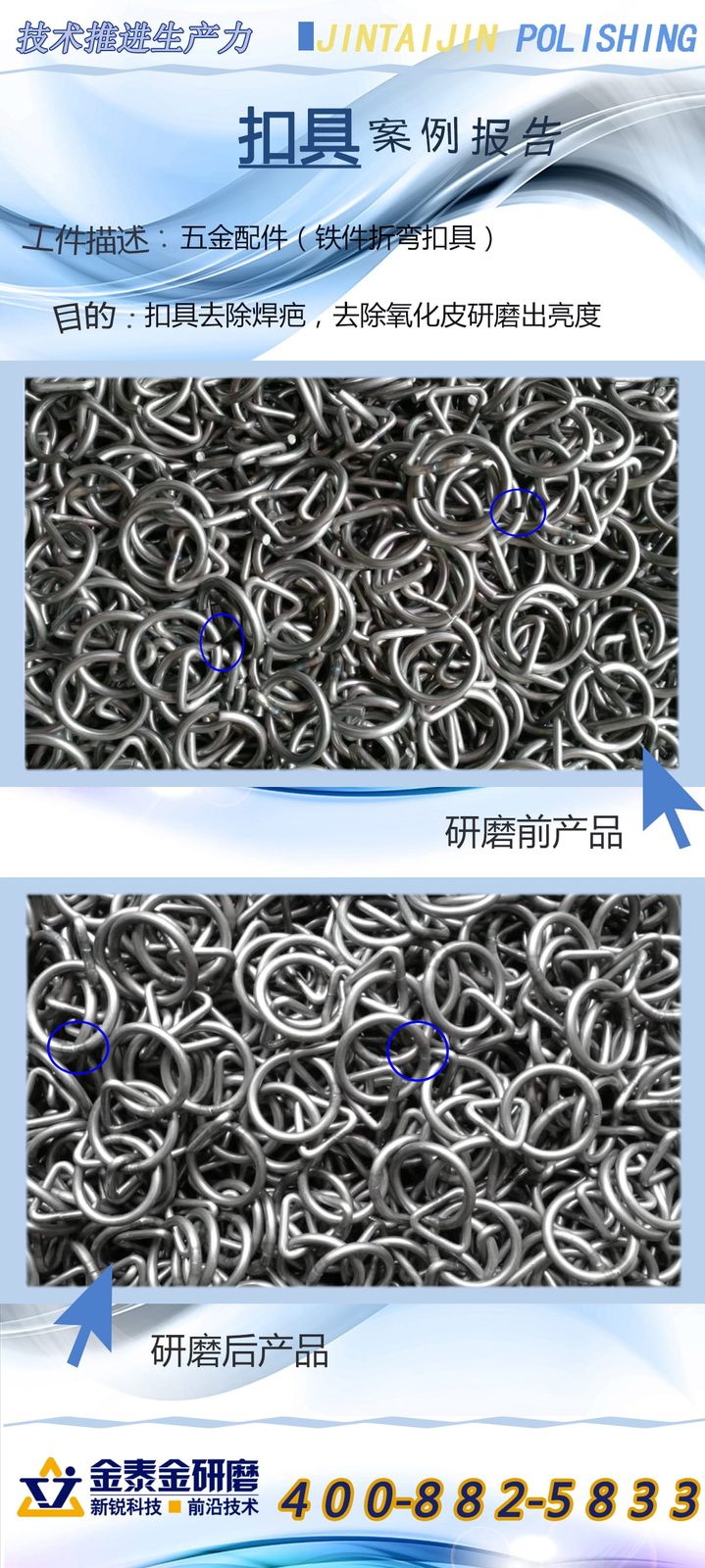
Vitrified high-frequency ceramic tumble deburring media locks sharp silicon-carbide or aluminum-oxide abrasive grit inside a rigid fired porcelain bond. Under vibratory cascade in ZL circular bowls or high-energy LLF120 centrifugal barrels, exposed abrasive facets plane down sharp CNC burrs, strip laser dross, and level rough milling ridges (Rz), leaving a clean uniform matte surface. Review our ceramic tumbler media guide and ceramic triangle media guide.
How Non-Abrasive 304 Steel Balls Compress Peaks Into Mirror Luster
Smooth austenitic 304 stainless steel balls contain zero cutting grit. Instead, their high specific gravity (nearly three times denser than ceramic media) cold-works microscopic surface asperities plastically, flattening peaks downward and closing micro-porosity into bright, work-hardened mirror reflectivity without reducing critical part dimensions. Explore our steel shot tumbling media guide and stainless steel tumbling media guide.
Why Skipping Stage 1 Ruins Steel Ball Burnishing Batches
Loading rough stamped brackets or milled valve bodies straight into stainless steel balls without Stage 1 tumble deburring media leaves bright shiny peaks hovering above dark un-leveled valleys—and hammers heavy exit burrs sideways into folded "overhangs" that flake off in service or trap plating chemistry. Always verify uniform matte Ra and burr removal in Stage 1 before moving parts into Stage 2 balls.
Honest Boundary: When High-Alumina Beats Steel Balls on Non-Ferrous Alloys
Heavy 304 stainless balls hammer soft 6061 aluminum, thin brass, and Zamak zinc into an uneven orange-peel texture and risk transferring trace iron onto aluminum or medical Grade 5 titanium. On those non-ferrous lines, replace Stage 1 ceramic with resin-bonded plastic cones and replace Stage 2 steel balls with iron-free high-alumina spheres. Read our high-alumina polishing media guide and synthetic plastic tumbling media guide.
| Comparison Axis | Stage 1 High-Frequency Ceramic |
Stage 2 304 Stainless Balls |
Stage 2 High-Alumina Alternative |
|---|---|---|---|
| Primary Surface Action | Abrasive burr shearing & Rz leveling |
Plastic peak compression & work hardening | Buoyant iron-free peak burnishing |
| Resulting Finish Appearance | Clean uniform matte / satin | High-contrast specular mirror polish | Bright zero-iron mirror luster |
| Safe Alloy Scope | Carbon steel, 304/316 stainless, titanium |
304/316 stainless, brass, copper, carbon steel |
6061 aluminum, Grade 5 titanium, brass, zinc |
| Relative Media Weight | Medium-high (~2.4 specific gravity) |
Very high (~7.9 specific gravity) |
Medium (~3.4 specific gravity) |
| Primary Chemistry | LC10, MC8 (steel), JTS5 (sheet metal) |
JTJ20, JTJ25, JTJ60 brighteners |
HM3, JTJ50, JTJ60 |
Compatible SurfacePolish Machine |
ZL, ZXL/L1300–L1800, LLF120 |
Reinforced ZL bowl / LLF120 barrel |
Standard ZL / LLB50 / ZXL |
Choosing Shapes and Non-Lodging Sizes Across Both Stages
Preformed Ceramic Geometries for Corners, Slots, and Flat Edges
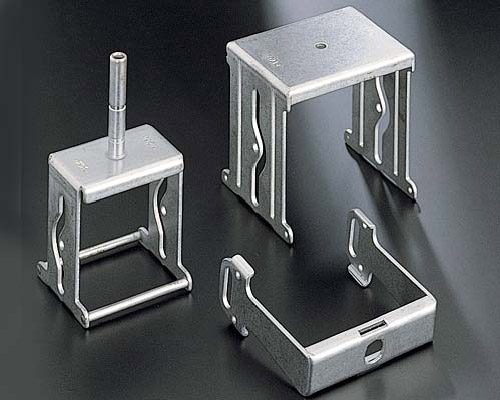
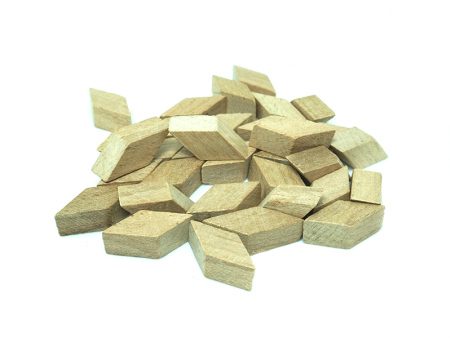
In Stage 1 tumble deburring media, straight and angle-cut ceramic triangles reach crisp ninety-degree corners and stamped slots, while angle-cut cylinders roll smoothly across round bolt holes without wedging. Tri-star stones add curved lobe contact across contoured machined ribs.
Spherical Balls vs. Ball-Cones (Satellites) in Stage 2 Burnishing
In Stage 2, round 304 stainless balls deliver maximum mirror brightness on broad cutlery handles, valve bonnets, and flat plates, whereas ball-cones (satellites) combine a curved rolling belly with tapered rim edges that reach into stepped shoulders and internal fillets.
Non-Lodging Clearance Rules for Holes and Cross-Bores
Never pick a ceramic chip or stainless ball whose dimension matches any bolt hole, slot, or counterbore on the part. Either select a larger shape that bridges openings cleanly or a compact profile small enough to pass freely through bores without jamming—remembering that worn ceramic fragments shrink across shifts and must be screened weekly.
Adding OBD-30..100 Magnetic Pins for Deep Threads and Knurling
When intricate hydraulic threads, knurled rings, or hollow watch cases stay dull inside pockets too tight for 304 balls, run a quick cycle inside an OBD-30..100 magnetic polisher using fine ferromagnetic stainless pins driven by rotating magnetic fields. See our magnetic polishing machine guide.
Machine Requirements: Standard Bowls vs. Reinforced Burnishing Platforms
Suspension Springs, Motor Amps, and Bowl Wall Strength
Because a full bed of 304 stainless steel balls weighs roughly three times as much as an equal volume of ceramic tumble deburring media, standard thin-wall vibratory tubs built solely for light plastic or ceramic loads can sag on springs or overheat drive motors. Confirm bowl reinforcement before loading heavy steel balls, whereas high-alumina spheres run safely inside standard ZL circular bowls.
Speeding Up Tough Cutting & Burnishing in LLF120 and LLB50 Centrifugals
When heavy carbon-steel laser dross or 304 stainless valve burnishing takes too long in circular bowls, moving into LLF120 planetary centrifugal barrels or LLB50 toroidal centrifugal discs multiplies contact pressure cleanly. Explore our centrifugal barrel finishing machine guide and centrifugal disc finishing machine guide.
Protecting Long Parts in ZXL and L1300–L1800 Divided Troughs
Long extruded rails, forged connecting rods, and precision shafts bend or clash end-to-end inside open circular bowls regardless of media choice. Load long parts inside ZXL or L1300–L1800 divided troughs so lane dividers protect part geometry throughout both Stage 1 cutting and Stage 2 burnishing. Review our divided trough vibratory finisher guide.
Heavy-Duty Separation Screens and Pneumatic Decks
Pair both lines with properly sized vibratory separator screen decks—using reinforced heavy-gauge wire or perforated plates on steel-ball tubs so dense stainless balls drop fast back into the bowl while bright workpieces cross the clean spray-rinse bar. Read our pneumatic separation screen deck guide.
Liquid Chemistry (LC10, MC8, HM3, JTJ), Settling Tanks, and Rinse Isolation
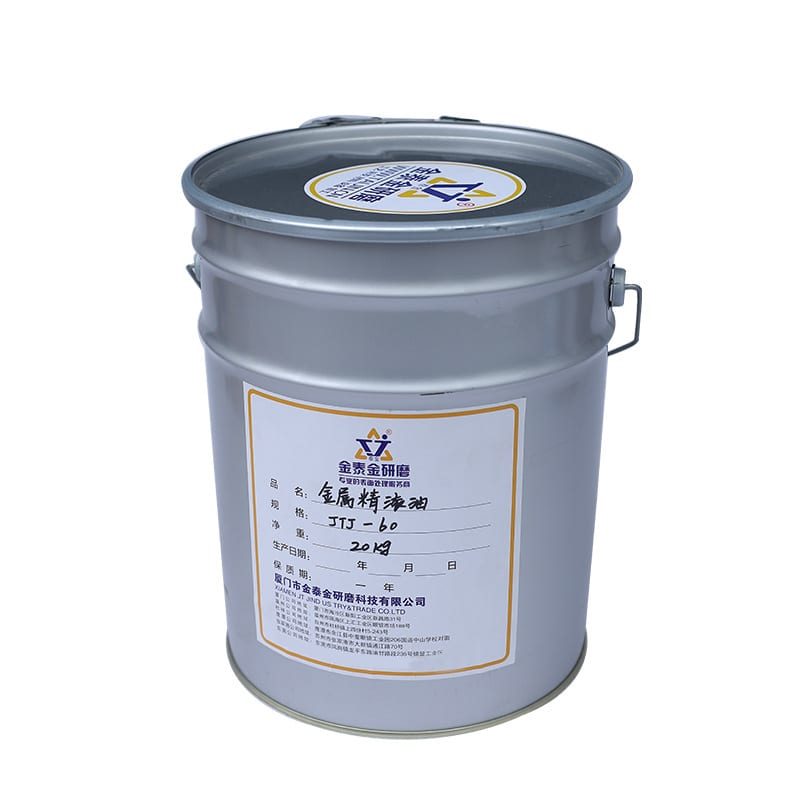
Stage 1 Cutting Compounds: LC10, MC8, and JTS5
Pair high-frequency ceramic tumble deburring media with continuous single-pass water and compound-LC10 for general steel, stainless, and titanium cutting; use acidic MC8 strictly for carbon-steel descaling (isolated from aluminum and stainless mirror lines); and use JTS5 for thin stamped sheet metal.
Stage 2 Burnishing Brighteners: JTJ20, JTJ25, JTJ60, and HM3
Switch to lubricating brighteners (JTJ20, JTJ25, JTJ60) inside 304 steel ball lines and HM3 or JTJ50 inside high-alumina non-ferrous lines so every rolling ball glides on a clean surfactant film without micro-scratching. See our compound for steel guide and compound for aluminum guide.
Mandatory Rinse Barrier Between Stage 1 and Stage 2 Tubs
Never carry wet Stage 1 ceramic-slurry parts straight into a Stage 2 steel ball or high-alumina bowl! Even a single loose silicon-carbide grain clinging inside a blind bore will scratch dozens of mirror parts during Stage 2 burnishing. Always rinse parts thoroughly over the Stage 1 separator spray bar and use dedicated color-coded transfer totes.
Multi-Baffle Settling Tanks and Upstream Alkaline Pre-Degreasing
Pre-degrease oily CNC batches upstream so machining oils neither glaze ceramic pores nor foul stainless ball brighteners, and route single-pass discharge water through a multi-baffle settling tank so metal fines and abrasive silt settle out cleanly.
Post-Finish 35A/70A Spin-Drying and Walnut Shell/Corncob Buffing
Stopping Flash Rust on Carbon Steel Immediately After Unload
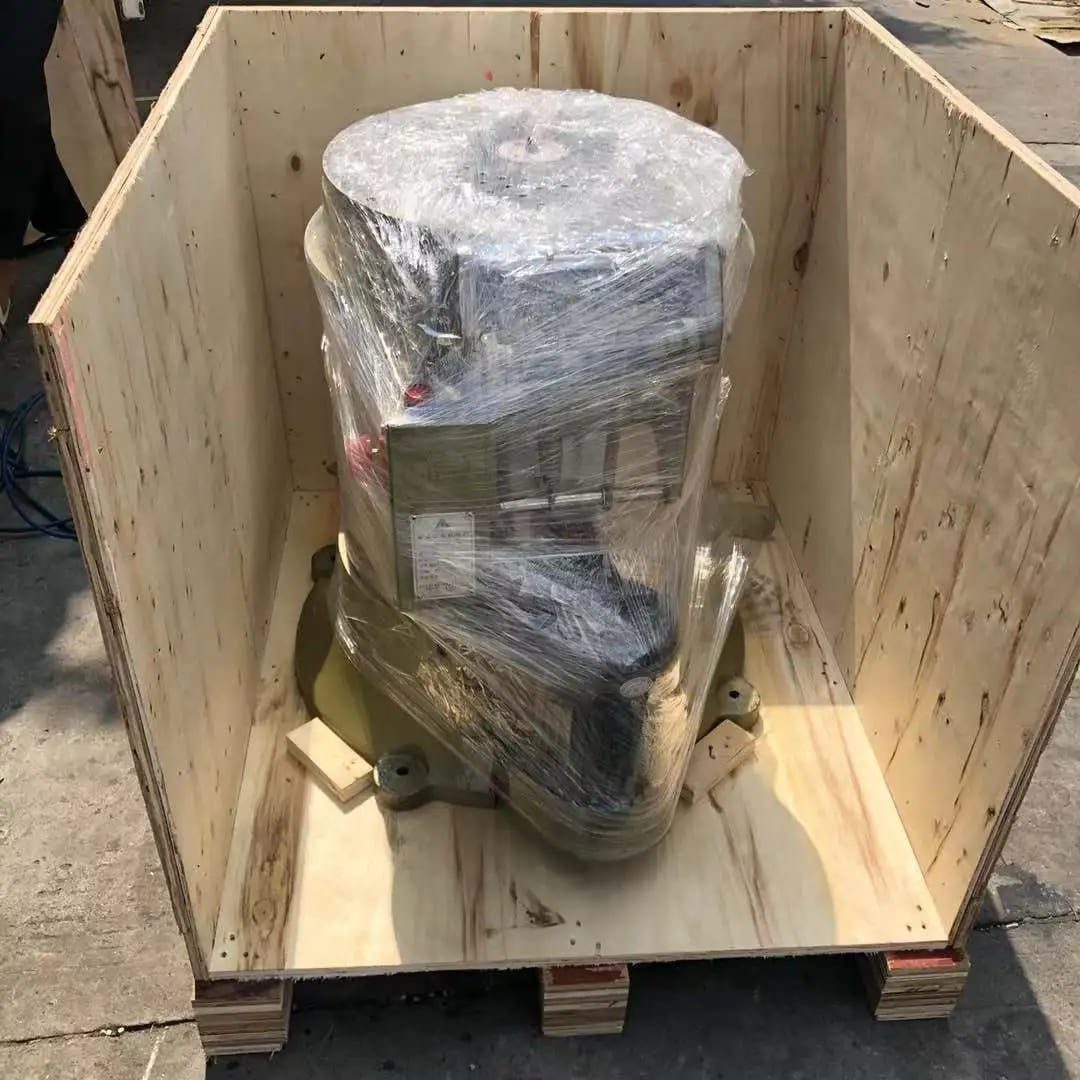
Whether parts exit Stage 1 ceramic cutting or Stage 2 ball burnishing, wet carbon steel and low-alloy parts begin rusting within minutes under humid shop air. Transfer rinsed batches straight from the separator spray bar into a heated 35, 35A, 70, or 70A centrifugal spin-dryer. See our centrifugal dryer guide.
Optional Stage 3 Dry Buffing With Corncob and Walnut Shell (8#-80#)
When optical-grade brass hardware, surgical stainless, or aluminum housings require zero calcium water rings or ultra-warm dry clarity, follow 35A/70A spin-drying with a brief dry pass in corncob granules or graded walnut shell (8#-80#) inside a sealed octagonal dry barrel or covered ZL bowl. Read our walnut media tumbling guide.
Multi-Shift Maintenance, Liner Inspection, and Troubleshooting
Checking Polyurethane Bowl Liners and Screening Worn Ceramic Chips
Because Stage 1 ceramic cuts aggressively and Stage 2 304 steel balls pack intense localized load, inspect polyurethane bowl ribs and drain grates weekly. Review our polyurethane bowl liner replacement guide and screen worn Stage 1 ceramic fragments weekly so undersized chips never lodge in holes.
Keeping Media Charges Segregated and Clean Across Shifts
Keep carbon-steel ceramic bins, stainless steel ball tubs, and aluminum high-alumina/plastic lines strictly color-coded and isolated. If 304 balls darken from soap film or oil residue, run a brief clean media-only wash cycle using warm water and compound-LC10 until drain water runs clear.
| Two-Stage Symptom | Likely Root Cause | Immediate Fix | Long-Term Standard |
|---|---|---|---|
| Bright finish yet rough valleys remain | Skipped Stage 1 ceramic cutting | Re-run Stage 1 high-frequency / plastic cut |
Verify matte Ra & Rz after Stage 1 |
| Fine random scratches in Stage 2 mirror | Abrasive ceramic grit carried from Stage 1 | Scrub bowl/screen; flush ball bed in LC10 |
Enforce spray rinse + dedicated Stage 2 totes |
| Orange-peel dimples on aluminum/brass | Heavy 304 balls or ceramic on soft alloy |
Switch to resin plastic + high-alumina spheres |
Match media density strictly to alloy |
| Slow ceramic cut & dark grey film | Oily CNC parts or dirty static sump | Pre-degrease batch; restore single-pass LC10 |
Upstream alkaline wash + settling tank |
| Flash rust or water rings post-burnish | Slow ambient air drying of wet batch | Filtered rinse + 35A/70A heated spin-dry |
Stage centrifugal dryer at separator chute |
Factory Capabilities & Verified Two-Stage Media Supply
Founded in 1992, Xiamen Jin Tai Jin Grinding Technology Co.,Ltd. (SurfacePolish) engineers and manufactures 21 machine platforms backed by 24 granted Chinese IP rights and more than 200,000+ solutions across certified facilities (ISO 00726Q01571R001, CE M.2023.206.C88121, and CE M.2023.206.C88120). Alongside ZL circular bowls, ZXL/L1300–L1800 divided troughs, LLF120/LLB50 centrifugal finishers, OBD-30..100 magnetic polishers, and 35/35A/70/70A dryers, we supply the complete two-stage media and chemistry chain: high-frequency ceramic tumble deburring media, resin-bonded plastic cones, 304 stainless steel balls and magnetic pins, iron-free high-alumina spheres, corncob, walnut shell (8#-80#), and LC10/MC8/HM3/JTJ/JTS5 compounds. Standard machines ship in 25–35 days and custom lines ship in 45–60 days. Send sample raw parts to surface-polish.com for complimentary two-stage process validation. Honest boundaries apply: we do not supply dry sandblasting shot, electroplating rectifiers, or acid pickling tanks.
Frequently Asked Questions About Ceramic Media vs. Steel Balls
Should I buy ceramic tumble deburring media or steel balls for my first machine?
If parts arrive with raw CNC burrs, stamping flash, or laser scale, start with Stage 1 abrasive tumble deburring media (high-frequency ceramic for steel/titanium, or resin plastic cones for aluminum/brass). Add Stage 2 304 steel balls or high-alumina spheres only once surfaces are deburred and leveled cleanly.
Can steel balls remove CNC machining marks if I run them longer?
No. Non-abrasive steel balls compress surface peaks plastically rather than cutting metal away; running rough parts longer in balls simply polishes the tops of ridges and hammers burrs sideways. Always level tool marks in Stage 1 first.
Why shouldn't I mix ceramic stones and steel balls in the same bowl?
Mixing abrasive ceramic with smooth stainless balls ruins Stage 2 mirror clarity immediately because ceramic grit scratches every compressed face, while heavy steel balls shatter brittle ceramic tips into sharp splinters.
Which is better for aluminum: ceramic media, steel balls, or plastic plus high-alumina?
For 6061 aluminum, brass, and zinc, avoid both heavy ceramic stones and heavy steel balls; run Stage 1 lightweight resin-bonded synthetic plastic cones with LC10, followed by Stage 2 iron-free high-alumina spheres with HM3 or JTJ50.
Can I run 304 steel balls inside any circular vibratory bowl?
Check machine load ratings first: 304 steel balls weigh roughly three times as much as ceramic media, so standard lightweight bowls may stall or overload springs. Use reinforced ZL bowls or LLF120 barrels for heavy stainless ball loads.
How do I prevent abrasive ceramic dust from entering my steel ball burnisher?
Pass Stage 1 parts across a clean-water spray rinse bar on the separator screen, inspect blind bores, and use strictly separate color-coded transfer baskets and scoops for Stage 1 vs. Stage 2 lines.
What liquid compound works best for Stage 1 ceramic vs. Stage 2 steel balls?
Use compound-LC10 (or MC8 on carbon steel scale) in continuous single-pass water for Stage 1 ceramic tumble deburring media, and switch to JTJ20, JTJ25, or JTJ60 brighteners for Stage 2 304 stainless ball burnishing.
How can I test a two-stage ceramic-plus-ball cycle on my parts before buying?
Send representative raw production parts to surface-polish.com for complimentary lab testing; our engineers run both Stage 1 cutting and Stage 2 mirror burnishing and return finished samples with verified media, machine, and chemical specs.
Why do hardened stainless steel balls last longer than ceramic media across multi-shift runs?
Unlike abrasive high-frequency ceramic stones whose vitrified silicon-carbide grain gradually wears away to expose fresh sharp cutting edges, smooth 304 stainless steel balls are non-abrasive and compress metal plastically without shedding grit. Provided operators keep carbon-steel tramp chips out and maintain continuous single-pass JTJ20/JTJ60 lubrication, one stainless ball bed lasts for years of continuous burnishing with minimal periodic top-ups.
How does media-to-part volume ratio change between Stage 1 ceramic and Stage 2 steel balls?
In both Stage 1 ceramic cutting and Stage 2 steel-ball burnishing, skimping on media bed depth lets heavy workpieces strike neighbors during upward cascade flips and leaves crescent impingement dings on chamfers. Because 304 stainless balls carry nearly three times the weight of ceramic stones, keeping an ample ball cushion around every valve, bracket, or cutlery handle is doubly critical to protect edges cleanly.
Can mixed ceramic sizes or mixed ball-and-cone steel charges improve recess coverage?
Yes. In Stage 1, pairing a larger non-lodging cylinder with a compact angle-cut triangle can blend flat faces and acute internal corners simultaneously, just as mixing spherical 304 balls with ball-cones (satellites) in Stage 2 reaches stepped fillets without sacrificing broad mirror luster. Both geometries must pass physical clearance tests against every bore and slot beforehand.
What happens if coolant oil enters either Stage 1 ceramic or Stage 2 steel ball bowls?
Machining coolant and stamping grease glaze ceramic cutting pores shut in Stage 1 and form dull grey soap scum on 304 stainless balls in Stage 2. Mandating an upstream alkaline wash on every oily CNC or stamped batch protects cutting velocity, brightener efficiency, and single-pass settling tank clarity across shifts.
When should a shop add dry corncob or walnut shell buffing after Stage 2 ball burnishing?
Immediately after Stage 2 parts cross the clean-water spray rinse bar and exit a heated 35A or 70A centrifugal spin-dryer, adding a brief dry corncob or walnut shell (8#-80#) pass removes any faint mineral ring and elevates warm optical sheen on brass hardware, surgical stainless, and mirror trim.
Can 304 stainless steel balls remove heat-treat scale or weld tint on stainless brackets?
No. Non-abrasive stainless steel balls merely compress existing oxide scale downward rather than stripping it clean. Always remove black heat-treat scale and weld heat-tint first during Stage 1 cutting with high-frequency ceramic stones and compound-LC10 (or MC8 on carbon steel), then rinse thoroughly before Stage 2 ball burnishing.
What happens if someone accidentally mixes acidic MC8 descaler with 304 steel balls?
Running strong acidic MC8 descalers inside a Stage 2 stainless ball charge dulls mirror contrast, attacks sensitive brass or zinc fittings, and strips the lubricating surfactant film needed for smooth rolling compression. Always lock MC8 strictly inside isolated Stage 1 carbon-steel descaling zones and run JTJ20, JTJ25, or JTJ60 in Stage 2 burnishing tubs.
How do I protect polyurethane bowl liners when switching from ceramic to steel balls?
Inspect polyurethane wall ribs, bottom drain grates, and coil-spring balance before loading heavy 304 stainless balls, and never run either media dry. Continuous wet LC10 or JTJ flow cushions sliding friction and prevents localized heat cracking along the discharge dam.
 +86-592-2381506


 IPv6 network supported
