

Vibratory Bowl Liner Guide: Auditing Cast Polyurethane Wear, Chemical Compatibility, and Recasting Timing
Every circular vibratory bowl, divided linear trough, and centrifugal barrel relies on one sacrificial shield to protect its heavy welded steel shell and drive motor: the cast polyurethane vibratory bowl liner. Yet many finishing shops treat liner inspection as an afterthought—running vitrified ceramic triangles shift after shift until a worn bottom curve exposes bare steel backing plates. Once ceramic stones strike bare steel, parts suffer severe edge dings, iron dust contaminates aluminum batches, and repair costs jump from a planned liner recast to structural weldment patching.
The central thesis of this guide is clear: maximizing the service life and part-protection value of a cast polyurethane vibratory bowl liner depends on specifying thick hot-cast high-rebound polyurethane at purchase, inspecting high-wear zones (dam edge, lower outer wall curve, and pneumatic flap seal) at every media changeout, maintaining continuous single-pass LC10/HM3/JTJ water lubrication (never running ceramic dry), and scheduling liner replacement or recasting before steel backing plates are exposed. For related equipment and maintenance guides, see our vibrating bowl deburring guide, vibratory finishing machine manufacturers guide, and surface finishing machinery guide.
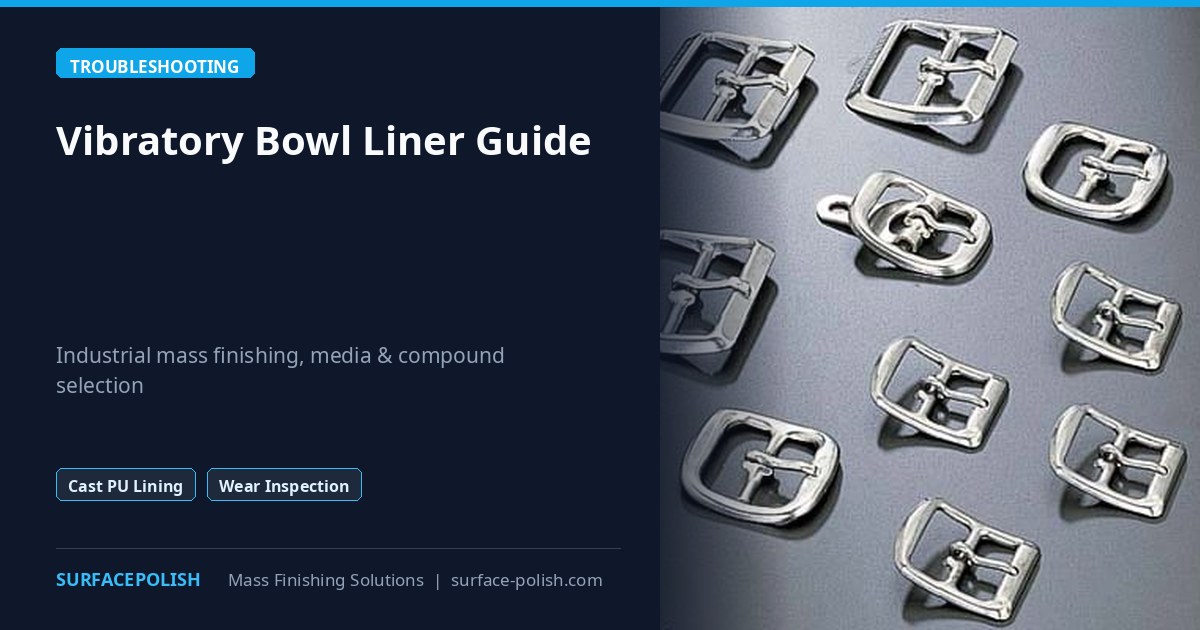
Why Cast Polyurethane Matters Inside Every Vibratory Chamber
A high-rebound cast polyurethane vibratory bowl liner performs four simultaneous engineering jobs inside ZL circular bowls, ZXL / L1300–L1800 troughs, and LLF120 / LLB50 centrifugal units.
Cushioning Part-on-Wall Impacts and Preserving Ra / Rz
When heavy steel forgings or soft 6061 aluminum brackets roll inside a vibrating tub, resilient cast polyurethane absorbs kinetic impact energy instead of rebounding parts sharply off rigid steel—preventing corner peening and protecting final Ra and Rz smoothness. Read our surface finish Ra vs Rz guide.
Resisting Sharp Ceramic Abrasion and Wet Chemical Attack
Unlike thin cold-sprayed coatings that peel or swell under wet chemistry, hot-cast industrial polyurethane resists continuous sliding shear from high-frequency ceramic triangles as well as daily exposure to LC10, MC8, HM3, JTJ, and JTS5 liquid compounds.
Driving Positive Media Roll Without Slippage
Polyurethane's controlled surface friction grips the outer media layer just enough to propel smooth three-dimensional helical turnover in ZL bowls and lateral cross-channel roll in ZXL troughs—whereas slick bare steel lets media slide sluggishly.
Dampening Shop-Floor Decibels Across Multi-Shift Cells
A thick cast polyurethane vibratory bowl liner dramatically cuts metallic clatter, working alongside hinged acoustic hoods and floor isolation pads to keep finishing departments comfortable and compliant.
High-Wear Zones: Where to Inspect a Vibratory Bowl Liner First
Polyurethane never wears evenly across the entire chamber. Knowing exactly where sliding pressure concentrates lets maintenance teams catch thinning months before failure.
Zone 1: The Lower Outer Wall Curve and Bottom Radius
Centrifugal and vibratory roll forces press heavy high-frequency ceramic stones and 304 stainless steel balls hardest against the lower outer radius where the flat bottom transitions into the vertical wall. Check this curve with ultrasonic thickness gauges or depth probes at every media dump.
Zone 2: The Separation Dam Edge and Ramp Transition
In ZL circular bowls, the stepped dam edge and inclined ramp leading up to the pneumatic separation flap endure concentrated stone impact as media climbs and cascades back down. Look for radial grooves, rounded-off dam lips, or soft spongy spots.
Zone 3: Pneumatic Separation Flap Edges and ZXL Divider Slots
Replaceable polyurethane edges on pneumatic separation flaps wear faster than main bowl walls. When flap seals thin out, compact springs and thin stamped contacts slip underneath the gate during unloading. Similarly, inspect removable polyurethane cell dividers inside ZXL and L1300–L1800 divided troughs for edge rounding. See our divided trough vibratory finisher guide and pneumatic separation screen deck guide.
Zone 4: LLB50 Disc-to-Ring Gap and LLF120 Barrel Corners
On LLB50 centrifugal disc machines, toroidal vortex speed concentrates wear along the outer perimeter of the rotating spinner disc and lower stationary ring—requiring weekly feeler-gauge gap checks alongside water back-flush audits. On LLF120 centrifugal barrels, check hexagonal interior corners and lid O-ring sealing rims. Compare platforms in our centrifugal disc finishing machine guide and centrifugal barrel finishing machine guide.
| Machine Platform | Highest-Wear Liner Zone | Early Warning Sign | Recommended Inspection Interval |
|---|---|---|---|
Circular Bowl (ZL, ZL250W, ZL900W) |
Lower outer curve & dam ramp | Radial grooves, dark drain dust, parts under flap | Every media changeout / monthly |
Divided Linear Trough (ZXL, L1300–L1800) |
Bottom U-curve & divider edges | Loosened divider slots or chatter marks | Every media swap / monthly |
Centrifugal Disc (LLB50) |
Disc perimeter & stationary wear ring | Gap widening, thin parts wedging at seam | Weekly feeler-gauge & water check |
Centrifugal Barrel (LLF120) |
Hex corners & lid O-ring groove | Slow slurry seepage or uneven corner wear | Every reload / weekly |
Early Warning Signs Before Steel Backing Plates Are Exposed
Waiting until you see shiny steel through the bottom of the bowl is too late. Watch for four early operational clues:
Dark Urethane Dust or Sudden Drain Discoloration
Fresh polyurethane wear produces faint, clean shavings, whereas exposed primer or steel dust turns settling-tank effluent noticeably darker and triggers unexpected rust staining on aluminum parts.
Sudden Drop in Helical Rolling Speed or Batch Consistency
As deep radial grooves form along the lower bowl curve, stones channel along ruts rather than rolling smoothly over each other—stretching cycle times and causing uneven edge break.
Fine Parts Slipping Beneath the Separation Flap
When the dam-edge polyurethane wears low or the pneumatic flap seal frays, compact parts bypass the screen deck during unloading.
Galvanic Iron Spots on Non-Ferrous Aluminum or Titanium Batches
Even a fingernail-sized patch of exposed steel backing plate inside a bowl running 6061 aluminum or medical titanium rubs iron dust into soft alloy walls, causing immediate galvanic pitting in salt-spray or passivation tests.
How Media, Compounds, and Operating Habits Affect Liner Life
Good chemistry and clean loading discipline can double the lifespan of a cast polyurethane vibratory bowl liner.
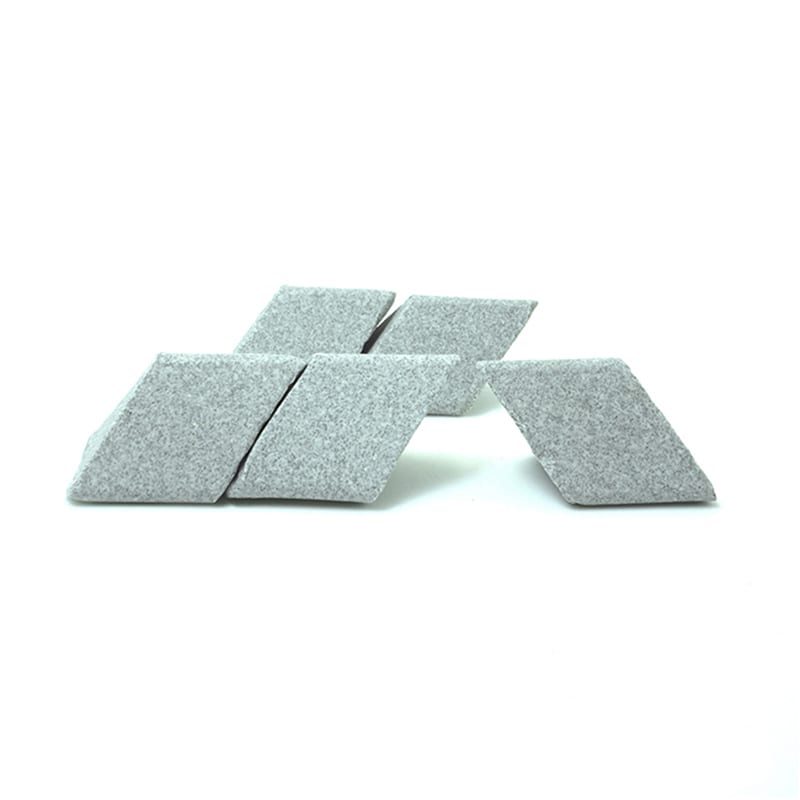
high-frequency ceramic and high-alumina media requiring continuous wet lubrication to protect the vibratory bowl linerRunning Continuous Wet Lubrication (LC10, MC8, HM3, JTJ, JTS5)
Never run vitrified high-frequency ceramic or abrasive resin plastic media dry inside a polyurethane bowl—dry friction overheats urethane rapidly, glazing stones and tearing soft liner walls. Always meter continuous single-pass water and compound-LC10 (general deburring), HM3/JTJ50 (non-ferrous aluminum/brass), JTJ60 (stainless), or JTS5 (thin stampings). If descaling steel with compound-MC8, flush thoroughly with clean water at shift end so residual acid never sits stagnant in the liner overnight. See our compound for aluminum guide and vibratory finishing supplies guide.
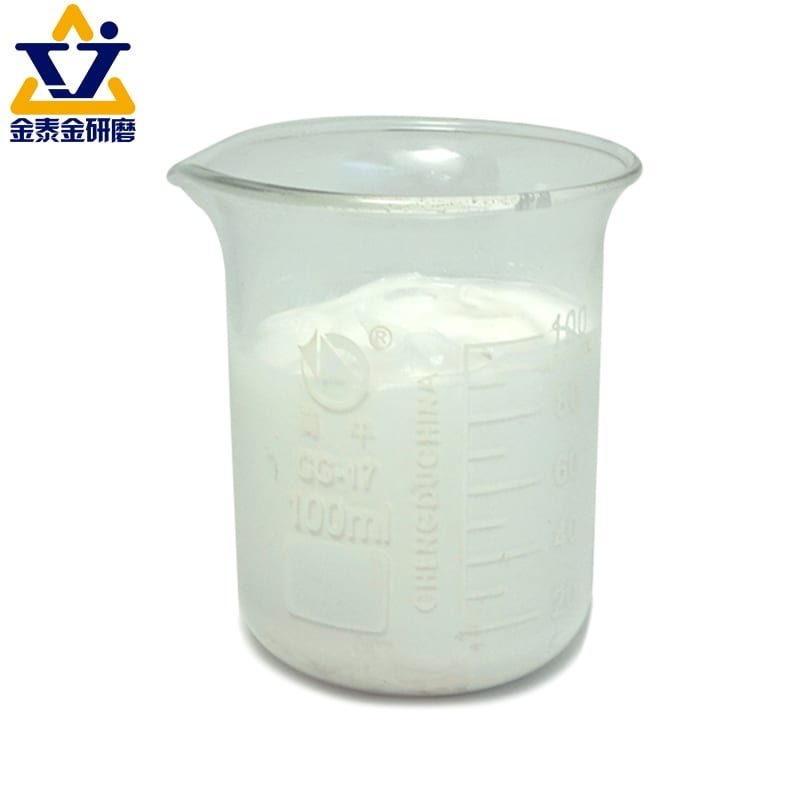
LC10, MC8, HM3, JTJ, JTS5) cooling and lubricating the vibratory bowl linerPre-Degreasing Oily Parts and Avoiding Solvent Swelling
Certain aggressive petroleum solvents and heavy machining oils cause low-grade elastomers to swell and soften. Passing oily CNC parts through an upstream alkaline pre-wash keeps the vibratory bowl liner firm and chemically clean.

Feeding Parts Into a Running Bed Instead of Dumping Onto Bare Liner
Never dump heavy forged steel flanges or sharp laser-cut brackets onto an empty or stationary tub. Always start the vibratory bowl liner tub with its active media bed rolling and feed parts steadily so heavy corners land cushioned in stones rather than gouging the polyurethane floor.
Screening Broken Ceramic Shards Weekly
Sharp, fractured ceramic slivers embed into soft urethane walls and act like cutting teeth against passing parts. Screen out undersized worn media fragments weekly and top up fresh media to the working fill line. Read our ceramic grinding media guide.
Replacement, Recasting, and Post-Maintenance Verification
When thickness checks confirm a vibratory bowl liner is nearing its wear limit, planning the swap proactively prevents costly emergency downtime.

35/35A/70/70A class) completing the clean wet finishing cycle alongside well-maintained vibratory bowl liner tubsPatching Minor Nicks vs. Full Hot-Cast Recasting
Small localized cuts above the working fill line can sometimes be repaired temporarily with two-part castable urethane kits after thorough solvent cleaning and roughening. However, widespread thinning across the lower outer radius or dam ramp requires full stripping, steel shell shot-blasting, primer application, and factory hot-cast recasting—or swapping in a pre-lined spare tub assembly.
Checking Steel-Rated Suspension Springs and Drain Screens During Rebuilds
Anytime a bowl is stripped for liner replacement, inspect the underlying steel weldment for fatigue cracks, verify helical coil springs are uniform and rated for steel-ball loads, and install fresh bottom drain screens and polyurethane separation flap seals.
Qualifying the Re-Lined Bowl With Sample Parts and Ra Checks
After installing a fresh vibratory bowl liner, run a test batch with witness coupons or sample parts to confirm normal helical roll speed, zero media wedging at the new dam height, and validated Ra/Rz outcomes before resuming full production.
Extending Vibratory Bowl Liner Service Life Across Multi-Shift Plants
Simple shop-floor habits dramatically reduce polyurethane abrasion rates and extend intervals between factory liner recastings.
Balancing Media-to-Part Volume Ratios for Heavy Castings
Running too many heavy steel forgings or sharp laser-cut brackets in an under-filled media bed forces parts to slam directly against the cast polyurethane vibratory bowl liner floor. Maintaining a generous media-to-part volume cushion keeps parts suspended inside rolling stones rather than gouging urethane walls.
Tuning Counterweight Lead Angles and VFD Speeds for Gentle Smoothing
Aggressive vertical counterweight angles accelerate burr removal on rough carbon steel, but running maximum amplitude unnecessarily during Stage 2 high-alumina or plastic-cone smoothing wears the lower outer liner radius faster. Dialing counterweight lead angles and inverter speed down to match each alloy protects both delicate edges and liner thickness.
Keeping Multi-Baffle Settling Tanks and Drain Screens Clean
When bottom bowl drain screens blind over with worn ceramic dust, dirty abrasive slurry pools inside the vibratory bowl liner—accelerating urethane wear and dulling aluminum parts. Brush bottom drain screens at shift start and scoop multi-baffle settling tanks on schedule. See our multi-baffle settling tank guide.
Stocking Replacement Flap Seals, Dividers, and Spare Lined Bowls
High-volume multi-shift facilities minimize downtime by keeping bolt-in polyurethane separation flap edges and ZXL cell dividers on the shelf—and scheduling spare pre-lined ZL tubs on rotation so liner recasting never halts production lines.
Documenting Monthly Ultrasonic or Depth-Probe Thickness Logs
Recording liner thickness readings at four fixed clock positions along the lower outer curve and dam ramp every month turns vibratory bowl liner replacement from a surprise breakdown into a predictable, budgeted maintenance event.
Comparing Hot-Cast Polyurethane Hardness Across Media Types
Heavy carbon-steel descaling with coarse high-frequency ceramic triangles demands tough, abrasion-resistant cast polyurethane formulated to absorb sharp point impact without tearing, whereas high-speed LLB50 centrifugal discs and mirror high-alumina burnishing cells rely on smooth, high-rebound elastomers that keep sliding friction uniform. Confirming exact liner spec with your machine builder prevents premature grooving.
Auditing Acoustic Hood Seals and Floor Isolation Pads During Liner Swaps
Whenever a bowl is offline for vibratory bowl liner replacement, inspect hinged acoustic cover gaskets, floor vibration isolation pads, and eccentric counterweight locking bolts. Tightening mechanical mounts alongside fresh urethane recasting restores factory noise abatement and rolling amplitude.
Training Operators to Spot Early Liner Blistering or Swelling
Posting visual inspection photos beside each circular bowl—showing normal matte wear versus early radial grooving, soft chemical swelling, or exposed primer—empowers shift operators to flag liner wear months before bare steel backing plates ever contact parts. Early reporting lets plant maintenance schedule hot-cast recasting during planned weekend shutdowns rather than suffering an emergency mid-week line stoppage.
Evaluating Steel Weldment Integrity Before Every Liner Recast
Before pouring fresh hot-cast polyurethane into a stripped circular bowl or ZXL linear trough, experienced liner rebuilders inspect the underlying carbon-steel shell for weld-seam fatigue cracks, corroded drain flanges, and warped center-column mounts. Repairing weldments and shot-blasting bare steel to white-metal cleanliness ensures the new vibratory bowl liner bonds permanently without premature delamination under LC10 or MC8 wet cycles.
Comparing Total Cost: Planned Recasting vs. Premature Shell Destruction
Replacing a vibratory bowl liner on schedule preserves the heavy machined tub and center motor housing for decades of service—costing a fraction of buying a new machine while restoring factory helical rolling geometry and Ra/Rz part-protection consistency. Pairing timely liner recasting with clean single-pass LC10/HM3 flow-through chemistry and weekly media screening maximizes both equipment uptime and finished part quality across every shift, preventing unexpected steel shell wear and galvanic iron contamination on high-value aluminum, titanium, and stainless components.
| Liner Defect | Likely Root Cause | Immediate Action | Long-Term Prevention |
|---|---|---|---|
| Peeling or blistering PU sheets | Poor steel primer prep or solvent attack | Strip & professionally recast shell | Pre-degrease oily parts; buy hot-cast PU |
| Deep grooves at lower outer curve | Dry ceramic runs or sharp heavy castings | Stop before steel shows; schedule recast | Maintain wet LC10 flow & media cushion |
| Parts slipping under separation flap | Worn PU flap edge or low dam lip | Replace flap seal & check air stroke | Inspect flap seal at every media swap |
| Swollen, gummy liner surface | Stagnant oil or harsh un-rinsed acid (MC8) |
Flush tub; replace affected liner section | Rinse MC8 thoroughly at shift end |
| Iron pitting on aluminum parts | Exposed steel backing plate beneath PU | Halt aluminum runs; swap/recast bowl | Check liner thickness monthly |
Factory Capabilities & Verified Liner and Machine Support
Founded in 1992, Xiamen Jin Tai Jin Grinding Technology Co.,Ltd. (SurfacePolish) engineers and manufactures 21 machine platforms backed by 24 granted Chinese IP rights and more than 200,000+ solutions across certified facilities (ISO 00726Q01571R001, CE M.2023.206.C88121, and CE M.2023.206.C88120). Standard ZL circular bowls with hot-cast polyurethane vibratory bowl liner chambers, LLF120/LLB50 centrifugal finishers, OBD-30..100 magnetic polishers, and 35/35A/70/70A dryers ship in 25–35 days, while custom divided-trough (ZXL, L1300–L1800) and automated lines ship in 45–60 days. Send sample parts or liner specs to surface-polish.com for complimentary process validation and wear-part support. Honest boundaries apply: we do not supply spray-on truck bedliners, rubber conveyor belting, or dry sandblasting cabinets.
Frequently Asked Questions About Vibratory Bowl Liners
How long does a cast polyurethane vibratory bowl liner typically last?
Service life depends on media aggressiveness, part weight, and wet lubrication discipline—often spanning years under resin-bonded plastic cones and LC10/HM3 flow-through, or shorter intervals under continuous heavy steel-forging descaling with coarse ceramic triangles. Regular monthly thickness checks along the lower outer curve and dam ramp catch wear well before steel shows.
Can I run ceramic grinding media dry to extend vibratory bowl liner life?
No. Running ceramic or plastic media dry actually destroys a polyurethane vibratory bowl liner much faster because dry friction overheats the elastomer, smears melted urethane onto stones, and glazes media pores. Always run continuous wet LC10 or HM3 flow-through alongside clean settling-tank drainage.
What happens if a vibratory bowl liner wears down to bare steel?
Exposed steel backing plates cause immediate corner dings on parts, accelerate weldment erosion, and rub microscopic iron dust into aluminum or titanium parts—triggering galvanic pitting during anodizing or salt-spray testing. Proactive recasting prevents expensive structural steel patching.
How often should operators inspect a vibratory bowl liner?
Inspect the lower outer wall curve, dam edge, separation ramp, and pneumatic flap seal at every scheduled media changeout (or at least monthly in multi-shift cells), and inspect LLB50 disc-to-ring gap clearance weekly with feeler gauges.
Why does upstream degreasing help protect a cast polyurethane liner?
Heavy machining coolants, cutting oils, and petroleum solvents can soften or swell lower-grade elastomers over time while glazing ceramic media. Passing oily CNC and stamped parts through a quick alkaline pre-wash keeps both the vibratory bowl liner and cutting stones clean.
Can damaged polyurethane separation flaps be replaced without recasting the whole bowl?
Yes. Replaceable polyurethane separation flap edges, perforated screen decks, and ZXL cell divider plates are bolt-in or slide-in wear parts that swap out in minutes without pulling the main tub out of service.
What lead time applies to SurfacePolish lined bowls and replacement wear parts?
Standard ZL circular bowls with hot-cast polyurethane vibratory bowl liner chambers, centrifugal finishers, and 35A/70A dryers ship within 25–35 days under ISO 00726Q01571R001 and CE certification, while custom divided troughs and automated lines ship in 45–60 days. Send sample parts to surface-polish.com for complimentary process validation.
 +86-592-2381506


 IPv6 network supported
