
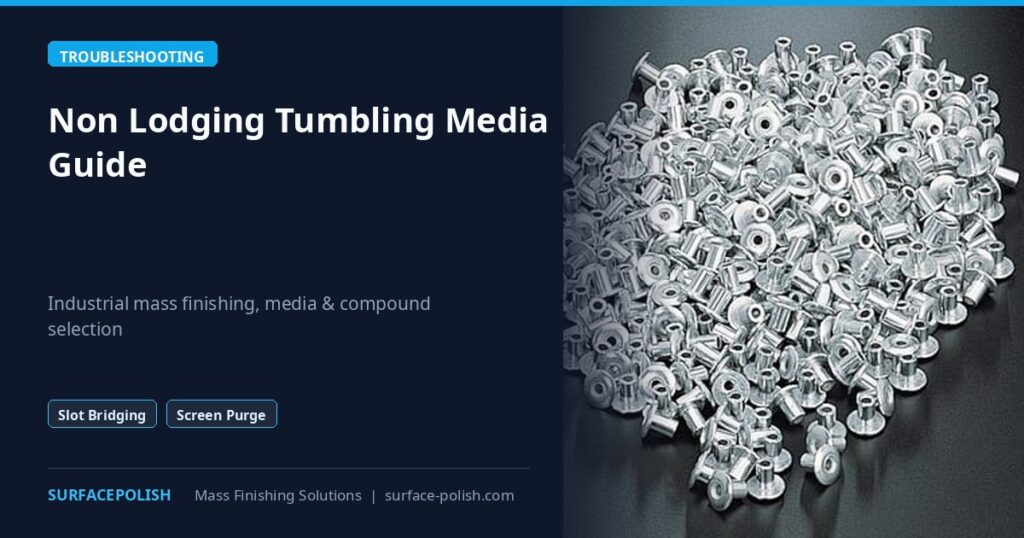
`Non-Lodging Tumbling Media` Sizing Rules: Eliminating Hole Wedging and Manual Picking Across Shifts
Nothing erases the labor savings of an automated vibratory finishing line faster than watching operators spend hours picking wedged ceramic triangles or plastic cones out of bolt holes with steel awls. When shops order non lodging tumbling media without checking both fresh stone geometry and worn mid-life dimensions against every slot, counterbore, and cross-hole on the blueprint, every batch turns into a bottleneck at the separator chute.
The central thesis of this guide is simple: achieving true zero-jamming performance from non lodging tumbling media requires applying the strict bridging-or-free-pass clearance rule on every hole and slot, selecting low-wedging preformed shapes (angle-cut cylinders, tri-stars, or ellipses over sharp triangles when round bores dominate), screening undersized worn fragments weekly across your separator deck, and verifying physical clearance on raw sample parts before ordering pallets.
In this engineering guide, you will master the exact geometry mechanics behind bore lodging, compare shape behavior across ceramic, resin plastic, high-alumina, 304 stainless, and organic media, and standardize weekly screening habits across multi-shift finishing rooms.
Why Media Lodges in Holes, Slots, and Counterbores
The Danger Zone Between Bridging and Free-Pass Clearance
Media jams whenever a stone's effective width or diagonal span sits right near the width of a hole, stamping slot, or threaded relief. Under forceful vibratory cascades inside ZL circular bowls or multiplied G-force inside LLF120 centrifugal barrels, a stone that barely enters an opening gets hammered tightly sideways—locking harder with every machine cycle. True non lodging tumbling media lives strictly outside that danger zone: either clearly larger than the widest opening so it bridges cleanly across, or clearly smaller so it tumbles straight through without touching opposite walls.
Why Sharp Triangles Wedge More Often Than Angle-Cut Cylinders
Standard ceramic triangles present three acute vertices and thin flat triangular faces. Once a triangle wears slightly thinner over weeks of service, a sharp corner dips into a circular bolt hole while the opposite base spans the rim—pinching diagonally like a cam lock. By contrast, angle-cut cylinders roll along curved circular sides that skip cleanly across round holes without catching. Compare both shapes in our angle-cut ceramic cylinders guide and ceramic triangle media guide.
How Worn Fragments Turn Non-Lodging Fresh Media Into Shift Headaches
Even when brand-new stones pass initial trials with zero jamming, abrasive high-frequency ceramic and resin-bonded plastic cones steadily lose material across continuous shifts. As large triangles shrink into smaller wafers, they cross straight into the exact hole-width danger zone—meaning last month's safe charge suddenly jams this week unless undersized chips are purged regularly.
Blind Tapped Bores vs. Through-Holes: Different Clearance Risks
Through-holes allow genuinely small media to pass completely through and exit cleanly, whereas blind counterbores, snap-ring grooves, and tapered valve seats trap any stone that fits inside and cannot turn around to escape. For blind recesses, bridging cleanly over the rim—or pairing large bridging external media with OBD-30..100 magnetic pins for fine recess brightening—is essential. See our magnetic polishing machine guide.
Comparing Preformed Shapes Across Every Media Family
Ferrous & Titanium Cutting: Angle-Cut Cylinders, Tri-Stars, and Triangles
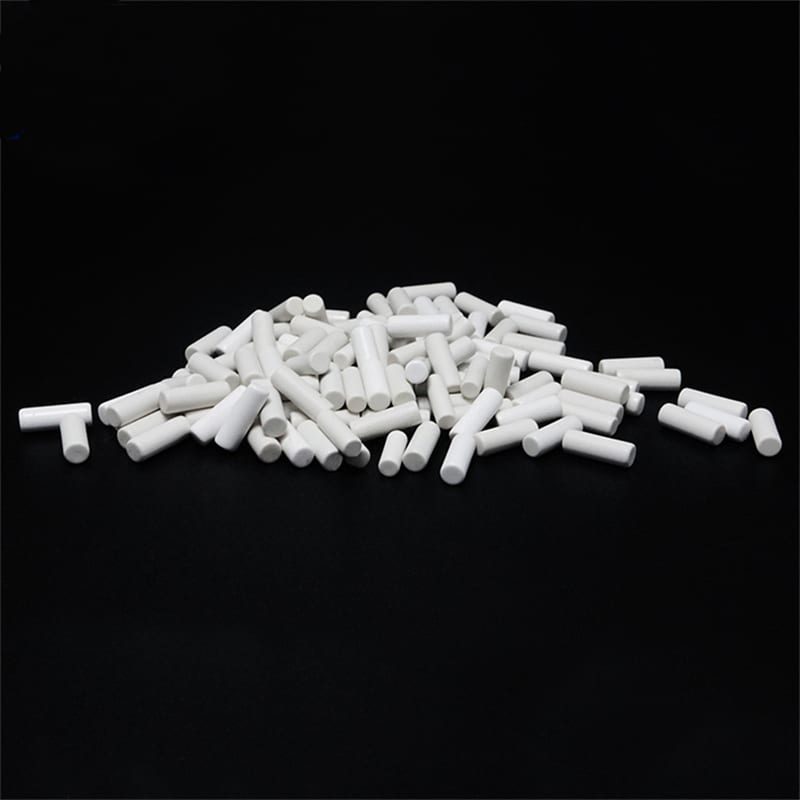
On carbon steel, 304/316 stainless steel, and titanium, choose angle-cut high-frequency ceramic cylinders when round cross-drilled bores dominate; choose tri-star ceramic shapes when curved turbine pockets or thin flat washers tend to stick together; and reserve straight or angle-cut triangles for open ninety-degree brackets with few circular holes near stone width. Review our tri-star ceramic media guide and ceramic tumbler media guide.
Soft Non-Ferrous Cutting: Resin Plastic Cones vs. Pyramids
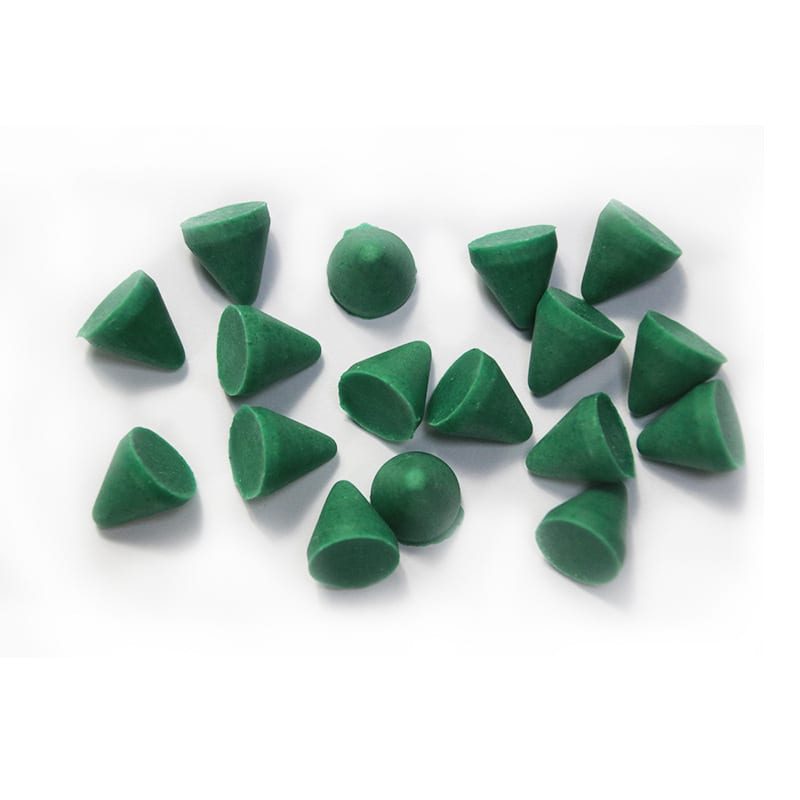
On 6061 aluminum, brass, copper, and Zamak zinc, tapered plastic cones sweep smoothly around circular bosses while plastic pyramids penetrate narrow heat-sink fins. Always check cone base diameter and pyramid edge span against every cooling slot—never load heavy ceramic stones on soft alloys just to avoid cone wear. Explore our plastic cone vs pyramid media guide.
Stage 2 Mirror Burnishing: High-Alumina Ellipses vs. Round Spheres
Round high-alumina porcelain spheres or 304 stainless balls lock most permanently when their diameter closely matches a round bolt hole! Whenever round spheres risk wedging inside circular bores, switch to high-alumina ellipses or 304 ball-cones (satellites) whose elongated axes bridge openings safely. See our porcelain ball burnishing media guide and stainless steel tumbling media guide.
Stage 3 Dry Buffing: Graded Walnut Shell (8#-80#), Corncob, and Wood Pegs
Even dry organic polishing granules jam inside blind threads or eyewear hinges if mesh size matches opening width! Either select coarse 8#–14# granules that bridge threads cleanly or fine 50#–80# grades that shake straight out after 35A/70A spin-drying. Review our walnut shell mesh 8 to 80 guide and corncob drying media grades guide.
| Part Feature / Opening | Highest-Risk Media Shape | Safer Non-Lodging Alternative |
Machine & Process Mitigation |
|---|---|---|---|
| Round cross-drilled hydraulic bores | Slightly worn ceramic triangles or spheres | Angle-cut ceramic cylinders or ellipses | Screen worn chips weekly on separator deck |
| Narrow cooling-fin slots & ribs | Thin flat triangles wedging sideways | Steep plastic pyramids or tri-star ceramic | Size lobe/pyramid clearly above slot span |
| Blind tapped threads & snap grooves | Small loose grit or wrong walnut mesh | Large bridging media + OBD magnetic pins |
Spin-dry 35A/70A before dry 8#–12# cob |
| Thin flat stamped washers & shims | Flat-faced triangles sticking via suction | Curved tri-star ceramic + JTS5 flow |
Boost single-pass water flow & drain brush |
| Delicate eyewear frame hinges | Medium pegs matching hinge slot width | Tapered slim wood pegs or broad cubes | Sift broken splinters cleanly per batch |
Screening, Separator Deck Setup, and Working Fill Control
Choosing Vibratory Separator Screen Apertures for Clean Purging
Every finishing line needs two distinct screening rules: production separation (keeping full-sized media in the tub while parts unload cleanly) and weekly fragment classification (dropping undersized worn chips out before they wedge in part bores). Review our pneumatic separation screen deck guide.
Handling Multi-Size Media Blends Without Losing Small Shapes
Some shops blend large bridging stones with compact filler shapes to reach tight fillets simultaneously. Both components in any blend must individually satisfy the bridging-or-free-pass clearance rule—and your separator deck must be set to catch both sizes cleanly during unload.
Keeping Working Fill Height Topped Up Across Multi-Shift Runs
Weekly fragment purging naturally lowers total media volume inside ZL circular bowls and ZXL divided troughs. Immediately top up fresh non lodging tumbling media to the working fill gauge so cushioning ratio and kinetic shear stay constant.
Inspecting Polyurethane Bowl Liners and Discharge Dam Gates
Worn polyurethane bowl ribs or bent separator gate fingers allow broken media chips to bypass screening and ride forward with finished parts. Check liners weekly and schedule timely polyurethane bowl liner replacement.
Single-Pass Wet Chemistry (LC10, MC8, HM3, JTS5) and Drying Integration
Stopping Sticky Slurry Packing Inside Blind Recesses
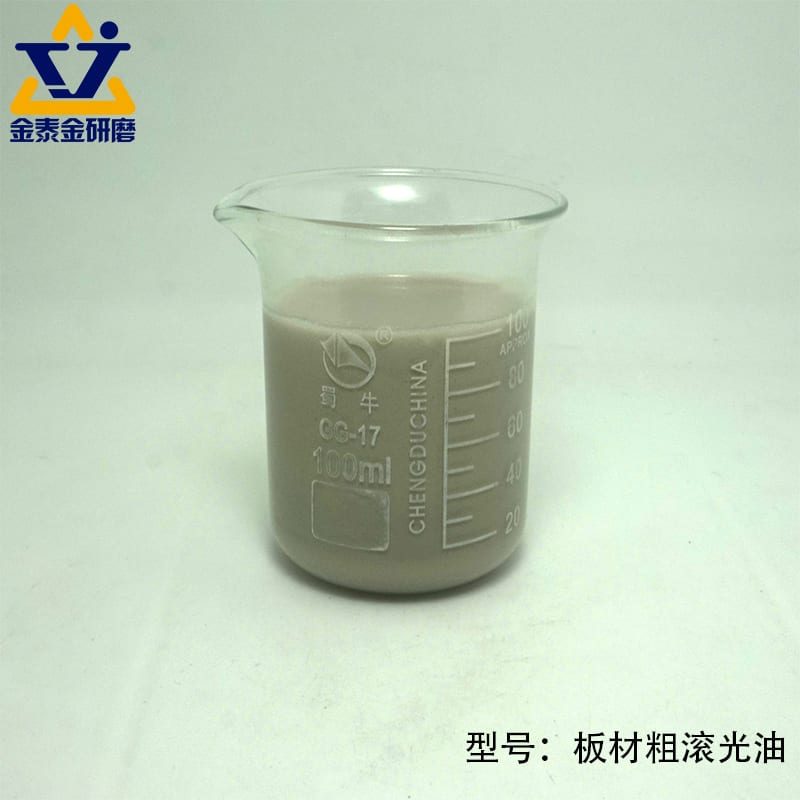
Recirculating stagnant dirty sump water or starving compound-LC10 lets fine ceramic dust and polymer silt pack like clay inside blind threads—cementing even properly sized media in place. Run continuous single-pass clean water with metered LC10 (general cut), MC8 (carbon steel descaling only), JTS5 (thin stampings), or HM3/JTJ (Stage 2 burnishing) routed into a multi-baffle settling tank.
Upstream Alkaline Pre-Degreasing for Oily CNC Batches
Machining coolant and stamping grease bind fine chips and dry organic granules into stubborn plugs inside counterbores. Always degrease oily CNC or die-cast batches upstream before loading wet finishing bowls.
Clean Spray Rinsing and Heated 35A/70A Centrifugal Spin-Drying
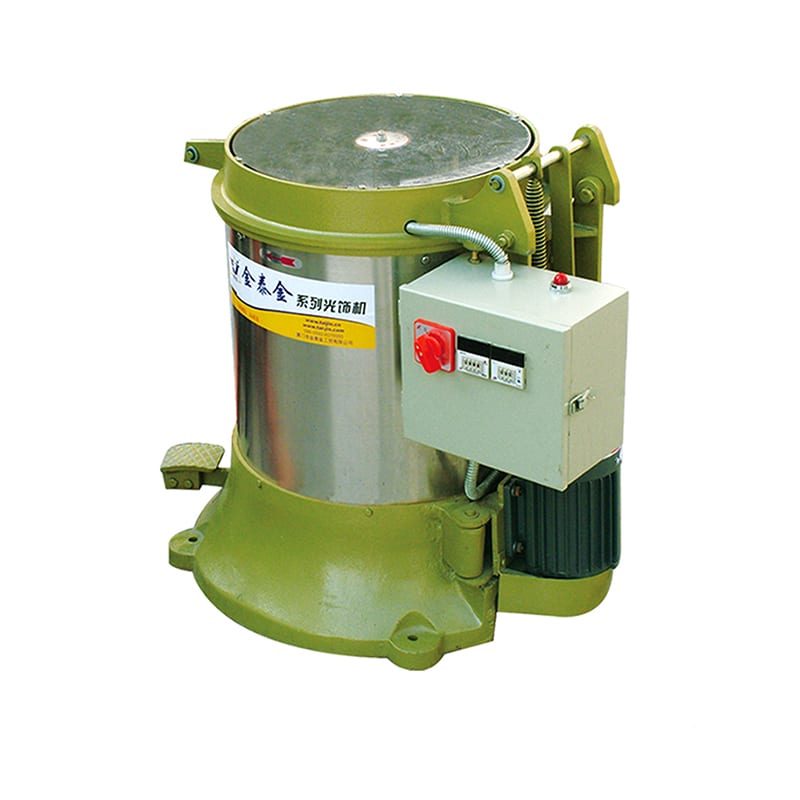
Pass separated batches under a clean-water spray rinse bar on the separator screen so zero loose chip fragments remain trapped, then transfer parts immediately into a heated 35, 35A, 70, or 70A centrifugal spin-dryer to throw trapped water out of threads and stop flash rust. Review our centrifugal dryer guide.
Keeping Dry Organic Buffing Charges Bone-Dry and Cool
Never dump damp parts straight into corncob or walnut shell (8#-80#); moisture swells granules inside threads instantly and forces manual picking even when dry mesh size was chosen carefully.
Multi-Shift Auditing, Color-Coding, and Troubleshooting
Pre-Run Blueprint Hole Audits Before Every New Part Number
Make bore-and-slot measurement mandatory before releasing any new CNC or stamped part number onto the finishing floor. Measuring the tightest through-hole, blind counterbore, and slot width takes two minutes and prevents hours of wasted picking labor.
Color-Coded Segregation Between Ferrous and Non-Ferrous Lines
Keep carbon-steel ceramic bins, screens, and scoops strictly segregated from stainless steel, titanium, and aluminum lines so broken ferrous chips never cross-contaminate non-ferrous parts.
Qualifying Sample Parts Across ZL, ZXL, and LLF120 Platforms
Running Physical Clearance Trials Before Pallet Purchases
Measuring a blueprint hole with calipers is only step one—actual tumbling motion inside ZL circular bowls, ZXL divided troughs, and LLF120 centrifugal barrels introduces diagonal orientation shifts that only real physical trials reveal cleanly. Running a short test batch on raw parts catches borderline wedging before bulk pallets arrive.
Selecting ZXL Divided Troughs vs. ZL Circular Bowls for Slotted Parts
Long stamped brackets and multi-slot extrusions often jam against curved bowl walls when tumbling uncontrolled. Moving long slotted components into ZXL or L1300–L1800 divided troughs isolates workpieces inside dedicated lanes while allowing non lodging tumbling media to sweep smoothly through every slot.
Balancing Cycle Speed vs. Bridging Clearance on Hard Alloys
Larger bridging ceramic triangles or angle-cut cylinders preserve zero-jamming safety across wide bolt holes, though slightly larger stones contact tight ninety-degree corners more gently than compact media. Compensate smoothly by running metered compound-LC10 flow-through or stepping up to LLF120 planetary centrifugal barrels when heavy steel burrs demand extra shear.
Documenting Verified Media Sizes on Work-Order Travelers
Lock exact non-lodging media geometry, vibratory separator screen mesh size, and weekly classification intervals onto every part traveler so second- and third-shift operators never substitute unapproved smaller stones mid-run.
| Lodging Symptom | Likely Root Cause | Immediate Correction | Long-Term Standard |
|---|---|---|---|
| Triangles wedged sideways in bolt holes | Worn thinned wafers not screened out | Purge small chips; switch to angle-cut cylinders | Screen media weekly & audit bore clearance |
| Round spheres locked inside circular bores | Ball diameter equal to bore ID | Clear jammed balls; switch to ellipses/larger ball | Verify bridging clearance on raw sample |
| Fine clay-like sludge packed in blind threads | Dirty static sump or oily CNC parts | Pre-degrease batch; restore single-pass LC10 |
Upstream alkaline wash + settling tank |
| Damp walnut/cob packed in brass fittings | Un-spun wet parts loaded into dry barrel | Discard fouled shells; spin-dry in 35A/70A first |
Mandate heated centrifugal dryer upstream |
| Thin washers clinging flat to triangles | Surface tension + thick compound film | Switch to tri-star media + JTS5 water flow |
Pair curved tri-star lobes with JTS5 |
Factory Capabilities & Verified Non-Lodging Media Supply
Founded in 1992, Xiamen Jin Tai Jin Grinding Technology Co.,Ltd. (SurfacePolish) engineers and manufactures 21 machine platforms backed by 24 granted Chinese IP rights and more than 200,000+ solutions across certified facilities (ISO 00726Q01571R001, CE M.2023.206.C88121, and CE M.2023.206.C88120). Alongside ZL circular bowls, ZXL/L1300–L1800 divided troughs, LLF120/LLB50 centrifugal finishers, OBD-30..100 magnetic polishers, and 35/35A/70/70A dryers, we supply precision-sized non lodging tumbling media across every family: angle-cut high-frequency ceramic cylinders, tri-stars, triangles, resin plastic cones and pyramids, high-alumina spheres and ellipses, 304 stainless balls and magnetic pins, corncob, walnut shell (8#-80#), and LC10/MC8/HM3/JTJ/JTS5 compounds. Standard machines ship in 25–35 days and custom lines ship in 45–60 days. Send sample raw parts to surface-polish.com for complimentary non-lodging clearance validation. Honest boundaries apply: we do not supply hobby rock-tumbler grit, dry sandblasting abrasive, or electroplating baths.
Frequently Asked Questions About Non-Lodging Tumbling Media
What is the golden rule for choosing non-lodging tumbling media?
Always apply the bridging-or-free-pass rule: select non lodging tumbling media clearly larger than your part's widest hole or slot so it bridges cleanly across, or clearly smaller so it flows straight through without touching opposite walls.
Why do angle-cut ceramic cylinders jam less than ceramic triangles?
Angle-cut cylinders roll along continuous curved sides that bridge smoothly across circular bolt holes, whereas thin triangular corners pinch diagonally inside round bores once stones wear slightly.
Why does media start jamming a few weeks into production when it worked fine at launch?
As abrasive ceramic or plastic media wears down across multi-shift runs, shrinking fragments gradually reach the exact width of part holes and slots. Screening out undersized chips weekly across your vibratory separator screen eliminates late-cycle wedging.
Can non-lodging tumbling media still reach inside deep blind threads and knurling?
External bridging media will clean edges around openings cleanly without entering deep blind threads; to brighten deep internal threads or knurled pockets without jamming, add a quick cycle inside an OBD-30..100 magnetic polisher using ferromagnetic stainless pins.
How do I keep dry walnut shell or corncob from packing inside brass threads?
Never load damp or oily parts into dry organic media—spin-dry rinsed parts in a heated 35A or 70A centrifugal dryer first, and choose either a coarser 8#–12# bridging mesh or a finer 50#–80# free-flowing grade.
What should I do if round high-alumina burnishing balls wedge in bolt holes?
Purge wedged balls immediately and switch either to a larger bridging sphere diameter or to elongated high-alumina ellipses that span circular bores safely without locking.
Can mixing two media sizes help clean multi-feature parts without lodging?
Yes, provided every shape in the blend independently clears all holes and slots cleanly and your vibratory separator screen retains both sizes cleanly inside the bowl during unload.
How can I test non-lodging media clearance before ordering bulk pallets?
Send several representative raw production parts containing your tightest holes, slots, and blind bores to surface-polish.com for complimentary lab testing; our engineers run physical ZL and LLF120 clearance trials and return finished samples before you order.
What should operators do if a few worn stones lodge inside a batch mid-shift?
Stop loading additional batches immediately, purge the active bowl charge across a classification screen to strip out undersized worn wafers, top up fresh non lodging tumbling media to the working fill line, and verify bore-bridging clearance before resuming production.
Can resin-bonded synthetic plastic cones also jam in aluminum bolt holes?
Yes. Even though lightweight plastic cones and pyramids protect soft 6061 aluminum from bruising, worn plastic wafers shrink across shifts just like ceramic stones and will wedge sideways inside tapped holes if weekly separator-deck screening is neglected.
Why do thin flat stamped washers stick to flat-sided media even when sized properly?
Flat washers cling to planar triangle faces through liquid surface tension rather than mechanical wedging. Switching to curved three-lobed tri-star ceramic shapes paired with generous single-pass compound-JTS5 water flow breaks capillary suction cleanly.
How does polyurethane bowl liner wear affect non-lodging screening accuracy?
When worn polyurethane discharge ramps sag or crack, broken media chips bypass separator gates and travel straight into finished part totes. Inspecting bowl liners weekly keeps both tumbling velocity and screening separation sharp.
Can ZXL and L1300–L1800 divided troughs run smaller ceramic shapes safely than open bowls?
Divided linear troughs prevent long rails and forged brackets from clashing end-to-end, though non lodging tumbling media hole-clearance rules remain identical: every stone must either bridge cleanly across slots or pass freely through bores without wedging.
What role does compound-LC10 play in keeping small bores free of jammed media?
Continuous single-pass water paired with metered compound-LC10 keeps metal swarf and ceramic silt flushed away cleanly instead of packing like wet clay around stones inside tight counterbores.
How can I standardize non-lodging media procurement across multiple finishing shifts?
Create a visual wall chart pairing each part number with its approved media geometry, vibratory separator screen aperture, working fill gauge, and weekly fragment-purge schedule so operators never substitute unapproved sizes mid-shift.
What happens if worn media chips are left inside heated 35A or 70A centrifugal dryers?
Undersized ceramic or plastic chips that bypass separator screens ride straight into heated 35A or 70A centrifugal spin-dryers, lodging inside blind threads during spin-up or scratching freshly burnished aluminum surfaces. Purging fragments weekly keeps both wet bowls and downstream dryers completely jam-free.
Can OBD-30..100 magnetic polishers brighten holes without risking ceramic media wedging?
Yes. Whenever tight cross-drilled bores, knurling, or snap-ring grooves require internal brightening that large bridging ceramic stones cannot reach, running ferromagnetic stainless pins inside an OBD-30..100 magnetic chamber cleans deep recesses effortlessly while external non lodging tumbling media handles outer edges cleanly.
How does single-pass settling tank clarity keep non-lodging media clean?
Routing continuous wet flow-through into a multi-baffle settling tank prevents fine ceramic silt and metal swarf from recirculating back onto workpieces and cementing tiny chips inside blind counterbores.
 +86-592-2381506


 IPv6 network supported
