Polishing Pewter: Heat Is the Constraint, and It Arrives Before the Cut Does
Pewter is a tin alloy — typically 85 to 99 percent tin, with copper or antimony added for hardness. That composition sets a constraint that comes before every other decision: tin melts at 232 °C, and a pewter alloy is soft enough that the surface moves well below that.
So on pewter the question is not "how fast can I cut" but "how much heat am I putting in". A process that would be normal on brass or aluminium will mark, smear or distort pewter before it polishes it — and the damage is not always visible until the part is finished.
This page is about that constraint and what it changes: the media, the cycle, the compound and the drying order.
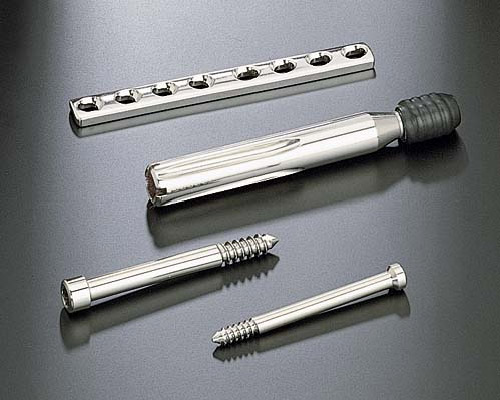
The heat limit that governs pewter is the constraint, and the media that keeps energy low is chosen from our grinding media range rather than from the ceramic end.
The compound chemistry that protects a tarnishing alloy is in our consumables range.
What makes pewter different
| Property | What it means for the process |
|---|---|
| Low melting point (tin 232 °C) | Friction heat is a real limit, not a theoretical one — a dry wheel or a high-energy charge can mark the surface |
| Very soft (softer than aluminium) | It smears rather than cuts, and it marks on contact — including against other parts |
| Low strength | Thin sections and cast detail deform under load, including the load of a charge |
| It tarnishes | The surface oxidises and dulls, so the finish has to be protected as well as produced |
| Often cast or spun | Cast pewter has porosity, and porosity holds compound and moisture |
The first row is the one that changes the process. On most metals you choose the cut and manage the heat. On pewter you manage the heat and take the cut that the heat budget allows.
A dry barrel leaves the part dry, which is why our rotary barrel tumbling range matters on a soft alloy as much as the charge does.
What the constraint changes
1. The media: softer body, smaller size, gentler shape
Body: a plastic or organic body rather than ceramic. Ceramic cuts efficiently and that is exactly the problem — on pewter it cuts the detail away before it removes the burr. A plastic body is the usual choice, and on cast decorative work a dry organic body (walnut shell, corn cob) is common because it works by scrubbing rather than cutting.
Size: the rule is unchanged — two safe zones, not one ceiling. Media above about 1.3× the smallest feature stays out; media below one third enters and flushes out; anything between lodges. On pewter both ends of that matter, and they pull in opposite directions: the upper limit matters more than on steel because a large body carries more momentum into a soft surface and marks it on contact, while the lower limit matters because a fine body that lodges in a cast edge has to be picked out of the one material that marks when you touch it. The practical band is the finer end of what the feature allows — and when the feature is fine enough that the band runs out of room, pewter is a masked-part job rather than a loose-charge one.
Shape: a rounded or cylindrical body marks less than an angular one. On a decorative surface where any contact mark is a reject, this is the deciding property rather than the grade.
2. The cycle: short and monitored, not long and hopeful
This is the opposite of the usual instinct. On hard metals, running longer removes more; on pewter, running longer heats the part and the surface starts to smear and dull.
The consequence is a process designed around a short cycle with a check, rather than a long cycle with an assumption:
- Start from the shortest cycle that produces any visible change, and build from there.
- Check the part physically — heat, not just appearance — during the first trial.
- Expect a light burr or a brighten in the 10 to 20 minute band rather than the multi-hour band a brightening stage takes on hard metal.
And the media life question follows: media life runs 20 to 200 operating hours, and on pewter a worn charge is a liability rather than an economy, because a charge that has broken down circulates fines that mark a soft surface.
3. The compound: chemistry and heat together
Two jobs, and on pewter the second one is the harder:
The cutting job is gentle — a compound that lets the media work without generating heat, and keeps the swarf in suspension so it does not re-cut the surface.
The protection job is the one that decides acceptance: pewter tarnishes, and a part that is bright at the machine and dull a week later has lost the finish. That means a compound and a rinse that leave nothing behind, and a drying step that gets the water out of cast porosity rather than waiting for it to evaporate.
What we do not publish is a formulation — pH, concentration and additives are set by the alloy and the process and confirmed against a part and a sample.
4. The drying order, which is not optional here
Cast pewter has porosity, and porosity holds water. A part that air-dries leaves a film in the pores, and that film is where the next round of tarnishing starts.
So the sequence is: rinse → dry by force and heat → protect. On a wet process, a centrifugal dryer with hot air does the second step. Air drying is the step that gets skipped and then blamed on the compound.
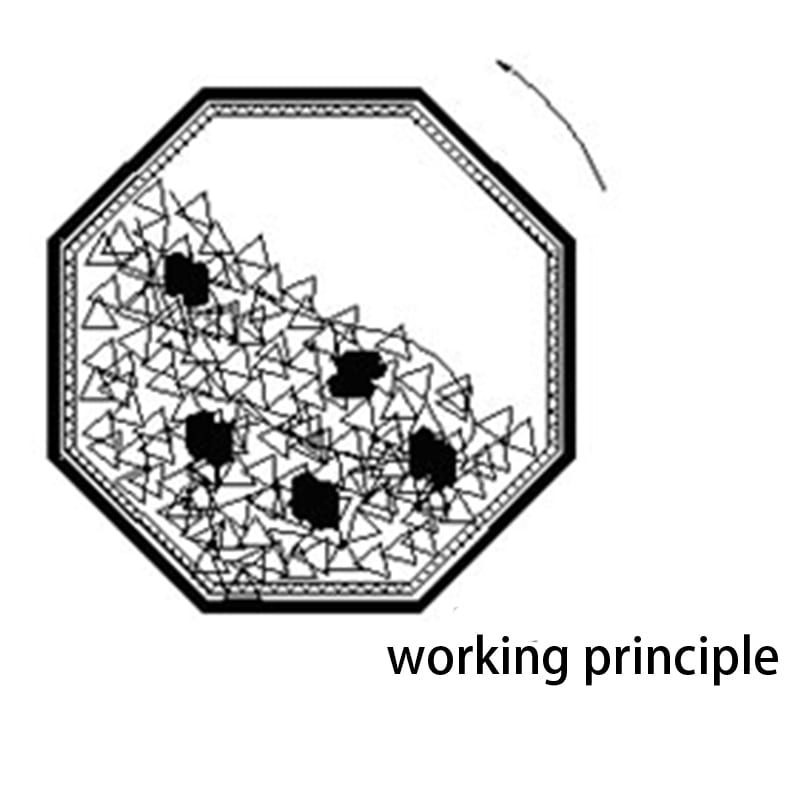
The tarnish that follows a wet process is covered in the centrifugal dryer page, and on pewter the dry step is part of the finish rather than an extra.
The route that reaches a feature a loose charge misses is in the magnetic polishing page.
Where these processes will not help
Being specific here saves a batch:
A part with fine cast detail or a crisp engraving. Every loose medium rounds what it reaches. If the detail is the value, the process is a different one — a very gentle dry scrub, or bench work.
A part that must keep a mirror finish and a sharp edge together. Pewter is soft enough that a mirror finish and a crisp edge are competing requirements; the process that produces one tends to lose the other.
A thin-walled or hollow form. The charge bends it, and on pewter the deformation is not recoverable.
A part that will be handled a lot. Pewter marks on contact, so most of the damage after polishing happens in handling and packing — a process-design problem, not an abrasive one.
A part where heat cannot be controlled. If the process cannot be run at low energy with a check, pewter is the wrong material for that process rather than the process being wrong for pewter.
The services, if a machine is involved. A powered unit in this class runs on three-phase 380 V or 415 V at 50 Hz, sits in the 75 to 85 dB(A) at one metre band, and ships in 25 to 35 days from the deposit with built-to-order at 45 to 60 days. On a wet process the dryer is part of the route rather than an accessory, because cast porosity holds water and the film in the pores is where the next tarnish starts.
If a compound is being specified at the same time, our consumables range is where the corrosion package lives.
What to send with an enquiry
- The alloy, by name or composition — a high-tin pewter and a leaded or antique-replica alloy behave differently, and the difference matters for both cut and tarnish.
- The part and how it was made: cast, spun or fabricated. Cast porosity changes the rinse and the dry.
- The feature that must survive: engraved detail, a cast edge, a hallmark. That decides the media size before the grade.
- The finish requirement, judged how — a boundary sample is worth more than a roughness figure on a decorative surface.
- What happens after: lacquering, packing, display. Pewter is often lacquered, and a residue under a lacquer is sealed in.
- The volume and the mix, because a soft part in a mixed charge marks against harder parts — on pewter, batching by material is not optional.
The four machine families are compared in the deburring machine route guide, which is the context a pewter job sits in.
The machine families are listed on our products page.
FAQ
Can pewter be polished in a vibratory machine? Yes, with a soft body and a gentle cycle. The constraint is heat rather than cut: a charge that would be normal on brass puts enough energy into a pewter part to smear and dull it. Low energy, a plastic or organic body, and a short cycle with a physical check are the usual basis.
Why does my pewter go dull or smeary instead of bright? Heat, in most cases. Pewter is a tin alloy with a low melting point and very low hardness, so friction heat softens the surface and the media smears it rather than cutting. The second cause is a worn charge circulating fines; the third is a compound that does not rinse clean.
What media for pewter? A plastic or dry organic body, in the finer range of what the smallest feature allows, with a rounded shape. Ceramic cuts too efficiently for pewter and removes the detail rather than the defect.
Does pewter need a different compound from aluminium? The requirement is similar in direction — gentle, low-heat, rinses clean — but pewter also tarnishes readily, so the protection function matters more than it does on aluminium. The product is confirmed against the alloy and a sample rather than chosen by name.
How do I stop pewter tarnishing after polishing? Rinse completely, dry by force and heat rather than air, and protect — a lacquer or a barrier — because the alloy oxidises in air. A residue left in cast porosity is where the next tarnish starts.
Can pewter parts be run with other metals? Not safely. Pewter is softer than most metals in a mixed charge, so harder parts mark it. Batching by material is not a preference on pewter; it is a requirement.
Max Xu, Sales — Xiamen Jin Tai Jin Grinding Technology Co.,Ltd.
No. 31, Xinchang Road, Xinyang Industrial Zone, Haicang District, Xiamen
info@surface-polish.com
This article describes how a polishing process for pewter is reasoned about; it is not a claim about any specific part's achievable result. A finishing process is set by the material, the stock to be removed and the finish required, so the configuration for a specific part is confirmed against a trial on that part. We manufacture finishing equipment and the media and compounds that run in it; we do not offer a job-shop finishing service.
 +86-592-2381506


 IPv6 network supported