
Brass Tumbler Media: Contamination Control, Lodging Rules, and Passivation
Processing copper-zinc alloys in mass finishing equipment presents a unique manufacturing paradox. When machine shops, cartridge reloaders, and valve manufacturers specify brass tumbler media or search for a media tumbler for brass, they frequently evaluate media purely on grit aggression or catalog price per kilogram. Yet on the factory floor, brass parts are far more easily damaged by the contamination history of the charge, improper media geometry in threaded bores, and uncontrolled wet chemistry than by selecting the wrong cutting speed.
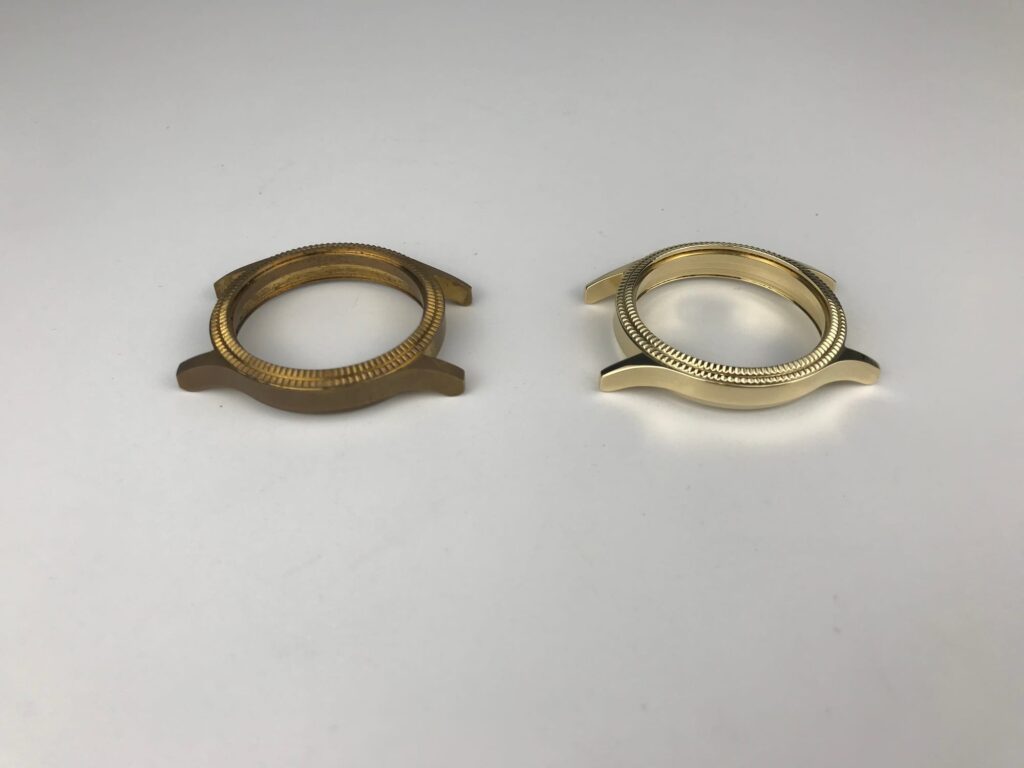
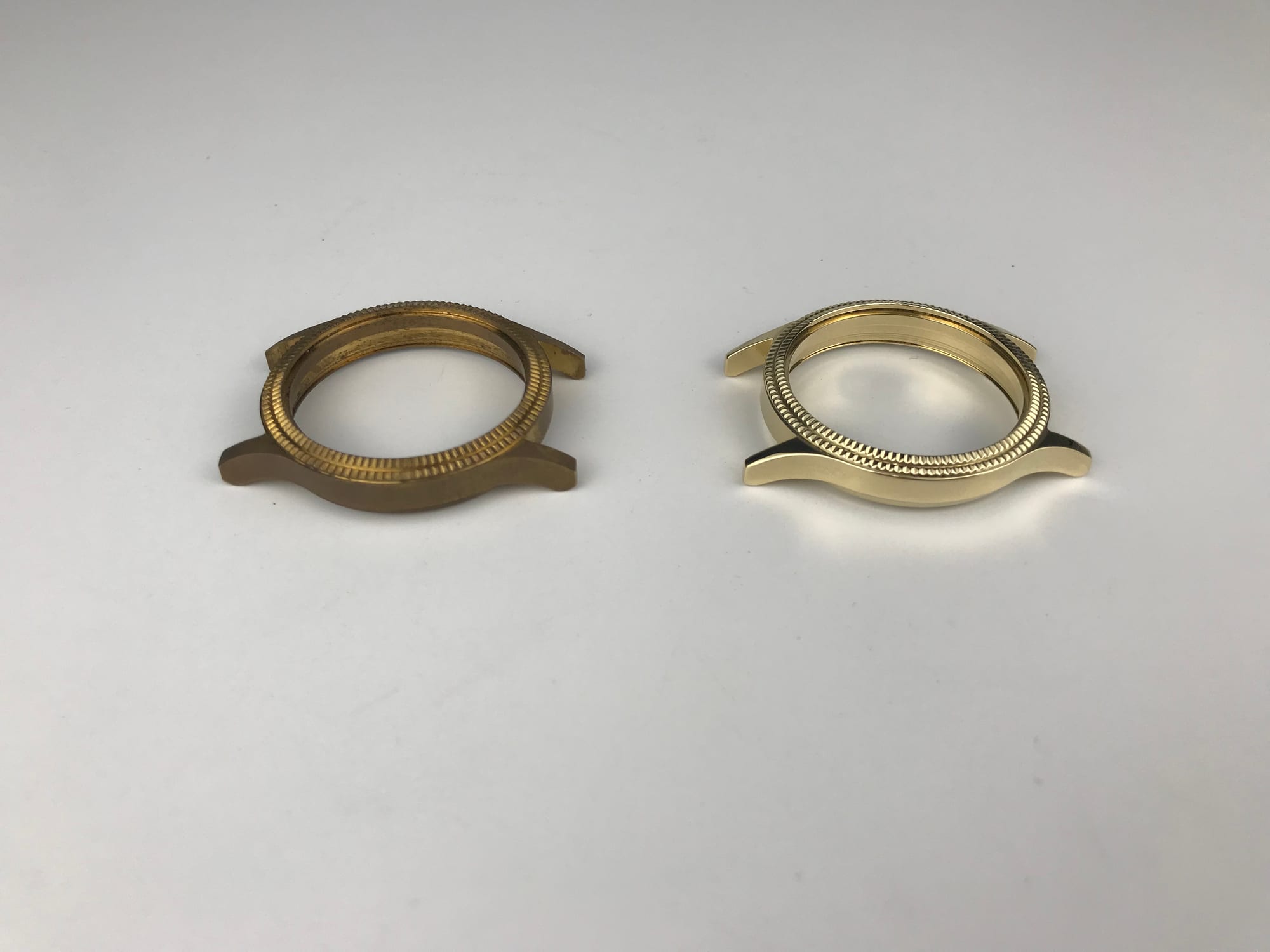
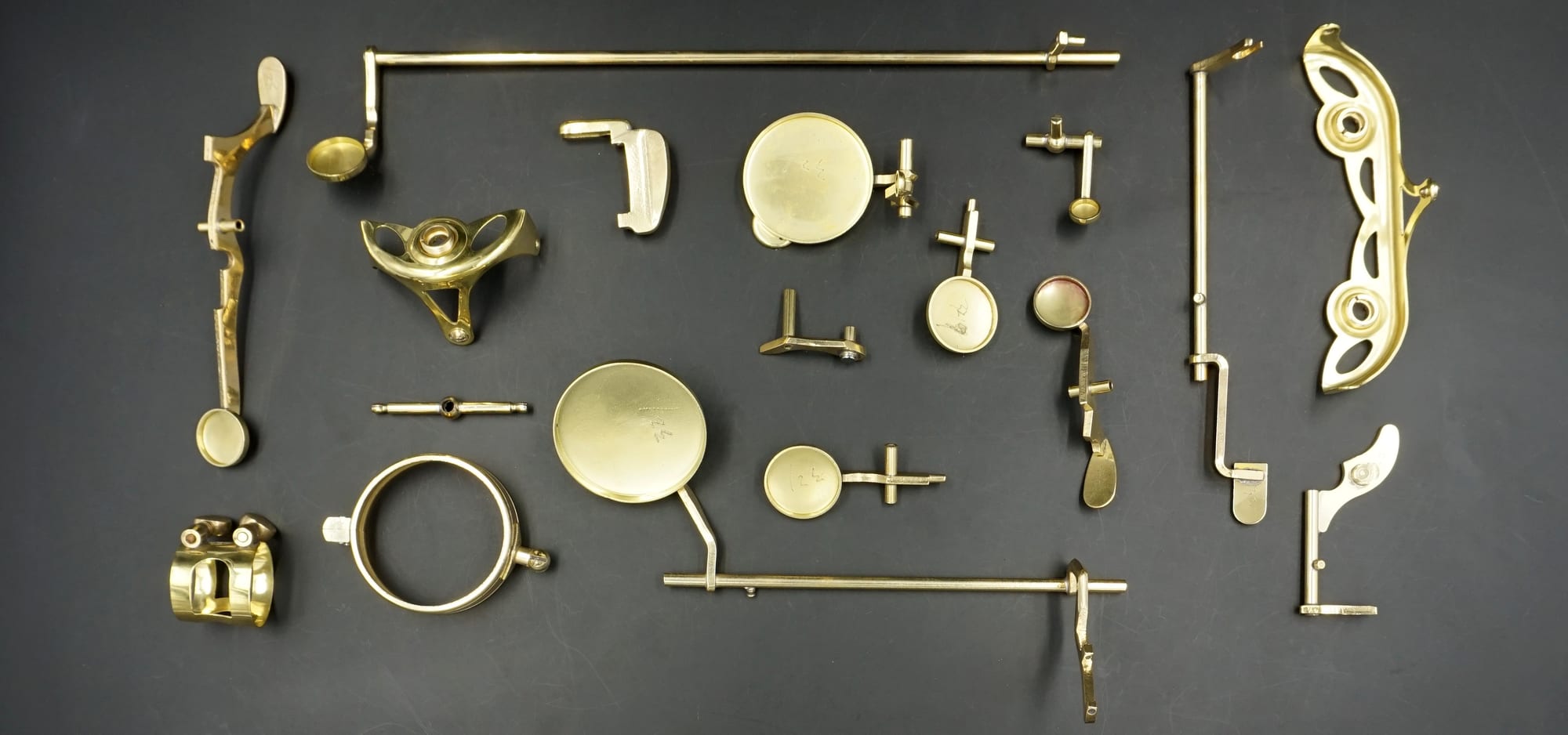
Brass is soft, dense, and chemically sensitive. Unlike ferrous alloys where surface roughness (Ra) is the predominant quality metric, brass components — including plumbing valves, musical instrument keys, electronic connector pins, luxury watch cases, and cartridge cases — are evaluated on dimensional thread fidelity, crisp edge contrast, and uniform golden tone.
A batch of precision brass fittings run in a tumbling bowl that previously processed steel may look immaculate upon exiting the rinse station. Within 72 hours of packaging, however, unsightly brown rust spots and localized galvanic pitting erupt across the golden surface. The culprit is not chemical staining; it is microscopic ferrous swarf embedded into the pores of a shared media charge.
This comprehensive technical reference details the four non-negotiable rules of brass tumbling media selection, establishes geometric anti-lodging formulas for holes and threads, analyzes dezincification chemistry and corrosion inhibition, benchmarks the five primary industrial media families, defines volumetric loading ratios, and provides an empirical shop-floor troubleshooting matrix.
The Contamination Rule: Why Shared Charges Ruin Brass
In mass finishing job shops, the single most expensive error is treating abrasive media as a universal consumable shared across steel, aluminum, and brass components.
```
Galvanic Contamination Cycle in Shared Tumbling Media:
Steel Processing Cycle: Hard Steel Swarf (Fe) ──► Imbeds in Micro-Porous Ceramic/Resin Media │ Downstream Brass Cycle: ▼ Contaminated Media ──► Transfers Fe Particles into Soft Brass Surface (Cu-Zn) │ Atmospheric Exposure (72 Hours): ▼ Electrochemical Cell (Fe-Cu) ──► Galvanic Corrosion ──► Post-Polish Rust Spots (Scrap)
```
1. Galvanic Implantation Mechanics
When vitrified ceramic or polyester-bonded plastic media runs carbon steel or cast iron workpieces, microscopic iron swarf (1 – 15\ μm) fractures under impact and embeds into the binder matrix of the media pellets.
- Because brass (typically CDA 360 free-cutting brass or CDA 260 cartridge brass) possesses a Brinell hardness (60 – 150 HB) significantly lower than hardened steel or vitrified ceramic, tumbling brass in this contaminated charge causes the embedded iron particles to micro-forge into the brass surface.
- Once exposed to atmospheric humidity, a micro-galvanic couple forms between the noble copper matrix and the active iron particle (E^°_cell ≈ 0.78 V). Rapid electrochemical oxidation causes dark red-brown rust spots to blossom across the component.
- The Rework Reality: Because iron particles are mechanically cold-worked into the parent alloy, chemical pickling or ultrasonic washing cannot remove them without etching base dimensions. The entire production lot must be scrapped.
2. Operational Discipline: Dedicated vs. Purged Charges
- The Dedicated Rule: Manufacturing facilities processing recurring brass volumes must maintain dedicated media charges stored in sealed, color-coded bins labeled exclusively for non-ferrous copper alloys.
- The Mandatory Purge Cycle: If an emergency production schedule forces a machine to switch from steel to brass, the bowl lining and media charge must undergo a 45-minute self-cleaning purge cycle using high-density detergent, followed by an acidic surfactant wash (
compound-LC10) to dissolve residual iron particulate before brass workpieces are introduced.
For deeper insights into media care and volumetric charging, read our vibratory tumbler media selection guide.
Media Lodging Prevention: Geometric Sizing for Holes, Threads, and Primer Pockets
The second most prevalent failure mode in brass finishing is media lodging (wedging). Brass components frequently feature intricate fluid passages, blind tapped holes, intersecting cross-drillings, and primer pockets (such as ⌀ 2.0 mm / 0.080" flash holes in ammunition cases). When a tumbling pellet lodges into an internal cavity, mechanical extraction requires manual punch-out, frequently stripping fine threads or gouging valve seats.
The 130% / 70% Dimensional Exclusion Rule
To guarantee that media cannot wedge inside holes, slots, or threads, process engineers must apply the mathematical exclusion threshold:
Safe Non-Entering Zone: D_media ≥ 1.30 × D_aperture
Safe Free-Flushing Zone: D_media ≤ 0.70 × D_aperture
```
Aperture Lodging Danger Window:
0 mm 0.70 x D 1.0 x D 1.30 x D ────┼────────────────────────────────┼─────────────────────────────┼────────────────────────────┼──────────► │ SAFE PASS-THROUGH ZONE │ CRITICAL LODGING DANGER ZONE (WEDGING RISK) │ SAFE BRIDGING │ (Media flushes freely through) │ (Pellet dimensions match aperture tolerance) │ (Stays outside)
```
- Bridging Action (D_media ≥ 1.30 × D_aperture): The media's smallest dimension is at least 30% larger than the hole diameter. Media pellets roll across the opening, deburring the external rim break without entering the hole. Internal bore cleaning is achieved purely via chemical surfactant flow.
- Pass-Through Action (D_media ≤ 0.70 × D_aperture): The media's maximum dimension is at least 30% smaller than the cavity. Pellets enter, scrub internal walls, and flush out freely with wastewater discharge without jamming.
- The Lodging Danger Zone (0.70 – 1.30 × D_aperture): Any media falling within this band will enter under vibratory kinetic force, wedge across its diagonal corners, and bind permanently due to friction.
Media Geometry Selection for Threaded Brass Features
- Angle-Cut Triangles (ACT): The 22° or 45° angle cut allows the point to penetrate tapped blind hole entries and female thread roots to deburr lead-in chamfers without flat-to-flat suction binding.
- Tri-Stars and Cones: Ideal for concave brass contours and contoured plumbing fixtures. Cones provide point contact that prevents edge rounding.
- The Cylinder Hazard: Standard straight-cut cylinders should never be used on brass parts containing cross-holes matching the cylinder diameter, as cylinders will align axially with fluid galleries and lock into place.
To understand machine chamber designs that protect small apertures, consult our reference on deburring machine route selection.
Wet Chemistry, Dezincification, and Surface Passivation
Brass is an alloy composed primarily of copper (60% – 70%) and zinc (30% – 40%). In wet mass finishing environments, water chemistry and chemical compound pH govern whether the finished part emerges with a brilliant golden luster or a dull, discolored surface.
1. The Dezincification Phenomenon
If an operator charges aggressive acidic descalers or caustic alkaline cleaners into a brass tumbling cycle, an electrochemical leaching reaction occurs:
- Zinc is more chemically active than copper (E^°_Zn = -0.76 V vs. E^°_Cu = +0.34 V). Under aggressive chemical attack, zinc atoms selectively dissolve from the crystal lattice, leaving behind a porous, mechanically weak layer of spongy copper.
- Visible Manifestation: The brass develops an irregular, mottled pink or salmon-red discoloration. Once dezincification occurs, the golden color cannot be restored by washing; the porous dezincified layer must be mechanically polished away with fine abrasive compounds.
2. The Narrow pH Processing Window
To maintain base metal passivity while sustaining cutting action, chemical dosing systems must regulate the finishing slurry within a precise pH band:
Optimal Brass Wet Processing Window: pH\ 5.5 – 6.8
- Acidic Cleaning: Mild organic acids (such as technical citric acid or sulfamic acid, buffered to pH 5.5 – 6.0) effectively strip copper-oxide tarnish and flux scale without attacking the zinc phase.
- Corrosion Inhibitors (BTA): Formulations like compound-LC10 incorporate benzotriazole (BTA) or tolyltriazole inhibitors. BTA molecules chemically bond to surface copper atoms, creating an insoluble monomolecular protective polymer film (Cu-BTA) that prevents flash oxidation and water-spotting upon post-cycle atmospheric exposure.
For comparative analysis of compound chemistries across various non-ferrous metals, review metal compounds for aluminium versus steel.
Brass Tumbler Media: Which Family for Which Job
Three media families cover almost every industrial brass job, and the choice between them is set by the feature that has to survive rather than by the finish that is wanted.
Ceramic, plastic or steel for brass
| Family | What it does on brass | Where it is the right answer |
|---|---|---|
| Ceramic (triangle, cylinder, ball) | Cuts fast and holds its shape | Deburring and edge-breaking on cast or stamped brass with no fine feature |
| Plastic / resin-bonded | Cuts progressively and wears as it works | Thin-wall brass, threaded parts, anything where a ceramic body would peen a crest |
| Steel / stainless shot | Removes almost no material; burnishes | Brightening and colour work where dimensional change is unacceptable |
The split that matters: ceramic changes the part, steel does not. A brass fitting with a cut thread is usually a plastic job for the cut and a steel job for the colour; using ceramic for both is how threads get rounded.
Why a shared charge ruins brass — and what to do instead
Brass tarnishes, and the tarnish is accelerated by contamination rather than caused by time alone. Iron and steel particles embedded in a shared charge leave rust spots that appear days after the parts leave the machine, which is why a brass charge is kept separate rather than cleaned between jobs. The full mechanism, and the wet-chemistry side of it, is set out in the contamination and passivation sections above.
Sizing rules for threaded and tapped brass parts
Two rules cover most of it. Media no larger than about one third of the smallest feature — on a tapped hole that is the thread root, not the hole diameter. And on anything threaded, prefer a body that rounds rather than one that peens, because a ceramic corner reaching a thread crest will roll it over rather than cut the burr.
A note on what this page is about. "Brass tumbler media" is searched by two very different audiences: industrial shops finishing brass components, and hobbyists cleaning cartridge cases for reloading. This page is about the first. The sizing logic is similar, but the media families, the chemistry and the tolerance expectations are not — and a charge built for reloading will not finish a machined brass fitting to a drawing.Industrial Benchmark Matrix: The Five Brass Media Families
Selecting the optimum media family is a balance between cutting aggression, edge preservation, surface finish (Ra), and media wear life. The following matrix benchmarks the five primary industrial media families utilized for brass:
| Media Family & Composition | Bulk Density & Hardness | Material Cut Rate on Brass | Surface Roughness (Ra) Capability | Media Wear Rate (%/hour) | Primary Application / Workpiece Class |
|---|---|---|---|---|---|
| Synthetic Resin-Bonded Plastic (Polyester/Urea + SiC or Alumina) | 1.5 – 1.8 g/cm^3<br>Shore D 80–90 | Moderate (0.01 – 0.03 mm/hr) | a matte that reads even; suitable before a plate | 1.0% – 2.0% / hr | Precision CNC turned brass fittings, valves, thin-wall musical keys, and electrical terminals. Cushions impacts, prevents thread dinging. |
| Vitrified High-Alumina Ceramic (Brown Fused Alumina + Clay Bond) | 2.4 – 2.7 g/cm^3<br>Mohs 8.5–9.0 | Aggressive (0.04 – 0.08 mm/hr) | a fine matte, the stage before a brightening charge | 0.2% – 0.6% / hr | Heavy stamping burrs, rough sand-cast plumbing bodies, flame-cut brass brackets. Caution: Rapidly rounds sharp precision corners. |
| 304 / 430 Stainless Steel Micro-Pins (Magnetic Wire Pins ⌀ 0.3 – 1.0 mm) | 7.8 – 7.9 g/cm^3<br>HRC 35–45 | Zero Cut (Pure Compressive Micro-Peening) | reflective without removing material | Negligible (< 0.01% / yr; 3–5 year service life) | High-speed magnetic deburring of blind threaded holes, cartridge case flash holes (⌀ 2.0 mm), and medical electronic pins. |
| Crushed Walnut Shell (impregnated with liquid polishing suspension) | 1.2 – 1.4 g/cm^3<br>Mohs 3.0–3.5 | Ultra-Fine Micro-Cut (< 0.005 mm/hr) | a bright surface short of a mirror | 0.5% – 1.0% / hr | Dry barrel tumbling of optical eyewear hinges, luxury watch parts, and brass hardware requiring zero chemical effluent. |
| Agricultural Corn Cob Granules (untreated or treated with dry rouge) | 0.8 – 1.0 g/cm^3<br>Mohs 2.5–3.0 | Zero Cut (Wiping, Oil Absorption & Buffing) | cleans and dries; does not change the surface profile | Gradual breakdown (1.5% – 3% / hr) | Secondary dry vibratory drying, wiping residual grease, and final mirror luster development on cartridge brass and decorative items. |
Operational Note: Ceramic media should be restricted strictly to initial heavy deburring on rugged sand castings. Tumbling fine brass screw-machined parts in ceramic media will erode precision pitch diameters within 20 minutes.
For comprehensive comparative properties between natural and synthetic abrasive grains, explore our tumbling media selection guide.
Volumetric Loading Ratios, Chamber Levels, and Cycle Time Optimization
Achieving repeatable finishes on brass without part-on-part impingement dings or slow cycle times requires precise management of the three primary load parameters:
```
Vibratory Bowl Load Distribution for Brass:
┌────────────────────────────────────────────────────────┐ ◄── 100% Total Bowl Rim │ │ │ [Headspace for Helical Wave Crest: 20% to 25%] │ ├────────────────────────────────────────────────────────┤ ◄── 75% to 80% Optimum Operating Fill │ │ │ [Fluidized Charge Zone: 75% to 80% Full] │ │ ├── Volumetric Ratio: 4:1 to 6:1 (Media to Brass) │ │ └── Continuous Dosing Stream: compound-LC10 (1.5%) │ │ │ └────────────────────────────────────────────────────────┘ ◄── Base Bowl Lining (Shore 85A Polyurethane)
```
1. Volumetric Media-to-Part Ratios
Brass possesses high specific gravity (8.4 – 8.7 g/cm^3). If brass parts strike one another inside a vibrating bowl, their weight causes visible peening nicks, dinged sealing ridges, and flattened thread peaks.
- Heavy Industrial Castings: A volumetric ratio of 3:1 (three parts media to one part workpieces by volume) is permissible where parts are rugged.
- Precision Threaded Fittings and External Gears: A ratio of 4:1 to 6:1 is mandatory to ensure every individual workpiece is completely cushioned in a pocket of abrasive media, eliminating metal-to-metal collision.
- Thin-Walled Musical Instruments / Luxury Hardware: A volumetric ratio of 8:1 is maintained to prevent slender brass linkages from entangling or bending.
2. Chamber Fill Levels and Water Management
- Vibratory Bowls (such as model ZL150 or ZL300): Maintain operating fill levels at 75% – 80% of total bowl volume. Under-filling (< 60%) dampens the helical roll and causes parts to migrate to the outer wall where they strike the polyurethane lining with high impact. Compound dosing should flow continuously at 1.5% – 2.0% concentration to carry away metal swarf.
- Rotary Tumbling Barrels (such as model OBD-BJ160B): Maintain operating fill at 50% – 60% of total drum volume. Add fresh water until it sits flush with the top level of the media bed. Over-filling with water creates excessive hydrostatic drag, stalling the slide, while under-filling creates violent tumbling impact that dings brass surfaces.
3. Empirical Cycle Time Baselines
- Wet Magnetic Pin Deburring (OBD-30 / OBD-60): Clean internal threads, remove machining burrs, and restore cartridge primer pockets in 30 to 50 minutes using ⌀ 0.5 mm stainless pins.
- Wet Vibratory Cutting (Plastic Media): Eradicate CNC milling lines and radius external edges in 60 to 90 minutes.
- Porcelain Ball Burnishing: Cold-work surfaces to high luster in 25 to 40 minutes.
- Dry Vibratory Buffing & Drying (Corn Cob): Absorb residual rinse water and apply anti-tarnish barrier film in 15 to 25 minutes.
To understand the mathematical relationship between charge density and yield, review loading ratio: the variable that decides yield.
Downstream Separation, Centrifugal Spin-Drying, and Tarnish Prevention
A flawless tumbling cycle is completely ruined if parts are allowed to air-dry slowly on a shop bench. As water evaporates, dissolved minerals precipitate into chalky white water-spots, and exposed brass rapidly develops an irregular brown oxide skin.
```
Downstream Separation and Drying Workflow:
Vibratory Finishing Bowl (Wet Abrasive Cycle) └──► Auto-Separation Screen Deck (Parts Discharged in 90 s) └──► Clean Deionized Water Spray Rinse (Flushes Swarf) └──► Centrifugal Dryer Model 35A (Hot-Air Spin Dry: 3 min) └──► 100% Spot-Free, Passivated Golden Finish
```
1. High-Speed Separation Mechanics
- Vibratory Screen Separation: In circular bowl vibrators, an internal polyurethane dam redirects parts onto an interchangeable perforated screen deck. Media pellets (> 10 mm) drop through apertures back into the bowl, while deburred brass fittings discharge into receiving baskets.
- Magnetic Pin Separation: In magnetic finishing, non-magnetic brass parts are lifted out of the chamber, while a secondary magnetic separation wand or continuous rotary magnetic belt sweeps the tank, separating kilograms of micro-fine stainless pins from the rinse fluid within 30 seconds.
2. Centrifugal Spin-Drying vs. Corn Cob Drying
Freshly rinsed brass parts must be dried immediately:
- Centrifugal Heated Spin Dryers: Workpieces are charged into a rotating perforate stainless basket within a dedicated unit such as Centrifugal Dryer Model 35A (35 kg capacity rating; 0.75 kW motor; 1.8 kW heating element) or Model 70A (60 kg rating; 1.1 kW motor; 3.0 kW heating). Centrifugal spinning forces water off the parts within 60 seconds, while high-velocity heated air (60^°C – 85^°C) flashes off micro-pores, leaving zero water-spots.
- Vibratory Corn Cob Dryers: For parts with deep blind recesses where centrifugal air cannot penetrate, heated vibratory tubs filled with fine corn cob absorb moisture and buff surfaces simultaneously.
For technical parameters on centrifugal thermal drying, read centrifugal dryer: why drying is a process step.
Shop-Floor Troubleshooting Matrix: Diagnosing Brass Finishing Defects
| Observed Defect | Probable Root Cause | Verification Method | Corrective Engineering Action |
|---|---|---|---|
| Post-Finishing Rust Spots (Red-Brown Dots) (Occurs 24–72 hours after polishing) | 1. Media charge contaminated with microscopic steel swarf.<br>2. Wash tank plumbing contains corroded iron pipes. | Examine spots under 40× magnification; apply potassium ferricyanide test (turns deep blue in presence of free iron). | Discard contaminated media charge; thoroughly clean and pickle bowl lining; enforce dedicated non-ferrous media charges. |
| Pink / Salmon-Red Mottled Discoloration (Brass loses golden luster; appears dull copper-red) | 1. Severe dezincification from acidic descalers (pH < 4.5).<br>2. Excessive processing duration with aggressive chemical additives. | Measure process wastewater pH; scratch surface lightly to inspect depth of copper red layer. | Adjust chemical dosing to maintain pH 5.5 – 6.8; substitute harsh cleaners with buffered compound-LC10; run a light plastic media smoothing pass to remove dezincified skin. |
| Dented Edges / Thread Peak Damage (Workpieces exhibit small peening indentations) | 1. Volumetric media-to-part ratio too low (parts colliding).<br>2. Machine amplitude excessive for soft brass alloy.<br>3. Media bulk density too high (heavy ceramic). | Inspect defect geometry under toolmaker's microscope; check whether dents match corners of adjacent workpieces. | Increase media-to-workpiece ratio to at least 5:1 or 6:1; reduce motor eccentric weight angle; substitute heavy ceramic media with polyester resin plastic media. |
| Media Wedged in Holes / Thread Roots (Pellets stuck tightly inside blind holes or flash apertures) | 1. Media dimensions match aperture diameter within the critical 0.70 – 1.30× danger zone.<br>2. Fractured media chips lodging in root corners. | Measure lodged pellet dimensions against part drawing aperture tolerances. | Apply the 130%/70% exclusion rule: select media > 1.3× or < 0.7× the hole diameter; switch from cylinders to angle-cut triangles or magnetic stainless pins. |
| Chalky White Water-Spots / Dark Tarnish (Parts exit dryer with cloudy grey-white rings or dark oxidation) | 1. High water hardness salts precipitating during evaporation.<br>2. Delayed transfer from rinse station to drying equipment.<br>3. Absence of BTA corrosion inhibitor in rinse water. | Wipe spot with dilute citric acid: if spot clears instantly, cause is mineral scale. | Install water deionizer or softening filter; add 0.5% corrosion inhibitor (compound-LC10) to final rinse; transfer immediately to centrifugal dryer. |
Boundary Limitations: When Loose-Media Tumbling Does Not Apply to Brass
Mass finishing media tumblers are exceptionally versatile, but they are subject to clear metallurgical and physical limitations:
- Large Architectural Brass Panels Requiring Hairline Graining:
Loose-abrasive mass finishing produces an isotropic, non-directional matte or tumbled finish. If an architectural fixture, elevator panel, or luxury door plate specifies a continuous #4 directional hairline brushed grain, it must be finished on a linear wide-belt sander or rotary flap wheel, not inside a tumbling bowl.
- Ultra-Heavy Foundry Scale on Annealed Sand Castings:
Thick, glassy silicate sand and heavy furnace scale fused to rough brass foundry castings cannot be removed by tumbling media without excessively eroding fine detail. Rough castings require initial chemical pickling in dilute sulfuric/nitric acid baths or dry grit blasting before entering mass finishing media cycles.
- Capillary Micro-Fluidic Orifices (< 0.15 mm):
Laser-drilled micro-orifices in gas chromatography brass nozzles cannot be processed with solid tumbling media or stainless steel pins without risk of plugging or edge distortion. These micro-features require ultrasonic solvent cleaning or electrochemical deburring (ECD).
Verified Machine Specifications and Quality Certifications
All mass finishing vibratory bowls, rotary barrels, centrifugal disc systems, and dryers manufactured by our facility in Xiamen, China (established in 1992) comply with international technical and safety directives:
- CE Machinery Directive Compliance: Validated under official European CE certificates covering 21 distinct machinery models:
- Certificate M.2023.206.C88120 (Horizontal, Vibratory, and Barrel machines; valid through 2028-07-24; test reports DTT230706S003 / S004) covering models including ZL150, ZL300, ZL450, HG70A, WFX50B, LLG40, LLQ120, YH-680D, YG350, YG450, HBPG-01, HBPG-02, and GSLX-120.
- Certificate M.2023.206.C88121 (Vertical and Rotary platforms; valid through 2028-07-24; test reports DTT230706S005 / S006) covering models including LX80B, CJS480A, CJS320, CJG480A, CJG320, BJ160B, BLG400, and BLG200.
- ISO 9001 Quality Management System: Certified under Certificate 00726Q01571R001 issued by Zhongjian Certification Co., Ltd. (valid through 2029-06-02) for the manufacturing, engineering, and sales of surface finishing machinery and consumables.
- Intellectual Property: Proprietary machine structures and separation mechanisms are backed by 24 granted Chinese intellectual property rights, consisting of 1 invention patent, 17 utility model patents, and 6 industrial appearance designs.
- Vendor Due Diligence: For guidelines on validating machinery suppliers and avoiding unauthorized brokers, review our guide to vetting deburring machine manufacturers.
Empirical Trial Testing on Customer Brass Workpieces
Because brass alloys vary in zinc content, hardness, and part geometry, process parameters should always be validated empirically prior to commissioning production equipment.
The way to settle a charge is a trial on your own part — the result on a sample is the only specification that holds, because the starting condition moves the answer more than the product does across synthetic plastic, ceramic, and magnetic finishing platforms, evaluating stock removal, edge breaks, cycle times, and chemical passivation. We provide fully documented inspection reports and treated sample workpieces for your quality evaluation.
To arrange a process trial or request technical consumable quotations, submit your inquiry through our engineering application portal.
 +86-592-2381506


 IPv6 network supported
