
Mass Finishing Supplier: How to Tell a Manufacturer From a Reseller
"Manufacturer" is one of the loosest words in this industry. A factory that designs, builds, assembles, and commissions its own machines writes it. So does an assembly shop that buys components and assembles them. So does a private-label company that buys complete machines and puts its own plate on them. So does a trader who never touches a machine at all.
That matters more here than in most equipment categories, because a finishing machine is fitted to a part, not bought off a shelf. In ten years your parts will change, and someone will have to answer whether the machine can change too. This page is about telling those four apart — and about the questions that do it fastest.
How this guide connects to our resources: Searches for a mass finishing company, vibratory finishing machine manufacturers, or a precision polisher supplier often land on company homepages. A homepage states who a vendor claims to be, not how to verify whether they build the machine. For deburring equipment checks, see how to vet deburring machine manufacturers.
The Word "Manufacturer" Is Used Loosely Here
When buyers search for a tumble polishing company, tumble finishing company, or vibratory polishing machine manufacturers, every site looks like a factory. Four business models use that exact same word.
Note: This diagram is explained in the text and table above rather than shown as a separate figure.
Four business models that all call themselves manufacturers
Suppliers selling bowls, barrels, and centrifugal machines fall into four tiers.
- True factory: Designs, welds, lines, wires, and runs commissioning on its factory floor and modifies designs and make spare parts.
- Assembly shop: Bolts purchased bowls, motors, and cabinets together, so structural changes depend on vendors.
- Private-label brand: Buys complete machines from an oem mass finishing plant, so it cannot alter designs.
- Trading company: Acts as a middleman without a shop, so it only relays messages.
Why "we are a manufacturer" carries zero information on its own
All four businesses print "manufacturer" across their websites and quotes. Whether you search for an industrial vibrator manufacturer, a deburring machine manufacturer, or a metallurgical machine supplier, the label appears everywhere. Because all four tiers claim the exact same title online, the statement "we are a manufacturer" carries zero information on its own.
Why this distinction hits harder in mass finishing than in standard machinery
Buying a standard compressor from a reseller rarely hurts because the tool never changes. Mass finishing equipment is different because a finishing machine is fitted to a workpiece rather than bought off a shelf. Because your part dictates the configuration, modifying hardware is the core capability.
Why the real question is fit rather than fraud
This guide is not about exposing "scammers" in the market. Most assembly shops, private-label brands, and trading companies are legitimate businesses at different supply-chain layers. The issue is fit: when choosing a supplier, the hard part is not finding a quote — it is verifying whether they build the machine.
Why "Do You Build It" Is a Risk Question, Not a Background Check
Buyers often treat factory verification as a routine formality before ordering. In practice, verifying who builds the machine is operational risk control.
The ten-year horizon of an industrial finishing machine
A properly built vibratory bowl or centrifugal finisher runs on a factory floor for a decade. Over ten years, your parts will change, your batch volumes will shift, and your target finishes will tighten. Every time your parts evolve — including new polishing of manufactured parts — someone must answer whether your machine can be modified.
How the four supplier types differ when your parts change
When your team needs to alter a ramp, retrofit a drive, or change drainage years later, the four tiers split sharply.
- True factory: Pulls the original CAD drawings and tells you how to modify it.
- Assembly shop: Must ask its external weldment or cabinet subcontractor if a retrofit works.
- Private-label brand or trading company: Cannot modify the design and cannot alter hardware.
Asking whether a supplier builds the machine is really asking whether you will find someone to modify it ten years from now.
Why you need someone who can change the design, not relay a message
When a machine develops an abnormal bounce or media lodges in a revised part, email forwarding fails. When equipment has a problem on your floor, you need the person who can modify the design, not someone who only relays messages. A builder can adjust eccentric weights or redesign the separator screen, while a middleman only forwards replies.
An honest reminder: when buying from a trading company actually makes sense
A factory is not always better than a trader for every buyer. If you want a standard machine, plan to run it as-is, and never intend to modify it, a trading company may quote faster and cheaper. However, if you need mass finishing machines for small custom manufacturing that grow with your parts, you are buying the ability to modify the machine.
Five Checks You Can Run Without a Factory Visit
You do not need to fly overseas to run a first-pass supplier audit. Five checks separate a builder from a reseller remotely.
Note: This diagram is explained in the text and table above rather than shown as a separate figure.
Check one: look for work-in-progress inside shop photos and videos
Ask the vendor for current photos or a shop video. A true factory's photos always show work-in-progress: unpainted weldments, welding jigs, curing ovens, polyurethane molds, and material racks. A trader only sends studio photos of finished machines — often shared stock photos; compare our bays on about us and company profile.
Check two: ask a specific part-defect question and watch the granularity
Never ask "can your machine deburr my parts?" as every vendor says yes. Instead, ask a concrete question: "My part has intersecting cross-holes where media wedges tight — how do you handle that"? A builder explains options like bridging media, flow-through media, fixturing, or avoiding tumbling, while a trader says "our machine handles all complex parts."
Note: This diagram is explained in the text and table above rather than shown as a separate figure.
Check three: ask to see two configurations of the exact same model
Every true precision grinding polisher manufacturer or precision grinding polisher supplier adapts standard frames to different tasks. Ask the vendor to show two builds of the exact same model and explain where Configuration A differs from Configuration B — and why. A factory engineer points out drain density, sound covers, pneumatic gates, or bearings, while a reseller says "configurations are customizable."
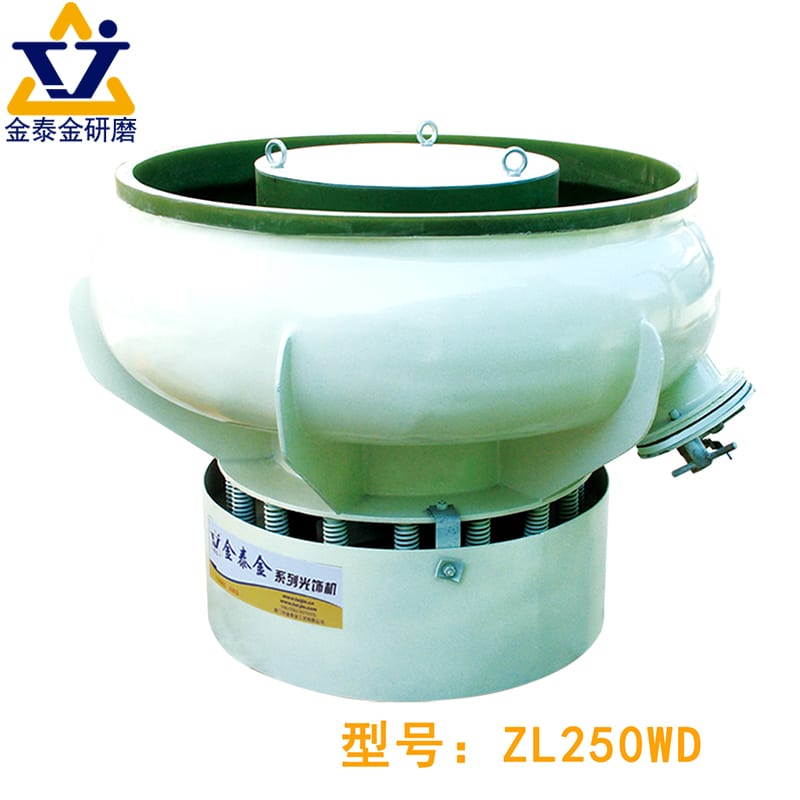
Check four and five: spare-parts specifics and asking what they do NOT do
First, ask which parts on that model are wear items and change time; a builder lists the liner, drain plugs, screen, and bearings, while a trader just says spare parts are ready. Second, ask what processes they do not do. "We can do everything" carries zero information, whereas "here is what we do not do, and why" proves process knowledge and boundaries. You can also verify conformity records — our system is under ISO 00726Q01571R001 (valid to June 2029) on certifications.
| Check | True Factory | Assembly Shop | Private-Label | Trading Company |
|---|---|---|---|---|
| WIP shop photos | Weldments, jigs, molds | Assembly bays only | Warehouse only | Shared stock photos |
| Cross-hole answer | Sizing, racking, limits | Partial tips | Brochure claims | "Handles everything" |
| Config differences | Structural/liner details | Bolt-on swaps | Cannot explain | Says "customizable" |
| Spare parts list | Wear list & steps | Bolt-on parts | Relays to plant | "All spares ready" |
| What they do NOT do | Clear boundaries | Partial limits | Rarely admits | Claims everything |
The Question That Settles It Fastest
If you only use one screening filter when evaluating a vibratory finishing equipment supplier, focus on Check Five: asking where their boundary sits.
Note: This diagram is explained in the text and table above rather than shown as a separate figure.
Focusing on what a supplier refuses to build or process
Buyers spend most of their time asking vendors what they can do, which helps resellers copying capability lists. Asking what a company does not build or process cuts through sales scripts immediately. A supplier who runs commissioning and after-sales support daily knows where mass finishing hits a physical wall.
Why admitting boundaries proves engineering depth
Saying "we can finish any part" takes zero technical skill, whereas explaining "we do not recommend tumbling here, and why" requires real shop-floor experience. Only an engineer who runs trials daily knows when a recessed burr is shielded from media or when thin stampings nest flat. A supplier willing to say "this part does not fit our route" is far more reliable than one who agrees to everything.
Three exact questions to ask on your first call
Use these three specific questions in sequence on your first supplier call.
- Question one: What batch volume and part category do you build machines for most often?
- Question two: Which types of parts or burrs do you advise customers NOT to put into a mass finishing machine?
- Question three: If my part is a poor fit for your equipment, who would you tell me to look for instead?
The second and third questions reveal a supplier's competence and honesty faster than brochures.
The reverse test: how to read an "everything is possible" reply
What if a vendor answers all three questions by insisting they handle every batch size, burr, and tolerance? When a supplier answers all three boundary questions with "we can do it all," that does not mean they are strong — it means they did not answer your question. You do not have to reject them for standard units, but lower your expectations of their ability to modify the machine later.
How to Compare Quotations Properly
Once you shortlist vendors and search for the best way to compare mass finishing machines, three quotes will arrive with very different prices.
Note: This diagram is explained in the text and table above rather than shown as a separate figure.
Compare the configuration list before you look at the price
Never start a quote review with the total price. The exact same line item — "one vibratory finishing machine" — can mean a bare bowl at one vendor and a complete cell with separator, control cabinet, starter media, compound, and dryer at another. See how to compare mass finishing quotations for CNC metal parts and our barrel polishing machines buyer guide.
Compare the included services and delivery commitments
Next, check whether you can witness a run before shipment, and whether commissioning guides, training, warranty terms, and a spare parts package are included. Also check whether delivery times match real production — our standard machines ship in twenty-five to thirty-five days and custom builds in forty-five to sixty days. A vendor promising instant shipment on a "custom" machine is just pulling stock from a warehouse.
Understand what a price gap actually means
Only compare prices after the hardware and service scopes match. In mass finishing equipment, a price gap rarely reflects "expensive versus cheap" — it reflects "included versus omitted". A cheaper quote often leaves out the separation deck, sound cover, dosing pump, starter load from deburring media suppliers, and dryer.
The practical method: build a row-by-row alignment sheet
When evaluating the best mass finishing machines high-mix low-volume for your floor, open a spreadsheet before signing any order. Put the three quotations into a single table and align them row by row, checking what is included before price. Once aligned, you will see the three quotes were never describing the same machine; see choosing a surface technology process on cost per part.
| Line Item | Why Compare First | Common Differences |
|---|---|---|
| Separation Unit | Enables continuous unloading | Included on cells; optional on bare bowls |
| Control Cabinet | Controls timers, speed, dosing | Basic switch versus VFD/PLC cabinet |
| Initial Media | Needed to run on day one | Omitted to lower headline price |
| Initial Compound | Needed for cutting and rust control | Left out of bare machine quotes |
| Parts Dryer | Prevents water spots and rust | Omitted on single-bowl quotes |
| Training & Setup | Ensures operators run recipes | Bundled by builders; extra at traders |
| Warranty & Spares | Controls ten-year upkeep cost | Builders include kits; traders omit |
The Sample Test, Done Right
Buyers searching for suppliers mass finishing machines demo with parts know trials matter, yet poorly structured trials often mislead buyers.
Note: This diagram is explained in the text and table above rather than shown as a separate figure.
The real purpose of a sample test
Many buyers treat a trial as an audition for the vendor. A sample test is not about letting the supplier prove they can polish metal — it is about letting you verify that they can hit your exact part requirements. A proper sample test proves the machine recipe hits your specification repeatably; see our buyer checklist for preparing a surface finishing sample test.
Three mandatory rules for a valid trial
Enforce three strict rules before shipping test parts to any vendor.
- Use your own parts: Never evaluate a machine using the supplier's showroom sample coupons.
- State the exact target: Specify whether you need burr removal, edge radiusing, or a specific surface finish.
- Record the process parameters: Require a written sheet logging machine model, media, compound, water rate, and drying — otherwise even a successful trial cannot be replicated on your floor.
Always keep an untreated control part from the exact same batch
Before shipping raw parts for testing, keep several untreated parts from that exact same batch at your facility. You must keep untreated control parts from the same lot so you can compare the tested parts against the original state. Without an untreated control part in hand, you can only see the finished look, not what changed or whether edges deformed.
Why a failed sample test is still a win for the buyer
Buyers often feel disappointed when a sample test fails to clear a recessed burr. A failed sample test is still valuable because it tells you this route does not fit your part before you buy the machine. Moreover, a supplier who honestly reports that a trial failed is far worthier of your trust than one who claims they can do everything.
What We Build, and the One Thing We Do Not
At Xiamen Jin Tai Jin Grinding Technology Co.,Ltd., founded in 1992 in Xiamen with 21 machine platforms and 24 IP rights, we apply this exact boundary rule to ourselves. Whether buyers search for an isotropic surface finishing company, isotropic finishing company, isotropic polishing company, isotropic metal finishing company, or iso finishing company, we state clearly what we build. Even when someone types a quick workshop query like how to deber in metal factory, we start by clarifying our role.
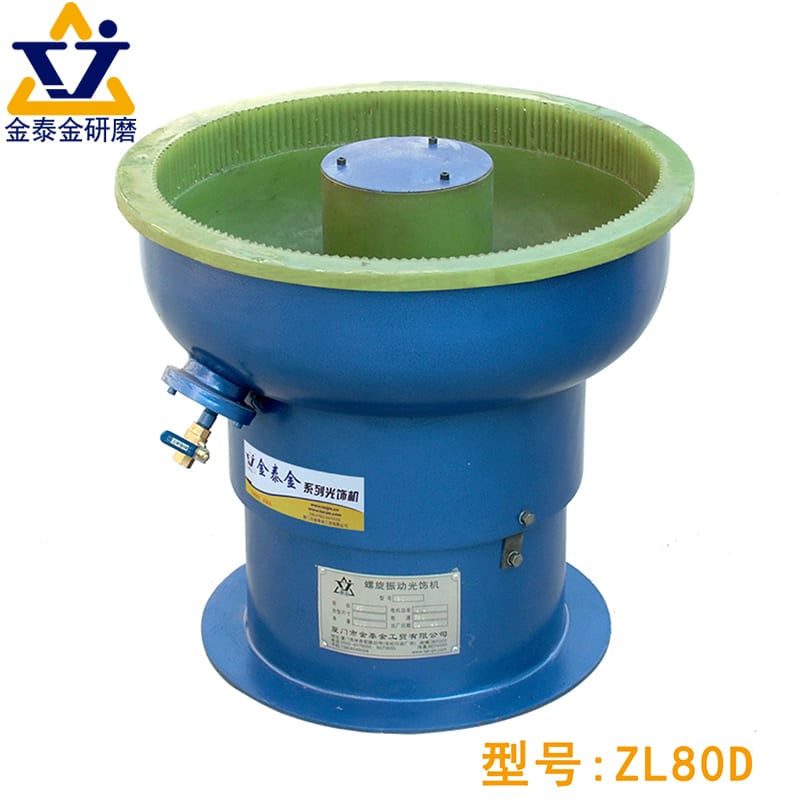
What we manufacture across our six product lines
We manufacture complete mass finishing equipment systems and consumables in our own plant. Across six product lines, we build rotary barrels, vibratory bowls and tubs, centrifugal disc and barrel machines, magnetic polishers, dry tumblers, separators, and dryers, plus ceramic, plastic, steel, and organic media and compounds. When parts need tailored hardware, our engineers configure it through our custom polishing solution workflow.
Why we never take contract finishing or job-shop work
Here is our core commercial boundary: we do not do contract finishing for customers' parts — we build the machines that contract finishing shops use. Contract finishing is one business, and manufacturing finishing machines is a completely different business. Running a contract shop would distract our engineers from building equipment, compete with our own customers, and confuse buyers about what we are.
Clearing up the "contract surface finishing company" search intent
People searching for a contract surface finishing company or mass finishing company often want an outside shop to tumble batches for a fee. If you are looking for an outside shop to process your parts, we are not it — but if you want to become that shop or bring finishing in-house, we are. See our guide on job shop finishing versus buying your own equipment.
Our complete boundary list of processes we do not supply
Just as we tell buyers to ask vendors what they do not do, here is our boundary list (also in what we do and what we don't in metal finishing).
- No contract finishing, toll tumbling, or subcontract part processing.
- No electroplating, anodizing, passivation, powder coating, or PVD coating.
- No sandblasting, shot-blasting, heat treatment, hand tools, electropolishing, or CNC machining.
To discuss equipment for your floor, reach our engineers via contact us.
Frequently Asked Questions
How do I tell a real manufacturer from a trading company?
Run the five checks in Table One above from your desk. Ask for shop photos showing work-in-progress weldments and jigs, ask how they handle cross-hole media lodging, compare two configurations of one model, request a wear-parts list, and ask what they do not do. A true factory gives specific boundaries, whereas a trader gives stock photos and vague promises.
Does it matter whether the supplier actually builds the machine?
Yes, because a mass finishing machine runs for ten years. Over ten years, your parts, volumes, and target finishes will change, and someone must answer whether the machine can be modified. When problems arise, you need the person who can modify the design, not someone who only relays messages; traders work fine only for unchanging standard units.
What should I ask before I approve a quotation?
Compare the configuration list and service scope before comparing prices, using Table Two above. Check whether the quote includes the separator, control cabinet, starter media, compound, dryer, commissioning, training, warranty, and spare parts. Aligning three quotes row by row shows that price gaps usually reflect missing items rather than a real discount.
Is a sample test worth the time?
Yes, because a sample test lets you verify that the process meets your requirements rather than just letting the vendor show off. Always use your own parts, state the target clearly, record all process parameters, and keep untreated control parts from the same batch for comparison. Even a failed trial helps you by ruling out a bad route early.
Do you do contract finishing for customers?
No, we do not take contract finishing or toll processing orders. We do not run a subcontract shop — we build the machines, media, and compounds that contract finishing shops use. If you need a vendor to finish batches for a fee, look for a local job shop; if you need equipment for your floor, talk to us.
What if the supplier says they can handle every part?
Treat "we can handle everything" as a zero-information reply rather than proof of capability. Every finishing method has physical limits, and a real builder will tell you where those limits sit. When a supplier claims zero boundaries, lower your expectations regarding their ability to engineer or modify your machine later.
 +86-592-2381506


 IPv6 network supported
