
Vibratory Tumbler: What the Name Covers, and What It Does Not
"Vibratory tumbler" is a term with two distinct lives. In a hobby workshop it describes a small benchtop container filled with mineral stones and grit running over weekends. On an industrial factory floor it means a heavy machine platform that deburrs stamped brackets, cleans weldments, and discharges parts for automated assembly. The name is identical across both environments, and the underlying contact physics remains consistent. What changes completely is what the equipment must deliver and the commercial promises it must maintain.
Note: This diagram is explained in the text and table above rather than shown as a separate figure.
This guide clarifies who searches this term, what each profile requires, and what production machinery must deliver.
If researching mass finishing processes, start with our core guide on vibratory finishing. If evaluating process selection between rotary barrels and vibration, consult our comparison on vibratory finishing vs barrel tumbling. If planning plant layouts, read our guide on how to select the right vibratory finishing machine for mass production. If comparing machine geometries, review how to choose a vibratory finishing machine for metal parts. For media selection, see our vibratory tumbler media selection guide and tumbling media selection guide. For naming history, read media tumbler naming conventions.
| Searcher Profile | Typical Part | Core Operational Goal | Essential Equipment Requirement |
|---|---|---|---|
| Rock Hobbyist | Rough agates, mineral stones | Slow corner rounding and optical shine | Low purchase cost and continuous multi-day run time |
| Studio Jeweler | Cast rings, precious filigree | Gentle sprue smoothing and burnishing | Gentle action, fine media retention, zero metal loss |
| Industrial Fabricator | Stamped brackets, machined fittings | Edge deburring, radiusing, and descaling | Batch uniformity, rapid cycles, parts separation |
| Production Engineer | High-volume automotive stampings | Automated manufacturing cell integration | Verifiable repeatability, wear linings, conveyor discharge |
Four Kinds of People Search This Word
Four Searchers Looking for Very Different Machines
The phrase "vibratory tumbler" brings four distinct buyer profiles to the same page. Mineral hobbyists seek to round rough agates over continuous multi-day runs. Studio jewelers must smooth delicate castings without rounding fine mounting prongs. Production machine shops require batch deburring for stamped brackets and machined fittings. Finally, process engineers specify automated capital machinery for continuous manufacturing lines.
Why Giving the Wrong Answer Destroys Credibility
These four audiences cannot share the same recommendation. Presenting a light benchtop bowl to a plant manager processing stampings shows ignorance of industrial requirements. Recommending a heavy steel tub with automated compound dosing to an amateur provides overbuilt hardware. Each category functions under completely different mechanical demands, throughput expectations, and operating budgets.
An Honest Boundary Regarding Consumer Search Volume
A substantial share of global search volume for vibratory tumblers originates from hobby collectors. We state this reality candidly rather than pretending every query represents an industrial manufacturing plant. We do not manufacture consumer rock tumblers, nor do we build machines for garage hobbyists. Pursuing consumer search traffic with heavy industrial equipment misleads buyers and wastes engineering resources.
Where Our Responsibility Begins and Ends
Our engineering focus belongs strictly to commercial metal fabricators and high-volume production facilities. If rounding mineral stones, established hobby retailers provide containers suited for slow domestic operation. If your plant manufactures precision stampings requiring uniform edge radii, this guide outlines the boundaries you need. People searching "vibratory tumbler" fall into four distinct groups, and they require completely different answers.
It Does Not Tumble — It Vibrates, and That Changes Three Things
The Nomenclature Paradox in Metal Finishing
The word "tumbler" is historical shorthand inherited from early rotary barrels. In an older barrel, the vessel rotates around a central axis, lifting workpieces and dropping them. A vibratory tumbler does not tumble workpieces. The vessel remains stationary on suspension springs while an eccentric motor induces continuous micro-friction between media and metal surfaces.
First Consequence: Zero Impact Shock on Delicate Parts
Because the container does not rotate, workpieces never reach an apex where gravity drops them onto other parts. Instead of collisions, parts experience steady scrubbing contact against fluidized abrasive stones. This fundamental difference allows fabricators to process thin-walled stampings, fragile clips, and sheet brackets without denting flat surfaces or peening sharp edges.
Second Consequence: Media Migrates Into Internal Geometry
In a rotary barrel, abrasive stones remain gathered in the lower quadrant of the drum, sliding primarily across exterior perimeters. In a vibratory vessel, mechanical excitation fluidizes the entire media bed simultaneously. Abrasive stones flow actively into blind holes, internal slots, and recessed pockets that rotating drums bridge across entirely.
Third Consequence: Predictable and Continuous Cycle Timing
A tumbling barrel relies on cascading cycles where abrasive action occurs only during the slide phase. Vibratory processing maintains continuous scrubbing pressure against all submerged surfaces throughout the cycle. Because surface interaction is steady, finish progression follows predictable timelines that production managers can calculate and schedule reliably.
Note: This diagram is explained in the text and table above rather than shown as a separate figure.
Vibratory vs Rotary: Four Physical Differences
Friction Versus Impact as the Primary Mechanism
Energy transfers into the workpiece through entirely different physical modes across these two machine families. Rotary barrels lift the entire mass until gravity forces an abrasive avalanche down the drum incline. Vibratory machines transfer motor excitation directly into the media mass through the vessel walls, generating continuous planar friction. The result is consistent edge deburring without heavy impingement marks across machined faces.
Accessing Internal Cavities and Shielded Surfaces
A rotating drum cannot drive abrasive particles into deep recesses or interior bores. As the drum revolves, media stones bridge over small openings, deburring exterior perimeters while leaving interior burrs untouched. A vibratory vessel causes media particles to oscillate independently, allowing stones to penetrate bore diameters and scrub internal cross-holes effectively.
Batch Containment Versus Inline Process Automation
Rotary barrels operate as closed containment cylinders that must be stopped, unlatched, and tipped to dump contents. This configuration restricts traditional tumbling barrels to isolated batch processing. Vibratory bowls utilize an open annular channel with internal separation dams. Parts travel up an internal spiral ramp onto a screening deck, discharging finished workpieces directly onto assembly conveyors.
The True Physical Meaning of Load Volume
In a tumbling barrel, changing fill volume alters drop height and collision energy. An underfilled drum causes severe impingement because workpieces drop across excessive distances. In a vibratory vessel, fill volume regulates hydrostatic scrub pressure within the media bed. Higher media loads increase contact pressure uniformly, while lower levels reduce cutting speed without causing destructive part impact.
| Mechanical Feature | Rotary Tumbling Barrel | Vibratory Finishing Vessel |
|---|---|---|
| Dominant Surface Action | Cascading impact combined with sliding friction | High-frequency sliding scrub with minimal impact |
| Vulnerability on Thin-Wall Parts | High risk of bending, denting, and corner peening | Low risk; parts remain cushioned in fluidized bed |
| Internal Cavity Penetration | Poor; media bridges over openings during rotation | Excellent; continuous vibration pumps media into bores |
| Process Continuity | Strictly discrete batch processing with manual dumping | Adaptable for automated batch or continuous inline discharge |
| Effect of Changing Fill Volume | Changes drop distance and impact energy severely | Alters scrubbing contact pressure smoothly and safely |
Note: This diagram is explained in the text and table above rather than shown as a separate figure.
Bowl or Tub? The First Fork Is Discharge, Not Size
Round Bowl Geometry: Engineered for Continuous Discharge
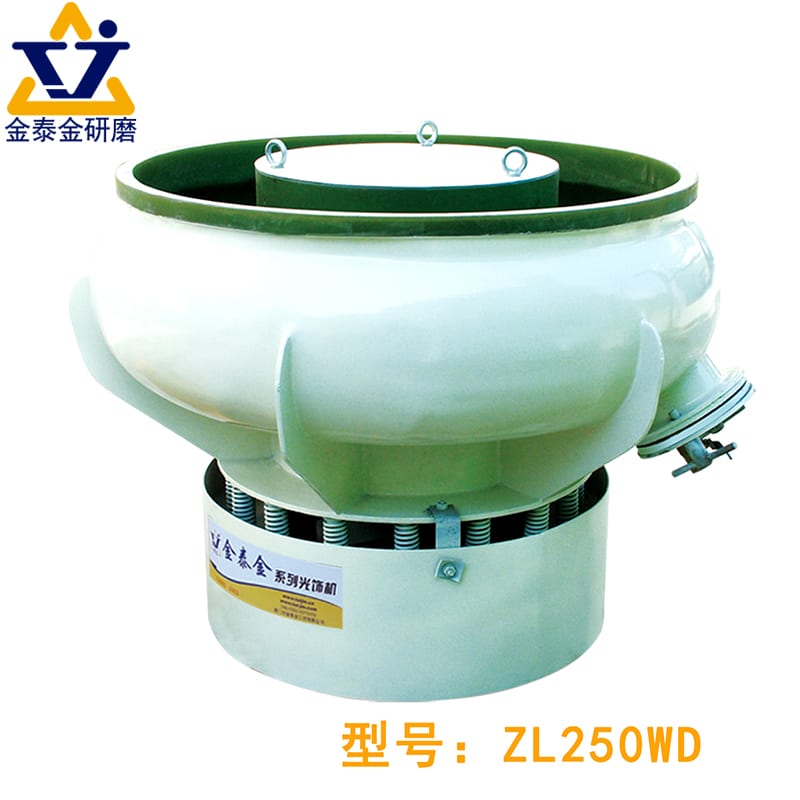
A round vibratory bowl features an annular processing channel wrapped around a central drive column. As the motor runs, media and workpieces advance along a helical corkscrew path around the ring. This circular movement makes the bowl ideal for continuous inline discharge. An internal pneumatic dam directs the mass onto a polyurethane separation screen, returning media to the bowl while discharging parts automatically.
Linear Tub Geometry: Built for Long Parts and Structural Shapes
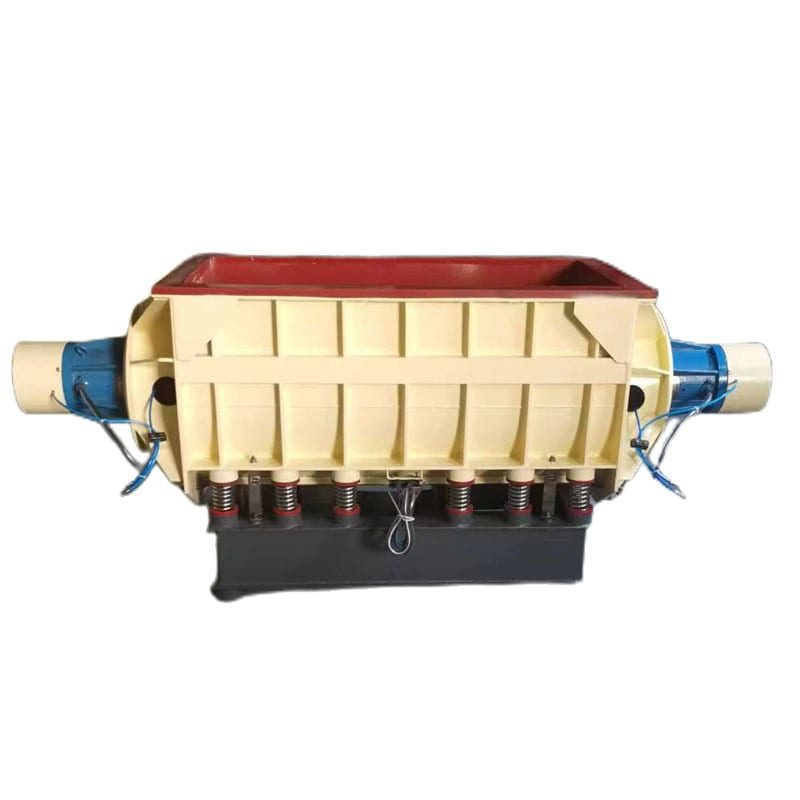
A linear tub vibrator utilizes an open rectangular trough mounted on heavy compression springs. The motor oscillates the trough to generate rolling scrubbing action along the chamber. This geometry accommodates long shafts, structural extrusions, and heavy pump housings that cannot turn inside a curved bowl. Discharge requires tilting the tub, lifting parts manually, or installing overhead hoists.
The Real Decision: Part Geometry and Workflow, Not Volume
Many engineers assume tub vibrators are simply larger versions of round bowls. The primary distinction between the two styles is discharge mechanism and workpiece length rather than batch capacity. If your production line demands automated continuous parts discharge, a round bowl is mandatory. If workpieces exceed the channel width of a bowl, a linear trough is the correct mechanical solution.
Common Layout Mistakes That Stall Production Lines
Selecting the wrong vessel geometry causes persistent bottlenecks on shop floors. Forcing long tubular parts into a round bowl causes components to bridge across the annular channel, jamming the mass. Deploying a linear tub for high-volume stampings requires operators to stop the process and empty troughs manually. Matching machine geometry to part envelope and material handling prevents costly delays.
What the Machine Actually Decides
The Mechanical Role: Movement, Access, and Separation
Plant operators often ask whether upgrading to a newer vibratory tumbler yields a brighter gloss finish. The machine itself does not determine surface brightness or edge cut rate. The platform performs three mechanical tasks: fluidizing the media bed, circulating abrasive stones into recesses, and separating finished components from media. Delivering consistent motion and clean separation fulfills its engineering role.
What Abrasive Media and Chemical Compounds Actually Control
The chemical compound and abrasive media stones dictate the final surface condition of your workpieces. Ceramic media cuts down heavy burrs, plastic media prepares soft metals for painting, and porcelain spheres produce burnished reflectivity. Liquid compounds clean off machining oils, keep media pores unclogged, and prevent rust during processing. The machine provides the mechanical motion; consumables generate the surface finish.
The Costly Habit of Blaming the Consumables First
When a batch displays burrs or inconsistent texture, operators frequently change abrasive media shapes or switch liquid chemistry. However, if the machine fails to generate sufficient rotational roll, fresh media cannot access shielded recesses. Swapping consumables without verifying machine motion wastes material budgets. Supervisors must confirm that the machine fluidizes the charge before adjusting chemical or abrasive formulas.
A Practical Workshop Rule for Root Cause Diagnosis
A dependable rule separates machine movement failures from consumable errors. If defects appear only at specific recessed corners, blind holes, or shielded flanges, the problem stems from machine motion or media size selection. If defects appear uniformly across all exposed faces, the issue lies in compound concentration, water flow, or media grade. Diagnosing physical location first prevents unnecessary consumable trials.
Note: This diagram is explained in the text and table above rather than shown as a separate figure.
What Hobby Machines and Production Machines Differ On
Deliverability and Repeatability: The Industrial Divide
The true difference between a benchtop hobby tumbler and a production vibratory machine has nothing to do with external dimensions. The dividing line is deliverability under commercial manufacturing standards. A hobbyist evaluates success by checking whether an individual stone looks polished after running for several days. An industrial manufacturer must verify that thousands of stamped components meet strict blueprint dimensions every shift.
Four Mechanical Contrasts That Define Production Hardware
Four physical features separate industrial vibratory machines from consumer hobby units. First, production machines feature internal screening decks for automated separation rather than manual colanders. Second, industrial systems utilize classified media grading rather than single bulk gravel. Third, factory units incorporate automated compound dosing and continuous drainage rather than static soapy water. Fourth, production equipment delivers verifiable repeatability across continuous schedules.
The Essential Question That Garage Units Never Face
An industrial finishing machine must answer one decisive question: does batch one hundred match batch one identically? A benchtop garage tumbler never faces this question because hobbyists tolerate wide variations in processing duration and final texture. In production facilities supplying automotive or medical supply chains, dimensional drift causes severe assembly line rejections. Commercial hardware is built specifically to maintain repeatability.
Identifying Which Category Fits Your Application
Selecting between hobby units and industrial equipment requires inspecting daily delivery obligations. If your workshop finishes dozens of metal components daily that must pass quality inspection, an industrial machine is necessary. If your requirement involves polishing mineral specimens or craft items occasionally at home, a consumer benchtop tumbler is sufficient. Purchasing heavy capital machinery for casual home use represents an impractical investment.
The Four Questions That Pick the Machine
Question 1: Can Your Parts Tumble Freely in Bulk?
The first decision evaluates part contact tolerance during mass vibration. If workpieces are sturdy stampings, forged brackets, or small fittings that tolerate mutual contact, standard bulk vibratory processing is appropriate. If components are delicate or feature machined sealing threads that nick upon impact, free-floating finishing causes part damage. Sensitive workpieces require specialized fixture machines, dividers, or centrifugal disc units.
Question 2: Does the Workpiece Contain Internal Cavities?
The second question examines part geometry for blind holes, cross-bores, and narrow slots. If components feature internal channels requiring burr removal, a vibratory tumbler is mandatory because its fluidized bed drives media through openings. If workpieces are simple solid blocks without interior features, both rotary barrels and vibratory bowls remain mechanically viable options.
Question 3: Do You Require Continuous Discharge or Batch Operation?
The third question reviews how finished parts transition into downstream manufacturing stages. If your plant demands automated continuous discharge onto washing conveyors, choose a round vibratory bowl equipped with an internal separation dam. If your manufacturing workflow operates in scheduled batch lots with manual inspection between stages, a linear tub vibrator or batch bowl fits your facility layout.
Question 4: Is Part Geometry Vulnerable to Impact Peening?
The final question examines workpiece cross-sections and impact sensitivity. Fragile sheet stampings, thin precision shims, and soft copper brackets bend when exposed to cascading rotary drops. For these vulnerable shapes, a vibratory vessel cushions workpieces within fluidized media, eliminating structural deformation. If parts are heavy iron castings needing rough scale removal, rotary tumbling or blast methods provide durable alternatives.
| Decision Stage | Primary Question | If YES | If NO |
|---|---|---|---|
| Step 1: Part Contact | Can parts tumble freely in bulk without contact damage? | Proceed to standard mass finishing | Use dedicated part fixtures or compartment dividers |
| Step 2: Internal Features | Does the part have internal bores or cross-holes? | Vibratory system mandatory; verify media sizing | Rotary tumbling or vibratory both mechanically viable |
| Step 3: Material Handling | Does downstream assembly require continuous part exit? | Select round bowl with internal separation dam | Select batch tub or manually unloaded bowl |
| Step 4: Cross Section | Are workpieces thin-walled, delicate, or easily bent? | Vibratory finishing required to prevent impact damage | High-energy tumbling or blast methods remain options |
What We Do, and What the Hobby Side Needs From Somewhere Else
Our Equipment Portfolio and Manufacturing Scope
Xiamen Jin Tai Jin Grinding Technology Co.,Ltd. has specialized in surface finishing machinery since our founding in 1992. Operating under ISO 00726Q01571R001 (valid through June 2029) and CE conformity (valid through July 2028), we build twenty-one standardized machine platforms across six categories, supported by twenty-four Chinese authorized IP rights. Our core equipment includes industrial vibratory finishing machines for automated deburring, heavy tub vibrators for long parts, traditional barrel finishing machines for heavy descaling, and high-energy centrifugal barrel finishing machines for precision edge radiusing. Across all six finishing machinery platforms, we supply matched ceramic media, plastic stones, and compound formulations engineered for production lines.
Note: This diagram is explained in the text and table above rather than shown as a separate figure.
What We Do Not Build: Consumer Hobby and Lapidary Equipment
We explicitly do not manufacture consumer hobby tumblers, benchtop rock polishers, or entry-level lapidary containers. If rounding mineral agates or polishing stones at home, you do not require our machinery. Those units belong to consumer craft retail channels, and we do not pursue that consumer search traffic. Industrial mass finishing platforms are built with heavy structural steel, hot-poured polyurethane linings, and industrial three-phase motors engineered for continuous factory operation.
The Boundary for Small-Batch Jewelry and Medical Fabricators
We recognize that precision jewelers, medical prototype shops, and dental laboratories finish delicate workpieces in compact batches. For commercial operations running precision batches under tight surface roughness requirements, compact vibratory bowls and centrifugal disc units deliver exceptional control without part impingement. If your weekly production involves only a few rings or personal craft pieces, consumer benchtop tumblers represent the more economical investment.
Clear Operational Limits Across Our Systems
Our company does not manufacture handheld pneumatic grinders, manual die tools, or wide-belt sanders. Furthermore, we do not operate a commercial contract job shop or offer outsourced part finishing services. Every machine we engineer requires components to be processed in bulk or fixtured within an engineered chamber alongside suitable media and liquid compounds. We build the production machinery that powers your manufacturing line; daily operations remain under your workshop control.
Frequently Asked Questions About Vibratory Tumblers
What is a vibratory tumbler used for in commercial manufacturing?
In industrial facilities, a vibratory tumbler performs mass finishing operations on metal, plastic, and ceramic parts. Primary tasks include removing sharp machining burrs, radiusing stamped sheet metal edges, descaling forgings, cleaning weldments, and preparing surfaces for electroplating. Unlike manual deburring, a vibratory machine finishes hundreds of workpieces simultaneously with complete geometric uniformity.
Is a vibratory tumbler better than a traditional rotary tumbling barrel?
Neither machine is universally superior because they operate on fundamentally different mechanical principles. A vibratory tumbler uses high-frequency scrubbing with minimal drop impact, making it ideal for delicate stampings, thin brackets, and parts with intricate internal cavities. A rotary barrel relies on cascading drop energy, which cuts aggressively on heavy steel castings but damages fragile parts. The correct choice depends on part geometry and impact sensitivity.
Can a vibratory tumbler deburr parts with internal holes and recesses?
Yes, deburring internal features is an operational strength of vibratory finishing. Because the vibration motor fluidizes the entire media bed, abrasive shapes flow continuously through holes, slots, and interior passages. To achieve effective deburring, select an abrasive shape that passes freely through openings without bridging or wedging tightly inside cavities.
How do I choose between a round bowl and a linear tub vibrator?
The decision between a bowl and a tub depends on part geometry and material handling requirements rather than batch volume. A round bowl features a circular spiral channel that accommodates an internal separation dam and screen, making it ideal for continuous automated production. A linear tub provides an open rectangular trough suited for long shafts, extruded bars, and bulky weldments that cannot turn inside a curved channel.
Do you sell small benchtop vibratory tumblers for rock polishing or hobby crafts?
No, Xiamen Jin Tai Jin Grinding Technology Co.,Ltd. does not manufacture consumer-grade rock tumblers or hobbyist lapidary equipment. Our machines are heavy industrial platforms engineered with welded steel frames, thick cast polyurethane linings, and three-phase motors built for factory production lines. Hobbyists seeking small rock or brass cleaning units should consult dedicated lapidary craft suppliers.
What is the most critical difference between a hobby tumbler and a factory machine?
The defining difference is process deliverability and mechanical repeatability over time. A consumer hobby tumbler processes individual items where slight batch variations do not matter. An industrial production machine must guarantee that batch one hundred matches batch one identically, ensuring every workpiece satisfies strict dimensional tolerances. Industrial machines achieve this through durable polyurethane linings, metered compound rinsing, and automated media separation systems.
 +86-592-2381506


 IPv6 network supported
