

Aluminum Finishes: Three Layers Most Buyers Treat as One
Aluminum finishes get discussed as one flat list — matte, satin, brushed, anodized, and powder-coated — as if all of those were variations of the same operation. They are not. They are three different layers, and the layer decides who does the work, whether the surface can be repaired, and what it costs to keep.
How this map fits with our process guides: This page maps all finishes for aluminum across three layers. For a cross-metal overview, see metal finishes. For mechanical processing, see tumble polishing aluminum with staged cut and media grading, mass finishing aluminum parts to deburr, smooth, and brighten without smearing, and compounds for aluminum and what the chemistry has to do.
Three Layers, Not One List
When buyers ask how to finish aluminum, every callout belongs to one of three layers: the mechanical layer (geometry), the chemical layer (oxide conversion), or the coating layer (applied film).
Note: This diagram is explained in the text and table above rather than shown as a separate figure.
The mechanical layer — geometry
In the mechanical layer, tumbling media, belts, or burnishing tools cut, level, or compress the peaks and valleys of raw aluminum. Because the part remains bare metal throughout, it can be mechanically re-blended if scratched.
The chemical layer — a converted surface
In the chemical layer, tank baths react with the aluminum surface to grow a new compound — usually an anodic aluminum oxide film. Nothing is painted on top; the outer metal transforms into a hard, non-conductive oxide crystal layer.
The coating layer — an added surface
In the coating layer, aluminum acts as a substrate under an applied blanket of polymer resin or vapor-deposited metal. When buyers specify coated aluminum or coated aluminium, the visible colour and texture belong to the added film.
Why the layer decides who you call
Only the first layer reshapes bare metal; the second and third layers create skins that cannot be spot-patched once ground through. That governs three realities:
- Who you call: Mechanical work goes to a tumbling or sanding bay, chemical work to an anodizer, and coatings to a paint or PVD line.
- Repairability: Mechanical scratches re-blend; anodized scratches require full stripping and re-anodizing; damaged coatings require recoating.
- Cost structure: Mechanical tumbling scales with batch throughput, while anodizing and coating lines carry high fixed bath and environmental overhead.
| Layer | What Changes | Common States | Who Does It | Can It Be Repaired? | We Build It? |
|---|---|---|---|---|---|
| Mechanical (Raw) | Forming or cutter geometry | Mill finish, as-machined | Mill or CNC shop | Yes — tumble or sand | Yes |
| Mechanical (Isotropic) | Non-directional smoothing | Matte aluminum finish, satin, burnished aluminum | Mass finishing bay | Yes — re-tumble | Yes |
| Mechanical (Linear) | Directional belt grain | Brushed, linished | Belt-sanding line | Yes — grain blend | No |
| Chemical (Anodize) | Surface converted to oxide | Clear, dyed, hard anodize | Anodizing plant | No patch — strip whole part | No |
| Chemical (Etch / Dip) | Bath-dissolved peaks | Caustic etch, bright dip | Chemical tank line | No patch — re-dip whole part | No |
| Coating (Added Film) | Polymer or PVD film | Powdercoating aluminum, paint, PVD | Coating shop | Recoat only | No |
Out of these three layers, we build equipment only for the first layer. We map all three so you know who to call, and detail the mechanical layer where we help.
The Mechanical Layer: Five States, and Where Each Comes From
Because every aluminum part begins in the mechanical layer — even before anodizing or painting — understanding the five mechanical states prevents costly specification errors between buyers and suppliers.
Mill finish is a starting point, not a finish
When a print specifies a mill aluminum finish, buyers sometimes think the mill applied a protective finish. In reality, mill finish is a starting point, not a finished surface treatment. Writing "mill finish" on a purchase order means leaving the raw aluminum untouched as it left the rolling mill or extrusion die.
Mill-finish stock arrives from two primary upstream origins that look very different in the bin:
- Rolled sheet and plate: Carries parallel rolling grain, mill oil, and occasional reflection bands.
- Extruded profiles and bar: Carries longitudinal extrusion die lines, uneven air oxide, and handling scuffs.
Note: This diagram is explained in the text and table above rather than shown as a separate figure.
Because mill-finish aluminum is bare, uneven metal, leaving it untreated on visible hardware exposes die lines, oxide streaks, and fingerprints.
As-machined — a different direction, same idea
An as-machined state is the CNC counterpart to mill finish, carrying milling scallops or turning spirals whose direction follows the cutter path rather than visual appearance.
Matte and satin — one word, a range
Ask three different shops for a matt aluminum finish, a matte aluminum finish, or an aluminium matte finish, and you will often get three different textures. Here is the shop-floor truth that prevents rejected lots: "matte" and "satin" are not single fixed points — they span a continuous range, and many suppliers use the two words interchangeably.
Strictly speaking, matte sits on the slightly coarser, lower-glare end of the non-directional spectrum. Ceramic or coarse plastic media carves tiny isotropic dimples that scatter light evenly, producing a flat, chalky grey appearance (also used to create a muted, aged aluminum finish on architectural hardware). Satin sits on the smoother, finer end: low-density plastic media levels those dimples into a soft, velvety sheen.
Compressing peaks with smooth media and soap — known as burnishing aluminum or burnishing aluminium — creates a bright burnished aluminum or burnished aluminium shine. Because shops blur matte, satin, and burnished, always specify with a physical sample rather than words alone (see brushed vs satin vs mirror finish).
Brushed — the only one with a direction
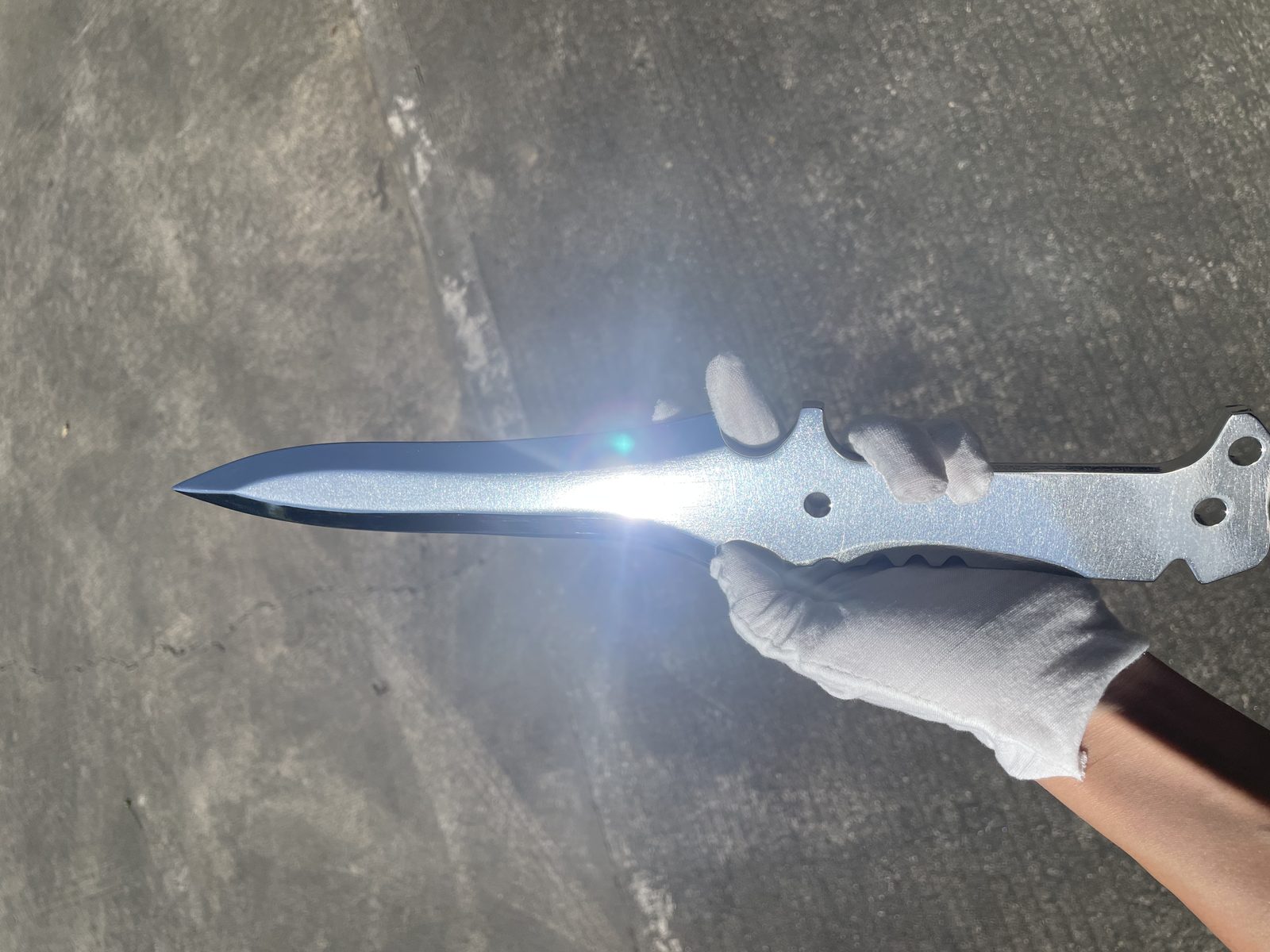
Unlike tumbled matte or satin textures, which are non-directional, a brushed finish consists of parallel linear scratches cut by abrasive belts, wheels, or brushes.
Because every line runs along one axis, any cross-grain scratch stands out immediately. Repairing a brushed aluminum panel requires re-stroking strictly parallel to the original grain and feathering the surrounding area; dropping a brushed part into a vibratory tumbler erases the linear grain completely.
Where bright dip sits (a chemical process in a mechanical costume)
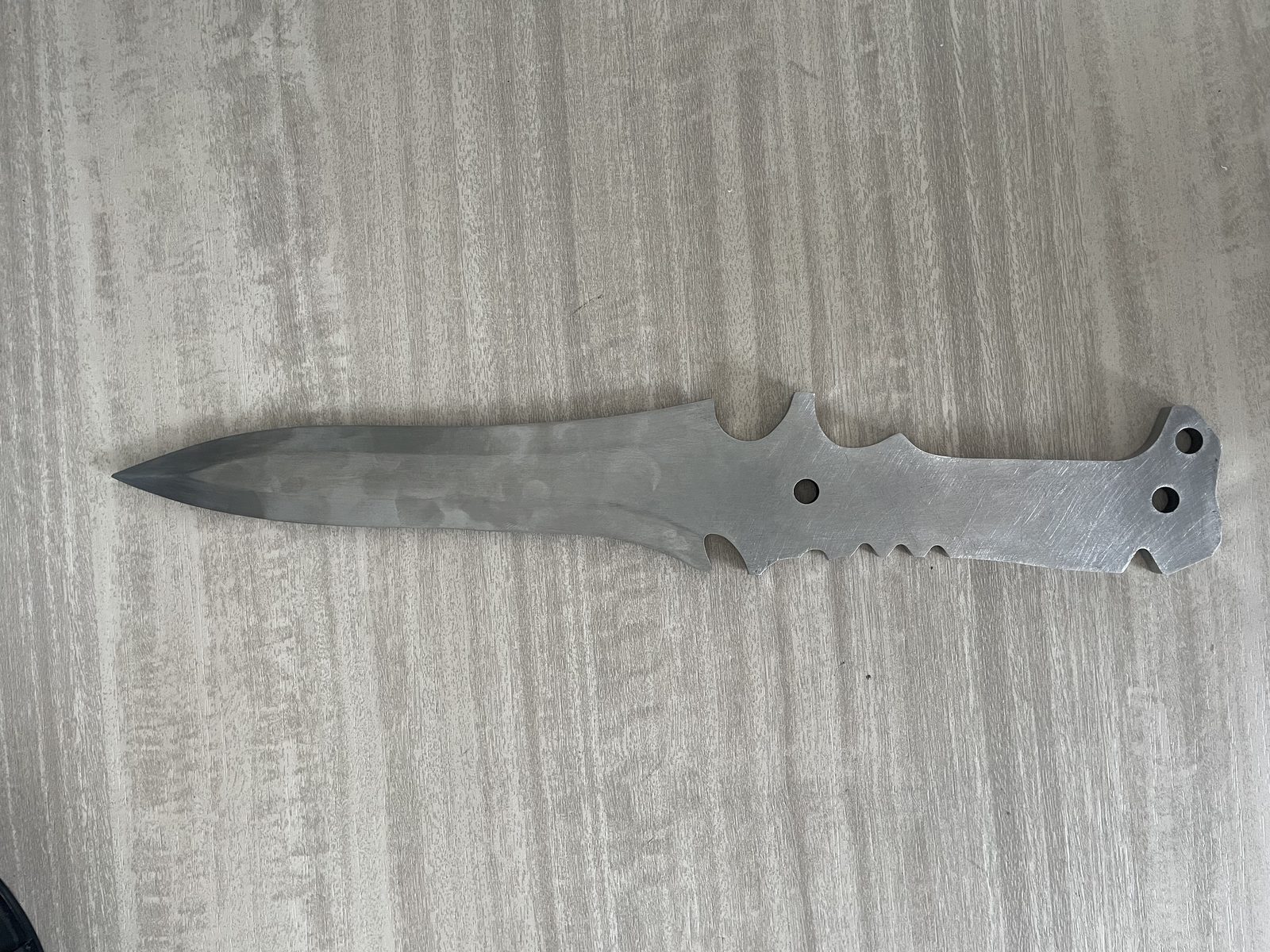
One state confuses buyers constantly: bright-dipped aluminum. On automotive trim and cosmetic bezels, bright dip looks just like mechanically buffed mirror aluminum.
In reality, bright dipping is a second-layer chemical bath process — an acid immersion that chemically levels microscopic peaks into a mirror shine before clear anodizing. It looks mechanical, but a tumbling machine cannot produce or patch it.
The Chemical Layer: Why It Cannot Be Patched
After mechanical preparation, aluminum parts frequently move to an anodizing plant. Understanding what anodizing physically does to the surface explains why pre-anodize mechanical finishing is so critical.
Anodize is not a coating — it is the metal becoming an oxide
Many buyers group anodizing with paint and powder coat. Anodizing is not an applied coating — it is an electrochemical conversion that turns the outer aluminum metal itself into aluminum oxide.
When an aluminum part hangs as the anode in an acid electrolyte bath, oxygen ions react directly with the surface aluminum atoms. Rather than laying a foreign skin on top, the bath grows a hard, porous crystalline aluminum oxide layer that penetrates inward into the base metal while building slightly outward. Because that oxide film grows directly from the parent aluminum, it is integral to the part: it never peels, flakes, or blisters like paint.
Note: This diagram is explained in the text and table above rather than shown as a separate figure.
What that means for repair
That inward growth mechanism creates a strict rule whenever an anodized part is scratched or gouged: you can never spot-patch a damaged anodized surface.
When a deep scratch or grinding wheel cuts through the anodic layer, the converted aluminum oxide in that spot is gone, exposing soft, bright raw aluminum underneath. You cannot brush on "liquid anodize," and buffing the scratch only grinds away more surrounding oxide film, making the bright raw patch larger. Restoring a scratched anodized part requires chemically stripping the entire oxide layer off the whole piece in a caustic bath. Only after stripping the conversion layer can you mechanically re-blend the bare aluminum down to the scratch floor and re-anodize the entire workpiece from scratch.
Colour, hardness, and insulation — what only this layer gives you
Engineers specify anodizing because converting aluminum into aluminum oxide delivers three properties that bare mechanical finishing can never provide:
- Integral dyed colour: Before the microscopic oxide pores are sealed, dyes can soak deep into the crystal structure, producing metallic black, gold, red, or blue parts that do not chip.
- High surface hardness and wear resistance: Hard-coat anodizing builds a dense ceramic-like oxide skin on pistons, valves, and manifolds that stops sliding galling on soft aluminum.
- Electrical insulation: Bare aluminum conducts electricity, whereas an intact anodic oxide layer acts as a reliable dielectric insulator on electronics housings and heat sinks.
Where it sits relative to mechanical finishing
Because anodizing is translucent and reproduces the exact topography underneath it, the anodic oxide layer magnifies rather than hides upstream mechanical defects.
If a milled bracket enters the anodizing bath with cutter chatter or belt gouges, those flaws remain locked under the hard oxide skin forever. We do not build anodizing tanks or etch lines. Instead, we build the vibratory and barrel finishing machines that operate immediately upstream to create a uniform matte or satin base.
The Coating Layer: The One That Hides Everything
The third layer covers applied films: electrostatic powdercoating aluminum, liquid paints, electrophoretic e-coat, and PVD films. Whether you search for coating aluminum, coating on aluminium, or aluminum machine parts coatings, you are dealing with an added blanket over the metal.
Note: This diagram is explained in the text and table above rather than shown as a separate figure.
What a coating buys you
- Complete masking of minor substrate flaws: Thick powder coat bridges over casting pores, weld colour changes, and minor machining lines.
- Custom colours and non-metallic textures: Delivers opaque gloss colours, matte architectural textures, and soft-touch films.
- Heavy environmental shielding: Isolates structural aluminum from road salt, mortar, and outdoor weathering.
What a coating costs you
Here is the hidden trap that coating vendors rarely mention: a thick coating can hide a deep scratch or crack — meaning you never know what substrate damage sits underneath until the coating is broken.
If a supplier coats over a deep gouge, the part passes visual inspection on delivery. The moment an impact chips that coating in service, the hidden gouge and raw aluminum are exposed together.
Why a coated part cannot be mechanically refinished
Remember this boundary: coated aluminum cannot be mechanically tumbled or buffed to fix scratches. Any abrasive media or wheel shreds, melts, or peels the polymer film. Once a coating is gouged, you must strip the entire film chemically or thermally and recoat the part.
The Four Ways to Tell Which Layer You Have
When a customer hands you an unknown aluminum sample to match or refurbish, run these four bench checks to identify which layer is on the part.
The scratch test — the one that settles it
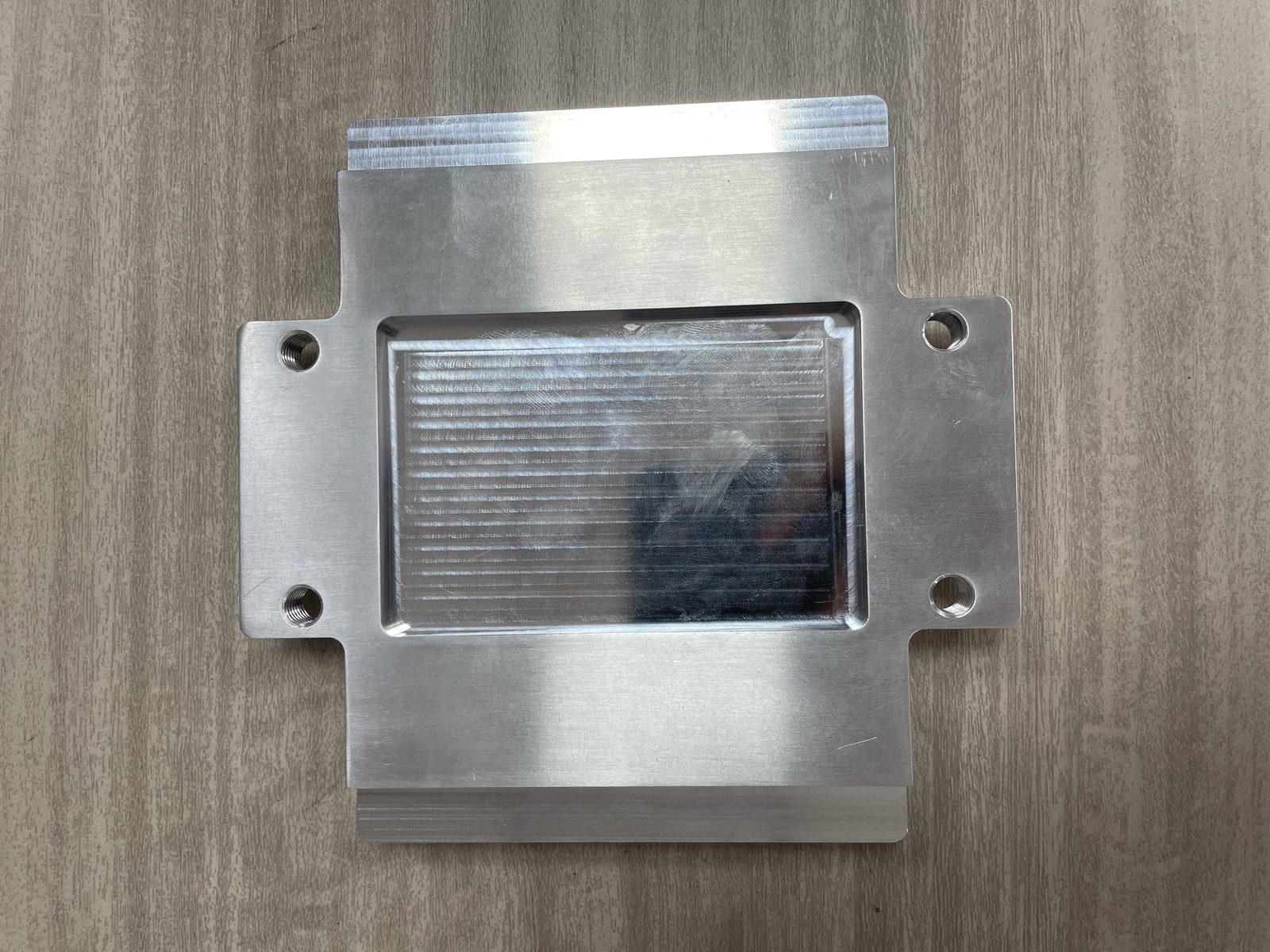
Make a tiny scratch with a sharp knife tip inside an unseen mounting hole or back recess:
- Mechanical layer: Cuts smoothly into soft metal with the same grey colour inside the groove.
- Chemical layer (anodized): Skates on a hard crust first, then crunches through to brighter raw aluminum below.
- Coating layer: Slices into a polymer film that curls or flakes, exposing primer or base metal.
The edge test — film thickness shows at a corner
Under a loupe, bare aluminum looks uniform at corners, anodized parts show a thin oxide rim or rack marks, and powder coat shows a thickened edge lip.
The feel test — and what it can be fooled by
Bare aluminum feels cold to the touch and leaves grey oxide smut on a rubbed white cloth. Coated aluminum feels warmer, sounds muted, and leaves no smut.
Where the tests disagree
Because thin clear anodize and clear lacquer can fool a casual glance, compare the four tests together using the table below.
| Bench Test | How to Do It | What It Separates | What Can Fool It |
|---|---|---|---|
| Knife-Tip Scratch | Score a hidden recess with a steel point | Soft bare metal vs hard anodize vs peeling coat | Thin chem-film offers almost zero scratch resistance |
| Edge Check | Inspect corners and holes under a loupe | Thick paint lips vs anodize rack-contact spots | Chamfered or tumbled edges hide film profiles |
| Feel & Cloth Rub | Feel heat draw and rub with white cloth | Bare metal feels cold and leaves grey smut | Clear anodize also feels cold, but leaves no smut |
| Colour Check | Check if colour hides or shows metal sheen | Opaque paint hides grain; dyed anodize glows | Tinted clear coat over brush mimics dyed anodize |
Repair by Layer
Once you identify the layer on your damaged part, physics dictates how it must be repaired.
Mechanical layer — refinish and blend
On bare mechanical aluminum, scratches are just grooves in homogeneous metal. Small parts can go back into a vibratory bowl with plastic media to replace the scratch with a fresh matte or satin texture, while brushed panels can be re-stroked along the grain with non-woven pads.
Chemical layer — replace, not patch
On anodized parts, local buffing or tumbling only strips the surrounding oxide and creates a bigger blotch. You must either scrap the part or chemically strip all anodizing off the entire piece, mechanically blend the bare metal, and re-anodize the whole part.
Coating layer — recoat, not refinish
On powder-coated or painted aluminum, mechanical abrasives ruin the polymer film. True restoration requires stripping the old coating off the whole component, pre-treating the metal, and recoating.
The one case where you replace the part
Notice the fourth row below: many aluminum parts are a multi-layer stack (mechanical satin or brushed texture under an anodized skin). You must strip the upper oxide film before reworking the mechanical layer underneath. If cutting out a deep gouge ruins dimensional tolerances, replace the part.
| Surface Layer | How Scratches Are Handled | Recovery Level | When to Replace the Part |
|---|---|---|---|
| Mechanical Only | Re-tumble in media or blend along grain | Full restoration to original state | Only when gouge depth violates tolerances |
| Chemical (Anodize) | Strip whole part, re-blend metal, re-anodize | Full recovery, but high rework cost | When stripping etch ruins tight bores |
| Coating (Powder / Paint) | Strip entire film, re-prep, and recoat | Restores coat, but exposes base flaws | When deep base gouges cannot be leveled |
| Multi-Layer (Mech + Anodize) | Strip oxide, rebuild mechanical texture, re-anodize | Hardest rework; must match both layers | Common on extrusions where rework exceeds part cost |
What We Do, and What We Do Not
At Xiamen Jin Tai Jin Grinding Technology Co.,Ltd., certified under ISO 00726Q01571R001 and CE standards, we build mass finishing systems backed by 21 machine platforms and 24 IP rights across six product lines. We state our boundaries clearly in what we build and what we do not.

The layer our equipment covers
Our machines and consumables cover only the first layer (mechanical finishes):
- Equipment & Media: Bowl vibratory finishing machine units, tubs, barrels, centrifugal finishers, ceramic/plastic grinding media, organic dry finishing media, and aluminum soaps from our finishing compounds line.
The two layers we do not
- No chemical or coating lines: We do not build anodizing, bright-dip, etching, chromate, passivation, powder-coating, e-coat, paint, or PVD lines.
- No belt grinders or job-shop services: We do not build belt sanders or angle grinders, and we do not run a contract job shop.
What we do upstream of an anodizing line
Here is our exact role in anodized production: we build the mechanical finishing stage immediately upstream of the anodizing tank. Because the anodic oxide layer cannot be patched later, the quality of that pre-anodize mechanical tumbling step decides the final anodized appearance.
When the honest answer is a different supplier
If your parts are already anodized or powder-coated and need repair, call an anodizer or coating shop. If you need to turn raw CNC or extruded aluminum into a clean, uniform matte, satin, or burnished surface before anodizing or assembly, our equipment is built for that job.

Frequently Asked Questions
What are the different types of aluminum finishes?
Aluminum finishes fall into three layers: mechanical states that reshape bare metal (mill, as-machined, matte, satin, burnished, brushed), chemical conversion films (anodized, bright-dipped, etched), and applied coatings (powder coat, paint, PVD).
What is the difference between matte and satin aluminum?
Suppliers often mix the two terms up. Strictly speaking, a matte aluminum finish is coarser and flat grey, while satin has a softer sheen; always use a physical sample.
Is anodized aluminum a finish or a coating?
Anodized aluminum is a chemical conversion finish, not an applied coating. Instead of laying paint on top, the electrochemical bath converts the outer aluminum metal itself into an integral aluminum oxide layer grown directly into the substrate.
Can a scratched anodized aluminum part be repaired?
Not locally. Once a scratch cuts through the anodic oxide, you must strip the entire part chemically, re-blend the bare metal, and re-anodize the whole piece.
What is mill finish aluminum?
Mill aluminum finish is the raw starting state of aluminum sheet or extrusion straight from the rolling mill or extrusion die. It is a starting point rather than a decorative finish, carrying die lines and oxidation streaks.
Can powder-coated aluminum be mechanically refinished?
No. Powder coat is a cured polymer film over the metal. Tumbling or buffing powdercoating aluminum shreds or melts the polymer layer; damaged parts must be stripped and recoated.
 +86-592-2381506


 IPv6 network supported
