
Vibratory finishing is usually described as "tumbling parts in a bowl of stones until the burrs come off," which is accurate and useless. What matters for a buyer is where the process sits in the shop: it comes after machining and before coating or plating to hand a uniform, burr-free surface to that next step.
This page is the overview: what the process is, what it does that no other route does, where it fits in a process chain, and which parts should not go into a machine at all. Once the route is settled, the specific decisions live on their own pages — machine selection, media selection, deburring equipment, multi-stage polishing, high-energy disc vs barrel, and the three finishing routes.
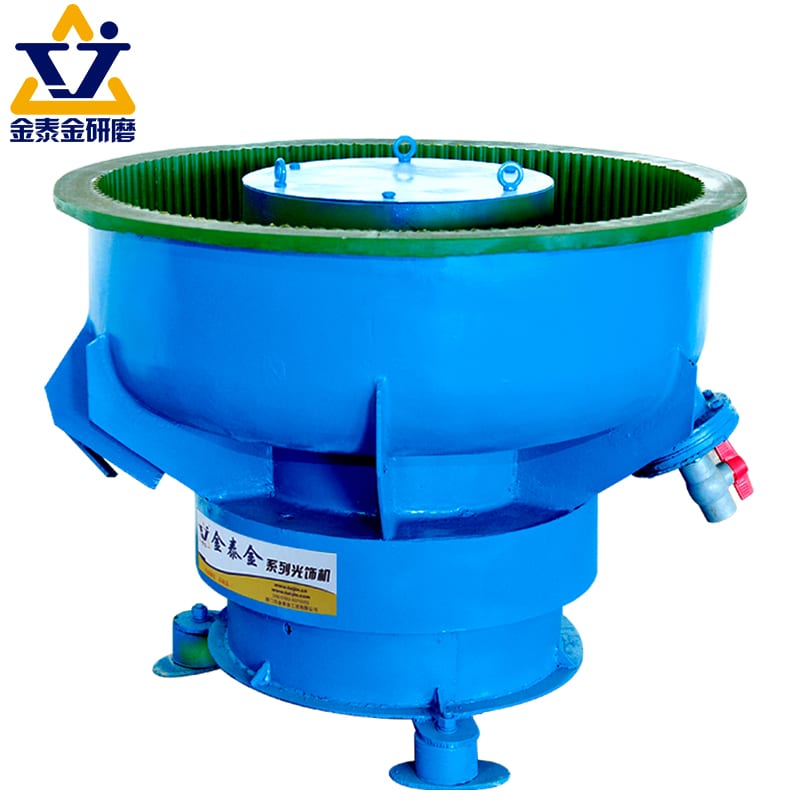
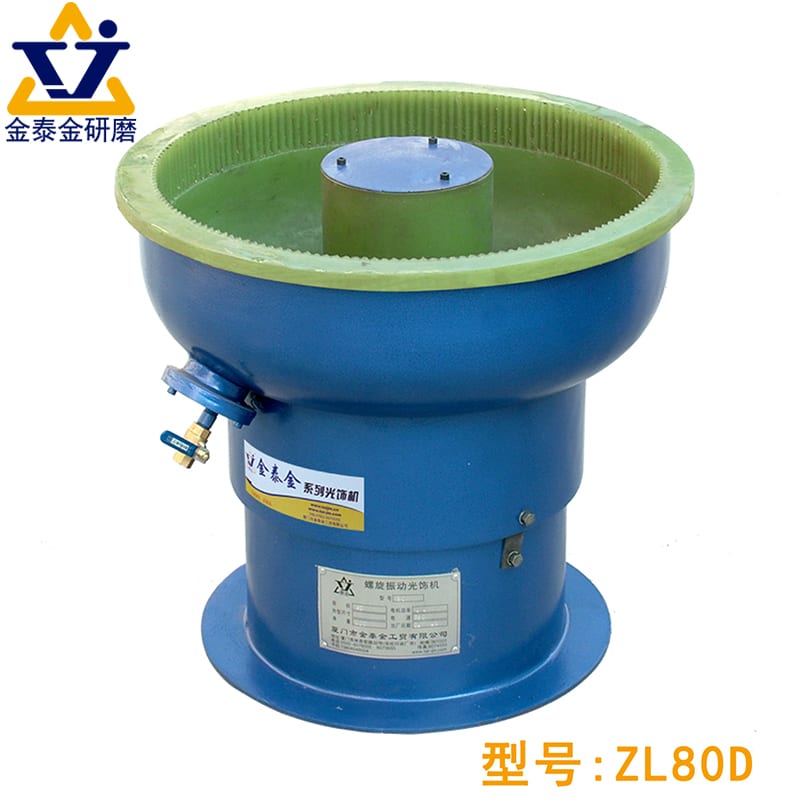
When engineers specify vibratory finishing on a print, they are calling for a mass finishing process where parts submerge inside a vibrating bed of preformed media, water, and compound. Across our vibratory finishing machine category, the hardware looks simple on the outside, yet the action inside the bowl is a balance of three mechanical forces.
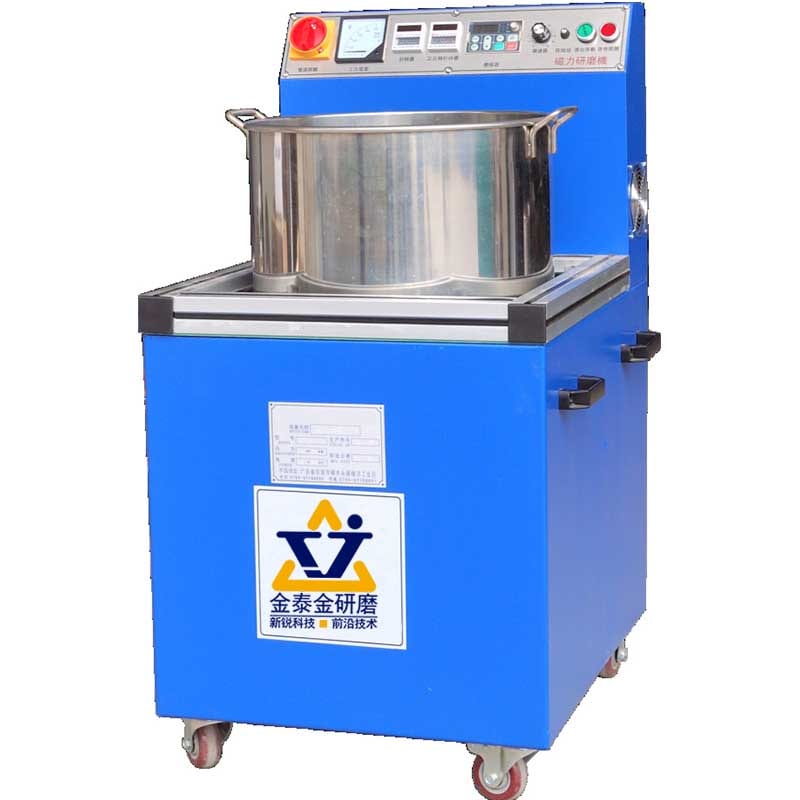
Every piece of vibratory finishing equipment is built around three core assemblies:
- Polyurethane-lined container: Either a toroidal round vibratory bowl or a straight rectangular trough on tub vibrators.
- Flowing media bed: Preformed ceramic, plastic, steel, or organic granules mixed with liquid compound.
- Eccentric drive: A spring-mounted motor with adjustable weights that shakes the chamber in three dimensions.
A vibratory machine does not simply rattle parts against stones. Inside the spiraling media bed, three contact actions happen at the same time:
- Micro-impact: Angular media edges tap protruding burrs and knock them off.
- Sliding shear: Media faces slide across parts under bed weight, shaving down cutter peaks.
- Compressive rolling: Smooth spheres or cylinders roll micro-peaks flat into a brighter finish.
Which motion dominates depends on the media shape, media density, and compound lubricity loaded into the bowl.
A vibratory finisher refines surface topography rather than cutting part geometry. Unlike a rigid CNC cutter referenced to a datum, the flowing media bed presses against all exposed faces at once. It removes burrs, rounds corners, and lowers roughness while leaving wall thicknesses and hole spacings intact. Because it has no rigid datum, it cannot flatten a warped bracket or correct an oversize shaft.
Shops do not buy vibratory machinery just to save on sandpaper. Vibratory finishing solves three production problems that manual bench work and rigid CNC tool paths cannot solve economically.
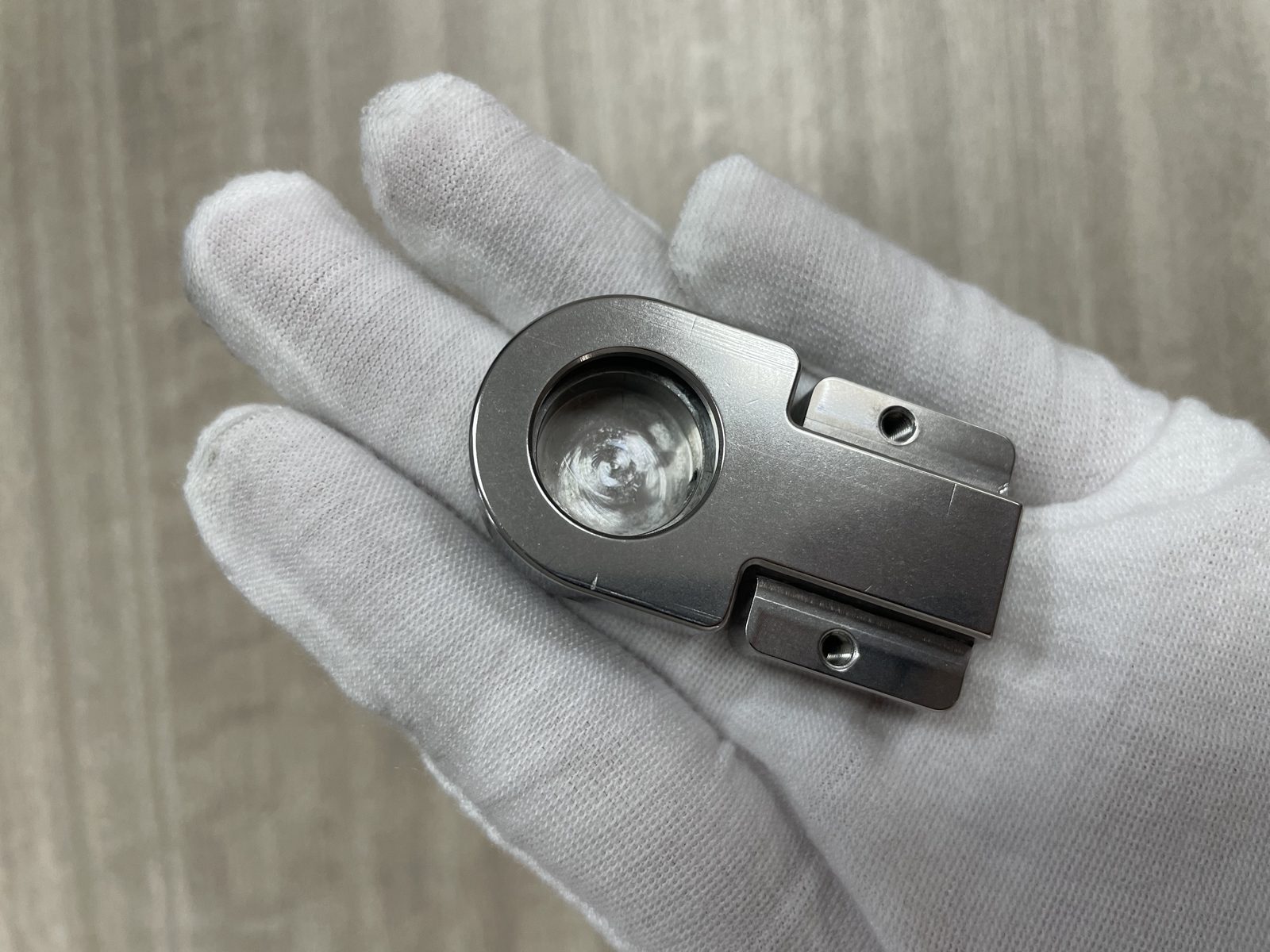
A sanding belt or grinding wheel only touches external faces that fit the wheel radius, bridging over recessed pockets, cross-holes, and weld roots. Because vibratory finishing media consists of loose flowing stones, the bed pours into pockets, wraps around ribs, and scrubs open slots at the same time it blends the outer shell.
At a manual deburring bench or robotic grinding cell, cycle time scales linearly with part count. Deburring a batch of stamped brackets by hand takes a separate handling cycle for every piece.
In a vibratory bowl or tub, the entire batch loads into the media bed together and finishes as one operation. While the batch circulates, the operator is free to run other machines, inspect lots, or pack shipments.
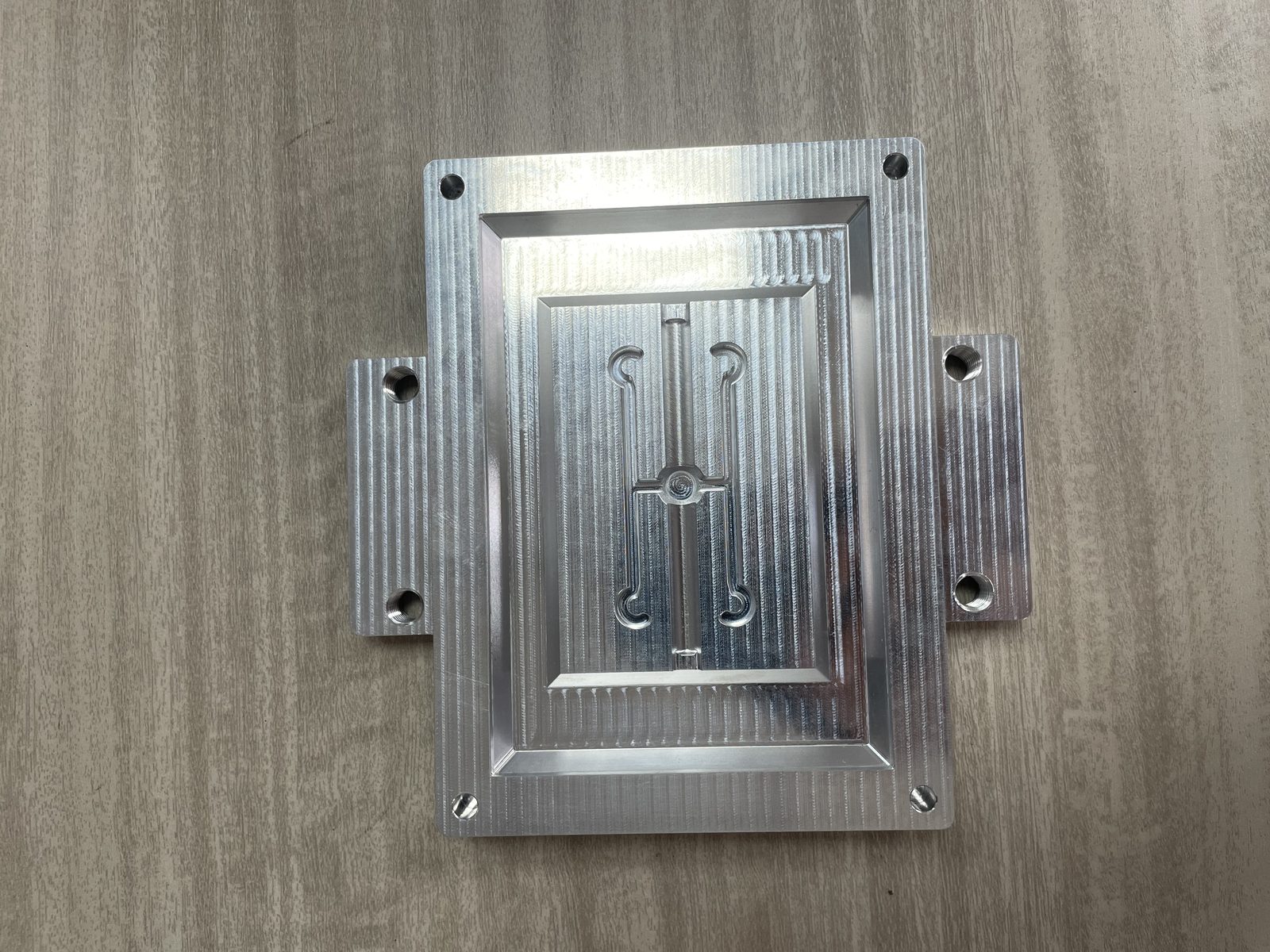
The deepest advantage of vibratory finishing is how it guarantees consistency. When an operator deburrs parts by hand with a file or sander, Monday morning's batch looks different from Friday afternoon's batch because human pressure, angle, and fatigue drift.
Inside vibratory finishers, consistency comes from the structure of the media bed rather than operator skill. Every part in the load travels through the same spiral path, feels the same media weight, and receives the same sliding contact from every angle. That is not "better" than master hand work — it is a different class of guarantee where every piece in the batch leaves the bowl with the same edge radius and texture.
Competitor guides almost always present vibratory finishing as a standalone end-of-line step. On a real routing sheet, vibratory finishing sits in the middle of the chain as the bridge between metal cutting and final surface protection.
Unless you ship bare tumbled stainless hardware or raw brass fittings, vibratory finishing is primarily a pretreatment step. It is not a substitute for electroplating, anodizing, powder coating, or PVD — it is the surface preparation step that lets those coatings bond.
Use the six-stage process chain table below to see where vibratory finishing sits in a factory workflow.
| Production Stage | Typical Equipment | Vibratory Finishing Role |
|---|---|---|
| **Forming and Machining** | CNC mills, lathes, presses | Raw parts exit with burrs, tool marks, scale, and oils |
| **Mechanical Surface Prep** | Vibratory bowls and tubs | Strips burrs, rounds corners, and builds a uniform profile |
| **In-Process Cleaning** | Compound dosing and rinse | Emulsifies oils and flushes metal fines out the drain |
| **Chemical Passivation** | Acid passivation tanks | Strips trace free iron after tumbling to restore rust resistance |
| **Final Coating or Plating** | Plating, anodizing, paint | Bonds cleanly to the uniform substrate prepared in tumbling |
| **Drying and Packing** | Hot-air or cob dryers | Evaporates rinse water rapidly to prevent water spots |
When a part leaves the vibratory bay headed for anodizing, plating, or powder coating, the coating line relies on the vibratory step for three conditions:
- Radiused edges: Paint pulls back from razor-sharp corners and plating crowds onto burrs; vibratory radiusing rounds edges so coatings wrap evenly.
- Isotropic texture: Anodizing, chrome, and PVD magnify cutter lines; vibratory blending replaces tool tracks with an even matte canvas.
- Scale-free pores: Scrubbing strips laser oxide, heat scale, and smeared metal slivers that block adhesion.
Skipping steps in this chain causes immediate failures. Sending raw laser-cut brackets straight to powder coating without vibratory edge breaking and descaling causes paint to flake off along the brittle oxide edge on impact. Conversely, tumbling stainless steel parts in general media without downstream acid passivation leaves trace free iron that can rust in humid service. It cannot change metal color, cannot add chemical corrosion barriers, and requires passivation afterward on stainless steel.
Never treat vibratory finishing and abrasive blasting as identical pre-paint options. Blasting shoots grit in a line-of-sight stream to strip heavy scale and carve a rough anchor profile on large weldments, but it cannot radius sharp burrs smoothly. Vibratory finishing works across batches of small to medium parts, rounding edges and refining surfaces to pre-plate smoothness while leaving color and corrosion barriers to plating and coating lines.
An honest builder will tell you up front which drawings should never enter a vibratory bowl. When vibratory finishing fails, the cause falls into one of three hard limits: part geometry, dimensional tolerance, or batch economics.
Media stones only finish a surface if they can enter the feature, slide across it, and flow back out. Deep blind holes, fine internal threads, and slots narrower than your smallest stone bridge over immediately; the outside finishes cleanly while the blind hole bottom stays raw. Wide, thin flat sheet panels also fail because wet flat faces suction against the liner wall and stop circulating.
Because media scrubs every exposed surface in the bowl, an unfixtured vibratory machine cannot strip heavy burrs off one corner while leaving an adjacent unmasked bearing journal or knife-sharp sealing land untouched. Exposing ultra-tight press fits or crisp functional sealing edges to loose tumbling without masking rounds the edge out of tolerance.
Vibratory finishing is a batch process built around a dedicated media bed. Setting up a bowl with media and compound to deburr a single prototype bracket or a massive welded frame makes no economic sense. One-off prototypes belong at a hand bench, and oversized weldments belong in a blast booth.
Use the four-column decision table below to filter out parts that belong on another machine before running a trial.
| Your Part or Target Goal | Vibratory Fit? | Why It Works or Fails | Better Route if No |
|---|---|---|---|
| **Complex three-dimensional machined parts** | Yes — ideal | Media wraps around ribs and contours at once | None needed |
| **Batch stampings needing edge radiusing** | Yes — ideal | Finishes full lots in one operation | Centrifugal disc for faster cycles |
| **Accessible intersecting cross-holes** | Conditional | Works only if media flows through freely | Magnetic pin deburring |
| **Deep narrow blind bore bottoms** | No | Media bridges over blind holes | Magnetic pin or waterjet |
| **Wide, thin flat sheet panels** | No | Wet sheets suction to walls or warp | Wide-belt sander |
| **Single prototype or huge weldment** | No | Setup is uneconomical for one piece | Hand bench or blasting |
| **Unmasked tight fits or knife edges** | No | Loose media rounds all exposed edges | Masking or drag finishing |
| **Paper-thin fragile stampings** | Conditional | High-frequency impact can bend thin walls | Rotary barrel tumbler |
| **Dead-flat optical mirror on plates** | No | Tumbling rounds edges and loses flatness | Flat lapping or wheel buffing |
| **Change color or add corrosion barrier** | No | Abrasion only refines bare metal | Anodizing, plating, or paint |
Once you confirm your part fits vibratory finishing, quality comes down to three shop-floor variables: media, compound, and machine loading.
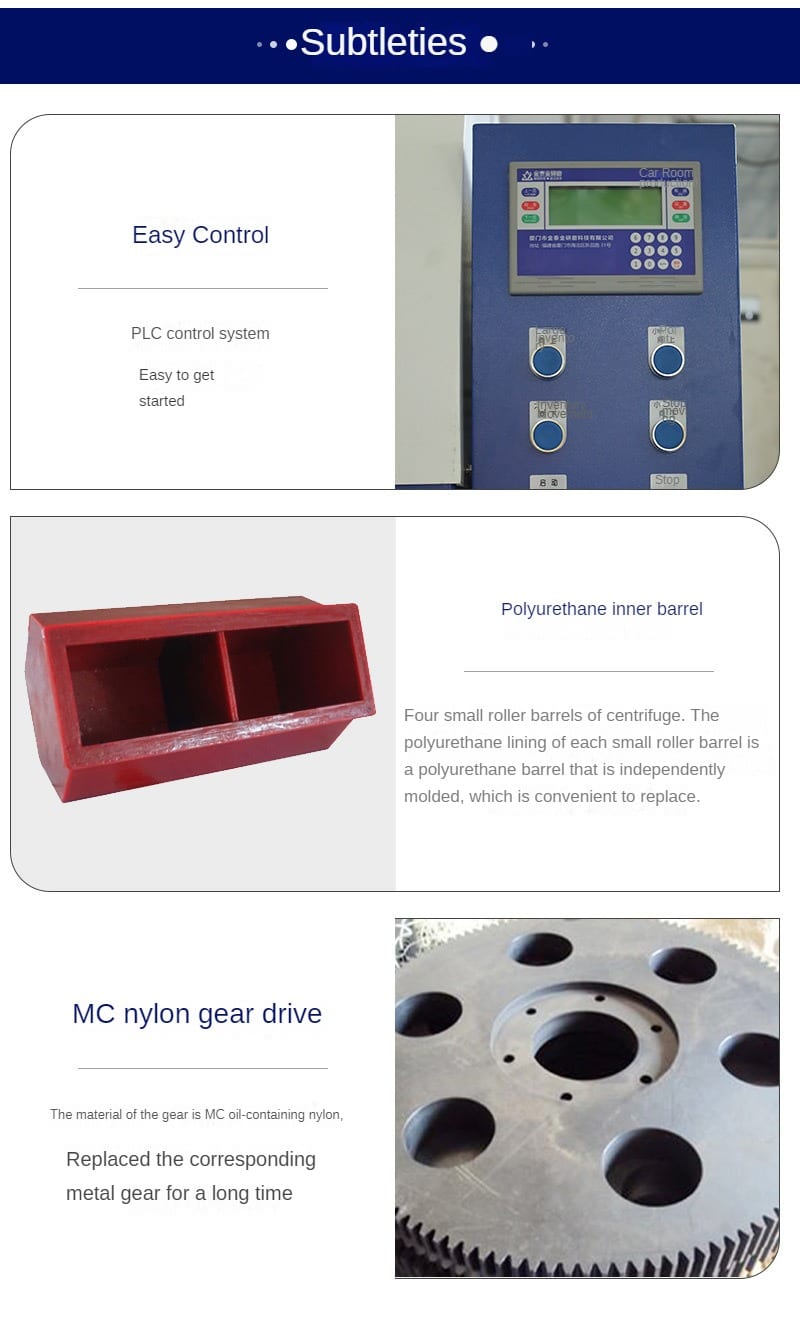
Vibratory finishing media is the cutting tool inside the bowl. Material sets the cut: ceramic media strips steel and titanium burrs, plastic media refines soft aluminum and brass without bruising, and non-abrasive steel or porcelain media burnishes surfaces bright. Shape and size govern reach — triangles reach corners, cylinders roll across curves, and stones must be sized so they never wedge in holes. Our grinding media catalog covers these grades in full.
Running media without compound glazes the stones with swarf and leaves parts dark. Metering liquid vibratory finishing supplies and finishing compounds into the water stream controls bed chemistry. Cleaning soaps strip oils, cutting compounds keep stone pores open, burnishing compounds build a slick cushion for high-gloss rolling, and inhibitors prevent flash rust.
Even with the right media and soap, two operational errors ruin batches daily: improper loading ratio and blind timer settings.
Loading too many parts and too little media removes the cushioning blanket so bare parts hammer against each other, nicking edges. Packing the bowl too full stalls the spiral roll so parts barely move. The loading ratio must keep media flowing smoothly around the parts.
There is no universal chart that gives the exact amplitude, frequency, media-to-part ratio, and cycle time for an untested part. Because burr thickness and alloy hardness vary across shops, every reliable production recipe is set by running a sample trial on your actual parts.
Vibratory finishing sits alongside six other mechanical finishing methods. Knowing how they compare stops you from forcing one machine to do seven jobs.
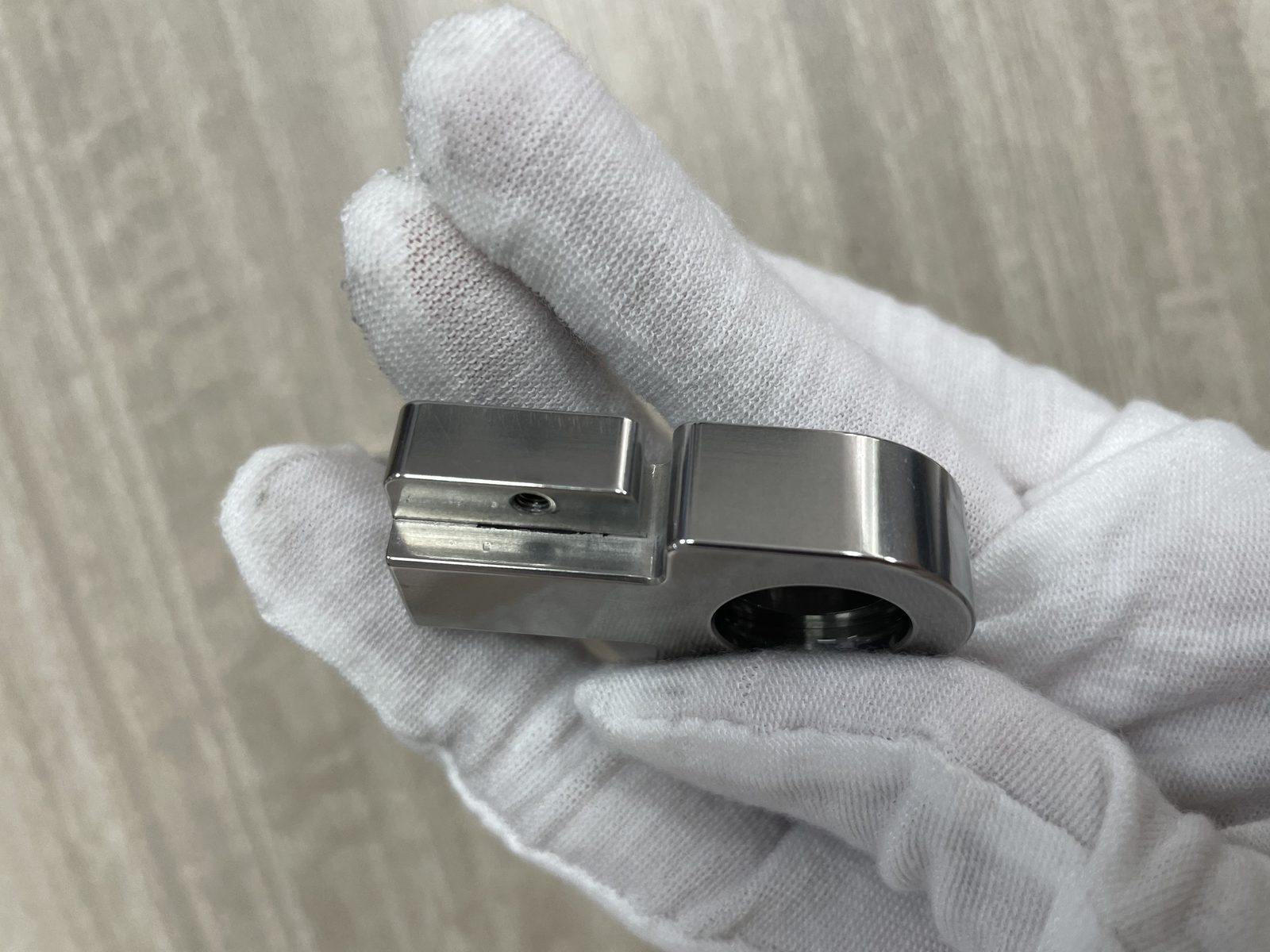
Comparing a vibratory bowl against our rotary barrel tumbling machines is not new versus old; it is impact scrubbing versus avalanche sliding. Vibratory finishing shakes the bed at high frequency to cut burrs rapidly across contours, while a rotary barrel slides the load gently down a slope to protect thin stampings from impact distortion.
Centrifugal disc and centrifugal barrel machines multiply contact pressure far above normal gravity. They strip tough burrs on titanium or hardened steel and burnish small parts in a fraction of a vibratory cycle, trading chamber size and loading simplicity for speed.
When burrs hide inside tiny injector cross-holes or thread roots where stones cannot fit, magnetic pin finishers drive fine stainless needles into the recess. When heavy, high-value gears or implants cannot risk touching each other at all, drag finishers clamp parts on spindles and pull them through a media bed.
Abrasive blasting shoots high-velocity grit to strip heavy rust or weld scale and etch a rough anchor profile for thick coatings. Unlike vibratory finishing, blasting does not radius sharp edges smoothly or polish metal bright.
Use the five-column comparison table below to see how all seven mechanical routes divide up shop work.
| Route | Contact Mechanism | Core Strength | Main Limitation | Best-Fit Parts |
|---|---|---|---|---|
| **Vibratory Finishing** | Spiraling bed scrubbing | Versatile batch work; reaches open contours | Moderate pressure on tough alloys | Machined parts, stampings, castings |
| **Rotary Barrel** | Avalanche zone sliding | Gentle on thin walls; low media wear | Slow; cannot reach internal cavities | Thin stampings, tubes, forgings |
| **Centrifugal Barrel** | High-G sealed drum sliding | Cuts tough alloys fast; burnishes mirrors | Slower loading; drum size limits part size | Implants, blades, watch cases |
| **Centrifugal Disc** | Spinning disc toroidal roll | Fast cycles with open-bowl unloading | Disc gap cannot take paper-thin shims | High-volume small stampings, gears |
| **Magnetic Pin** | Magnetic stainless needles | Reaches tiny cross-holes and threads | Small non-magnetic parts and micro-burrs only | Turned connectors, jewelry, valves |
| **Drag Finishing** | Spindles pulled through media | Zero part collision; high edge pressure | Fixture cost; smaller batch count | High-value gears, knee joints, tools |
| **Abrasive Blasting** | High-velocity grit stream | Strips heavy scale and rust on any size | Line-of-sight only; roughens surfaces | Weldments, castings, enclosures |
No productive finishing shop buys only one machine type for every job. Seeing a vibratory bowl running general brackets right beside a centrifugal machine or rotary barrel is normal because different geometries require different contact physics.
When engineering teams budget for a vibratory finishing cell, looking only at the bare machine price leads to an incomplete budget.
Every in-house vibratory installation pays for five distinct cost lines:
- Machine frame and automation: The vibratory bowl or tub, sound cover, variable-frequency drive, PLC panel, dosing pump, and optional separation deck or dryer.
- Initial working media fill: The first full charge of ceramic, plastic, or steel media required to fill the bowl to its operating bed height.
- Ongoing media and compound replenishment: Replacement media added to offset wear, plus drums of liquid compound and water treatment supplies.
- Operator handling labor: Time spent loading batches, operating the separation dam, and moving lots to drying.
- Scrap and rework prevention: Savings from eliminating hand-grinding slips, uneven edge breaks, and coating failures.
First-time buyers usually count the machine price and forget the initial media fill. Because a bowl or tub must be filled to its working level before processing even one part, that first charge of media and compound is a separate expense outside the machine price. It is often left off basic hardware quotes, so always ask vendors to quote the starter media and compound package up front.
For occasional small lots, a manual-separation vibratory bowl keeps capital cost low while replacing hours of hand filing. Once production scales into daily multi-batch volume, adding an integrated pneumatic separation deck, dosing pump, and inline dryer pays back quickly by cutting operator attendance to minutes per batch.
Because vibratory recipes cannot be guessed from a catalog, evaluating a supplier comes down to how they run your sample trial and how honestly they state their limits.
Send the supplier four items for a real trial: unfinished sample parts, drawings showing critical tolerances and no-touch zones, a finished master sample or target specification, and your daily batch volume.
A real trial processes your actual parts and returns them with a written process report. That report states the machine model, media grade and shape for each stage, compound type, water flow, and before-and-after inspection results verifying that critical edges survived intact.
A capable builder explains why they picked a bowl or tub, how media size avoids hole lodging, how fast media wears, and what drying step follows.
Walk away from any vendor who claims their machine finishes everything in one step or skips sample trials. Any supplier who claims zero process boundaries is setting up a failed installation.
At Xiamen Jin Tai Jin Grinding Technology Co.,Ltd., certified under ISO 00726Q01571R001 and CE standards, we build mass finishing systems backed by 21 machine platforms and 24 IP rights across six product lines. We state our boundaries clearly: we manufacture vibratory bowls, tub vibrators, centrifugal machines, rotary barrels, magnetic finishers, media, and compounds. We do not build plating, anodizing, powder coating, sandblasting, or heat-treating lines, we do not sell handheld tools, and we do not run a contract job shop. For our full manufacturing and non-manufacturing boundaries, see our scope guide in what we build and what we do not.
Vibratory finishing is the broad process family covering every job done in a vibratory bowl or tub, including deburring, descaling, edge radiusing, matte blending, and smoothing. Vibratory polishing is one specific goal within that family — setting the machine up with fine or non-abrasive media and brightening compound across multiple stages to build a high-gloss surface.
It replaces hand deburring, hand sanding, and pre-plate smoothing across batches of small to medium parts, delivering much higher consistency at lower labor cost. However, when a large flat panel or complex casting requires a dead-flat, distortion-free optical mirror across wide faces, wheel buffing or flat lapping still finishes what loose tumbling cannot.
Avoid loading parts with burrs at the bottom of deep narrow blind bores, wide thin flat sheet panels that suction against liner walls, or oversized weldments that cannot circulate. Unmasked precision parts with knife-sharp sealing lands that must stay sharp also belong on a fixture or hand bench.
There is no fixed universal cycle time because duration depends on incoming surface condition, alloy hardness, target finish, media configuration, and batch loading volume. Light deburring on aluminum finishes quickly in one stage, whereas multi-stage stainless steel refinement takes much longer. Cycle times must always be set by testing your actual parts.
Vibratory finishing refines surface topography rather than machining part dimensions. With proper media selection and cycle control, it strips burrs, rounds sharp outer corners, and levels micro-peaks while leaving nominal wall thicknesses, bore diameters, and hole locations intact.
Yes, on external curved surfaces and small rigid parts when run through a multi-stage sequence ending with non-abrasive porcelain spheres, hardened steel media, or treated dry organic media. To test your parts and lock in a verified machine and media specification, reach out on our contact page to start a sample trial with our engineering team.
Email : info@surface-polish.com


 IPv6 network supported
 +86-592-2381506
