A buyer in Venice, Italy working on marine components has a duplex tube sheet with 800 drilled holes whose edges must be broken evenly without trapping medium. SurfacePolish supplies finishing machines, media and compounds across borders and runs a free sample trial: a cut section of the tube sheet travels to Xiamen and returns with an observed condition and a proposed media, compound and cycle direction for the buyer's own inspection. This brief is written for a buyer in Venice working on marine components; it describes equipment, media and a scoped sample review, not a local polishing service.
Does the part family repeat often enough, with stable geometry, to justify a cell rather than a batch machine or hand work?
Can the charge or the tool reach the surfaces that matter, and which enclosed passages and blind holes can never be reached at all?
What starting condition and cleanliness baseline will the part arrive in, and who owns the pre-finish step?
Automation needs repetition more than it needs difficulty. A family with stable geometry, a fixed set of controlled features and demand that recurs every week is a candidate; a one-off fabrication with a different weld layout each time is not, however much hand work it consumes. Establish the annual and monthly quantity, how many variants sit in the family, the size difference between the largest and smallest variant, and the takt a cell would have to meet. Then count the manual hours honestly: finishing, setup and fixture change, handling, inspection and rework. If setup and changeover dominate those hours, a robot may reproduce the same inefficiency with more capital behind it. If a few stable variants consume predictable hours, the arithmetic changes and a feasibility discussion is worth having.
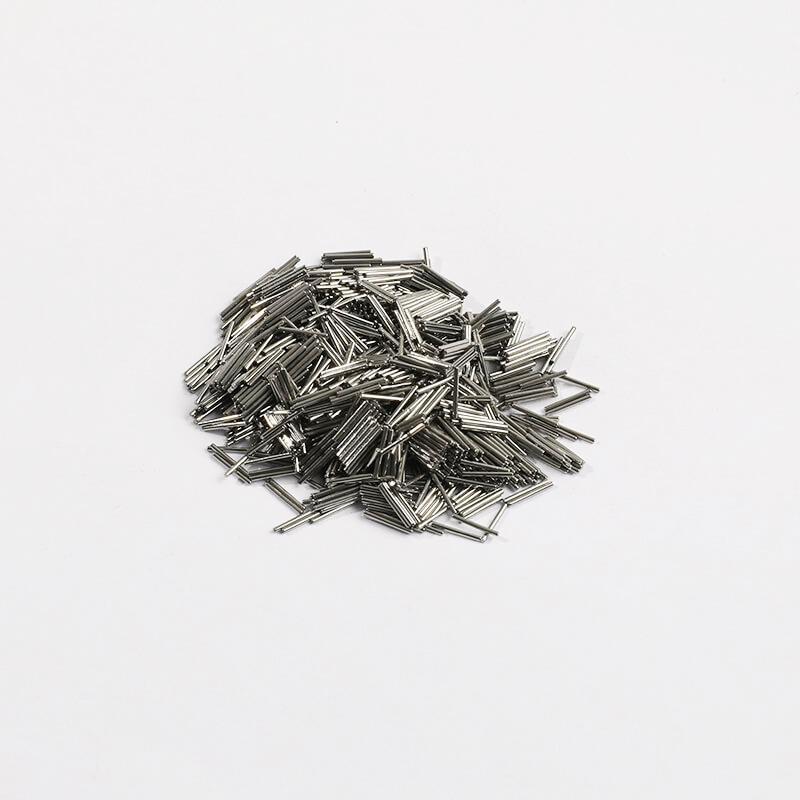
Ceramic media is chosen by shape and size class before the material name is considered. Angle-cut triangles cut edges and work into corners; cylinders and cones roll differently and can wedge; spheres are gentle and consistent but blend rather than cut. A coarse size class removes more per cycle and leaves a coarser texture, and it may not enter a narrow slot at all, while a fine class reaches tighter geometry and takes longer to move the same amount of material. On marine fittings and small castings, a medium triangle in a heavy-cut ceramic is a common starting point for edge break, followed by a finer shape for refinement. Media wear shrinks every piece, so the effective size class drifts upward in age: a charge that was correct when new can stop reaching a groove, or begin lodging in a hole, after weeks of use.
| Media | Best fit | Watch out for |
|---|---|---|
| Fine ceramic or porcelain shapes in a small size class | Refinement and light edge blending after a cutting stage, and reaching tighter external geometry on small valve parts and fittings | Small sizes enter and lodge in cross-drillings and fine slots, and media wear shrinks the charge so the finish drifts over its life |
| Dry media such as walnut shell and corn cob with a dry polishing machine | Drying, light polishing and luster on parts that must leave the line dry, and on assemblies where a wet residue would be difficult to remove | Generates dust and needs extraction, cannot cut a burr, and organic media can carry moisture and contamination into a clean area |
| Heavy-cut ceramic angle-cut triangles in a coarse size class | Breaking the edge of a machined or cast marine fitting and removing a substantial burr on robust stainless before a refinement stage | Cuts corners and weld toes aggressively and can round a seat or keyway, and the coarse section may not enter narrow passages at all |
| Plastic triangles, cones and pyramids in a soft to medium grade | Deburring aluminium brackets, bronze castings and cosmetic faces where marking and edge loss must stay small | Slow cut rate, media deforms as it wears, and a worn charge behaves quite differently from a fresh one |
Do the arithmetic before drawing a cell. Reach is measured to the tool centre point, not to the mounting flange, and it must cover the far corner of the largest part with the arm still in a posture that has authority; a five-metre nominal reach does not mean a five-metre useful envelope. Payload is rated at the flange and includes the gripper, the tool, cable management and any offset that creates a moment. Stiffness matters more than the payload figure once a tool pushes against a surface, because compliance and lost motion appear as variation in depth of cut and as chatter on thin panels. Arm repeatability is not the same as accuracy of the finished surface, since the part, the fixture and any positioner each add error. Compliant or force-controlled tooling changes the requirement substantially and belongs in the discussion from the start.
| Machine route | Where it fits | What it will not do |
|---|---|---|
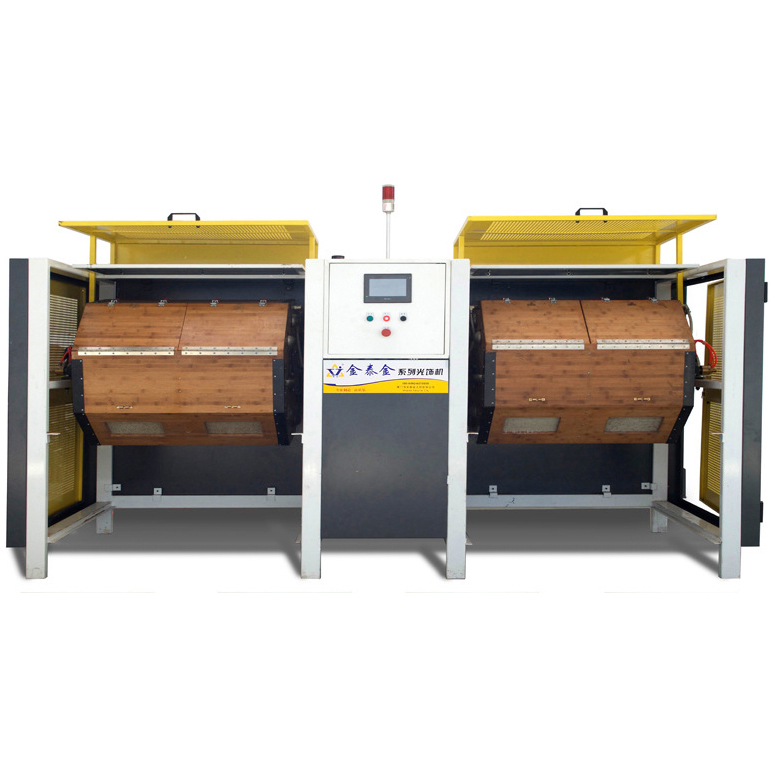
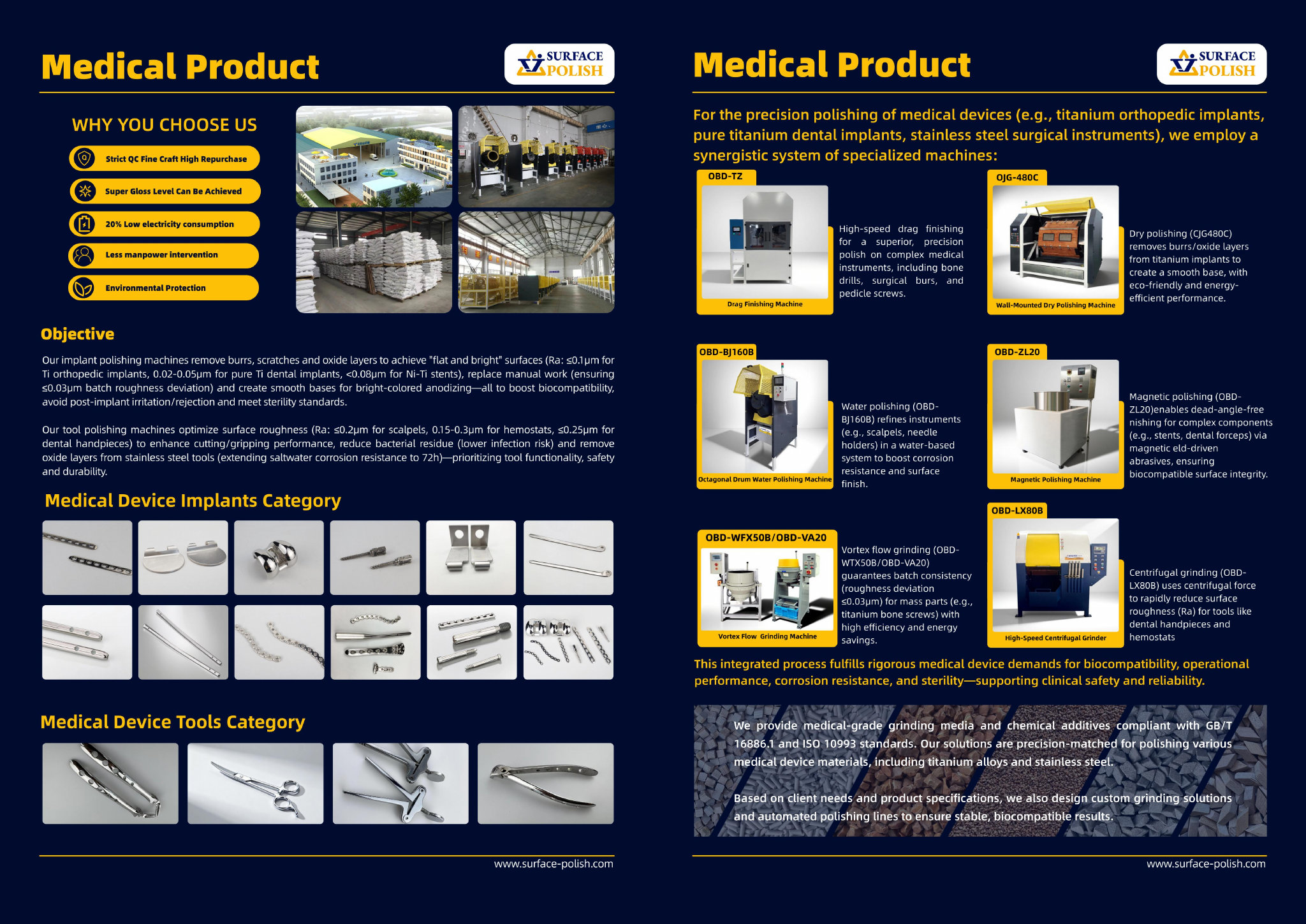
| Tub vibrator | Long parts that cannot rotate in a bowl, such as rail sections, pipe spools, linear weldments and long shafts, provided they can be supported along their length | Lower energy per unit area, so heavy weld dressing takes longer, and a long tub needs floor space plus a support method that does not mark the part |
| Grinding finishing machine | Taking off a heavy machining burr or a defined stock layer before a refinement pass on robust stainless and duplex work | High removal energy cuts functional edges fast, so geometry assessment and a short controlled cycle matter more than on any other route |
| Dry polishing machine and dryer | Drying parts after a wet stage and producing a dry polished surface with organic media where a wet residue would be hard to remove | No cutting action, needs dust extraction, and organic media must be kept dry and clean or it transfers contamination to the part |
| Centrifugal barrel finishing machine | Short, aggressive cycles on small precision items such as valve trim, inserts and small stainless components with fine edge requirements | Rounds edges and can distort thin unsupported sections quickly, and results are sensitive to charge weight, speed and stop time |
Removing material releases residual stress, and on a large thin fabrication that means movement. A scrubber panel welded into a frame can lose flatness after weld dressing, a long shaft can bend slightly as a skin is taken off, and a bore can close or open as the surrounding metal is worked. Clamping makes this worse when force is used to pull a warped part onto a fixture, because the part springs back on release. Measure flatness, straightness and critical diameters at marked points before and after, and record the support and clamping scheme used. In a cell, gripper force and fixture datums are part of the process rather than peripheral equipment. Where drift matters, the buyer should decide whether stress relief, a reduced stock allowance or a different finishing route is the right answer.
| Failure mode | Likely cause | How to catch it |
|---|---|---|
| Compound film, burnished residue or dried detergent left on a sealing face | Rinse that did not reach the same features the finishing step reached, compound drag-out from the charge, or a part allowed to drain and dry in position instead of being dried deliberately | Wipe the sealing face with a clean white cloth and a defined solvent, inspect the wipe, and borescope any groove or land the rinse may not have reached |
| Dwell mark or flat spot where a robot-held tool paused, slowed or changed direction | Waypoint spacing or path speed poorly set, a tool change or program transition in the middle of a visible surface, or missing compensation for tool wear along the path | Photograph the surface under raking light and compare first and last parts of a run, and measure at fixed points along the path to locate any step or band |
| Over-grind step or gouge at a path transition or belt change | Two passes overlapping at different pressures, a fresh belt run at the setting that suited a worn one, or an operator touching up a transition by hand without recording it | Inspect each transition zone at a fixed viewing distance under consistent lighting, and compare the zone against the surrounding surface with a roughness reading on both sides |
| Dimensional drift on a bearing journal, bore or machined fit | Too much stock removed at the feature, stress redistribution in a long or thin part, or clamping force that pulled the part out of shape during finishing | Micrometer or bore gauge the same stations before and after at a controlled temperature, and re-check after the clamps are released to separate clamping deflection from real drift |
Venice's industrial identity is built on the port system and on the Porto Marghera industrial zone on the mainland. The port authority reports that the lagoon port handled 24,220,555 tonnes of goods in the twelve months to March 2023, a fall of 3.6% year on year, with 517,781 TEU of containers and a decline in refined petroleum products that it attributes both to the green conversion of the Marghera pole and to the effects of sanctions on Russia (s1). The authority describes the Veneto port system as multipurpose, with the ports of Venice and Chioggia working agro-food, steel, chemical and energy supply chains as well as commercial and tourist traffic, and Chioggia holding national standing in fishing (s2). Alongside this, Murano retains a concentrated glass manufacturing base: the Consorzio Promovetro represents more than 40 artisan and industrial glass firms on the island (s3).
For this brief the relevant part of that base is marine: The port authority reports 24,220,555 tonnes of goods handled and 517,781 TEU of containers in the twelve months to March 2023, and describes the Venice and Chioggia ports as a multipurpose system with ro-ro traffic growing at Fusina.
The Venice-area finishing problem is split between metal and glass. In the Marghera and port-related industrial zone, ship repair, steel and process-plant work create deburring and weld-dressing requirements on large fabrications, where the constraint is access and part size rather than cycle time. On Murano the requirement is different again, because glass finishing is about cold working, edge polishing and surface defect control where a metal-media process is not applicable; a supplier should be clear about which of the two it is being asked to solve.
The first distinction to settle is whether the part is a metal fabrication or a glass article, because almost nothing about the process carries over between them. For the Marghera and port-side industrial work, the practical questions are whether the part can be moved to a machine at all and what the acceptance criterion for weld dressing or edge condition will be.
Freight context: Porto di Venezia (Marghera), Porto di Chioggia, Porto di Fusina (ro-ro). The lagoon port system is the freight gateway: 24,220,555 tonnes of goods in the twelve months to March 2023 with 517,781 TEU of containers, and ro-ro units at Fusina up 11.5% (s1). The authority describes the ports as multipurpose and working agro-food, steel, chemical and energy supply chains (s2), so Marghera is the natural point of discharge for a machine or a pallet of sample parts destined for the Venice-Padua industrial area. Venice Marco Polo airport was not verified in this session and is therefore not listed as a confirmed hub.
The customs authority is the Agenzia delle Dogane e dei Monopoli (ADM), which is the regulatory, supervisory and control authority for customs and collects the duties. Goods arriving from China are cleared by customs before they can enter the single market and are released into free circulation by means of a customs declaration; the date of acceptance of that declaration is the date used to calculate and apply the import duty and any VAT or excise duty. Importers should settle in advance who lodges the declaration and under which VAT and EORI arrangements, and must ensure the machine carries CE marking and is supported by the EU declaration of conformity and technical file. Because the CE mark is compulsory for machinery covered by the EU machinery legislation and forbidden for products outside it, the conformity route must be settled before shipment rather than at the border.
Business is conducted in Italian; quotations, drawings, technical dossiers and declarations of conformity are normally expected in Italian, and correspondence in English is workable but rarely sufficient for a purchase order or for a conformity file. Italian industrial buyers qualify suppliers through a documented process: a part drawing with surface-texture indications, a sample or trial batch, and written acceptance criteria are the usual gate before a machine or media is specified into production. Payment and documentation norms follow Italian/EU practice - the importing entity's VAT and EORI details, invoice data matching the customs declaration, and standard EU commercial terms - so a cross-border seller should expect the conformity documentation (declaration of conformity, technical file, material certificates) to be requested before, not after, delivery.
SurfacePolish supplies from Xiamen, China. The buyer's own destination rules, conformity marking, tariff classification and documentation responsibilities stay with the buyer; confirm them against the authorities named above before ordering.
Acceptance should exist before finishing starts, on the drawing or in a document the drawing references. Name every controlled surface, the parameter and the cut-off to be used, the measurement direction and the locations where readings are taken, because a seal face, a bore and an outer wall respond differently to the same charge. State the maximum edge radius or the minimum remaining edge at any weld toe, bore lip, keyway or seat. Say what is acceptable visually and under what lighting and viewing distance. Add the functional checks and the cleanliness requirement, together with who performs them. Without this the first argument about a rejected lot becomes a discussion about opinion. A buyer who writes the criteria can also compare two route options on the same basis, whether the work is done in a machine, by hand or by an arm.
A comparison is useful only if one thing changes at a time. Run the same part, the same marks and the same measurement plan against two options, keeping compound, concentration, cycle or path, and charge age as close as possible. Where the trial runs in a machine, charge the two options separately rather than mixing them, and add the fresh-media effect to the list of variables, since a new charge cuts differently from an aged one. For a tool-carrier comparison, use the same belt or wheel specification and reset the tool life counter between runs. Randomise the order when more than two options are compared, and have the parts evaluated by someone who does not know which is which. Record everything on the same form and photograph each option under the same lighting.
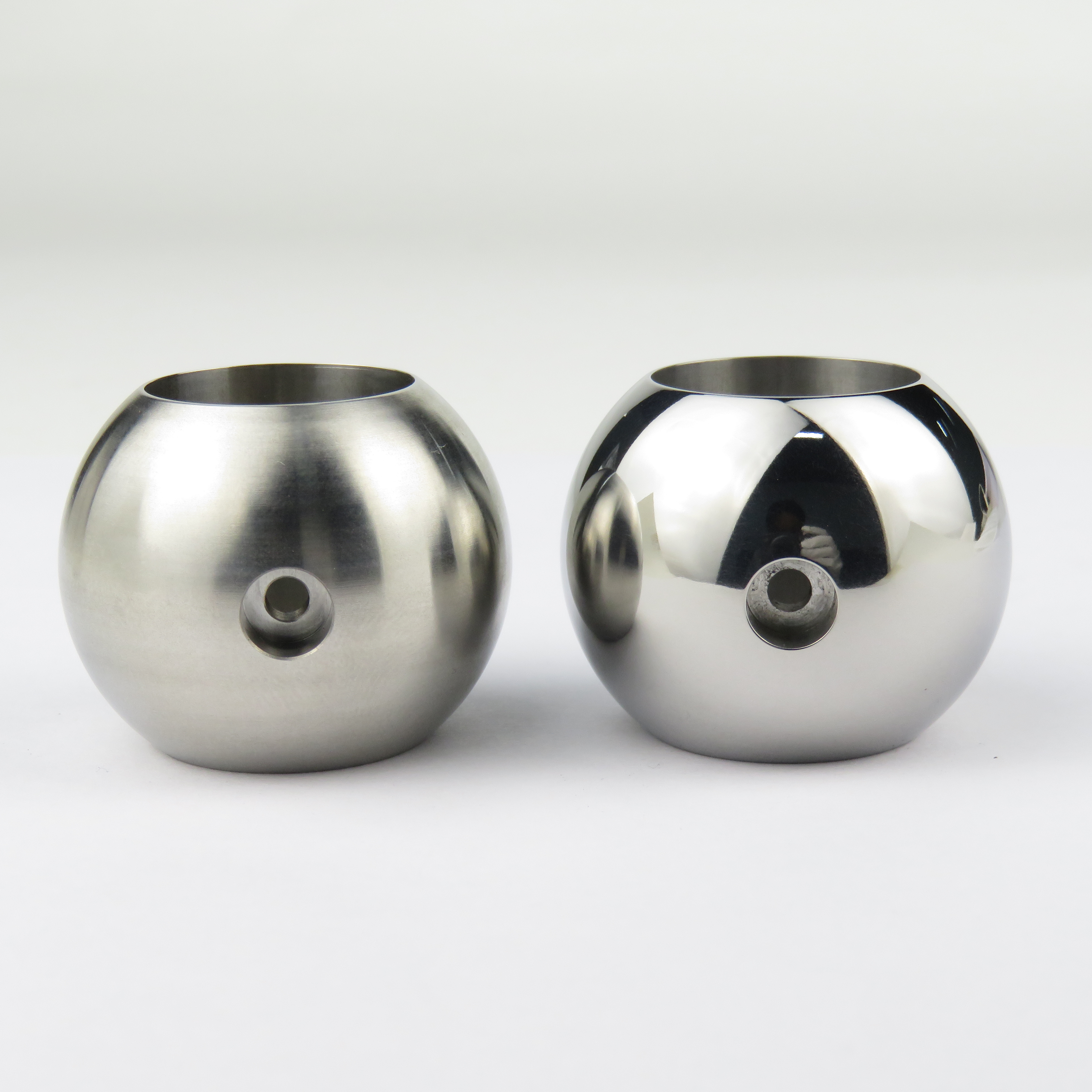
Usually contamination rather than the material itself. Carbon steel media, carbon steel brushes, a machine also used for carbon steel work, grinding dust settling on a wet surface, bare-hand handling and chloride carried in rinse water can all leave something behind that starts to stain. It often appears first at a weld, a pit or a thread root. Segregate stainless work, use dedicated tooling, control the rinse water, dry the part promptly, and check with a wipe test or a free-iron check if the buyer wants one. Whether passivation follows mechanical finishing is the buyer's decision and its own requirement to define in Italy.
Send parts that represent the extremes of the family: the tightest internal passage, the thinnest section, the largest surface, the worst access, and one weld made with the production procedure. Add an as-received reject so the starting condition is documented, and mark the controlled features and measurement points before shipping. Include a note of the material grade, product form, heat treatment and the cleanliness requirement the part must eventually meet. Parts travel to the factory in Xiamen from Italy and come back with an observed condition and a proposed media, compound and cycle direction for the buyer to evaluate.
There is no universal number, but the shape of the answer is consistent: a small number of stable variants, each repeating often enough to amortise setup, with a predictable manual time content. Count the hours over a year, then subtract the hours a cell would still spend on loading, fixture changes, tool changes and inspection. If the remainder is small, a batch machine or a fixture change may be the better buy. Where a finishing route near Venice already produces an acceptable surface in bulk, automating load and unload is usually the smaller and more certain step than automating the finishing motion itself.
Use Venice, Italy as the destination on the enquiry and state whether the deliverable is equipment, media and compound, a representative sample review or a line concept. A destination does not imply local stock, a local service point or a local delivery time.
Italian buyers reference UNI and the ISO/EN surface-texture, tolerancing and cleanliness standards transposed into it, while glass and ceramic producers work to product standards rather than to metal-finishing standards. In the Venice industrial area the finish requirement usually arrives inside the individual order from the shipyard's or plant operator's own specification, so it has to be read off the customer's drawing and inspection plan rather than from a generic default.
Sources were retrieved on 2026-09-29 and describe the local industrial and trade context only. They do not evidence any SurfacePolish project, shipment, installation or service in Venice.
The buyer needs the drilled hole edges broken consistently without medium wedging in the holes or damaging the gasket face.
Send the material, dimensions, approximate weight, batch quantity, the incoming condition and photographs of the difficult features. Mark which features must not be contacted by media and state how the result will be inspected. This form carries source reference PSEO-0486; quote it if you prefer an additional manual reference.
Open the SurfacePolish enquiry form Email a prepared enquiry
No price, lead time, certification or result is promised here. Confirm whether a sample trial is available for the specific part and what the trial can and cannot show.
Page PSEO-0486 · revised 2026-09-29 · cross-border equipment, media and scoped sample review. City context is sourced and cited above.
Use this local checker to identify missing part and inspection information. It prepares a technical-review brief; it does not approve a machine, process recipe or production result.
Complete the part details to prepare a review brief.
Email : info@surface-polish.com


 IPv6 network supported


 +86-592-2381506