
Compound for Aluminum in Mass Finishing: Preventing Oxide Darkening & Automating Deburring
Manufacturing engineers and finishing supervisors searching for the right compound for aluminum (and the best way to automate deburring aluminum die cast automotive parts) rarely fail because aluminum is hard to cut. They fail because aluminum is chemically reactive and mechanically soft: running a harsh alkaline steel descaler turns bright 6061, 7075, or die-cast A380 housings dark charcoal grey and pits the surface, while running heavy ceramic triangles or dirty static sump water leaves permanent edge bruising and grey oxide smear.
The central thesis of this guide is clear: bright, bruise-free aluminum finishing depends on pairing neutral-to-mild flow-through chemistry (compound-LC10 for deburring, compound-JTJ60 or compound-HM3 for fine smoothing and brightening, and compound-JTS5 for thin sheet alloys) with low-density resin-bonded plastic cones or high-alumina spheres inside polyurethane-lined vibratory bowls or divided troughs—followed immediately by clean spray rinsing and heated centrifugal or dry corncob drying. For related alloy and media comparisons, see our aluminum polishing machine guide, aluminum isotropic finishing guide, and metal discoloration after tumbling guide.
Why Aluminum Blackens and Pits in the Wrong Tumbling Compound
Unlike carbon steel or 304 stainless steel, aluminum alloys rely on a thin, amphoteric natural oxide skin that reacts rapidly with both strong acids and strong caustics.

compound-HM3 liquid polishing compound formulated to brighten non-ferrous metals without alkaline pittingAmphoteric Reactivity With Strong Alkaline and Acidic Steel Compounds
Heavy-duty steel derusting and descaling compounds—such as compound-MC8—are formulated to attack iron oxides and heat-treat scale on ferrous forgings. When poured onto aluminum die castings or CNC-machined 6061 cavities, aggressive chemistry strips the protective aluminum oxide film, etches grain boundaries unevenly, and leaves a dull, dark grey or black smut layer across every face. Once grain boundaries are etched, even subsequent brightening with HM3 or JTJ60 cannot restore uniform optical reflectivity without re-cutting the surface. Always keep ferrous descalers strictly separated from aluminum finishing tanks.
Grey Oxide Smear From Closed Static Sump Recirculation
Even with a safe compound for aluminum, running a vibratory bowl in a sealed puddle traps microscopic aluminum fines and worn media dust in suspension. Within minutes, those suspended aluminum particles oxidize and re-deposit onto parts as a stubborn grey smear that resists simple water rinsing. Worse still, that same sludge packs into blind tapped holes and cooling-fin roots, creating downstream assembly contamination. Continuous single-pass flow-through chemistry is mandatory to flush aluminum fines out of the chamber as fast as they are abraded.
Galvanic Darkening From Mixed-Metal Media or Steel Shot Contamination
Running aluminum housings inside a bowl that previously tumbled carbon steel—without thoroughly flushing out residual steel dust—or mixing ferrous media with aluminum parts accelerates galvanic darkening. Iron particles pressed into soft aluminum surfaces also cause localized corrosion spots during salt-spray or humidity exposure later in service. Always dedicate clean media charges and wash down polyurethane chamber linings before switching from ferrous alloys to aluminum.
| Chemical / Process Mistake | Visible Aluminum Defect | Root Cause | Corrective Action |
|---|---|---|---|
Using Steel Descaler (MC8) |
Charcoal-black film & micro-pitting | Aggressive chemical attack on amphoteric aluminum | Switch to compound-LC10 (deburr) or JTJ60/HM3 (polish) |
| Static Closed Sump Water | Dull grey oxide smear on flats | Suspended aluminum fines re-depositing on parts | Run continuous flow-through into a multi-baffle settling tank |
| Heavy Ceramic Triangles | Edge bruising & orange-peel dimples | High stone density hammering soft aluminum skin | Switch to light resin-bonded plastic cones / pyramids |
| Air Drying Damp Parts | White water spots & dull rings | Mineral evaporation on reactive aluminum surfaces | Use clean spray rinse → 35A/70A spin-dryer or dry corncob |
Selecting the Right Liquid Compound for Each Aluminum Stage
Just as steel finishing separates rough deburring from bright burnishing, aluminum mass finishing uses distinct liquid compounds across Stage 1 cutting and Stage 2 brightening.

compound-JTJ60 fine metal polishing compound used for smooth aluminum surface preparationcompound-LC10 for Automated Deburring of Die-Cast and CNC Aluminum
For Stage 1 removal of CNC milling burrs, die-casting parting lines, and sharp stamped edges, compound-LC10 provides continuous flow-through lubrication and cleaning. It keeps resin-bonded plastic cone pores open, suspends fine aluminum swarf in the effluent stream, and cushions sliding contact so machined 6061 and cast A380 parts emerge clean and uniform without dark smut. On high-volume automotive die-casting lines, steady LC10 flow keeps cycle times repeatable from the first basket of the morning shift to the last. See our vibratory deburring machine guide for flow-through dosing setups.
compound-JTJ60 and compound-HM3 for Fine Metal Smoothing and Brightening
Once burrs and tool marks are leveled, Stage 2 brightening transitions to compound-JTJ60 (fine metal polishing) or compound-HM3 (polishing). Paired with dense high-alumina ceramic spheres or gentle 304 stainless steel balls (on heavy-walled parts), these compounds build bright, low-roughness luster on aluminum fan wheels, automotive brackets, and decorative housings prior to clear anodizing or powder coating. Because JTJ60 and HM3 leave a clean, residue-free surface after spray rinsing, downstream anodizing tanks experience fewer bath contamination issues.
compound-JTS5 for Thin-Sheet Aluminum Stampings and Delicate Panels
Thin-gauge stamped aluminum covers, heat-sink fins, and trim plates deform easily under aggressive tumbling. compound-JTS5 is formulated specifically for fine sheet-metal polishing, delivering high lubricity that lets parts glide smoothly inside light plastic or high-alumina media without edge roll-over or surface galling. It is especially effective when paired with gentle eccentric counterweight angles on circular vibratory bowls.

compound-JTS5 fine sheet-polishing compound engineered to protect thin aluminum stampings during mass finishingMatching Plastic Cones vs. High-Alumina Media to Aluminum Alloys
Compound chemistry cannot fix mechanical bruising if the media itself is too heavy or coarse for the aluminum alloy.
Resin-Bonded Plastic Cones and Pyramids for Soft Die Castings and CNC Cavities
Resin-bonded plastic cones and pyramids have a density much closer to aluminum than vitrified ceramic stones. Inside a vibratory bowl, plastic media suspends machined aluminum cavities and die-cast automotive housings evenly, shearing sharp burrs and CNC tool paths without peening edges or leaving coarse gouges. Review our deburring plastic guide and tumbler media guide for plastic cone density benefits.
Dense High-Alumina Spheres for Non-Abrasive Aluminum Brightening
When aluminum parts require bright burnishing after Stage 1 plastic cutting—and iron-free cleanliness for downstream anodizing—dense high-alumina ceramic spheres provide smooth, non-abrasive peak compression. Because high-alumina contains zero free iron, it never embeds ferrous dust into soft aluminum walls. See our ceramic grinding media guide and abrasive polish vs burnishing guide for two-stage progressions.
Non-Lodging Sizing to Protect Cast Ribs, Cooling Fins, and Tapped Bores
Die-cast automotive housings and machined aluminum manifolds feature deep cooling fins, cross-drilled oil passages, and threaded bosses. Always specify plastic cones or high-alumina spheres that either bridge cleanly across the widest slot or pass straight through without jamming, and screen out worn undersized fragments on a fixed schedule.
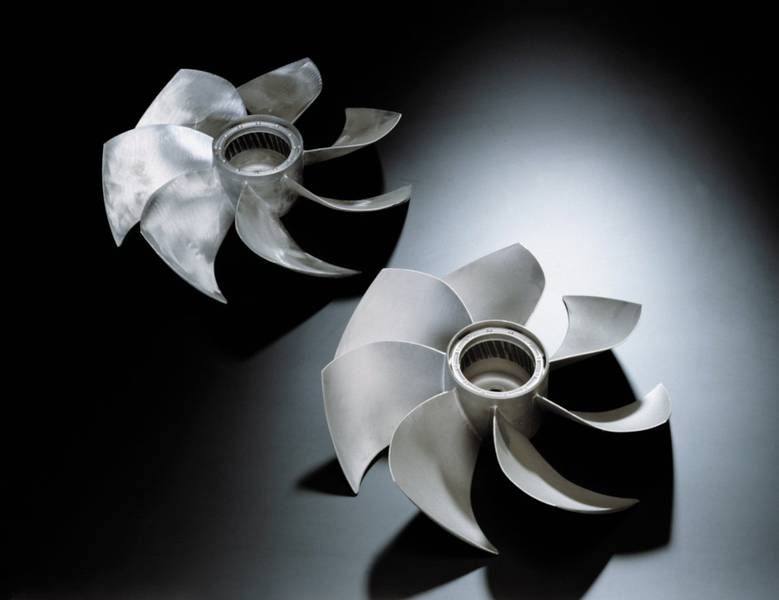
Automating Die-Cast Automotive Aluminum Deburring Lines
High-volume automotive Tier-1 and Tier-2 suppliers need repeatable, low-labor automation rather than manual bench grinding.

ZL250W class) configured for automated aluminum die-casting finishingWide-Channel Circular Bowls (ZL250W Class) With Pneumatic Screen Separation
For compact to mid-sized die-cast aluminum brackets, fan wheels, and valve bodies, a wide-channel cast polyurethane-lined circular vibratory bowl—such as the ZL250W series—delivers continuous helical turnover with automated pneumatic flap separation. At cycle end, closing the flap routes parts up onto the perforated screen deck under a clean water spray bar while plastic media drops back into the tub ready for the next batch. Choosing a wide-channel profile gives wider castings room to roll freely without bridging against the center column.
Divided Linear Troughs (L1300–L1800) for Large Aluminum Housings and Rails
Large die-cast transmission covers, extruded aluminum rails, and complex multi-cavity CNC blocks cannot negotiate a circular bowl without colliding. Linear troughs (L1300, L1500, L1800) fitted with removable polyurethane dividers isolate each heavy casting in its own cushioned bay, eliminating part-on-part dings while maintaining full LC10 or JTJ60 flow-through. Operators can inspect individual housings mid-cycle and lift finished parts by hoist without disturbing adjacent compartments. See our vibro polishing machine guide and metal parts tumbler guide for trough vs. bowl selection.
High-Energy Centrifugal Disc Finishers (LLB50 / LLF120) for Small Machined Fittings
Small turned aluminum fittings, spacers, and miniature brackets finish rapidly inside high-energy centrifugal disc machines such as the LLB50 or LLF120. Because centrifugal sliding pressure is much higher than in a vibratory bowl, pairing lightweight plastic cones with steady LC10 water flow keeps small aluminum parts cool, bright, and free of edge roll-over. Always verify gap-seal clearance and water flow before starting high-energy aluminum cycles.
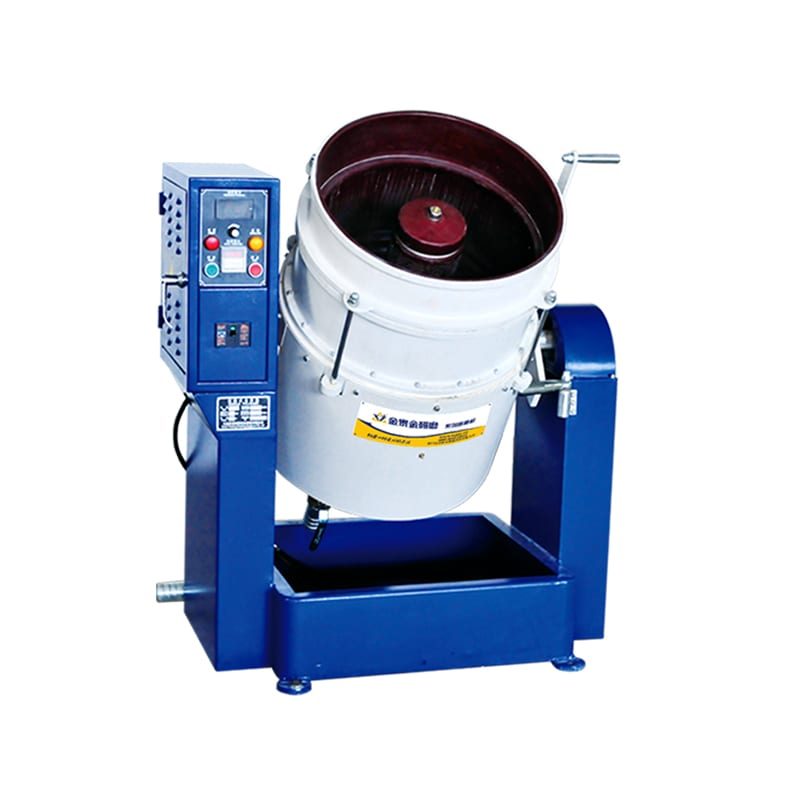
LLB50 class) built for rapid deburring and smoothing of compact aluminum componentsHeated Centrifugal Drying (35A / 70A) and Dry Corn Cob Spot Prevention
Aluminum does not flash-rust like carbon steel, yet leaving rinse water to evaporate in baskets leaves chalky white mineral rings that ruin anodizing appearance. Route rinsed aluminum batches straight through a heated centrifugal spin-dryer (35A or 70A series) or follow with a short dry corncob polish cycle to wick away trace moisture and leave every surface spot-free. See our corn cob vs walnut media guide and corncob and cob media guide for dry finishing stages.
| Aluminum Application | Stage 1 Media & Compound | Stage 2 Brightening | Machine Platform | Drying Step |
|---|---|---|---|---|
Die-Cast Automotive Brackets (A380) |
Plastic cones + compound-LC10 |
Optional high-alumina + JTJ60 |
ZL250W bowl or L1300 divided trough |
Clean rinse + 35A/70A spin-dryer |
CNC-Machined 6061/7075 Cavities |
Fine plastic pyramids + compound-LC10 |
High-alumina spheres + HM3 |
Divided L1300–L1800 linear trough |
35A dryer → dry corncob buff |
| Thin Stamped Aluminum Plates | Light plastic cones + compound-JTS5 |
High-alumina + JTS5 |
Circular vibratory bowl (gentle weights) | Heated centrifugal spin-dryer |
| Small Turned Aluminum Fittings | Fine plastic cones + compound-LC10 |
High-alumina + HM3 |
LLB50 / LLF120 centrifugal disc |
35A centrifugal spin-dryer |
Troubleshooting Aluminum Compound and Surface Defects
When bright aluminum batches turn dull, spotty, or bruised mid-shift, check chemical dosing, sump cleanliness, and upstream degreasing first.
Dull Grey Smut After Wet Vibratory Deburring
If freshly unloaded aluminum parts look coated in grey film that wipes off onto gloves, flow-through water rate is too low or the settling tank is overdue for cleanout. Increase clean water flow alongside metered LC10, flush the multi-baffle settling tank, and verify the clean-water spray rinse bar on the separation screen. Running a brief clean-water purge cycle at the end of the shift also clears residual aluminum hydroxide from the plastic media bed.
White Water Spots and Chalky Rings After Drying
Chalky spots appear when hard tap water dries slowly on warm aluminum castings. Ensure the separation deck spray bar uses clean rinse water and move parts immediately into a 35A/70A centrifugal spin-dryer or dry corncob polishing stage. For decorative parts headed to clear anodizing, clean final rinsing prevents uneven dye uptake later.
Edge Peening and Orange-Peel Texture on Soft Alloys
Dented corners or dimpled flat faces mean either media density is too high (ceramic triangles used instead of plastic cones) or the part-to-media ratio is too crowded. Switch to resin-bonded plastic media, reduce part load per batch, or isolate castings inside divided L1300–L1800 trough bays.
Excessive Foam Cushioning the Cut
Heavy white foam slows deburring and leaves soap film inside blind holes. Excessive foam usually signals over-concentrated liquid compound or residual CNC coolant carried in on un-washed parts. Pre-degrease oily castings upstream and calibrate peristaltic pump dosing for LC10 or JTJ60.
Media Fragments Wedged in Cast Cooling Fins
Broken plastic cone tips trapped between fins or inside tapped bosses indicate worn media has not been screened. Purge undersized fragments regularly and verify non-lodging cone dimensions against your narrowest fin gap.
Upstream Degreasing, Settling Tanks, and Shift-Start Controls
Even the cleanest compound for aluminum loses effectiveness if machining coolants, die-release sprays, and settled aluminum hydroxide sludge are allowed to accumulate inside the finishing loop.
Removing Die-Release Agents and CNC Coolants Before Charging
Die-cast automotive parts arrive coated in silicone or wax release sprays, while CNC-machined 6061 and 7075 blocks carry water-soluble or oil-based cutting fluids. Running oily parts directly into a plastic-media bowl coats the cones, causes heavy foaming, and traps dark oxide on the surface. A quick upstream alkaline wash and clean water rinse ensures compound-LC10 and JTJ60 act directly on bare aluminum rather than fighting oil films.
Multi-Baffle Settling Tanks for Aluminum Hydroxide Sludge
Flow-through aluminum finishing generates fine white-to-grey aluminum oxide and resin dust in the effluent. Piping that slurry straight into floor drains clogs pipes rapidly. A multi-baffle settling tank slows effluent velocity so heavy solids settle out cleanly for periodic removal, keeping the bowl drain open and preventing back-pressure inside the tub.
Brushing Drain Screens and Calibrating Peristaltic Dosing Pumps
At the start of every shift, operators should brush the bottom bowl drain screen clear of plastic cone chips and verify peristaltic pump flow for LC10, JTJ60, JTS5, or HM3. Consistent dosing keeps media pores open without creating excess foam that cushions the tumbling action.
Dedicated Media Bins for Aluminum vs. Ferrous Alloys
Never share media scoops, transfer baskets, or separation screens between carbon-steel ceramic lines and aluminum plastic-media lines. Even minor iron dust carried into an aluminum bowl causes galvanic staining and compromises downstream clear anodizing quality.
Sourcing & Factory Capabilities: Verified Aluminum Finishing Supply
Xiamen Jin Tai Jin Grinding Technology Co.,Ltd. has engineered and manufactured industrial mass finishing equipment and chemistry since 1992, accumulating 200,000+ workpiece finishing solutions across 21 machine platforms—including PU-lined circular vibratory bowls (ZL250W class), L1300/L1500/L1800 linear troughs, centrifugal disc finishers (LLB50, LLF120), octagonal rotary barrels, and 35/35A/70/70A centrifugal dryers—paired with resin-bonded plastic cones, high-alumina spheres, corncob, walnut shell (8#-80#), and dedicated LC10, JTJ60, JTS5, and HM3 liquid compounds.
Every machine line operates under ISO 9001 (00726Q01571R001), holds CE vertical (M.2023.206.C88121) and horizontal (M.2023.206.C88120) certification, and incorporates 24 granted Chinese IP rights. Standard machines ship in 25–35 days, with custom automated or divided-trough lines delivered in 45–60 days. Honest boundaries apply: we do not supply anodizing dye tanks, chromate conversion baths, or dry sandblasting cabinets.
Send sample aluminum castings or CNC parts, alloy grade, and target hourly output to surface-polish.com or call +86 189 6582 7080 for a complimentary sample finishing trial and compound dosing recommendation.
Frequently Asked Questions About Compound for Aluminum
What is the best compound for aluminum tumbling in a vibratory bowl?
For Stage 1 deburring of CNC-machined or die-cast aluminum, use compound-LC10 in continuous wet flow-through with resin-bonded plastic cones. For Stage 2 fine smoothing and brightening, use compound-JTJ60 or compound-HM3, and use compound-JTS5 for thin-sheet aluminum stampings.
Why did my aluminum parts turn black or dark grey during tumbling?
Aluminum turns dark grey or black when tumbled with harsh steel descaling compounds (such as MC8), closed static sump water saturated with oxidized aluminum fines, or media contaminated with carbon-steel dust. Switch to fresh LC10 or JTJ60 flow-through and clean plastic or high-alumina media.
What is the best way to automate deburring aluminum die cast automotive parts?
Combine a polyurethane-lined wide-channel circular bowl (ZL250W class) with pneumatic screen separation for compact castings—or a divided linear trough (L1300–L1800) for large housings—running resin-bonded plastic cones and continuous compound-LC10 flow-through, followed by clean spray rinsing and a 35A/70A centrifugal spin-dryer.
Can I use ceramic grinding media with aluminum compound?
Generally no for soft 6061, 7075, or A380 aluminum parts. Heavy ceramic triangles bruise soft edges and leave coarse scratches. Use lightweight resin-bonded plastic cones for cutting and dense high-alumina spheres only when non-abrasive Stage 2 brightening is needed.
Should aluminum parts be dried in a centrifugal dryer or corn cob after wet tumbling?
Yes. Immediately after wet rinsing, pass aluminum parts through a heated centrifugal spin-dryer (35A or 70A class) to eliminate chalky water spots, and add a short dry corncob cycle if mirror-bright decorative clarity is required.
What lead time applies to automated aluminum finishing bowls and linear troughs?
Standard circular vibratory bowls, centrifugal disc finishers, and centrifugal spin-dryers ship in 25–35 days, while custom divided-trough systems ship in 45–60 days under ISO 9001 (00726Q01571R001) and CE certification.
Can one vibratory line run both aluminum castings and stainless steel parts?
Yes, provided you dedicate separate media charges (resin-bonded plastic cones for aluminum, preformed ceramic or 304 steel balls for stainless) and flush the polyurethane bowl, drain screen, and settling lines thoroughly before switching alloys so residual iron swarf never stains soft aluminum parts.
 +86-592-2381506


 IPv6 network supported
