
Metal Finishing: The Five Routes We Build, and What We Do Not
Metal finishing is not one process. It is a set of routes that remove material, add material, or transform the surface, and the first useful thing a buyer can do is find out which route the part actually needs — because most of the cost and almost all of the disappointment come from picking the wrong category, not the wrong brand.
This page does what the usual overview does not: it says plainly which of these routes we manufacture equipment for, and which we do not. We build vibratory, disc, barrel, magnetic and centrifugal finishing machines, plus the media and compounds that run in them. We do not offer a job-shop finishing service, and we do not make blasting, coating or plating equipment. If your part needs those, this page says so and you can stop reading and go find the right supplier. If it needs a mass-finishing route, the rest is the selection logic.
Where a figure is a starting point rather than a promise, it says so: a published cycle assumes a material and a removal that may not be yours.
The routes, sorted by what they do to the surface
| Route | What it does | Do we build equipment for it? |
|---|---|---|
| Vibratory finishing (bowl, tub) | media flow removes burrs, smooths, brightens | Yes |
| Centrifugal finishing (disc, barrel) | high energy for short cycles and tolerances | Yes |
| Barrel / rotary tumbling | whole charge rotates; volume work on simple shapes | Yes |
| Magnetic finishing | needle mass reaches slots, cross-holes, thread roots | Yes |
| Drag finishing | parts held in a fixture and dragged through a media bed | Built to order — not a catalogue model, made to the workpiece |
| Blasting (sand, glass bead, walnut shell, corn cob dry blast) | impact cleaning, matte texture, coating prep | No |
| Shot peening | compressive residual stress for fatigue life | No |
| Anodising / plating / electropolishing | electrochemical surface conversion or deposition | No — we supply the mechanical finish that precedes them |
| Powder coating / painting / PVD | applied coating | No |
| Passivation / chemical conversion | chemical cleaning and oxide control | No |
Two "no" rows deserve a sentence each. Blasting and mass finishing are confused because both use loose abrasive, but blasting throws media at the surface to clean it while mass finishing rubs media against the part to cut it — a matte blast texture cannot be produced on a vibratory bowl, and an edge radius cannot be produced by blasting. Anodising, plating and electropolishing sit downstream: the mechanical finish sets the base the coating is built on, so the two decisions belong together even when they are bought from different suppliers.
Drag finishing is the one row in this table that is neither a catalogue line nor a "no". We do not publish a drag finishing model, because the machine is built around a fixture and the fixture is built around the part — so it is quoted from a drawing and a trial rather than from a specification sheet. The honest position is that it is available on a built-to-order basis for work that justifies it, which in practice means large or high-value parts with a defined feature in low to medium volume. It is not a standard offering, and it should not be presented as one.
What decides the route: five questions, in order
Work these before looking at a machine. Each one eliminates routes rather than adding them.
1. Remove, add, or transform? Removing a burr, a parting line or roughness is mass finishing; adding a coating or conversion layer is not; changing the stress state is shot peening. Most parts need remove-then-add — two suppliers, one interface, and the interface is where finishes go wrong.
2. Where is the feature, and how big is it? An open edge is reachable by any route; a cross-hole, slot or thread root only if the media fits, or by a magnetic needle mass; a deep blind feature is often unreachable by all of them — a design conversation, not a purchasing one.
3. How much stock comes off, in absolute terms? Not "deburr" but how many tenths of a millimetre. That plus the finish required sets the grade and the cycle — two separate requirements that pull against each other.
4. What is the part worth, and how many are there? A high-value part justifies a controlled single-part process; a high-volume simple part justifies a barrel or a large bowl; high-mix low-volume punishes any process needing a part-specific charge.
5. What happens next? Plating, anodising, coating, assembly, a leak test, a thread gauge. The finishing step is judged by what the next step accepts, not by how bright the part looks.
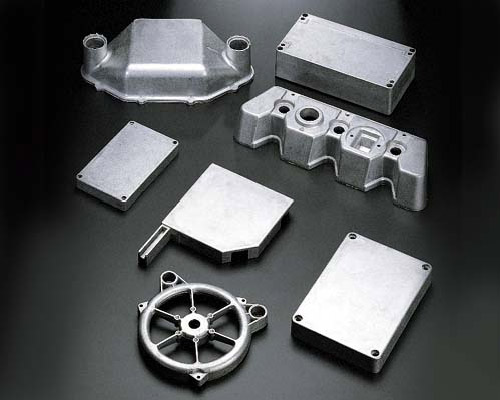
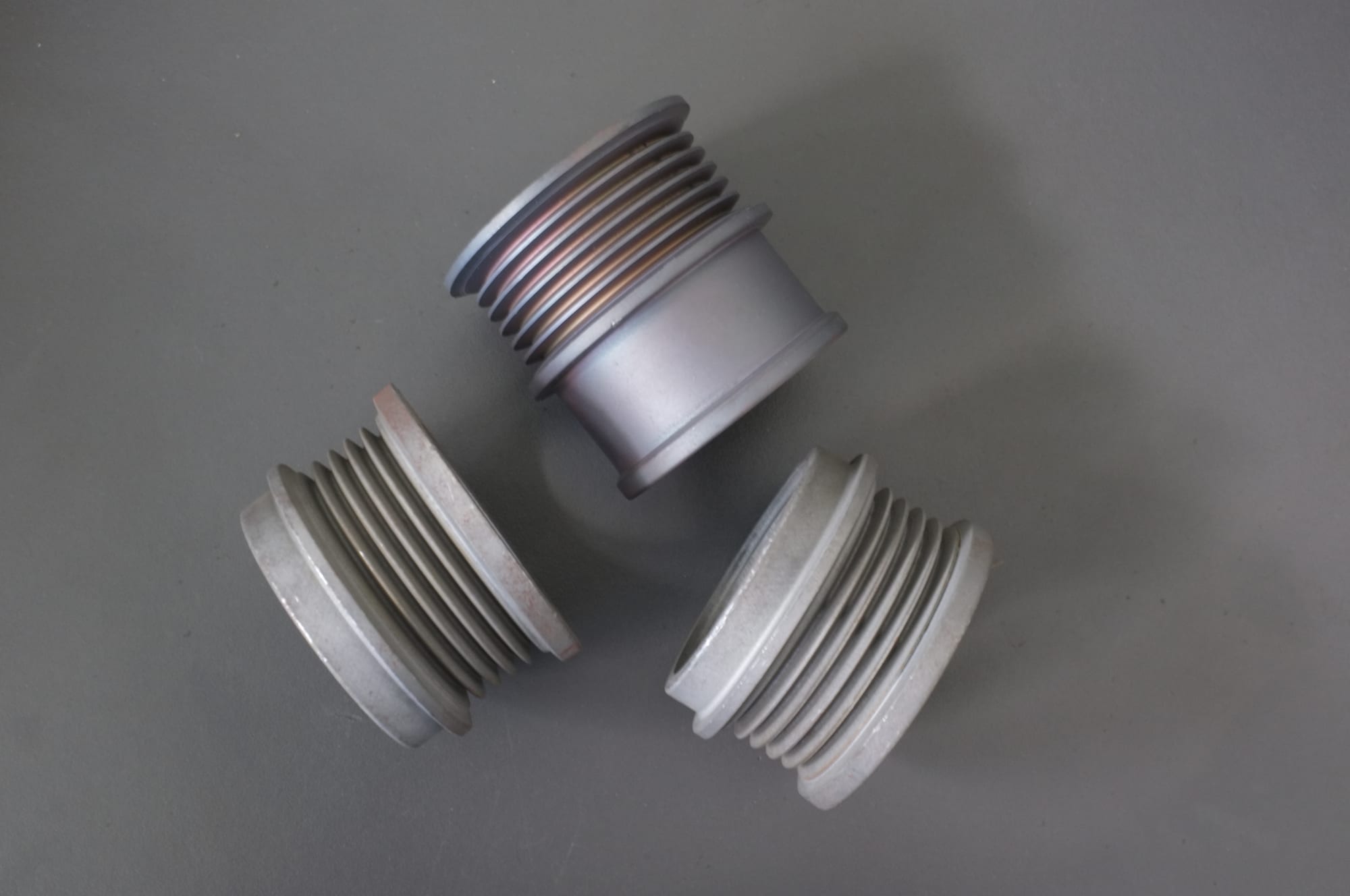
The five routes we build, and the honest limits of each
Vibratory finishing — the general-purpose answer
Vibratory drives the media past the workpiece in a flow, so it reaches into features and the result is even across the surface. A bowl is compact and suits mixed small-to-medium work; a tub is long and open and takes parts a bowl will not. How to choose a vibratory finishing machine for metal parts covers bowl vs tub and capacity.
Real numbers from our tub range: the L1300 is 1,200 L (42.4 cu.ft) with a 1,200 × 1,000 × 1,000 mm working chamber and 5.0 kW × 2 motors; the L1500 is 1,500 L with 5.5 kW × 2; the L1800 is 1,800 L with 7.5 kW × 2. All three use a 20–35 mm polyurethane lining — the wear surface between the part and the steel wall — and weigh 2,200 / 2,600 / 3,000 kg net.
The limit: a charge needs volume to circulate, so a very small load runs poorly, and parts that bridge or tangle need another family.
Centrifugal finishing — intensity, not capacity
A centrifugal barrel rotates the whole charge in small compartments at high energy; a centrifugal disc holds one part against a rotating tool. Both buy cycle time with intensity.
The LX60B centrifugal barrel is 60 L with 3.0 + 0.75 kW, 0–170 rpm, and a load of 15 × 4 kg compartments. The limit is also what makes it attractive: intensity rounds edges and distorts thin sections, so load and cycle control matter more than on a vibratory machine. Where the choice is between the two high-energy families, centrifugal disc vs centrifugal barrel sets out which parts fit which.
Barrel / rotary tumbling — volume on simple shapes
The whole charge rotates together, so the media only has to reach the outside. It is the cheapest way to finish many simple parts and the worst way to finish a complex one, because the charge, the media and the cycle are all part-specific and changeover is slow. Our rotary barrel range includes polyurethane-lined octagonal barrels and wooden-barrel dry polishing machines; the catalogue line for the OBD—BJ160B lists 160 L capacity, 80 L load, 1.1 kW, 0–50 rpm and a tiltable octagonal barrel.
Magnetic finishing — the small-feature specialist
A magnetic field drives a mass of fine needles around the part. Because the mass follows the contour instead of touching at one point, it reaches slots, cross-holes and thread roots without rounding a sharp edge. Our magnetic finishing range runs from small units to the YH-680D (25 L, 2.2 kW, 0–1800 rpm) and PY-980D (60 L, 4 kW). It is a light-removal process: fine burrs and surface improvement, not heavy edge work.
The media and compounds are half the process
A machine without the right charge does not produce a finish. Ceramic and plastic media are the two wet-grinding families, both graded on a six-point scale, and the two grinding tables use different letters — wet: VR / R / N / NF / F / FF, dry: VR / R / M / MF / F / FF. Ceramic is stocked as ball, angle-cut triangle, triangle and angle-cut cylinder from 2 mm upward by shape; plastic as cone from 5×5 and 6×6 mm and as larger sizes up to 50×50 mm on the finer grades; dry media includes walnut shell from 8# to 80#, wood and bamboo in several forms, and stone powder. The common bands are 3–10 mm ceramic against 10–25 mm plastic, and media should never exceed about one third of the smallest feature on the part.
Two facts belong in any plan: media life runs 20–200 operating hours depending on material and cycle, and a light deburr runs 10–20 minutes while a high-finish polish runs 2–8 hours.
What we do not do — and why saying so matters
We do not offer a job-shop finishing service. We manufacture this equipment and the media and compounds that run in it; we do not finish parts for customers. If you need someone to run your parts through a process, we are the wrong supplier — saying so now is cheaper than a trial that ends in a dead end.
We do not make blasting, coating, plating, anodising or electropolishing equipment. A drawing that specifies a blast texture, a powder coat, a hard anodise or an electropolished surface belongs to a different supplier category.
What follows is useful rather than limiting. We can specify the mechanical finish the downstream step is built on and state what base condition it needs. We can be held to a process window — media, compound, cycle, measured result — in a way a job shop quoting a price per part often cannot. And we cannot promise anybody's capacity: a supplier offering both machines and toll processing has an incentive to sell you the processing, while a builder who does not has an incentive to get the equipment right.
One more verifiable fact: the plant is owned rather than rented, so assembly, test and dispatch sit under one roof and a machine goes from assembly straight into a loaded test run.
Buying a metal-finishing process: what to ask
- Which route, and why. Ask the supplier to name the route and the feature that drove it, not the machine.
- A trial on the worst-case part — deepest feature, thinnest wall or heaviest burr. Send representative parts, the material, and both the finish you need and the finish you will accept; our trials return the measured cycle time and media consumption. The sample test checklist is the format we use.
- The acceptance standard in writing before the trial: burr height, edge condition, which gauge or assembly test passes, which faces are protected.
- Media and compound consumption per 100 hours. With a 20–200 hour media life, a per-kilogram price is not usable without the consumption rate.
- The full line, not just the machine. Separator, dryer and wash are separate quotation lines, and a wet process without a centrifugal dryer leaves a film in blind features that appears as spotting weeks later.
- Noise and services. Expect 75–85 dB(A) at one metre from a vibratory machine, mostly from the vibrator; anti-vibration mounts, a flexible drive and a lined or enclosed tub bring it down. Machines run on three-phase 380 V or 415 V at 50 Hz, with 220 V on smaller units — a 415 V transformer is a lead-time item.
- Lead time. A standard machine ships in 25–35 days from the deposit, a built-to-order configuration takes 45–60 days, and a separator or dryer extends it. Media shipped with the machine adds about a week, sea transit from Xiamen is 30–40 days, and the minimum order is one machine, 30% deposit with the balance against the shipping documents. Machines ship in a wooden case bolted to a pallet with a spare parts kit, a media and compound starter set, tools and manuals, after a loaded test run.
- The credentials. Type-examined to Machinery Directive 2006/42/EC against EN ISO 12100 and EN 60204-1: vertical M.2023.206.C88121, horizontal M.2023.206.C88120, both valid to 2028-07-24. Quality system to ISO 9001:2015 under 00726Q01571R001, valid 2026-06-03 to 2029-06-02. Twenty-one machine platforms are covered by the two type-examination certificates (8 vertical, 13 horizontal, no overlap), and the company holds 24 granted Chinese intellectual property rights (1 invention patent, 17 utility models, 6 design patents). Both are on the certifications page; the machine list is on the catalogue.
When metal finishing is not the answer — by part feature
Every route below has a part it cannot serve, and the honest answer is usually to change the part or change the process family rather than to try harder:
- A drawing that specifies a blast texture, a coating, a hard anodise or an electropolish. That is a different supplier category, and no amount of media tuning produces a finish the process family cannot make.
- Thin walls below roughly 0.5 mm. The risk is distortion, not the cut. A high-energy process bends the part before it polishes it; reduce energy or change family, because shortening the cycle alone does not fix it.
- Tight-pitch threads and fine recesses. Media locks into a fine thread and rounds the thread start. Mask, use a smooth small media, or form the thread after finishing.
- Deep blind features close to the media size. Media enters and does not leave, and on soft metals the lodged piece cannot be pushed out without marking the part.
- A heavy burr from a cutoff, a coarse stamping or a casting. Mass finishing is a finishing process, not a repair process — tool wear, cutoff condition and die condition set the incoming defect, and a fold of metal has to be corrected upstream.
- A part that cannot go wet. Dry media exists — walnut shell from 8# to 80#, wood, bamboo, stone powder — but dry is slower, produces dust and needs extraction.
- Mixed metals in one charge. They cut at different rates and finish to different colours, and ferrous fines contaminate stainless. One charge, one material family, one standard.
- A part whose appearance is the specification. Where the part is later plated, anodised or coated, the base is held to a control rather than to "as good as possible", and that has to be written as a process, not inspected at the end.
FAQ
Do you finish parts for customers? No. We manufacture the equipment and the media and compounds that run in it; we do not offer a job-shop finishing service. What we can do is specify a process on your parts, prove it with a trial, and supply what delivers it.
Which metal finishing process is best for my part? The one whose reach matches the feature. Open edges suit a barrel or a bowl; a slot, cross-hole or thread root suits magnetic finishing or a small media in a vibratory flow; a tolerance-held finish on one precision part suits disc finishing. A deep blind feature may suit none of them — a design question, not a machine question.
Can you do blasting, anodising or powder coating? No. We do not make blasting, coating, plating, anodising or electropolishing equipment. The mechanical finish we produce is what those processes are built on, so the two steps are specified together even when bought elsewhere.
How long does a metal finishing cycle take? A light deburr is 10–20 minutes, a high-finish polish 2–8 hours, and a small-part vibratory cycle usually lands between 15 minutes and a few hours. What decides it is the stock to be removed and the finish required — two separate requirements — confirmed on a trial rather than quoted from a catalogue.
How long does the media last, and how do I know it is spent? A charge lasts 20–200 operating hours depending on material and cycle. The signals are consistent: the finish stops improving, a matte grey haze appears, and the cycle needs about 20% longer for the same result.
What are the commercial terms? Minimum order is one machine, 30% deposit with the balance against the shipping documents, and a standard machine ships in 25–35 days from the deposit (45–60 days built to order). Every machine is run with a media load before it ships.
 +86-592-2381506


 IPv6 network supported
