
Mirrored Finish Mass Polishing: Multi-Stage Leveling, Burnishing, and Dry Buffing for Specular Metals
Achieving a distortion-free mirrored finish through mass polishing requires disciplined multi-stage progression—never a single magic compound or an overnight tumble. True specular reflectivity (N1–N3) only appears when coarse machining marks and forging pits are leveled flat first, followed by grit-free cold-work burnishing or dry organic buffing. SurfacePolish (Xiamen Jin Tai Jin Grinding Technology Co.,Ltd.) draws on 200,000+ verified finishing trials to help manufacturers replace costly manual buffing wheels with repeatable vibratory and centrifugal mirror cells.
Why Mirror Mass Polishing Fails Without Multi-Stage Leveling
The single most common mistake in industrial polishing shops is dumping raw CNC-machined or stamped parts straight into 304 stainless steel balls or dry corncob hoping for a bright mirror. Burnishing media does not cut metal; it cold-rolls existing microscopic peaks over adjacent valleys. If deep cutter ridges or thermal scale remain on the surface, burnishing simply turns rough hills shiny while leaving dark, hazy micro-valleys behind.
Separating Abrasive Peak Removal from Non-Abrasive Burnishing
Every reliable mirror line divides work cleanly into two distinct mechanical phases: Stage 1 abrasive leveling and Stage 2 non-abrasive burnishing. Stage 1 uses sharp ceramic media or progressive plastic media to erase directional tool lines into a uniform fine satin baseline. Only after inspection confirms zero raw machining marks remain do parts enter Stage 2 burnishing.
Inspecting Rz and Rq Before Entering Stage 2 Mirror Bowls
Standard Ra stylus averages frequently fool operators into advancing under-leveled lots too early because smooth plateaus lower the average while isolated deep valleys persist. Auditing peak-to-valley Rz via our surface roughness measurement checklist and RMS surface finish Rq limits catches hidden tool troughs before parts ever touch expensive mirror burnishing beds.
Matching Stage Count to Alloy Hardness & Incoming Roughness
Soft 6061 aluminum, brass, and zamak zinc castings often step cleanly from resin plastic media directly into fine plastic media or 304 steel ball burnishing. By contrast, hard 304 stainless steel, forged carbon steel, and titanium surgical hardware typically require fast-cut ceramic or high frequency stone leveling, intermediate plastic media refinement, and final 304 stainless steel ball burnishing with JTJ60 or JTJ20.
| Target Alloy | Incoming Surface | Stage 1 Leveling Media | Stage 2 Refinement | Stage 3 Mirror Burnish / Dry Buff | Critical Quality Guard |
|---|---|---|---|---|---|
304 / 316 Stainless Steel |
Machined or stamped matte | High frequency ceramic + LC10 |
Fine plastic media + JTJ25 |
304 steel balls + JTJ20 / JTJ60 |
Zero stray Stage 1 cutting grit |
| Carbon / Alloy Steel | Forged or CNC turned | Fast-cut ceramic + MC8/LC10 |
Resin plastic media + JTJ50 |
304 steel balls + JTJ60 + inhibitor |
Immediate 35A/70A dry post-rinse |
| Brass, Bronze & Copper | Cast or CNC turned | Resin plastic media + HM3 |
Fine plastic media + JTJ50 |
304 balls + JTJ60 or corncob (8#-80#) |
Neutral pH rinse prevents tarnish |
6061 / 7075 Aluminum |
Extruded or CNC milled | Resin plastic media + HM3 |
Extra-fine plastic media + JTJ50 |
Light 304 ball or dry corncob |
Soft media stops orange-peel dimpling |
| Titanium Hardware | Precision CNC / DMLS |
High frequency ceramic + LC10 |
Fine plastic media + JTJ25 |
304 steel balls + JTJ60 |
Compartmented / high media fill |
Stage 1 & Stage 2 Media: Ceramic, Plastic & 304 Steel Balls
Selecting the exact media progression protects fragile edge geometry while compressing cycle times across multi-shift production. Each step leaves a finer, more uniform isotropic texture so final cold-working glides smoothly across every contour.
Stage 1 Leveling with Ceramic Media & Resin Plastic Media
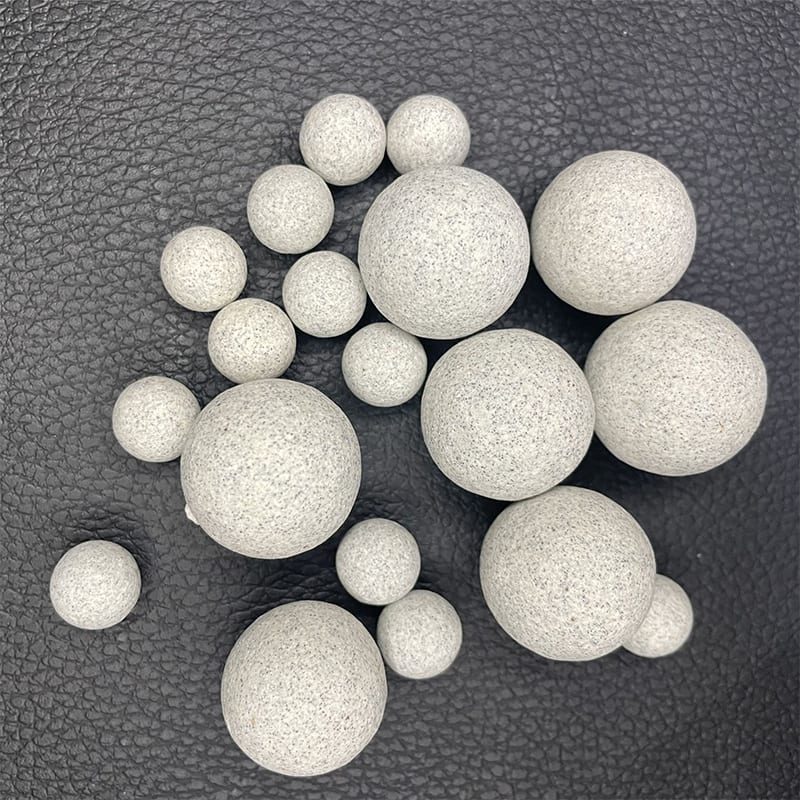
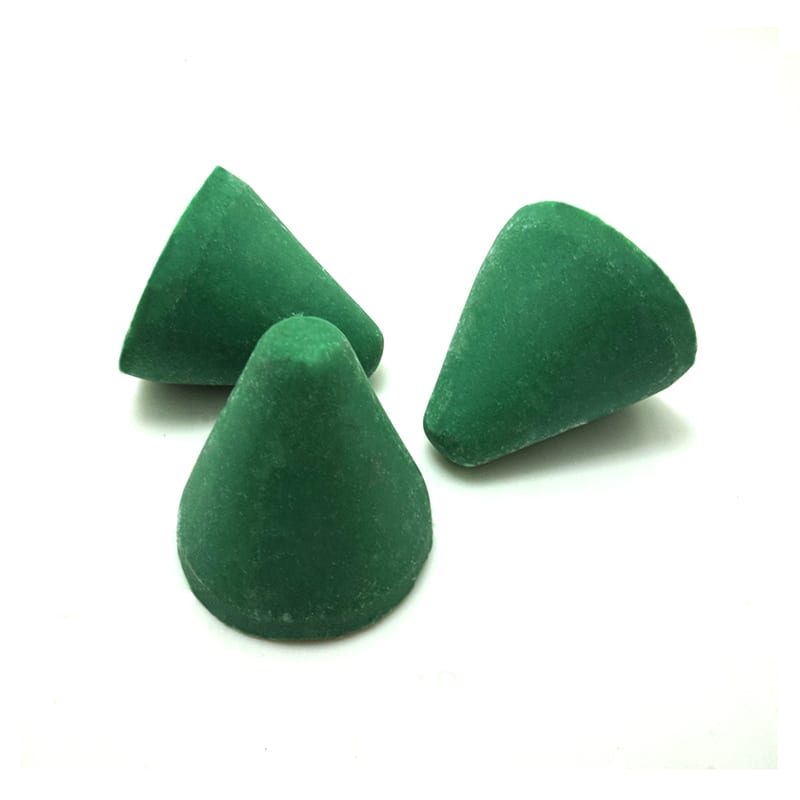
Use fast-cut or medium-cut ceramic media on hard steel and titanium blanks to knock down sharp burrs and coarse milling cusps rapidly, then switch into fine resin plastic media cones or pyramids to erase ceramic scratch lines cleanly. For soft aluminum, brass, and zamak castings, start directly in resin plastic media so heavy ceramic density never peens flat cosmetic faces. Always verify non-lodging media sizing across cross-holes and threads before loading production lots.
Stage 2 Cold-Working with 304 Stainless Steel Balls
Non-abrasive 304 stainless steel balls—often mixed in spheres, pins, and satellite shapes to reach recessed fillets—deliver genuine cold-forged mirror luster without removing dimensional stock. High ball density presses microscopic satin peaks smoothly down into bright specular flats when lubricated with a clean JTJ60 or JTJ20 soap cushion. Keep ball loads spotless via periodic LC10 wash cycles so oxidized metal smut never grays out mirror brightness.
Dry Corncob & Walnut Shell (8#-80#) Buffing for Moisture-Sensitive Parts
For delicate jewelry, plated brass fittings, or thin-wall non-ferrous housings prone to water spotting, dry corncob and walnut shell (8#-80#) beds inside heated bowls deliver warm optical luster after wet leveling and 35A/70A centrifugal drying. Never load wet parts or liquid LC10 into organic media—moisture turns dry corncob beds into clumped mud immediately.
Machine Selection, Compound Chemistry & Water Quality for Mirror Gloss
Mirror polishing is unforgiving of dirty water, foamy compound overdosing, or worn polyurethane bowl liners. Even slight turbidity leaves a milky haze across stainless and brass flats that looks dull under showroom inspection lights. Tight chemical and mechanical control keeps gloss razor-sharp lot after lot.
ZL/ZXL Bowls vs. LLB50/LLF120 Centrifugal Barrels
Standard ZL and ZXL vibratory finishing machine bowls provide ideal gentle rolling action for large cosmetic brackets, cutlery, and continuous steel-ball burnishing runs with easy screen separation. When hard stainless or titanium components need rapid multi-stage smoothing before ball burnishing, LLB50 and LLF120 centrifugal barrel finisher machines cut Stage 1 and Stage 2 leveling hours dramatically. Fragile precision rings also benefit from cushioned rotary barrel tumbler rotation to eliminate high-energy edge battering.
Dosing LC10, HM3, JTJ20, JTJ25, JTJ50, and JTJ60 Cleanly
Match compound chemistry strictly to stage and alloy: LC10 for ferrous Stage 1 cutting, HM3 for bright non-ferrous cleaning, JTJ25 for coarse stainless smoothing, JTJ50 for fine pre-mirror brightening, and JTJ20 or JTJ60 for ultra-clean ball burnishing. Using automated peristaltic compound dosing keeps lubricating film thickness constant, preventing both metal-on-metal galling from under-dosing and cushion-dampened dullness from excess foam.
Softened Flow-Through Water & Upstream Ultrasonic Degreasing
Hard shop water minerals react with burnishing soaps to deposit cloudy white films over mirror surfaces. Pair softened supply water per our water hardness in mass finishing checklist with steady flow-through rinsing so abraded fines flush out continuously. Equally vital, pre-wash oily CNC blanks inside an ultrasonic cleaner so tramp coolant never contaminates porous ceramic or steel ball beds.
Preventing Mirror Scratches, Haze & Post-Tumble Corrosion
One stray abrasive grain or five minutes of damp basket staging can destroy hours of careful multi-stage mirror work. Disciplined segregation between cutting and burnishing zones, paired with rapid heated drying, preserves flawless specular clarity until final packaging.
Zero-Tolerance Isolation Between Stage 1 Cutting Grit and Stage 2 Ball Bowls
A single fractured Stage 1 ceramic shard carried into a 304 stainless ball bowl scores dozens of near-mirror parts in seconds, ruining Rq and optical clarity across the batch. Dedicate strictly color-coded transfer totes to each stage, inspect discharge screens via our media screening and replenishment schedule, and audit bowl liners regularly using our polyurethane bowl liner replacement guide.
Maintaining Media-to-Part Ratios to Eliminate Collision Dings
Mirror-polished flats expose every tiny crescent nick from part-on-part impingement immediately. Enforce generous media-to-part volume ratio fill levels inside ZL, ZXL, and LLB50 chambers so workpieces stay cushioned inside dense ball or plastic beds throughout loading, active tumbling, and discharge.
Heated 35A/70A Centrifugal Drying & Rust-Free Storage
Water droplets left drying slowly on mirror stainless, brass, or carbon steel etch permanent mineral rings and tarnish spots into high-gloss flats. Spin every rinsed basket immediately inside a heated 35A or 70A centrifugal dryer—using a clean inhibitor rinse per our rust inhibition after wet tumbling guide on carbon steel—so finished mirror parts emerge bone-dry and streak-free.
Alloy-Specific Mirror Mass Polishing Workflows in Production
Different engineering metals respond very differently to mechanical burnishing pressure and chemical pH. A mirror recipe optimized for hard 304 stainless cutlery will peen soft 6061 aluminum or tarnish brass fittings if applied blindly. Tailoring each stage to alloy metallurgy guarantees deep, distortion-free reflectivity without surface damage.
304 & 316 Stainless Steel Cutlery, Surgical & Marine Hardware
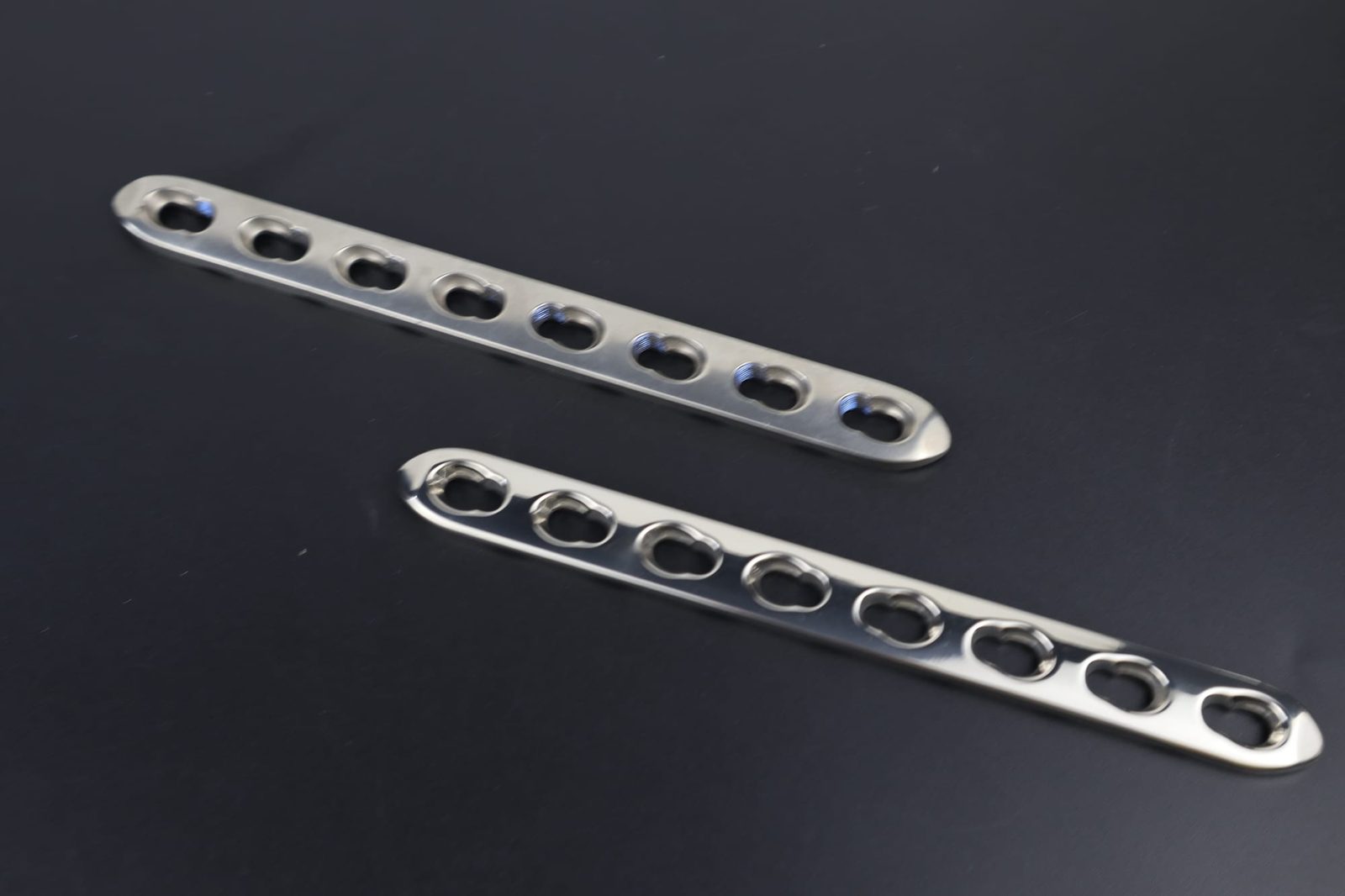
Stainless steel work-hardens under heavy impact, so clean mirror finishes rely on thorough Stage 1 high frequency ceramic leveling followed by fine plastic media (JTJ25) until zero cutter arcs remain. Transfer cleanly into 304 stainless steel balls dosed with JTJ20 or JTJ60 inside a ZL bowl to cold-roll satin plateaus into deep blue-white mirror luster.
Brass, Bronze & Copper Decorative Fittings & Musical Hardware
Copper alloys polish rapidly yet tarnish or pit if exposed to harsh alkaline cleaners or stagnant dirty water. Step cast or CNC brass parts through resin plastic media cones with HM3, rinse thoroughly with softened water, and burnish gently with 304 steel balls plus JTJ60 or spin-dry cleanly in 35A/70A dryers followed by warm dry corncob (8#-80#) buffing.
6061/7075 Aluminum Housings & Consumer Electronics Bezels
Aluminum scratches easily and darkens in high-pH solutions, demanding cushioned resin plastic media leveling with neutral HM3 and extra-fine plastic media (JTJ50) refinement. For high-gloss cosmetic bezels, run short light 304 ball burnishing or dry walnut shell and corncob (8#-80#) buffing only after parts are completely dry and free of water spots.
Titanium Fasteners & High-Strength Aerospace Hardware
Gummy titanium alloys smear onto dull ceramic stones and easily gall against adjacent parts in under-filled tubs. Use sharp high frequency ceramic media with steady LC10 flow-through rinsing, refine in clean plastic media, and burnish in high-fill 304 ball beds inside ZL or LLB50 units to hold crisp thread geometry alongside mirror cosmetic shoulders.
Replacing Manual Buffing Wheels With Automated Mirror Cells
Traditional cloth-wheel buffing relies on scarce skilled labor, fills shops with greasy rouge dust, and leaves inconsistent edge rounding across complex geometries. Converting mirror finishing to enclosed vibratory and centrifugal cells cuts labor cost while improving part-to-part uniformity.
Eliminating Rouge Dust, Fire Hazards & Ergonomic Bottlenecks
Manual Sisal and cotton buffing wheels throw airborne lint and waxy polishing compound everywhere, forcing heavy downstream solvent washing before plating or cleanroom assembly. Wet 304 ball burnishing and enclosed JTJ60 vibratory lines keep floors clean while delivering uniform gloss inside recessed fillets that cloth wheels cannot reach.
Compressing Multi-Hour Cycles With LLB50 & LLF120 Centrifugal Units
While standard ZL bowls run large mirror batches gently overnight or across full shifts, LLB50 and LLF120 centrifugal barrel finisher machines multiply abrasive G-force to compress Stage 1 and Stage 2 leveling into rapid batch cycles for small precision hardware.
Integrating 35A/70A Drying & Ultrasonic Cleaner Pre-Wash Stations
Automated mirror cells pair upstream ultrasonic cleaner degreasing with downstream 35A/70A centrifugal drying so oily blanks never foul ball beds and wet parts never water-spot during unloading.
Quality Control, Master Witness Boards & Multi-Shift Standardization
Because mirror defects—micro-scratches, orange peel, and faint water rings—show up starkly under angled inspection lights, consistent quality requires strict shift-to-shift process discipline rather than end-of-line sorting.
Inspecting Under Diffused Angled Lighting & Sealed Master Samples
Mount sealed physical mirror witness samples inside diffused light booths beside every finishing cell so operators check Stage 1 satin uniformity and Stage 2 gloss clarity consistently across all shifts.
Auditing Rq, Rz & Ra Together on Mirror Qualification Lots
Always verify mirror lots with both Ra and peak-sensitive RMS surface finish Rq or Rz traces during first-article sign-off to confirm zero hidden CNC valleys or stray grit scratches lurk beneath bright plateaus.
Keeping 304 Stainless Ball Beds Clean With Periodic LC10 Washes
Even grit-free ball bowls gradually accumulate microscopic oxidized metal paste that dulls mirror clarity. Schedule regular clean LC10 ball-wash cycles and flush drains clean so 304 balls stay bright and free-rolling.
Documenting Peristaltic Pump Rates & Water Hardness Logs
Log daily peristaltic compound dosing settings, softened water checks, and 35A/70A dryer temperatures beside each ZL, ZXL, LLB50, and LLF120 unit to guarantee identical mirror gloss across every production run.
Managing Organic Corncob & Walnut Shell (8#-80#) Moisture Discipline
When running final dry buffing on brass, copper, or plated decorative hardware, keep corncob and walnut shell (8#-80#) beds strictly separated from wet finishing zones. Always spin-dry parts thoroughly in 35A/70A centrifugal dryers first—even minor residual moisture clumps organic media and ruins mirror uniformity.
Auditing Polyurethane Bowl Liners & Screen Meshes Between Stages
Cracked polyurethane bowl ribs and fatigued discharge screens harbor stray Stage 1 cutting grit that later drops into Stage 2 304 stainless ball bowls and scratches dozens of mirror-bound parts. Schedule weekly checks via our polyurethane bowl liner replacement guide to keep every burnishing chamber contamination-free.
Training Operators on Visual Stage-Gate Rejection Criteria
Even the best automated dosing system depends on operators recognizing hazy Stage 1 satin transitions versus bright Stage 2 cold-worked mirror gloss. Displaying side-by-side "Accept" and "Hold for Re-Leveling" physical master coupons at each machine empowers every shift lead to catch incomplete leveling before parts advance.
Maintaining Strict Ferrous vs. Non-Ferrous Line Segregation
Never run carbon steel, stainless steel, brass, and 6061 aluminum through the same un-rinsed Stage 2 burnishing bowls or shared transfer baskets. Embedded steel particles cause unsightly rust spots on stainless hardware and galvanic pitting on aluminum bezels, destroying mirror clarity within hours of drying. Dedicating alloy-specific media loads, hoses, and color-coded baskets keeps cross-contamination near zero across high-mix finishing floors.
Validating First-Article Mirror Cycles After Media Replenishment
Adding fresh ceramic media, resin plastic media, or new 304 stainless steel balls shifts cutting aggression and bed packing density slightly until new media breaks in cleanly. Always run a short break-in wash and verify first-article Ra/Rq traces plus angled light inspection whenever topping up media beds so production lots maintain uniform specular reflectivity without unexpected scratch spikes or edge-rounding drift. Recording media batch additions alongside daily peristaltic compound dosing logs gives process engineers complete historical visibility whenever subtle surface gloss shifts appear across high-volume multi-shift mirror polishing cells.
Preventing Water-Spot Re-Contamination During Manual Unloading & Packing
Operators wearing bare hands or dusty shop gloves leave acidic fingerprint oils and lint smudges across mirror-finished stainless steel, brass, and aluminum flats within seconds of unloading heated 35A or 70A dryer baskets. Enforce clean powder-free nitrile gloves at every discharge table and line transit trays with non-abrasive VCI or lint-free tissue so freshly burnished mirror luster reaches assembly spotless.

| Mirror Polishing Defect | Primary Shop-Floor Cause | Immediate Corrective Action | Preventive Line Control |
|---|---|---|---|
| Bright gloss with micro-pits ("orange peel") | Skipped or short Stage 1 leveling | Re-run Stage 1 plastic/ceramic cut | Gate Stage 1 exit by Rz/Rq check |
| Random deep scratches on mirror flats | Stray Stage 1 cutting grit in ball bed | Scrub bowl & screen; LC10 ball wash |
Color-coded totes + weekly screen audit |
Milky cloudy haze on 304 stainless |
Hard-water soap scum or excess foam | Reduce dosing; run clean JTJ60 rinse |
Softened water + peristaltic compound dosing |
| Crescent impact nicks on flat faces | Low media-to-part volume ratio |
Raise media fill; reduce batch load | Post max part weight per bowl card |
| Water rings or dark spots post-dry | Air-drying or damp corncob bed |
Re-brighten in JTJ50; 35A/70A spin-dry |
Mandatory heated centrifugal drying |
Factory Capabilities & Verified Mass Finishing Supply
Replacing manual buffing wheels with automated mirror mass finishing requires matched machines, uncontaminated media, and reliable chemical dosing from SurfacePolish (Xiamen Jin Tai Jin Grinding Technology Co.,Ltd.). Backed by 200,000+ verified customer trials, our engineers build repeatable multi-stage mirror cells engineered for cosmetic hardware, medical fasteners, and precision industrial components.
Integrated Equipment, Media & Dryer Lines
From ZL and ZXL vibratory bowls to LLB50/LLF120 centrifugal barrels, rotary barrel tumbler drums, 35A/70A centrifugal dryers, and ultrasonic cleaner lines, SurfacePolish integrates 21 machine platforms with precision ceramic media, plastic media, 304 stainless steel balls, organic corncob/walnut shell (8#-80#), and LC10/MC8/HM3/JTJ20/JTJ25/JTJ50/JTJ60 compounds. Unified supply prevents foam incompatibility and guarantees consistent specular gloss across high-volume OEM shifts.
Quality Certifications, IP Rights & Complimentary Mirror Trials
SurfacePolish operates under certified ISO 00726Q01571R001 quality management alongside CE M.2023.206.C88121 and CE M.2023.206.C88120 machine compliance, supported by 24 granted Chinese IP rights. Send your raw machined, stamped, or cast parts to our laboratory for complimentary multi-stage mirror polishing trials, stylus roughness verification, and documented parameter sheets ready for full production rollout.
 +86-592-2381506


 IPv6 network supported
