Vibration Deburr Machine Sizing Guide: Matching ZL Bowls and L1300–L1800 Straight Troughs to Part Geometry

Properly sizing a vibration deburr machine determines whether stamped brackets, CNC housings, and precision gears emerge with uniform edge breaks or suffer part-on-part nicking and jammed separation screens. Choosing an undersized bowl starves media cushioning, while picking the wrong chamber geometry forces long shafts or wide weldments to bridge awkwardly against curved walls. SurfacePolish (Xiamen Jin Tai Jin Grinding Technology Co.,Ltd.) draws on 200,000+ verified finishing trials to size vibratory burnishing machines (ZL bowls) and L1300/L1500/L1800 straight-tub troughs accurately by part envelope, batch mass, and internal separation clearance.

Core Sizing Factors: Part Envelope, Batch Weight & Media Cushion
Before comparing motor ratings or tub capacities, every vibration deburr machine sizing decision begins with three physical realities: your largest single workpiece dimension, your target parts-per-batch mass, and the minimum media-to-part volume ratio required to keep parts separated.
Why Channel Width & Curved-Wall Clearance Dictate Maximum Part Size
In a curved-wall ZL vibratory bowl, parts travel along a circular annular channel wrapping around a central column. If a bracket, extrusion, or valve body exceeds safe channel width clearance, it jams sideways between the inner dome and outer polyurethane wall, stalling toroidal media roll and bruising adjacent workpieces. Measuring maximum diagonal part length against effective channel width prevents expensive sizing mistakes.
Balancing Batch Throughput Against Media-to-Part Volume Ratio
Trying to squeeze extra stamped blanks into an undersized tub drops the media-to-part volume ratio below safe cushioning thresholds. Once metal parts outnumber surrounding stones in the active shear zone, heavy castings and sharp-edged stampings collide directly, trading edge burrs for crescent impact dings. Proper sizing ensures generous media volume surrounds every workpiece from startup through discharge.
Straight-Wall ZXL & L1300/L1500/L1800 Troughs for Long or Delicate Parts
When components are too long, flat, or fragile for curved-bowl rotation—such as long milled rails, aircraft ribs, wide heat-sink extrusions, or thin sheet-metal covers—straight-tub vibratory finishing machine troughs (L1300, L1500, L1800) and ZXL straight-wall platforms eliminate radial turning constraints completely. Parts ride smoothly inside a linear rolling bed without wedging against curved inner domes.
| Workpiece Profile & Batch Need | Recommended SurfacePolish Platform | Media & Compound Pairing | Separation & Handling Fit | Primary Sizing Rationale |
|---|---|---|---|---|
| Small-to-medium gears, springs, contactors | ZL curved-wall bowl (medium-to-large class) |
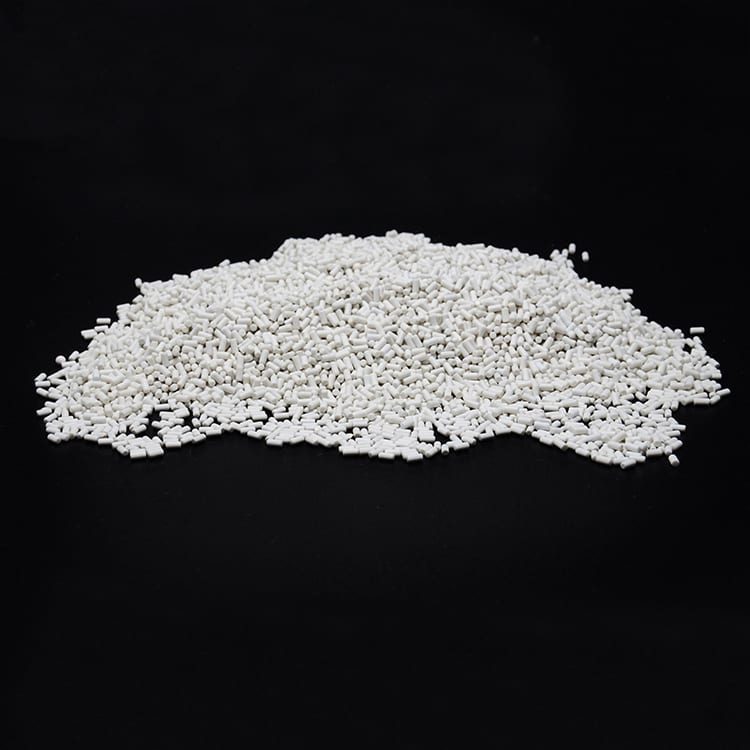
Ceramic media + LC10 |
Built-in internal flapper screen | Continuous toroidal roll + auto separation |
| Wide housings & fragile aluminum covers | ZXL straight-wall bowl |
Resin plastic media + HM3 |
Gentle drop-screen or manual tray | Straight wall prevents dome pinching |
| Long shafts, extrusions & linear rails | L1300 / L1500 / L1800 trough |
Ceramic media / plastic media + LC10 |
Overhead hoist or compartment dividers | Long unobstructed linear chamber |
| High-speed small-lot heavy deburring | LLB50 disc or LLF120 centrifugal |
Fine ceramic media + LC10 / JTJ60 |
Fast batch dump & rinse screen | Multiplies cut rate when bowl is too slow |
| Blind bores & micro-threads inside parts | OBD-60 / OBD-100 magnetic unit |
Stainless pins + HM3 |
Magnetic recovery separator | Complements external vibratory deburring |
Comparing ZL Curved Bowls, ZXL Straight-Wall Bowls & L1300–L1800 Troughs
Understanding how chamber shape changes media roll velocity and separation ergonomics helps manufacturing engineers pick the exact vibration deburr machine architecture for their floor layout and part mix.
ZL Curved-Wall Bowls (medium-to-large Class): Compact Footprint & Auto-Separation
Curved-wall ZL bowls—including our popular vibratory burnishing machine series—deliver the highest throughput per square foot of shop floor. A built-in spiral ramp and pneumatic or manual separation flap lifts finished parts cleanly onto an integrated screen deck, letting media fall straight back into the bowl while clean parts discharge directly into transfer baskets or a 35A/70A dryer.
L1300 / L1500 / L1800 Straight-Tub Troughs: Long Envelopes & Divided Cells
Long tubular weldments, automotive trim bars, and wide CNC plates demand L1300, L1500, or L1800 straight-tub machines. Removable polyurethane divider plates can also split a single long trough into multiple isolated compartments, allowing delicate heavy castings or precision machined shafts to finish side-by-side in the same media bed without touching each other.
When to Step Over to LLB50 Centrifugal Discs or Rotary Barrel Tumbler Lines
If a high-volume stamped clip or small sintered gear takes too long in a standard ZL bowl, stepping over to an LLB50 centrifugal finishing machine or OBD-LX100B barrel multiplies shear pressure cleanly. Conversely, ultra-fragile thin-gauge parts or delicate eyewear frames often fare better inside slow rotary barrel tumbler cascades or dry-hang tumbling units.
Internal Separation Screen Geometry & Non-Lodging Media Selection
Even a perfectly sized vibration deburr machine stalls production if parts snag on the discharge screen or ceramic triangles wedge inside tapped mounting holes.

Sizing Screen Aperture Against Part Width & Media Dimensions
Your internal separation deck must feature slot or wire-mesh apertures smaller than your narrowest finished workpiece yet comfortably larger than worn, undersized abrasive media. If media sizes sit too close to part dimensions, manual hand-picking wipes out the labor savings of an automated separation ramp.
Enforcing Non-Lodging Media Rules Across Slots & Cross-Holes
Before ordering stones for a new ZL or L1300 installation, map every slot, keyway, and threaded bore on your target parts against proven non-lodging media sizing ratios. Choosing angle-cut cylinders or larger ceramic media triangles that bridge cleanly over critical holes eliminates manual stone extraction completely.
Scheduling Media Screening & Polyurethane Liner Maintenance
As ceramic media wears down over consecutive shifts, undersized slivers become lodging hazards and reduce total media bed height inside the chamber. Enforcing disciplined media screening and replenishment alongside regular inspection of polyurethane bowl ribs preserves consistent toroidal roll and protects steel tub shells from premature wear.
Matching Media, Compounds & Drying Capacity to Your Machine Size
Sizing the chamber is only half the equation; media density, liquid tumbling compounds, and downstream 35A/70A drying capacity must scale proportionally with machine volume.
Pairing Ceramic Media (LC10) vs. Plastic Media (HM3) by Alloy Hardness
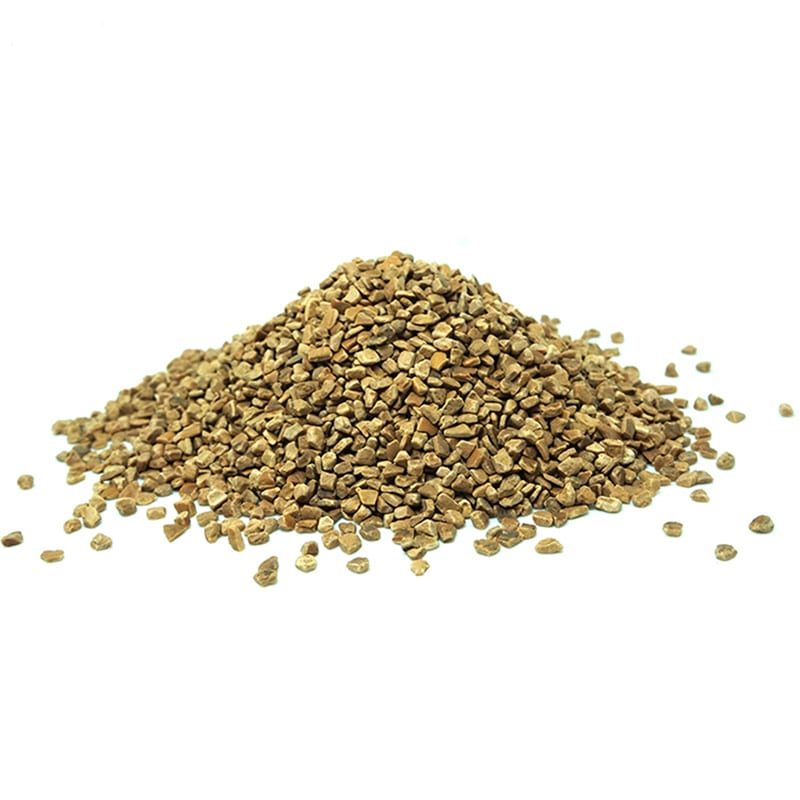
Hard carbon steel stampings, 304 stainless valve bodies, helical springs, and cast iron brackets require dense ceramic media driven by LC10 deburring compound to shear tough burrs cleanly. Soft 6061 aluminum housings, brass fittings, and zinc die castings demand lighter resin plastic media with HM3 or JTJ60 to prevent orange-peel surface dimpling.
Pre-Cleaning Oily Blanks & Descaling Rust with MC8
Loading press-oiled stampings or heat-treat-scaled forgings straight into a fresh vibratory bowl fouls the polyurethane liner and glazes ceramic cutting faces immediately. Pre-wash oily parts in an ultrasonic cleaner bath and strip heavy ferrous oxide rapidly using MC8 descaling chemistry before launching production deburring cycles.
Matching 35A / 70A Centrifugal Dryers & Corncob/Walnut Shell Finishing
A ZL bowl discharging wet steel parts every batch quickly overwhelms a tiny shop air hose, inviting flash rust before inspection. Size a 35A or 70A heated centrifugal dryer—or a secondary corncob / walnut shell (8#-80#) luster-drying pass—to match your bowl's batch discharge weight so every load dries completely between cycles.
Amplitude, Lead Angle & Process Tuning for Burr Removal Without Over-Rounding
Once your vibration deburr machine is installed, mechanical eccentric weight settings govern how aggressively media shears edges versus gently burnishes flats.
Adjusting Eccentric Weights & Lead Angle for Aggressive Cut vs. Gentle Polish
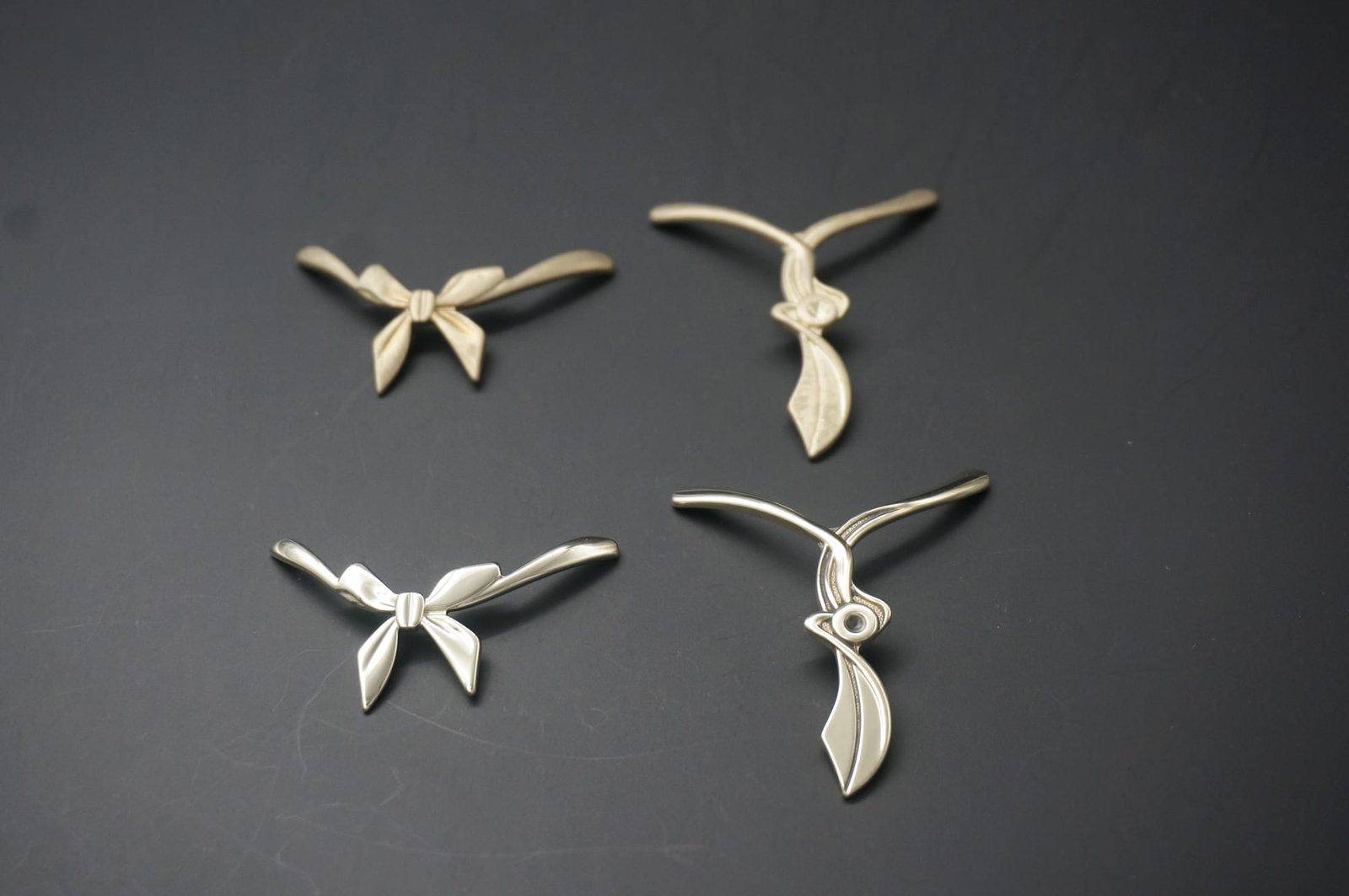
Increasing eccentric weight offset raises stroke amplitude for heavier burr removal on thick laser-cut or CNC-milled steel, while shifting the lead angle alters spiral advance speed and impact cushioning. Gentle low-amplitude settings protect thin aluminum fins and precision gear teeth while still delivering uniform edge break.
Flow-Through Water & Peristaltic Dosing for Multi-Shift Repeatability
Dirty recirculated compound water cushions abrasive contact with thick foam and deposits dark metallic sludge back onto finished parts. Calibrated peristaltic dosing of LC10, HM3, or JTJ50 paired with steady flow-through water—and monitored water hardness in mass finishing—keeps cut rates identical from shift start to shift end.
Verifying Edge Break & Surface Finish Targets Against Blueprints
Validate every new machine recipe on first-article parts before releasing production runs, checking both burr-free edge radii and flat smoothness against surface finish conversion chart tolerances so critical sealing faces and bearing lands remain strictly within spec.
| Sizing or Setup Symptom | Root Cause in Vibratory Cell | Immediate Corrective Adjustment | Long-Term Cell Standard |
|---|---|---|---|
| Parts hit each other & dent | Undersized bowl or low media fill | Raise media-to-part volume ratio / reduce load |
Lock max batch weight per chamber |
| Long parts jam against center dome | Curved ZL channel too narrow |
Move to L1300–L1800 straight trough |
Size channel clearance to max part diagonal |
| Parts fall through discharge screen | Screen slot wider than part width | Install finer separation mesh plate | Match screen aperture per part family |
| Flash rust after bowl unloading | Slow air-drying on wet steel parts | Spin promptly in 35A/70A dryer |
Pair every steel bowl with heated dryer |
Planning Floor Layout, Noise Control, Drainage & Multi-Machine Cells
Smart vibration deburr machine sizing also accounts for utilities, floor space, operator workflow, and future expansion before concrete anchors are set.
Sound Covers, Drainage Trenches & Settling-Tank Footprint
Vibratory bowls and straight troughs need clean floor drainage for continuous flow-through compound runoff, plus settling tanks to trap abrasive slurry fines before water discharge. Optional acoustic covers reduce shop-floor noise levels comfortably when machines sit near CNC machining centers or inspection benches.
Separating Ferrous Steel Bowls from Aluminum & Brass Lines
High-mix machine shops processing both carbon steel and aluminum or stainless hardware should size two dedicated smaller ZL bowls rather than one oversized unit. Segregating ferrous and non-ferrous media beds eliminates cross-contamination rust spots and avoids tedious media changeovers between alloy lots.
Scaling from Single Bowl Cells to Automated Inline Finishing
Starting with a ZL bowl, a 35A/70A centrifugal dryer, and a peristaltic dosing pump gives growing shops immediate deburring capacity with minimal floor footprint—while leaving clear adjacent space for adding an L1500 straight trough or OBD-60 magnetic polisher as part sizes diversify.
Integrating Multi-Stage Mass Finishing Around Your Vibratory Cell
Once your primary vibration deburr machine is properly sized, connecting upstream cleaning and downstream brightening stages turns standalone deburring into a complete, repeatable finishing line.
Upstream Ultrasonic Degreasing Before Vibratory Loading
Heavy stamping lubricants, CNC sulfur cutting oils, and quench residues contaminate abrasive media beds far faster than metal burrs wear down stones. Running oily incoming hardware through an ultrasonic cleaner bath protects polyurethane liners and ensures LC10 and HM3 compounds work at peak efficiency from minute one.
Pairing OBD Magnetic Polishers for Internal Cross-Holes
Even an ideally sized ZL bowl or L1500 straight trough relies on external stone contact that cannot reach deep blind threads or tight cross-holes. Routing parts from external vibratory edge breaking into an OBD-60 or OBD-100 magnetic polishing machine clears internal burrs rapidly without altering exterior edge radii.
Stepping Into Rotary Barrel Tumbler & Centrifugal Brightening
When parts need mirror-grade luster after initial ceramic media deburring, transferring cleaned batches into a secondary ZL bowl charged with high-alumina burnishing spheres or a rotary barrel tumbler line produces uniform reflective smoothness; explore our barrel finishing process and isotropic finishing guides for multi-stage recipe design.
Managing Media Inventory & Hopper Storage Beside the Machine
Keeping dedicated labeled bins for coarse ceramic media, medium-cut triangles, resin plastic media cones, and dry corncob/walnut shell (8#-80#) grades beside your vibratory line speeds up alloy changeovers and prevents accidental media mixing.
Implementing Routine Polyurethane Rib & Drain Screen Checks
Worn spiral separation ramps and torn bowl ribs cause parts to hang up during unloading and expose steel shells to abrasion. Inspecting drain screens and chamber linings weekly keeps cycle consistency high and prevents unplanned downtime.
Standardizing Compound Pump Calibration Across Shifts
Peristaltic dosing pumps slowly drift as squeeze tubing ages, starving the chamber of fresh LC10 or HM3 chemistry or over-dosing into thick foam. Checking tubing condition and flow consistency during weekly preventive maintenance protects surface uniformity across every batch.
Documenting Verified Sizing & Load Recipes per Part Number
Record exact machine model, media shape, media-to-part volume ratio, compound type, separation screen aperture, and 35A/70A drying settings on every part router. Standardized setup sheets guarantee identical edge break whether a job runs on day shift or night shift.
Planning Spare Parts & Consumable Reorder Thresholds
Maintaining backup polyurethane screen decks, drain plugs, dosing tubes, and replacement ceramic media or plastic media stock keeps high-throughput vibratory cells running smoothly without waiting on emergency shipments.
Validating Bowl vs. Trough Throughput Before Capital Commitment
When comparing a curved-wall ZL vibratory bowl against an L1300, L1500, or L1800 straight-tub trough, throughput calculations must factor in loading, separation, rinsing, and 35A/70A drying time—not just chamber volume alone. Curved ZL bowls shine on high-mix small-to-medium gears, springs, stampings, and valve sleeves because their integrated spiral ramp separates parts from media automatically at the end of each cycle. Straight L1300–L1800 troughs excel on long shafts, linear rails, and wide structural weldments that would jam against a curved inner dome, and removable polyurethane dividers let operators run delicate parts in isolated lanes without part-on-part collision.
Sustaining Media Cushioning, Compound Flow & Liner Longevity Over Years of Service
Even the best-sized vibration deburr machine loses capacity quickly if operators let abrasive media wear down without replenishment or neglect polyurethane bowl liner maintenance. Following disciplined media screening and replenishment schedules keeps stone geometry uniform, maintains the protective media-to-part volume ratio, and prevents broken slivers from wedging in part slots. Pairing clean flow-through LC10, MC8, HM3, or JTJ50 compound dosing with weekly drain-screen and eccentric-bearing checks ensures predictable burr removal and edge-break consistency across thousands of operating hours.
Avoiding Common Vibratory Sizing Mistakes in Job-Shop Environments
Many machine shops size a vibration deburr machine solely around their smallest high-volume bracket, only to discover months later that longer milled rails or wide laser-cut plates jam against the curved center dome of a standard ZL bowl. Evaluating your three largest projected part envelopes—alongside minimum slot widths for non-lodging media sizing—prevents costly capital mismatches. Where part mix spans both compact stamped hardware and long structural extrusions, pairing a ZL auto-separating bowl with an L1300 or L1500 straight-tub trough gives operators complete geometric flexibility without compromising cushioning or cycle consistency.
Integrating Separation, Drying & Slurry Control into One Compact Footprint
Chamber sizing is only practical when downstream unloading, rinsing, and 35A/70A centrifugal drying match batch throughput cleanly. Routing flow-through LC10 or HM3 discharge into multi-baffle settling tanks keeps shop drains clear, while staging dedicated ceramic media and plastic media hoppers beside each machine enables fast, contamination-free alloy changeovers across ferrous and non-ferrous production runs.
Balancing Batch Cycle Predictability with Flexible Part Changeovers
For contract manufacturers running short high-mix runs alongside steady OEM blanket orders, sizing a vibration deburr machine with accessible drain plugs, quick-change polyurethane screen decks, and modular media storage keeps changeover downtime minimal. Documenting exact fill levels and compound drip settings turns every shift handoff into a smooth, predictable routine.
Validating Final Surface Quality & Edge Break Before Full-Line Release
Before releasing a newly sized ZL bowl or L1300–L1800 straight trough to full multi-shift production, run a documented first-article batch to confirm uniform burr removal, clean separation-screen flow, and spotless 35A/70A drying. Comparing outgoing parts against sealed master coupons and surface finish conversion chart targets locks in repeatable quality from day one.
Coordinating Maintenance Logs Across Multi-Machine Vibratory Cells
Tracking eccentric bearing lubrication, polyurethane liner thickness, separation flap tension, and compound pump flow rates inside a shared maintenance log keeps every ZL bowl and L1300–L1800 straight trough operating at peak efficiency. Preventive care prevents unexpected downtime during peak production quarters and preserves uniform finishing repeatability across every alloy family.
SurfacePolish Vibratory Platforms, Certifications & Complimentary Sizing Trials
SurfacePolish (Xiamen Jin Tai Jin Grinding Technology Co.,Ltd.) builds complete vibration deburr machine solutions across 21 machine platforms—covering ZL and ZXL vibratory bowls, L1300/L1500/L1800 straight troughs, LLB50/LLF120 centrifugal units, OBD-30 to OBD-100 magnetic polishers, rotary barrel tumbler lines, 35A/70A dryers, and ultrasonic cleaner stations—backed by 200,000+ practical finishing solutions.
Certified Manufacturing Quality & Single-Source Media Supply
All equipment is engineered under ISO 00726Q01571R001 quality management alongside CE M.2023.206.C88121 and CE M.2023.206.C88120 certifications and 24 granted Chinese IP rights. Sourcing matched machines, ceramic media, plastic media, corncob/walnut shell (8#-80#), and LC10/MC8/HM3/JTJ50/JTJ60 compounds from one factory ensures predictable sizing performance.
Submit Part Drawings or Samples for Free Chamber Sizing Validation
Send your part dimensions, target batch throughput, and raw sample components to our engineering team for complimentary sizing trials. We verify exact ZL or L1300–L1800 chamber sizing, non-lodging media selection, and separation screen specs before you commit.
Long-Term Engineering Support from Commissioning to Expansion
Whether configuring a single ZL bowl cell or expanding into multi-trough L1800 production lines, SurfacePolish provides ongoing recipe guidance, media replenishment, and reliable factory spare-part support.
 +86-592-2381506


 IPv6 network supported