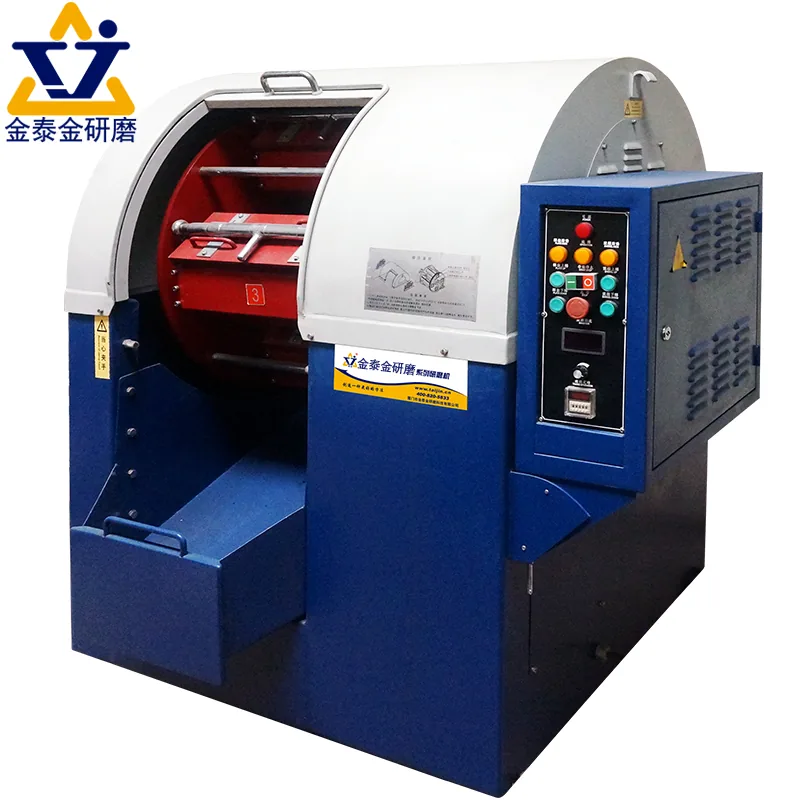
Metal parts are an essential component of many industrial products. To make them look their best and function correctly, polishing is an essential process. But manual polishing can be a time-consuming and labor-intensive process. That's where drum centrifugal polishing machines come in.
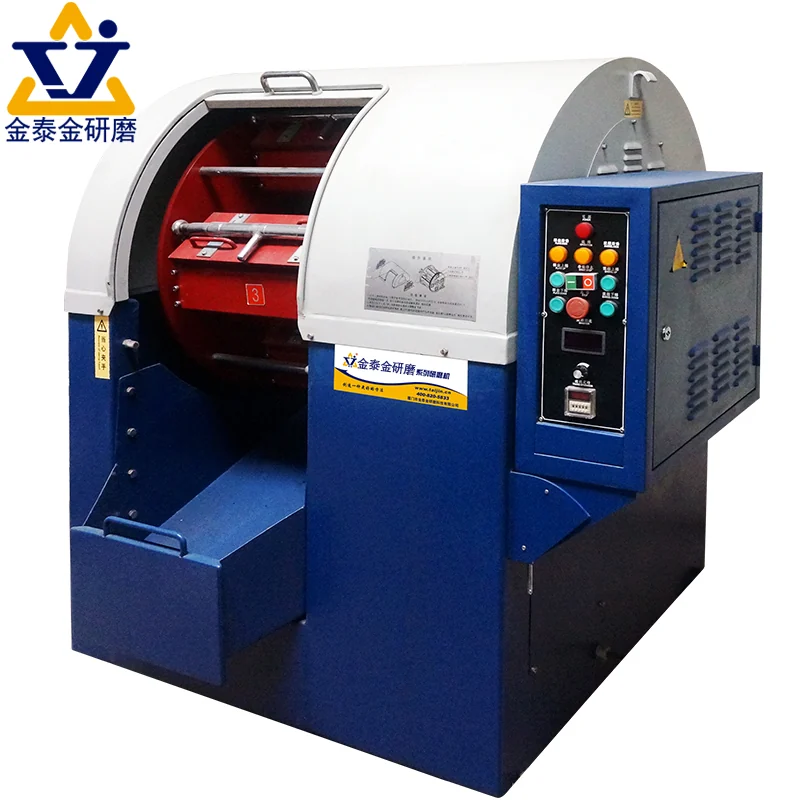
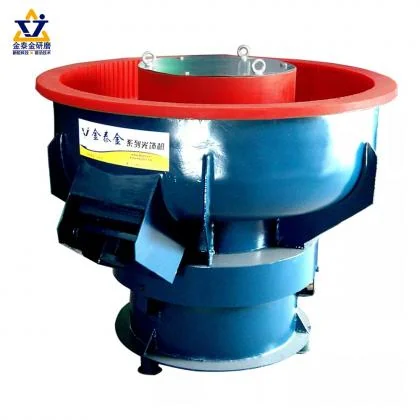
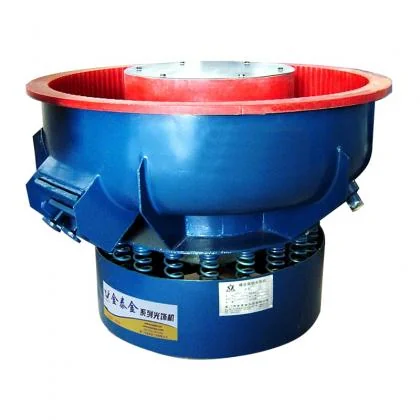
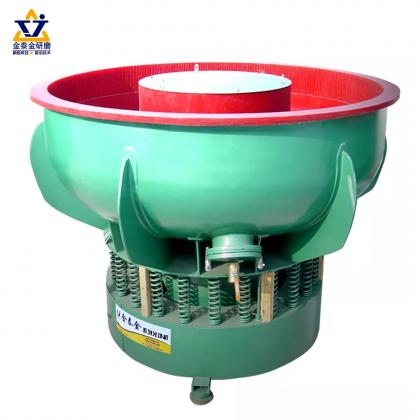
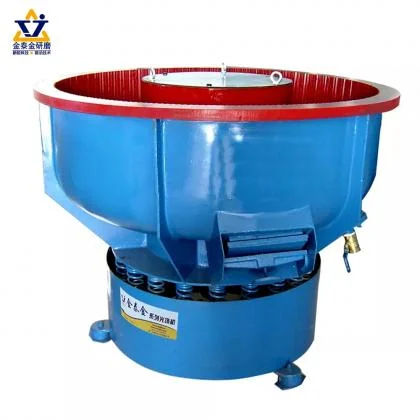
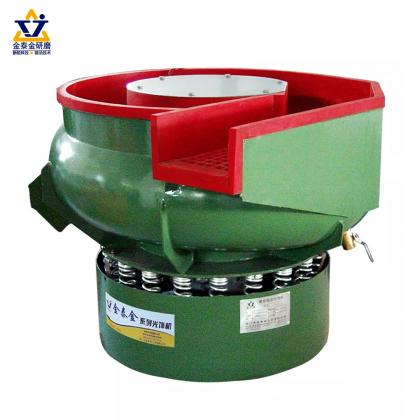
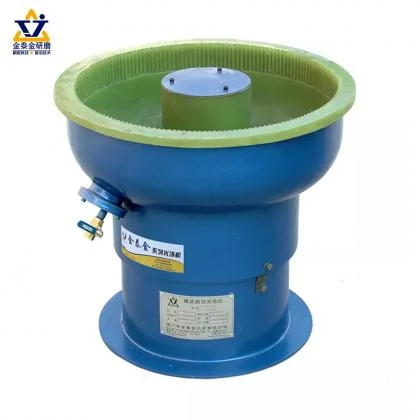
Drum centrifugal polishing machines are an excellent solution for polishing metal parts quickly and efficiently. They use a rotating drum that holds the metal parts and applies pressure and friction to the parts, resulting in a polished surface. These machines are ideal for mass production and can handle a wide range of metal parts, including those with complex shapes and surfaces.
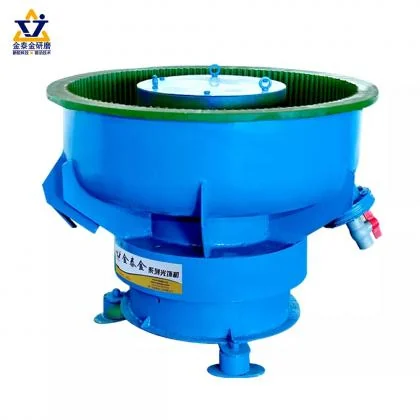
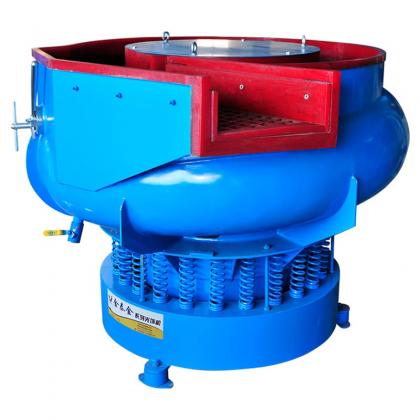
At Jintai Jin Grinding and Polishing Company, we offer advanced polishing machinery and equipment, including drum centrifugal polishing machines. Our machines are of the highest quality and are designed to meet the specific needs of our clients. We offer a variety of polishing machines such as magnetic machines, vibration machines, and other large industrial polishing equipment.
Our drum centrifugal polishing machines are among the best in the industry. They are designed to handle various metal parts and can produce a polished surface in a short amount of time. We use high-quality materials and advanced technology to manufacture our machines, ensuring they are durable and reliable.
If you're looking for a reliable and efficient solution for polishing metal parts, consider a drum centrifugal polishing machine from Jintai Jin Grinding and Polishing Company.
You can reach us by email at sales@jingseyewear.com, by phone at +86-592-2381506, or by visiting our official website at https://www.surface-polish.com/. Our headquarters are located at:
No.31 Xinchang Road,
Xinyang Industrial Zone,
Haicang District,
Xiamen, China.
| Situation | Suggested direction | Reason |
|---|---|---|
| Cycle time is the constraint | Centrifugal process with a cutting media | Higher energy than a standard vibratory process |
| Edge must be preserved | Shorter cycle and a check on a sample | High energy rounds edges quickly |
| Thin or delicate parts | Confirm the part suits the energy level | The process is more energetic than vibratory finishing |
| Finish after deburring | Follow with a gentler stage | The cutting stage is not the finishing stage |
| Consistent result across barrels | Load each barrel the same way | An uneven load changes the action in that barrel |
| Component wear | Check at intervals | High-energy operation wears media and liners faster |
Directions to test on a representative sample, not validated results for a specific component.
A centrifugal machine does not simply move the load faster than a vibrating machine; it changes the nature of the contact. Rotating barrels around a central axis drives the media and parts into each other under pressure, so the load works against itself rather than being moved against a chamber wall or a falling charge.
The result is a much higher work rate. A process that takes hours in a barrel can take minutes in a centrifugal machine, and that is the reason to choose one: it is the answer when cycle time is the constraint rather than the finish.
The trade-off follows directly from the same property. High energy removes material quickly and rounds edges quickly, so the features that would tolerate a long gentle cycle may not survive a short energetic one. A centrifugal process is therefore scoped more tightly than a vibratory one, and the scoping is done on a sample.
Load per barrel comes first. Each barrel has to be loaded so the charge can work against itself; an uneven load changes the action in that barrel and shows up as variation between barrels rather than across the whole batch. Because the barrels are the working unit, the load is best checked per barrel rather than as a total.
Media comes second. The size still has to suit the smallest feature, but the consequence of choosing too coarse a grade appears far sooner here than in a slower process. Cycle time comes last and is kept short by design — the point of the process is to reach the result quickly, and extending the cycle past that point removes material without improving the surface.
Where a gentler final surface is required, the usual structure is two stages: a centrifugal cutting stage that does the work quickly, followed by a lower-energy finishing stage that produces the surface. Each stage then does the job it is suited to.
Email : info@surface-polish.com


 IPv6 network supported



 +86-592-2381506
