
Wheel Polisher Buying Guide: Which Machine Form, Which Budget, and When Not to Buy
Most wheel polishing content is written by people selling machines, and it answers one question: which machine is best. That is the second question. The first one is whether you should be buying a wheel polisher at all, and if you should, what the quote actually has to include for the machine to work on your wheels.
This page is about the purchase decision: the forms, the budget tiers, the used-versus-new question, and the cases where the honest answer is no. The engineering is covered separately — if you already know you are buying, start with which wheel and which process.
Start With What the Wheel Actually Is
Before you look at a brochure for a wheel polisher machine or ask a dealer for a quote, look at the rims sitting on your shop floor. Buyers often purchase the wrong machine because they treat every metal wheel as the same polishing job.
Note: This diagram is explained in the text and table above rather than shown as a separate figure.
Alloy, steel, and chrome — three different jobs
In fleet maintenance, tire shops, and wheel remanufacturing plants, incoming wheels fall into three material groups:
- Cast and forged aluminum wheels: The primary candidate for mechanical polishing, where oxidation and road pitting sit on bare or clear-coated alloy.
- Carbon steel commercial wheels: Covered in thick paint; refurbishing steel rims is a stripping and repainting job.
- Electroplated chrome wheels: Covered in a thin decorative nickel-chrome skin rather than solid homogeneous metal.
What "polishing a wheel" means on each
Polishing an uncoated forged aluminum truck rim or alloy car wheel means cutting away the oxidized outer layer and refining the bare metal into a mirror shine.
On a steel rim, mechanical finishing means stripping old paint and rust scale before powder coating. On a chrome wheel, however, you can only wipe away grime or lightly buff surface haze. Because electroplated chrome is ultra-thin, abrasive cutting cuts straight through the chrome to expose dull nickel or base metal underneath. Once you cut through chrome, the wheel is ruined and must go to an electroplating plant for stripping and replating.
Why the wheel type decides the machine, not the other way around
Your machine choice must follow your wheel mix. If your shop strips and repaints rusted steel fleet rims, you need blasting and coating equipment, not a mirror rim polisher. If customers bring peeling chrome rims, mechanical polishing cannot fix them, and we do not build electroplating lines.
If your core volume is bare forged or cast aluminum wheels — across passenger car and commercial truck wheel sizes — dedicated mechanical wheel polishing equipment is built for your floor.
The Machine Forms, and What Each One Actually Is
Search for rim polishers or wheel polishing equipment and you will see three machine architectures competing for the same buyers. For an engineering breakdown of how these fit into a plant layout, see our guide on wheel polishing equipment forms and line integration.
The vibratory form — our strong side
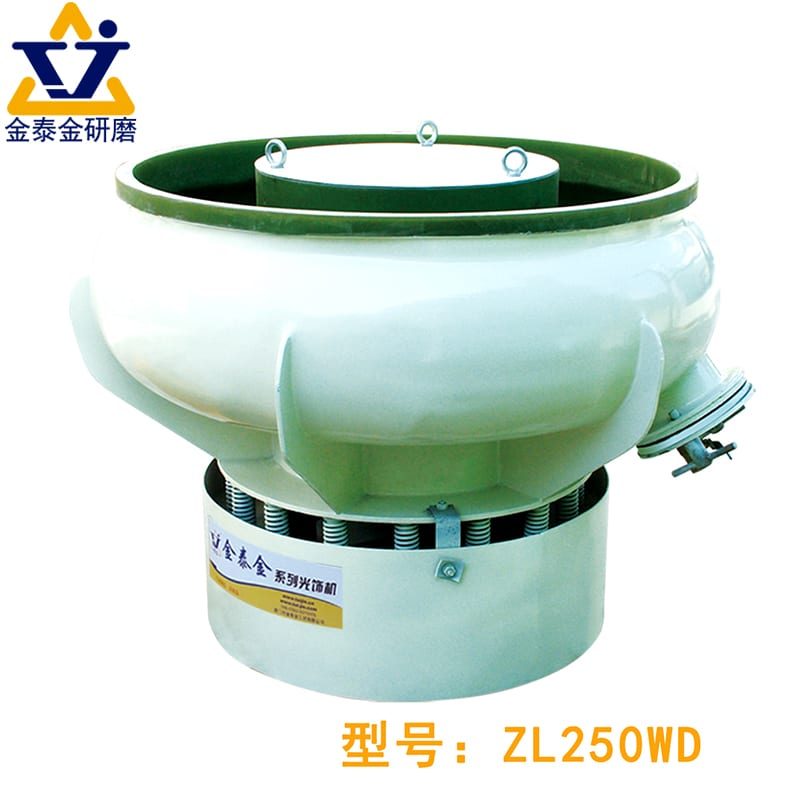
In a vibratory wheel polisher — also searched as a vibratory wheel polishing machine or vibratory wheel polishing machine for sale — the wheel clamps onto a fixture inside a round vibratory finishing machine bowl. An eccentric motor vibrates the chamber so ceramic, plastic, or stainless steel media and liquid compound flow continuously across the wheel face, hand holes, and flange.
This vibratory route is our core manufacturing strength. Because the flowing media bed reaches into tight spoke windows and bolt circles without manual steering, it produces a uniform satin or bright burnished luster across the whole wheel. An aluminum wheel must never float loose in a bowl where it can strike the wall; why the clamping fixture governs the cycle is detailed in our guide on aluminum truck wheel polishing machines.
The spindle and buffing form
In a rotary spindle wheel buffing machine — often called an aluminum wheel buffing machine or big rig wheel polishing machine — the rim bolts onto a motorized drive spindle. Automated or manual arms press spinning cloth buffing wheels and solid compound bars against the rotating rim face and barrel.
Spindle machines excel at fast face buffing on open commercial truck wheel profiles. However, wide cloth wheels struggle to reach inside narrow multi-spoke car rim windows and wear quickly against sharp spoke edges. Stand-alone cloth-wheel buffing lathes are not our standard product line; we focus on mass finishing and vibratory wheel systems.
The hybrid and mobile forms
At the entry end sit portable handheld buffers and compact mobile wheel polisher carts mounted inside service vans. A mobile operator mounts a rim on a portable roller stand and uses handheld angle polishers and airway buffing wheels to shine the outer lip.
Mobile rigs keep startup cost low for route operators visiting truck stops, yet finish quality depends on operator stamina. Dust, compound sling, and fatigue cap how many wheels one person can finish per day. We do not manufacture mobile van rigs or handheld power tools.
Which form fits which volume
Match the machine form to your daily production volume rather than brochure claims:
- High daily batch volume (remanufacturing plants and regional fleet hubs): Vibratory wheel polishing machines deliver the lowest labor per wheel and reach complex spoke pockets uniformly.
- Moderate daily throughput on open commercial truck rims: Automated spindle buffing machines handle simple dish profiles rapidly.
- Low-volume on-site touch-ups (mobile route vans and small tire bays): Handheld and portable roller tools fit occasional single-wheel jobs.
What the Machine Actually Consists Of
When you request quotes for a car rim polishing machine or truck wheel polishing equipment, two quotes that look similar on the cover page can differ wildly in what arrives on your dock. Reading a quote properly requires separating the system into four parts.
The base machine
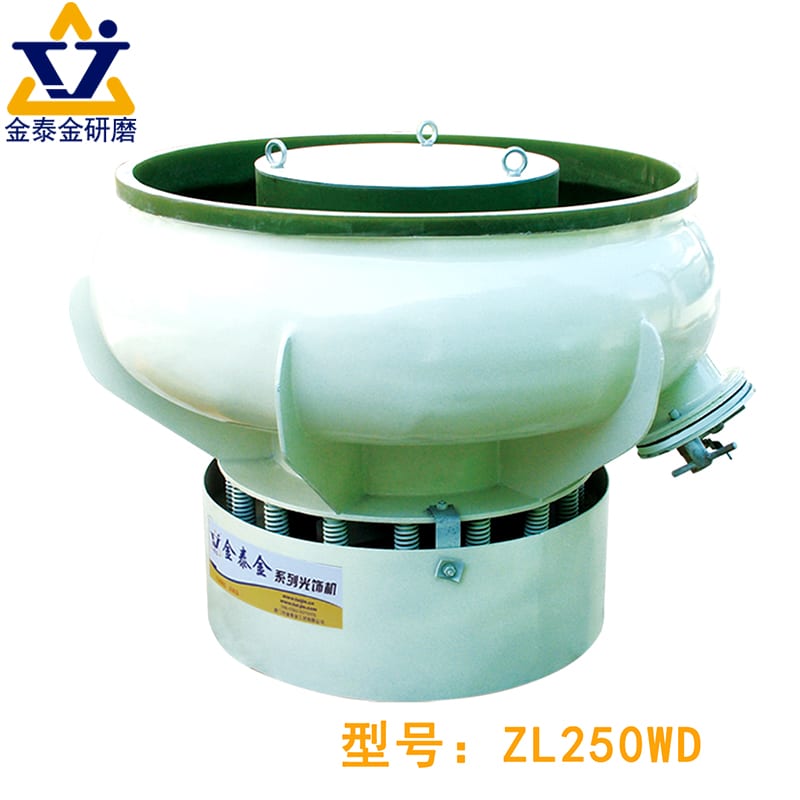
The base machine is the structural vibratory bowl, the polyurethane liner, the suspension springs, the eccentric drive motor, and the control cabinet with its variable-frequency drive and timer. On its own, a bare base bowl is just a general mass finishing tub — it cannot polish a wheel safely until the other three subsystems are added.
The fixture — the part that decides whether it works
The difference between a standard vibratory bowl and a true wheel rim polishing machine is almost entirely in the clamping fixture. The fixture must lock the heavy aluminum wheel through its center bore or lug holes and hold it at the proper immersion angle inside the media bed. It also must release quickly between cycles without marring the mounting face.
If the fixture flexes or sits at the wrong height, media flow stalls on one side and leaves a half-polished wheel. How fixture stiffness and concentricity protect wheel balance is covered in our guide on wheel workpiece polishing roundness and fixturing.
Media and compound
A wheel polisher cannot run dry stones. It needs a full working charge of grinding media — such as fine plastic cones for pre-polish cutting, porcelain spheres, or stainless steel media for burnishing. That media pairs with continuous dosing of water and finishing compounds formulated to brighten aluminum without leaving dark oxide film.
The parts that get quoted separately and surprise people
When comparing vendor quotes, check immediately whether these four items are included or hidden as add-ons:
- Custom wheel fixtures: Dedicated clamping plates and adapter rings for your bolt patterns.
- Initial media charge: The first full bowl fill of cutting or burnishing media.
- Starter compound and dosing pump: Metered aluminum brightening liquid required from day one.
- Hoist and settling tank: Overhead lifting gear for heavy rims and drain sludge settling.
Budget: What the Price Actually Includes
Buyers searching wheel polishing machine price or wheel polishing machine for sale want to know how much budget to set aside. While we never publish flat price tags — because a single-stage plastic-media bowl costs something very different from a multi-bowl steel-media burnishing line — every real quote falls into one of three budget tiers.
Three budget tiers, and what each one really gets you
Use the four-column table below to see what each investment tier delivers on the shop floor.
| Budget Tier | Typical System Configuration | What You Can Deliver | What You Cannot Deliver |
|---|---|---|---|
| Entry Tier | Single manual vibratory bowl, basic center-clamp fixture, and one general media grade | Clean matte or satin refurbishment ready for powder coat or paint | Cannot produce a bright mirror finish on bare forged aluminum |
| Mid-Range Tier | Variable-speed vibratory wheel machine, custom lug-and-bore fixture kit, dosing pump, and cut/burnish media | Reliable satin or bright burnished finishes across car and truck rims | Swapping cutting and burnishing media in one bowl limits daily batch count |
| High-Volume Tier | Multi-bowl staged line (dedicated cut bowl plus burnish bowl), pneumatic fixtures, hoist, and water recycling | Continuous multi-stage mirror finishing at remanufacturing speeds with minimal labor | Footprint and media inventory are uneconomical for low weekly wheel counts |
Why a low quote often costs more in the first year
When one vendor's quote for an alloy wheel polishing machine comes in far below every other builder's quote, look straight at the fixture line and media specification.
Low-bid suppliers cut their sticker price by bolting a flimsy universal clamping rod into a light-duty bowl and shipping cheap, coarse gravel media. When you clamp a heavy truck rim onto that rod, vibration shakes the clamp loose, the wheel tilts into the liner wall, and coarse media leaves blotchy patches across the spokes. Within months, you pay to fabricate proper fixtures and buy a fresh fill of media anyway.
The parts of the cost that are not on the quote
Remember to budget for shop utilities around the machine. You will need an overhead hoist so operators do not lift wet truck rims by hand, a water line and settling pit, compressed air for pneumatic clamps, and drying racks.
Should You Buy Used?
Because many buyers search for a used wheel polishing machine for sale, let us address the secondhand market honestly. Buying a used industrial machine can save capital, but only if you know what wears out and what cannot be fixed cheaply.
When used makes sense
Buying used makes sense when three conditions line up. First, the machine is a proven model with standard replacement motors and bearings. Second, the seller lets you run a live load test with your own wheel. Third, the sale includes the complete clamping fixture assembly for your rim sizes.
What to check on a used machine
Never buy a used wheel polisher from photos alone. Inspect four physical components in person:
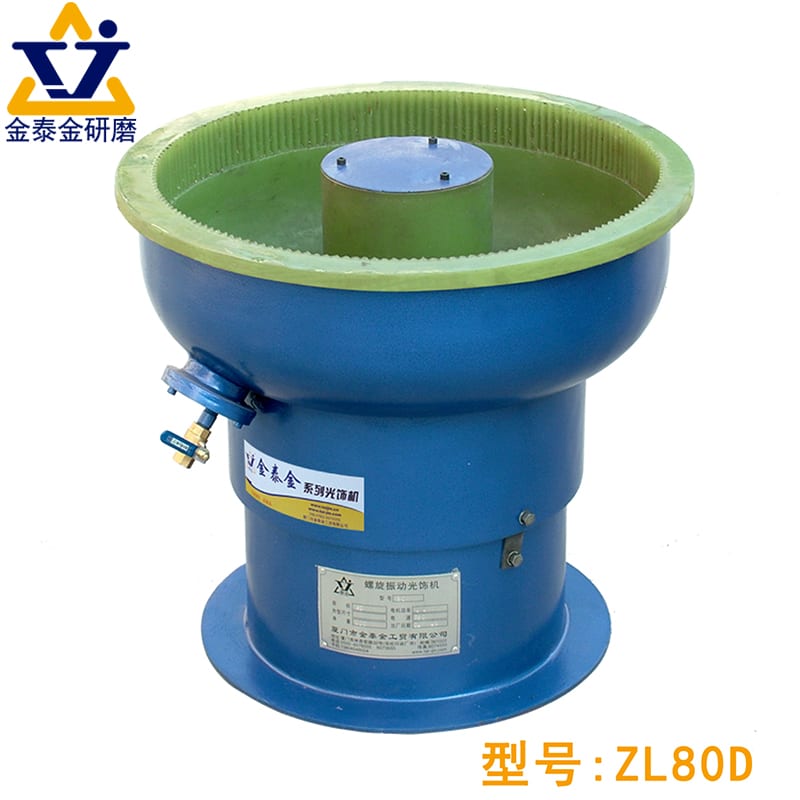
- Polyurethane liner: Inspect the bottom trough and center post for thin spots, blisters, or peeling.
- Motor and springs: Run the bowl under full media load to check for bearing knock or weak springs.
- Fixture condition: Check clamping plates and threads; rebuilding missing custom fixtures is expensive.
- Drive controls: Verify that the VFD powers up cleanly without fault codes.
What you cannot check, and what that costs
The biggest risk on a used vibratory wheel polisher is something you cannot see during a dry inspection: what metal alloys the previous owner ran in that bowl.
If the used machine spent years deburring carbon steel castings in a job shop, microscopic iron particles and heavy grease are trapped in the media and worn liner crevices. Loading a soft forged aluminum wheel into an iron-contaminated bed drives iron into the aluminum skin, turning the wheel dark gray and triggering galvanic pitting.
The hidden replacement parts
If you buy a used machine with worn or contaminated media, factor in dumping the old media, scrubbing the liner, replacing clamp pads, and buying a new charge of aluminum-safe media and compound. Unless you can test the machine under load and confirm the fixtures fit your wheels, the money saved upfront will vanish in year one.
When Not to Buy a Wheel Polisher At All
Equipment salespeople hate turning down an order, yet the smartest decision for some shops is not buying a machine. Look at the four situations below where buying a wheel polisher is the wrong move.
| Your Shop Situation | Why Not to Buy | What to Do Instead |
|---|---|---|
| Only a few wheels a month | Fixed machine and media cost cannot pay back | Outsource to a regional remanufacturer |
| Single rim style in high volume with no crew | Running a wet finishing bay distracts from core operations | Negotiate a contract rate with a finishing vendor |
| Mostly peeling chrome-plated wheels | Abrasive polishing cuts through thin chrome and ruins rims | Send to a chrome stripping and replating plant |
| Bent flanges, cracks, or deep curb gouges | Polishing only builds shine and cannot fix geometry | Use a straightener, TIG welder, and wheel lathe first |
Volume too low to justify the machine
A stationary industrial wheel polisher requires floor space, power drops, water connections, and a full bed of media sitting in the bowl. If your shop only sees a few oxidized rims a month, that capital sits idle most of the time.
When outsourcing is cheaper
Until your weekly wheel count crosses a steady recurring threshold, sending rims out to a wholesale polishing hub keeps cash free and avoids equipment maintenance or wastewater disposal.
When the wheel type is outside the process
If your local market is dominated by peeling chrome rims or two-tone painted passenger wheels, a mass vibratory polisher is the wrong tool. Vibratory media scrubs every exposed surface uniformly — it cannot polish raised spoke faces while leaving painted inner pockets untouched.
When the damage is past recovery
This last point is the most important boundary in the business: polishing is not wheel repair.
Many buyers search for an alloy wheel repair machine and a wheel polisher thinking they are the same tool. A wheel polisher only refines surface roughness to build shine. If a wheel hits a curb and arrives with a bent flange, cracked barrel, or deep lip gouges, a vibratory polisher will only produce a shiny bent, gouged wheel. Structural damage and deep curb rash require a hydraulic straightener, TIG welding, and a CNC wheel lathe before polishing begins.
What to Ask Before You Sign
Once you verify that your wheel material, surface state, and weekly volume justify an in-house machine, use these questions to evaluate suppliers across our all machines catalog or any other builder.
The five questions that separate suppliers
Put these five questions in writing before paying a deposit:
- Is the clamping fixture engineered specifically for my wheel sizes and bolt patterns, or is it a generic clamp?
- Does the written quote include the full initial working fill of media and starter drums of aluminum compound?
- Can I ship or bring my own oxidized wheel for a live sample trial, and get the finished wheel and parameters back?
- How is the polyurethane bowl liner replaced when it wears out, and what is the expected liner life?
- If my shop adds different rim sizes next year, can the fixture plate be adapted or must it be rebuilt?
What a real trial looks like
A capable builder mounts your actual rim onto their fixture, documents the media grade and compound flow, and runs a full test cycle. They return the wheel showing uniform luster inside tight spoke corners and an unmarked hub mounting face.
The answers that should make you walk away
Walk away immediately if a salesperson gives you any of these three answers:
- "Our universal fixture fits every wheel." Wheel bores and offsets vary too much for a generic clamp.
- "You do not need a sample trial." Forged and cast aluminum require tested recipes.
- "Wheel fixtures are standard catalog parts." Wheel fixtures are custom engineering, never standard.
At our Xiamen plant, founded in nineteen ninety-two, we build mass finishing equipment across twenty-one machine platforms and six product lines, backed by twenty-four authorized Chinese IP rights. We manufacture vibratory wheel polishing systems, custom wheel fixtures, media, and aluminum brightening compounds. We do not build chrome electroplating lines, wheel straighteners, CNC repair lathes, paint booths, or mobile van tools, and we do not run a contract job shop.
Frequently Asked Questions About Wheel Polishers
What is the difference between a wheel polisher and a wheel polishing machine?
In shop language the terms overlap, but "wheel polishing machine" usually means the bare bowl or spindle frame. "Wheel polisher" refers to the complete working package including the custom clamping fixture, dosing pump, and media. The base machine cannot work without the fixture.
Can a vibratory machine polish wheels without a fixture?
No, never float a wheel loose inside a vibratory bowl without a clamping fixture. Because an aluminum rim is heavy and soft, an unfixtured wheel stalls the media roll and slams into the liner wall or another wheel, denting the rim lip. The fixture locks the wheel in place so media flows smoothly through the spoke windows.
How much does a wheel polisher cost?
Price depends on three variables: machine form, custom fixture complexity, and whether the quote includes the initial fill of media and compound. Because different fixtures and media grades change the total significantly, quotes must be calculated against your specific wheel sizes and daily volume.
Can I polish chrome wheels with this equipment?
No. Decorative chrome on a wheel is a thin electroplated skin over nickel and base metal. Abrasive tumbling media or cutting wheels will cut right through the thin chrome layer on edges and spokes, exposing the dull underlayer permanently. Peeling or pitted chrome rims must go to an electroplating plant for stripping and replating.
Do I need different media for aluminium wheels?
Yes. Aluminum is much softer and more reactive than steel. Coarse deburring stones made for steel castings will gouge soft aluminum rims, and harsh alkaline cleaners will turn aluminum dark gray. Aluminum wheels require smooth plastic cones or non-abrasive porcelain and stainless burnishing media paired with dedicated aluminum brightening compounds; see our vibratory tumbler media selection guide for details.
What is the difference between wheel polishing and wheel repair?
Wheel repair restores damaged part geometry — using hydraulic presses to straighten bent rims, TIG welders to fill curbed lips, and CNC lathes to recut machined faces. Wheel polishing refines surface texture — using vibratory media or buffing wheels to remove oxidation and bring sound metal to a uniform satin or mirror shine. To evaluate a vibratory wheel polisher and custom fixture setup for your rim volume, reach out on our contact page to arrange a sample trial with our engineering team.
 +86-592-2381506


 IPv6 network supported
