Ceramic Polishing Machine Guide: Selecting OBD Magnetic and Vibratory Systems for Technical Ceramics & Media

Selecting a ceramic polishing machine requires balancing two distinct industrial realities: finishing brittle technical ceramic components (such as alumina insulators, zirconia ferrules, and valve seals) without edge chipping, and running ceramic-media-driven mass finishing machines cleanly on hard metal alloys. Because technical ceramics lack metal ductility, uncontrolled stone impact fractures corners instantly. SurfacePolish (Xiamen Jin Tai Jin Grinding Technology Co.,Ltd.) applies insights from 200,000+ verified finishing trials to match OBD-100 magnetic polishing machines and cushioned ZL vibratory systems to delicate ceramic workpieces and high-alumina media processes alike.
Understanding Ceramic Finishing Challenges: Brittle Workpieces vs. Ceramic Media
When engineers search for a ceramic polishing machine, they are either smoothing sintered technical ceramic parts or configuring a vibratory tumbler loaded with ceramic abrasive media. Both workflows demand tight control over impact energy, media density, and liquid cushioning, yet they require completely opposite media hardness pairings.
Why Sintered Technical Ceramics Chip Under Heavy Tumbling
Fired alumina, silicon nitride, and zirconia ceramics exhibit extreme compressive hardness alongside low fracture toughness. Dropping sintered ceramic rings or sensor substrates into heavy, coarse ceramic stones creates sharp point impacts that spall corners and open micro-cracks. Any ceramic polishing machine handling brittle non-metallic substrates must replace heavy impact with high-frequency sliding shear or fine stainless pin burnishing.
Removing Firing Flash, Kiln Dust & Grinding Marks Safely
Even precision-ground ceramic components retain fine diamond-wheel striations, sharp laser-scribed edges, and residual kiln dust inside micro-holes. Gentle wet polishing inside a controlled magnetic polishing machine or cushioned ZL bowl sweeps away surface haze and breaks razor-sharp edges uniformly without stressing the bulk ceramic body.
Distinguishing Ceramic-Workpiece Polishing from Ceramic-Media Finishing
When finishing steel, stainless, or titanium hardware, ceramic media acts as the hard cutting tool inside a vibratory finishing machine to shear metal burrs rapidly. Conversely, when finishing technical ceramic parts themselves, high-density stainless magnetic pins or soft resin-bonded plastic media and high-alumina spheres serve as the cushioned contact medium that refines surface gloss safely.
| Finishing Scenario | Workpiece Material | Recommended SurfacePolish Machine | Media & Compound Choice | Key Quality Safeguard |
|---|---|---|---|---|
| Technical ceramic insulators & seals | Sintered alumina / zirconia | OBD-60 / OBD-100 magnetic unit |
Fine stainless pins + HM3 |
Zero heavy impact; cleans micro-holes |
| Large ceramic plates & valve sleeves | Structural technical ceramics | ZL cushioned bowl / rotary barrel |
Fine high-alumina or plastic media + HM3 |
High media cushion; slow bowl roll |
| Ceramic-media deburring of steel | Carbon / 304 stainless steel |
ZL / ZXL vibratory bowl |
Ceramic media triangles + LC10 |
Flow-through rinse prevents stone glazing |
| Brightening ceramic-leveled alloys | Hardened steel & stainless | ZL bowl or LLB50 / LLF120 |
High-alumina balls + JTJ50 / JTJ60 |
Step-down from coarse cut to smooth burnish |
| Post-polish ceramic substrate drying | All non-porous & porous ceramics | 35A / 70A centrifugal dryer |
Clean heated spin basket | Prevents water spots & thermal shock |
OBD Magnetic Polishing Machines for Precision Ceramic Components
For small-to-medium sintered ceramic sleeves, electronic substrates, watch bezels, and precision fluidic valves, an OBD-30, OBD-60, or OBD-100 magnetic polishing machine delivers unmatched safety and internal reach. Instead of tumbling heavy ceramic parts down a cascading media waterfall, high-frequency magnetic rotation sweeps lightweight stainless pins smoothly across every face.

How High-Frequency Magnetic Pin Motion Protects Brittle Edges
Inside an OBD chamber, rotating permanent magnets agitate fine 304 stainless steel needles in a dense, fluid-like vortex suspended in water and HM3 polishing compound. Because individual stainless pins carry minimal kinetic mass compared to heavy stones, they glide around sharp ceramic corners and polish flat lands smoothly without generating fracture-inducing shock loads.
Deburring & Cleaning Micro-Bores, Slots & Blind Recesses
Technical ceramic ferrules, burner nozzles, and electronic switch bases frequently feature tiny laser-drilled holes and recessed slots where preformed stones cannot fit. Magnetic pins align dynamically with changing field gradients, threading cleanly through internal passages to clear firing dust and smooth micro-edges that hand brushes never reach.
Scaling Batch Output Across OBD-30 to OBD-100 Tanks
Prototype labs and high-mix ceramic component fabricators can match chamber capacity directly to batch volume across OBD-30, OBD-35, OBD-60, OBD-70, OBD-90, and OBD-100 platforms. Rapid part-and-pin separation via magnetic recovery trays keeps turnaround fast between consecutive production lots while protecting delicate ceramic surfaces from manual scooping damage.
ZL Vibratory & LLB50 Centrifugal Systems with Ceramic & High-Alumina Media
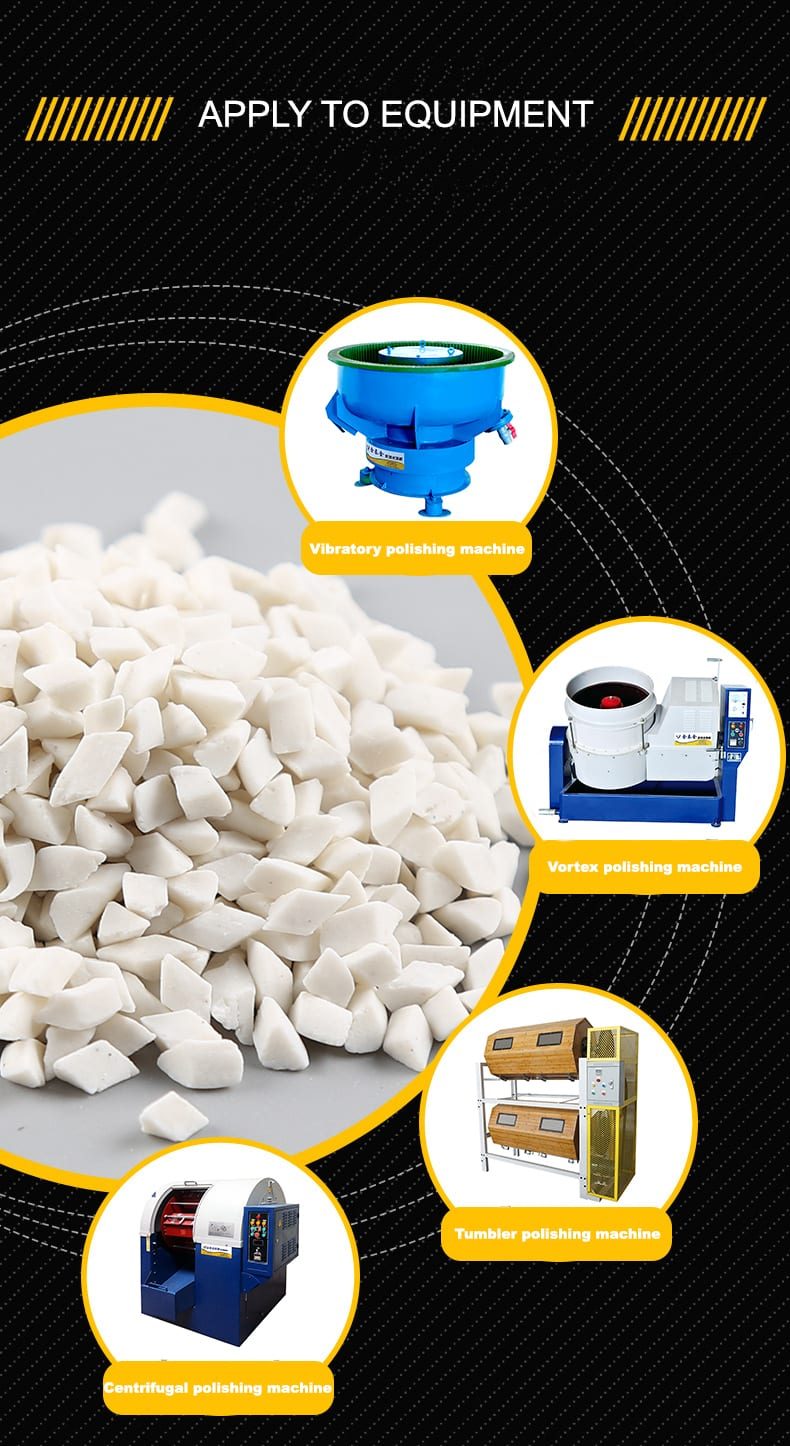
When workpieces exceed magnetic tank capacity—or when running ceramic abrasive stones to finish metal parts—curved-wall ZL bowls, straight-wall ZXL troughs, and LLB50 centrifugal disc units provide stable, continuous mass circulation.

Cushioning Technical Ceramics Inside ZL Bowls with Plastic Media & High-Alumina
Larger ceramic valve plates and industrial wear tiles require a ZL vibratory bowl lined with thick wear-resistant polyurethane to absorb wall impacts. Loading fine resin plastic media pyramids or smooth high-alumina balls at a high media-to-part volume ratio isolates ceramic parts from hitting one another, allowing gentle edge rounding and surface brightening across full batch loads.
Running Ceramic Media on Steel, Stainless & Titanium Alloys
For industrial metal finishers, a ceramic polishing machine often means a heavy-duty ZL bowl or LLF120 centrifugal unit charged with aluminum-oxide ceramic media. Triangles, angle-cut cylinders, and spheres cut hard CNC tool marks and laser-cut burrs cleanly when paired with LC10 deburring compound, preparing steel and stainless parts for downstream JTJ50 brightening.
Selecting LLB50 Centrifugal Discs for High-Density Small-Batch Throughput
When small sintered wear parts or tough metal fasteners need rapid surface refinement in compact batches, an LLB50 centrifugal finishing machine accelerates sliding pressure between media and workpiece surfaces. Adjusting disc speed lets operators dial in aggressive cut on hard metals or gentle smoothing on dense ceramic sleeves.
Media & Compound Chemistry: Preventing Glazing, Smut & Surface Haze
Abrasive media and liquid chemistry work as an integrated system inside any ceramic polishing machine. Starving the chamber of compound or running dirty recirculated water glazes stones and leaves dull mineral film across polished ceramic faces.
Pairing HM3 & JTJ60 Compounds with Stainless Pins & High-Alumina
In OBD magnetic units and high-alumina vibratory burnishing cycles, HM3 polishing compound and JTJ60 fine metal brightening chemistry reduce liquid surface tension, suspend microscopic wear debris, and cushion pin-to-ceramic contact. Clean chemical lubrication prevents fine metallic smut from transferring onto bright white alumina or zirconia substrates.
Using LC10 & MC8 for Heavy Ceramic-Media Cutting & Oxide Purge
When running rough ceramic media against scale-coated steel or heat-treated stainless parts, LC10 deburring compound keeps abrasive stone pores open and free-cutting. If stones accumulate dark oxide glaze from oily or scaled incoming lots, a quick MC8 purge restores fresh cutting bite immediately without dumping the bowl.
Dry Corncob & Walnut Shell (8#-80#) Buffing After Wet Cycles
Never run dry corncob or walnut shell (8#-80#) beds expecting to remove diamond-grinding lines from sintered ceramics or deep tool marks from steel. Instead, use dry organic beds strictly after wet polishing and heated drying to lift residual moisture haze and impart a clean final luster on precision parts.
Preventing Fracture, Cross-Contamination & Water-Spot Defects
Technical ceramics punish sloppy shop-floor handling. Enforcing simple mechanical and chemical safeguards prevents costly scrap across high-value sintered lots.
Controlling Media-to-Part Ratio & Bowl Fill Depth
Insufficient media fill exposes ceramic workpieces directly to each other and to chamber walls, turning gentle sliding into destructive edge chipping. Maintain generous media cushioning and verify bowl fill height before starting every cycle so parts remain suspended inside the rolling mass at all times.
Segregating Stainless Pins & Non-Ferrous Baths from Carbon Steel Fines
Never polish white alumina or zirconia parts in magnetic pins or ZL media beds previously used on carbon steel without thorough cleaning. Embedded iron fines transfer microscopic rust spots onto porous ceramic grain boundaries during drying, failing cosmetic and electrical insulation inspections downstream.
Managing Water Hardness & 35A/70A Centrifugal Drying
Hard municipal rinse water leaves chalky mineral rings on glossy ceramic substrates as droplets evaporate slowly on shop racks. Monitor water hardness in mass finishing stability and transfer rinsed batches straight into a 35A or 70A centrifugal dryer so warm airflow flashes moisture off cleanly without thermal shock.
| Ceramic Polishing Defect | Probable Root Cause | Immediate Corrective Action | Long-Term Process Prevention |
|---|---|---|---|
| Chipped edges on ceramic parts | Low media fill or over-heavy stone size | Switch to OBD pins or fine plastic media |
Lock high media-to-part ratio on recipe sheet |
| Dark gray haze on white ceramics | Dirty slurry or cross-contaminated pins | Flush tank; charge fresh HM3 solution |
Dedicate separate pin/media sets per material |
| Stalled cutting on steel alloys | Glazed ceramic media from oil/scale |
Pre-wash parts; run MC8 stone purge |
Enforce ultrasonic cleaner pre-degrease |
| Water spots after wet cycle | Slow air drying with hard rinse water | Spin promptly in 35A/70A dryer |
Standardize clean final rinse + heated spin |
Optimizing Cycle Recipes, Media Screening & Process Economics
Once your ceramic polishing machine recipe is locked, long-term operating cost depends on disciplined media screening, predictable compound dosing, and clean separation tooling.
Implementing Non-Lodging Media Sizing for Slotted Ceramics
Ceramic burner plates, insulating spacers, and fluidic manifolds often combine fragile outer edges with narrow internal slots. Follow proven non-lodging media sizing geometry rules when selecting ceramic triangles or plastic media cones so stones never wedge inside slots and force risky manual prying.
Scheduling Media Screening & Polyurethane Liner Inspections
Worn media fragments lose mass and wedge in part openings, while degraded bowl liners expose bare steel walls that shatter brittle ceramics on contact. Run routine media screening and replenishment checks alongside liner rib inspections to keep every shift predictable.
Benchmarking Surface Roughness Against Industrial Standards
Whether targeting functional sealing smoothness on zirconia valve seats or isotropic satin on stainless housings, verify first-article results against a consistent surface finish conversion chart standard and sealed visual master coupons before releasing full production batches.
Scaling Ceramic Finishing Lines: Multi-Stage Workflows & Shop Integration
Moving a ceramic polishing machine from lab validation to steady multi-shift production requires aligning pre-cleaning, batch loading, secondary brightening, and clean drying into one uninterrupted workflow. Properly balanced cells protect delicate ceramic workpieces while maximizing throughput on hard metal alloys.
Pre-Cleaning Oily or Diamond-Ground Ceramics in Ultrasonic Baths
Precision-ground alumina and zirconia components often arrive at the finishing cell coated in diamond-coolant oil, lapping paste, or fine ceramic swarf. Running a quick pre-wash in an ultrasonic cleaner prevents oil from glazing high-alumina spheres or fouling OBD magnetic pin baths, keeping every polishing cycle consistent from the first load onward.
Combining Rotary Barrel Tumblers with Vibratory & Magnetic Stages
For ultra-fragile thin ceramic wafers, intricate watch components, or delicate metal-ceramic assemblies, a slow rotary barrel tumbler provides cushioned cascading motion without high-frequency vibration spikes. Pairing slow barrel smoothing with a final OBD-60 magnetic pin brighten or plastic media polish lets shops handle fragile geometries safely at scale; see our barrel finishing process and isotropic finishing guides for multi-stage cell planning.
Separating Technical Ceramic Lines from Heavy Steel Deburring Bowls
Never alternate between sintered ceramic substrates and rough carbon steel stampings inside the same ZL bowl or OBD chamber. Dedicated polyurethane-lined tubs, isolated ceramic media and plastic media hoppers, and separate 35A/70A dryer baskets eliminate metallic transfer stains completely.
Managing Slurry Filtration, Settling Tanks & Water Turnover
Continuous flow-through rinsing carries fine ceramic dust and abraded oxide away from the work zone, but unfiltered slurry quickly clogs shop drains. Routing machine discharge through simple multi-baffle settling tanks traps heavy ceramic and alumina sediment cleanly while keeping compound chemistry balanced across every shift.
Inspecting Polyurethane Bowl Liners & Magnetic Tank Plates
Worn polyurethane bowl ribs or scratched acrylic OBD tank bottoms accelerate part bruising and trap abrasive grit. Scheduling brief weekly visual inspections of chamber linings, separation flaps, and magnetic disc seals protects expensive precision parts from unexpected surface scratches.
Documenting Verified Cycle Recipes Across High-Mix Ceramic SKUs
Because technical ceramic parts vary widely in wall thickness, hole geometry, and sintered density, operators should never guess media ratios or compound flow rates. Recording proven machine settings, pin grades, and drying parameters per part family ensures repeatable gloss and edge safety across every repeat order.
Planning Batch Capacity for Future Production Growth
Growing technical ceramic suppliers and precision job shops often start with an OBD-60 or OBD-100 magnetic unit alongside a 35A dryer for small intricate parts, then add a cushioned ZL bowl or LLB50 centrifugal disc as larger plates and structural rings enter production. Modular equipment footprints make capacity expansion straightforward without re-engineering existing utilities.
Training Operators on Safe Ceramic Handling & Separation
Even the smoothest finishing cycle can be undone if operators dump wet ceramic parts roughly onto bare metal trays. Using cushioned unloading baskets, soft mesh sieves, and dedicated transfer racks after 35A/70A drying preserves spotless edges all the way to final inspection.
Auditing Final Surface Gloss & Edge Integrity Before Packaging
Before shipping finished zirconia ferrules, alumina insulators, or ceramic-media-finished stainless valves, verify representative parts under clean oblique lighting and calibrated stylus checks. Consistent incoming-to-outgoing verification protects downstream assembly yields and prevents costly field returns.
Controlling Media Wear Rates & Ceramic Substrate Dimensional Stability
Technical ceramic seals, pump plungers, and insulating rings rely on tight flatness and concentricity tolerances established during diamond grinding prior to mass finishing. Monitoring pin or high-alumina media condition alongside gentle HM3 chemical lubrication ensures that micro-edges are cleanly relieved and kiln haze is stripped away without rounding precision sealing lands. Maintaining clean separation between finishing lots, filtering fine ceramic sediment from rinse water, and logging batch-specific recipes gives production teams repeatable mirror-satin clarity across high-value sintered orders.
Integrating Ultrasonic Cleaning & Centrifugal Drying into Automated Lines
When sintered ceramic components leave diamond slicing or CNC green-machining stations, residual wax, coolant emulsions, and fine grinding dust cling stubbornly inside blind bores and mounting grooves. Routing raw parts through a dedicated ultrasonic cleaner bath before loading your ceramic polishing machine prevents oil contamination from glazing media or clouding HM3 solutions. Afterward, spinning rinsed parts promptly inside a 35A or 70A centrifugal dryer removes trapped droplets from micro-holes cleanly, eliminating mineral water marks before final optical inspection and protective packaging.
Selecting Between Batch Automation & Multi-Stage Ceramic Finishing Cells
High-mix technical ceramic manufacturers rarely process only one part geometry across an entire production week. Small intricate zirconia sleeves, burner nozzles, and insulating collars with narrow micro-bores finish fastest inside OBD-60 or OBD-100 magnetic pin polishers using fine 304 stainless needles and HM3 compound, whereas larger flat wear plates and structural valve rings require cushioned ZL vibratory bowls or slow rotary barrel tumbler cascades loaded with high-alumina spheres or resin plastic media. Pairing isolated rinsing baskets with a 35A or 70A centrifugal dryer ensures spotless, mineral-free drying without thermal shock. Documenting verified machine settings, media fill heights, and compound drip rates for each part family keeps edge integrity and gloss uniform from initial lab qualification through continuous multi-shift output.
Protecting High-Value Sintered Tolerances Through Disciplined Process Control
Unlike ductile metal stampings that can tolerate minor rework if over-tumbled, sintered alumina and zirconia components suffer permanent edge spalling if media cushioning drops too low or steel contamination enters the tank. Establishing strict visual master coupons, monitoring water hardness in mass finishing, and verifying bowl polyurethane liner integrity before loading high-value lots protects both dimensional accuracy and cosmetic surface clarity across every production shift.
Verifying Chemical Compatibility Across Technical Ceramic Grades
Before introducing new compound formulations to porous sintered alumina or high-purity zirconia substrates, always confirm chemical neutrality across a small test batch. Neutral-to-mildly-buffered HM3 and JTJ60 solutions prevent grain-boundary etching while keeping 304 stainless pins and high-alumina spheres clean and free-cutting throughout extended multi-shift production schedules.
Auditing Lot-to-Lot Repeatability Across Multi-Shift Ceramic Production
Sustaining uniform gloss and edge integrity across high-volume technical ceramic orders depends on disciplined incoming screening, clean water turnover, and consistent media replenishment. Logging every verified machine parameter alongside 35A/70A drying settings keeps day-shift and night-shift output indistinguishable, eliminating downstream sorting rework and protecting critical assembly tolerances.
SurfacePolish Equipment Platforms, Certifications & Sample Trials
SurfacePolish (Xiamen Jin Tai Jin Grinding Technology Co.,Ltd.) manufactures complete ceramic polishing machine solutions spanning 21 machine platforms—including OBD-30 through OBD-100 magnetic polishers, ZL/ZXL vibratory bowls, LLB50/LLF120 centrifugal systems, rotary barrel tumbler lines, 35A/70A centrifugal dryers, and ultrasonic cleaner stations—backed by 200,000+ practical finishing solutions.
Certified Manufacturing Quality & Single-Source Consumables
All hardware is built under ISO 00726Q01571R001 quality management with CE M.2023.206.C88121 and CE M.2023.206.C88120 certifications and 24 granted Chinese IP rights. Supplying matched ceramic media, high-alumina spheres, plastic media, stainless pins, dry corncob/walnut shell (8#-80#), and tumbling compounds (HM3, LC10, MC8, JTJ50, JTJ60) from one factory guarantees repeatable results.
Complimentary Ceramic & Alloy Finishing Lab Trials
Ship your raw sintered ceramic workpieces or metal test lots to our engineering laboratory for complimentary trials. We document exact machine selection, pin or media grade, compound dosing, and drying settings before you invest, ensuring fracture-free quality from day one.
 +86-592-2381506


 IPv6 network supported