
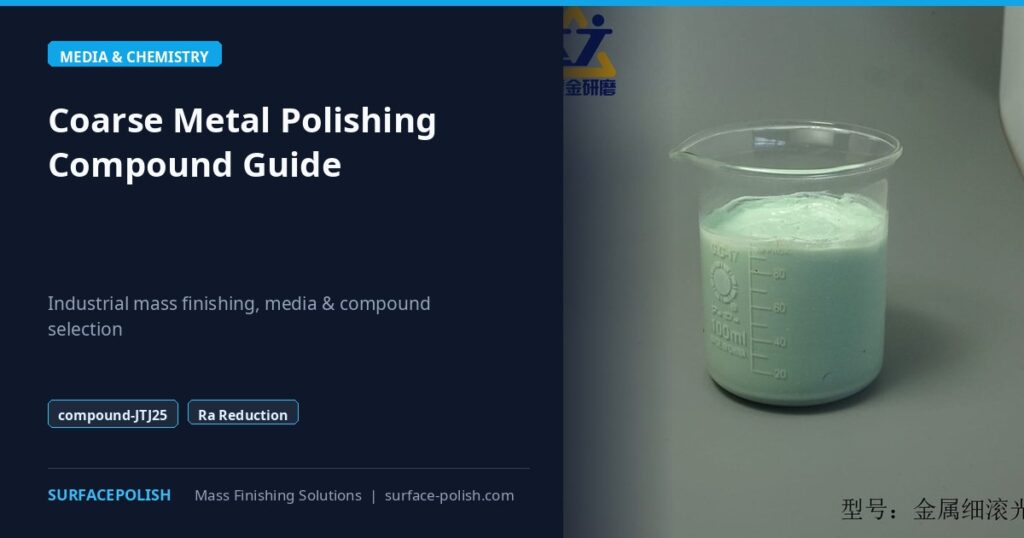
`Coarse Metal Polishing Compound` Guide (`compound-JTJ25`): Rapid `Ra` Reduction on Steel, Stainless, and Brass
Finishing supervisors searching for a coarse metal polishing compound often run into an engineering gap between rough Stage 1 deburring and delicate optical finishing. When forged carbon-steel hand tools, heavy 304 stainless marine shackles, and rugged turned brass manifolds exit Stage 1 ceramic cutting with clean burrs yet noticeable Ra texture, jumping straight to light final brighteners takes too long—while re-cutting in coarse silicon-carbide stones risks over-radiusing sharp blueprint edges.
The central thesis of this guide is straightforward: achieving brisk, uniform Ra reduction and bright metallic sheen with compound-JTJ25 coarse metal polishing compound requires completing Stage 1 burr cutting (high-frequency ceramic + LC10 or MC8) beforehand, enforcing a thorough clean-water rinse barrier before Stage 2, pairing JTJ25 with heavy 304 stainless balls or ball-cones inside reinforced ZL bowls or LLF120 barrels in continuous single-pass flow into a multi-baffle settling tank, and immediately spin-drying finished steel hardware in heated 35A/70A centrifugal dryers.
In this engineering guide, you will compare compound-JTJ25 against JTJ20, JTJ60, LC10, and MC8, map heavy ball-burnishing machine loads cleanly, and eliminate grey smut, crescent peening, and flash rust across shifts.
Where compound-JTJ25 Fits Between Stage 1 Cutting and Optical Mirror Luster
High-Lubricity Cushioning for Heavy 304 Ball Peak Compression
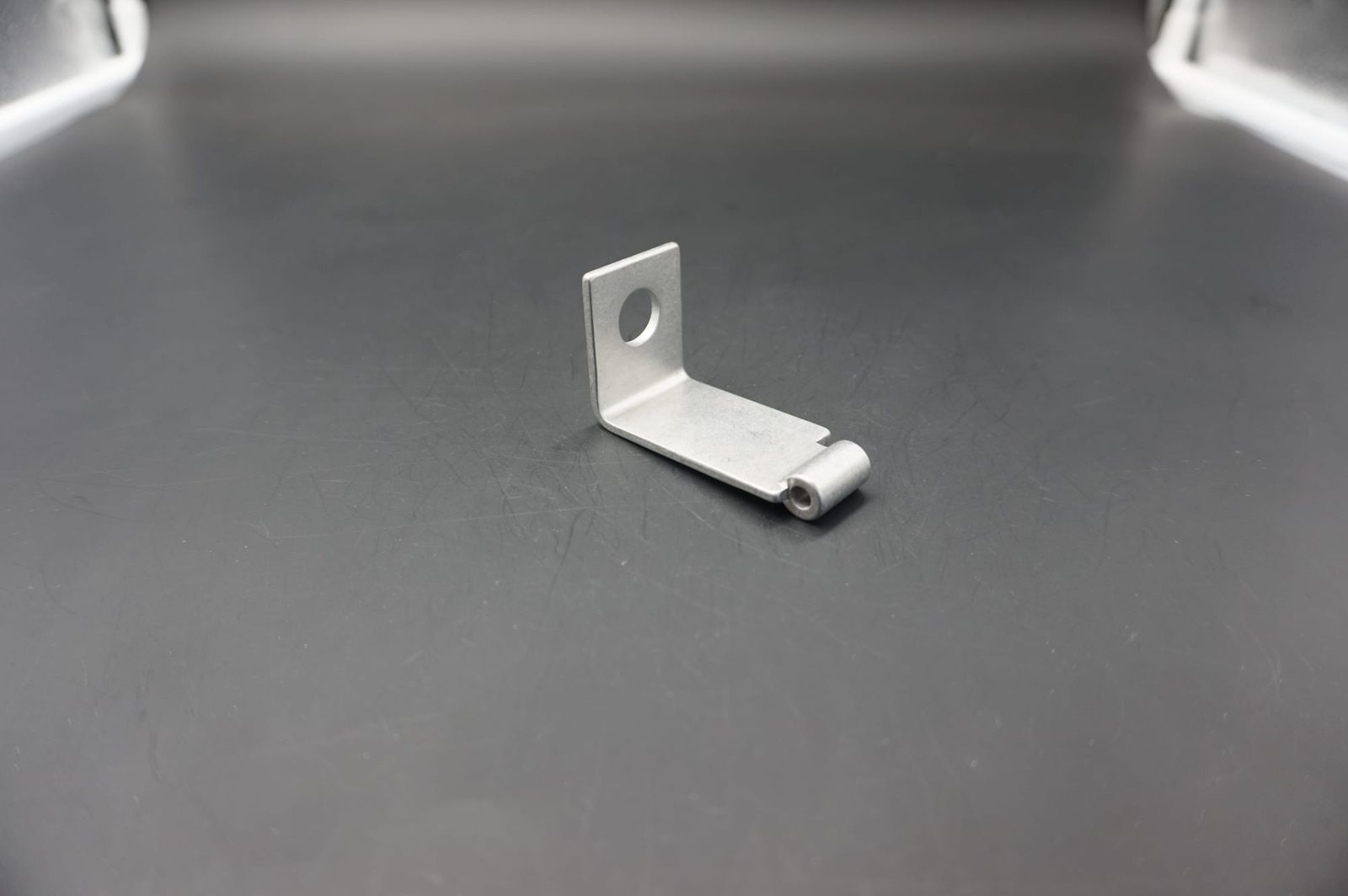
Compound-JTJ25 coarse metal polishing compound is engineered specifically for vigorous Stage 2 mechanical ball burnishing on tough stainless steel, forged carbon steel, and robust brass castings. Its high-film surfactant package cushions intense rolling pressure from heavy 304 stainless balls and ball-cones—flattening residual Stage 1 Rz peaks rapidly without micro-galling, soap build-up, or dark oxide smearing. Review our steel polishing compound guide and mass finishing compounds guide.
Comparing JTJ25 With JTJ20, JTJ60, LC10, and MC8
Within the SurfacePolish chemistry matrix, compound-MC8 strips heavy black heat-treat scale on isolated carbon-steel lines; compound-LC10 powers daily Stage 1 abrasive cutting across ceramic and plastic media; compound-JTJ25 drives brisk heavy-duty Ra compression on steel, stainless, and brass with 304 stainless balls; JTJ20 and JTJ60 deliver maximum optical mirror brilliance on stainless cutlery and surgical trim; and JTJ50/HM3 serve reactive non-ferrous aluminum and titanium alongside iron-free high-alumina spheres. Explore our compound JTJ20 stainless brightener guide and compound JTJ60 fine polishing guide.
Why JTJ25 Still Requires Stage 1 Abrasive Deburring First
Even as a heavy-duty Stage 2 coarse metal polishing compound, compound-JTJ25 contains zero cutting grit and will not shear sharp CNC exit burrs or thick stamping flash. Always strip burrs and level deep tool paths first using vitrified high-frequency ceramic stones (LC10 or MC8 for steel/stainless) before loading Stage 2 304 stainless balls. Read our high-frequency ceramic media guide and ceramic media vs steel balls guide.
| Compound Stage Role | Active Code | Best Media & Machine | Target Alloy Scope | Key Shop-Floor Rule |
|---|---|---|---|---|
Heavy Ra Burnishing |
compound-JTJ25 (Coarse Polishing) |
304 balls & cones (ZL / LLF120) |
Carbon steel tools, 304 stainless, heavy brass |
Maintain generous ball cushion & clean flow |
| Bright Mirror Ball | JTJ20 / JTJ60 |
304 balls / high-alumina (ZL / LLF120) |
304/316 stainless cutlery, surgical valves |
Enforce Stage 1 rinse barrier & carbon isolation |
| Non-Ferrous Mirror | JTJ50 / HM3 |
Iron-free high-alumina / OBD pins |
6061 aluminum, brass, Grade 5 titanium |
Avoid heavy 304 balls on soft aluminum |
| Stage 1 General Cut | compound-LC10 |
High-frequency ceramic / resin plastic |
All metals (segregated by alloy) | Pre-degrease oily CNC batches upstream |
| Ferrous Scale Stripper | compound-MC8 (Acidic) |
High-frequency ceramic (ZL / barrel) |
Carbon steel & forged alloy steel ONLY | Lock strictly away from aluminum & zinc |
Media & Machine Pairing: 304 Balls, Reinforced ZL Bowls, and LLF120 Barrels
Confirming Bowl Springs, Motor Amps, and Polyurethane Liner Strength
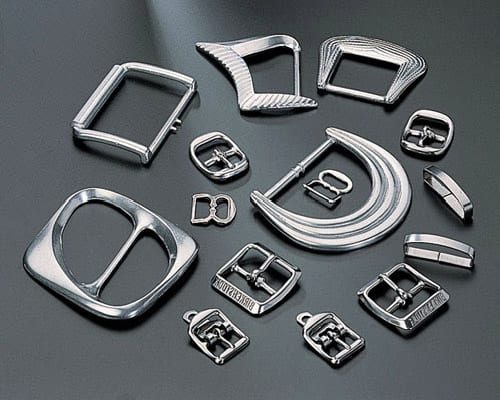
Because 304 stainless steel balls and ball-cones weigh nearly three times as much as ceramic media, verify that your ZL circular bowl suspension springs, motor drives, and polyurethane ribs are engineered for heavy steel-ball loads before pouring a full bed. Inspect polyurethane discharge dams weekly so worn ribs never scuff burnished surfaces. Review our polyurethane bowl liner replacement guide and vibratory motor counterweight tuning guide.
Selecting Non-Lodging 304 Balls, Ball-Cones, and Diagonals
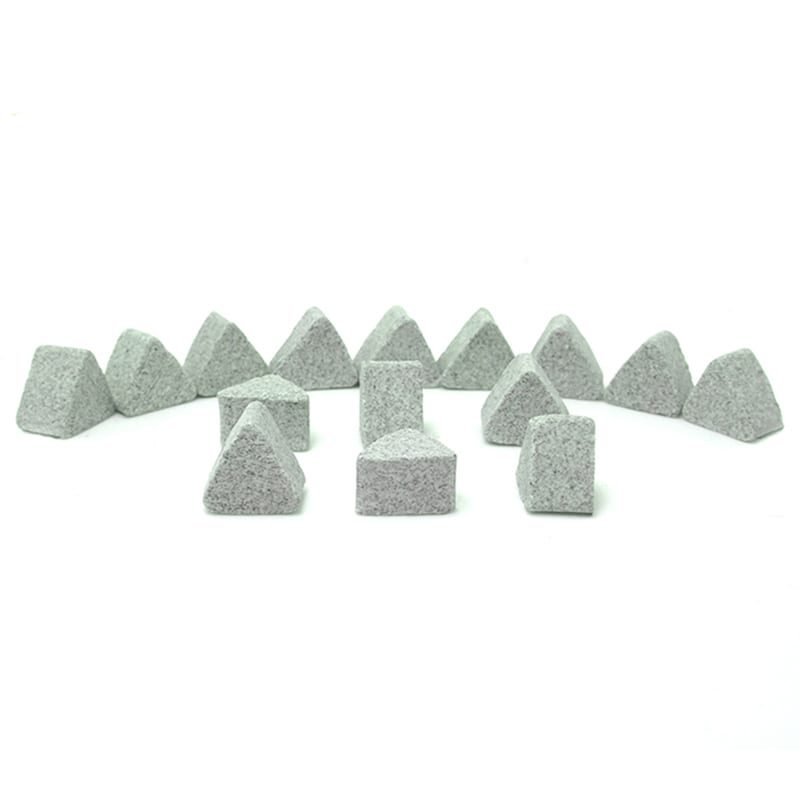
Match 304 stainless shapes cleanly to part geometry: use spherical balls for open tool shanks and valve bodies, ball-cones (satellites) for stepped shoulders and gear roots, and chamfered diagonals for flat planes—verifying non-lodging clearance across every bolt hole and keyway beforehand. Explore our stainless steel tumbling media guide and non-lodging media sizing guide.
High-Energy LLF120 Barrels vs. ZXL Divided Troughs for Long Parts
For tough forged steel wrenches or stainless shackles needing rapid Ra compression, LLF120 planetary centrifugal barrels multiply sliding pressure cleanly with measured clean water and compound-JTJ25. For long shafts, rails, and surgical bars that would clash end-to-end in circular bowls, load ZXL or L1300–L1800 divided troughs with lane dividers and multi-nozzle JTJ25 spray bars. See our centrifugal barrel finishing machine guide and divided trough vibratory finisher guide.
Single-Pass Chemistry, Settling Tanks, and Heated 35A/70A Spin-Drying
Continuous Clean Water Flow vs. Dirty Sump Recirculation
Never recirculate stagnant sump water during compound-JTJ25 burnishing! Dirty sump slurry pushes abraded iron oxides and spent soap straight back onto bright steel and stainless parts, turning mirror sheen dull grey. Run continuous single-pass clean water and metered JTJ25 into a multi-baffle settling tank after upstream alkaline pre-degreasing.
Heavy-Duty Separator Screening & Clean-Water Spray Rinsing
Equip JTJ25 ball-burnishing bowls with reinforced vibratory separator screen decks sized accurately so dense 304 balls drop rapidly back into the tub while burnished parts glide beneath a filtered clean-water spray rinse bar. Read our pneumatic separation screen deck guide.
Heated 35A/70A Centrifugal Spin-Drying Stopping Flash Rust
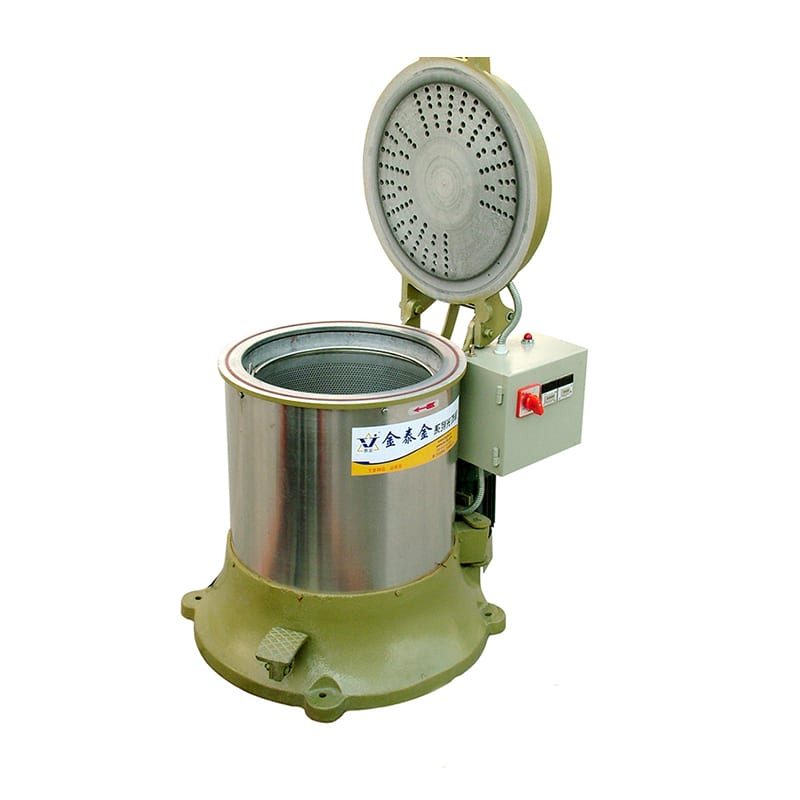
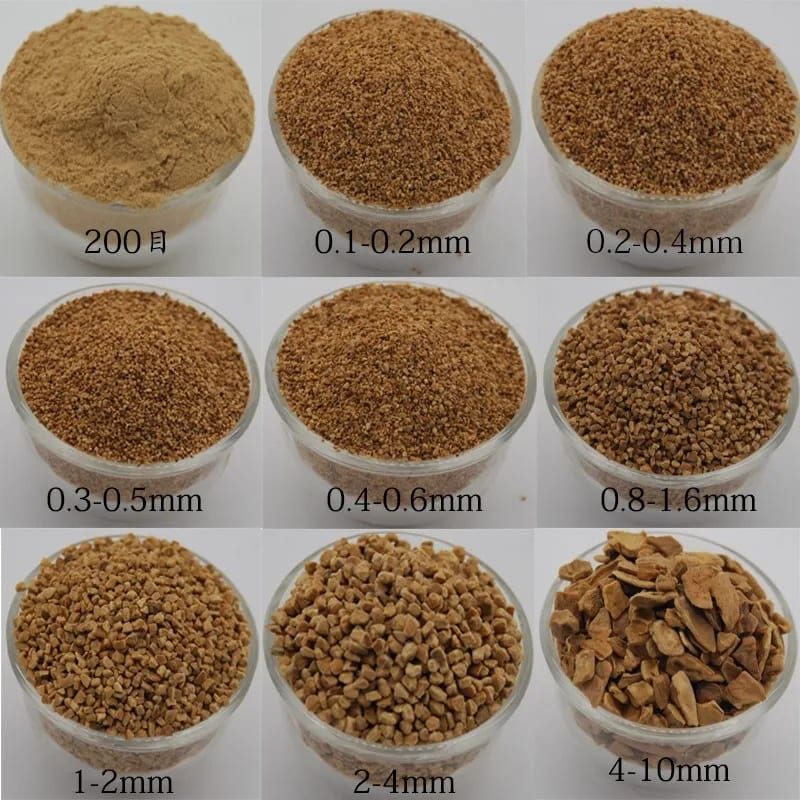
Transfer rinsed carbon-steel and stainless batches straight from the separator spray bar into a heated 35, 35A, 70, or 70A centrifugal spin-dryer immediately! Rapid warm spin-drying evaporates moisture out of blind bores before carbon steel flash-rusts or hard-water rings form—with optional warm dry corncob or walnut shell (8#-80#) buffing downstream for optical trim. See our centrifugal dryer guide and walnut media tumbling guide.
Multi-Shift Bed Maintenance, Cushion Ratios, and Troubleshooting
Protecting Tumbler Media Ratio & Washing Darkened 304 Balls With LC10
Keep generous 304 ball-to-part cushion volume (tumbler media ratio) around heavy forged wrenches and valves so parts never strike neighbors during upward flips. Whenever stainless balls darken from oil or scale, run an empty media-only strip-wash using warm clean water and compound-LC10 until drain effluent runs clear. Review our tumbler media ratio guide and media screening and replenishment SOP.
JTJ25 Burnishing Issue |
Likely Root Cause | Immediate Correction | Preventive Standard |
|---|---|---|---|
| Dull grey smut on steel or stainless | Dirty static sump or starved JTJ25 |
Brush drain grates; restore single-pass JTJ25 |
Maintain clean multi-baffle settling tank |
| Crescent peen dings on tool edges | Over-packed parts (low ball cushion) |
Cut batch part count; verify 304 ball fill |
Standardize pre-measured part totes |
| Fine random scratches in Stage 2 | Stray Stage 1 cutting grit carried over | Scrub bowl/screen; flush balls with LC10 |
Enforce Stage 1 spray rinse & separate totes |
| Flash rust spotting on carbon steel | Slow ambient drying post-unload | Spray rinse + heated 35A/70A spin-dry |
Stage heated centrifugal dryer at chute |
| Orange-peel dimples on soft aluminum | Heavy 304 balls used on non-ferrous |
Stop steel run; switch to high-alumina + JTJ50 |
Restrict 304 balls strictly to steel/brass/SS |
Isolating Carbon-Steel Swarf From Passive Stainless Steel Lines
Keep dedicated color-coded tubs, catch baskets, and scoops separating carbon-steel tools from 304/316 stainless hardware so tramp carbon iron never triggers galvanic rust pitting on stainless lines.
Auditing Peristaltic Dosing Pumps and Chemical Drum Storage
Verify compound-JTJ25 pump tubing and spray nozzles every morning at shift start, and store reserve drums sealed indoors above freezing temperatures on spill-containment pallets.
Process Engineering: Sequencing JTJ25 Between Cut and Mirror Luster
Distinguishing JTJ25 High-Pressure Burnishing From Stage 1 Abrasive Cutting
Forged alloy-steel wrenches, marine shackles, stainless pipe fittings, and heavy brass castings often leave Stage 1 high-frequency ceramic deburring (LC10 or MC8 on isolated carbon steel) with a uniform but coarse matte texture that still requires aggressive Stage 2 surface smoothing before final mirror brightening or plating. Compound-JTJ25 coarse metal polishing compound bridges that exact gap: formulated as a robust non-abrasive burnishing surfactant for heavy 304 stainless steel balls and ball-cones, JTJ25 delivers high film strength under heavy load so steel balls compress residual Ra micro-peaks rapidly without galling, scuffing, or losing rolling momentum.
Designing Two-Step vs. Three-Step Workflows (LC10 -> JTJ25 -> JTJ60/JTJ20)
For utility hardware, hand tools, and industrial valve bodies where a clean, bright commercial sheen is the target specification, a two-stage line moving from Stage 1 high-frequency ceramic (LC10) straight into Stage 2 304 stainless balls with compound-JTJ25 meets target Ra and brightness in minimal floor space. For decorative cutlery, surgical clamps, or showcase brass fittings requiring deep dark mirror clarity, JTJ25 acts as the rapid Stage 2 pre-burnish before finishing in a dedicated clean 304 ball bed dosed with compound-JTJ20 or compound-JTJ60 (or high-alumina spheres with HM3 for soft non-ferrous alloys).
Matching Ball-Cone Geometry and Reinforced ZL / LLF120 Mechanics to Heavy Parts
Heavy forged steel and thick stainless castings exert severe impact forces during tumbling. Running compound-JTJ25 inside reinforced ZL circular bowls or LLF120 centrifugal barrels requires thick polyurethane bowl liners, heavy-duty suspension springs, and well-chosen 304 ball diameters that cushion part-to-part impact while rolling into concave radii. Blending round balls with angled 304 ball-cones reaches wrench box-ends, forging fillets, and recessed hex sockets that pure spheres bridge over. Always maintain generous tumbler media ratio cushioning and check vibratory motor counterweight tuning so heavy forgings never dive into the bottom liner.
Preventing Oil Carry-Over and Stray Stage 1 Ceramic Grit Into JTJ25 Beds
Even a handful of fractured Stage 1 high-frequency ceramic chips carried inside a transfer tote turns a JTJ25 burnishing barrel into a slow grinding mill, etching random hairline scratches across every polished face. Enforce mandatory clean-water spray rinsing across the Stage 1 vibratory separator screen, dedicate separate color-coded totes exclusively to Stage 2 burnishing, and run an alkaline pre-wash whenever forged parts carry quenching oil or machining grease.
Multi-Shift Line Control, Corrosion Prevention & Inspection Standards
Stopping Carbon-Steel Flash Rust Immediately After JTJ25 Unloading
Forged carbon-steel tools and machined mild-steel brackets leave wet JTJ25 burnishing baths chemically clean and stripped of protective shop oil—meaning humid air triggers visible amber flash rust within minutes if wet parts sit in catch bins. Stage a heated 35, 35A, 70, or 70A centrifugal spin-dryer right beside the discharge chute so freshly rinsed parts dry completely under warm airflow, and route dry parts immediately into rust-preventive packaging or warm dry corncob wipe buffing.
Isolating Carbon-Steel Fines From Passive 304/316 Stainless Cells
Never run carbon-steel forgings and 304/316 stainless hardware through the same 304 ball bed or catch baskets without complete cleaning and isolation. Carbon-steel wear fines trapped in polyurethane crevices or recirculated sump sludge transfer free iron onto stainless parts, causing galvanic rust spots in downstream humid storage. Keep carbon-steel and stainless JTJ25 stations physically separate with dedicated color-coded totes, scoops, and settling tanks.
Managing Single-Pass Flow, Water Hardness, and Multi-Baffle Settling Tanks
Closed-loop sump recirculation concentrates suspended metallic smut, soap-scum precipitates, and hard-water calcium salts until parts exit JTJ25 burnishing coated in dull grey film. Continuous single-pass dosing of clean softened water and compound-JTJ25 sweeps wear debris cleanly through bottom bowl drain grates into a multi-baffle settling tank, preserving crisp metallic luster from Monday morning through Friday night shift.
Establishing Daily Pump Audits, Ball Washes, and Master Sample Boards
Check compound-JTJ25 peristaltic dosing tubing, suction filters, and overhead spray bars at every shift change, wash darkened 304 ball charges cleanly in warm water plus compound-LC10 on schedule, and mount sealed pass/fail visual reference samples beside every ZL and LLF120 machine so operators catch chemical starvation or grit carry-over before full batches are affected.
Selecting 304 Ball Load Sizes for Reinforced Bowls vs. LLF120 Barrels
Because 304 stainless balls exert substantial hydrostatic pressure on bowl springs and barrel drives, verify machine load ratings before charging heavy forged hardware alongside steel media. Inside LLF120 centrifugal barrels, compact sealed batches achieve rapid Ra reduction with minimal floor space, whereas continuous reinforced ZL bowls handle bulky wrenches, shackles, and pipe elbows smoothly across automated spray-rinse separator screens.
Preventing Liner Gouging and Drain Blockages in Heavy Hardware Cells
Sharp-edged forgings and cast gate stubs can nick polyurethane bowl ribs if loaded into an under-filled 304 ball bed or run with clogged bottom drain slots. Inspect bowl wall ribs weekly for tearing, keep drain grates brushed open at shift start, and review our polyurethane bowl liner replacement guide before wear reaches steel bowl shells.
Standardizing Lot Sign-Off Before Downstream Plating or Final JTJ60 Mirroring
Inspect five sample wrenches, shackles, or stainless valve bodies from each JTJ25 batch under bright diffused shop lighting before moving parts forward. Confirm uniform Ra smoothing without crescent edge dings, zero residual grit scratches, and spotless 35A/70A drying so parts enter electroplating baths or final JTJ60 mirror brightening lines cleanly without rework, streaking, spotting, cloudy oil film, or dull surface haze.
Factory Capabilities & Verified Coarse Polishing Chemistry Supply
Founded in 1992, Xiamen Jin Tai Jin Grinding Technology Co.,Ltd. (SurfacePolish) engineers and manufactures 21 machine platforms backed by 24 granted Chinese IP rights and more than 200,000+ solutions across certified facilities (ISO 00726Q01571R001, CE M.2023.206.C88121, and CE M.2023.206.C88120). Alongside heavy-duty ZL circular bowls, ZXL/L1300–L1800 divided troughs, LLF120/LLB50 centrifugal finishers, OBD-30..100 magnetic polishers, and 35/35A/70/70A dryers, we supply compound-JTJ25 coarse metal polishing compound, JTJ20, JTJ60, JTJ50, HM3, LC10, MC8, and JTS5 matched to 304 stainless balls and magnetic pins, iron-free high-alumina spheres, high-frequency ceramic, resin plastic cones, corncob, and walnut shell (8#-80#). Standard machines ship in 25–35 days and custom lines ship in 45–60 days. Send sample raw steel, stainless, or brass parts to surface-polish.com for complimentary two-stage process validation. Honest boundaries apply: we do not supply electroplating baths, dry sandblasting shot, or abrasive buffing rouges.
Frequently Asked Questions About compound-JTJ25 Coarse Metal Polishing Compound
What is compound-JTJ25 coarse metal polishing compound used for?
Compound-JTJ25 coarse metal polishing compound is a heavy-duty Stage 2 burnishing surfactant formulated to cushion 304 stainless steel balls and ball-cones—delivering rapid Ra reduction and bright metallic luster on forged carbon steel, 304/316 stainless hardware, and heavy brass castings.
Can compound-JTJ25 remove CNC machining burrs without Stage 1 ceramic media?
No. Compound-JTJ25 contains zero cutting abrasive grit. Always remove sharp CNC burrs and level deep Rz ridges first in Stage 1 high-frequency ceramic stones (LC10 or MC8 on isolated carbon steel) before Stage 2 ball burnishing.
How does compound-JTJ25 compare with compound-JTJ20 and compound-JTJ60?
Compound-JTJ25 targets vigorous Stage 2 Ra compression on tough steel tools, shackles, and heavy hardware, whereas JTJ20 and JTJ60 focus on final high-specular silver mirror luster on stainless cutlery and surgical trim.
Can I use compound-JTJ25 with 304 stainless balls on 6061 aluminum?
No—heavy 304 stainless balls peen soft 6061 aluminum into an uneven orange-peel texture and risk iron transfer. Burnish aluminum and medical titanium instead using lighter iron-free high-alumina spheres with JTJ50 or HM3.
Why do carbon-steel tools rust right after JTJ25 burnishing if left in open bins?
Wet carbon steel oxidizes rapidly under humid shop air once rinsed clean of surfactant. Always transfer rinsed parts straight from the separator spray bar into a heated 35, 35A, 70, or 70A centrifugal spin-dryer immediately.
How do I keep 304 stainless balls from scratching parts during JTJ25 runs?
Enforce a thorough clean-water spray rinse bar on your Stage 1 separator screen, use dedicated Stage 2 color-coded totes, and wash 304 ball beds cleanly with compound-LC10 if any stray abrasive grit enters the bowl.
Can compound-JTJ25 be poured into dry corncob or walnut shell barrels?
Never add water or liquid compound-JTJ25 to corncob, walnut shell (8#-80#), or hardwood pegs; moisture swells dry organic media into sticky mud immediately. Spin-dry parts first before any dry organic buff.
Why did parts turn dull grey even with compound-JTJ25 running?
Dull grey smut indicates recirculating dirty sump slurry, clogged bottom drain grates, or oily CNC parts bypassing upstream alkaline pre-degreasing. Maintain clean single-pass flow into a multi-baffle settling tank.
How can I test compound-JTJ25 cycle times on my forged steel or stainless parts?
Send representative raw and Stage-1-cut production parts to surface-polish.com for complimentary lab testing; our engineers validate Stage 2 304 ball burnishing with JTJ25 and return finished samples before you order.
 +86-592-2381506


 IPv6 network supported
