
`Brass Polishing Compound` Guide (`compound-HM3`): Pit-Free Burnishing for Brass, Aluminum, and Titanium
Finishing engineers choosing a brass polishing compound for turned brass fittings, decorative copper hardware, 6061 aluminum manifolds, and Grade 5 titanium fasteners quickly discover why generic ferrous soaps and acidic descalers ruin soft non-ferrous alloys. Running acidic MC8 descalers pits brass and turns Zamak zinc black, while stagnant recirculated soap leaves dull grey oxide smears that fail bright plating and anodizing inspection.
The central thesis of this guide is simple: getting bright, pit-free luster from compound-HM3 brass polishing compound requires completing Stage 1 leveling first (synthetic plastic cones with LC10 for brass/aluminum/zinc, or high-frequency ceramic with LC10 for titanium), enforcing a clean-water spray rinse barrier before Stage 2, pairing HM3 with iron-free high-alumina spheres or OBD-30..100 magnetic pins in continuous single-pass clean water into a multi-baffle settling tank, and immediately spin-drying finished parts in heated 35A/70A centrifugal dryers.
In this engineering guide, you will learn how compound-HM3 compares with JTJ50, LC10, and JTJ60, match it cleanly to ZL bowls, LLB50 toroidal discs, and OBD magnetic polishers, and prevent calcium spots, foam spikes, and galvanic iron pitting.
How compound-HM3 Brightens Brass, Aluminum, Copper, and Titanium
Inhibiting Oxide Tarnish & Zinc Dezincification on Copper Alloys
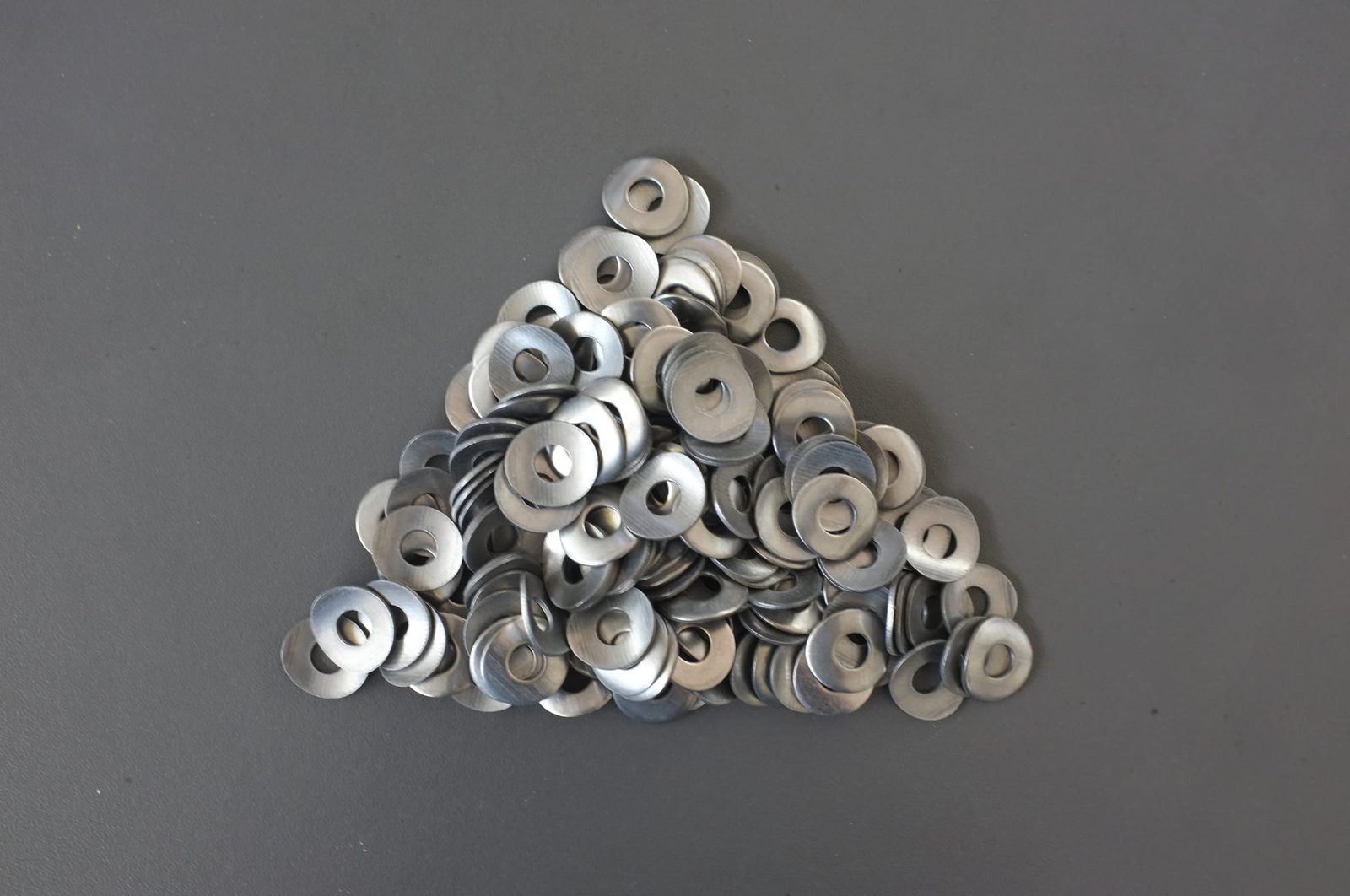
Brass, bronze, and copper oxidize rapidly when tumbled in plain tap water or harsh alkaline cleaners. Compound-HM3 brass polishing compound delivers balanced non-ferrous surfactants and tarnish inhibitors that cushion rolling contact, keep copper oxides suspended for single-pass drainage, and preserve warm golden brass brilliance across multi-shift runs. Review our mass finishing compounds guide and compound for aluminum guide.
Comparing HM3 With JTJ50, LC10, and MC8
Within the SurfacePolish chemistry lineup, compound-HM3 and compound-JTJ50 both specialize in bright, pit-free non-ferrous and titanium burnishing alongside iron-free high-alumina spheres and OBD magnetic pins. Reserve compound-LC10 for Stage 1 abrasive burr cutting, reserve JTJ20/JTJ25/JTJ60 for heavy stainless and carbon-steel ball burnishing, and lock acidic MC8 strictly inside isolated carbon-steel descaling cells (never near brass, aluminum, or zinc). Explore our compound JTJ50 brightening guide and compound LC10 deburring guide.
Why Stage 1 Synthetic Plastic Cutting Must Precede HM3 Burnishing
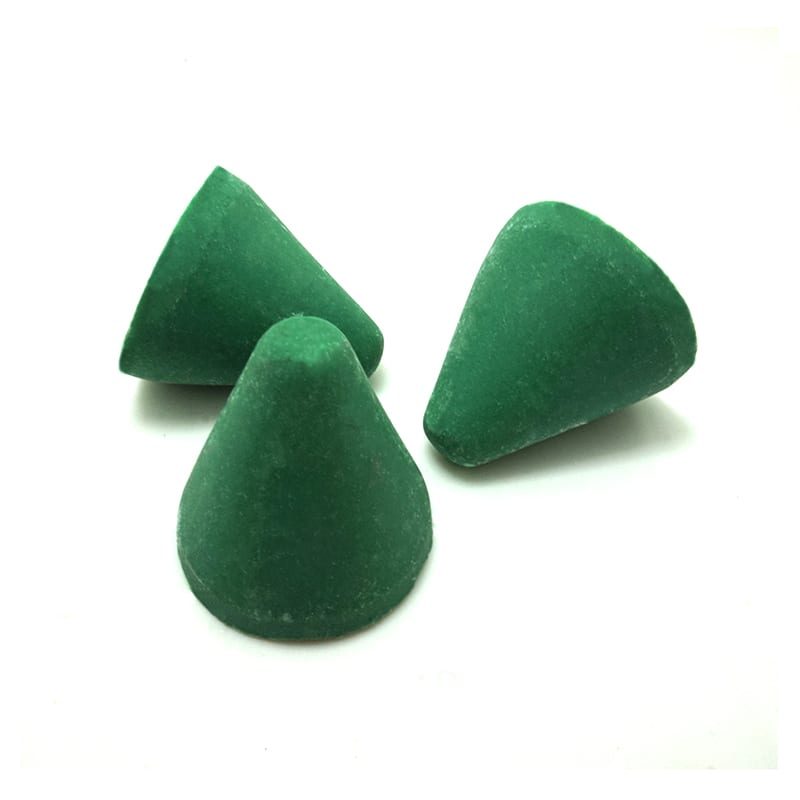
Brass polishing compound (HM3) contains zero abrasive grit and cannot erase die-cast parting lines, lathe tool ridges (Rz), or stamping burrs. Always level rough non-ferrous parts first in Stage 1 lightweight resin-bonded synthetic plastic cones or pyramids dosed with compound-LC10 (never heavy ceramic stones on soft brass or aluminum). Read our synthetic plastic tumbling media guide and plastic cone vs pyramid media guide.
| Non-Ferrous Setup | Active Compound | Paired Media Family | Target Alloy Scope | Critical Shop-Floor Rule |
|---|---|---|---|---|
| Stage 2 Non-Ferrous Mirror | compound-HM3 (Brass Compound) |
Iron-free high-alumina / OBD pins |
Brass, copper, 6061 aluminum, titanium |
Filtered clean water + 35A/70A spin-dry |
| Stage 2 Multi-Metal Bright | compound-JTJ50 |
High-alumina spheres / OBD pins |
Aluminum, brass, Zamak zinc, titanium |
Enforce Stage 1 spray rinse first |
| Stage 1 Soft-Alloy Cut | compound-LC10 |
Resin plastic cones & pyramids | 6061 aluminum, brass, zinc die castings |
Upstream alkaline pre-wash for oily parts |
| Heavy Stainless Mirror | JTJ60 / JTJ20 / JTJ25 |
304 stainless balls & ball-cones |
304/316 stainless, carbon steel |
Keep carbon-steel tramp chips completely out |
| Ferrous Scale Stripper | compound-MC8 (Acidic) |
High-frequency ceramic stones |
Carbon steel & forged alloy steel ONLY | Lock strictly away from brass & aluminum |
Media & Machine Pairing: High-Alumina, OBD Pins, and LLB50 Discs
Iron-Free High-Alumina Spheres Inside ZL Bowls and LLB50 Discs
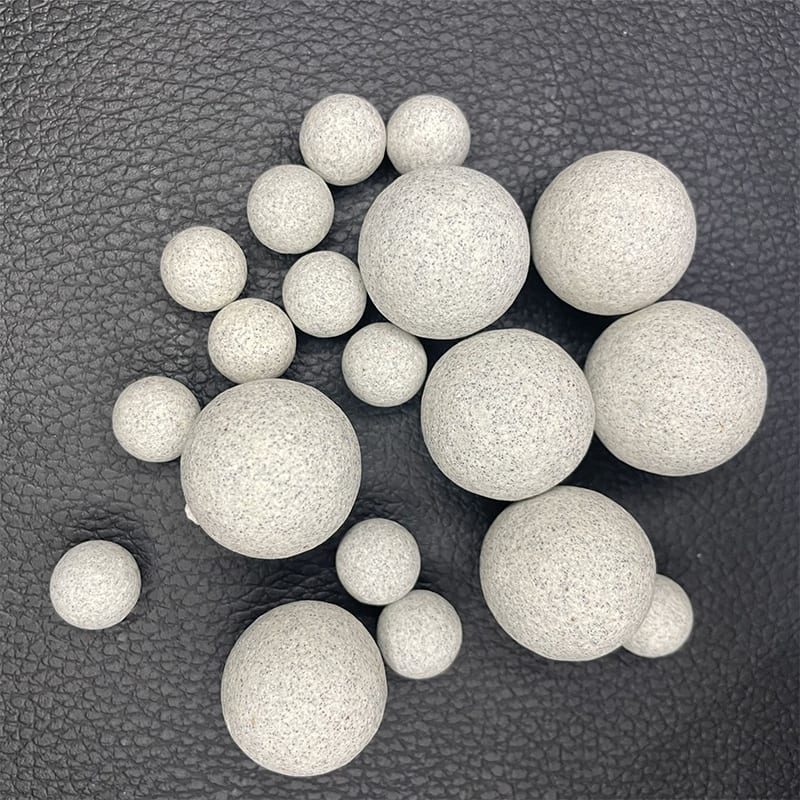
Because high-alumina porcelain contains zero free iron and weighs roughly half as much as 304 stainless steel balls, pairing compound-HM3 with high-alumina spheres or ellipses inside standard ZL circular bowls (ZL250W, ZL900W, ZL900C), ZXL divided troughs, or LLB50 toroidal centrifugal discs produces high-contrast mirror luster on brass valves and 6061 aluminum housings with zero orange-peel hammering or galvanic rust pitting. Review our porcelain ball burnishing media guide and high-alumina polishing media guide.
Fine Magnetic Pins Inside OBD-30..100 Polishers for Brass Threads & Filigree
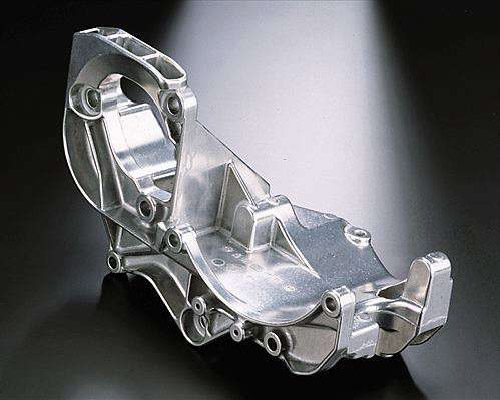
Turned brass electrical connectors, jewelry bezels, and watch crowns often hide internal knurling and blind threads that spherical balls bridge over untouched. Running ferromagnetic stainless pins inside OBD-30..100 magnetic polishers with compound-HM3 drives rapid brightening deep inside narrow grooves without distorting delicate brass threads. See our magnetic polishing machine guide.
Protecting Long Extrusions Inside ZXL and L1300–L1800 Divided Troughs
Long extruded brass handles, aluminum architectural bars, and forged brackets clash end-to-end inside open circular bowls. Load long profiles inside ZXL or L1300–L1800 divided troughs fitted with lane dividers and evenly spaced overhead HM3 spray nozzles so every surface polishes smoothly without chamfer nicking. Read our divided trough vibratory finisher guide.
Single-Pass Flow, Settling Tanks, and Spot-Free 35A/70A Drying
Stopping Grey Oxide Smears With Continuous Single-Pass HM3 Flow
Recirculating stagnant sump slurry pushes abraded brass and aluminum fines straight back onto mirror faces—dulling golden brass contrast and leaving grey film across 6061 aluminum. Run continuous single-pass clean water (ideally filtered soft water) paired with metered compound-HM3 into a multi-baffle settling tank after upstream alkaline pre-degreasing.
Thorough Separator Spray Rinsing, 35A/70A Drying, and Corncob / Walnut Follow-Up
Immediately after separating parts across your vibratory separator screen beneath a filtered clean-water spray rinse bar, transfer wet brass or aluminum batches into a heated 35, 35A, 70, or 70A centrifugal spin-dryer so calcium water rings never form—adding warm dry corncob or graded walnut shell (8#-80#) buffing in sealed dry barrels when optical mirror clarity is required. Review our centrifugal dryer guide and walnut media tumbling guide.
Multi-Shift Maintenance, Color-Coding, and Troubleshooting
Cleaning Darkened High-Alumina Beds and Enforcing Alloy Isolation
If high-alumina spheres gradually darken from hard-water scale or soap residue, run an empty media-only wash cycle with warm clean water and compound-LC10 until drain effluent turns clear, and keep brass, aluminum, and carbon-steel bins strictly color-coded and separated across every shift. See our media screening and replenishment SOP and polyurethane bowl liner replacement guide.
HM3 Process Defect |
Likely Root Cause | Immediate Correction | Preventive Standard |
|---|---|---|---|
| Dull grey film on brass or aluminum | Dirty static sump or oily CNC parts | Pre-degrease batch; restore single-pass HM3 |
Upstream alkaline wash + settling tank |
| Fine random scratches on mirror brass | Stray Stage 1 cutting grit carried into tub | Scrub bowl/screen; flush high-alumina bed |
Enforce Stage 1 spray rinse & separate totes |
Black pitting on Zamak zinc or brass |
Acidic MC8 cross-contaminated line |
Flush bowl; lock MC8 away from non-ferrous |
Color-code & lock chemical drums |
| White mineral rings after drying | Unfiltered hard tap water air-drying | Filtered spray rinse + 35A/70A spin-dry |
Stage heated centrifugal dryer at chute |
| Shiny peaks with rough un-leveled valleys | Stage 1 plastic cutting skipped | Route batch back to Stage 1 LC10 cutting |
Verify uniform matte Ra after Stage 1 |
Optimizing HM3 Across Vibratory, Centrifugal, and Magnetic Lines
Auditing Peristaltic Dosing Pumps and Spray-Bar Nozzles Daily
Check compound-HM3 peristaltic pump tubing, suction strainers, and overhead spray-bar nozzles before every shift start so brightener concentration stays uniform from first batch to last.
Refreshing OBD-30..100 Magnetic Chamber Baths Between Batches
Because OBD-30..100 magnetic polishers run closed-chamber liquid baths rather than continuous drain-through flow, drain spent HM3 solution and flush ferromagnetic pins cleanly whenever polishing brass versus aluminum batches so dissolved metal fines never stain incoming parts.
Managing Tumbler Media Ratio Cushions on Heavy Brass Valves
Never overload heavy brass valve bodies or forged fittings into an under-filled high-alumina sphere bed; maintaining generous tumbler media ratio cushioning prevents crescent impingement dings across precision sealing chamfers.
Documenting Multi-Shift Recipes and Storing Reserve Drums Safely
Keep reserve compound-HM3 drums sealed indoors above freezing temperatures on spill-containment pallets, and post exact HM3 dosing rates, cycle timers, and 35A/70A drying temperatures beside every non-ferrous machine.
Pre-Finish Surface Preparation & Alloy-Specific HM3 Protocols
Stripping Die-Cast Mold Release and CNC Cutting Oils Before HM3
Die-cast brass plumbing fittings, Zamak zinc latches, and CNC-machined 6061 aluminum housings arrive at the vibratory finishing bay coated in silicone mold-release sprays, sulfurized tapping fluids, and emulsified coolant residues. Introducing unwashed parts straight into a high-alumina porcelain sphere bed with compound-HM3 brass polishing compound forces the delicate Stage 2 brightening surfactant to emulsify heavy industrial grease instead of lubricating sliding sphere contact. Emulsified oil rapidly darkens the liquid film, turns the high-alumina media surface slick and hydrophobic, and leaves a dull grey haze across recessed fillets. Always route oily non-ferrous batches through an upstream alkaline soak or heated spray wash before loading Stage 1 or Stage 2 tubs, and verify water-break-free wetting on sample parts prior to bright burnishing.
Avoiding Galvanic Staining Between Brass, Copper, and Aluminum Batches
Shops that process red brass, leaded free-machining brass, copper busbars, and 6061 aluminum in the same vibratory cell face a subtle electrochemical hazard: dissolved copper and zinc ions carried in recirculated sump water plate onto freshly exposed aluminum surfaces as dark, blotchy contact smut. Even trace copper fines trapped inside worn polyurethane bowl ribs or porous stone beds accelerate galvanic darkening on subsequent aluminum runs. Prevent cross-alloy discoloration by dedicating separate color-coded transfer totes, catch baskets, and high-alumina sphere charges to copper-bearing alloys versus aluminum and titanium hardware, and always flush the bowl and drain grates thoroughly with clean filtered water whenever changing alloy families.
Protecting Fine Threads, Chamfers, and Thin Wall Edges During Burnishing
Precision brass valve stems, pneumatic quick-connect couplers, and thin-walled Grade 5 titanium housings suffer edge roll-over or crest peening if tumbled in oversized high-alumina spheres or operated at excessive eccentric lead angles. Select sphere diameters small enough to roll smoothly across flat lands without hammering sharp sealing shoulders, and dial down vibratory motor lead angles inside ZL circular bowls or ZXL divided troughs once Stage 1 LC10 plastic cutting has already leveled tool marks. For ultra-delicate jewelry filigree, watch bezels, and blind internal brass threads, move parts out of heavy sphere beds entirely into an OBD-30..100 magnetic polishing chamber with fine ferromagnetic stainless pins and clean compound-HM3 bath chemistry, where rapid pin agitation brightens recesses without mechanical edge peening.
Controlling Water Hardness and Dissolved Solids in Closed-Sump vs. Flow-Through Lines
Regional tap water rich in calcium and magnesium bicarbonates reacts with anionic brightening soaps to form insoluble white soap-scum rings that bake onto warm brass and mirror aluminum as parts dry. On continuous single-pass ZL and ZXL vibratory lines, feeding softened or reverse-osmosis makeup water into the compound-HM3 peristaltic dosing manifold keeps the burnishing film optically clear and eliminates mineral spotting at the chute. On closed-chamber OBD-30..100 magnetic polishers or LLB50 centrifugal disc barrels where the bath recirculates for the duration of the cycle, mixing compound-HM3 with deionized or softened water is even more critical because evaporation concentrates dissolved minerals over repeated shifts.
Verifying Post-HM3 Surface Readiness for Lacquer, PVD, or Anodizing
Many non-ferrous components move directly from compound-HM3 burnishing into clear electrophoretic lacquering, PVD vacuum coating, or decorative anodizing. Any residual silicone defoamer, dried surfactant ring, or corncob dust left inside blind tapped holes causes coating fisheyes, peeling, or poor adhesion in downstream finishing lines. Standardize a two-zone rinse protocol at the vibratory separator screen—first a clean softened-water spray bar to strip HM3 film, followed by filtered deionized mist—before immediate 35A or 70A heated centrifugal spin-drying and clean-air blow-off of threaded bores.
Establishing Multi-Shift Media Screening and Drum Inventory Controls
Maintain a scheduled weekly screening audit on every high-alumina sphere charge using a calibrated check sieve matched to your smallest part slot or bore diameter so fractured half-spheres are culled before they wedge in holes. Keep a sealed visual reference sample board beside each ZL, LLB50, and OBD station showing acceptable Stage 1 matte Ra uniformity alongside target Stage 2 HM3 mirror contrast so night-shift operators spot chemical starvation or grit contamination immediately rather than waiting for final inspection.
Avoiding Dry-Spot Sticking and Thermal Shock During Spin-Dry Transfers
Never allow freshly brightened brass fittings or 6061 aluminum housings to sit damp in perforated catch baskets between the separator screen and the heated 35A or 70A centrifugal spin-dryer. As standing rinse water evaporates unevenly in warm shop air, residual calcium salts and trace HM3 soap etch crescent rings across flat mirror lands that cannot be wiped away by hand. Move each basket directly under a clean filtered spray rinse, shake excess water off, and load the preheated 35A/70A spin-dryer immediately; for optical hardware requiring spotless cosmetic faces, follow spin-drying with a brief warm pass in clean dry corncob or walnut shell (8#-80#) media.
Isolating Spent Non-Ferrous Effluent and Copper-Rich Sludge Safely
Single-pass compound-HM3 discharge carries fine abraded brass, bronze, and aluminum hydroxide particles into the shop multi-baffle settling tank. Always skim floating oil films cleanly from the first chamber and pump out settled metallic sludge on a regular schedule so suspended copper or zinc fines never overflow back into shop drains or cross-contaminate adjacent steel cells.
Validating Cycle Consistency Across Brass, Zinc, and Aluminum Lot Changes
When transitioning an active ZL bowl or LLB50 centrifugal disc barrel from leaded brass fittings to Zamak zinc die castings or 6061 aluminum brackets, record part weight per load, clean-water rinse duration, compound-HM3 peristaltic feed setting, and 35A/70A dryer timer on a laminated setup sheet so every operator reproduces identical mirror brightness without trial-and-error guesswork.
Factory Capabilities & Verified Brass & Non-Ferrous Supply
Founded in 1992, Xiamen Jin Tai Jin Grinding Technology Co.,Ltd. (SurfacePolish) engineers and manufactures 21 machine platforms backed by 24 granted Chinese IP rights and more than 200,000+ solutions across certified facilities (ISO 00726Q01571R001, CE M.2023.206.C88121, and CE M.2023.206.C88120). Alongside ZL circular bowls, ZXL/L1300–L1800 divided troughs, LLF120/LLB50 centrifugal finishers, OBD-30..100 magnetic polishers, and 35/35A/70/70A dryers, we supply compound-HM3 brass polishing compound, JTJ50, LC10, MC8, JTS5, JTJ20, JTJ25, and JTJ60 matched to iron-free high-alumina spheres, resin plastic cones, high-frequency ceramic, 304 stainless balls and magnetic pins, corncob, and walnut shell (8#-80#). Standard machines ship in 25–35 days and custom lines ship in 45–60 days. Send sample brass, aluminum, or titanium parts to surface-polish.com for complimentary two-stage process validation. Honest boundaries apply: we do not supply electroplating rectifiers, anodizing dye baths, or dry buffing rouges.
Frequently Asked Questions About compound-HM3 Brass Polishing Compound
What metals work best with compound-HM3 brass polishing compound?
Compound-HM3 brass polishing compound excels on brass, copper, bronze, 6061 aluminum, Zamak zinc die castings, and Grade 5 titanium—delivering bright, tarnish-free mirror luster alongside iron-free high-alumina spheres or OBD-30..100 magnetic pins.
Can compound-HM3 remove heavy die-cast parting lines or CNC machining burrs?
No. Compound-HM3 is a non-abrasive Stage 2 burnishing brightener. Always complete Stage 1 cutting and Rz leveling first using lightweight resin-bonded synthetic plastic cones (LC10) for brass and aluminum or high-frequency ceramic (LC10) for titanium.
How does compound-HM3 differ from compound-MC8 on brass hardware?
Compound-MC8 is an acidic carbon-steel descaler that pits and blackens brass, zinc, and aluminum, whereas compound-HM3 is a gentle non-ferrous brightening compound designed specifically to protect brass and aluminum luster.
Can I use compound-HM3 inside an OBD-30..100 magnetic polishing machine?
Yes. Compound-HM3 pairs cleanly with ferromagnetic stainless pins inside OBD-30..100 magnetic polishers to brighten narrow brass threads, knurling, and jewelry filigree rapidly.
Why do brass or aluminum parts still come out dull grey when using compound-HM3?
Dull grey film usually comes from recirculating stagnant dirty sump slurry, plugged bottom bowl drain grates, or oily CNC parts bypassing upstream alkaline pre-degreasing. Maintain clean single-pass flow into a multi-baffle settling tank.
What drying workflow stops water spots after HM3 mirror burnishing?
Pass separated brass or aluminum parts beneath a filtered clean-water spray rinse bar on the separator screen and transfer them straight into a heated 35, 35A, 70, or 70A centrifugal spin-dryer, adding warm corncob wipe buffing when zero optical haze is needed.
Can compound-HM3 be poured into dry walnut shell or corncob barrels?
Never add water or liquid compound-HM3 into corncob, walnut shell (8#-80#), or hardwood pegs; moisture swells dry organic media into sticky mud immediately. Always spin-dry parts first before dry buffing.
Can I mix compound-HM3 and LC10 together inside one chemical drum?
Keep Stage 1 LC10 cutting compound and Stage 2 HM3 brightening compound strictly in separate color-coded drums and separate bowls, with a thorough clean-water spray rinse in between.
How can I test compound-HM3 on my brass or aluminum parts before buying drums?
Send representative raw production parts to surface-polish.com for complimentary lab validation; our engineers run Stage 1 plastic cutting plus Stage 2 high-alumina/HM3 burnishing and return mirror-finished samples before you order.
 +86-592-2381506


 IPv6 network supported
