
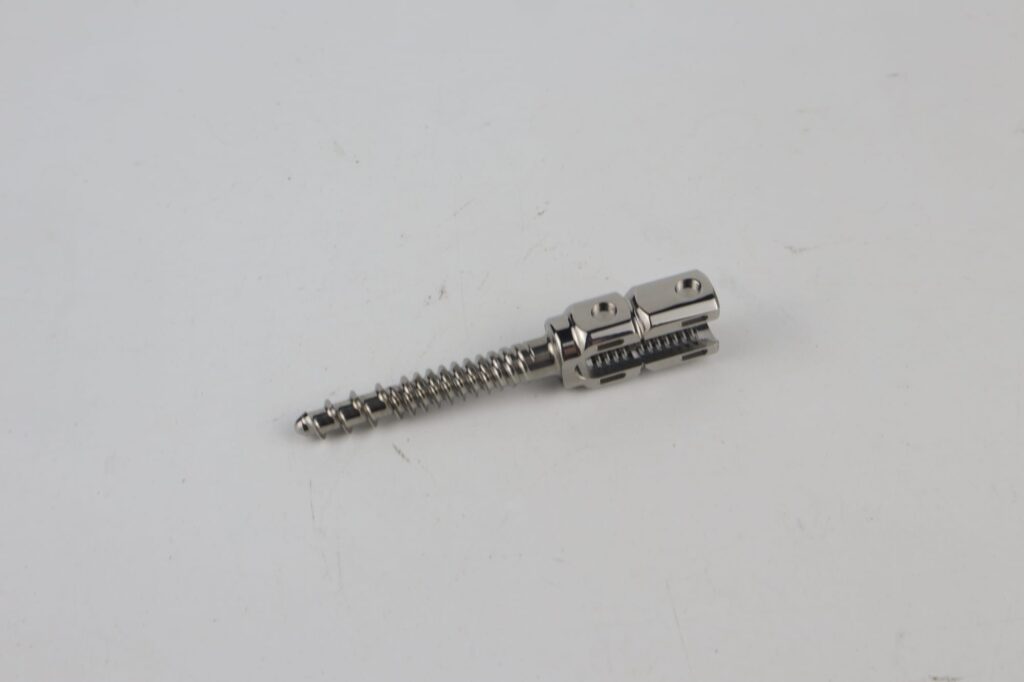
Polishing Jewelry: Running Small, High-Value Batches Without Losing Metal
Polishing jewelry at a bench is a wheel, a mop and a hand. As a production step it is a different problem, and it is not a shine problem — it is a metal-loss problem. On a silver or gold part the material removed by polishing is the most expensive material in the building, and unlike a stainless bracket nobody writes that loss off as "cut". A process that produces a beautiful finish and removes 4 % of the part's mass has spent the customer's metal.
That reframing decides everything downstream: which machine family fits, how the charge is sized, how long the cycle runs, and — the question almost nobody asks before the purchase order — whether the batch is large enough for a batch process at all.
This page is written for production: the shop running components, findings and watch parts by the hundred, not the bench doing one commission. Where numbers appear they are a starting band — a published cycle assumes a material and a removal that may not be yours, and on precious metal that sentence has a price.
What tells you the jewelry batch is being run as if it were stainless
These arrive together because they have one root cause — a process designed for base metal, applied to parts where metal is the cost:
| What you see | What it actually means |
|---|---|
| Finish is good, but the batch weighs less than it should and nobody recorded the starting weight | The process was never specified as stock removal, only as appearance |
| Prongs and fine detail rounded over | Charge too coarse for the feature — sized for the part family, not the smallest detail |
| Parts tangled or nested, bright spots where they rubbed | Load too high, or parts free to collide instead of being carried by media |
| Colour varies across the batch — some bright, some flat | Charge not moving uniformly; a corner of the bowl is a dead zone |
| A grey cast that more time will not remove | Coarse grit carried from the cut stage into polish |
| Bright, then dull again in days, or a pink cast on silver | Residue in recesses; or chemistry not matched to the alloy |
| The operator spends the shift loading and unloading | Machine and batch size are mismatched — the cycle is shorter than the handling |
The last row is a buying signal, not a process fault. If loading and unloading takes longer than the cycle, the machine is too large for the batch. That sizing error is more common in jewelry than anywhere else, because the parts and the batches are both small.
Why jewelry is a batch problem at all
Three properties push jewelry work towards loose media, and one pushes back.
The parts are too small to fixture economically. A finding, a jump ring, a watch crown — a fixture per part can cost more than the polishing. Loose media needs none: the charge holds the part and reaches it from every direction.
The value is in the whole surface. A jewelry part is judged on faces a wheel cannot reach — inside a ring band, under a setting, behind a pendant. Batch processing treats all faces at once.
The geometry is often complex. Castings, filigree, engravings, pierced work — media sized to the smallest feature follows detail a wheel cannot enter.
The property that pushes back: metal loss is money, and small parts have a large surface-to-mass ratio. A small component loses a larger percentage of its mass for the same finish, because most of it is near a surface. That is why jewelry polishing is not "stainless with a smaller batch" — aggressiveness is dialled back until the loss is acceptable, and the finish is what is left over.
The three routes, and which part goes to which
We build all three families. The choice is set by the part, not by preference.
| Route | What it is | Suits | Does badly |
|---|---|---|---|
| Centrifugal disc | Parts and media in a rotating disc bowl, high energy at the gap | Small detailed high-value components; short cycles | Very thin or soft parts; parts kept apart |
| Rotary barrel | A closed barrel turning the whole charge together | Gentle long cycles; burnishing; mixed small parts; lowest loss per hour | Detail that nests; fast cutting |
| On-table tumbler | A small benchtop drum, sized to a jeweller's batch | Bench-adjacent work, small lots, sampling | Volume; a bench-scale answer |
Two of these are real products named on the site: the 20L Jewelry CF18 Element Centrifugal Disc Finishing Machine and the On Table Jewelry Polishing Tumbler. Both exist because jewelry is a production category for us, not an edge case — our own application line reads "precision jewelry production: fine jewelry components, watch parts, decorative hardware, precious metal finishing". There is also a jewelry industry page.
We will not quote a capacity for either machine from a web page. Bowl volume, drive, control and separator are set against your parts, and the number that matters is measured on your batch. On a precious-metal part, a trial is cheaper than an assumption.

Size the charge: three rules, and the one that costs metal
Rule 1 — media no larger than about one third of the smallest feature. This governs every loose-media process, and on jewelry it decides whether detail survives. A 6 mm body cannot enter a 2 mm recess, and forcing a coarser charge to reach detail only rounds what it touches. Practical bodies are ceramic from about 3 mm to 10 mm and plastic from about 10 mm to 25 mm; jewelry work sits at the fine end of the ceramic range, and on small plastic where the metal is soft.
Rule 2 — mix sizes, don't run a single grade. A one-size charge packs and slides as a mass; a graded one lets small bodies work into recesses while large ones carry the energy. That is what "graded" means, and why a single-size charge leaves either unpolished recesses or rounded edges, depending on which end you picked.
Rule 3 — load the charge, not the machine. Too light a charge lets parts collide, and collision marks — a bright spot with a small dent — are rework. Too full a charge cannot move, and the bowl's corners go dead: the colour variation above. The ratio is set per machine and per part; what is not negotiable is that it is written down.
The rule that costs metal is the first, and it is broken in the opposite direction to expectation: shops go finer than they need, on the theory that finer is safer. It is not. Too fine a charge cuts slowly, and the recovery is to run longer — which removes more metal on the features that are reachable, more diffusely, producing a part that is bright, detailed and slightly under size. Finer media with a longer cycle is not the gentle option; it is another way to lose metal. The gentle option is the right grade at the right cycle.
What the cycle is made of, and where the time goes
A jewelry cycle is two stages, and they are not interchangeable:
- The cut stage takes the surface to a uniform base — casting skin, file marks, the previous operation's scratches. It removes metal, and it sets the loss.
- The polish stage raises reflectivity on that base. It removes very little and cannot repair the base underneath.
The bands across our range: a light deburr or edge stage runs about 10 to 20 minutes, a high-finish polish about 2 to 8 hours. Jewelry cut stages sit at the short end and polish stages at the long end, and between them sits the cleaning step the batch process does not do for you — coarse grit carried from stage one into stage two is the most common cause of a grey cast, and more compound never fixes it.
Media is a wear part here, not a fixture. Life runs about 20 to 200 operating hours depending on material and cycle; the signals are a finish that stops improving, a matte grey haze, and the same result taking about 20 % longer than it used to. When those appear the answer is new media, not a stronger compound — and on a jewelry line the charge is small enough that running a spent one is a false economy.

Where a batch process will not work, and why
This section saves the most money: a batch process sold into the wrong job is not a slightly worse process — it is a rejected batch:
- Stones set, pearls, amber, enamel, glued assemblies. A loose charge treats the setting as part of the part: it polishes a prong and works a stone loose. Set work belongs to the bench.
- Plated or gilt parts. The layer is microns; any cut stage takes it in the recesses first, and the failure appears as a patch of base metal weeks later. Plated work needs the burnish route, specified as "do not cut".
- Very thin sheet and hollow forms. A hollow pendant or thin bangle deforms under a charge a solid part of the same size shrugs off. The limit is the section, not the machine.
- One piece, or a handful. Setup, charge, rinse and dry dominate; below a batch of any size the per-part cost is a bench cost.
- A part whose edges must stay crisp by drawing. Loose media rounds edges by the way it works; a sharp-edge requirement is the wrong family.
- A one-off patina or an oxidised recess that is the design. Tumbling removes the contrast.
- A batch that must match a previous one exactly. Consistency comes from a written recipe — fixed charge, dose, cycle and rinse — not from a better compound.
What to send before a jewelry process is quoted
- Representative parts, including the worst case — a good one and a difficult one, same family.
- The alloy, by name, and whether any part is plated or set.
- The starting mass of the batch, and the acceptable mass loss. This turns the process from a finish specification into a cost specification, and it is the one most often missing from an enquiry.
- The smallest feature that must survive, in millimetres.
- The finish target: colour and clarity, and a roughness figure if your customer measures one.
- The batch size and the mix — one part family or many, because a mixed load quotes differently from a single-family one.
- What happens next: setting, plating, lacquering, packing. A residue problem is cheap to fix before packing and expensive after.
Our standard route is to take those parts, run them through the relevant media and compound, and return them with the cycle time and the media and compound consumption measured — plus, on a precious-metal job, the weight before and after, the acceptance criterion the finish cannot replace.
Two site facts that belong in the quotation
A powered finishing machine in our range runs on three-phase 380 V or 415 V at 50 Hz, with small models at 220 V, and sits in the 75 to 85 dB(A) at one metre band. Neither is jewelry-specific, but both are room facts, and a jewelry workshop is often a room built for benches rather than machines.
The commercial lines matter as much: standard configurations ship in 25 to 35 days from the deposit, built-to-order ones in 45 to 60 days, media and compound adding about a week. Minimum order is one machine, terms are 30 % deposit with the balance against the bill of lading, and packing is a wooden case on a pallet with a spare parts kit and a media and compound starter set — so the first trial runs on arrival.
FAQ
Is polishing jewelry a machine process or a hand process? Both, and the part sets the split. Bench work owns set stones, plated work, one-offs and anything where a hand decision is the value. A batch process owns uniform small components in quantity, where every face must be reached and the finish must repeat. Most jewelry production uses both.
Can a batch machine replace hand polishing entirely? On a uniform component family, often yes. It will not replace the bench for set work, a deliberate patina, or the last touch where the customer pays for the hand. A shop buying a batch machine to eliminate the bench usually ends up with both and a queue.
How much metal does polishing jewelry remove? It is not a fixed number, which is why it should be measured rather than assumed: it depends on the incoming finish, the stock to come off, the media grade, the cycle and the section. Weigh the batch before and after a trial, in grams per batch and as a percentage of part mass; approve a precious-metal process on that number.
Why did my parts come out with a grey cast that longer polishing does not fix? Almost always coarse grit carried over from the cut stage: the charge keeps abrasive from the previous step and the polish stage polishes over it. Clean the parts and the charge, re-run the same compound and cycle, and see whether the cast returns. If not, the compound was never the problem.
Disc machine or barrel for jewelry? The part decides. A disc gives high energy at the gap and short cycles, suiting small detailed components that need a defined finish. A barrel is gentler, longer and lower on loss per hour, suiting burnishing and mixed small parts. The comparison is in our note on centrifugal disc versus centrifugal barrel finishing.
Do you supply the small-format jewelry machines? Yes — the 20L Jewelry CF18 centrifugal disc machine and the On Table Jewelry Polishing Tumbler are both in our range and on the site, alongside the wider barrel, disc and vibratory families. We do not publish a capacity figure for either, because configuration is set against your parts. We will run your worst-case part and return the cycle and consumption measured.
Max Xu, Sales — Xiamen Jin Tai Jin Grinding Technology Co.,Ltd.
No. 31, Xinchang Road, Xinyang Industrial Zone, Haicang District, Xiamen
info@surface-polish.com
This article describes how a jewelry polishing route is chosen and specified; it is not a claim about any specific part's achievable result, and no capacity figure is offered for any machine. A finishing process is set by the alloy, the stock to be removed and the finish required, so the configuration for a specific part is confirmed against a trial on that part. We manufacture finishing equipment and the media and compounds that run in it; we do not offer a job-shop finishing service.
 +86-592-2381506


 IPv6 network supported
