
Buffing Stainless Steel: The Wheel and the Media Are Two Different Tools
"Buffing" is one of those words that means several things at once. In a workshop it means running a spinning soft wheel loaded with compound across a surface. As a noun it means that wheel, or the bar you load it with. It also means "an enthusiast" (like a car buff), a common meaning online that explains why what does buffing mean is a real search.
This page pins down the workshop meaning, how to buff stainless steel, and when a wheel is the wrong tool. For stage order, see polishing and buffing as two operations. For compound details, see buffing compounds for metal by colour and by metal, stainless steel buffing compound, and metal finishes.
What "Buff" Actually Means
Before buying a stainless steel buffer, you need to sort out the vocabulary around "buff." Many buyers searching for a buffing synonym or asking whats buffing assume buffing and polishing are identical. In reality, they use completely different tools.

The workshop verb — a spinning soft wheel stroking a line
When a finisher uses "buff" as a verb — as in how to buff stainless or buff steel — they press a spinning cloth wheel with compound against a part. The contact is linear, directional, and governed by how the hand or fixture moves the part. Every pass strokes one narrow strip along that path.
Four different meanings hiding inside one short word
Why do people search for buffing mean or meaning of buffing so often? Because English uses the same four-letter word in four distinct ways:
- As a verb: To buff a surface with a spinning soft wheel.
- As a noun: Operators call both the cloth wheel and the wax bar "a buff."
- As a state: Drawings call a wheel-brightened surface "a buffed finish."
- As an enthusiast: The hobby meaning ("car buff") has nothing to do with polishing, yet it is far more common online and causes the word's ambiguity.
Drawing the line — this guide is strictly about workshop buffing
This page covers only workshop buffing metal, never the "enthusiast" meaning. Inside the shop, buffing is neither a synonym for polishing nor simply a "brighter degree" of it. Moreover, both buffing and polishing can be done by hand or by machine.
The contrast — what "polishing" with media actually means
In mass finishing, polishing means moving parts inside a container of grinding media. The contact is full-surface, non-directional, and governed by the motion of the container. Therefore, the difference between buff and polish is not which one is brighter, but how the tool contacts the part.
The Two Differences That Matter
When buyers compare buff vs polish, polish vs buffing, or polishing vs buffing, looking at brightness alone misses the point. Two physical differences govern where each tool works on the shop floor.
Difference one — line contact versus full-surface contact
A spinning ss buffing wheel touches metal only along a narrow line. Buffing works by sweeping one line at a time, whereas media polishing rubs the entire surface at once. Line contact suits curves and local spots, while full-surface contact finishes whole batches at once.
Note: This diagram is explained in the text and table above rather than shown as a separate figure.
Difference two — built-in directionality versus non-directional uniformity
A spinning wheel drags abrasive grains in one plane. Buffing inherently leaves a directional track — if you need a non-directional satin finish, a wheel cannot do it. Directionless texture requires media or blasting, which is the core difference between buff and polish.
How those two differences decide which tool fits your part
From contact geometry and directionality, three clear shop routing rules follow:
- Wheel buffing fits: Large sheets, curves, local spots, and peak mirror gloss.
- Media polishing fits: Batches, complex shapes, internal pockets, and strict lot uniformity.
- Neither fits alone: Requiring both directionless texture and ultra-high gloss demands specialized isotropic superfinishing.
Why the sequence is always polish first, buff second — never reversed
When a job uses both, buffing stainless steel follows media polishing in series. The real sequence is always media polish first, then wheel buff second — never reversed. Media makes the surface uniform, and the wheel pushes peak gloss; reversing them scrambles the shine into a dull haze.
| Dimension | Wheel Buffing ("Buff") | Media Polishing ("Polish") |
|---|---|---|
| Contact Mode | Linear contact ("sweeping line by line") | Full-surface contact ("rubbing all faces at once") |
| Directionality | Always leaves a directional path | Non-directional (isotropic) across the part |
| Best Part Types | Large panels, curves, local spots | Batches, complex shapes, internal cavities |
| Sequence Order | Second stage: pushes gloss to the peak | First stage: makes rough surfaces uniform |
| Consistency Source | Operator hand skill or robot path | Shared media bed and cycle timer |
How to Buff Stainless Steel, Step by Step
When your part calls for a wheel and you need to know how to buff stainless steel cleanly, follow four strict stages.
Note: This diagram is explained in the text and table above rather than shown as a separate figure.
Step one — pre-buff surface leveling comes before the wheel
A soft cloth wheel cannot flatten deep defects. Before buffing begins, the incoming stainless steel surface must already be smooth and uniform. If sanding lines or cutter marks remain, directional steel buffing magnifies them by shining the high ridges around dark grooves.
Step two — going through the grades from cut to colour
Proper stainless buffing means "going through the grades" from a firm cutting wheel to a soft colouring wheel. Each grade must completely cover and erase the marks left by the previous grade. If coarse marks remain, the finer wheel only makes them stand out brighter.
Step three — crossing your stroke direction between stages
Stroke direction changes between grades. On the coarse cut with a stainless buffing wheel, operators can stroke at an angle to level ridges. On the final pass with a soft stainless steel buffing wheel, every stroke must align strictly with the final grain direction.
Step four — degreasing and wiping off residual buffing wax
After the final pass, melted wax remains on the metal. Wiping off residual buffing wax is the step operators forget most often — and residual wax traps dust and turns yellow. Clean the part immediately with whiting powder or degreaser until a white cloth wipes clean.
Where Buffing Fails on Stainless
Before setting up a stainless steel buffing machine, check four situations where a spinning wheel fails on stainless steel.
Complex shapes — starved recesses and burned high corners
Because a buffing wheel makes line contact along its outer rim, it struggles on complex three-dimensional shapes. Inside deep pockets, narrow slots, and tight internal corners, the cloth rim simply cannot reach the metal. Meanwhile, the raised corners and ridges next to those pockets take excessive wheel pressure and get ground thin or rounded over.
Note: This diagram is explained in the text and table above rather than shown as a separate figure.
Non-directional satin specifications — the wheel always leaves a trail
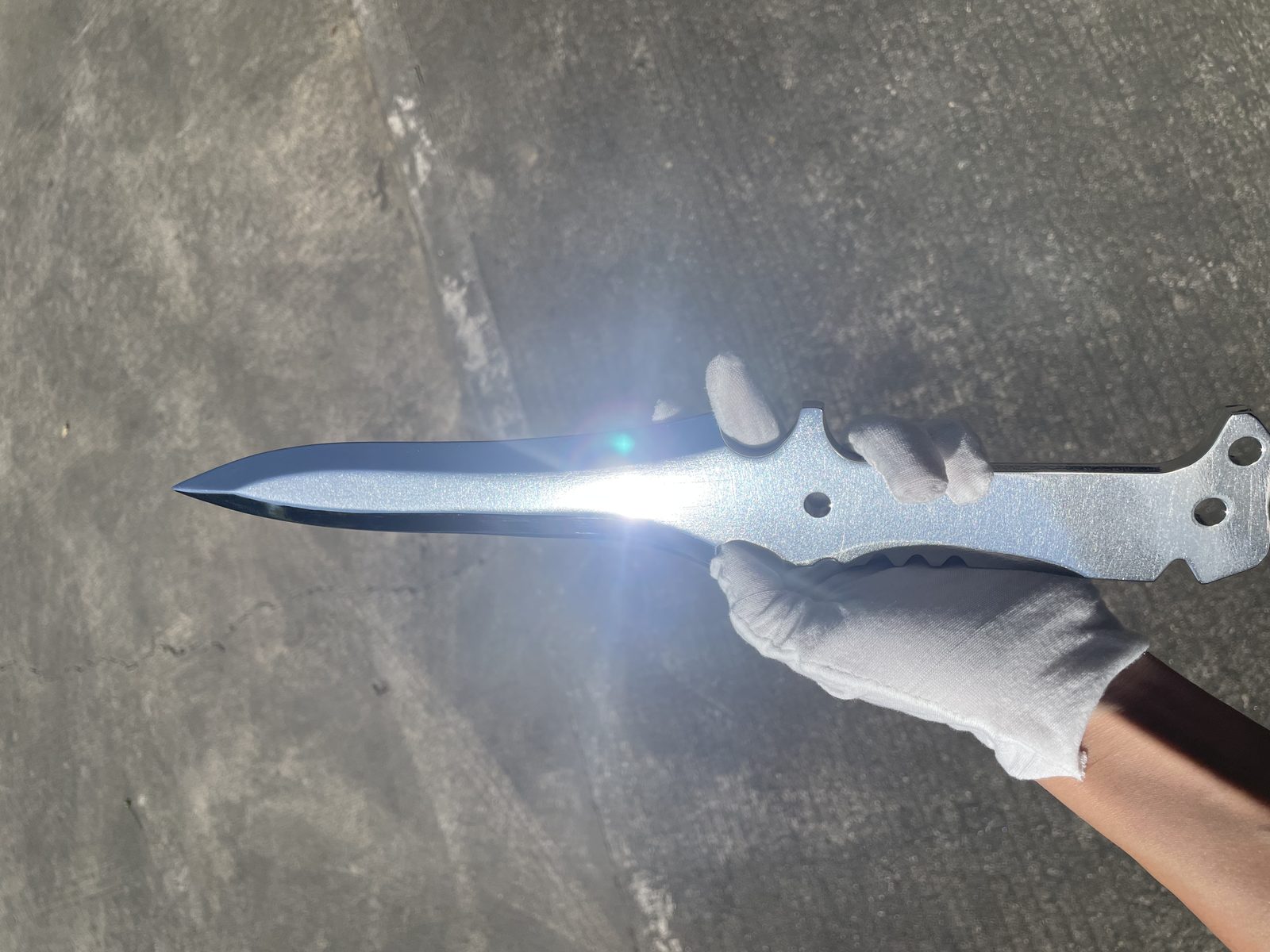
Many architectural and medical prints call for a uniform, low-glare, non-directional satin finish. Because a spinning wheel inherently leaves a directional path, it cannot produce a true non-directional satin finish. If your drawing specifies satin, a buffing wheel is the wrong tool regardless of operator skill. You need wet plastic media or dry media tumbling instead (see brushed vs satin vs mirror finish).
High batch consistency — morning hands versus afternoon hands
Manual ss buffing depends entirely on human grip pressure, stroke speed, and how often the operator loads compound onto the wheel. Because wrist fatigue sets in over a shift, two parts buffed by the same operator in the morning and afternoon will often show different gloss levels. When a batch of hundreds of parts must match identically, hand wheel work struggles to hold consistency.
Thermal buildup — stainless steel traps heat and turns yellow
Stainless steel conducts heat poorly, so friction heat from a spinning wheel builds up rapidly in the contact zone during buff stainless steel work. If the operator presses too hard or dwells in one spot, the overheated metal turns straw-yellow or blue. That discolouration is thermal oxidation (heat tint), not a scratch — and you cannot buff it out with final polishing paste. Because it is a thickened oxide layer rather than surface geometry, only cutting abrasives or acid pickling can remove it.
Note: This diagram is explained in the text and table above rather than shown as a separate figure.
| Failure Case | What Happens on the Wheel | Physical Cause | Better Process Route |
|---|---|---|---|
| Complex Geometry | Recesses stay raw; high corners round over | Wheel rim bridges pockets and hits corners | Vibratory or magnetic media finishing |
| Non-Directional Satin | Visible directional wheel trails remain | Rotating wheel always cuts in one plane | Wet plastic or dry organic tumbling |
| Tight Batch Uniformity | Morning and afternoon parts do not match | Operator pressure and wheel wear drift | Timed batch tumbling in one shared bowl |
| Thermal Heat Tint | Yellow or blue oxide blotches appear | Low heat conductivity traps wheel friction | Cool wet tumbling or light, moving passes |
The four things a buffing wheel cannot do are the exact things mass finishing media handles well. Thus, the practical answer to the difference between polishing and buffing is letting media do most of the leveling before touching a wheel.
The Consumables: Wheel, Bar, and What Each Does
Buffing and mass polishing use four distinct consumables that should never be confused on a purchase order.

The buffing wheel — material, stitching, and stiffness
A buffing wheel's cutting aggressiveness depends on its fabric material, how tightly its plies are stitched, and its overall size. Sisal and tightly stitched cotton wheels present a stiff edge for heavy initial cutting on stainless steel. Loose, unstitched cotton and flannel wheels flex softly to bring out final mirror colour without leaving deep wheel lines.
The solid buffing bar — why colour is a convention, not a standard
Operators load a wheel with a solid bar of buffing compound for stainless steel (or buffing compounds for stainless steel, buffing compound stainless steel, stainless buffing compound). Bar colour is only a loose industry habit, not a standard — two brands of the same colour can differ. Judge a bar by whether it cuts fast or colours bright. Soft bars like acrylic buffing compound or plexiglass buffing compound (for how to buff acrylic / buffing acrylic), silver buffing compound, or zam buffing compound cannot cut stainless steel.
Liquid polishing compound — when liquid replaces the solid bar
Liquid compounds serve two distinct roles in industrial finishing. On automated wide-wheel buffing machines, spray nozzles mist liquid abrasive emulsion onto spinning drums continuously. In mass finishing bowls and barrels, water-based finishing compounds (often searched as a buffing chemical) flow through the media bed to lubricate parts, flush away metal swarf, and brighten the surface without grease buildup.
Buffing compound versus polishing compound — two different worlds
Keep this distinction clear when ordering supplies: a "buffing compound" and a "polishing compound" for mass finishing are two completely different products. A buffing compound is a solid grease or wax bar built to melt onto a dry spinning cloth wheel. A mass-finishing polishing compound is a liquid chemical soap poured into a wet tumbling chamber with media stones.
| Consumable | Form | Where It Is Used | Main Action | Supplied by Us? |
|---|---|---|---|---|
| Buffing Wheel | Rotating fabric disc | Hand or machine wheel buffer | Carries wax bar across the part in lines | No |
| Buffing Bar / Paste | Solid bar or paste | Rubbed on wheels or mixed in dry media | Cuts peaks and builds mirror gloss | Partial (pastes for media routes) |
| Liquid Compound | Liquid concentrate | Dosed into wet media bowls and barrels | Lubricates, cleans, and brightens batches | Yes |
| Tumbling Media | Solid preformed granules | Loaded inside tumbling chambers | Rubs all part surfaces simultaneously | Yes |
When You Do Not Need a Buffing Wheel at All
Before setting up a buffing station, check four common cases where a buffing wheel is completely unnecessary.
Batches of simple brackets and stampings — batch cost versus piece cost
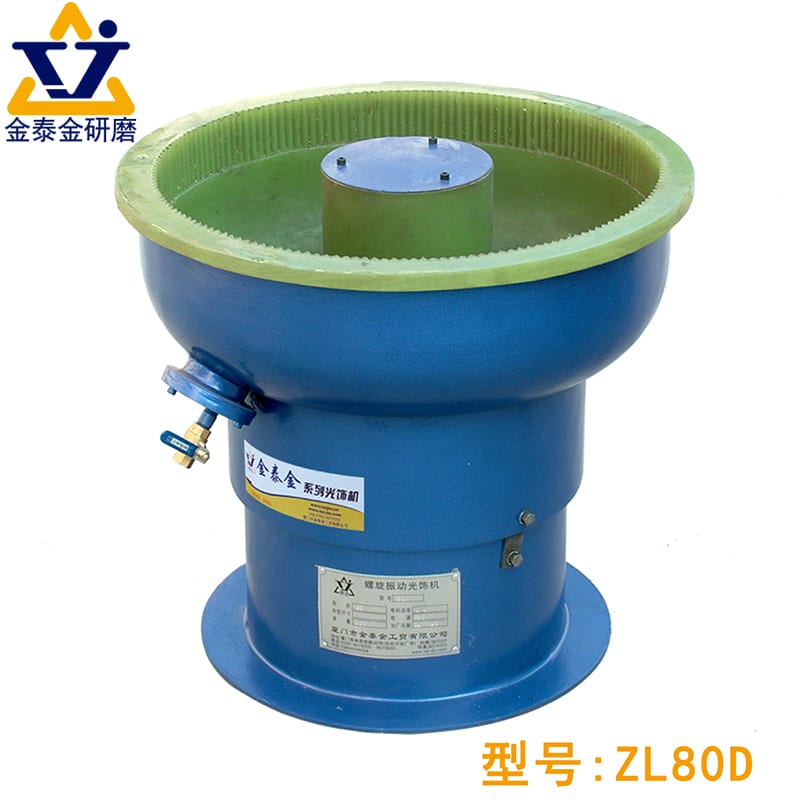
When you have baskets of stamped brackets, turned bushings, or laser-cut plates with simple geometry, media polishing handles the whole lot without a wheel. Wheel buffing costs money one piece at a time, whereas media tumbling processes parts one batch at a time. Running the batch inside a vibratory finishing machine cuts labor cost dramatically while delivering uniform edges.
Drawings that call for a uniform matte or satin finish
If your drawing specifies a matte or non-directional satin finish, never touch the part with a buffing wheel. Even a light pass on a wheel leaves directional streaks and shiny high spots that fail inspection. Wet plastic media or dry tumbling produces the exact uniform, low-glare satin the print requires.
Components with internal bores, slots, and complex pockets
When a stainless steel manifold, valve, or fitting has internal passages, deep slots, or blind pockets, a cloth wheel cannot enter the feature. Those parts require magnetic pin polishing, drag finishing, or small angle-cut tumbling media that flows right inside the cavity. Attempting to wheel-buff them only ruins the outer corners.
Parts that just need to look clean — why "shiny" is not an engineering spec
"Shiny" is not an engineering target — reaching the surface grade on the print is. Buffing for an unrequested shine is costly over-processing. We do not build buffing wheels or hand tools — we build media systems that make batches uniform and non-directional, which is the exact foundation a wheel cannot create on its own.
What We Do, and What the Wheel Is Not
At Xiamen Jin Tai Jin Grinding Technology Co.,Ltd., certified under ISO 00726Q01571R001 and CE standards, we build mass finishing systems backed by 21 machine platforms and 24 IP rights across six product lines. We detail our full boundaries in what we build and what we do not.
The batch mass-finishing systems we build
Across our machines catalog, we manufacture vibratory bowls and tubs, rotary barrels, centrifugal disc and barrel machines, magnetic pin finishers, and dryers. We also manufacture ceramic, plastic, and steel media, walnut shell and corn cob dry finishing media, and liquid compounds. These systems take batches of stainless steel parts from burrs and machining marks to uniform matte, satin, or bright-burnished finishes.
Why we do not build buffing wheels or wheel-buffing machines
We do not build cloth buffing wheels, handheld buffers, belt sanders, angle grinders, plating lines, or wheel-buffing machines, nor do we run a contract job shop. Wheel buffing is a process where an operator moves a tool over a stationary part, whereas all of our processes place the part inside a moving machine chamber. Those two approaches require completely different equipment and shop workflows.
What compounds we supply — and what we do not
In our consumables line, we supply liquid polishing compounds for wet media systems and select polishing pastes used in dry media tumbling routes. We do not claim to supply dedicated solid wax bars for cloth buffing wheels, and we do not sell buffing wheels. If your stainless part has deep handling gouges that need localized repair first, see our guide on removing scratches from stainless steel.
The honest rule for choosing your supplier
Use this simple rule to pick the right partner: if you want to buff a single piece bright by hand on a wheel, that is not our field. If you want to finish batches of stainless steel parts to a uniform, repeatable grade inside a machine, that is what we build. Send a clear part photo and target finish note through our website for an initial engineering assessment.
Frequently Asked Questions
What does "buffing" actually mean?
In a workshop, "buffing" means stroking a spinning soft wheel loaded with compound across a part to brighten it along a linear path. As a noun, "buff" also names the cloth wheel or the compound bar, and as an adjective, "buffed" describes the shiny state. Outside metalworking, "buff" means an enthusiastic fan (like a car buff) — an unrelated meaning that causes most online confusion.
Is buffing the same as polishing?
No. They differ in how the tool contacts the workpiece rather than how bright the metal gets. Buffing uses a spinning wheel for directional line contact, while mass-finishing polishing uses a container of media for non-directional, full-surface contact across a whole batch.
How do I buff stainless steel?
Follow four steps in order. First, make sure the incoming surface is already smooth and uniform, because a wheel magnifies leftover sanding gouges. Second, step through the wheel and compound grades from cut to colour so each grade completely covers the prior marks. Third, align your final strokes with the target grain direction, and fourth, wipe off all residual wax so it does not trap dust or turn yellow.
Can I get a satin finish with a buffing wheel?
No. Because a spinning buffing wheel makes linear contact in one plane, it always leaves a directional trail on the metal. If your drawing requires a true non-directional satin finish, use wet plastic tumbling media or dry organic media instead.
Why did my stainless steel turn yellow after buffing?
Yellow or bluish patches after buffing are thermal oxidation (heat tint) caused by friction heat trapped in slow-conducting stainless steel. Heat tint is a chemical oxide layer, not a surface scratch. You cannot buff it off with finer paste; it must be cut back or pickled away.
Do I need a buffing wheel or a tumbling machine?
Check your drawing and batch size. Use a buffing wheel for oversized sheets, handrails, or single curved covers that need maximum mirror gloss on open faces. Use a tumbling machine when you have batches of parts, internal pockets, or drawings that require a uniform, non-directional matte, satin, or batch-brightened finish.
 +86-592-2381506


 IPv6 network supported
