
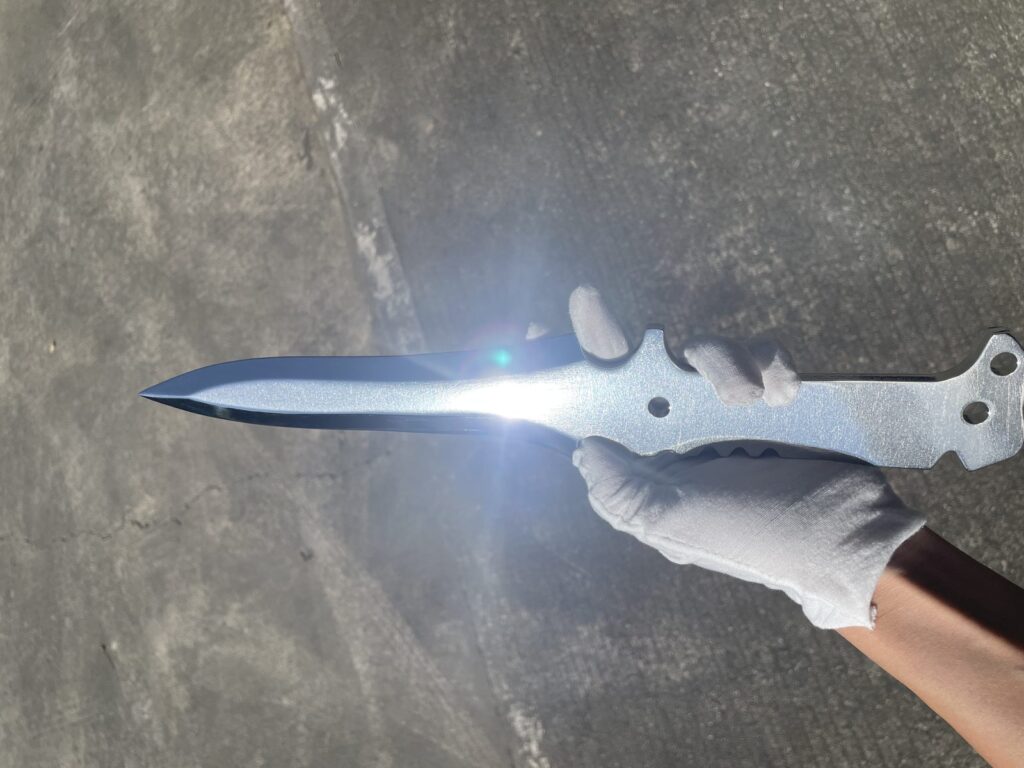
Pewter Finish Metal: The Three States, and the Two Things the Term Hides
When buyers search for pewter finish metal, they face a naming trap. In metalworking and hardware catalogs, a pewter finish names two completely different things on the shop floor.
First, it refers to genuine solid pewter — a soft, high-tin alloy hardened with copper or antimony — finished into satin, bright mirror, or oxidized patina states. Second, on cabinet pulls and lighting, a pewter metal finish is an imitation coating of brushed nickel, darkened plating, or grey powder coat over steel, brass, zinc, or aluminum.
Polishing an imitation handle like solid pewter strips its thin plating down to brass or zinc. Buffing genuine cast pewter like steel smears the soft alloy and melts cast details.
How our guides fit together: For operating procedures on real tin alloy, read our pewter process guide. For a broader comparison across alloys, see our guide to metal finishes. To compare sheen levels on harder metals, visit our breakdown of brushed vs satin vs mirror finish. This page explains what a pewter finish is, how to separate real tin alloy from imitation coatings, why soft metal galls, and how batch finishing works safely.
What Does "Pewter Finish" Actually Mean? (Two Meanings Under One Name)
Before touching any part with a wheel, compound, or media, identify which material sits on your bench.
Meaning One — The Surface State of Real Solid Pewter
Genuine pewter is a lead-free white metal alloy of high tin hardened with copper, antimony, or bismuth. Because the casting is solid throughout, its look comes directly from how the bare tin alloy is abraded, burnished, or oxidized.
When a foundry discusses pewter finishing on solid castings, they mean bringing raw tin alloy into one of three states:
- Satin or brushed pewter, offering a warm, low-glare sheen with subtle texture.
- Polished pewter, bringing the bare alloy up to a bright, silver-white mirror reflection.
- Oxidized or antique pewter, where chemical darkening or natural aging leaves charcoal recesses and muted grey highlights.
Meaning Two — A Pewter-Look Coating on Another Base Metal
In kitchen hardware, plumbing, and lighting, solid pewter is too soft and costly for daily wear. When a hardware box says "pewter finish," the core is zinc, steel, brass, or aluminum covered by a paper-thin decorative skin of warm-lacquered brushed nickel, relieved antique plating, or grey powder coat.
Why Confusing the Two Ruins Parts on the First Pass
When people ask can you polish pewter, the answer depends on the core metal. Solid pewter polishes up cleanly because the alloy is uniform throughout. On an imitation coating over zinc or brass, abrasive polish or tumbling cuts straight through the thin plating, exposing raw brass or zinc that only replating can fix.
Four Shop-Floor Checks to Tell Solid Pewter from an Imitation Finish
Run these four quick checks before choosing a finishing method:
- Check for a hallmark or touchmark: Real pewter hollowware and castings carry a maker touchmark or "Lead-Free Pewter" stamp underneath, whereas plated hardware does not.
- Inspect worn edges and screw holes: Solid pewter stays uniform grey-white inside deep scratches, while worn imitation coatings expose yellow brass, copper, or dark zinc.
- Feel the heft and warmth: Solid tin alloy feels dense and warms quickly in your hand, unlike light stamped steel or cold, sharp-ringing zinc.
- Test with a magnet and pin-scratch: True pewter is non-magnetic and yields like butter with bright grey metal inside a pin scratch, while magnets stick to steel and hard nickel resists.
Note: This diagram is explained in the text and table above rather than shown as a separate figure.
Why Real Pewter Behaves Nothing Like Steel, Brass, or Aluminum
Once you confirm a part is solid pewter, set aside every habit learned on stainless steel, brass, or aluminum.
The Softest Common Metal in the Shop
Among common workshop metals, pewter sits at the softest end of the spectrum, with a melting point far below steel, brass, or aluminum. Thumbnail pressure dents a thin pewter rim, and a standard file clogs almost immediately on a cast sprue. That extreme softness and low heat threshold govern every step of finishing pewter.
Consequence One — Galling and Smearing Instead of Clean Cutting
Whereas steel or brass shears into clean chips, soft pewter yields plastically under dry or aggressive abrasives, tearing and smearing across the surface like warm butter.
Those torn ribbons weld onto the buffing wheel or media as a sticky grey-white paste. Once loaded, the tool stops cutting and plows rough galling tracks back into the casting.
Consequence Two — Heat Arrives Long Before the Cut Finishes
On pewter, the problem is never how fast you can cut; the problem is how much heat you put into the metal. Because tin alloy has a low melting point, local friction softens microscopic surface peaks long before the part feels hot in a gloved hand, turning the skin gummy.
Consequence Three — Permanent Geometry Loss on Edges and Details
Pewter is prized for crisp cast crests, knotwork, figurines, and lettering. Excessive wheel pressure, coarse media, or spot-dwelling permanently rewrites that geometry — slumping sharp corners into rounded blobs, blurring fine lettering, and leaving wavy heat ripples across flat walls.
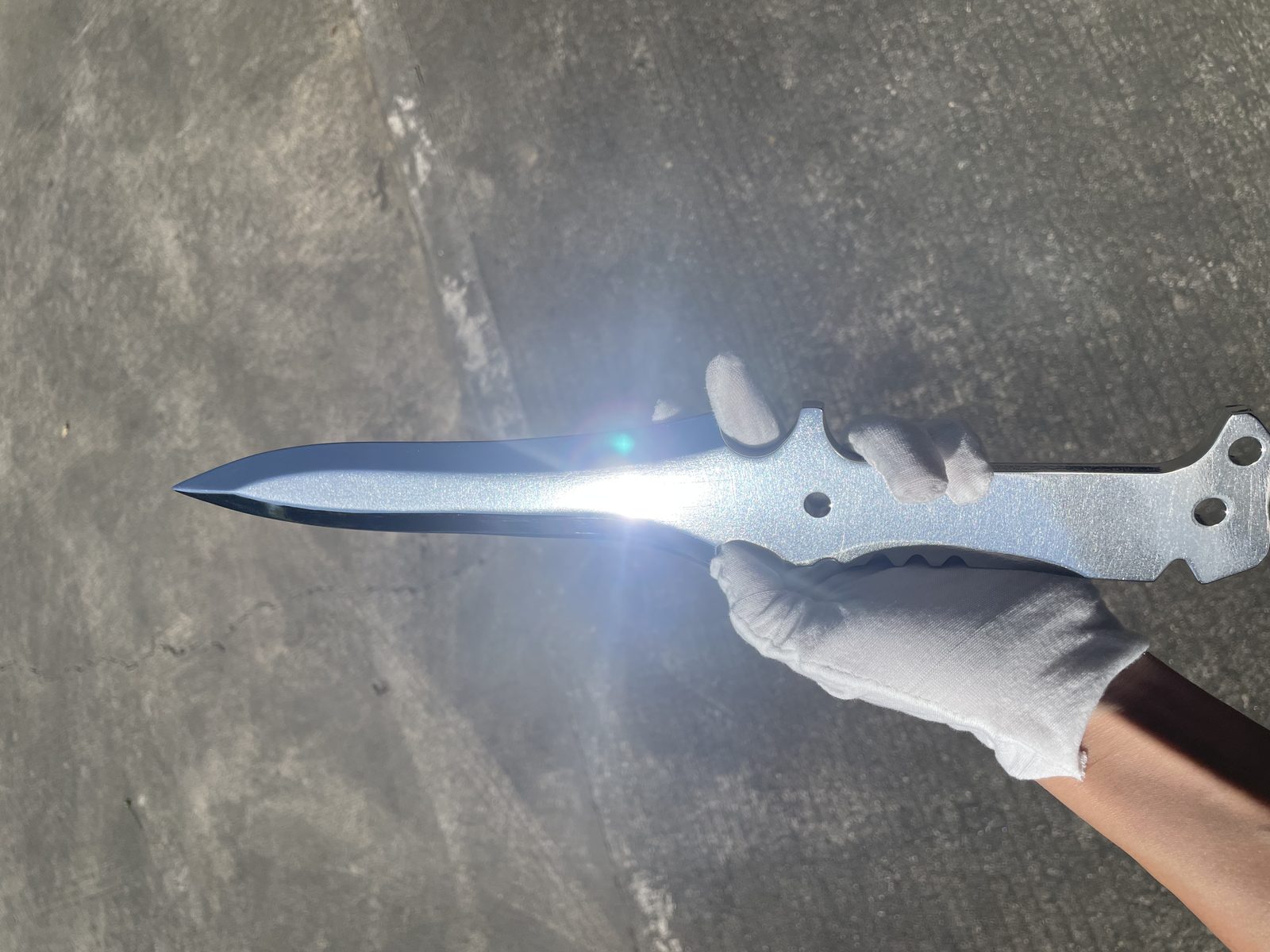
The Three Surface States of Genuine Solid Pewter
Every genuine tin-alloy specification falls into one of three classic surface states.
State One — Satin or Brushed Pewter
Satin is the most practical finish for solid pewter tableware and giftware. Gentle friction from fine wet plastic media, soft pads, or dry organic tumbling creates a velvety matte sheen that scatters light and hides fingerprints.
State Two — Polished Pewter (Bright Mirror Luster)
Freshly finished polished pewter resembles bright sterling silver with a warm undertone, achieved using ultra-light pressure with wax-free compounds or dry organic media. However, chasing a mirror sheen carries the highest risk of slumping sharp edges, and bare mirror pewter shows smudges easily while slowly mellowing in air.
State Three — Oxidized or Antique Patinated Pewter
Dark grey or charcoal pewter gets its depth either from decades of natural oxidation on vintage pieces or from controlled chemical darkening rubbed back on the high reliefs.
Remember the golden rule of pewter care: natural patina on old pewter is historical and monetary value, not dirt. Stripping or buffing a genuine antique patina down to bright metal is called over-cleaning. It is an irreversible mistake that destroys both visual character and collector value. Even on new chemically darkened castings, aggressive tumbling strips the dark recesses and ruins the two-tone contrast.
Note: This diagram is explained in the text and table above rather than shown as a separate figure.
Side-by-Side Comparison of Pewter Finish Types
| Finish Type | Underlying Material | Visual Appearance | Scratch & Tarnish Behavior | Safe Cleaning & Care | Covered by Our Equipment? |
|---|---|---|---|---|---|
| Real Pewter — Satin | Solid high-tin alloy | Warm matte-grey sheen | Hides marks; mellows slowly | Warm soapy water, soft cloth | Yes — wet plastic or dry walnut shell |
| Real Pewter — Polished | Solid high-tin alloy | Bright silver-like mirror | Scratches easily; dulls slowly | Mild soap, polish for pewter | Yes — dry media with polishing cream |
| Real Pewter — Oxidized | Solid tin alloy with oxide | Charcoal recesses, grey highs | Stable skin; rubbing strips dark tone | Water rinse, soft wax; never polish | No — tumbling strips dark patina |
| Imitation — Brushed Nickel | Zinc, brass, or steel | Brush lines with warm tint | Resists wear; gouges show brass | Damp cloth and mild soap only | No — plating and belt brushing |
| Imitation — Antique Pewter | Plated base, darkened, relieved | Dark recesses, brushed edges | Abrasion strips dark layer | Wipe with damp cloth; no abrasives | No — plating, dip, and lacquer |
| Imitation — Powder Coat | Steel, aluminum, or zinc | Opaque grey-silver paint film | Chips on impact; solvents cloud | Mild soap and water; never buff | No — spray and curing oven |
The Three Imitation "Pewter Finishes" on Other Metals
Because many people searching for polish for pewter or can you polish pewter are holding household hardware, let us examine the three imitation finishes and why metal polishes destroy them.
Imitation One — Brushed Nickel Sold as "Pewter"
Most retail hardware labeled "pewter finish" is brushed nickel electroplated over zinc or brass and sealed with a warm-tinted clear lacquer. Rubbing it with metal polish burns through the thin lacquer and nickel layer into yellow brass.
Imitation Two — Antique Pewter (Chemically Darkened & Relieved Plating)
Antique pewter hardware is plated, chemically darkened, lightly brushed on raised edges for contrast, and clear-lacquered. Tumbling or rubbing it with compound strips the dark layer and ruins the two-tone look.
Imitation Three — Powder-Coated Pewter Colour
On lanterns, brackets, and steel plates, "pewter" is simply a metallic grey polyester or epoxy powder coat baked onto the metal. Buffing wheels melt this polymer paint film, while harsh solvents cloud it permanently.
Comparison of the Three Imitation Pewter Coatings
| Imitation Finish | Typical Base Metal | How the Surface Is Built | Correct Care Method | What Destroys It Immediately |
|---|---|---|---|---|
| Brushed Nickel ("Pewter") | Zinc, brass, or steel | Nickel plate brushed, tinted lacquer | Warm water, mild soap, soft cloth | Polishing creams, pads, or tumbling |
| Antique Pewter Plating | Zinc or solid brass | Plated base, chemical dip, edge relief | Damp cloth wipe; thin wax if needed | Compound, buffing wheel, or solvents |
| Pewter Powder Coat | Steel, aluminum, or zinc | Grey polymer powder baked into film | Mild dish soap and soft sponge | Buffing wheels, media, or thinners |
Process Routes for Genuine Pewter (And What Our Equipment Covers)
When a foundry or jewelry maker finishes batches of solid pewter castings — such as figurines, miniatures, buckles, coins, or badges — hand-buffing is slow and prone to heat mistakes. Controlled mass finishing delivers repeatable results when configured for soft metal.
Dry Organic Tumbling — The Safest Route for Satin & Bright Luster
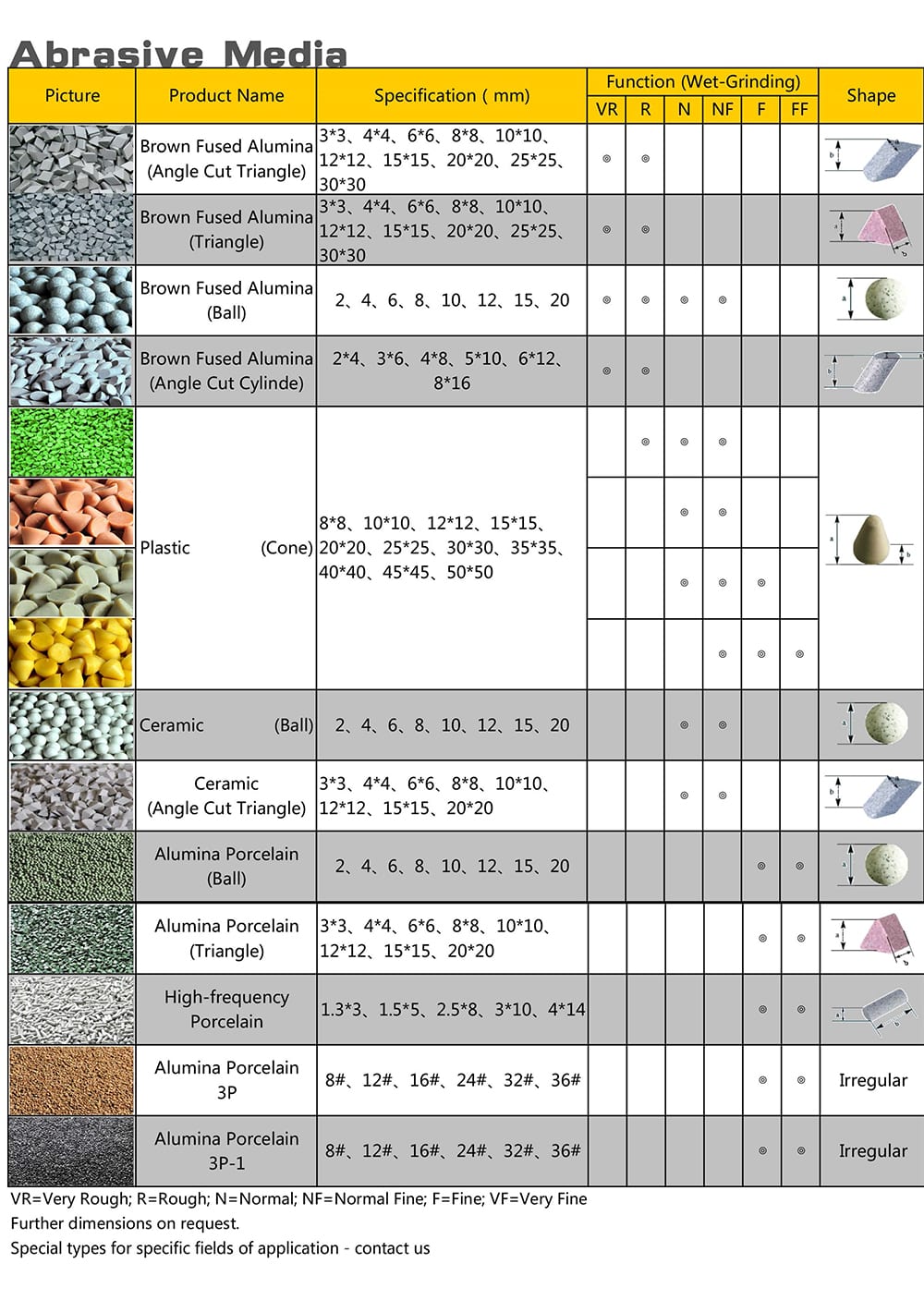
For satin blending and bright luster on small pewter castings, dry tumbling with organic dry finishing media — crushed walnut shells, corn cob, or treated hardwood pegs — is the safest route. Soft organic media cushions delicate figurines, medals, and buckles without bruising parts, building heat, or rounding cast lettering.
Gentle Wet Tumbling — Low-Density Plastic Media with High Lubricity
When castings carry parting-line flash or rough mold skin, shops run a gentle wet stage using low-density plastic grinding media and high-lubricity soap from our finishing compounds line. Never use heavy ceramic or steel media on solid pewter — their weight peens an orange-peel texture into soft tin, while continuous soapy flow is essential to prevent galling.
Why Loading and Part Isolation Matter More Than the Machine Frame
Whether you process pewter in a gentle vibratory finishing machine or a slow-turning rotary barrel tumbling machines line, the primary risk is never the machine frame — it is part-on-part collision and under-lubrication.
Because pewter is soft yet heavy, castings sink toward each other if the media ratio is lean or if vibration amplitude is too high. When two pewter castings collide, a sharp corner gouges a crescent-shaped dent into its neighbor. Safe pewter finishing requires generous media cushioning, gentle amplitude or slow barrel speed, and dividers for heavy buckles or hollowware. Also inspect assemblies beforehand: hollow pewter items with weak solder seams, thin stems, or glued inlays should never be tumbled. For media pairing rules, read our vibratory tumbler media selection guide.
Clear Boundaries — What We Build and What We Do Not
At Xiamen Jin Tai Jin Grinding Technology Co.,Ltd., we manufacture mass finishing machines and consumables backed by twenty-one machine platforms and twenty-four authorized Chinese IP rights. Because "pewter finish" spans several trades, we state clearly where our equipment fits — a standard we share in our guide to what we build and what we do not:
- What we supply: We build vibratory bowls, rotary barrels, treated walnut shell and corn cob dry media, low-density plastic wet media, and high-lubricity compounds for batch finishing genuine solid pewter castings.
- What we do not supply: We do not sell chemical darkening liquids, electroplating lines, powder-coating equipment, handheld buffing wheels, or retail polish tins. We also do not run a contract job shop for individual household items.
Troubleshooting Pewter Finishing Defects (Seven Shop-Floor Failure Modes)
How to Diagnose a Bad Pewter Run on the Spot
When a pewter run goes wrong, stop the machine and check two places immediately. Wipe the media or buffing wheel with your finger to see if grey metallic paste has transferred onto the tool, and inspect the crispest cast edges under angled light.
Note: This diagram is explained in the text and table above rather than shown as a separate figure.
| Defect Seen on the Part | What It Looks Like Under Light | Root Cause on the Shop Floor | How to Fix & Prevent It |
|---|---|---|---|
| Galling & Metallic Smearing | Torn grey streaks; sticky grey paste on media or wheel | Abrasive is too dry, coarse, or hot, smearing soft tin | Real pewter: Use high-lubricity soap or dry media; clean media |
| Slumped Edges & Blurred Relief | Cast lettering and corners look melted or rounded over | Excessive pressure, coarse media, or wheel dwelling | Real pewter: Shorten cycle; use fine plastic or walnut shell |
| Heat Ripples & Wavy Flats | Undulating waves across flat tankard walls or medals | Friction heat softening tin alloy under a dry wheel | Real pewter: Keep parts moving; use cool wet flow or dry media |
| Part-on-Part Impingement Dents | Crescent-shaped nicks across smooth casting faces | Parts colliding due to overloading or high amplitude | Real pewter: Increase media cushion; lower amplitude; use dividers |
| Media Dimpling (Orange Peel) | Tiny peened craters giving a pebbled surface texture | Heavy ceramic or steel media exceeding pewter yield | Real pewter: Remove ceramic or steel; run plastic or walnut shell |
| Stripped Imitation Coating | Yellow brass or dark zinc peeking through worn patches | Treating plated nickel or antique hardware with polish | Imitation finish: Stop — only stripping and replating restores it |
| Ruined Antique Patina (Over-Cleaning) | Patchy bright spots cutting through dark oxidized skin | Buffing, tumbling, or rubbing antique pewter with polish | Irreversible — the costliest mistake: Use water and soft wax only |
What Does Pewter Finishing Cost in Practice?
Whether you are setting up a tumbling cell for cast pewter giftware or comparing per-part costs against steel stampings, total cost breaks down into four practical lines.
First Cost Line — Equipment and Media Setup
For small pewter castings like miniatures, medals, and buckles, a polyurethane-lined vibratory bowl or rotary barrel handles wet plastic pre-polishing and dry walnut-shell brightening using dedicated wet and dry chambers.
Second Cost Line — Why Soft Metal Costs More Per Part Than Steel
On genuine pewter, the softness of the alloy directly limits how many parts you can load per cycle. Preventing part-on-part bruising requires generous media cushioning or dividers, meaning fewer parts per batch and higher machine time per piece than steel.
Third Cost Line — Scrap and Rework from Edge Slumping or Cut-Through
Slumped cast lettering or media-dimpled pewter figurines cannot be touched up and must be remelted, while cut-through imitation hardware requires full stripping and replating.
Fourth Cost Line — The Hidden Cost of Cleaning Vintage Pewter
If you hold a vintage or antique solid pewter piece with an even dark patina, the smartest financial decision is to spend nothing on polishing at all. Collectors value undisturbed oxidation on historic pewter, and buffing it bright strips away resale value in minutes. Reserve mechanical polish pewter workflows strictly for new foundry castings or modern bright-finish tableware.
If your shop produces solid pewter castings and wants to match dry walnut-shell or low-density plastic tumbling to your part geometry, reach out via our contact page. Share your casting shape, detail sensitivity, and target sheen state, and our engineers will recommend a safe media and compound setup.
Frequently Asked Questions About Pewter Finish Metal
Is a "pewter finish" on cabinet hardware real solid pewter?
Almost never. On modern cabinet pulls, faucets, and light fixtures, "pewter finish" refers to an imitation coating over zinc, brass, or steel, such as brushed nickel, darkened antique nickel, or grey powder coat.
How can I tell if my item is solid pewter or a plated imitation?
Run four quick checks. Look for a stamped maker's touchmark underneath, inspect worn edges for yellow brass showing through, feel for the dense warmth of solid tin alloy, and test with a magnet and a hidden pin-scratch.
Can you polish pewter to a bright mirror shine?
Yes, genuine solid pewter can be polished to a bright mirror luster resembling sterling silver. Because pewter is very soft and melts at a low temperature, use ultra-light pressure and fine compounds to avoid slumping sharp edges.
Should I polish old or antique pewter that has turned dark grey?
No. On genuine vintage or antique pewter, that dark charcoal or warm grey skin is natural patina, which carries historical and collector value. Buffing it down to bright metal is over-cleaning and permanently reduces its value.
Why does pewter smear and turn sticky when I try to buff or sand it?
Because tin alloy is very soft with a low melting point, friction heat softens the surface skin almost immediately. Instead of shearing cleanly, the warm metal tears, smears like butter, and welds onto the dry wheel or abrasive stone.
Can solid pewter castings be finished in a vibratory tumbler or rotary barrel?
Yes, when using low-density plastic media with high-lubricity soap for wet pre-polishing, or treated walnut shell and corn cob for dry brightening. Cushion parts with ample media volume to prevent collisions, and never tumble fragile soldered assemblies.
 +86-592-2381506


 IPv6 network supported
