
Cleaning Brass Cases in Production: Wet Stainless Steel Tumbler Media vs. Dry Corncob Media
Brass casing manufacturers, commercial reloaders, and ammunition-component plants searching for cleaning brass cases or stainless steel tumbler media often get conflicting advice online—some swear by dry corncob and walnut shell, while others insist on wet stainless pins. On a production floor, treating those two methods as rivals misses the real engineering point.
The core thesis of this guide is clear: wet stainless steel tumbler media strips stubborn carbon, oxide tarnish, and primer-pocket residue cleanly inside a rotary or magnetic chamber, whereas dry corncob media wipes away residual moisture and adds spot-free storage luster—using either method in the wrong stage wastes hours and leaves spotted or dirty brass. Separating wet pin scrubbing from dry organic moisture removal turns messy hand work into a predictable, repeatable multi-shift production line across commercial brass plants. For related burnishing physics, see our steel shot burnishing media guide and corncob media guide.
Wet Stainless Steel Tumbler Media vs. Dry Organic Media
Comparing wet stainless media against dry organic media starts with what is actually on the brass surface when it enters the machine.

What Wet Stainless Pins Clean That Dry Cob Cannot
Fired or annealed brass cases carry baked-on carbon inside the case mouth, crusty residue inside primer pockets, and dark heat-treat tarnish. Dry corncob media and walnut shell wipe loose dust off outer walls yet cannot scrub burnt carbon out of tight primer pockets or brighten dark annealed necks reliably. Fine stainless steel tumbler media (pins or micro-cones) suspended in liquid compound scrubs both outer walls and internal pockets down to bright bare brass.
Why Dry Corncob Still Matters After Wet Cleaning
Brass pulled straight from a wet tumbler will tarnish into cloudy water spots if left air-drying slowly in open baskets. Passing rinsed, spun-dry brass through warm corncob media—or drying immediately in a heated centrifugal spin dryer—locks in a clean, uniform golden finish ready for inspection and packaging.
Avoiding Ammonia and Harsh Acid Dips on Cartridge Brass
Shop-floor shortcuts using strong ammonia cleaners or harsh acid dips strip zinc selectively from brass (dezincification), turning cases pinkish and making cartridge brass brittle under firing pressure. Mechanical wet tumbling with 304 stainless pins and brass-safe liquid compound (JTS5 or neutral-to-mild LC10) cleans thoroughly without weakening brass grain structure.
| Process Factor | Wet Stainless Steel Tumbler Media | Dry Corncob / Walnut Shell Media |
|---|---|---|
| Primary Strength | Strips carbon, annealing tarnish & primer-pocket fouling | Absorbs moisture, removes light lube & adds dry gloss |
| Internal Neck & Pocket Clean | Excellent (pins reach inside pockets & necks) | Poor (granules bridge or pack into primer pockets) |
| Dust & Airborne Hazard | Zero airborne dust (fully wet bath) | Generates cellulose dust if un-screened or worn |
| Post-Cycle Requirement | Immediate clean rinse + heated spin-dry | Screen separation + blow-out check on flash holes |
| Media Wear Life | Near-permanent (304 stainless resists wear) |
Consumable (gradually breaks down into fines) |
[DESIGN: Four-panel comparison showing tarnished/carbon-fouled brass, wet stainless pin scrubbing, centrifugal spin-drying, and bright finished brass]
Choosing Chambers for Cleaning Brass Cases at Scale
Machine choice determines batch throughput, noise level, and how easily operators separate tiny stainless pins from thousands of brass cases.

Octagonal Rotary Barrels for High-Volume Wet Pin Tumbling
An industrial octagonal rotary barrel lifts brass cases, water, compound, and stainless steel tumbler media smoothly every revolution, rolling pins gently through case interiors and primer pockets. Thick polyurethane drum linings handle dense stainless loads quietly without denting case mouths.
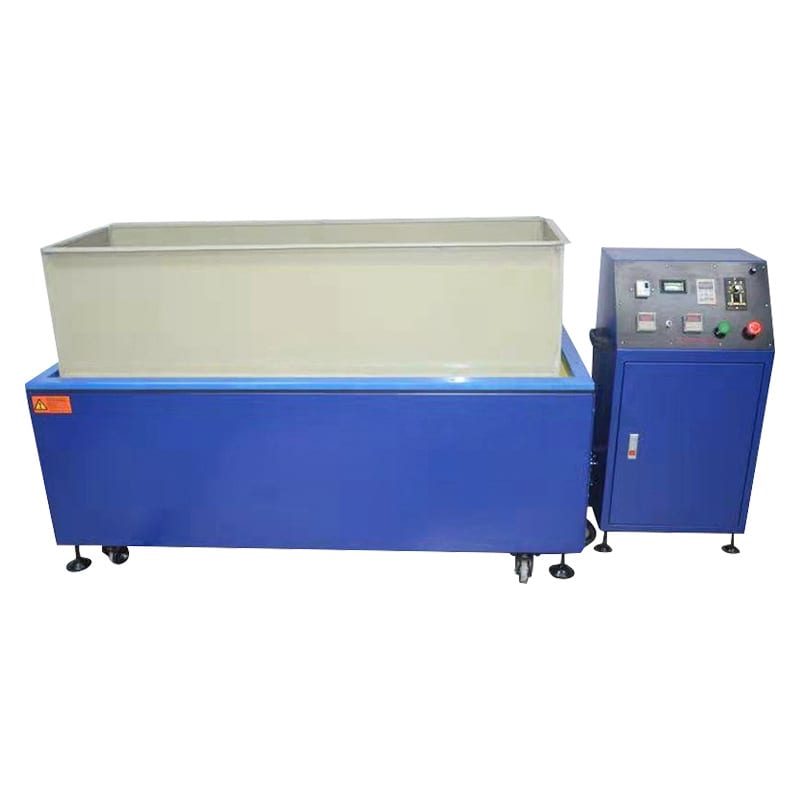
Magnetic Tumblers for Rapid Pocket and Interior Scrubbing
When cycle speed and intricate pocket cleaning are top priorities—especially on new machined brass sleeves, small primer pockets, or specialty fittings—a magnetic tumbler spins lightweight stainless pins rapidly inside a liquid bath. Magnetic tumbling scrubs primer pockets and internal necks quickly while keeping case mouths round and un-peened.
Heated Vibratory Dryers for Post-Sizing Lube Removal and Drying
After wet tumbling—or after case resizing when sizing wax must be stripped—a heated vibratory bowl charged with coarse corncob media dries brass rapidly and wipes light lube off cleanly without leaving wet spots.
Why Standard Light-Duty Vibratory Bowls Struggle With Wet Steel Pins
Small open-top vibratory bowls built for plastic or ceramic media often lack the spring stiffness and motor torque for heavy steel charges, and fine stainless pins tend to cling along bowl corners unless properly drained and separated. Reserve wet steel pins for heavy-duty rotary barrels or dedicated magnetic chambers.
Selecting Stainless Steel Tumbler Media Geometry
Not all stainless steel tumbler media works equally well on brass cases—pin diameter and length determine whether pins clean primer pockets or wedge sideways inside flash holes and case mouths.
Cylindrical Stainless Pins for Primer Pockets and Case Interiors
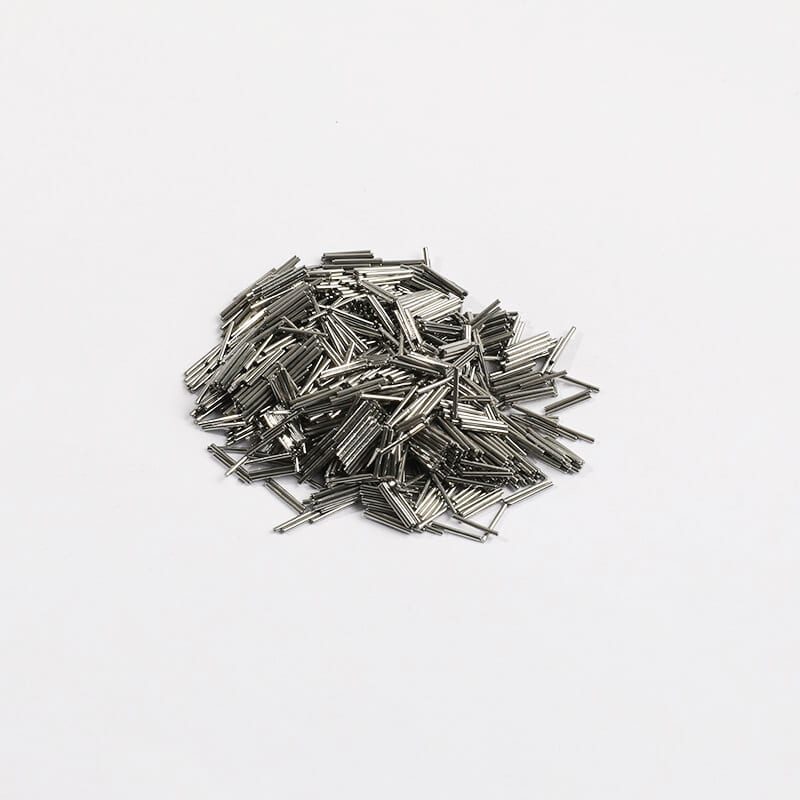
Fine 304 stainless steel pins tumble freely through case mouths and sweep primer pockets clean. Always size pin length so two pins cannot bridge sideways inside the narrowest case neck, and size pin diameter cleanly smaller or larger than flash-hole openings so pins never jam inside primer flash holes.
Stainless Balls and Ballcones for External Burnishing Only
Smooth stainless spheres and ballcones deliver rapid external brightening on solid brass hardware, switch contacts, and thick brass fittings, yet cannot enter narrow cartridge necks or primer pockets. Use pins when internal cleanliness matters; use balls or cones when external peen-brightening on solid brass parts is the goal.
Why 304 Austenitic Stainless Prevents Media Rust
Never use plain carbon-steel wire cut or blast-cabinet steel shot abrasive in wet brass tumbling. Carbon steel rusts rapidly in aqueous baths and stains brass dark brown. True 304 stainless steel (or dedicated magnetic stainless pin alloy for magnetic tumblers) stays bright and rust-free across thousands of cycles.
Inspecting Pin Condition and Preventing Cross-Contamination
Keep brass-cleaning stainless pins strictly separated from media used on carbon steel or aluminum. Embedded iron dust from carbon steel transfers onto wet brass and causes unsightly spotting during storage.

Liquid Chemistry, Water Control, and Preventing Tarnish Rings
Running cleaning brass cases batches in plain tap water leaves dull film and invites rapid oxidation during drying.

Using Brass-Safe Brightening Compounds (JTS5 / LC10)
Proper liquid compound (JTS5 for non-ferrous brightening, or controlled LC10 where light cutting/cleaning is needed) suspends carbon soot and spent drawing lube in the bath so dark soil never redeposits back onto clean brass walls. Over-dosing acidic cleaners turns brass pinkish-red by leaching surface zinc—stick to brass-safe neutral or mild-brightening concentrations.
Immediate Clean-Water Flushing Before Air Exposure
Never let brass cases sit inside dirty, carbon-gray tumbler water after the timer stops. Discharge the barrel immediately, separate the pins, and flush the brass thoroughly under clean running water so zero soap film dries on the case walls.
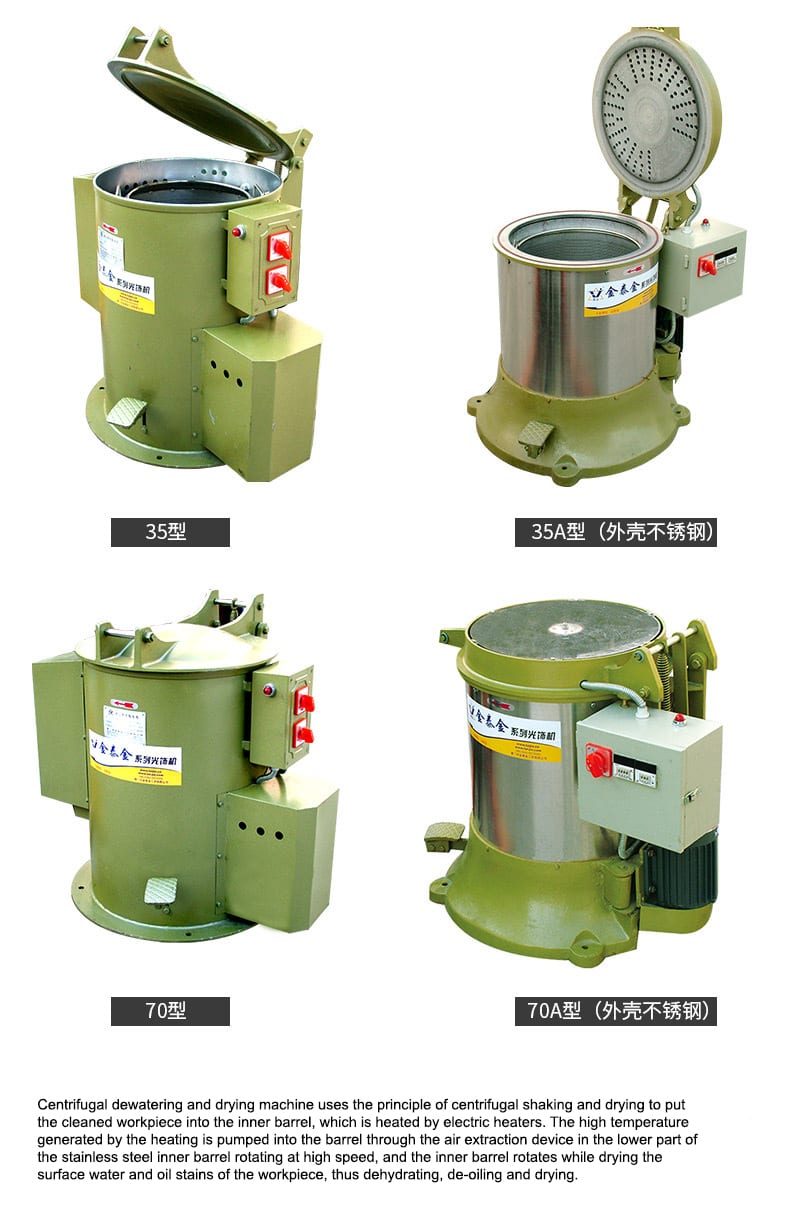
Heated Centrifugal Spin-Drying for Internal Case Cavities
Hollow brass cases hold water droplets inside every interior cavity. Dumping wet cases onto a shop towel leaves water trapped inside until ugly tarnish rings form. Loading rinsed cases into a heated centrifugal spin dryer forces trapped water out of every case mouth and primer pocket while warm air evaporates residual moisture cleanly.
Optional Warm Corncob Wipe for Long-Term Shelf Shine
For commercial retail brass or decorative brass casings requiring maximum shelf appeal, passing spin-dried brass briefly through warm corncob media removes any trace hard-water mineral ring and leaves a bright, dry finish.
Pin Separation, Flash-Hole Checks, and Dry-Stage Safety
Fast, reliable pin separation makes the difference between a smooth production line and an operator headache.

Wet Rotary Separator vs. Magnetic Recovery Sweeps
After discharging an octagonal rotary barrel, tumbling the brass-and-pin mixture inside a submerged wet media separator (or over a vibrating screen deck with water spray) drops stainless pins straight into the recovery tub below while retaining brass cases cleanly. Passing finished brass over a magnetic sweep tray adds a final safety check against stray magnetic pins. For non-magnetic 304 stainless pins, thorough double-tumble rinsing inside a perforated separator drum ensures zero pins hide inside hollow case mouths.
Preventing Bridged Pins Inside Case Necks and Flash Holes
If operators ever spot a pin wedged across a case mouth or stuck inside a flash hole, pin geometry is mismatched to that caliber's neck or flash-hole diameter. Switch to a shorter or thicker pin specification before running the next batch, and verify sample cases visually under bright light before shipping.
Controlling Cellulose Dust in Dry Corncob Operations
When running dry corncob media or walnut shell to strip resizing lube or buff dry brass, worn granules break down into fine dust that can carry lead or primer residue on fired brass. Use enclosed dry barrels or dust-extracted vibratory dryers, screen out fines regularly, and refresh the cob bed before powder coats the cases. For broader dry-finishing media rules, see our tumbler media selection matrix and vibratory grinder guide.
Separating Fired Range Brass From New Machined Brass Cases
New machined or drawn brass casings carry drawing lubricant and crisp neck edges, whereas fired range brass carries baked-on carbon, primer soot, and occasional grit or pebbles picked up off firing ranges. Never mix dirty range brass into the same stainless steel tumbler media charge used for clean new OEM brass shells without a dedicated pre-wash and magnetic/screen cleanout, because range grit scratches bright new brass walls.
Managing Batch Load Ratios for Thin Case Mouths
Brass case mouths are thin and vulnerable to denting if heavy loads drop onto bare steel or run with too little water and media cushion. Keep the barrel properly filled with water, JTS5 compound, and stainless steel tumbler media so cases float and roll inside the wet pin bed rather than slamming into each other. If you also finish solid brass fittings or marine hardware, compare against our polishing cream and zam guide, tumbler polishing machine guide, and repolish stainless steel guide.
[DESIGN: Jings Polish equipment bay showing octagonal rotary barrels, magnetic tumblers, and centrifugal spin dryers]
Four Common Brass Case Cleaning Failures and How to Diagnose Them
Failure Mode 1: Pink or Copper-Tinted Brass Cases
Brass exits looking reddish-pink instead of bright yellow-gold.
Diagnostic rule: If brass turns pink across the entire case, the cleaning solution was too acidic or cycle time in acid-based cleaner was too long, leaching zinc out of the brass surface—switch immediately to brass-safe neutral/brightening compound (JTS5) and shorten chemical contact.
Failure Mode 2: Dark Tarnish Spots Appearing Hours After Unloading
Cases look bright wet, then develop ugly brown water-spot rings on the drying tray.
Diagnostic rule: If spots appear during drying rather than inside the barrel, dirty rinse water or slow air-drying left mineral/soap film inside cavities—flush immediately with clean water and run cases through a heated centrifugal spin dryer.
Failure Mode 3: Dull Gray Film Inside Case Necks After Tumbling
Outer walls look clean while case interiors stay smeared in gray soot.
Diagnostic rule: If gray soot redeposits on brass, the bath is overloaded with carbon/oil or compound concentration is too low to hold soil in suspension—run a brief pre-wash on oily/sooty brass or drain and refresh compound mid-cycle.
Failure Mode 4: Stainless Pins Wedged in Flash Holes or Primer Pockets
Pins stick tightly inside small pockets and require manual punching.
Diagnostic rule: If pins jam in flash holes or pockets, pin diameter matches the hole opening—change pin diameter or length so pins cannot wedge two-abreast or lodge in flash holes.
| Symptom on Brass Case | Root Cause | Immediate Fix |
|---|---|---|
| Pink / reddish copper tint | Over-acidic cleaner leaching zinc | Switch to brass-safe JTS5 neutral/brightening chemistry |
| Brown water-spot rings | Slow air-drying or dirty rinse | Clean water flush + heated centrifugal spin-dry |
| Dull gray soot film | Spent bath overloaded with carbon/lube | Pre-wash dirty brass; refresh compound & water |
| Stuck pins in flash holes | Pin diameter ≈ flash-hole diameter | Resize stainless pin diameter/length |
Honest Capability Boundaries and Production Standards
What Mass Finishing Does and Does Not Do for Brass Cases
Mass finishing chambers excel at cleaning brass cases, scrubbing carbon from primer pockets, brightening annealed brass, stripping sizing lube, and spin-drying hollow cavities cleanly at production scale. However, mass finishing does not replace case annealing, neck sizing, flash-hole reaming, or ultrasonic primer-pocket gauging, and we do not supply reloading presses, dies, or ammunition components. For other brass hardware workflows, see our polishing valves guide and finishing gold guide.
Preventing Case-Mouth Peening on Thin-Wall Brass
Thin-walled rifle and pistol brass mouths can roll inward slightly if tumbled dry in oversized heavy media or overloaded inside an under-cushioned barrel. Keep the wet pin-to-brass ratio generous, maintain full water coverage with JTS5 lubricating compound, and avoid running heavy solid steel balls alongside hollow thin-neck cases.
Handling Annealed vs. Work-Hardened Brass Batches
Annealed brass necks carry dark heat-tint discoloration and softer metal at the shoulder compared to work-hardened case heads. Wet stainless steel tumbler media removes dark annealing tint uniformly in a single controlled cycle without stripping zinc or scratching the softer neck wall, leaving cases clean and ready for sizing or inspection.
Packaging and Long-Term Tarnish Prevention After Drying
Even spotless brass tarnishes slowly if stored open in humid coastal air or near acidic shop vapors. Once cases exit the heated centrifugal spin dryer (and optional warm corncob wipe), inspect sample primer pockets under task lighting and seal dry brass promptly inside clean, moisture-barrier lined totes or poly bags.
What We Supply and What We Do Not Supply
At Xiamen Jin Tai Jin Grinding Technology Co.,Ltd. (brand: Jings Polish), our workshop roots date back to 1996 and our company was formally established in 2009, delivering over 200,000+ sets of grinding and polishing solutions worldwide. Across our catalogue, we manufacture 21 machine platforms backed by 24 granted Chinese IP rights (1 invention patent, 15 utility model patents, and 8 design patents), under ISO 9001 certification 00726Q01571R001 (valid 2026-06-03 to 2029-06-02) and CE certifications M.2023.206.C88121 (Vertical, 8 models) and M.2023.206.C88120 (Horizontal, 13 models), valid until 2028-07-24.
To keep boundaries clear: we supply industrial mass finishing machines (octagonal rotary barrels, wide-table OBD and circular magnetic tumblers, heated vibratory dryers, heated centrifugal spin dryers), tumbling media (304 stainless steel pins and balls, corncob, walnut shell), and liquid compounds (JTS5, LC10, MC8); we do NOT supply reloading presses, brass ammunition cases, acid pickling tanks, or contract job-shop brass cleaning services.
Honest Lead Times and Engineering Review
Standard machines ship in 25–35 days, while custom-configured rotary/dryer lines require 45–60 days. Because case caliber, flash-hole diameter, incoming lube or carbon load, and hourly batch weight dictate pin sizing and dryer capacity, we do not promise free sample trials by mail or guarantee cycle times before inspecting your workpiece—send clear photos of your brass cases, caliber/hole dimensions, and hourly throughput via our custom polishing solution page for an engineering assessment. Clear close-up photos of primer pockets and case mouths allow our engineering team to match pin length, separator mesh, and spin-dryer basket capacity accurately.
Scaling From Small Batches to Multi-Shift Brass Production
Commercial cartridge plants and high-volume brass component shops often outgrow small benchtop tumblers quickly once daily batch weights climb. Pairing an industrial octagonal rotary barrel—or wide-table magnetic tumbler for fast pocket cleaning—with a submerged wet separator and heated centrifugal spin dryer turns messy manual sifting and towel drying into a clean, repeatable multi-shift workflow. Dedicated wet and dry machines also eliminate cross-contamination between carbon-soiled fired brass, new machined shells, and dry lube-removal runs.
Frequently Asked Questions
Which is better for cleaning brass cases: stainless steel tumbler media or corncob media?
They serve different stages. Wet stainless steel tumbler media strips stubborn carbon, annealing tarnish, and primer-pocket residue cleanly, while dry corncob media excels at absorbing water after wet tumbling or wiping resizing wax off dry cases.
Why did my brass cases turn pink after wet tumbling with stainless pins?
Pink discoloration means the liquid cleaner was too acidic or left in contact too long, stripping zinc from the brass alloy. Use brass-safe compound (JTS5) and rinse thoroughly right after the cycle finishes.
How do you dry hollow brass cases without getting water spots?
Flush cases immediately in clean water after unloading, then run them through a heated centrifugal spin dryer to force water out of hollow interiors and evaporate surface film before spots form.
Can stainless steel pins get stuck inside brass flash holes or primer pockets?
Only if pin diameter matches the flash-hole or pocket opening. Choosing the right pin diameter and length prevents wedging; always run a screen separator and magnetic sweep check after unloading.
Can I tumble brass cases and steel hardware in the same stainless pin charge?
No. Keep brass-cleaning pins strictly separated from carbon steel or aluminum work so iron dust never transfers onto wet brass and causes corrosion spots.
What details should I share before requesting a quote for a brass case cleaning line?
Send clear photos of your brass cases showing carbon or tarnish level, case caliber and flash-hole size, whether sizing lube is present, and your hourly batch weight. Our engineers can size the right barrel, magnetic tumbler, pin spec, and spin dryer from photos and specs.
[DESIGN: Annotated buyer enquiry checklist showing brass case photos, flash-hole size, soil type, and hourly throughput]
 +86-592-2381506


 IPv6 network supported
