
Polishing Stainless Steel Wheels in Production: Heavy-Duty Vibratory Bowls, Ceramic Media, and Steel Burnishing
Fleet maintenance shops, commercial truck upfitters, and industrial wheel manufacturers searching for polishing stainless steel wheels quickly run into a harsh physical reality: 304 stainless steel wheel simulators, heavy-truck trim rings, and multi-piece cast stainless rims work-harden rapidly under manual buffing wheels, burning up cotton mops and leaving inconsistent swirl halos around lug pockets.
The central thesis of this guide is clear: production-grade polishing stainless steel wheels replaces slow manual buffing with staged mass finishing—combining high-mass ceramic cutting inside wide-channel vibratory bowls or troughs to erase stamping draw lines and weld beads, followed by stainless steel ball burnishing with lubricating compound to compress a dense, corrosion-resistant mirror skin across every spoke and lug recess. Separating heavy cutting from mirror burnishing avoids work-hardened orange peel, trapped compound haze, and uneven hand-buffed edges. For related stainless-steel workflows, see our stainless steel polisher guide and stainless steel repolishing guide.
Why Stainless Steel Wheels Resist Casual Buffing and Light Tumbling
Stainless steel behaves completely differently from cast aluminum truck rims or thin chrome-plated steel covers.
Work-Hardening Under High-Friction Manual Buffing
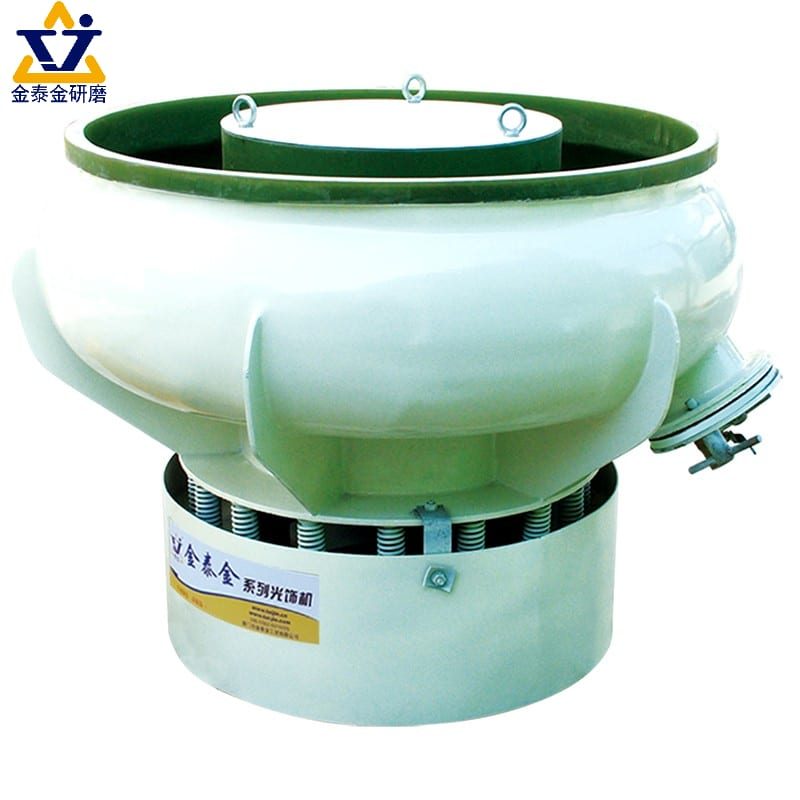
When an operator presses a stitched cotton wheel and aggressive bar compound too hard against a 304 stainless wheel simulator, localized frictional heat work-hardens the outer skin almost instantly. Once the alloy work-hardens in patchy streaks, further hand buffing only smears compound wax over micro-scratches, creating heat-tint rainbows and cloudy directional halos under direct sunlight.
Deep Lug Recesses, Vent Cutouts, and Rolled Lips
Every commercial stainless wheel cover or modular industrial rim contains deep stud pockets, narrow cooling slots, and tight rolled mounting lips. Large stationary buffing wheels simply cannot reach down into lug wells without scorching the surrounding flange, whereas properly sized mass finishing media flows hydraulically into every pocket simultaneously.
High Part Mass Demands Heavy-Duty Chamber Isolation
A full-size commercial wheel ring or forged stainless caster wheel carries substantial mass. Dropping heavy wheels loose into an undersized light-duty tumbler causes violent part-on-part denting along the outer bead. Production wheel finishing requires either large-diameter wide-channel vibratory bowls, heavy-duty divided rectangular troughs, or single-part fixture clamping.
| Wheel Finishing Method | Reach Into Lug Wells | Surface Consistency | Work-Hardening Risk | Best Production Fit |
|---|---|---|---|---|
| Manual Buffing Wheel | Poor (misses deep pockets) | Operator-dependent | High (frictional heat streaks) | Touch-up only on flat lips |
| Light-Duty Hobby Tumbler | Stalls under wheel weight | Uneven | Low | None (chamber overload) |
| Wide-Channel Vibratory Bowl | Full fluid media contact | Uniform across entire rim | Zero (wet cooled cut) | Medium-to-large wheel rings & caps |
| Divided Rectangular Vibratory Trough | Full contact with zero part collision | High repeatability | Zero (wet cooled cut) | Heavy forged or cast stainless wheels |
[DESIGN: Four-panel comparison of manual buffing halos, lug-pocket shadow zones, part-on-part rim dents, and uniform vibratory mirror finish]
Equipment Platforms for Polishing Stainless Steel Wheels
Selecting the right chamber geometry ensures media circulates vigorously around large wheel diameters without slamming parts into each other.
Wide-Channel Circular Vibratory Bowls for Wheel Simulators and Trim Rings
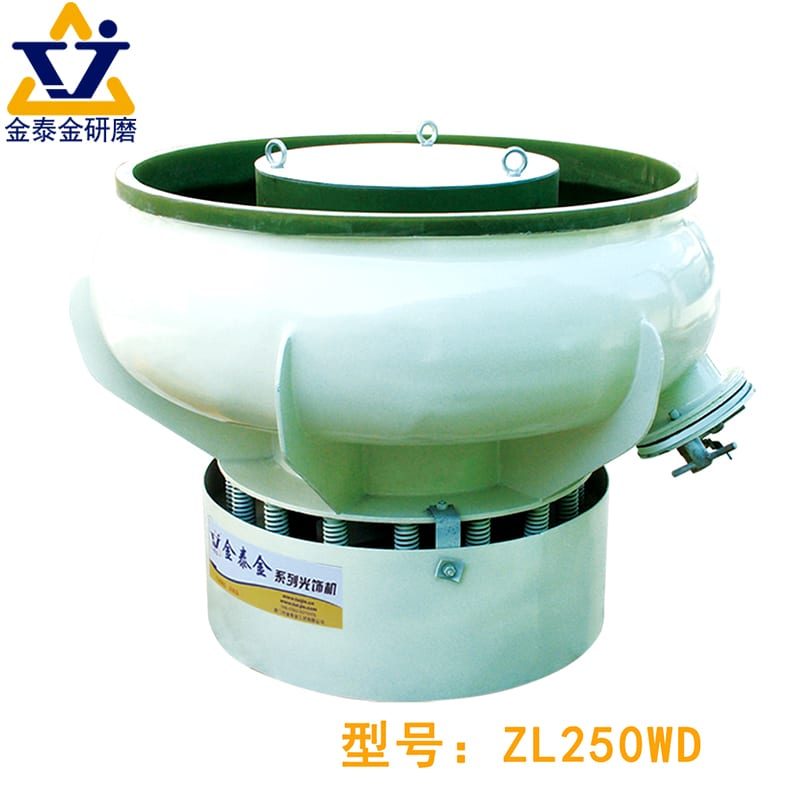
For stamped 304 wheel simulators, hubcaps, and stainless trim rings, a large-diameter vibratory grinder with an unobstructed wide processing channel lets the entire ring rotate smoothly through the rolling toroidal media bed. Thick polyurethane lining absorbs heavy metallic impacts, while continuous fresh water and compound flow-through flushes dark metallic fines straight out of the bowl.
Divided Rectangular Vibratory Troughs for Heavy Forged and Cast Wheels
When finishing heavy multi-piece stainless rims, industrial AGV drive wheels, or large marine hardware, multiple loose parts inside one open bowl will hammer each other's machined flanges. A rectangular vibratory trough equipped with removable polyurethane-lined dividers isolates one wheel per compartment—delivering intense, uniform ceramic cutting and steel ball burnishing with zero part-on-part collision.
Fixtured Drag Finishing for Precision Forged Center Hubs
High-value billet stainless center hubs, custom motorcycle rims, and precision-machined wheel adapters benefit from drag finishing. Clamping each hub onto a rotating planetary spindle sweeps the outer face and spoke windows through high-density ceramic and porcelain media at controlled speed without risking a single nick on critical lug seats.
Why Rotary Barrels and Small Magnetic Tumblers Fail on Full Wheels
Standard hexagonal or octagonal rotary barrels drop heavy wheels from the top of the cascade onto neighboring parts, bruising rolled lips and ovalizing thin rings. Likewise, compact benchtop magnetic tumblers only carry enough magnetic flux for small fasteners and jewelry—never full-size stainless wheel rims.
The Two-Stage Media and Compound Sequence for Stainless Wheels
Skipping straight from raw stamped or cast stainless steel to mirror burnishing balls never erases deep draw marks or weld beads. A disciplined two-stage sequence separates material removal from surface compression.

Stage 1: Heavy Ceramic Cutting to Level Draw Lines and Weld Beads
Raw wheel stampings carry die draw scratches along the curved dish, while fabricated rims carry TIG weld seams and heat tint. Start with dense preformed high-alumina ceramic triangles or angle-cut cylinders paired with LC10 cleaning and grinding compound (plus MC8 if heavy weld heat tint and scale are present). Ceramic mass cuts hard stainless ridges down to a uniform, non-directional matte satin plateau.
Stage 2: Stainless Steel Ball Burnishing for Mirror Luster
Once every die mark and weld transition is completely leveled, rinse the chamber thoroughly and transfer parts (or switch media) into stainless steel burnishing media—typically a blended mix of balls, pins, and satellite shapes. Driven by a heavy-duty vibratory bowl with high-lubricity PL10 burnishing compound, thousands of hard steel spheres peen and compress the matte stainless peaks into a bright, smear-free reflective finish.
Blending Steel Ball Shapes to Reach Tight Lug Pockets
Pure round steel balls bridge over sharp corner fillets where wheel spokes meet the outer barrel lip. Adding small steel pins or tapered cones (satellite shapes) into the burnishing charge ensures the steel media reaches deep into 90-degree lug steps and recessed rivet grooves while large spheres flatten broad curved faces.
Porcelain Polishing Alternative When Weight Limits Apply
If a large existing vibratory tub lacks the drive-motor structural capacity to fluidize a full charge of dense stainless steel shot, substitute smooth non-abrasive high-alumina porcelain spheres paired with dedicated brightening compound. Porcelain runs lighter on motor bearings while still yielding a clean commercial luster, though steel ball burnishing produces deeper cold-worked reflectivity on 304 stainless.
[DESIGN: Staged surface progression from raw stamped stainless wheel face to matte ceramic-cut finish and final steel-ball burnished gloss]
Handling Pre-Existing Damage, Weld Seams, and Road Corrosion
Wheels arriving from field service or stamping presses vary dramatically in starting surface condition.
Heavy Curb Rash and Deep Grinding Scars
Mass finishing removes stamping draw lines, light oxidation, and fine machining marks—it does not erase deep curb gouges or coarse flap-disc grinding grooves without over-rounding adjacent logos or stamped ribs. Deep local gouges must be blended smoothly by machining or belt grinding beforehand so the vibratory bowl only has to refine uniform fine tool marks.
Heat Tint and Oxide Scale Around TIG-Welded Rim Barrels
Two-piece welded stainless wheel barrels develop straw, blue, and dark oxide bands next to the weld zone. Chemical descaling with MC8 combined with sharp ceramic triangles strips stubborn oxide scale mechanically and chemically without resorting to hazardous hydrofluoric pickling pastes.
Road Salt Pitting and Brake-Dust Staining on Refurbished Simulators
Refurbished commercial truck simulators often carry baked-on brake dust and chloride pitting around lug cutouts. Always degrease road film and heavy grease completely before loading wheels into ceramic or steel media; oil carryover coats media stones, kills cutting bite, and turns burnishing compound into dark gray sludge.
| Starting Defect on Stainless Wheel | Can Mass Finishing Fix Alone? | Recommended Pre-Step or Process Adjustment |
|---|---|---|
| Fine stamping draw lines & press scuffs | Yes | Stage 1 dense ceramic triangles + LC10 |
| TIG weld heat tint & light oxide scale | Yes | Ceramic media + MC8 descaling compound |
| Deep curb gouges & coarse grinding scores | No (only blends edges) | Pre-blend locally before loading into bowl |
| Baked-on road grease & brake dust | No (contaminates media) | Pre-degrease in hot alkaline wash before tumbling |
Mild surface dullness on clean 304 rims |
Yes | Direct steel ball burnishing + PL10 |
[DESIGN: Decision matrix showing pre-degreasing, local scar blending, Stage 1 ceramic cut, and Stage 2 steel burnishing]
Post-Finish Rinsing, Spot-Free Drying, and Surface Protection
A freshly burnished stainless wheel can lose its mirror clarity in minutes if hard rinse water dries on the dish face.
Flushing Burnishing Compound Before Water Spots Form
PL10 burnishing soap lifts fine metallic particles into foam suspension. As soon as the burnishing cycle finishes, flush the bowl or rinse rack thoroughly with clean softened water so suspended fines do not dry back onto lug pockets as chalky white streaks.
Spin-Drying and Warm Forced-Air Drying
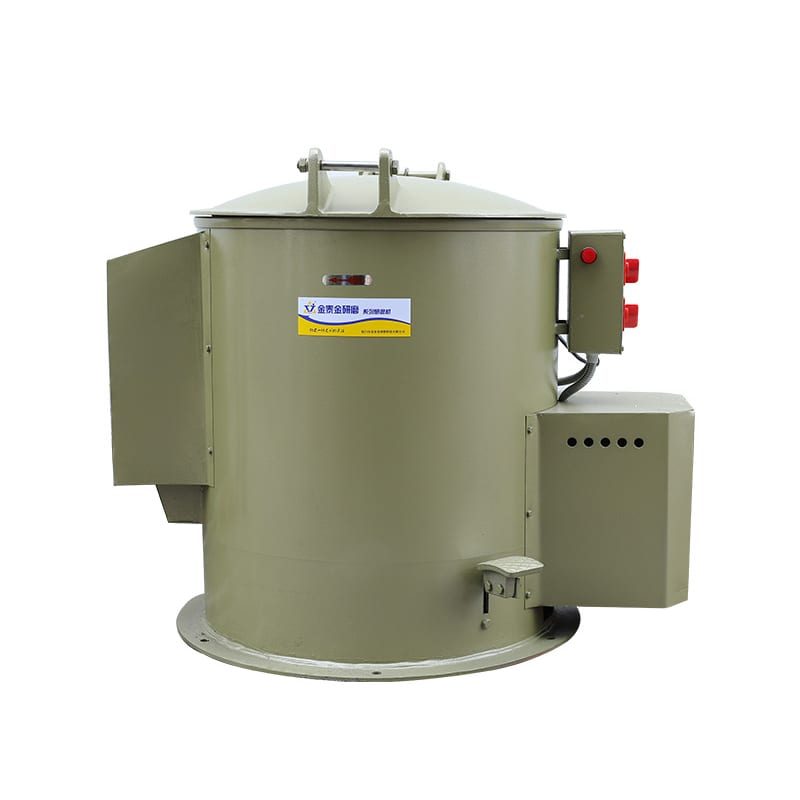
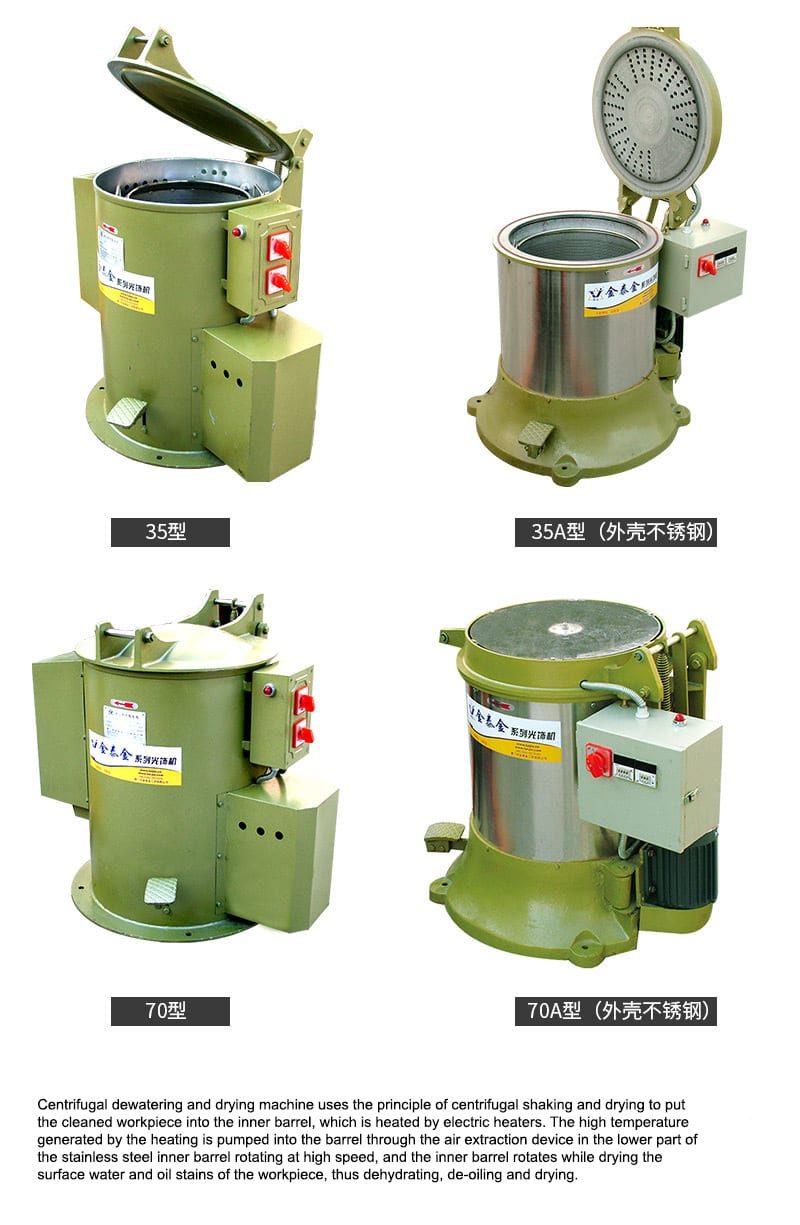
Small-to-medium stainless wheel centers, lug covers, and caster wheels should move straight from the rinse station into a heated centrifugal dryer or warm air knife tunnel. Rapid moisture evacuation eliminates calcium water rings around embossed brand lettering and stud holes.
Optional Cob Media Drying for Complex Multi-Spoke Wheels
For intricate spoked stainless wheels with deep pockets that trap rinse droplets, a heated vibratory bowl filled with dry corncob media absorbs residual moisture cleanly while wiping away faint compound film for showroom clarity.
Common Failure Modes When Polishing Stainless Steel Wheels
Most rejected wheel batches trace back to three preventable setup errors rather than machine defects.

Orange-Peel Dimpling From Over-Aggressive Steel Media
Running oversized heavy steel balls on thin-gauge stamped stainless covers without enough PL10 cushioning compound hammers tiny craters into flat reflective faces—creating a wavy "orange peel" texture. Reduce ball size, raise PL10 lubricating concentration, and verify water level keeps the mass fluid.
Media Lodging in Vent Cutouts and Embossed Logos
If ceramic triangles or steel cones match the exact width of wheel cooling slots or embossed script channels, single media pieces wedge tightly inside the openings and block uniform polishing around the slot edge. Always size media strictly larger than the widest narrow slot—or significantly smaller so every piece passes freely through the cutout.
Dull Gray Haze From Contaminated Burnishing Solution
Recirculating dirty burnishing water indefinitely loads the steel balls with fine stainless smut and residual Stage 1 ceramic grit. Maintain steady fresh-water bleed, dump spent LC10 completely before switching to PL10, and inspect steel balls periodically for rust spots if carbon-steel parts ever entered the same tub.
Honest Boundaries: What We Do and Do Not Supply
At Xiamen Jin Tai Jin Grinding Technology Co.,Ltd. (brand: Jings Polish), our workshop roots date back to 1996 and our company was formally established in 2009, delivering over 200,000+ sets of grinding and polishing solutions worldwide. Across our catalogue, we manufacture 21 machine platforms backed by 24 granted Chinese IP rights (1 invention patent, 15 utility model patents, and 8 design patents), under ISO 9001 certification 00726Q01571R001 (valid 2026-06-03 to 2029-06-02) and CE certifications M.2023.206.C88121 (Vertical, 8 models) and M.2023.206.C88120 (Horizontal, 13 models), valid until 2028-07-24.

Equipment, Media, and Compounds—Not Contract Wheel Polishing
We build and supply vibratory bowls, divided rectangular troughs, drag finishers, ceramic media, stainless steel burnishing media, and finishing compounds for your own facility. We do not operate a contract job-shop polishing service for individual customer wheels. Standard machines ship in 25–35 days, while custom divided troughs and drag-finishing fixtures require 45–60 days.
No Hand-Held Buffers, Electroplating, or Sandblasting
We do not supply hand-held angle grinders, portable rotary buffers, chrome electroplating tanks, or abrasive sandblasting cabinets. Our systems perform automated wet mass finishing inside lined vibratory, centrifugal, and drag chambers. For customers transitioning from abrasive blasting to wet mass finishing, compare media behavior in our glass bead vs aluminum oxide media guide and superfinishing guide.
Realistic Gloss Expectations vs. Electroplated Chrome
Well-executed ceramic cutting followed by stainless steel ball burnishing yields a deep, bright mechanical mirror finish across 304 stainless wheels without peeling risk—but bare burnished stainless steel retains a slightly warmer metallic tone than electroplated decorative chrome and cannot mirror-cover deep unground casting porosity.
Line Layout, Wastewater Settling, and Floor-Load Planning
Before installing a heavy wide-channel vibratory bowl or divided rectangular trough loaded with dense ceramic or stainless steel shot, verify shop floor slab rating, fork-truck access for media drum handling, clean water supply pressure, and a simple multi-baffle settling tank to trap worn ceramic slurry before drain discharge. Proper layout prevents unscheduled stoppages and keeps operator changeover clean and predictable.
Quality Control Checks Between Stage 1 Cutting and Stage 2 Burnishing
Never move wheel rings straight into stainless steel burnishing balls without inspecting the Stage 1 matte finish under bright angled light. If a faint stamping draw line or TIG weld ripple remains visible after ceramic cutting, steel balls will merely shine the bottom of the scratch rather than erasing it. Catching incomplete cut marks at the rinse station saves an entire rework cycle.
Training Operators on Media Screening and Compound Dosing
Even the best equipment drifts if operators guess compound scoops or let broken ceramic chips accumulate in the chamber. Establish a simple shift routine: check LC10 and PL10 dosing lines, confirm fresh-water drain clarity, screen undersize ceramic fragments regularly so they never wedge inside lug holes, and rinse steel burnishing media with clean hot water whenever wheels carry residual shop oil.
When Multi-Chamber Automation Beats Single-Bowl Batching
High-volume wheel upfitters and OEM rim plants running continuous shifts gain immediate payback by pairing one dedicated ceramic-cutting bowl or divided trough with a second dedicated steel-ball burnishing bowl and a heated centrifugal dryer. Eliminating daily media swaps doubles effective chamber utilization and guarantees zero stray abrasive grit ever touches the final mirror burnishing stage.
Buyer Checklist & FAQ for Polishing Stainless Steel Wheels
Use these practical benchmarks when sizing equipment for your wheel line or fleet refurbishment bay.
[DESIGN: Annotated wheel-finishing enquiry checklist showing wheel outer diameter, weight, slot dimensions, and target hourly output]
Can one vibratory machine handle both heavy ceramic cutting and steel ball burnishing?
Yes, if the machine's drive motor and spring suspension are rated for heavy steel media density. However, running two dedicated bowls—one for ceramic cut and one for steel burnishing—eliminates daily media changeovers and prevents abrasive ceramic grit from contaminating your mirror burnishing charge.
How do I prevent wheel simulators from denting each other in a circular vibratory bowl?
Either process one large simulator per cycle in an appropriately sized wide-channel bowl, load multiple smaller hub covers spaced with a high media-to-part volume ratio, or step up to a divided rectangular vibratory trough with dedicated polyurethane-lined compartments.
Do I need acid passivation after polishing stainless steel wheels?
Mechanical burnishing leaves a clean, compressed stainless surface, but if wheels operate in severe marine or winter road-salt environments and require formal ASTM chemical passivation, that step is performed separately downstream—we supply mechanical mass finishing equipment and neutral/mild compounds, not strong acid passivation lines.
Why did my steel burnishing balls turn dark and stop shining my wheels?
Residual oil from unwashed parts or leftover ceramic slurry coated the steel balls. Flush the entire steel charge in clean hot water with fresh PL10 burnishing compound to strip the grime before loading the next wheel batch.
Can vibratory polishing remove deep curb rash or heavy casting porosity on stainless rims?
No. Mass finishing refines uniform stamping draw marks, light weld heat tint, and fine machined surfaces, whereas deep mechanical curb gouges and open casting blowholes must be blended or repaired upstream before loading parts into the finishing bowl.
How do I keep cast stainless center caps from nicking each other during bulk tumbling?
Cast stainless center caps and heavy lug-nut covers carry sharp machined corners that easily dent flat mirror faces when parts collide in an open chamber. Raise your ceramic or steel-ball media-to-part volume ratio so heavy media cushions every cap, keep water and PL10 compound levels well calibrated so the media bed stays buoyant, and avoid overloading the bowl beyond its effective channel capacity. For large, high-value forged wheel centers, clamp each part individually on a drag-finishing spindle or run one piece per compartment inside a divided rectangular vibratory trough.
Why do lug-nut recesses sometimes stay matte while outer spokes shine brightly?
That contrast happens when round steel burnishing balls are slightly too large to enter tight lug pockets or sharp spoke fillets, so the balls roll right over the recess while burnishing only the outer crown. Blending smaller steel pins or tapered satellite shapes into the burnishing charge lets hard stainless media reach deep into recessed lug wells, while steady PL10 foam flushes dark metallic wear residue out of blind corners.
How often should stainless steel burnishing media be cleaned or reconditioned?
Whenever the burnishing solution turns dark gray or wheel surfaces emerge slightly hazy instead of crisp and reflective, the steel charge has picked up residual shop oil or fine Stage 1 ceramic grit. Drain the dirty water completely, flush the media bed with clean hot water and a fresh dose of PL10 brightening compound, and run the empty media charge briefly until drain water runs clear before loading the next batch of wheels.
What details should I send to get an accurate equipment quote for stainless steel wheels?
Share clear photos of your wheel (front face, back rim, and close-ups of draw lines or weld seams), overall outer diameter and depth, single-wheel weight, narrowest vent-slot or lug-hole width, and your target hourly or daily batch output via our custom polishing solution page. Because alloy grade, slot clearance, and starting draw-line depth dictate chamber and media selection, we do not promise free sample trials by mail or guarantee cycle times before inspecting your workpiece—our engineers configure the right divided trough or wide-channel bowl, media blend, and compound recipe from your photos and dimensions.
 +86-592-2381506


 IPv6 network supported
