
Bolt Tumbler and Threaded Fastener Mass Finishing: Deburring and Brightening Without Thread Peening
Fastener plants and machine shops searching for a bolt tumbler or tumbler media for polishing steel quickly discover a hard rule: threaded bolts, socket-head cap screws, and machined studs are unforgiving when tumbled with the wrong media or load ratio. Heavy bolts slamming into each other inside a half-empty rotary barrel roll thread crests flat so nuts bind during assembly, while triangular ceramic stones wedge tightly inside Allen hex sockets or Torx recesses.
The central thesis of this guide is clear: thread-safe fastener tumbling depends on cushioning heavy bolts inside a high media-to-part volume ratio, sizing non-lodging ceramic or plastic shapes away from hex/Torx sockets, and finishing with heated centrifugal spin-drying to keep carbon and martensitic stainless fasteners rust-free. Separating rough scale stripping from final brightening and moisture removal keeps Go/No-Go thread gauges passing reliably across high-volume production shifts. For related stainless and carbon steel hardware rules, see our ss polisher guide and mild and carbon steel finishing guide.
Why Threaded Bolts Fail in Generic Tumblers
Threaded fasteners combine sharp, exposed helical crests with deep drive sockets and heavy shank mass. Generic tumbling setups fail on three predictable fronts.
Thread Crest Peening From Part-on-Part Collision
When a bolt tumbler runs too low a media-to-part ratio, heavy bolt heads strike neighboring shanks during tumbling or vibratory roll. Even tiny micro-dings across thread crests fail Go/No-Go ring gauges and cause galling during automated nut-runner assembly. Maintaining a full, supportive media bed around every fastener absorbs impact energy before heavy hex heads contact adjacent lead threads.
Ceramic Chips Wedging Inside Hex Sockets and Torx Recesses
Socket-head cap screws, set screws, and flanged bolts carry deep drive recesses. Small ceramic triangles or worn-down stone tips jam edge-first inside hex sockets, slipping past visual inspection until assembly bits fail to seat. Screening out worn undersize fragments regularly and sizing initial media larger than socket widths keeps every recess completely clear.
Flash Rust and Thread Staining During Slow Drying
Carbon steel and 410/420 martensitic stainless fasteners trap dirty rinse water along thread roots by capillary action. Leaving wet bolts sitting in open wire baskets triggers orange flash rust or dark soap spotting along thread flanks within hours. Immediate clean-water flushing paired with heated centrifugal spin-drying removes capillary moisture before oxidation begins.
| Fastener Failure | Root Mechanical Cause | Thread-Safe Mass-Finishing Fix |
|---|---|---|
| Failed Go/No-Go thread gauge | Part-on-part collision peening crests | Raise media-to-part volume; use padded vibratory roll |
| Jammed stone inside hex socket | Media size ≈ socket across-flats width | Size media strictly larger than socket opening or use balls |
| Flash rust in thread roots | Slow air-drying or un-inhibited rinse | Rust-inhibited clean flush + heated centrifugal spin-dry |
| Dark gray carbon-steel film | Stagnant oil/slurry in closed barrel | Degrease oily bolts first; run steady LC10 flow-through |
[DESIGN: Four-panel comparison showing thread crest peening, hex-socket stone jamming, flash rust, and clean bright threads]
Choosing the Right Bolt Tumbler: Vibratory Bowl vs. Octagonal Barrel
Chamber motion controls whether heavy fasteners glide cushioned in a rolling bed or drop onto each other from height.
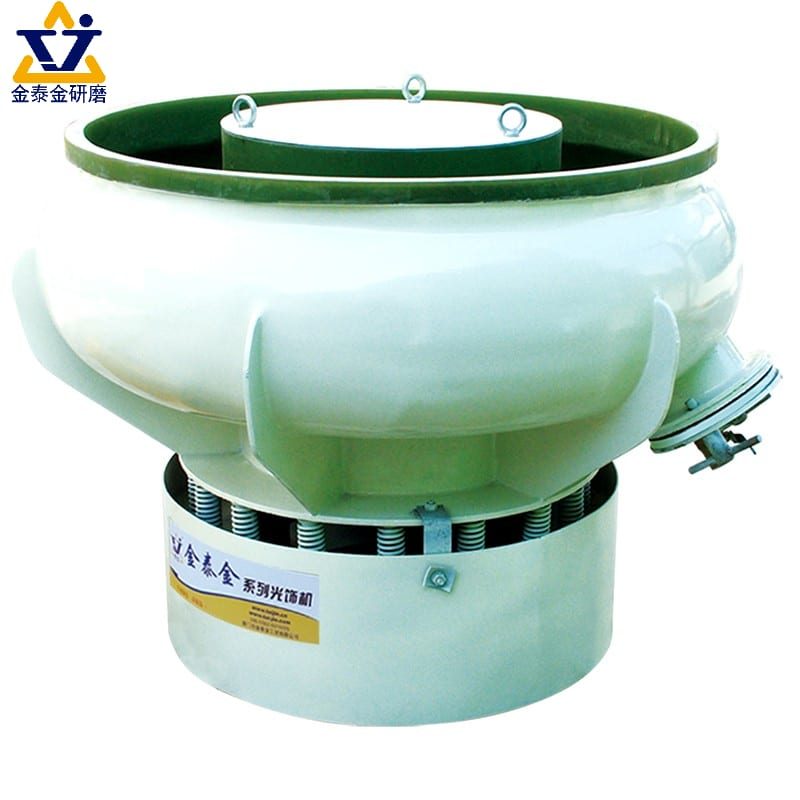
Polyurethane-Lined Vibratory Bowls for Continuous Thread Protection
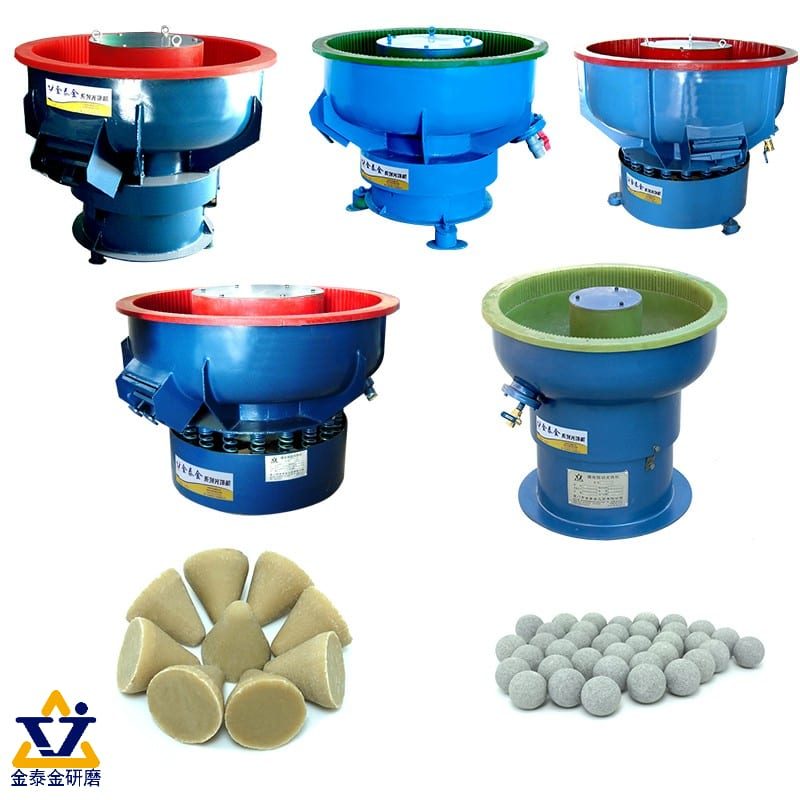
A polyurethane-lined vibratory grinder suspends bolts inside a continuous toroidal media stream, dramatically reducing heavy drop impacts compared to rotating drums. Continuous flow-through water and LC10 compound flush iron dust and stamping lube straight out of the bowl while built-in screen decks separate fasteners cleanly without manual shoveling.
Octagonal Rotary Barrels for Heavy Scale Stripping on Forged Bolts
When hot-forged alloy bolts carry thick heat-treat scale or heavy forging flash, an octagonal rotary barrel paired with MC8 descaling chemistry and dense ceramic media delivers strong cascading scrub pressure. Keep barrel speed moderate and charge volume cushioned so heavy bolt heads do not hammer adjacent threads.
Centrifugal Disc Finishers for Small Precision Screws and Studs
Compact electronics screws, surgical bone screws, and small precision studs run rapidly in a centrifugal disc finishing machine, provided minimum thread diameter stays safely above rotor-gap clearances.
Wide-Table OBD Magnetic Polishers for Fine Threads and Blind Bores
For delicate miniature stainless screws, hollow threaded sleeves, and cross-drilled lock-wire bolts where heavy ceramic could dull fine pitch crests, a magnetic tumbler drives fine 304 stainless pins into thread roots and cross-holes without altering outer pitch diameter.
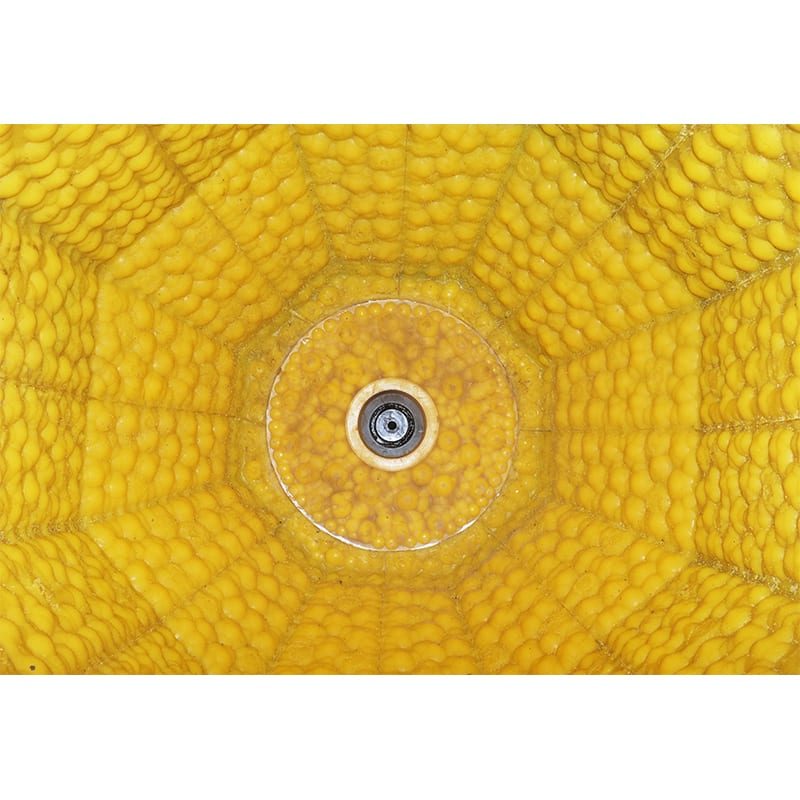
Selecting Tumbler Media for Polishing Steel Fasteners
Choosing tumbler media for polishing steel bolts requires balancing cutting speed against thread-crest safety and socket clearance.
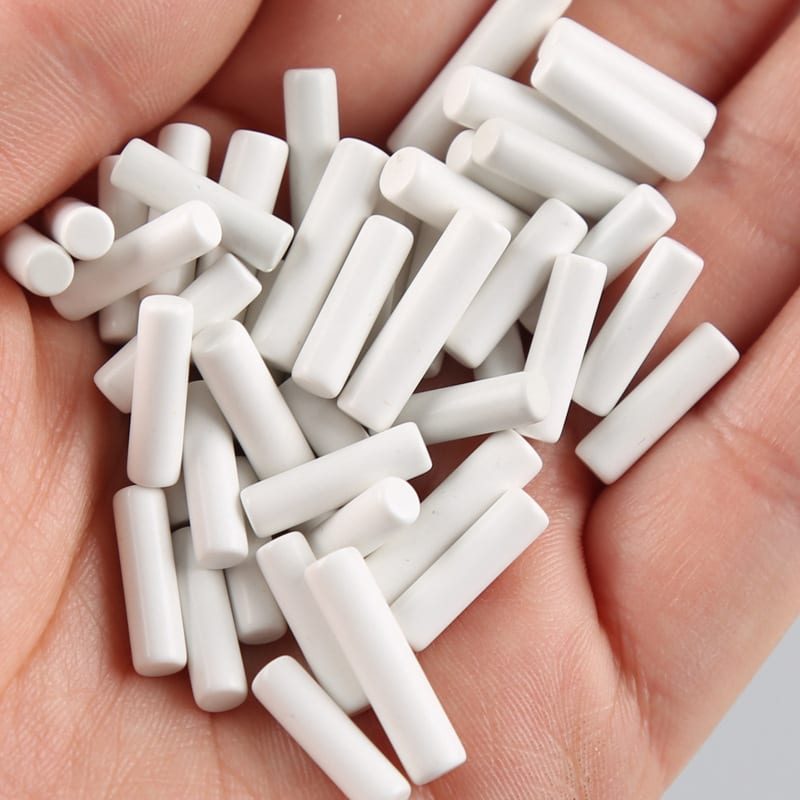
Preformed Ceramic Media (LC10 / MC8) for Cut-Down and Descaling
Raw stamped nuts, laser-cut washers, and CNC-turned bolts with heavy cutoff burrs require dense preformed ceramic media (angle-cut cylinders or triangles) paired with LC10 deburring compound—or MC8 when heat-treat scale is present. Angle-cut cylinders roll smoothly along thread flanks without sharp corners gouging pitch crests. Compare media shapes in our ceramic media guide and tumbler media matrix.
High-Alumina Porcelain Spheres for Thread-Safe Brightening
Once burrs and scale are removed, transferring rinsed fasteners into smooth high-alumina porcelain spheres with JTJ50 brightening compound compresses micro-peaks cleanly to a uniform commercial shine without aggressive stone cutting.
Stainless Steel Burnishing Balls and Ballcones for Zero-Loss Shine
For 304/316 stainless bolts and decorative chrome-look hardware, stainless steel burnishing media (balls and ballcones) lubricated with JTJ50 imparts a dense, bright, work-hardened luster with virtually zero dimensional pitch loss—provided the bowl is reinforced for steel-media weight and the media bed stays generous.
Sizing Media to Avoid Jamming Hex Sockets and Slotted Heads
Never load media whose minimum dimension matches the across-flats width of a hex socket or the slot width of a slotted screw. Size ceramic cylinders or steel balls comfortably larger than the largest socket opening so stones bridge cleanly across the top without dropping inside, saving operators from manual picking and protecting assembly drivers.
[DESIGN: Four-stage fastener finishing sequence: degrease/descale, wet ceramic cut, porcelain/steel brighten, and heated spin-dry]
Compound Control, Oil Removal, and Drying Fasteners Spot-Free
Fasteners arrive from cold-headers and screw machines coated in heavy sulfurized cutting oil or drawing grease—ignoring pre-cleaning ruins the best media charge.
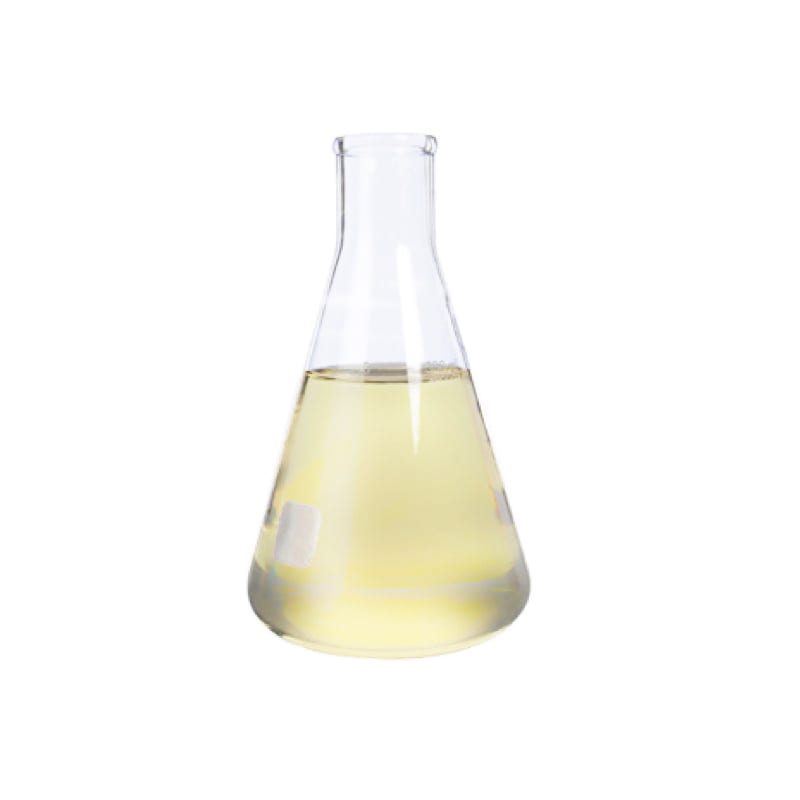
Why Heavy Cutting Oil Must Be Stripped Before Tumbling
Dumping oil-soaked bolts straight into a ceramic vibratory bowl coats every stone in sticky black grease, choking cut speed and staining bright stainless batches. Degrease heavily oiled fasteners in an aqueous wash before loading them into finishing media. Keeping cutting oil out of the ceramic bed also prevents thick oil-and-stone sludge from packing inside fine socket-head recesses during the cut stage.
Running MC8 Descaling vs. LC10 Deburring on Heat-Treated Bolts
Heat-treated Grade 8, 10.9, and 12.9 alloy steel bolts carry dark quench scale. Run a controlled MC8 descaling cycle with continuous clean flow-through water to strip dark oxide, then rinse and transition to LC10 or rust-inhibiting rinse chemistry. Avoid excessive static acid dwell on ultra-high-strength fasteners. Pairing mechanical ceramic contact with metered flow-through MC8 clears quench scale rapidly without requiring harsh static acid baths.
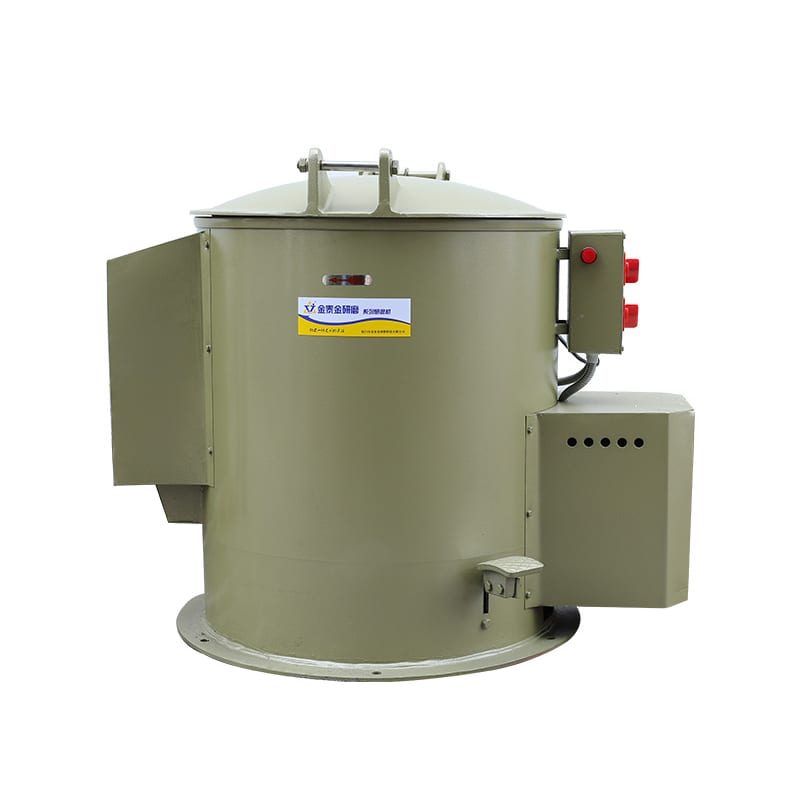
Heated Centrifugal Spin-Drying for Capillary Thread Drainage
Immediately after unloading and clean-water flushing (with rust inhibitor for carbon steel), transfer fasteners into a heated centrifugal spin dryer. High-speed spin force flings trapped water out of thread roots and hex sockets while heated air dries every surface cleanly within minutes. Never dump wet carbon steel bolts into deep solid-wall tote buckets where pooled water at the bottom starts orange rust overnight.
Warm Corncob Wiping for Decorative Stainless and Brass Screws
For exposed architectural stainless bolts or decorative brass screws where zero water spots are allowed, pass spin-dried parts briefly through warm corncob media inside a heated vibratory dryer. Keep carbon-steel cob charges strictly separated from stainless and brass charges. Using clean, dry cob granules eliminates hand towel-wiping labor and leaves every bolt head bright and spot-free.
Four Common Bolt Tumbling Failures and How to Diagnose Them
Failure Mode 1: Nuts Binding on Tumbled Bolt Threads
Thread gauges fail near the lead threads or mid-shank after tumbling.
Diagnostic rule: If lead threads show flattened bright spots, parts collided part-on-part or heavy steel/ceramic hit un-cushioned threads—raise media-to-part volume, switch from rotary barrel to cushioned vibratory bowl, or shorten coarse ceramic cut time.
Failure Mode 2: Ceramic Fragments Wedged Inside Hex Sockets
Operators find broken stone tips jammed tightly inside socket heads during packaging.
Diagnostic rule: If stones jam inside sockets, undersized worn media entered the bowl or initial media size matched socket width—screen out worn undersize fragments on a deck check and select media strictly larger than socket openings.
Failure Mode 3: Orange Flash Rust on Carbon Steel Threads Overnight
Bolts look clean coming off the screen deck, then develop rust specks in storage bins.
Diagnostic rule: If rust appears after unloading, rinse water lacked rust inhibitor or parts dried too slowly in bulk tubs—add a clean rust-inhibiting flush and immediate heated centrifugal spin-drying.
Failure Mode 4: Gray Smeared Film on Stainless Fasteners
Stainless bolts exit dull gray instead of bright silver.
Diagnostic rule: If fasteners exit coated in gray film, heavy machining oil fouled the bath or water flow-through was too slow—degrease incoming bolts beforehand and raise clean LC10 / JTJ50 flow-through rate.
| Symptom on Fastener | Root Cause | Immediate Fix |
|---|---|---|
| Binding lead threads | Part-on-part impact or low media ratio | Raise media volume; switch to vibratory bowl |
| Wedged stone in hex socket | Media size ≈ socket width / worn fines | Screen undersize media; size larger than socket |
| Flash rust in thread roots | Missing rust inhibitor / slow drying | Rust-inhibited flush + heated centrifugal spin-dry |
| Dull gray smeared bolts | Oily parts or low flow-through water | Pre-degrease parts; raise fresh water + compound flow |
[DESIGN: Troubleshooting matrix linking thread peening, socket jamming, flash rust, and gray film to media and drying fixes]
Separating Alloy Batches and Automating Separation
High-volume fastener plants run carbon steel, 304 stainless, 410 stainless, and brass hardware under one roof. Keeping batches organized prevents expensive corrosion claims.
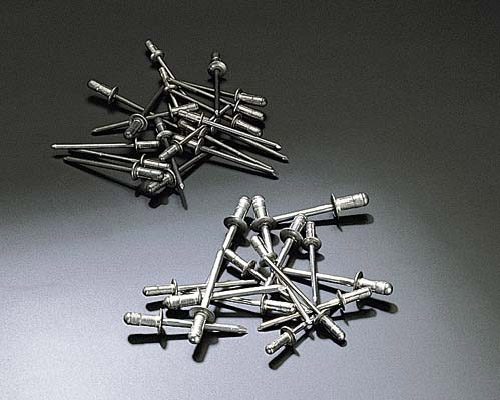
Never Mix Carbon Steel and Stainless Steel Fasteners in the Same Media
Even trace iron dust transferred from carbon steel bolts embeds into 304 or 316 stainless threads and causes brown rust spotting during humid ocean shipping. Dedicate separate media charges, screen decks, and centrifugal spin-dryer baskets to stainless versus carbon steel. Labeling storage hoppers and screen decks clearly by alloy prevents accidental cross-contamination during busy shift handovers.
Automated Vibratory Screen Decks for Fast Fastener Discharge
Discharging a vibratory bowl directly across an internal or external polyurethane-coated screen deck drops ceramic media back into circulation while conveying clean bolts straight into rinse baskets—eliminating manual sorting and protecting lead threads from shovel nicks. Adding a polyurethane liner on the discharge chute prevents heavy hex heads from striking bare steel hoppers as parts exit.
Checking High-Strength Fasteners Before Coating or Plating
Before sending tumbled alloy-steel bolts to zinc plating, black oxide, or Dacromet coating, inspect random samples under task lighting for clean descaled thread roots, zero lodged media tips, and complete oil removal. Checking a Go/No-Go ring gauge at the end of every batch confirms that thread pitch stayed completely intact throughout the tumbling cycle and verifies readiness for automated assembly lines.
Controlling Batch Load Volume and Media-to-Part Ratios
Fastener shops often try to squeeze maximum batch weight into a bolt tumbler to hit hourly quotas, only to find that overloaded bowls lose circulation speed and dent lead threads. Keeping a generous media bed around every bolt cushions heavy hex heads during toroidal roll, allowing higher-quality deburring in shorter total shift time than an overloaded chamber. Monitoring part-to-media spacing visually during the first few minutes of each run ensures smooth, cushion-rich rolling.
Separating Long Studs From Compact Nuts and Washers
Long threaded studs behave completely differently from short hex nuts inside a vibratory bowl. Short nuts tumble freely in circular bowls without tangling, whereas long studs can bridge across narrow channels or collide end-to-end. Run long studs in wider vibratory channels or divided troughs, and keep small flat washers out of gap-ring disc finishers where thin plates jam. Matching chamber channel width to fastener length prevents bent shanks and keeps thread pitch intact across busy multi-shift production runs.
Managing Settling Tanks for Fastener Scale and Iron Fines
Stripping heat-treat scale and rolling burrs off steel fasteners generates dense iron-oxide slurry. Routing vibratory bowl drains through a multi-baffle settling tank captures heavy metallic sludge before water reaches shop drains and keeps clarified rinse lines running clean across multi-shift fastener production. Scheduled tank cleanouts prevent fine metallic mud from backing up into recirculation pumps or staining freshly tumbled stainless fasteners across busy multi-shift production schedules.
Honest Capability Boundaries and Production Standards
What Mass Finishing Can and Cannot Do for Bolts and Fasteners
A bolt tumbler excels at stripping forging and heat-treat scale, removing cutoff and thread-rolling burrs, brightening stainless fasteners, and spin-drying threaded batches cleanly. However, mass finishing cannot re-cut damaged thread pitch, straighten bent bolts, or supply electroplating, zinc-flake coating, or heat-treating services. For precision engine components, see our superfinishing guide. Keeping dimensional machining, heat-treatment, and surface coating separated from mechanical tumbling avoids unrealistic process expectations.
Comparing Wet Ceramic Cut vs. Dry Stainless Brightening on Hardware
Many fastener distributors ask whether they can skip wet ceramic tumbling completely and run raw cold-headed bolts straight in dry organic media or bare steel balls. Un-deburred fasteners still carry sharp cutoff burrs and rolled thread-root slivers that dry organic media cannot remove and heavy steel balls simply fold over. Always run a proper wet ceramic or plastic cut stage first whenever burrs or forging flash are present, then transition cleanly into porcelain or stainless burnishing.
Extending Polyurethane Liner Life Under Heavy Bolt Heads
Sharp hex-bolt flanges and coarse ceramic triangles abrade thin chamber liners rapidly when parts run under-lubricated. Maintaining steady LC10 compound flow-through builds a protective lubricating film between metal, ceramic, and polyurethane walls—keeping cut speed high while extending bowl and barrel liner life across long production runs.
What We Supply and What We Do Not Supply
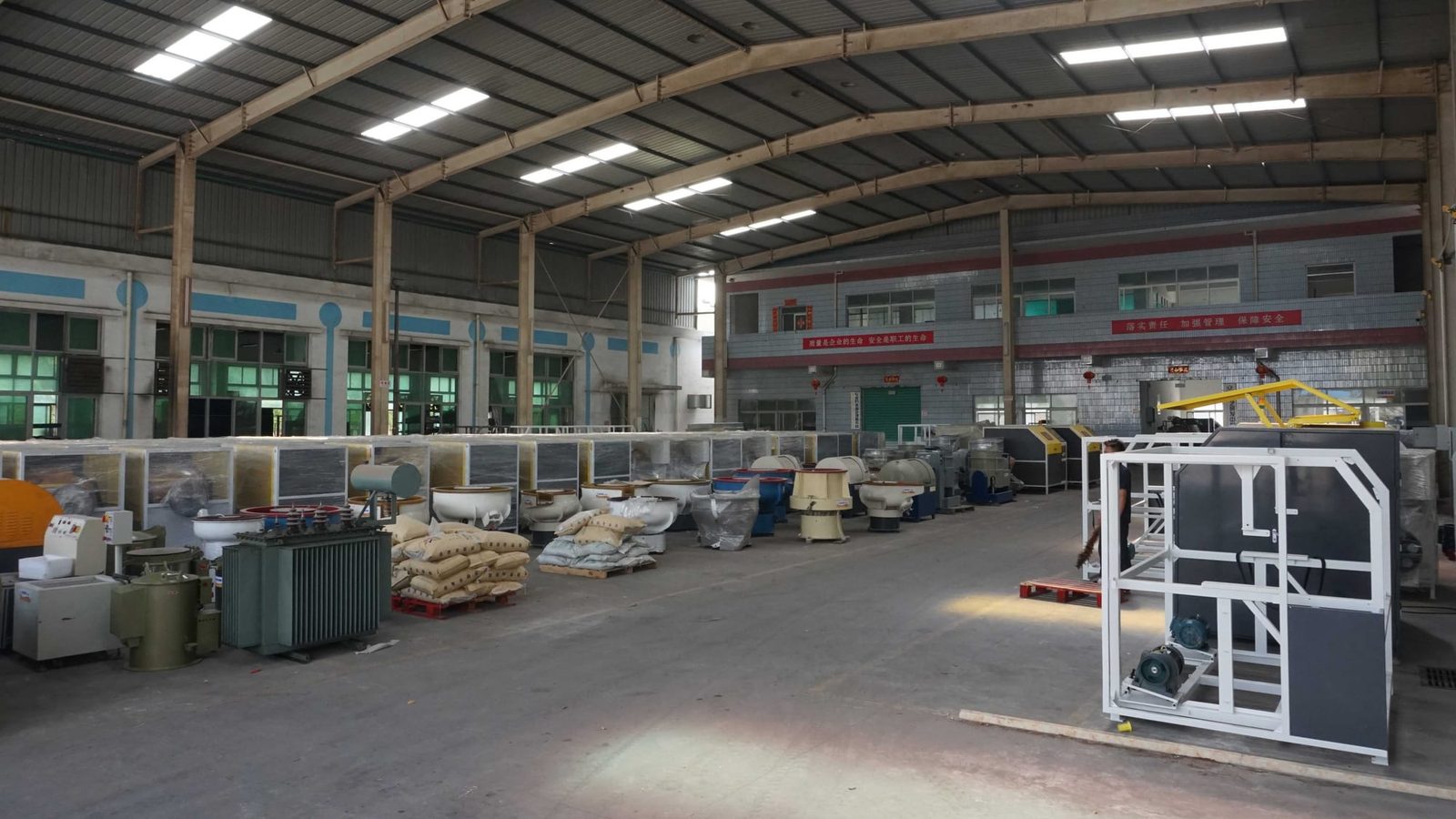
At Xiamen Jin Tai Jin Grinding Technology Co.,Ltd. (brand: Jings Polish), our workshop roots date back to 1996 and our company was formally established in 2009, delivering over 200,000+ sets of grinding and polishing solutions worldwide. Across our catalogue, we manufacture 21 machine platforms backed by 24 granted Chinese IP rights (1 invention patent, 15 utility model patents, and 8 design patents), under ISO 9001 certification 00726Q01571R001 (valid 2026-06-03 to 2029-06-02) and CE certifications M.2023.206.C88121 (Vertical, 8 models) and M.2023.206.C88120 (Horizontal, 13 models), valid until 2028-07-24.
To keep boundaries clear: we supply industrial mass finishing machines (vibratory bowls, octagonal rotary barrels, centrifugal disc finishers, wide-table OBD magnetic tumblers, heated centrifugal spin dryers), tumbling media (preformed ceramic, high-alumina porcelain, resin-bonded plastic, stainless steel balls/pins, organic media), and liquid compounds (MC8, LC10, JTJ50, JTS5); we do NOT supply thread-rolling dies, zinc-plating/black-oxide lines, heat-treat furnaces, or contract job-shop fastener tumbling services.
Honest Lead Times and Engineering Assessment
Standard machines ship in 25–35 days, while custom automated fastener lines require 45–60 days. Because thread pitch, socket-head width, alloy grade, and hourly weight dictate media sizing and chamber torque, we do not promise free sample trials by mail or guarantee cycle times before inspecting your workpiece—send clear photos of your bolts showing head sockets, thread pitch, and incoming scale/burrs via our custom polishing solution page for an engineering assessment. Clear photos next to a ruler let our engineering team select non-lodging media and size bowl capacity accurately on the first reply.
Frequently Asked Questions
Can tumbling bolts in ceramic media damage the threads?
Only if parts collide due to a low media-to-part ratio, oversized drop impacts in an under-filled rotary barrel, or overly long cycles in coarse triangles. Using a generous media bed inside a polyurethane-lined vibratory bowl with angle-cut ceramic or porcelain protects thread pitch cleanly.
What is the best tumbler media for polishing steel bolts?
For deburring and scale removal on steel bolts, use preformed ceramic angle-cut cylinders or triangles with LC10 or MC8. For final brightening on stainless bolts, follow with high-alumina porcelain spheres or stainless steel burnishing balls with JTJ50.
How do I keep media from getting stuck inside Allen hex sockets?
Select media shapes comfortably larger than the hex socket's across-flats opening, and screen out worn undersize stone fragments on a regular maintenance schedule.
How do you stop carbon steel bolts from rusting after wet tumbling?
Flush bolts immediately in a clean rust-inhibiting rinse upon discharge and spin-dry them right away in a heated centrifugal spin dryer. Never let wet carbon steel bolts air-dry slowly in bulk baskets.
Should I use a vibratory bowl or a rotary barrel for heavy forged bolts?
Use a vibratory bowl for continuous flow-through rinsing, automated separation, and thread-safe cushioning. Use an octagonal rotary barrel when stripping stubborn heavy forging scale with MC8 chemistry, keeping fill ratio cushioned.
What details should I share before requesting a quote for a fastener tumbling line?
Send clear photos of your bolts showing head sockets and threads, along with alloy grade, thread size, incoming scale or oil condition, and hourly batch weight. Our engineers can size the right machine, non-lodging media, and spin dryer from photos and specs.
[DESIGN: Annotated buyer enquiry checklist showing bolt photos, socket widths, alloy grade, and hourly batch weight]
 +86-592-2381506


 IPv6 network supported
