
Rotary Barrel and Metal Parts Tumbler Selection: Sizing From Model RT25 Benchtop Units to Production Barrels
Buyers researching a model rt25 rotary tumbler, metal parts tumbler, or industrial part tumblers often run into a confusing gap between compact benchtop drums and factory-floor octagonal barrels. On paper, both rotate a lined drum filled with media, water, and parts. On the shop floor, choosing a light benchtop barrel for production metal deburring leads to stalled motors, worn-out rubber liners, and severe bottlenecks.
The central thesis of this guide is straightforward: the real difference between a compact RT25-class rotary tumbler and an industrial octagonal metal parts tumbler is not drum shape alone—it is cascade geometry, liner durability, torque under dense ceramic/steel loads, and repeatable shift-level throughput. Choosing a light benchtop barrel for heavy production hardware wastes operator labor and wears out thin sleeves rapidly. For a broader look at chamber families, see our tumbler polishing machine guide and vibratory grinder guide.
Benchtop RT25-Class Tumblers vs. Industrial Octagonal Barrels
Understanding where a small round drum stops and an industrial octagonal barrel begins saves shops from buying under-sized equipment twice.

Round Benchtop Drums vs. Eight-Sided Octagonal Cascade
Small benchtop units—such as an RT25-class round drum—rely on smooth cylindrical walls. When wet media lubricates a smooth round liner, heavy metal parts often slide gently along the bottom without lifting and tumbling cleanly. An industrial octagonal rotary barrel uses eight flat interior facets that lift the charge steadily and cascade parts smoothly down the active slope every revolution.
Torque Reserve Under Ceramic and Stainless Steel Media
Benchtop tumblers are rated for light jewelry, shell casings, or occasional hobby stone loads. Loading a small belt-driven benchtop drum with dense preformed ceramic or stainless steel burnishing media overloads small bearings and slips drive belts quickly. Industrial octagonal barrels use geared heavy-duty drives built to turn dense wet loads continuously across full shifts.
Liner Thickness and Chemical Resistance
Thin rubber sleeves in light-duty tumblers tear and swell when exposed to industrial deburring compounds (LC10) or derusting chemistry (MC8). Production metal parts tumbler drums use thick, cast polyurethane or heavy industrial rubber linings engineered to withstand sharp ceramic triangles and continuous chemical contact.
| Selection Factor | Benchtop RT25-Class Round Tumbler | Industrial Octagonal Rotary Barrel |
|---|---|---|
| Drum Geometry | Smooth round cylinder | Eight-sided octagonal lift-and-cascade chamber |
| Intended Duty Cycle | Light shop trials, small jewelry, low batch volume | Multi-shift production deburring & burnishing |
| Media Load Handling | Light organic, brass, or small plastic/ceramic loads | Full dense ceramic, porcelain, and steel media loads |
| Liner & Drive | Thin rubber sleeve, light belt/motor | Heavy polyurethane/rubber lining, geared industrial drive |
| Separation Workflow | Manual dumping into hand sieves | Batch chute discharge onto vibratory screen deck |
[DESIGN: Four-panel comparison showing round drum sliding vs. octagonal cascade, benchtop belt vs. industrial geared drive]
Sizing Your Metal Parts Tumbler: Volume, Fill Level, and Media Ratio
Even an industrial metal parts tumbler fails if operators pack too many parts into the drum or overfill past the cascade zone.
Why Overfilling a Rotary Barrel Kills Tumbling Action
A rotary barrel needs open headroom above the media charge so lifted parts and stones can tumble down the active slope. Filling a drum almost to the lid traps the entire charge into a solid rotating plug—parts ride in a circle with zero relative motion between media and metal, wasting hours of electricity with zero deburring. Leaving proper cascade headroom ensures every revolution turns the entire media bed smoothly from top to bottom.
Balancing Media-to-Part Volume to Prevent Edge Nicks
Unlike a vibratory bowl where parts stay suspended in a continuous toroidal current, rotary barrels roll parts down an inclined cascade. If the media-to-part ratio is too low, heavy steel brackets or brass castings collide directly during the cascade, nicking threads and bruising corners. Keep a generous bed of tumbler media cushioning every workpiece.
Accounting for Bulk Density: Organic vs. Plastic vs. Ceramic vs. Steel
Drum capacity ratings change dramatically depending on what you load inside. Lightweight corncob media and walnut shell fill a drum with very little motor load; resin-bonded plastic cones weigh more; preformed ceramic is heavier still; and stainless steel balls weigh roughly three times as much as ceramic. Always size drum capacity by both working volume and maximum allowable load weight.
Single-Drum vs. Double-Layer and Double-Deck Rotary Formats
When shops need to run two distinct alloys—or separate coarse wet cutting from dry organic brightening—a double-layer or double-deck rotary barrel lets operators run independent charges simultaneously without cross-contaminating media or compounds. Running dedicated drums for brass versus stainless steel or dry acrylic versus wet carbon steel eliminates lengthy drum washdowns between batches and protects sensitive finishes from embedded metal dust.
Calculating Realistic Daily Throughput From Batch Cycle Times
Unlike continuous-flow vibratory bowls, rotary barrels process one closed batch at a time—meaning loading, water dosing, tumbling, unloading, rinsing, and spin-drying all count toward real shift capacity. When sizing a metal parts tumbler, include operator unload and screen-separation time in your hourly throughput calculation rather than dividing shift hours by tumbling time alone. Many growing shops start with one octagonal barrel and later add a vibratory separator and heated centrifugal spin dryer so barrel turnaround stays fast.
Checking Floor Footprint, Drain Access, and Hoist Clearance
Industrial octagonal rotary barrels require clear front access for batch discharge chutes, wheeled media tubs, and floor drains—or settling tanks—directly beneath the rinse zone. Before ordering a multi-barrel lineup, verify aisle width for pallet jacks or overhead hoist hooks if heavy steel-media loads will be handled during media changes.
Extending Polyurethane Drum Liner Life
Thick cast-polyurethane linings last far longer than thin rubber sleeves, yet sharp stamped edges and dry ceramic runs still accelerate wear. Keep wet cutting charges properly lubricated with LC10 compound, never run dry ceramic media in a wet-cut barrel, and inspect drum ribs monthly so worn liners are replaced before sharp steel parts reach the outer steel shell.

Rotary Barrel vs. Vibratory Bowl: When Each Format Wins
Many buyers comparing part tumblers assume vibratory bowls always beat rotary barrels, or vice versa. Each platform has clear mechanical strengths.

When an Octagonal Rotary Barrel Is Better
Octagonal rotary barrels excel at aggressive wet scale stripping on thick forged steel, quiet low-vibration operation, heavy stainless steel ball burnishing with high peening pressure, and long-cycle dry brightening on acrylic polish and eyewear frames. They also seal cleanly during dry walnut or cob polishing to keep shop dust contained.
When a Vibratory Bowl Is Better
A vibratory grinder wins whenever you need continuous in-process visual inspection without stopping the machine, automated flow-through compound rinsing, gentle treatment of fragile or large flat parts that would drop-dent in a barrel, or high-throughput integration with built-in deck separators.
When You Need Both in a Two-Stage Cell
High-mix job shops often pair an octagonal rotary barrel (for quiet, heavy cut-down or bright steel burnishing) with a heated vibratory dryer or centrifugal spin dryer downstream, capturing the strengths of both formats without over-investing in oversized disc units.
| Application Need | Better Chamber Choice | Why |
|---|---|---|
| Heavy scale stripping on steel forgings | Octagonal rotary barrel | High cascading pressure + sealed chemical retention |
| In-process inspection & continuous rinse | Vibratory bowl | Open top + continuous flow-through drain |
| Fragile thin stampings or large plates | Divided vibratory trough / bowl | Minimal drop impact + optional cell dividers |
| Quiet dry walnut/cob gloss on plastics | Double-deck dry rotary barrel | Cool sliding action + dust containment |
[DESIGN: Four-stage batch tumbling workflow from loading and chemistry dosing to screening and heated spin-drying]
Compound Dosing, Gas Venting, and Separation in Rotary Barrels
Sealed wet rotary barrels operate differently from open-top vibratory bowls—ignoring venting and separation creates real safety and quality hazards.

Why Sealed Wet Barrels Build Gas Pressure
Running acidic derusting chemistry (MC8) or reactive aluminum/zinc compounds inside a tightly sealed rotary drum generates hydrogen or gas pressure as metal oxides dissolve. Always inspect drum gaskets, avoid over-acidic mixes on reactive alloys, and vent or check sealed drums safely before unlatching lids.
Water Level Control Inside the Drum
Too little water turns worn ceramic fines into thick mud that cushions stones and stops cutting; too much water floods the barrel, floats light plastic parts out of the media bed, and dilutes LC10 or JTJ50 compound. Keep water level just covering the settled media charge for wet cutting, or slightly higher with thick foam compound during bright burnishing. Maintaining clean, consistent water dosing keeps stone surfaces sharp and prevents dull gray slurry from coating parts.
Fast Unloading With External Vibratory Separators
Dumping a heavy industrial rotary barrel into a hand sieve slows operators down and risks back strain or part denting. Discharge barrel loads smoothly onto a dedicated vibratory separator so media drops cleanly into a return tub while parts move directly to rinsing.
Immediate Rinsing and Heated Centrifugal Spin-Drying
Because wet rotary barrels run in a closed charge rather than continuous flow-through water, parts emerge coated in spent slurry. Flush parts immediately in clean water and dry them inside a heated centrifugal spin dryer to prevent water spots, brass tarnish, or carbon steel flash rust.
Material-Specific Rotary Barrel Setups: Steel, Brass, Aluminum, and Plastics
Different workpiece materials require distinct cascade speeds, media densities, and compound rules inside an industrial metal parts tumbler.

Carbon Steel and Stainless Steel Hardware
Heavy stainless fasteners, forged brackets, and carbon steel stampings handle aggressive octagonal tumbling in preformed ceramic triangles with LC10 deburring compound (or MC8 if mill scale is present). Always keep water level just over the settled media bed so steel parts stay cushioned while iron fines suspend cleanly.
Brass, Copper, and Non-Ferrous Fittings
Brass and copper hardware bruise easily if tumbled dry or under-cushioned in heavy ceramic. Use resin-bonded plastic cones with neutral compound for gentle cut-down, then transition rinsed parts to smooth porcelain spheres or stainless steel burnishing media with JTS5 for bright luster, followed immediately by centrifugal spin-drying and warm corncob media wiping.
Aluminum Stampings and Die-Castings
Soft aluminum alloys require generous media-to-part cushioning and neutral aluminum-safe chemistry inside a rotary barrel. Never seal reactive aluminum inside an unvented barrel with strong alkaline or acidic cleaners, and keep barrel speed slow enough that flat plates slide rather than slap across the drum.
Acrylic, Acetate, and Dry Organic Tumbling
For acrylic blocks, resin buttons, and cellulose acetate frames, dry double-deck rotary barrels charged with walnut shell, hardwood pegs, or corncob media deliver cool, streak-free optical gloss without the thermal crazing caused by high-speed buffing wheels. Keep dry organic barrels strictly isolated from wet metal charges.

Four Common Rotary Barrel Failures and How to Diagnose Them
Failure Mode 1: Zero Deburring After Full Cycle
Parts roll for hours yet edges remain sharp and rough.
Diagnostic rule: If burrs remain sharp after a full barrel run, the drum is overfilled past the cascade zone, water is too thick with mud, or the media lacks cutting grit—lower total fill level to leave open tumble space and refresh clean LC10 water.
Failure Mode 2: Peened Threads and Bruised Part Corners
Brass fittings or machined steel parts emerge with rolled edges and flattened threads.
Diagnostic rule: If parts show impact dings along exposed corners, the media-to-part ratio is too low or barrel speed is throwing parts instead of cascading them—increase media cushion, reduce drum speed, or switch to lower-density plastic cones.
Failure Mode 3: Premature Liner Wear and Flat Spots
The barrel lining tears along the ribs or thins out rapidly at one end.
Diagnostic rule: If liners tear early, sharp heavy stampings are running with insufficient media bed or oversized coarse ceramic—increase media volume so parts ride inside the stone bed rather than scraping bare liner walls.
Failure Mode 4: Cloudy Residue Dried Onto Finished Parts
Parts look clean wet, then dry with chalky gray streaks.
Diagnostic rule: If chalky streaks appear after unloading, closed-barrel slurry dried on the surface before rinsing—flush batches immediately upon discharge and spin-dry promptly.
| Symptom in Barrel | Root Cause | Immediate Fix |
|---|---|---|
| Zero edge deburring | Overfilled drum / no cascade space | Reduce charge to leave headroom; refresh water |
| Bruised corners & threads | Low media ratio or high RPM | Add media cushion, slow drum, or use plastic cones |
| Torn drum liner | Heavy parts scraping bare walls | Increase media-to-part volume; inspect liner |
| Chalky dried streaks | Closed-barrel slurry not flushed fast | Immediate clean rinse + heated spin-dry |
[DESIGN: Troubleshooting decision matrix linking zero cut, edge bruising, liner wear, and streaks to fill level and rinsing fixes]
Honest Capability Boundaries and Production Standards
What Rotary Barrels Can and Cannot Replace
Industrial part tumblers and octagonal rotary barrels deliver rugged, economical batch deburring, scale removal, and dry organic brightening across hardware, fasteners, castings, and plastics. However, rotary barrels cannot maintain tight flat-lapped tolerances on precision valve seats, cannot prevent long thin shafts from tangling without fixturing, and cannot match the cycle speed of centrifugal disc or drag finishers on high-volume precision parts. When zero part-on-part contact is required, upgrade to drag finishing or a divided trough.
What We Supply and What We Do Not Supply
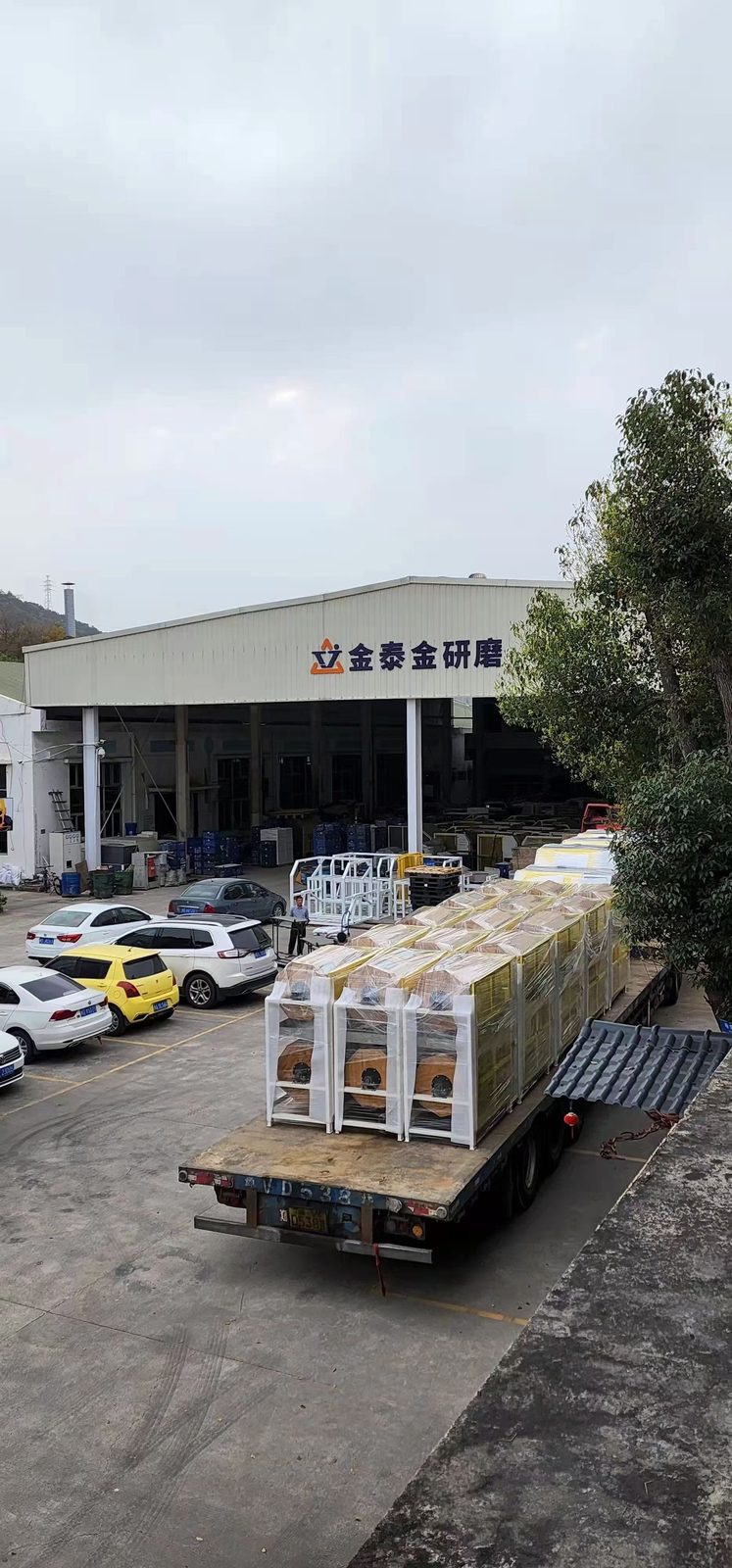
At Xiamen Jin Tai Jin Grinding Technology Co.,Ltd. (brand: Jings Polish), our workshop roots date back to 1996 and our company was formally established in 2009, delivering over 200,000+ sets of grinding and polishing solutions worldwide. Across our catalogue, we manufacture 21 machine platforms backed by 24 granted Chinese IP rights (1 invention patent, 15 utility model patents, and 8 design patents), under ISO 9001 certification 00726Q01571R001 (valid 2026-06-03 to 2029-06-02) and CE certifications M.2023.206.C88121 (Vertical, 8 models) and M.2023.206.C88120 (Horizontal, 13 models), valid until 2028-07-24.
To keep boundaries clear: we supply industrial mass finishing machines (octagonal rotary barrels, double-layer and double-deck barrels, vibratory bowls, divided troughs, centrifugal disc and drag finishers, heated spin dryers), tumbling media (ceramic, resin-bonded plastic, high-alumina porcelain, stainless media, walnut shell, wood, and corncob), and liquid compounds; we do NOT supply hobby benchtop RT25 consumer kits, sandblasting cabinets, handheld grinders, or contract job-shop tumbling services. Separating industrial production machinery from hobby benchtop units upfront helps buyers invest once in equipment sized for real shift durability.
Upgrading From a Benchtop Drum to an Industrial Batch Cell
Many growing workshops start with a small benchtop tumbler for prototype batches and quickly hit a wall when customer orders scale up. Rather than buying three or four undersized round drums that multiply operator labor, transitioning directly to one industrial octagonal rotary barrel paired with a vibratory separator and heated centrifugal spin dryer cuts floor space, reduces manual media sifting, and keeps surface consistency uniform from prototype approval into full production. Investing in industrial barrel capacity early also gives your shop headroom to handle heavier ceramic and stainless steel media loads without burning out light motors or tearing thin sleeves.

Honest Lead Times and Engineering Review
Standard machines ship in 25–35 days, while custom barrel layouts and multi-stage lines require 45–60 days. Because part weight, alloy hardness, and daily batch volume determine whether an octagonal rotary barrel or a vibratory bowl fits best, we do not promise free sample trials by mail or guarantee cycle times before inspecting your workpiece—send clear photos of your parts, dimensions, and daily throughput via our custom polishing solution page for an engineering assessment. Sharing clear photos of burrs, threads, and internal bores lets our engineering team size drum capacity and media geometry accurately on the first reply.
Frequently Asked Questions
Is a benchtop model RT25 rotary tumbler enough for commercial metal parts production?
A compact RT25-class round drum is suitable only for very small hobby batches, light brass casings, or occasional lab tests. Commercial metal deburring with dense ceramic or stainless steel media requires an industrial octagonal rotary barrel or vibratory bowl with heavy polyurethane lining and geared drive torque.
Why is an octagonal rotary barrel better than a round drum for metal parts?
Eight flat interior sides lift parts and media cleanly into a steady rolling cascade every revolution, whereas smooth round drums allow heavy wet metal parts to slide along the bottom without tumbling effectively.
How full should I load a rotary barrel tumbler?
Load media and parts together only partway up the drum so generous open headroom remains above the charge for tumbling cascade. Overfilling a barrel locks the load into a solid plug and stops deburring action.
Can I run stainless steel burnishing balls in an industrial rotary barrel?
Yes, provided the barrel drive motor, bearings, and polyurethane lining are rated for heavy steel-media loads and you use proper burnishing compound (JTJ50 or JTS5) with clean post-cycle rinsing.
When should I choose a vibratory bowl instead of a rotary barrel?
Choose a vibratory bowl when you need continuous in-process inspection, automated flow-through compound rinsing, built-in screen separation, or gentler handling for fragile parts that would dent in a barrel cascade.
What details should I share before requesting a quote for a metal parts tumbler?
Send clear photos of your parts showing burrs, holes, and edges, along with part weight, alloy type, and target hourly or daily batch volume. Our engineers can size the right barrel or vibratory chamber from photos and drawings.
[DESIGN: Annotated buyer enquiry checklist showing part photos, dimensions, alloy grade, and daily batch target]
 +86-592-2381506


 IPv6 network supported
