
`Tumbler Media Ratio` Guide: Setting Media-to-Part Volume to Eliminate Impingement and Speed Up Deburring

Production supervisors trying to boost daily shift output often make the exact same costly mistake: packing extra workpieces into a circular vibratory bowl or rotary barrel without increasing media volume proportionally. Instead of doubling throughput, starving the tumbler media ratio strips away the protective cushion separating heavy metal parts—causing crescent collision dings on precision chamfers, uneven edge rounding, and stalled mass turnover.
The central thesis of this guide is straightforward: maintaining a disciplined tumbler media ratio matched to part weight, fragility, and machine platform (ZL bowls, ZXL divided troughs, LLB50 discs, or LLF120 barrels) keeps every component suspended inside a continuous rolling media cushion—preventing part-on-part impingement, accelerating burr shear, and protecting polyurethane bowl liners across shifts.
In this engineering guide, you will learn how to calibrate media-to-part cushion depth for heavy steel versus delicate aluminum, adjust ratios across batch vs. continuous lines, and spot under-filled media symptoms early before scrap piles grow.
Why Tumbler Media Ratio Controls Both Surface Quality and Cycle Speed

The Physics of Cushion Separation Inside Rolling Mass
Inside a vibrating ZL circular bowl or spinning LLF120 centrifugal barrel, workpieces do not finish evenly by rubbing against one another; they finish when surrounding ceramic stones, plastic cones, or burnishing balls cascade continuously across every external edge. A healthy tumbler media ratio ensures multiple layers of media occupy the space between neighboring parts at every flip—turning violent metal-on-metal collisions into controlled sliding shear.
Why Over-Packing Parts Actually Slows Down Deburring
When operators overload parts relative to media volume, heavy metal components sink toward the bottom curve or ride sluggishly on top of an under-cushioned bed. Mass turnover slows down, compound-LC10 lubrication drains unevenly, and parts spend more time bruising neighbors than rubbing against active abrasive grit—forcing longer cycles just to chase leftover burrs.
Distinguishing Media-to-Part Ratio From Total Machine Fill Height
Both metrics matter together: total fill height (keeping media plus parts at the bowl's working level) drives healthy toroidal rolling energy, while tumbler media ratio (the proportion of media volume to part volume inside that working charge) controls collision spacing. Dropping total fill height cuts kinetic energy; crowding parts into a fixed fill height kills cushioning.
Honest Machine Limits: When Even Generous Ratios Need ZXL Divided Troughs
No tumbler media ratio can stop long extruded aluminum rails, forged shafts, or thin wide brackets from clashing end-to-end inside an open circular bowl. Whenever part length risks tangling or end-to-end collision, move out of open circular tubs into ZXL or L1300–L1800 divided linear troughs fitted with lane dividers. Review our divided trough vibratory finisher guide.
Matching Cushion Volume to Part Alloy, Weight, and Fragility
Tough Ferrous Hardware & Fasteners: Compact Working Ratios
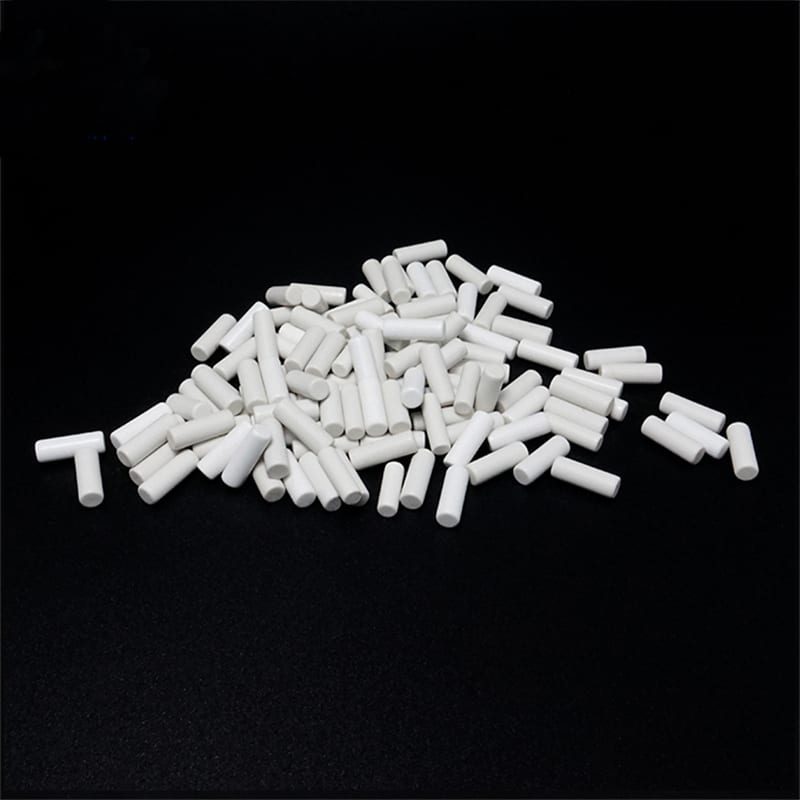
Compact carbon-steel stampings, cold-headed bolts, and small hardened brackets tolerate tighter tumbler media ratio packing because parts are light, tough, and small enough to roll smoothly inside dense high-frequency ceramic beds without bruising delicate mirror faces. See our bolt and fastener tumbling guide and ceramic tumbler media guide.
Precision CNC Manifolds & Heavy Castings: Generous Cushion Ratios
Heavy CNC-machined stainless valve blocks, forged steel arms, and multi-port hydraulic manifolds carry high momentum on every bowl cascade. Always run generous media cushion ratios—giving heavy parts ample surrounding high-frequency ceramic or angle-cut cylinders so sharp machined chamfers never nick neighbors. Explore our angle-cut ceramic cylinders guide.
Soft 6061 Aluminum, Brass, and Zinc: High-Cushion Plastic & High-Alumina
Soft non-ferrous alloys bruise immediately when neighboring parts kiss inside a bowl. Use generous tumbler media ratio cushions of lightweight resin-bonded plastic cones during Stage 1 cutting (LC10) and buoyant iron-free high-alumina spheres during Stage 2 burnishing (HM3/JTJ50). Review our synthetic plastic tumbling media guide and porcelain ball burnishing media guide.
Heavy 304 Stainless Ball Burnishing: Preventing Crescent Peen Marks
Because 304 stainless steel balls weigh nearly three times as much as ceramic media, starving the ball-to-part cushion lets heavy cutlery handles or valve bonnets slam together violently. Always maintain generous stainless ball volume paired with lubricating JTJ20/JTJ60 flow. Read our steel shot tumbling media guide.
| Part Family & Alloy | Impingement Sensitivity | Recommended Cushion Strategy | Preferred Media Type | Compatible SurfacePolish Machine |
|---|---|---|---|---|
| Small stamped steel & fasteners | Low (robust edges) | Compact production batch ratio | High-frequency ceramic / JTS5 |
ZL circular bowl / 35A/70A dryer |
| Heavy CNC steel & stainless valves | Moderate-high (machined chamfers) | Generous protective media cushion | Angle-cut ceramic / 304 balls |
ZL bowl / LLF120 centrifugal barrel |
6061 aluminum & brass castings |
High (soft chamfer bruising) | High-cushion generous separation | Resin plastic cones + high-alumina |
ZL / LLB50 disc / ZXL trough |
| Long extrusions, shafts & rods | Very high (end-to-end clashing) | Isolated lane dividers + full bed | Ceramic or plastic + LC10 |
ZXL / L1300–L1800 divided trough |
| Eyewear frames & molded acrylic | Very high (optical surface haze) | Ample dry barrel media cushion | Conditioned hardwood pegs / walnut |
Sealed octagonal dry rotary barrel |
Calibrating Ratios Across ZL Bowls, LLB50/LLF120 Centrifugals, and Barrels

Tuning Motor Counterweight Lead Angles Alongside Batch Load
Changing tumbler media ratio changes total load inertia inside a ZL circular bowl. Pair healthy media bed depth with properly tuned motor counterweight lead angles so the rolling cascade turns smoothly without throwing heavy parts airborne onto neighboring workpieces. See our vibratory motor counterweight tuning guide.
Batch vs. Continuous Inline Flow-Through Load Discipline
In continuous inline vibratory troughs, part feed rate at the entry chute directly dictates tumbler media ratio inside the channel! Surge-feeding a bucket of parts all at once creates an un-cushioned traffic jam, whereas metered conveyor feeding keeps spacing uniform from inlet to separator screen. Review our inline vibratory deburring system guide and batch vs continuous mass finishing guide.
High-Energy LLB50 Discs and LLF120 Planetary Centrifugal Barrels
Because LLB50 toroidal discs and LLF120 planetary barrels multiply grinding pressure sharply, under-filling media or over-packing parts magnifies collision dings instantly. Always measure both media volume and part count accurately before sealing planetary barrels. Explore our centrifugal barrel finishing machine guide and centrifugal disc finishing machine guide.
Sealed Dry Octagonal Barrels for Walnut Shell and Hardwood Pegs
Inside sealed octagonal dry barrels running walnut shell (8#-80#) or hardwood pegs, keeping ample lightweight organic media around eyewear frames or brass hardware cushions delicate hinges while preventing excessive barrel friction heat. See our walnut media tumbling guide and hardwood peg polishing media guide.
Liquid Chemistry (LC10, MC8, HM3, JTJ), Screening, and Liner Life

Why Single-Pass Wet Chemistry Supports Cushioning Film Strength
Even with an ideal tumbler media ratio, starving compound-LC10 or HM3 water flow strips away the hydraulic surfactant film that helps stones glide smoothly around parts. Keep continuous single-pass clean water and metered compound flowing steadily into a multi-baffle settling tank after upstream alkaline pre-degreasing.
How Media Wear Silently Erodes Your Tumbler Media Ratio Across Shifts
Every shift of aggressive ceramic or synthetic plastic cutting wears stones slightly smaller—meaning a bowl that started Monday morning at an ideal cushion ratio slowly loses media volume by Thursday while operators keep loading the exact same number of parts! Screen undersized chips weekly across your vibratory separator screen and top up fresh media daily to the working fill gauge.

Protecting Polyurethane Bowl Liners From Under-Filled Abrasion
Running a ZL bowl low on media forces workpieces and remaining stones to bounce harshly against polyurethane bottom ribs, accelerating liner grooving and risking bare-steel contact. Inspect liner ribs weekly and review our polyurethane bowl liner replacement guide.
Clean Separator Rinsing and Heated 35A/70A Spin-Drying
Maintain balanced batch sizes through your vibratory separator screen and clean-water spray bar into heated 35, 35A, 70, or 70A centrifugal spin-dryers so parts dry uniformly without clumping or flash rust. See our centrifugal dryer guide.
Troubleshooting Tumbler Media Ratio Failures on the Shop Floor
| Ratio / Load Symptom | Likely Root Cause | Immediate Correction | Preventive Standard |
|---|---|---|---|
| Crescent dings & bruised chamfers | Too many parts for media bed volume | Cut part count per batch; top up fresh media | Mark batch-count gauge beside each bowl |
| Parts sinking & stalling at bowl bottom | Heavy parts + low total media fill height | Raise media fill line; tune counterweight angle | Audit working fill line at every shift start |
| Sudden dings in inline continuous trough | Un-metered bucket surge at inlet chute | Install paced feeder conveyor at entry | Calibrate continuous feed rate to channel speed |
| End-to-end bending on long shafts/rails | Long parts tumbling in open circular bowl | Move batch to ZXL / L1300–L1800 trough |
Route long profiles strictly to divided troughs |
| Cycle times lengthening by week's end | Unreplenished media wear shrinking cushion | Screen worn chips; top up to working fill line | Weekly screening + daily media top-up log |
Standardizing Visual Fill Gauges and Part-Count Scoops
Eliminate shift-to-shift guesswork by bolting a simple fill-level marker inside the bowl lip and staging pre-measured part transfer totes beside every machine—so second- and third-shift operators never cram extra pieces into a single cycle.
Multi-Shift Auditing, Color Segregation, and Ratio Troubleshooting
Auditing Working Fill Height Before Every Shift Handover
Make a thirty-second visual check of the working fill line mandatory at every shift start. Topping up fresh ceramic, plastic, or high-alumina media before loading parts guarantees your tumbler media ratio never drifts downward silently over the week.
Adjusting Batch Counts When Switching Part Geometry or Wall Thickness
Never apply one universal part-count scoop across different part families! Heavy forged manifolds and thin-walled 6061 aluminum brackets displace vastly different volumes and bruise at different thresholds—so always calibrate batch counts separately for each blueprint.
Isolating Ferrous and Non-Ferrous Media Bins During Top-Ups
Keep color-coded media reserve bins, plastic scoops, and separator screens strictly separated between carbon steel, stainless/titanium, and aluminum/brass lines so operators never grab a steel-contaminated scoop while topping up non-ferrous bowls.
Monitoring Settling Tank Clarity Alongside Heavy Batch Loads
Higher part throughput generates heavier metal swarf and polymer silt loads. Verify single-pass LC10 or HM3 water flow and inspect multi-baffle settling tank overflow clarity daily so dirty slurry never coats parts.
Factory Capabilities & Verified Process Validation
Founded in 1992, Xiamen Jin Tai Jin Grinding Technology Co.,Ltd. (SurfacePolish) engineers and manufactures 21 machine platforms backed by 24 granted Chinese IP rights and more than 200,000+ solutions across certified facilities (ISO 00726Q01571R001, CE M.2023.206.C88121, and CE M.2023.206.C88120). Alongside ZL circular bowls, ZXL/L1300–L1800 divided troughs, LLF120/LLB50 centrifugal finishers, OBD-30..100 magnetic polishers, and 35/35A/70/70A dryers, we supply matched high-frequency ceramic, resin plastic cones, iron-free high-alumina spheres, 304 stainless balls, corncob, walnut shell (8#-80#), and LC10/MC8/HM3/JTJ/JTS5 compounds. Standard machines ship in 25–35 days and custom lines ship in 45–60 days. Send sample raw parts to surface-polish.com for complimentary batch-ratio and cycle validation. Honest boundaries apply: we do not supply hobby rock tumblers, dry sandblasting cabinets, or electroplating rectifiers.
Frequently Asked Questions About Tumbler Media Ratio
What happens if I load too many parts relative to media in a vibratory bowl?
Over-packing parts starves the tumbler media ratio, stripping away the protective media cushion so heavy workpieces collide part-on-part, bruising chamfers, slowing mass turnover, and lengthening deburring cycles.
Why do parts get nicked later in the week even when batch counts stay the same?
As ceramic or plastic media gradually wears down across continuous shifts, total media bed volume shrinks while part count stays constant—silently lowering your tumbler media ratio until parts touch. Top up fresh media daily to the working fill line and screen worn chips weekly.
Can raising the tumbler media ratio stop long shafts from colliding?
No. Long shafts, extrusions, and wide forged arms will still clash end-to-end inside an open circular bowl; move long profiles into ZXL or L1300–L1800 divided troughs where lane dividers isolate parts physically.
Does aluminum need a higher tumbler media ratio than carbon steel?
Yes. Soft 6061 aluminum, brass, and Zamak zinc bruise far more easily than hardened steel fasteners, requiring generous cushioning volumes of lightweight resin-bonded plastic cones or high-alumina spheres plus conservative motor counterweight angles.
How does tumbler media ratio apply to inline continuous deburring machines?
In continuous pass-through troughs, feeding parts in paced intervals from a metered conveyor maintains a steady media cushion around every part, whereas dumping a whole tote at once causes localized part-on-part impingement.
Should I adjust motor counterweight lead angles when changing media fill levels?
Yes. If raising media volume or switching to heavier 304 stainless balls alters rolling speed, tune motor counterweight lead angles carefully so the cascade turns smoothly without throwing workpieces into collisions.
Why does dry barrel buffing with walnut shell or wood pegs still need generous media ratios?
Ample dry walnut shell (8#-80#) or conditioned hardwood pegs cushion delicate eyewear hinges and acrylic faces inside octagonal rotary barrels while dispersing friction heat evenly across long buffing runs.
How can I determine the exact safe batch size for a new machined part?
Send representative raw production parts to surface-polish.com for complimentary lab testing; our process engineers qualify exact tumbler media ratio, media geometry, and cycle duration and return finished samples before you launch production.
Can raising the tumbler media ratio allow me to skip polyurethane liner inspections?
No. While a healthy tumbler media ratio cushions workpieces away from bowl walls, continuous wet abrasion still gradually wears polyurethane ribs and discharge gates. Inspecting liners weekly prevents sudden bare-steel contact and unexpected downtime.
What happens if I overload parts in a heated 35A or 70A centrifugal spin-dryer?
Just like wet finishing bowls, packing excessive heavy parts into a centrifugal spin-dryer basket blocks warm circulating airflow, traps rinse droplets inside nested pockets, and risks leaving flash-rust spots or water rings on carbon steel and mirror aluminum.
How does media shape affect safe tumbler media ratio packing?
Rounded angle-cut cylinders and high-alumina spheres roll freely around compact parts, whereas bulky sharp triangles or long fragile extrusions need extra cushion spacing—or dedicated ZXL lane dividers—to keep edges nick-free across shifts.
Why do cycle times vary between first and third shift when batch timers are locked?
Shift-to-shift finish variation almost always stems from operators silently overloading part totes above the qualified tumbler media ratio or skipping daily media top-ups after weekly separator screening. Standardizing pre-measured part baskets eliminates operator drift immediately.
How does high-frequency ceramic density compare with resin plastic when setting cushion depth?
Because dense high-frequency ceramic stones carry more kinetic momentum per piece than lightweight resin-bonded plastic cones, ceramic beds finish tough steel burrs briskly at standard cushion depths, whereas soft 6061 aluminum parts inside plastic cones need generous separation volume to prevent chamfer bruising.
Should I reduce batch size when transitioning from Stage 1 cutting into Stage 2 304 steel balls?
Yes, whenever delicate valve edges or cutlery handles enter heavy 304 stainless ball burnishing, keeping a generous ball-to-part cushion prevents crescent peening marks and lets JTJ20 or JTJ60 brighteners compress surface peaks evenly.
Can OBD-30..100 magnetic polishers tolerate tighter batch loading than vibratory bowls?
Even inside OBD-30..100 magnetic finishing chambers, packing excessive rings or brass fittings together restricts magnetic pin circulation and creates shadowed zones. Keeping balanced batch loads ensures ferromagnetic needles reach every groove evenly.
How does total fill height inside a ZL circular bowl affect tumbler media ratio?
Operating a ZL circular bowl below its designed working fill line slows down the toroidal cascade even when the media-to-part ratio looks reasonable on paper. Keeping total charge volume at the working gauge ensures lively rolling motion while preserving generous cushion spacing between adjacent parts.
What happens when oily CNC parts enter a tightly packed vibratory media bed?
Cutting coolants and stamping grease cling between crowded parts, forming thick foam blankets in plastic media or glazing ceramic pores shut in steel bowls. Pre-degreasing oily batches upstream and keeping a healthy tumbler media ratio lets single-pass LC10 water flush swarf cleanly out of bottom drain grates.
Why should shops measure batch loads by part count or volume rather than weight alone?
Two brackets of identical weight can displace vastly different volumes and expose fragile thin flanges. Always calibrate tumbler media ratio by physical volume and part geometry on sample runs before setting shift baskets. Posting a laminated batch-load chart beside each ZL circular bowl, ZXL divided trough, and LLF120 barrel ensures second- and third-shift operators never over-pack delicate parts or skip daily working fill-line top-ups. Consistent cushion ratios protect precision chamfers, reduce rework scrap, and keep deburring cycles predictable from lot to lot.
 +86-592-2381506


 IPv6 network supported
