

Inline Vibratory Deburr Machine Systems: Integrating Alkaline Pre-Wash, Flow-Through Bowls, and Centrifugal Dryers
Standing alone on a shop floor, even a high-capacity deburr machine only solves half of a factory's finishing problem. When CNC housings arrive dripping in machining coolant, operators waste fifteen minutes hand-washing oily parts—or dump oil straight into the tub and glaze every ceramic triangle in sight. Worse still, when wet parts drop off the separation screen into stagnant baskets, freshly deburred carbon steel flash-rusts while aluminum develops chalky mineral spots before reaching inspection. Linking every station into one disciplined inline deburr machine cell eliminates manual transfers and stabilizes throughput.
The central thesis of this guide is clear: designing a high-uptime inline vibratory deburr machine system requires connecting five synchronized stages—upstream alkaline pre-degreasing, continuous single-pass ZL / ZL900C circular bowl or ZXL / L1300–L1800 divided-trough cutting with non-lodging high-frequency ceramic or resin plastic media and LC10/MC8/HM3/JTJ dosing, automated pneumatic flap separation under clean spray-rinse bars, multi-baffle settling tanks, and immediate 35/35A/70/70A heated centrifugal spin-drying. For related equipment guides, see our vibratory deburring machine guide, automated deburring systems guide, and surface finishing machinery guide.
Why Standalone Deburring Bowls Create Hidden Shop Bottlenecks
A standalone deburr machine without upstream washing or downstream spin-drying shifts labor from manual grinding to manual material handling.
Oil Carryover From CNC Lathes and Stamping Presses
Machining coolants, die-release waxes, and stamping oils coat ceramic and plastic media pores within minutes, creating thick white foam that cushions media-to-part impact and slows burr removal dramatically. Dark oxidized oil film also re-deposits onto aluminum and brass faces as grey smear.
Manual Basket Transfers and Flash Rust Delays
When operators carry dripping catch baskets across the aisle to air-dry or blow off with compressed air, carbon-steel forgings begin rusting within two minutes while hard tap water leaves mineral rings inside blind bores.
Unbalanced WIP Buffers Between Machining and Coating Lines
Inline cells synchronize vibratory batch times directly with upstream CNC pallet changers and downstream anodizing or powder-coating racks—keeping work-in-process inventory lean and traceable.
Station-by-Station Architecture of an Inline Deburr Machine Cell
Connecting five modular stations turns batch tumbling into a repeatable, low-labor production line.
Station 1: Upstream Alkaline Pre-Wash and Clean Rinse
A compact immersion or spray alkaline wash tank strips cutting fluids, press lubricants, and shop dust before parts enter the deburr machine. Clean bare metal allows compound-LC10 and HM3 to wet part surfaces immediately.
Station 2: Primary ZL / ZL900C Bowl or ZXL / L1300–L1800 Trough
For compact-to-medium gears, springs, brackets, and valves, a ZL circular vibratory bowl (ZL250W, ZL900W wide-channel for bulky castings, or ZL900C high-capacity) drives three-dimensional helical rolling. For long shafts, turbine blades, or heavy collision-sensitive CNC housings, ZXL or L1300–L1800 divided linear troughs isolate every part inside cushioned polyurethane cells. Compare options in our wide channel vibratory bowl guide and divided trough vibratory finisher guide.
Station 3: Automated Pneumatic Separation and Spray Rinse Bar
At cycle completion, an air cylinder swings the polyurethane-coated separation flap into the media stream, guiding parts up onto a perforated screen deck beneath a clean-water spray rinse bar while media drops cleanly back into the bowl.
Station 4: Multi-Baffle Effluent Settling Tanks
Routing bottom bowl drains through a multi-baffle settling tank settles heavy ceramic wear dust and metallic swarf cleanly before clarified water overflows to floor drains.
Station 5: Heated 35 / 35A / 70 / 70A Centrifugal Spin-Drying
Cushioned discharge chutes feed rinsed catch baskets straight into a heated centrifugal spin-dryer (35, 35A, 70, or 70A)—flashing off residual moisture in seconds before oxidation or mineral spotting can occur. See our centrifugal dryer guide.
| Inline Cell Station | Core Hardware | Primary Function | Key Failure Prevented |
|---|---|---|---|
| 1. Pre-Degrease | Alkaline wash + clean rinse | Strips CNC coolants & press oils | Media glazing, foam cushion, & grey smear |
| 2. Media Cutting | ZL bowl / ZXL trough + LC10 |
Shears burrs & levels Ra/Rz |
Inconsistent hand-filed edge radii |
| 3. Auto Separation | Pneumatic flap + spray-rinse deck | Separates media & flushes slurry | Manual stone sorting & baked-on soap |
| 4. Effluent Settling | Multi-baffle settling tank | Drops ceramic dust & metal swarf | Clogged floor drains & dirty sump |
| 5. Spot-Free Drying | 35A / 70A heated spin-dryer |
Flings water & flashes vapor | Flash rust & chalky mineral rings |
Selecting Non-Lodging Media and Flow-Through Chemistry Inline
Even the cleanest inline deburr machine layout stalls if stones wedge in bolt holes or run in dirty static water.
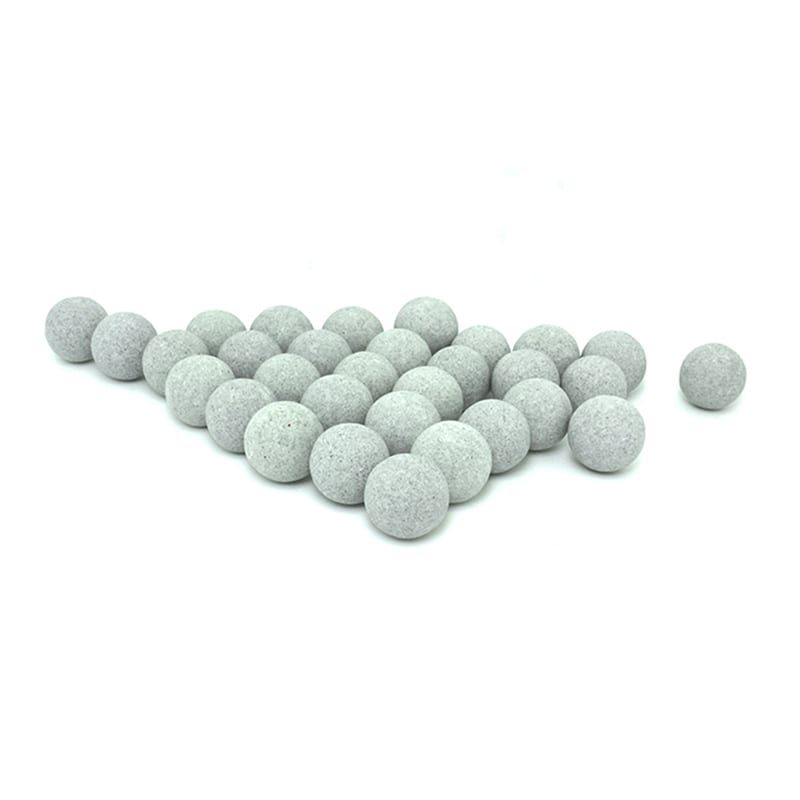
high-frequency ceramic media selected for continuous inline deburr machine operationHigh-Frequency Ceramic vs. Resin Plastic vs. High-Alumina
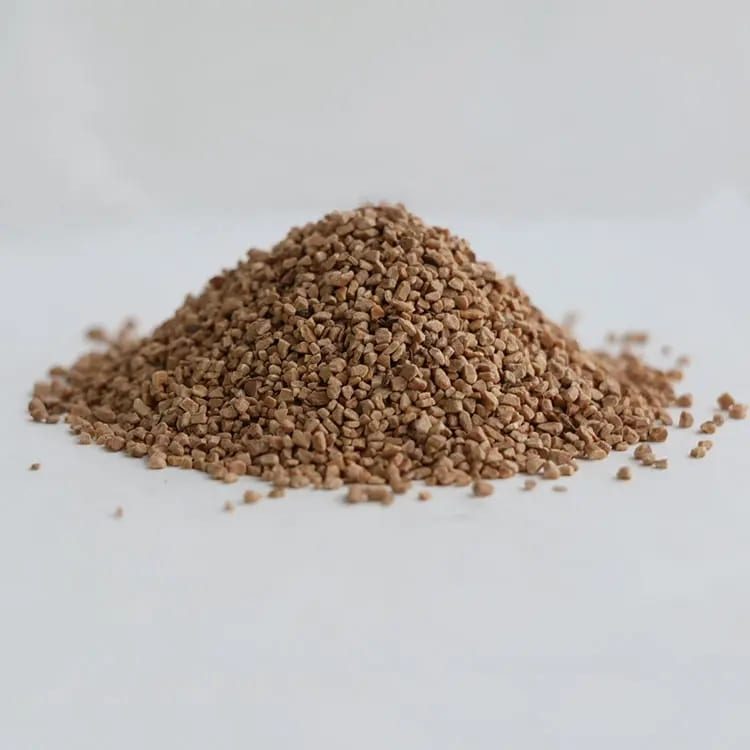
High-FrequencyPreformed Ceramic: Angle-cut cylinders, triangles, and tri-stars cut tough CNC burrs and laser dross on carbon steel,304/316stainless, and titanium. Read our ceramic grinding media guide and aluminum oxide tumbling media guide.- Resin-Bonded Plastic Cones & Pyramids: Lightweight non-ferrous media preventing corner peening on
6061aluminum,A356castings, brass, andZamakzinc. See our deburring plastic guide. High-AluminaSpheres &304Steel Balls: Stage 2 burnishing media for bright low-Rafinish, optionally followed by drycorncoborwalnut shell(8#-80#) buffing. See our steel shot burnishing media guide and corn cob vs walnut media guide.
Single-Pass Peristaltic Dosing (LC10, MC8, HM3, JTJ, JTS5)
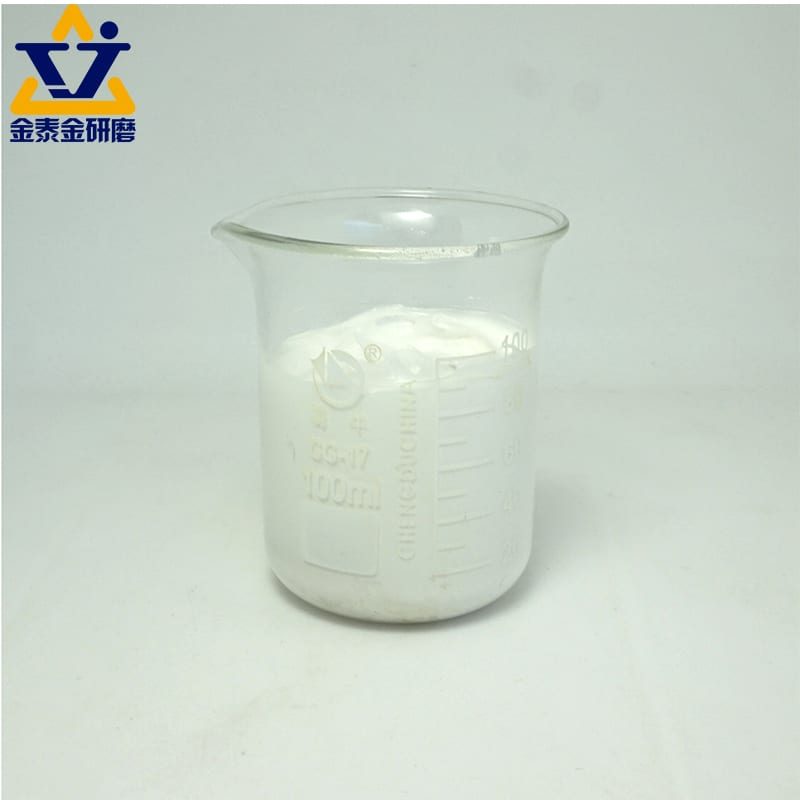
Continuous single-pass peristaltic dosing feeds fresh water and compound (LC10 for standard cutting, MC8 for heavy carbon-steel descaling, HM3/JTJ50 for aluminum and brass brightening, JTJ60 for stainless burnishing, and JTS5 for thin sheet stampings) while flushing fines out the drain. See our compound for aluminum guide and metal discoloration after tumbling guide.
LC10, MC8, HM3, JTJ, JTS5) sustaining clean inline deburr machine chemistryDual-Stage Inline Cells: Separating Stage 1 Cutting From Stage 2 Polishing
For high-volume automotive, aerospace, and medical lines requiring both heavy burr removal and mirror burnishing, pairing two chambers inline beats running sequential changeouts in one tub.
Dedicated Stage 1 Cut Bowl + Stage 2 Burnish Bowl
Chamber 1 stays permanently charged with high-frequency ceramic or resin plastic + LC10, discharging rinsed parts via cushioned chute straight into Chamber 2 charged with iron-free high-alumina spheres or 304 steel balls + HM3/JTJ60. Zero stray abrasive grit ever contaminates the Stage 2 mirror finish.
Integrating LLF120 / LLB50 Centrifugal or OBD Magnetic Side-Cells
When compact screws, titanium screws for dental implants, or non-magnetic blind-bore fittings travel alongside larger castings, side-by-side LLF120/LLB50 centrifugal finishers and OBD-30..100 magnetic polishers feed the same 35A/70A drying station seamlessly.
Controls, Hoists, Chute Cushioning, and Multi-Shift Maintenance
Keeping an inline deburr machine cell running reliably across multi-shift schedules requires disciplined mechanical care and operator standardization.
Synchronizing VFD Drives, Timers, and Peristaltic Pumps
Lock cycle timers, inverter motor frequencies, and peristaltic pump dial settings into part-number recipes so night-shift operators press one start button rather than improvising compound dilutions.
Cushioning Discharge Chutes and Segregating Ferrous vs. Non-Ferrous Baskets
Fit resilient polyurethane flaps on screen discharge chutes and use padded or submerged catch baskets so freshly deburred parts never suffer fresh edge nicks at unload. Dedicate color-coded transfer baskets separately to steel versus aluminum/titanium lines to prevent galvanic iron pitting.
Auditing Ra / Rz, Witness Coupons, and Drain Screens
Measure both Ra and Rz across sealing faces—or place matching witness coupons inside spare ZXL bays—to verify isotropic uniformity rather than hidden lathe valleys. Brush bottom bowl drain screens clear at shift start and inspect cast polyurethane bowl linings and separation flap seals at every media changeout. Read our surface finish Ra vs Rz guide.
Commissioning, Plant Layout, and Multi-Shift ROI Control
Designing an inline deburr machine cell that runs reliably across three shifts requires planning floor drainage, jib-hoist material flow, and operator recipe discipline upfront.
Planning Floor Trenches, Electrical Drops, and Air Supply
Position the upstream alkaline wash, ZL circular bowl or ZXL divided trough, multi-baffle settling tank, and 35A/70A centrifugal spin-dryer in a straight or U-shaped work cell so operators move catch baskets in one step. Route large-diameter gravity drain pipes with continuous slope into the settling tank to avoid standing puddles, and supply clean dry compressed air for pneumatic separation cylinders.
Integrating Jib Hoists and Wheeled Stainless Catch Baskets
Heavy steel forgings and bulky die-cast aluminum brackets strain manual lifting when unloading multi-hundred-kilogram batches. Overhead jib hoists paired with wheeled stainless catch baskets and padded transfer carts let one operator run an inline deburr machine cell safely and effortlessly.
Balancing Media Fill Height and Weekly Fragment Screening
As high-frequency ceramic triangles and resin-bonded plastic cones wear smaller across repeated shifts, active bed height drops and worn slivers can wedge in part slots. Screen out undersized chips weekly and top up fresh media to the working fill line so inline cycle times stay constant.
Protecting Nearby Metrology Benches With Floor Isolation Pads
Mounting circular vibratory bowls and divided linear troughs on heavy-duty elastomer isolation pads and fitting hinged acoustic hoods keeps shop-floor noise low and prevents structural vibration from disturbing nearby coordinate measuring machines.
Validating Inline Recipes With Uncleaned Raw Sample Parts
Before committing capital equipment, send oily raw stampings, castings, or CNC housings directly from your machines for complimentary lab trials—verifying alkaline pre-wash requirements, non-lodging media geometry, LC10/HM3/JTJ flow-through rates, and 35A/70A drying times.
Standardizing Laminated Setup Cards Across Day and Night Shifts
Posting single-page laminated recipe cards beside each deburr machine station—listing media grade, fill height, counterweight lead angle, VFD frequency, peristaltic pump dial setting, and timer—ensures every shift delivers identical edge radius and optical luster.
Calculating Labor and Scrap Payback on Inline Cells
Consolidating washing, deburring, spray rinsing, and centrifugal spin-drying into one synchronized inline deburr machine cell eliminates manual hand-grinding benches, cuts work-in-process inventory, and prevents downstream plating blisters and flash-rust rejects.
Integrating Dry Corncob or Walnut Shell Polishing Downstream
When decorative brass bezels, watch hardware, or mirror-burnished 6061 aluminum brackets require showroom optical clarity after Stage 2 high-alumina burnishing, adding a compact dry corncob or walnut shell (8#-80#) barrel directly downstream of the 35A/70A centrifugal spin-dryer delivers spot-free brilliance without water rings or handling delays.
Scheduling Preventive Audits on Liners, Screens, and Pump Tubing
Assigning a five-minute Friday afternoon preventive check—inspecting cast polyurethane bowl bottoms, pneumatic flap edges, perforated separation screens, peristaltic pump squeeze tubing, and multi-baffle settling tank sludge depth—keeps every inline deburr machine cell running at peak efficiency across continuous multi-shift production without unplanned stoppages.
Managing Color-Coded Ferrous vs. Non-Ferrous Inline Tooling
Plants running both carbon-steel forgings (MC8 / LC10) and aluminum or medical titanium parts (HM3 / JTJ50) should never share transfer baskets, separation screens, or drying baskets between alloy families. Color-coded inline tooling prevents trace iron dust from triggering galvanic pitting during salt-spray or passivation audits. Dedicated spray-rinse manifolds and multi-baffle settling tanks for ferrous versus non-ferrous lines also keep iron oxide sludge completely separated from non-ferrous hydroxide waste, protecting downstream anodizing and medical passivation quality across every shift.
Auditing Electrical Cabinets, Emergency Stops, and Wet-Floor Grating
Because an inline deburr machine cell integrates alkaline wash heaters, continuous water spray bars, peristaltic dosing pumps, pneumatic separation valves, and heated centrifugal dryers, routine safety checks protect both operators and controls. Verify waterproof sealing on VFD inverter cabinets, test emergency stop pushbuttons at shift start, maintain anti-slip floor grating beside separation decks, and route drain piping cleanly away from walkways.
Scaling Inline Deburr Machine Throughput Without Expanding Floor Footprint
When part demand grows beyond one shift's capacity, upgrading from a single circular bowl to dual Stage 1 cutting and Stage 2 burnishing chambers—or adding an extra perforated 35A/70A dryer basket so spin-drying never bottlenecks the separation chute—unlocks higher hourly output inside the same floor bay. Integrating wheeled catch-basket buffers and pre-measured media tote carts keeps batch changeovers smooth, predictable, and safe across multi-shift manufacturing cells. Sending sample raw parts from machining or stamping lines for complimentary lab validation guarantees every inline deburr machine stage hits target Ra, Rz, and edge-break tolerances on day one of production, eliminating costly trial-and-error adjustments and ensuring smooth handoffs into downstream anodizing, plating, powder coating, or precision assembly lines across multi-shift factory schedules.
| Inline Cell Issue | Root Cause | Immediate Fix | Preventive Standard |
|---|---|---|---|
| Foam & slow cut in Stage 1 | Bypassed upstream alkaline wash | Degrease oily batch; flush media bed | Require alkaline pre-wash on all oily CNC parts |
| Grey oxide smear on aluminum | Blocked drain screen or starved LC10/HM3 |
Brush drain screen; boost clean water + dosing | Clean settling tank & check pump tubing daily |
| Fresh corner nicks at dryer transfer | Bare steel catch basket or unpadded chute | Add PU chute flap & padded transfer basket | Standardize cushioned baskets across line |
| Media chips wedging at screen | Unscreened worn fragments | Purge undersized tips; confirm non-lodging size | Screen media charge weekly |
| Flash rust or water spots | Delayed transfer into 35A/70A dryer |
Spray rinse on screen + immediate spin-dry | Stage dual dryer baskets for zero wait |
Factory Capabilities & Verified Inline System Supply
Founded in 1992, Xiamen Jin Tai Jin Grinding Technology Co.,Ltd. (SurfacePolish) engineers and manufactures 21 machine platforms backed by 24 granted Chinese IP rights and more than 200,000+ solutions across certified facilities (ISO 00726Q01571R001, CE M.2023.206.C88121, and CE M.2023.206.C88120). Standard ZL circular deburr machine bowls with pneumatic separation, LLF120/LLB50 centrifugal finishers, OBD-30..100 magnetic polishers, and 35/35A/70/70A dryers ship in 25–35 days, while custom divided-trough (ZXL, L1300–L1800) and inline automated multi-station lines ship in 45–60 days. Send sample oily raw parts to surface-polish.com for complimentary process validation. Honest boundaries apply: we do not supply robotic CNC arms, electroplating rectifiers, or dry sandblasting cabinets.
Frequently Asked Questions About Inline Vibratory Deburr Machine Systems
Why connect an upstream alkaline wash tank ahead of a vibratory deburr machine?
Machining coolants and stamping oils carried straight from presses glaze ceramic pores, create dense cushioning foam, and trap dark smear. An upstream alkaline wash and rinse lets compound-LC10 and HM3 act directly on bare metal, cutting deburring cycle times while keeping multi-baffle settling tanks calm and foam-free across multi-shift runs.
How does pneumatic separation automate an inline deburr machine cell?
At cycle end, an air cylinder swings a polyurethane-coated flap into the bowl stream, guiding parts up onto a perforated screen deck beneath a clean-water spray rinse bar while media falls back into the tub—cutting manual sorting labor dramatically and letting one operator supervise multiple finishing cells simultaneously.
When should an inline system use two bowls instead of one?
Whenever high-volume production requires both heavy Stage 1 burr shearing (high-frequency ceramic or plastic + LC10) and Stage 2 mirror burnishing (high-alumina spheres or steel balls + HM3/JTJ60), dedicating two separate chambers eliminates media swaps and abrasive cross-contamination while keeping line throughput continuous.
What compounds run inline in continuous flow-through deburr machine cells?
Use compound-LC10 for general wet deburring, MC8 for heavy carbon-steel descaling (kept strictly isolated from aluminum), HM3/JTJ50 for aluminum and brass brightening, JTJ60 for stainless burnishing, and JTS5 for thin sheet stampings. Continuous peristaltic dosing ensures fresh chemistry contacts bare metal at all times.
How do inline cells prevent flash rust and water spots after rinsing?
Transfer rinsed catch baskets straight from the spray-rinse separation deck into a heated 35, 35A, 70, or 70A centrifugal spin-dryer—using two alternating dryer baskets so wet parts never sit waiting in damp air. Add a brief corncob or walnut shell (8#-80#) buff when mirror optical brilliance is needed.
How do I keep heavy castings from nicking at the dryer transfer chute?
Fit resilient cast polyurethane curtains on the deburr machine screen discharge chute and catch parts inside urethane-lined or water-submerged baskets. Cushioning the unload transition preserves Ra and Rz surface uniformity on soft aluminum and brass housings.
What lead time applies to SurfacePolish inline deburr machine systems?
Standard ZL circular bowls, centrifugal finishers, and 35A/70A dryers ship within 25–35 days, while custom divided-trough (ZXL, L1300–L1800) and integrated multi-station inline cells ship within 45–60 days under ISO 00726Q01571R001 and CE certification. Send sample oily raw parts to surface-polish.com for complimentary lab validation.
 +86-592-2381506


 IPv6 network supported
