

RMS Surface Finish (Rq): Controlling Peak Sensitivity and Mirror Uniformity in Vibratory Finishing

Aerospace, hydraulic, and optical engineers reviewing blueprint callouts for rms surface finish rq (Root Mean Square roughness) often wonder why a tumbled part with an acceptable Ra reading still fails Rq inspection. Unlike Ra, which averages all profile deviations linearly, Rq squares every peak height and valley depth before averaging—making rms surface finish rq dramatically more sensitive to stray deep scratches, un-leveled CNC chatter valleys, and sharp micro-peaks! Understanding how Stage 1 high-frequency ceramic or resin plastic cones (compound-LC10) erase deep valleys and how Stage 2 304 stainless balls (JTJ20/JTJ60) or high-alumina spheres (HM3) compress remaining peaks lets shops hit tight Rq specifications consistently.
Why RMS Surface Finish (Rq) Reacts Strongly to Peaks & Scratches

Mathematical Sensitivity of Rq vs. Ra to Stray Rz Valleys
On a perfectly uniform sine-wave surface, Rq sits slightly higher than Ra in a predictable proportion. However, inside real CNC machining and mass finishing cells, surfaces rarely follow clean sine waves: a single stray Stage 1 ceramic scratch or un-leveled milling chatter groove gets squared in the Rq calculation, pushing rms surface finish rq sharply upward even while Ra barely budges!
Why Optical Reflectivity and Seal Leakage Correlate Better With Rq
Laser optics, high-pressure hydraulic valve seats, and mirror-polished stainless trim depend heavily on eliminating isolated deep pits and sharp peaks—the exact defects Rq highlights! Achieving low Rq delivers cleaner optical light reflection without scatter haze and tighter O-ring sealing without micro-leakage paths.
How Stage 1 Abrasive Leveling Eliminates Deep Chatter Valleys
Stage 2 zero-grit ball burnishing cannot grind away deep CNC chatter valleys! If Stage 1 high-frequency ceramic (LC10) or resin plastic cone (LC10) leveling stops too early, 304 stainless balls polish upper ridges bright while leaving deep valleys intact—keeping Rq stubbornly high. Complete uniform Stage 1 isotropic matte leveling before transferring baskets to Stage 2. Review our machined surface roughness guide and surface roughness measurement guide.
Why One Stray Stage 1 Cutting Grit Grain Ruins Stage 2 Rq Compliance
Even a single fractured Stage 1 ceramic sliver carried into a Stage 2 304 ball or high-alumina bowl etches random hairline scratches across mirror flats—immediately failing Rq inspection! Enforce clean softened-water spray rinsing across the Stage 1 vibratory separator screen and dedicate strictly color-coded Stage 2 totes.
| Roughness Metric | Sensitivity to Isolated Scratches | Primary Mass Finishing Control Lever | Common Shop-Floor Failure Mode |
|---|---|---|---|
Ra (Arithmetic Average) |
Low (averages out rare valleys) | Stage 1 cutting + Stage 2 burnishing | Passes while deep chatter ruins Rq |
Rq (RMS Root Mean Square) |
High (squares peaks & valleys) | Complete Stage 1 leveling + grit-free Stage 2 | Stray Stage 1 cutting grit or ceramic dimples |
Rz (Peak-to-Valley Height) |
Extreme (tracks single worst defect) | Non-lodging sizing + generous media ratio |
Part-on-part collision dings in ZL bowl |
| Optical Gloss / Contrast | High (scatters on micro-haze) | Softened water + JTJ20/HM3 + 35A dry |
Hard-water soap scum or dirty closed sump |
| Isotropic Multi-Axis Lay | Detects directional tool marks | Full Stage 1 ceramic / plastic blending | Insufficient Stage 1 dwell time |
Controlling Rq Across Stage 1 Leveling & Stage 2 Burnishing
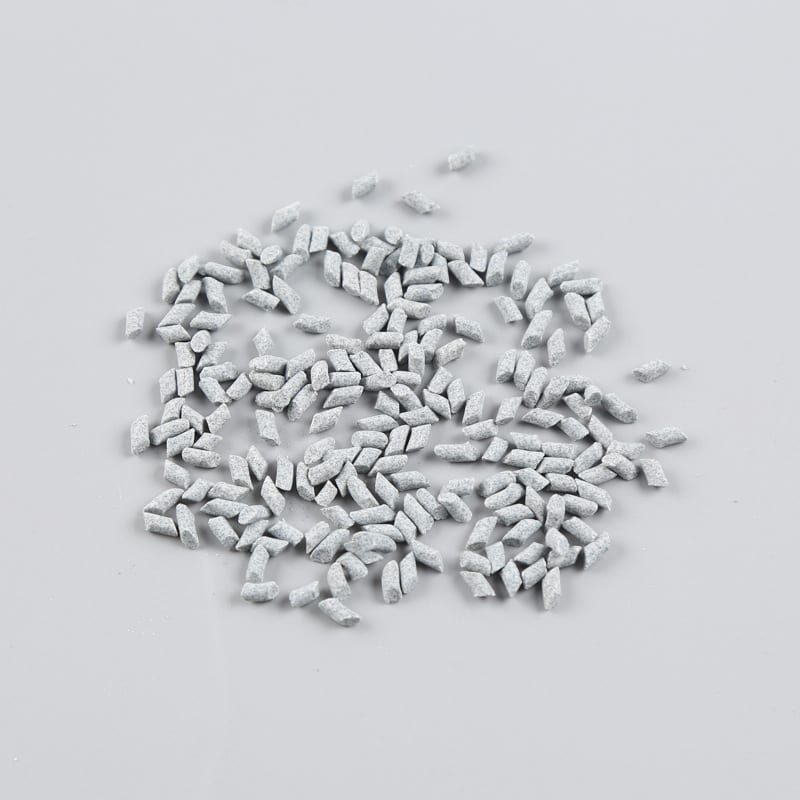
High-Frequency Ceramic vs. Resin Plastic Cones for Soft Alloys
Heavy vitrified high-frequency ceramic stones cut tough 304/316 stainless steel, carbon steel, and titanium cleanly—dropping high Rq tool marks evenly. However, running heavy ceramic stones on soft 6061 aluminum, brass, copper, or Zamak hammers orange-peel dimples that spike Rq upward! Always level soft non-ferrous alloys using lightweight resin-bonded synthetic plastic cones (compound-LC10). Review our ceramic tumbler media guide and synthetic plastic tumbling media guide.
Cold-Rolling Remaining Micro-Peaks Flat With 304 Balls & High-Alumina
Once Stage 1 leveling removes directional CNC ridges, Stage 2 zero-grit 304 stainless balls (JTJ20/JTJ25/JTJ60) on stainless/steel—or iron-free high-alumina spheres (HM3/JTJ50) on aluminum, brass, and titanium—cold-roll remaining matte micro-peaks plastically flat, compressing Rq down cleanly without removing bulk metal. See our metal burnishing guide.
Protecting Surfaces From Part-on-Part Collision Dings (Tumbler Media Ratio)
A single crescent impingement ding from two heavy valves colliding inside an under-filled ZL bowl destroys Rq and Rz compliance instantly! Maintain generous tumbler media ratio cushions, lower vibratory motor counterweight lead angles, and isolate heavy or elongated shafts inside divided ZXL/L1300–L1800 linear troughs.
Weekly Media Screening & Non-Lodging Sizing to Stop Bore Scratches
Screen worn ceramic and plastic chips weekly via our media screening and replenishment SOP and select media shapes via our non-lodging media sizing guide so wedged fragments never score precision datum walls.
Chemistry, Single-Pass Flow & Clean Metrology Prep
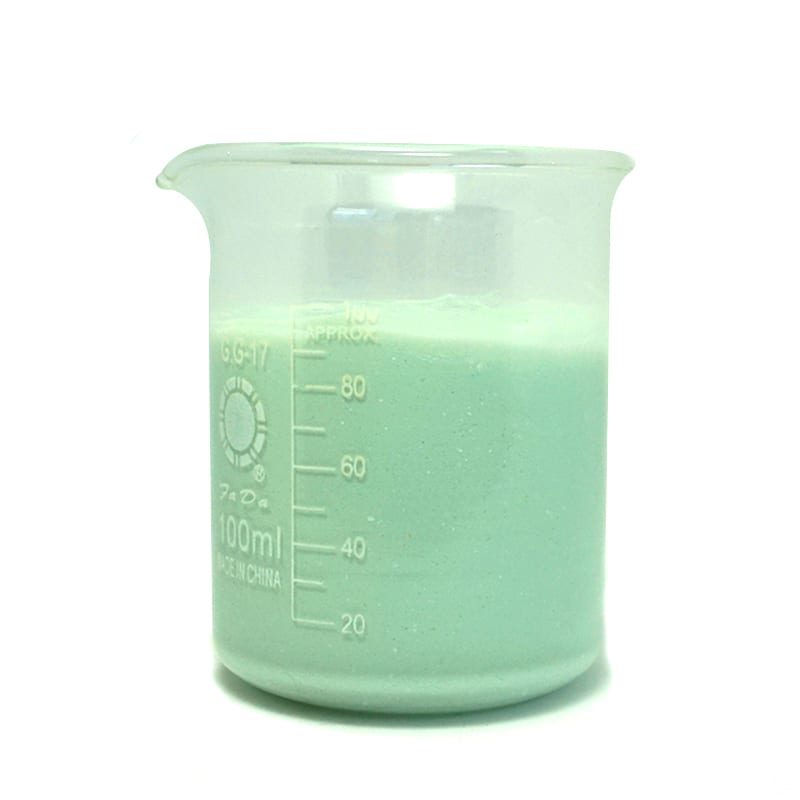
Single-Pass Flow Through vs. Dirty Closed-Sump Smut
Closed-sump recirculation tanks pump fine ceramic silt and oil sludge back onto parts—glazing Stage 1 media (leaving high Rq peaks) and coating Stage 2 mirror surfaces in dull grey smut. Run continuous single-pass flow through mass finishing dosed cleanly by peristaltic compound dosing into a multi-baffle settling tank.
Softened Water & Zero Silicone Defoamers for True Rq Readings
Hard tap water precipitates calcium soap-scum specks onto mirror flats that distort stylus Rq traces and trigger downstream coating defects, while thick bowl foam cushions media shear and leaves peaks un-leveled! Feed softened water, brush bottom drain grates clear daily, and ban silicone defoamers completely. Check our water hardness in mass finishing guide and preventing foam in vibratory bowls guide.
Upstream Coolant Stripping (Degreasing Before Vibratory Finishing)
Heavy CNC coolants and tapping oils glaze ceramic and plastic pores rapidly, stalling Rq reduction mid-shift. Strip oils upstream following our degreasing before vibratory finishing guide.
Immediate Heated 35A/70A Drying & Warm Dry Corncob Wipe Buffing
Rinse exiting parts under a clean softened/RO spray bar across the vibratory separator screen, spin-dry immediately in a heated 35, 35A, 70, or 70A centrifugal dryer, and follow with warm dry corncob buffing (never wet) before running Rq profilometer checks. Review our centrifugal dryer guide and corncob drying media grades guide.
Converting Blueprint Specs & Multi-Shift Rq Troubleshooting
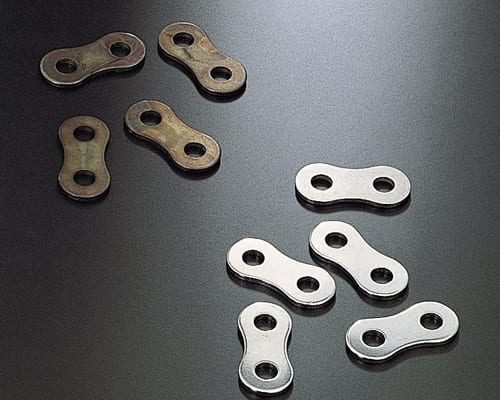
Avoiding Blind Ra-to-Rq Conversion Multipliers on Non-Uniform Surfaces
Engineers sometimes assume Rq always equals a simple fixed fraction above Ra—yet on a partially tumbled CNC part with leftover chatter valleys, Rq jumps much higher than any textbook conversion chart predicts! Always measure Rq directly on sample validated parts rather than guessing from Ra alone. See our surface finish conversion chart guide and Ra surface finish chart guide.
Tracing Multi-Angle Stylus Paths Across Stage 1 & Stage 2 Parts
Trace stylus profilometers perpendicular to original CNC lay after Stage 1 cutting and across two perpendicular axes after Stage 2 ball burnishing to confirm isotropic Rq compliance across the entire sealing or optical face.
Isolating Carbon-Steel MC8 Cells From Stainless & Non-Ferrous Rq Lines
Keep acidic compound-MC8 carbon-steel descaling cells strictly isolated from 304/316 stainless and non-ferrous aluminum/brass lines so tramp-iron rust pits or acid etching never spike Rq values.
Auditing Polyurethane Bowl Discharge Ramps Weekly
Worn polyurethane bowl ribs trap stray Stage 1 ceramic grit chips and scratch soft parts during automated separation—inspect liners regularly via our polyurethane bowl liner replacement guide.
Troubleshooting High Rq Readings Across Production Lots

Fixing High Rq With Passing Ra, Random Scratches, and Dimpled Aluminum
Match every Rq failure directly to its shop-floor root cause: high Rq alongside passing Ra points to un-leveled Stage 1 CNC chatter valleys or stray grit scratches; sudden lot-to-lot Rq spikes indicate Stage 1 cutting grit carry-over or low tumbler media ratio collisions; and high Rq on 6061 aluminum indicates heavy ceramic stones dimpling soft metal.
Rq QA Failure Mode |
Likely Process Root Cause | Immediate Correction | Preventive Standard |
|---|---|---|---|
High Rq while Ra passes |
Leftover CNC chatter valleys or stray grit | Re-run Stage 1 fine cut; inspect totes | Verify Stage 1 Rq & Rz before Stage 2 |
Sudden lot Rq scratch spikes |
Stray Stage 1 cutting grit in Stage 2 ball bed | Scrub bowl/screen; LC10 ball wash |
Dedicated Stage 1/2 totes + screen spray rinse |
High Rq dimples on 6061 aluminum |
Heavy ceramic stones used on aluminum | Purge ceramic; load resin plastic cones | Aluminum-only resin plastic cones + LC10 |
Isolated crescent Rq dents |
Low media ratio or circular collision |
Raise tumbler media ratio; load ZXL |
Pre-measured totes + ZXL dividers |
| Mineral spike readings post-dry | Hard tap water or dirty closed sump | Soft/RO rinse + 35A dry + single-pass |
Softened single-pass flow + heated dryer |
Restoring Glazed Media & Darkened 304 Balls With LC10
Whenever coolant carry-over or hard-water film glazes Stage 1 media or darkens Stage 2 304 balls / high-alumina spheres, unload all parts and run an empty warm strip-wash with softened water and compound-LC10 until drain effluent runs clear.
Managing LLB50 & LLF120 Centrifugal Units for Tight Rq Batches
Small precision hydraulic spools, optical bezels, and medical fasteners achieve ultra-consistent low Rq inside LLB50 centrifugal disc finishers and LLF120 centrifugal barrels with compact, alloy-dedicated media charges.
Posting Laminated Rq Setup Cards & Visual Master Boards
Mount laminated setup cards beside every machine detailing Stage 1/2 media grades, peristaltic compound dosing dials, softened water flow, cycle timers, and Rq release limits alongside sealed master visual samples.
Controlling Media Screening, Water Chemistry & Centrifugal Drying Before Rq Checks
Because Rq squares every surface height deviation from the mean line, even microscopic grit contamination, dried mineral rings, or stray machining debris inflates root-mean-square readings faster than Ra. Maintain disciplined media screening and replenishment intervals so fractured ceramic corners leave the bed before wedging into precision slots. Pair clean media with softened flow-through rinsing and calibrated peristaltic compound dosing (LC10, MC8, JTJ50, or JTJ60) so suspended soils flush continuously out of the vibratory finishing machine drain. Immediately after unloading, spin batches dry inside a heated 35A or 70A centrifugal dryer to eliminate water spotting prior to stylus or optical verification.
Troubleshooting Rq Variance & Process Diagnostics on the Shop Floor
When Rq drifts upward across consecutive production lots even though cycle timers remain unchanged, root-cause diagnostics should separate incoming blank variation, media wear, and metrology setup before altering machine parameters.
Separating Incoming CNC Tooling Wear from Mass Finishing Drift
Worn CNC inserts, chattering boring bars, and dull milling cutters leave periodic tear marks that raise Rq disproportionately compared to Ra because deep valley troughs carry squared weight. Measure a sample of incoming un-tumbled blanks whenever Stage 1 exit Rq jumps unexpectedly. If raw parts already exceed baseline roughness, either refresh upstream tooling or extend the initial fast-cut ceramic and LC10 pass before transferring parts into Stage 2 plastic media or 304 stainless steel ball burnishing.
Fixing Rq Spikes from Ceramic Glazing & Compound Foam
Over-compounded bowls or hard shop water glaze ceramic media surfaces and blanket the mass in thick foam, cushioning media-to-part shear and leaving uneven peaks behind. Verify ceramic media glazing by inspecting media pores for metallic smear, then run an MC8 acid-clean purge or adjust pump stroke rates per our preventing foam in vibratory bowls guide. Restoring crisp abrasive exposure stabilizes Rq scatter across multi-shift runs.
Preventing Part-on-Part Nicking & Preserving Critical Edges
Heavy steel, brass, or aluminum parts that collide inside under-filled tubs develop isolated impact craters that pass Ra averages yet fail Rq limits immediately. Maintain generous media-to-part volume ratio loading inside ZL and ZXL bowls, or shift fragile precision shafts into compartmented tubs and rotary barrel tumbler lines. Balancing cut aggression with proper media cushioning protects bearing lands, sealing lips, and threaded shoulders while holding tight Rq uniformity.
Upstream Ultrasonic Cleaning & Post-Tumble Rust Protection for Tight Rq Parts
Controlling Rq on precision hydraulic spools, valve seats, and stainless surgical hardware depends as much on cleanliness at entry and exit as on tumbling action itself. Running an ultrasonic cleaner wash before loading Stage 1 ceramic media strips tenacious CNC cutting oils that would otherwise cause uneven chemical wetting and patchy micro-valleys. Equally important, ferrous parts leaving wet ZL or LLB50 cycles must go straight into a heated 35A or 70A centrifugal dryer with controlled inhibitor dosing per our rust inhibition after wet tumbling guide, preventing microscopic corrosion pits that immediately elevate Rq scatter.
Locking In Multi-Shift Rq Repeatability Through Stage Gates & Master Samples
Treat Rq as a two-gate milestone rather than a single final check. Confirm that Stage 1 leveling completely removes CNC tool marks before parts ever enter Stage 2 JTJ60 + 304 stainless steel ball burnishing or dry corncob (8#-80#) buffing, because Stage 2 burnishing closes micro-peaks without erasing deep Stage 1 valleys. Documenting Stage 1 and Stage 2 stylus traces alongside sealed physical master coupons, water hardness readings, and peristaltic compound dosing settings keeps Rq performance locked within drawing tolerances across every shift and operator rotation.
Auditing Polyurethane Bowl Liners & Discharge Screens for Scratch-Free Rq Retention
Worn polyurethane bowl ribs, cracked discharge flapper seals, and fatigued screen meshes trap broken Stage 1 ceramic shards that later shake loose into Stage 2 mirror cycles and ruin Rq compliance across an entire basket. Schedule weekly liner and screen inspections following our polyurethane bowl liner replacement guide, and dedicate strictly color-coded transfer totes to Stage 1 abrasive cutting versus Stage 2 304 stainless ball burnishing. Keeping mechanical hardware tight ensures consistent media circulation speed and eliminates random scratch outliers from high-value cosmetic or hydraulic production lots. Proactive screen maintenance also stabilizes separation efficiency so finished components discharge cleanly without extra tumbling wear, stray grit carry-over, costly batch rework, or manual re-sorting delays on the busy production shop floor.
Factory Capabilities & Verified Mass Finishing Supply
Founded in 1992, Xiamen Jin Tai Jin Grinding Technology Co.,Ltd. (SurfacePolish) engineers and manufactures 21 machine platforms backed by 24 granted Chinese IP rights and more than 200,000+ solutions across certified facilities (ISO 00726Q01571R001, CE M.2023.206.C88121, and CE M.2023.206.C88120). Alongside ZL circular bowls, ZXL/L1300–L1800 divided troughs, LLB50/LLF120 centrifugal finishers, OBD-30..100 magnetic polishers, and heated 35/35A/70/70A centrifugal dryers, we supply LC10, JTS5, HM3, JTJ20, JTJ25, JTJ50, JTJ60, and isolated MC8 compounds matched to fast-cut and fine-cut high-frequency ceramic, resin-bonded synthetic plastic cones, 304 stainless balls and magnetic pins, iron-free high-alumina spheres, corncob, and walnut shell (8#-80#). Standard machines ship in 25–35 days and custom lines ship in 45–60 days. Send sample raw parts with target Rq callouts to surface-polish.com for complimentary process validation. Honest boundaries apply: we do not supply portable stylus profilometers, optical interferometers, or diamond lapping slurries.
Frequently Asked Questions About RMS Surface Finish (Rq)
How does rms surface finish rq differ from Ra on mass finishing blueprints?
Ra averages absolute surface deviations linearly, whereas Rq (Root Mean Square) squares deviations before averaging—making Rq much more sensitive to isolated deep scratches, chatter valleys, and sharp micro-peaks.
Why can a mirror-burnished part pass Ra yet fail Rq inspection?
If Stage 1 ceramic or plastic leveling stopped too early—or a stray Stage 1 cutting grit grain scratched the part in Stage 2—isolated deep valleys or scratches spike Rq sharply even while smooth surrounding lands keep Ra low.
Which mass finishing progression lowers Rq fastest on 304/316 stainless steel?
Level CNC tool marks uniformly in Stage 1 high-frequency ceramic (compound-LC10), rinse thoroughly on the separator screen, and burnish in zero-grit 304 stainless balls (JTJ20 or JTJ60) inside a reinforced ZL bowl or LLF120 barrel.
How do I lower Rq on 6061 aluminum without creating orange-peel dimples?
Use lightweight resin-bonded synthetic plastic cones (compound-LC10) for Stage 1 leveling, followed by iron-free high-alumina spheres (HM3 or JTJ50)—never heavy ceramic stones or 304 steel balls.
Why did Rq suddenly jump on one batch of heavy machined valves?
Sudden Rq jumps usually trace back to part-on-part crescent dings from low tumbler media ratio cushioning, or stray Stage 1 cutting grit carried into a Stage 2 ball bowl.
Should parts be dried before measuring rms surface finish rq?
Yes! Always rinse parts cleanly with softened/RO water on the separator screen and spin-dry in 35A/70A dryers (plus warm dry corncob wipe if needed) so soap film or water spots never distort profilometer traces.
Can OBD-30..100 magnetic polishers help meet Rq inside threaded bores?
Yes—OBD-30..100 magnetic polishers with ferromagnetic pins (HM3/JTJ50) smooth fine internal thread burrs cleanly, and should run before final Stage 2 ball burnishing on critical flat lands.
How can I test whether my parts meet Rq limits before buying mass finishing equipment?
Send representative raw production parts with your blueprint Rq callouts to surface-polish.com for complimentary lab testing; our engineers validate Stage 1 and Stage 2 cycles and return finished samples before you order.
 +86-592-2381506


 IPv6 network supported
