
Drag Finishing in Production: Zero-Collision Automated Finishing Technology for Precision Metal Parts
When high-value machined components—such as hardened transmission gears, turbine blades, orthopaedic implants, or heavy hydraulic spools—cannot risk a single nick against a neighbouring workpiece, loose tumbling inside a vibratory bowl or rotary drum hits a hard ceiling. Drag finishing solves that collision problem by clamping each part onto an individual rotating spindle and sweeping it through a stationary tub of media.
Among modern metal finishing processes, high-speed drag finishing sits at the top of automated finishing technology for precision parts requiring repeatable edge radiusing and bright surface smoothing without hand labour. This guide explains how drag finishing works, how it compares with other metal finishing technology options, and when a shop actually needs clamped spindles rather than loose batch tumbling. For chamber naming, see finishing machine names and vibratory finishing.
How High-Speed Drag Finishing Works
A high-speed drag finishing machine flips traditional mass finishing upside down: instead of shaking or rotating the media tub around loose parts, the tub stays stationary while a motorized carousel drags clamped parts through the media bed.
[DESIGN: Cutaway schematic of a high-speed drag finishing machine showing individual rotating workpiece spindles orbiting inside a stationary circular media tub]
Clamped rotating spindles orbiting a stationary media tub
Above a large circular tub filled with ceramic, plastic, or high-alumina media, a heavy overhead turret rotates multiple vertical spindles in a planetary motion. Each spindle spins on its own axis while orbiting the tub, dragging the clamped workpiece smoothly through the abrasive bed. Every exposed flank, fillet, and edge receives continuous, balanced media contact from all directions.
Why zero part-on-part collision protects high-value tolerances
In any loose-tumbling chamber, heavy parts occasionally strike one another when media cushions thin out or parts migrate to the same zone. On precision gear teeth, ground bearing journals, or medical bone nails, even one microscopic ding causes immediate scrap. Drag finishing isolates every workpiece on its own fixture, guaranteeing zero part-on-part collision throughout the entire cycle.
Multiplied contact pressure compared with gravity bowls
Because the spindles actively force workpieces through a dense, stationary bed of media, contact pressure is substantially higher than in gravity-fed rotary barrels or standard vibratory bowls. High pressure accelerates burr removal and surface smoothing on tough stainless steel, titanium, and hardened alloy steels. Drag finishing delivers fast cut rates while keeping edge geometry uniform.
Wet compound flushing versus dry organic drag finishing
Depending on the stage, a drag tub can run wet with continuous liquid compound spray—such as compound-LC10 for deburring, compound-JTJ20 for coarse stainless cutting, or compound-JTJ50 for brightening—or run dry with conditioned walnut shell and corn cob media for final lustre. Keeping wet cutting and dry organic brightening in separate tubs avoids fouling dry media.

Comparing Metal Finishing Processes for Automated Production
Selecting the right metal finishing technology from our machines portfolio means matching collision tolerance, batch size, and fixture cost against part value.
| Metal Finishing Process | Part Handling Mode | Collision Risk | Best Workpiece Profile | Fixture / Setup Effort |
|---|---|---|---|---|
| High-Speed Drag Finishing | Clamped individually on rotating spindles | Zero | Heavy gears, turbine blades, medical implants, shafts | Requires part-specific spindle chucks or holders |
Vibratory Bowl / Trough (ZL & L) |
Loose batch tumbling in spiral/linear flow | Low with proper media cushion | Stamped brackets, hinges, valve sleeves, long tubes | Zero fixtures — bulk load and automated screen unload |
Centrifugal Barrel / Disc (LX / LLF) |
High-G loose batch tumbling in sealed drum/disc | Low on compact lightweight parts | Small gears, chains, buckles, connectors | Zero fixtures — fast batch load and unload |
| Rotary Barrel Tumbler | Slow loose cascading slide in rotating drum | Minimal on tough hardware | Fasteners, forgings, dry-polished brass/acrylic | Zero fixtures — simple bulk drum load |
Magnetic Precision Polisher (OBD) |
Stationary bowl with spinning stainless pins | Minimal on non-magnetic parts | Blind bores, threaded fittings, filigree, rivets | Zero fixtures — non-magnetic alloys only |
[DESIGN: Five-way comparison diagram contrasting clamped drag finishing spindles against vibratory bowls, centrifugal units, rotary barrels, and magnetic bowls]
When drag finishing beats vibratory and barrel tumbling
Choose drag finishing when part weight, sharp functional edges, or tight cosmetic specs make loose tumbling too risky—or when tough alloys like hardened steel or titanium move too slowly in a standard bowl. Because spindles hold every part in a fixed orientation, leading and trailing edges finish identically across every shift. High part value and zero-ding inspection standards justify spindle fixturing immediately.
When loose vibratory bowls remain the smarter buy
If your shop runs thousands of low-to-medium-cost stamped brackets, hinges, or turned bushings per shift, clamping every single piece onto a drag spindle creates an unacceptable manual loading bottleneck. A vibratory finishing machine with an integrated separation deck processes bulk baskets unattended from load to screen-out. Never pay for spindle fixturing when loose media cushioning already protects your part.
Combining automated finishing technology with upstream CNC cells
Modern factories integrate automated finishing technology directly downstream of CNC machining centres, gear hobbers, and multi-axis lathes. Parts transfer from machining pallets to drag-finishing spindles or vibratory feeders, run a fixed timer, and move straight to washing and spin drying. See our job shop finishing guide for organizing high-mix finishing cells.
Honest limits versus cloth wheels and blasting cabinets
Like all loose-media metal finishing processes, drag finishing produces a uniform, non-directional satin or bright-burnished surface—not a directional buffing-wheel sheet reflection or an etched sandblast anchor profile. We do not build cloth buffing wheels, handheld grinders, sandblasting cabinets, or electropolishing lines.
Workpieces Built for Drag Finishing
Across automotive, fluid-power, medical, and industrial tooling plants, four part families consistently deliver the fastest payback on high-speed drag finishing equipment.

Hardened transmission gears, pinions, and spline shafts
Hobbed and ground steel gears carry fine directional ridges that shear lubricant films and raise gearbox noise. Dragging gears through smooth high-alumina ceramic media with active liquid compound levels surface peaks evenly without rounding the involute tooth profile. Cleanly rounded tooth roots also resist bending fatigue under heavy torque.
Orthopaedic implants, bone nails, and surgical instruments
Medical bone nails, gamma nails, and stainless surgical tools require smooth, uniform, burr-free surfaces with zero part-on-part chatter marks. Clamping each implant on a dedicated drag spindle keeps delicate tips and threads completely protected while smoothing milling steps uniformly. Strict alloy-dedicated media charges prevent carbon-iron transfer onto surgical stainless.
Turbine blades, impellers, and aerospace brackets
Thin-edged blades and complex multi-axis milled brackets deform or nick immediately if tumbled loose with heavy ceramic chips. High-speed drag finishing flows media smoothly across leading and trailing airfoils at controlled immersion depth, refining surface finish while holding thin edge profiles steady. Controlled spindle speed and immersion depth protect delicate blade geometry.
Heavy hydraulic valves, manifolds, and precision tooling
Precision-turned valve spools, carbide punches, and heavy cutting inserts benefit from uniform edge honing and bright smoothing without manual stoning. Automated finishing technology eliminates operator-to-operator variation on critical sealing lands and cutting edges. Check our stainless steel finishes guide for matching finish grades to functional seals.
Media, Compounds, and Dryers for Drag Finishing Lines
Because drag finishing forces parts rapidly through a stationary bed, selecting the right media body from our grinding media and dry finishing media lines—and keeping it clean—decides surface quality.

Ceramic and plastic media for cut-down and deburring
When incoming forged or milled parts carry tough burrs and visible tool steps, load dense ceramic triangles or angle-cut cylinders for steel and stainless, or resin-bonded plastic cones for aluminium, brass, and titanium. Because parts are clamped, media flows around fixtures continuously without trapping parts against the tub wall. Always check media size against part slots so chips never wedge inside bores.
High-alumina and dry walnut/corn cob for final brightening
After wet cut-down, switch to smooth high-alumina ceramic balls for non-abrasive burnishing, or move dry parts into a second tub charged with walnut shell or corn cob media dressed with polishing paste. Dry organic drag finishing delivers a crisp, warm lustre on stainless, brass, and titanium hardware. Confirm corn cob mesh grade when ordering dry organic media.
Verified Jings Polish compounds for drag finishing tubs
Running plain water inside a drag tub quickly rusts steel fixtures and glazes ceramic pores. Match our verified liquid compounds directly to your alloy and stage:
compound-LC10&compound-MC8: Heavy deburring and rust/oxide scale stripping on steel parts.compound-JTJ20&compound-JTJ25: Coarse cutting support for stainless steel and general metal smoothing.compound-JTJ50&compound-JTJ60: Stainless brightening and fine metal polishing during finish passes.compound-JTS5&compound-HM3: Thin-sheet precision finishing and final brightening support.
We supply liquid compounds for wet media systems and select pastes for dry tumbling, while never designing custom chemical cleaning formulas.
Rinsing and rapid spin drying after wet drag cycles
Once spindles lift finished parts out of a wet drag tub, rinse residual compound promptly and dry parts in a heat centrifugal spin dryer (35, 35A, 70, or 70A models) or clean air-knife station. Leaving wet steel or stainless parts coated in compound water creates mineral spots and flash tarnish across critical bearing surfaces. See our post-finishing separate wash and dry guide for clean cell design.

Step-by-Step Workflow in a High-Speed Drag Finisher
Running a drag finishing cell smoothly depends on proper fixturing, clean upstream parts, and disciplined media upkeep.
| Workflow Stage | Shop-Floor Action | Key Parameter / Focus | Quality Gate Before Next Step |
|---|---|---|---|
| 1. Pre-Wash & Fixture | Degrease cutting oil; clamp parts securely on spindles | Verify tight grip and clear media flow around faces | Zero oil slicks; parts spin true without wobble |
| 2. Wet Cut-Down Pass | Lower turret into ceramic or plastic media + liquid compound | Match spindle rotation and immersion to burr location | Uniform matte surface with zero remaining burrs |
| 3. Brightening / Dry Drag | Transfer to high-alumina wet tub or dry walnut/cob tub | Keep cutting grit completely out of brightening tub | Even, non-directional lustre across all flanks |
| 4. Unclamp, Rinse & Dry | Flush clean water and dry in centrifugal spin dryer | Protect sharp threads and bearing surfaces at unload | Spot-free, dry parts inspected under angled light |
[DESIGN: Four-step drag finishing workflow showing degreased gears clamped on spindles, immersed in ceramic media, rinsed clean, and spin-dried]
Designing spindle holders so parts do not shadow
Wherever a clamp or mandrel grips a workpiece, media cannot rub that covered spot. Design spindle holders to grip non-critical mounting bores, internal threads, or sacrifice tabs so every functional face stays fully exposed to media flow. Smart fixture design eliminates unpolished shadow rings on critical shoulders.
Leveling deep machining marks before bright drag stages
Drag finishing accelerates cut rate, yet bright burnishing media still cannot erase deep bandsaw chatter or heavy lathe grooves without over-rounding corners. Level heavy mechanical marks first in a cut-down stage—just as outlined in grinding and sanding marks. Consistent upstream machining keeps drag finishing cycles short and repeatable.
Maintaining tub media freshness and drain hygiene
Because a drag tub stays stationary, worn ceramic mud and metal fines settle toward the bottom if flushing is weak. Keep drain screens clean, meter fresh liquid compound steadily, and screen out undersized broken media fragments on schedule. Clean media beds deliver predictable cut rates across every shift.
Rotating or reversing spindle direction for even edge radii
Unidirectional dragging hits one side of a gear tooth or turbine vane harder than the trailing side. Programming periodic spindle reversal ensures both leading and trailing edges receive equal media pressure and identical edge radiusing across every tooth flank and root fillet. Balanced bi-directional rotation keeps complex profiles symmetrical.
[DESIGN: Diagram showing bi-directional spindle rotation inside a drag tub so leading and trailing gear flanks finish symmetrically]
Common Mistakes When Adopting Drag Finishing Technology
Avoid these four shop-floor traps when investing in drag finishing and automated finishing technology.
[DESIGN: Troubleshooting grid showing four drag finishing errors: shadow marks from poor fixture grip, bent thin edges from excessive immersion speed, fouled dry walnut media, and rusted steel parts from slow drying]
Clamping parts that belong in loose vibratory bowls
Using an expensive spindle machine to process simple, low-cost stamped washers wastes operator time on loading and unloading fixtures. Reserve drag finishing for parts whose weight, geometry, or cosmetic standard cannot tolerate loose tumbling, and keep bulk hardware in barrel finishing machines or vibratory bowls.
Ignoring fixture wear and loose collets
High-speed dragging exerts continuous side force on spindle collets and pins. A worn fixture lets a heavy gear wobble or drop straight into the bottom of the media tub, damaging both the part and adjacent spindles. Inspect spindle grips and mounting pins at every shift change.
Mixing dry and wet stages inside the same tub
Dumping wet-rinsed parts into a dry walnut shell or corn cob drag tub clumps the organic media into sticky balls within minutes. Always dry parts completely before any dry organic finishing pass, and maintain strictly separate wet and dry tubs.
Expecting drag finishing to clean deep internal blind bores
Media grains pushed around an exterior spindle flow cleanly over outer flanks and open slots, yet cannot force their way deep inside narrow blind threads or cross-drilled oil holes. For non-magnetic parts with intricate internal holes, pair external finishing with a magnetic precision polisher (OBD or HBPG series) to clean internal passages cleanly without altering outer tolerances.
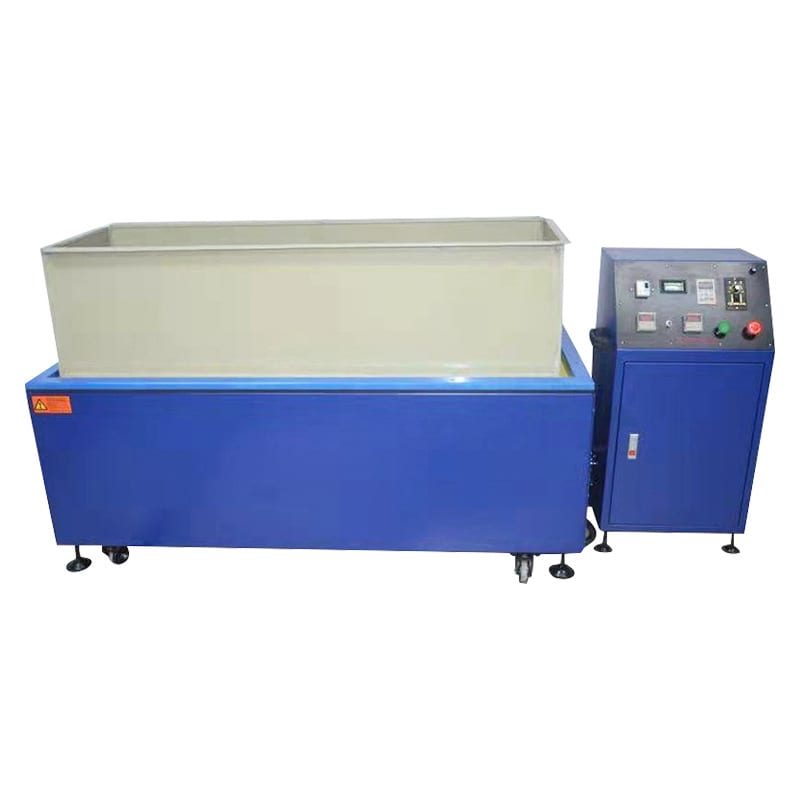
How Xiamen Jin Tai Jin Builds Automated Finishing Lines
At Xiamen Jin Tai Jin Grinding Technology Co.,Ltd. (brand: Jings Polish), our workshop started in 1992 and our company was formally established in 2002, delivering over 200,000+ sets of grinding and polishing solutions to customers worldwide. Across our catalogue, we manufacture 21 machine platforms backed by 24 granted Chinese IP rights—including 1 invention patent, 17 utility model patents, and 6 design patents—under ISO 9001 certification 00726Q01571R001 (valid 2026-06-03 to 2029-06-02) and CE certifications M.2023.206.C88121 (Vertical, 8 models) and M.2023.206.C88120 (Horizontal, 13 models), valid until 2028-07-24.
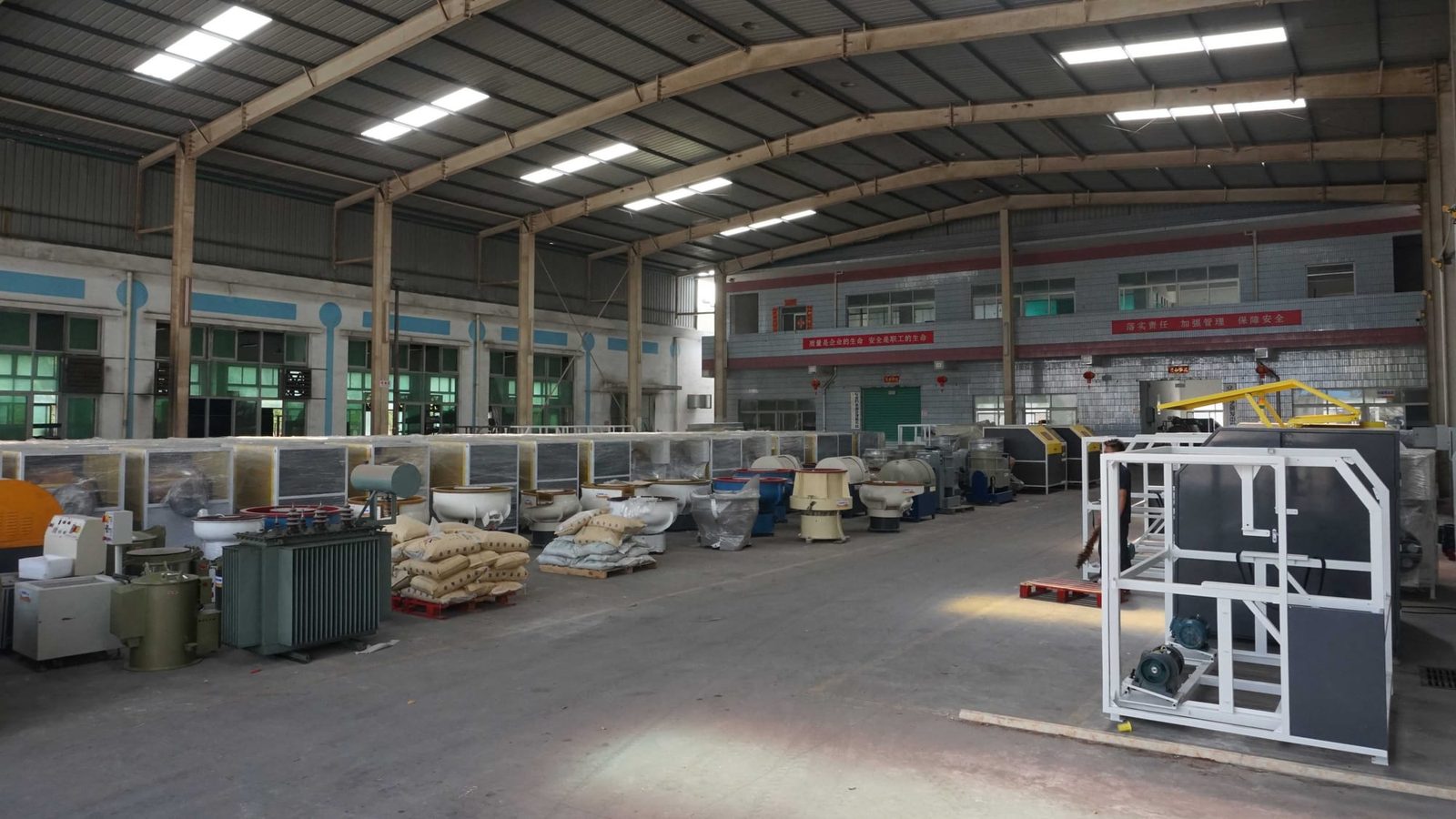
Drag finishers, vibratory, centrifugal, and drying lines we build
We manufacture high-speed drag finishing machines, circular vibratory bowls (ZL series), rectangular troughs (L1300, L1500, L1800), rotary barrels, centrifugal disc and barrel units (LLF120, LX series), magnetic precision polishers (OBD and HBPG series), heat centrifugal spin dryers (35, 35A, 70, 70A), and media cleaners. We also supply ceramic, plastic, high-alumina, steel, walnut shell, and corn cob media alongside our verified HM3, JTJ20, JTJ25, JTJ50, JTJ60, JTS5, LC10, and MC8 compounds.
Honest boundaries on what we do not offer
In line with our choosing a mass finishing supplier policy, we state our boundaries plainly. We do not operate a contract job shop or run paid customer parts; we do not offer plating, anodizing, passivation, PVD coating, clear-coat sealing, or heat treatment; we do not sell cloth buffing wheels, handheld grinders, belt sanders, or sandblasting abrasives; and we do not design custom chemical cleaning formulas.
Standard and custom build lead times
Standard mass-finishing equipment ships within a 25 to 35 day production lead time once specifications are confirmed. Custom-engineered drag finishing fixtures, specialized multi-tub layouts, and integrated automated finishing technology lines require 45 to 60 days to build and test.
Requesting an initial assessment from part photos
We do not promise free mail-in sample trials or guarantee cycle times before reviewing your workpiece. Send clear photos of your gears, blades, or precision shafts showing critical tolerances, clamping bores, alloy grade, and daily batch target via our custom polishing solution page—our engineers can evaluate your photos and drawings to confirm whether drag finishing or vibratory finishing fits best, including for non-ferrous parts covered in aluminum finishes.
Frequently Asked Questions
What is drag finishing used for in metal manufacturing?
Drag finishing is used to deburr, edge-round, and polish high-value precision metal parts—such as hardened gears, turbine blades, camshafts, hydraulic spools, and medical implants—that cannot risk part-on-part collision inside loose vibratory bowls or rotary barrels. Clamping each component individually guarantees repeatable edge quality across every shift.
How is drag finishing different from vibratory finishing?
In vibratory finishing, parts tumble loose inside a vibrating bowl of media, which is ideal for bulk hardware batches and stamped brackets. In drag finishing, each part is clamped onto a rotating spindle and actively dragged through a stationary media tub for higher contact pressure, symmetric flank finishing, and zero part-to-part contact.
Can drag finishing automate my entire finishing line?
Drag finishing automates the mechanical deburring and polishing cycle with repeatable timer, immersion depth, and spindle-direction control, and pairs cleanly with upstream CNC cells and downstream centrifugal spin dryers (35/70 series). Manual or robotic fixturing is still needed to load parts onto spindle holders cleanly.
What media works best in a high-speed drag finisher?
Use dense cutting ceramic media or resin-bonded plastic cones for deburring and smoothing tool marks, high-alumina ceramic balls for non-abrasive brightening, and dry walnut shell or corn cob for final warm lustre in a dedicated dry tub. Always size media against part slots using worn-chip dimensions so chips never wedge.
Does drag finishing polish inside narrow blind holes?
No. Exterior media flow around a clamped part cleans open slots, fillets, and outer flanks cleanly, yet cannot enter narrow blind bores or deep internal threads. Non-magnetic parts with tight internal holes pair well with a magnetic precision polisher (OBD/HBPG) before or after external finishing.
What information should I send before requesting a drag finishing quote?
Send clear close-up photos of your part showing critical edges, current machining marks, and mounting bores, along with overall dimensions, part weight, alloy type, target finish, and daily batch volume. Our engineers can assess your photos and drawings to recommend spindle layout, fixture grip points, and media grade before quoting.
[DESIGN: Annotated buyer enquiry checklist showing part photo angles, clamping bore notes, and daily batch requirements for drag finishing]
 +86-592-2381506


 IPv6 network supported
