
Ceramic Wheel Polishing Machine vs Rotary Tumbler: Separating Wheel Buffers, Hobby Tumblers, and Industrial Chambers
Industrial buyers searching for a ceramic wheel polishing machine, ceramic wheel polisher, stone tumbler machine, or glass tumbler polisher frequently land on three unrelated product categories at once: pedestal wheel polishers fitted with ceramic/vitrified wheels, tabletop lapidary rock tumblers, and heavy factory mass-finishing chambers. Ordering a hobby lapidary drum for industrial steel brackets stalls production on day one, while buying a rigid wheel polisher for intricate 3D stampings leaves every recess untouched.
The central thesis of this guide is straightforward: rotary mass-finishing chambers, wheel polishers, and tabletop rock/glass tumblers are distinct product classes—and knowing which physical motion your part needs prevents buying the wrong equipment. This guide clarifies how industrial rotary barrels and vibratory bowls compare with a ceramic wheel polisher, stone tumbler machine, and glass tumbler polisher, and states plainly what Xiamen Jin Tai Jin manufactures versus what falls outside our scope. For broader machine naming, see finishing machine names and tumbler polishing machine.
Four Different Machines Hiding Behind Similar Search Terms
Before requesting a quote, separate the four mechanical layouts that share "wheel" and "tumbler" keywords online.
[DESIGN: Four-panel equipment comparison showing industrial octagonal rotary barrel, circular vibratory bowl, centrifugal disc finisher, and magnetic precision polisher]
What "ceramic wheel polishing machine" means in industry
A ceramic wheel polishing machine or ceramic wheel polisher typically describes a stationary spindle or automated multi-station machine that spins a rigid bonded ceramic wheel (or mounted abrasive wheel) against the outer surface of a workpiece—common in automotive alloy-wheel refurbishment or cylindrical metal grinding. Contact is localized along the wheel face rather than surrounding the entire part inside loose tumbling media.
What "stone tumbler machine" means for rock and mineral polishing
A stone tumbler machine is usually a small, sealed rubber-barrel rotary drum built for tumbling agate, quartz, and lapidary gemstones over multi-week cycles using loose silicon carbide grit. While the basic gravity-cascading drum idea resembles an industrial barrel, tabletop rock tumblers are a different product class built for light studio and hobby runs, not continuous industrial metal deburring.
What "glass tumbler polisher" means for glass and crystal
Buyers searching glass tumbler polisher are looking either for decorative drinking-glassware buffing machines or for rotary tumblers used to frost or smooth small glass beads and sea glass. Glass is brittle and chips instantly under heavy steel-grade ceramic impact; industrial glass edge smoothing relies on specialized diamond-wheel glass edgers rather than loose metal-finishing bowls.
What industrial mass-finishing chambers actually do
Industrial mass-finishing chambers—vibratory bowls (ZL series), rectangular troughs (L series), rotary barrels, centrifugal units (LLF120, LX), and magnetic polishers (OBD, HBPG)—process batches of metal, plastic, and eyewear parts inside moving beds of preformed ceramic, plastic, high-alumina, steel, or organic media. Full-surface tumbling reaches edges, slots, and recesses across hundreds of parts per cycle.
Comparing Machine Motion, Part Fit, and Supply Scope
Use this matrix to match your actual workpiece to the right equipment class before sending an RFQ.
| Equipment Class | How Tool Touches Part | Best Workpiece Profile | Industrial Batch Fit | Our Supply Scope |
|---|---|---|---|---|
Vibratory Bowl / Trough (ZL & L Series) |
Spiral or linear vibration in polyurethane chamber | Stamped brackets, valves, hinges, flatware, tubes | High — automated screen separation | Manufactured by us (ZL & L series) |
| Industrial Rotary Barrel Tumbler | Slow cascading slide in octagonal/double drum | Heavy forgings, fasteners, brass, acrylic/eyewear | High — quiet pressure & dry organic shine | Manufactured by us (octagonal & dry barrels) |
| Centrifugal / Drag / Magnetic Units | High-G rotation, clamped spindles, or magnetic pins | Precision gears, blades, blind bores, jewellery | High — rapid cut or zero-collision precision | Manufactured by us (LLF, LX, OBD, HBPG) |
| Ceramic Wheel Polisher / Alloy-Wheel Buffer | Spinning rigid/cloth wheel on open outer face | Car alloy rims, flat sheets, single cylindrical shafts | Single-piece / indexed station | Not manufactured — we do not build wheel buffers |
| Tabletop Stone / Glass Tumbler Machine | Small sealed rubber drum for rocks or sea glass | Agate stones, hobby brass, decorative glass beads | Small studio / craft batches | Not manufactured — different product class |

Why a rigid ceramic wheel polisher cannot deburr complex brackets
A ceramic wheel polishing machine only touches the outer silhouette that can be pressed against the spinning wheel face. Stampings with bent flanges, mounting holes, internal slots, and recessed corners remain sharp and untouched. Loose media inside a vibratory finishing machine flows around every bent flange and inside cutouts simultaneously.
Why tabletop stone tumblers stall on factory metal batches
A small stone tumbler machine lacks the polyurethane liner thickness, motor torque, drainage flushing, and separation hardware required for daily metal deburring. Attempting to run heavy steel stampings in an unvented craft drum wears through thin rubber liners quickly and forces operators into manual hand-sorting. Industrial batch production requires factory-built chamber capacity and sealed wet-duty drives.
Where alloy-wheel polishing and automotive rim buffers belong
Many searches for ceramic wheel polishing machine come from automotive repair shops restoring scuffed car alloy wheels. Car rims are oversized, heavy, and require directional lathe or wheel-buffing passes—not loose tumbling inside a standard hardware bowl. We do not build car-rim wheel-buffing lathes, handheld angle grinders, belt sanders, or cloth buffing wheels.
Honest scope: what Xiamen Jin Tai Jin manufactures
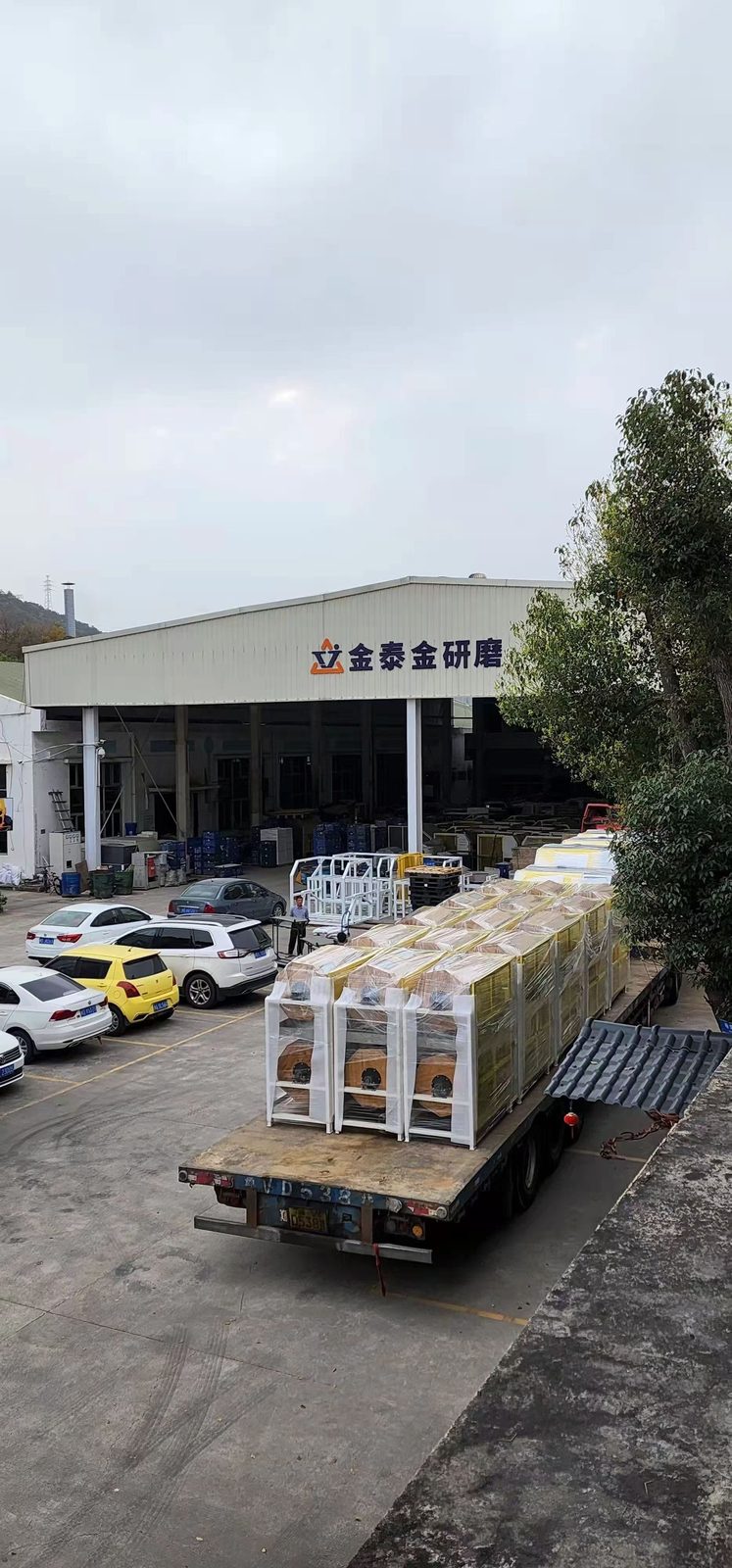
At Xiamen Jin Tai Jin Grinding Technology Co.,Ltd., we build industrial chamber-based mass-finishing machines—vibratory bowls and troughs, rotary barrels, centrifugal disc and barrel units, drag finishers, magnetic precision polishers, spin dryers, and media cleaners—alongside preformed media and liquid compounds. We do not build cloth buffing wheels, wheel wax bars, handheld buffers, lapidary rock tumblers, or glass-edging lathes.
Choosing the Right Industrial Tumbler Format for Factory Batches
Once you confirm your parts belong in an industrial mass-finishing chamber rather than a ceramic wheel polisher or stone tumbler machine, pick the chamber motion that matches part weight, length, and collision tolerance.
Octagonal and double-barrel rotary tumblers for quiet cascading
Industrial octagonal and double-barrel tumblers from our barrel finishing machines line rotate smoothly so media and parts slide in a steady cascade. Because there is no high-frequency vibration, rotary barrels produce tight, consistent edge radii on fasteners, forgings, and brass hardware while keeping shop noise low. Double-deck and double-barrel dry tumblers also let eyewear and acrylic shops run two dry organic stages side by side.
Circular vibratory bowls with built-in separation decks
For stamped brackets, hinges, and flat hardware that tend to stick together face-to-face inside a slow drum, a circular vibratory finishing machine (ZL series) keeps parts separated in a lively spiral of media. Models fitted with integrated separation decks (ZL100C through ZL900C) divide finished parts from ceramic or plastic chips automatically at cycle end.
Long rectangular troughs for shafts, bars, and tubes
Elongated shafts, extruded aluminium rails, and cut pipe sections jam across the centre dome of a circular bowl. Rectangular vibratory troughs (L1300, L1500, L1800) give long parts straight rolling room, while removable dividers isolate heavy bars so sharp edges never nick adjacent parts.
Centrifugal disc, drag, and magnetic units for precision parts
Compact precision hardware that lacks weight to cut quickly in a gravity barrel accelerates inside a centrifugal disc (LLF120) or centrifugal barrel machine. High-value gears and blades that cannot touch each other belong on clamped high-speed drag-finishing spindles, while non-magnetic parts with blind threads run cleanly in magnetic precision polishers (OBD and HBPG series).

Preformed Ceramic Media vs Ceramic Polishing Wheels
Because the word "ceramic" appears in both ceramic wheel polisher and "ceramic tumbling media," buyers often confuse rigid grinding wheels with loose preformed tumbling chips.

Preformed ceramic triangles and angle-cut cylinders
In mass finishing, ceramic media consists of small, preformed shapes pressed from clay and aluminium oxide or silicon carbide grit and fired in a kiln. Loaded inside a vibratory bowl or rotary drum from our grinding media line, thousands of loose ceramic chips slide across metal burrs at once without needing a spinning wheel arbor.
High-alumina ceramic spheres for non-abrasive burnishing
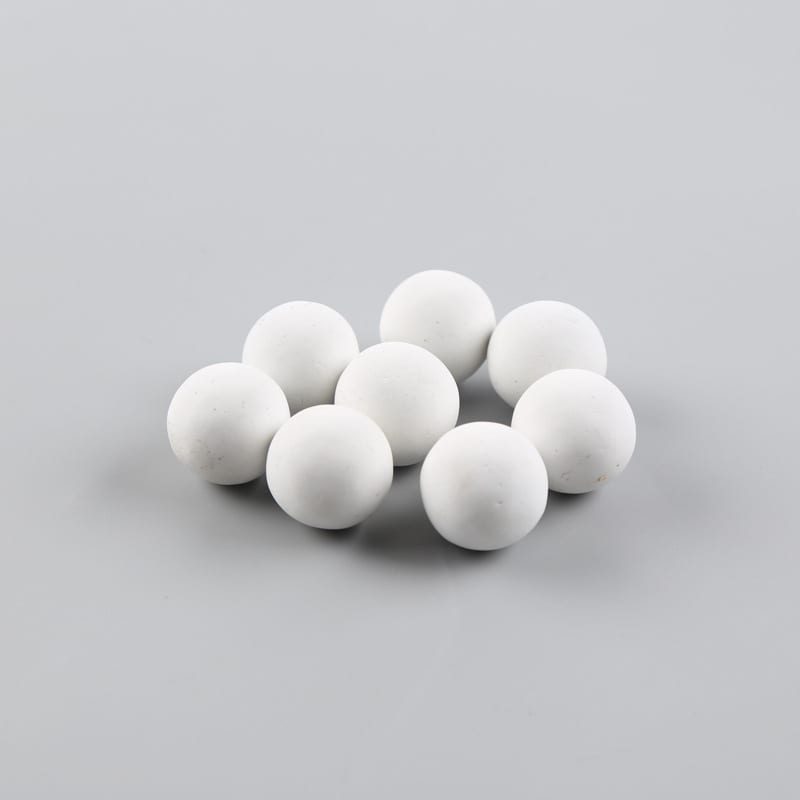
When parts need bright lustre after deburring, smooth high-alumina ceramic spheres and cylinders compress microscopic surface peaks flat without grinding away tolerances. High-alumina media runs cleanly in vibratory bowls, centrifugal discs, and high-speed drag finishers—delivering uniform brightness across complex 3D hardware. See our isotropic finishing guide for how non-abrasive burnishing refines gear and valve surfaces.
Resin-bonded plastic cones for soft aluminium and brass
Soft non-ferrous parts—such as aluminium housings, brass fittings, and zinc die-castings—dent under heavy ceramic impact. Resin-bonded plastic cones embed fine abrasive inside a lighter polymer matrix, smoothing CNC tool marks without orange-peel bruising. Check our aluminum finishes and copper alloy finishing guides for alloy-safe media pairing.
Walnut shell and corn cob for dry barrel brightening
For dry final gloss on eyewear acetate, machined acrylic, and pre-smoothed brass, industrial double-barrel and double-deck dry tumblers use crushed walnut shell and corn cob from our dry finishing media line dressed with dry polishing paste. Confirm corn cob mesh grade when ordering dry organic media.
Step-by-Step Industrial Rotary & Vibratory Tumbling Workflow
If your parts are metal, plastic, or eyewear hardware suited for batch mass finishing rather than a ceramic wheel polisher or stone tumbler machine, follow this four-stage industrial routine.
| Stage | Shop-Floor Action | Equipment & Media Choice | Quality Gate Before Next Step |
|---|---|---|---|
| 1. Pre-Clean & Sort | Degrease oil; sort ferrous from non-ferrous alloys | Clean wash before loading chamber | Zero oil slicks or mixed carbon/stainless lots |
| 2. Wet Cut-Down | Deburr and smooth tool marks in moving media | Ceramic (steel) or plastic (Al/brass) + LC10/JTJ20 |
Uniform matte surface; zero remaining burrs |
| 3. Brightening Pass | Lift non-directional lustre in clean media | High-alumina / steel (JTJ50/JTJ60) or dry cob |
Even sheen across flats, corners, and slots |
| 4. Separate & Spin Dry | Divide parts from media; rinse and spin-dry fast | Separation screen + spin dryer (35/70 series) |
Bone-dry, spot-free parts ready for assembly |
[DESIGN: Four-stage industrial tumbling workflow showing raw metal brackets entering a vibratory bowl, separating over a screen, and exiting a centrifugal spin dryer]
Degreasing oily parts and verifying media-to-hole clearance
Stamping oil and CNC coolant glaze ceramic chips within minutes, while worn-down media fragments can wedge tightly inside mounting holes. Wash oily parts clean before loading and size every media charge against worn-chip dimensions so shrinking chips never lodge inside critical bores.
Running verified Jings Polish liquid compounds
Plain tap water rusts carbon steel and leaves dull oxide film on stainless parts. Match our verified liquid compounds directly to your alloy and stage: MC8 for rust/mill-scale stripping, LC10 for deburring, JTJ20 / JTJ25 for coarse cutting, JTJ50 for stainless brightening, JTJ60 for fine metal polishing, JTS5 for thin-sheet finishing, and HM3 for final polishing. We supply liquid compounds for wet media systems and dry pastes for tumbling, while never designing custom chemical cleaning formulas.
Automated separation versus manual drum unloading
In high-volume production, manually sorting parts out of a rotary barrel eats up shift labour. Circular vibratory bowls with built-in separation decks (ZL100C through ZL900C) lift a separation dam at cycle end so parts ride cleanly onto a screen while media drops back into the bowl.
Rapid spin drying to prevent mineral water spots
Pulling bright metal parts out of wet media and leaving them in open baskets causes mineral water spots and flash rusting. Rinse loads promptly in clean water and dry them inside a heat centrifugal spin dryer (35, 35A, 70, or 70A models). See our post-finishing separate wash and dry guide for clean cell design.

Failure Modes When Buyers Pick the Wrong Machine Class
Avoid these four purchasing and operating mistakes when comparing a ceramic wheel polishing machine, stone tumbler machine, and industrial mass-finishing chambers.
[DESIGN: Troubleshooting matrix showing four selection failures: unpolished recesses from wheel buffing, chipped glass/brittle parts in heavy media, wedged ceramic chips in slots, and flash-rusted carbon steel]
Buying a wheel polisher for intricate 3D stampings
Rigid wheels and cloth buffers polish wide flat sheets and outer curves cleanly, yet leave inside corners, cross-holes, and stamped cutouts sharp and dull. Match 3D batch hardware to loose-media vibratory bowls, rotary barrels, or magnetic pin polishers so every recessed edge receives uniform contact.
Trying to tumble oversized car rims or brittle glass
Oversized alloy wheels exceed standard barrel channel widths and bang violently, while brittle glass objects chip along edges under heavy tumbling loads. Keep oversized wheels on dedicated rim lathes and brittle glass on specialized glass-edging equipment rather than forcing them into metal chambers.
Mixing carbon steel and stainless steel in one chamber
Running carbon steel brackets in a barrel or bowl and then loading 304 stainless parts into the same ceramic charge embeds free iron into the stainless steel, triggering rust spots days later. Keep ferrous and stainless media charges strictly separated—a core rule in job shop finishing.
Skipping worn-media screening and compound metering
Letting broken ceramic fragments accumulate in a drum leads to wedged chips in slots, while running plain water instead of metered compound causes flash rust and glazed media pores. Screen media and meter compound steadily every shift.

How Xiamen Jin Tai Jin Builds Industrial Mass-Finishing Lines
At Xiamen Jin Tai Jin Grinding Technology Co.,Ltd. (brand: Jings Polish), our workshop started in 1992 and our company was formally established in 2002, delivering over 200,000+ sets of grinding and polishing solutions to customers worldwide. Across our catalogue and machines portfolio, we manufacture 21 machine platforms backed by 24 granted Chinese IP rights—including 1 invention patent, 17 utility model patents, and 6 design patents—under ISO 9001 certification 00726Q01571R001 (valid 2026-06-03 to 2029-06-02) and CE certifications M.2023.206.C88121 (Vertical, 8 models) and M.2023.206.C88120 (Horizontal, 13 models), valid until 2028-07-24.

Industrial rotary barrels, vibratory bowls, and dryers we build
We manufacture barrel finishing machines (octagonal, double-barrel, double-deck dry tumblers), circular vibratory bowls (ZL series), rectangular troughs (L1300, L1500, L1800), centrifugal disc and barrel units (LLF120, LX series), drag finishers, magnetic precision polishers (OBD and HBPG series), heat centrifugal spin dryers (35, 35A, 70, 70A), and media cleaners alongside preformed media and verified compounds for automated factory cells.
Honest boundaries on wheels, hobby tumblers, and contract work
In line with our choosing a mass finishing supplier policy, we state our boundaries plainly before quoting any equipment. We do not build rigid ceramic wheel polishing machines, car-rim lathes, handheld grinders, cloth buffing wheels, or solid wheel wax bars; we do not manufacture tabletop hobby stone tumbler machines or glass-edging equipment; we do not supply sandblasting abrasives, plating, anodizing, or clear-coat sealing; and we do not operate a contract job shop or accept parts for paid polishing.
Standard and custom build lead times
Standard rotary barrel, vibratory, centrifugal, and spin-drying equipment ships within a 25 to 35 day production lead time once specifications are confirmed. Custom-engineered troughs, compartmented dividers, and integrated separation and drying lines carry a 45 to 60 day build lead time to manufacture and test.
Requesting an initial assessment from part photos
We do not promise free mail-in sample trials or guarantee cycle times before inspecting your workpiece. Send clear close-up photos of your parts showing burrs, geometry, smallest slots, overall dimensions, alloy grade, target finish, and daily batch volume via our custom polishing solution page—our engineers can evaluate your photos and drawings to confirm whether industrial batch tumbling fits your job, including for stainless steel finishes and grinding and sanding marks.
Frequently Asked Questions
Do you manufacture a ceramic wheel polishing machine for car alloy wheels?
No. A ceramic wheel polishing machine or ceramic wheel polisher uses spinning rigid or cloth wheels on oversized rims, which we do not build. We manufacture chamber-based mass-finishing equipment (vibratory bowls, rotary barrels, centrifugal units, drag finishers, and magnetic polishers) for batch hardware across factories.
What is the difference between a stone tumbler machine and an industrial barrel tumbler?
A stone tumbler machine is a small sealed tabletop drum designed for multi-week hobby rock polishing. An industrial rotary barrel tumbler features thick polyurethane or rubber linings, heavy-duty wet/dry drives, and batch capacity built for daily metal, plastic, and eyewear production shifts.
Can you polish glass inside a vibratory or barrel tumbler?
Brittle glass objects chip easily under heavy tumbling impacts, and we do not manufacture dedicated glass tumbler polisher or glass-edging equipment. Industrial mass finishing is engineered primarily for metals, engineered plastics (like acrylic and acetate), and select ceramic-metal components.
What is preformed ceramic tumbling media used for?
Preformed ceramic triangles, cones, and angle-cut cylinders roll inside vibratory bowls and rotary barrels to deburr stamped brackets, smooth CNC tool marks, and round sharp metal edges across hundreds of parts per batch without manual wheel work or hand scraping.
How do I choose between a rotary barrel and a vibratory bowl for metal parts?
Choose a rotary barrel for quiet cascading edge rounding or dry organic polishing in walnut shell and corn cob across small-to-medium batches. Choose a circular vibratory bowl (ZL series) for faster cutting, flat-plate separation, and built-in separation screens that save sorting labour every shift.
What details should I send before ordering an industrial tumbler machine?
Send clear close-up photos of your parts showing burrs, surface marks, and recesses, overall dimensions, smallest slot widths, part weight, alloy type, target finish, and daily batch volume. Our engineers can recommend the right chamber architecture and preformed media grade from photos and drawings before quoting.
[DESIGN: Annotated buyer enquiry checklist showing part photo angles, slot dimensions, and daily batch target]
 +86-592-2381506


 IPv6 network supported
