
Vibratory Deburring Equipment: How to Specify One That Actually Ships Parts
If you are evaluating vibratory deburring equipment for your manufacturing floor, you have likely encountered basic online guides that offer vague overviews of mass finishing without giving you the engineering parameters needed to size a machine or calculate true operating costs. This article assumes you have already reviewed our high-level process comparisons in our deburring machine route selection guide and decided that the vibratory mass finishing route fits your production profile.
Here, we dive exclusively into the vibratory route. We will examine how bowl machines and rectangular tubs differ in actual shop-floor practice, why nominal machine capacity differs from usable load, how media sizing and chemical compounds control edge radii, how to break down the total cost of ownership without falling for predatory pricing traps, and where vibratory deburring is the wrong manufacturing choice entirely.
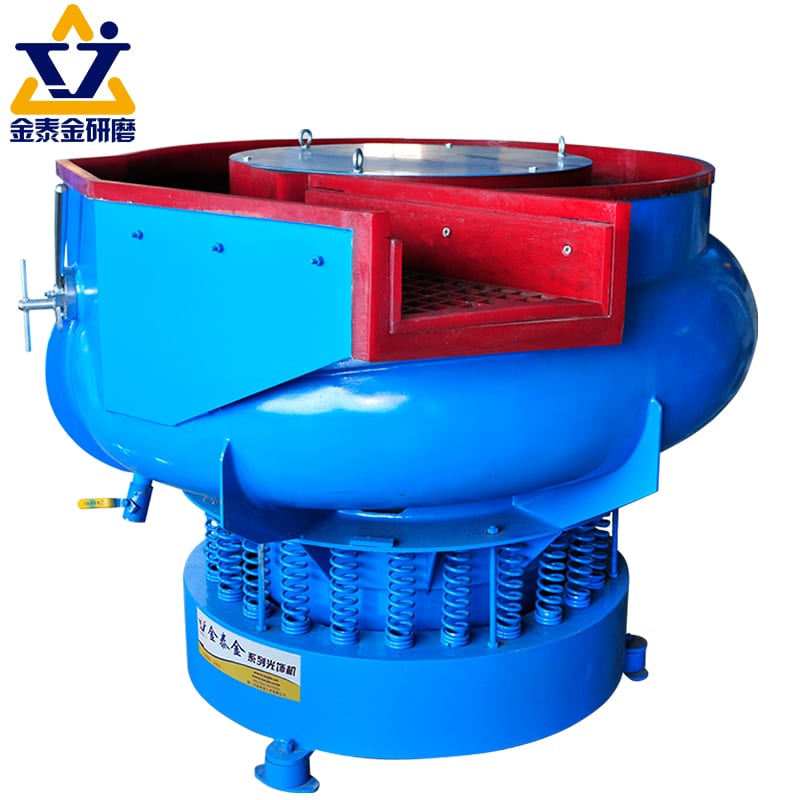
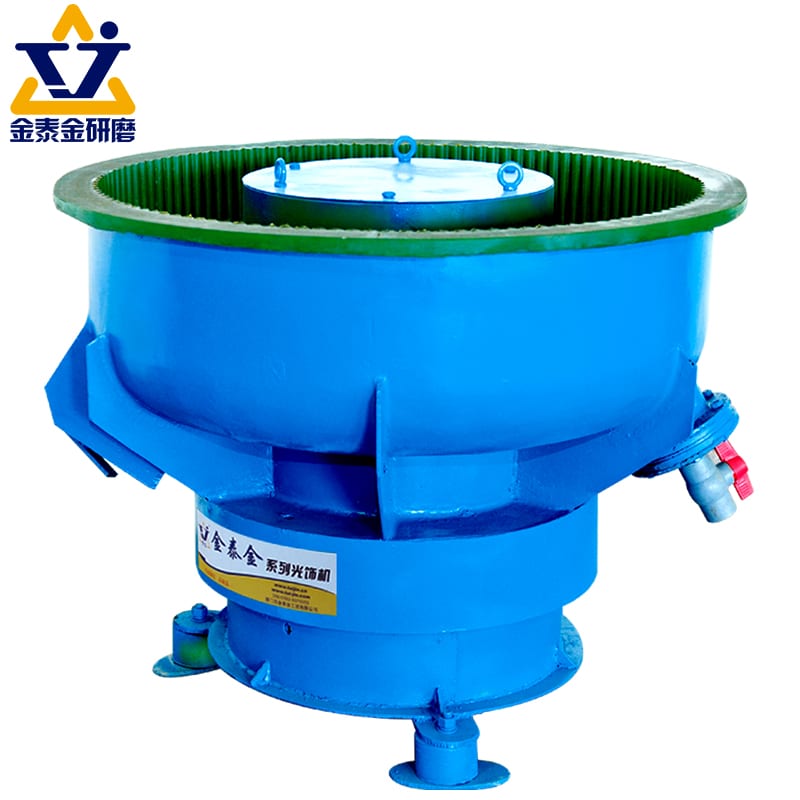
What the "Two Categories" Actually Mean in Practice
Many equipment brochures state that vibratory finishing systems fall into "two distinct categories" without explaining how those categories affect your daily loading, cycle times, and part geometry limits. On the production floor, those two physical architectures are circular bowl finishers and rectangular tub vibrators (troughs).
Bowl machines and tub machines — what each one can carry
A circular bowl vibrator uses an annular processing channel wrapped around a raised center dome. The rotational vibration created by bottom-mounted or central vertical eccentric motors drives the media mass in a continuous helical spiral: media rolls up the inner wall of the bowl, cascades over the top, flows down the outer wall, and travels back across the bottom.
A rectangular tub vibrator (trough), by contrast, features an open U-shaped or rectangular channel driven by dual horizontal or vertical eccentric shaft motors mounted along the base or sides. Because the trough has no center dome interrupting its width, it provides an unobstructed straight-line working length.
| Comparison Parameter | Circular Bowl Finisher | Rectangular Tub Finisher (L-Series Trough) |
|---|---|---|
| Chamber Geometry | Annular ring around a center dome | Open rectangular U-shaped trough |
| Part Length Limit | Limited by annular curve and center dome clearance | Accommodates long shafts, rails, and large linear weldments |
| Partitioning Potential | Fixed single channel (or manual separation dams) | Accepts movable urethane partition plates for multi-batch running |
| Media Unloading | Internal unload plug or manual scoop | Tilt-discharge mechanism or drop-bottom gate |
Why the choice is decided by part size and loading, not by price
The decision between a bowl and a trough should never be made purely on initial equipment price. It is governed by workpiece geometry:
- Circular bowls excel at small-to-medium stamped parts, die-castings, turned fittings, and general hardware. The circular flow naturally tumbles free parts uniformly and handles internal separation dams efficiently if equipped with an unload gate.
- Rectangular tubs are required when your component inventory includes long linear parts (such as automotive control arms, surgical shafts, extruded profiles, or large manifolds) that would jam or span across the curved radius of a circular bowl. Furthermore, long troughs can be divided into two or three isolated compartments using removable urethane partition plates, allowing an operator to run different parts or separate media stages simultaneously in one machine.
To understand how vibratory equipment compares against alternative automated finishing architectures like centrifugal disc systems or robotic cells, read our guide on automated deburring machines.
Capacity Is Not the Number on the Brochure
When a specification sheet states that a vibratory finishing machine has a capacity of 1200 liters, buyers frequently assume they can load 1200 liters of solid metal parts into the tub. Exceeding the actual working envelope is the fastest way to stall media circulation, overload the drive motor, and ruin surface finishes.
Why nominal tub volume overstates usable load
Nominal tub capacity is a catalogue rating for the empty vessel measured to the brim. In actual operation, several physical factors reduce the usable volume:
- Freeboard clearance: The top 15% to 20% of the trough height must remain empty so the media and parts can roll and cascade freely without spilling over the rim.
- Media-to-metal ratio: Mass finishing requires a high volumetric ratio of abrasive media to parts (typically 3:1 to 6:1 depending on part fragility) to ensure that stones cushion the workpieces and prevent metal-to-metal impingement.
- Lining thickness: The heavy-duty cast polyurethane lining that protects the steel shell occupies several centimeters of internal clearance.
How to estimate the real charge from part volume and media ratio
To determine your true batch capacity, calculate the bulk volume of the parts processed per cycle, multiply that volume by the required media ratio, and verify that the combined mass does not exceed the motor's power rating.
Our standard heavy-duty rectangular trough lineup illustrates the scale of industrial vibratory platforms:
| Model | Nominal Trough Capacity (L) | Overall Dimensions L×W×H (mm) | Motor Power (kW) |
|---|---|---|---|
| L1300 | 1200 | 2700 × 1300 × 1400 | 5.0 × 2 |
| L1500 | 1500 | 3340 × 1290 × 1440 | 5.5 × 2 |
| L1800 | 1800 | 2800 × 1700 × 2000 | 7.5 × 2 |
Engineering caveat on ratings: Nominal trough capacity (1200 L, 1500 L, 1800 L) is the catalogue rating for the empty tub. The actual load depends on part geometry, media charge, and divider setup, and must be confirmed by sample trial. Cycle time depends on burr height and target edge radius; establish it by sample trial and monitor rather than assuming a fixed catalogue number.
Founded in Xiamen in 1992, our manufacturing operation builds these vibratory platforms under ISO 9001 certification (certificate 00726Q01571R001, valid 2026-06-03 to 2029-06-02), with CE compliance covering 21 machine platforms across vertical (M.2023.206.C88121) and horizontal (M.2023.206.C88120) lines valid through 2028-07-24. Backed by 24 granted Chinese IP rights — including 1 invention patent and 17 utility model patents supporting our mechanical drive and structural engineering — we have validated vibratory finishing processes across 48 distinct industrial workpiece categories, ranging from electrical contacts and stamped springs to cast gears, valve sleeves, and brass fittings.
The Three Variables That Decide the Finish
A vibratory machine is only the power source; the actual surface work is performed by the media and the chemical compound solution circulating inside the chamber.
Media grade — cut rate versus edge radius
Ceramic media (high-alumina bond) provides aggressive material removal, heavy burr knockdown, and scale scaling, while resin-bonded plastic media offers gentle surface smoothing, pre-paint preparation, and controlled edge radiusing without deep surface scratching. For specialized small component requirements, our small parts deburring guide outlines how miniature components behave in high-frequency vibratory streams.
Media size — the one-third rule and where it breaks
Media selection is governed by geometry: stones must be large enough that they never wedge into blind slots, cross-holes, or internal threads, yet small enough to reach into recessed corners. A primary guideline in mass finishing is that media dimensions should be at least three times larger or significantly smaller than any hole or slot on the part to prevent media lodging. For a detailed breakdown of shape and size selection, see our tumbling media selection guide.
Compound — why LC10 is a starting point, not an answer
Running parts in a vibratory tub with plain water causes rapid oxidation and sludge buildup. Liquid chemical compounds lubricate the contact zone, suspend abraded metallic swarf, and chemically brighten the metal. For heavy burr removal on steel and general alloy components, formulations such as compound-LC10 (deburring) provide the initial cutting lubrication. Subsequent stages transition to compound-JTJ25 (metal rough polishing), compound-JTJ60 (metal fine polishing), compound-HM3 (brightening), or compound-MC8 (rust inhibition). Exact dosing ratios and flow rates are always established according to technical data sheets and confirmed during sample trials.
What Drives the Cost (and What the Quote Leaves Out)
Search queries for vibratory deburring equipment frequently focus on cost, price lists, and cheap equipment options. However, evaluating a finishing installation based solely on the upfront machine price tag is a common financial trap in manufacturing procurement.
The five cost lines, in the order they surprise buyers
- The machine base and tub: The capital cost of the vibratory trough, eccentric motor drives, and sound enclosure.
- The initial media charge: A 1500-liter trough requires hundreds of kilograms of ceramic or plastic media stones to fill the working chamber to the correct operating level. Media is an initial consumable investment that must be accounted for in project budgets.
- Running consumables: Ongoing consumption of replacement media (which wears down over weeks of operation) and continuous dosing of liquid compounds and water.
- Utility and floor space infrastructure: Three-phase industrial power supply, clean water intake lines, and wastewater treatment or effluent settling tanks required to handle metal-laden discharge.
- Labour displacement value: The true return on investment (ROI) is measured by how many manual bench grinders, deburring files, or hand-debursing operators the automated vibratory system replaces. Two installations of the same nominal capacity can differ by a wide margin in operating cost once media grade and compound consumption are optimized.
The two numbers to ask for that are not the machine price
When requesting quotes from equipment manufacturers, do not just ask for the machine price. Always ask for:
- Media consumption rate per operating hour: How many kilograms of stones wear down per 100 hours of processing under load?
- Compound dosing volume per cycle: What is the recommended millilitres-per-minute flow rate through the metering pump?
These two operational metrics decide your recurring running cost far more than minor variances in initial equipment quotations.
Where Vibratory Deburring Is the Wrong Route
Competitor literature often implies that vibratory machines can solve every surface defect in a machine shop. Knowing where the vibratory route fails saves capital equipment from being misapplied.
Burrs the media cannot reach (cross-holes, blind slots, threads)
Vibratory deburring relies on relative movement between media stones and the workpiece surface. If a burr is located inside a deep, dead-bottom blind hole, a narrow cross-drilled intersection, or fine internal pipe threads where abrasive stones cannot physically enter or circulate, vibratory finishing will not remove it. Those geometries require thermal deburring, electrochemical machining, or specialized high-pressure fluid deburring.
Parts that cannot lose edge material
If your engineering drawing specifies razor-sharp, zero-radius edges with zero tolerance for dimensional edge break, mass finishing is the wrong process. The continuous tumbling action of media against a metal part inherently rounds off sharp corners and creates a controlled edge break radius.
Volume too low to justify a charge
If your shop produces one custom prototype assembly per week, the time required to lock down media grades, set up compound dosing, and run qualification batches outweighs the efficiency of mass finishing. Low-volume custom work is better handled by manual bench deburring.
Troubleshooting: Four Failures Blamed on the Equipment
When processed parts emerge with burrs intact, surface staining, or wedged stones, operators frequently blame the vibratory equipment itself. Nearly all processing failures trace back to media selection, chemical compound dosing, or parts loading parameters.
| Observed Symptom | Root Cause | Shop-Floor Check | Corrective Adjustment |
|---|---|---|---|
| Burrs remain on one face only | Part orientation in the tub blocking media flow on downstream surfaces, or incorrect vibration rotation direction. | Inspect whether parts are wedged flat against the polyurethane tub wall or stagnant in a dead zone. | Re-position parts with partition plates, alter the fixture/basket angle, or verify eccentric motor rotation phase. |
| Edges rounded over (over-cut) | Cycle duration is excessively long, or abrasive media aggressiveness is too high for the part alloy. | Measure edge radius against an unpolished master sample at regular time intervals during the cycle. | Shorten cycle time, switch from aggressive cutting ceramic to finer plastic media, or reduce motor vibration amplitude. |
| Media lodging in cross-holes | Media nominal size matches the critical dimension of the slot or hole, causing stones to jam tightly. | Measure hole diameter and slot widths against the physical dimensions of worn media stones in the tub. | Screen out worn undersized stones immediately; change media size to either well below 1/3 or larger than the opening. |
| Grey finish that will not brighten | Metallic swarf re-depositing onto the parts due to exhausted compound or clogged wastewater drainage. | Check wastewater drain clarity; test if a clean white cloth wiped across wet media comes away grey. | Flush the chamber thoroughly, clean drainage ports, and verify steady dosing of brightening compound (compound-JTJ60 or compound-HM3). |
Burrs remain on one face only
In a U-shaped trough, media rolls in a predictable toroidal pattern. If components stack together or lie flat against the bottom liner, the upper or protected faces of the parts are starved of abrasive contact. Using removable urethane dividers to separate parts, or introducing light rotation to basket frames, ensures uniform media exposure across all surfaces.
Edges rounded over (over-cut)
Over-cutting occurs when parts are left in an aggressive ceramic cutting media stage long after burrs have been removed. Establishing strict cycle time controls and shifting from heavy ceramic stones to fine resin plastic media during the final minutes of processing prevents excessive edge radiusing.
Media lodging in cross-holes
When ceramic triangles or cylinders wear down over weeks of operation, their cross-section frequently shrinks until it matches the diameter of drilled holes or fastener slots on the workpiece. Implementing a routine media screening protocol purges worn stones before wedging becomes a persistent shop-floor bottleneck.
Grey finish that will not brighten
Freshly abraded metal sheds microscopic particles into the water bath. If compound flow is interrupted or drainage ports clog, those metallic fines bake back onto the part surface, creating a dull, cloudy gray finish. Maintaining clean water supply lines, proper compound metering (compound-LC10 for cutting, compound-JTJ60 for brightening), and active drainage prevents swarf re-deposition. For post-process water removal and flash-rust prevention, smaller parts and components can be rapidly dried in our heated centrifugal spin dryers (Model 35 with 30 kg capacity and φ400×300 mm basket; Model 70 with 50 kg capacity and φ500×400 mm basket; Model 70A with 60 kg capacity and φ480×290 mm basket, each equipped with 3 kW heating).
FAQ
1. How do I choose between a circular bowl vibrator and a rectangular tub vibrator?
Circular bowl finishers are ideal for general hardware, small stampings, and turned parts where free tumbling in an annular ring provides uniform finishing. Rectangular tub vibrators (troughs) are necessary for long linear components, shafts, and large weldments that require unobstructed straight-line length, or when you need to divide the chamber into isolated compartments for multi-batch running.
2. How many metal parts can I actually load into a 1200-liter vibratory machine?
Nominal tub volume (such as 1200 L, 1500 L, or 1800 L) is the catalogue rating for an empty vessel. Usable load capacity depends on freeboard clearance, polyurethane lining thickness, and the required 3:1 to 6:1 media-to-part ratio. Actual batch volume must always be confirmed through sample testing.
3. What is the difference between ceramic and plastic media for vibratory deburring?
Ceramic media (high-alumina bond) features high density and sharp cutting action, making it ideal for heavy burr removal, scale stripping, and fast stock reduction on hard metals. Plastic media (resin-bonded with embedded abrasives) is softer and lighter, providing controlled edge radiusing, surface smoothing, and pre-paint preparation without deep scratching soft alloys like aluminum or brass.
4. How can I evaluate the running cost of vibratory deburring equipment beyond the machine price?
True operating costs are driven by five factors: capital equipment, initial media charge, ongoing media consumption rates, utility/floor space infrastructure, and labour savings. When requesting equipment quotes, always ask suppliers for media wear rates per 100 hours and compound consumption millilitres per minute.
5. What types of burrs or part features cannot be removed by vibratory deburring?
Vibratory finishing cannot remove burrs located inside blind holes, narrow cross-drilled intersections, or internal threads where abrasive stones cannot physically circulate. It is also unsuitable for parts that require razor-sharp, zero-radius edges with strict zero tolerance for edge break.
6. Why do parts emerge from the vibratory tub with a dull gray finish or flash rust?
A dull gray finish is typically caused by metallic swarf re-depositing on the parts due to clogged drainage or exhausted chemical compounds. Flash rust occurs on steel components when wet parts dry slowly in ambient air. Using proper brightening chemicals (compound-JTJ60), maintaining steady wastewater flushing, and transferring wet parts immediately to heated centrifugal dryers or blow-off stations prevents surface staining and oxidation.
Specify Your Vibratory Deburring System
If you are evaluating vibratory finishing equipment for stamped brackets, machined castings, or precision industrial components, start by examining your workpiece geometry and production batch volume rather than a generic catalogue model. Explore our full range of industrial finishing machines or contact our engineering team to discuss trough capacities, media sizing, and custom sample processing trials.
 +86-592-2381506


 IPv6 network supported
