
Risks of Investing in Mass Finishing Equipment: Hidden Failure Modes, Sizing Traps, and How to De-Risk Your Purchase
Operations managers and manufacturing engineers researching the risks of investing in mass finishing equipment are usually trying to avoid an expensive capital mistake: buying a vibratory bowl, rotary barrel, or centrifugal disc machine that looks impressive on a catalog page yet stalls under real shop-floor parts, wedges media into blind holes, or misses cycle-time targets completely.
The central thesis of this guide is clear: most capital failures when investing in mass finishing equipment do not come from faulty motors or welds—they come from buying the wrong chamber physics for part geometry, underestimating media consumption and compound water management, and skipping wet sample trials on actual production parts before signing the purchase order. Mapping geometry limits, downstream rinsing/drying, and honest process boundaries upfront eliminates costly commissioning surprises. For equipment platform comparisons, see our vibratory grinder guide and rotary barrel sizing guide.
Why Mass Finishing Capex Projects Fail After Delivery
Capital equipment rarely fails for lack of horsepower; it fails because the machine's mechanical action mismatches the workpiece's fragile edges, weight, or throughput demand.
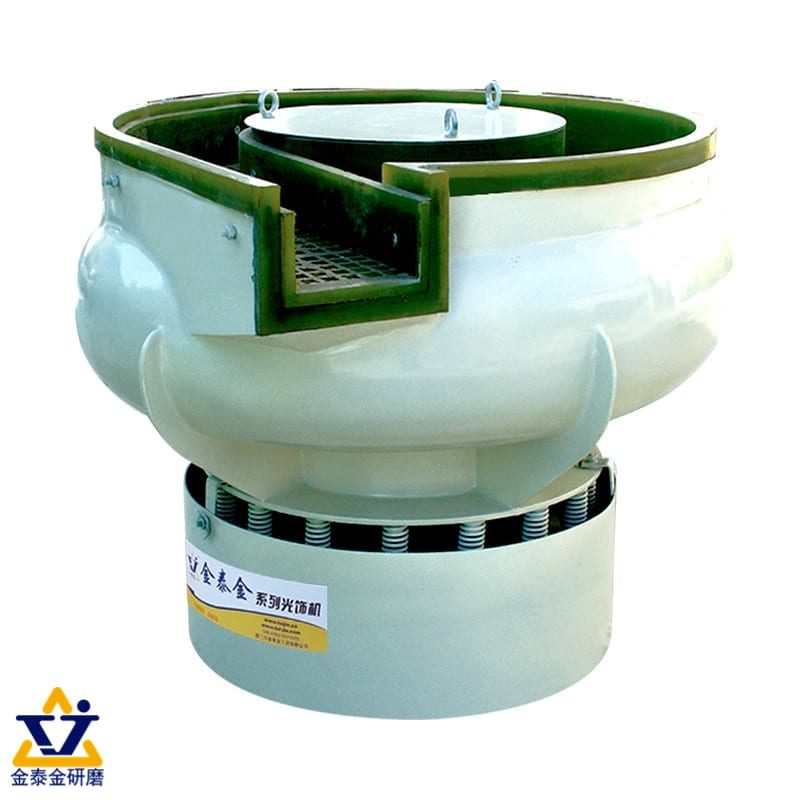
Buying Capacity by Catalog Liters Instead of Effective Part Envelope
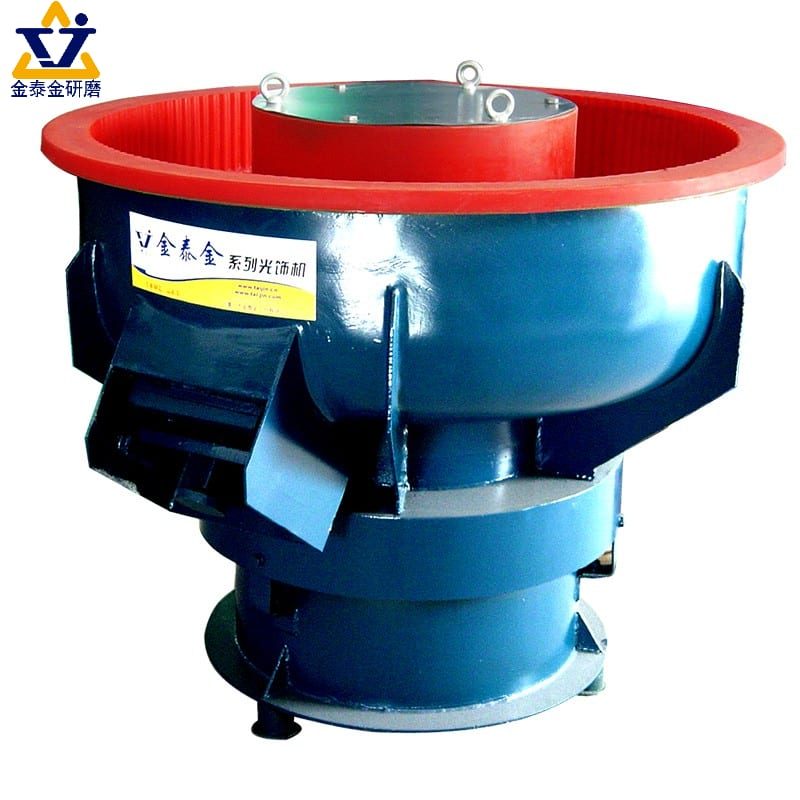
One of the steepest risks of investing in mass finishing equipment is sizing a circular vibratory bowl solely by total chamber volume. Long machined brackets, wide stamped plates, or heavy cast housings easily bridge across narrow bowl channels—jamming the toroidal media roll and hammering against the center dome even when total batch weight looks comfortably below the nameplate rating.
Treating All Mass Finishing Platforms as Interchangeable
Shops often assume any tumbler can deburr, smooth, and mirror-polish every alloy. In reality, centrifugal disc finishers, drag finishers, magnetic tumblers, and rotary barrels apply fundamentally different impact forces, contact speeds, and part-on-part collision profiles. Choosing a high-energy rotary drum for thin precision aerospace ribs bends parts beyond salvage in minutes.
Skipping Pre-Purchase Wet Trials With Actual Production Burrs
Evaluating a machine using smooth demo slugs instead of parts carrying real stamping rollover burrs, CNC exit fringes, or laser dross creates false confidence. A light plastic cone that leaves a lovely matte sheen on clean demo coupons may take far too long—or fold burrs over instead of breaking them—when confronted with thick work-hardened shop burrs.
| Capex Risk Category | Root Cause on the Shop Floor | Visible Failure Symptom | Pre-Purchase Prevention Step |
|---|---|---|---|
| Wrong Chamber Physics | Choosing open bowl/barrel for collision-sensitive parts | Edge nicks, bent thin ribs, damaged threads | Specify divided trough or fixtured drag finisher |
| Channel Bridging | Part length exceeds bowl channel clearance | Parts jam, stall media flow, burnish unevenly | Check effective channel width vs max part diagonal |
| Media Lodging Trap | Unverified slot/hole sizes vs media dimensions | Operator spends hours picking wedged stones | Match non-lodging media geometry to smallest slot |
| Missing Downstream Flow | No budget for rinse, wastewater, or spin-dryer | Flash rust on steel, water spots on aluminum | Scope dryer and closed-loop compound care upfront |
[DESIGN: Four-quadrant risk matrix mapping part geometry, alloy sensitivity, batch volume, and downstream drying requirements]
Technical Sizing Traps That Turn ROI Upside Down
Even experienced buyers get tripped up by three recurring engineering blind spots during machine specification.
[DESIGN: Diagram showing media-to-part volume ratio, bowl channel clearance, and integrated separation screen deck]
Underestimating Media-to-Part Volume Ratio
Mass finishing relies on keeping workpieces cushioned inside a moving blanket of stones or plastic cones. When buyers try to cram more parts into a small bowl to hit daily quotas, the media-to-part ratio collapses—parts smash into parts, edge dings spike, and cycle times actually stretch because media can no longer surround every face uniformly.
Ignoring Polyurethane Lining Wear and Replacement Intervals
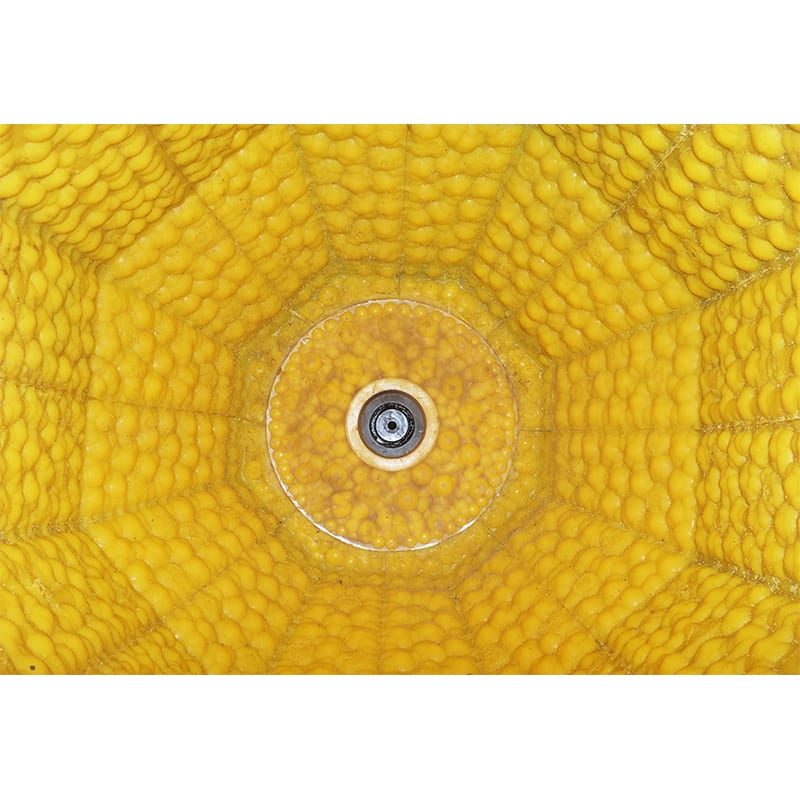
Heavy ceramic triangles and sharp alumina stones steadily abrade chamber walls. Buying a bare-steel drum or thin spray-coated tub to save upfront capital leads to rapid wall穿孔 (wall wear-through), metallic iron contamination on aluminum or stainless parts, and deafening shop noise. Thick poured-cast polyurethane linings carry higher initial cost but protect both parts and structural steel over years of service.
Overlooking Internal Separation and Material Handling Ergonomics
A machine that cuts burrs cleanly in bulk still creates a labor bottleneck if operators must scoop heavy wet parts and stones out by hand with shovels. Failing to specify an integrated air-operated or manual separation flap and vibrating screen deck—or magnetic separator when running steel burnishing media—turns fast machine cycles into exhausting manual sorting shifts.
Media and Compound Operating Costs Buyers Forget to Budget
The machine invoice is only part of total lifecycle cost; consumables and fluid management govern daily cost per part.
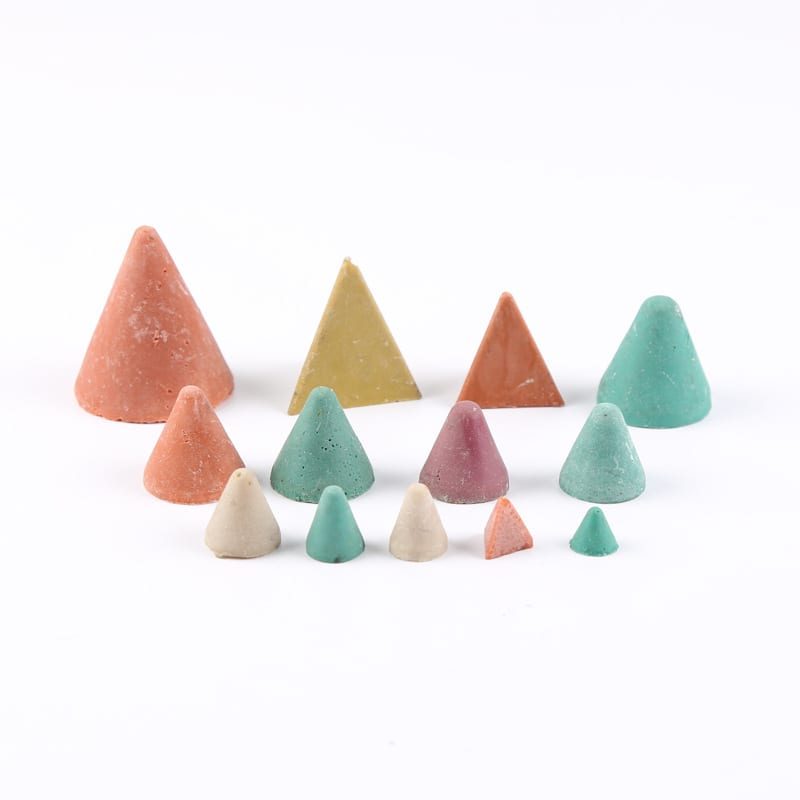
Media Attrition Rate and Undersize Chip Screening
Ceramic cutting media wears down continuously as it shears metal burrs. Without regular screening to purge undersized broken chips, worn fragments wedge inside threaded bores and small cross-holes—turning a low-cost automated line into an expensive rework inspection station. Always budget ongoing replenishment for high-cut ceramic and plastic media.
Compound Chemistry Mismatch and Recirculation Sludge
Running tap water alone rusts carbon steel and lets suspended metallic fines glaze ceramic stones shut. Conversely, recirculating spent alkaline compound indefinitely builds up a slimy gray slurry that stains aluminum and dulls stainless luster. Budget dedicated dosing pumps and clean fresh-water flow-through—such as LC10 for general deburring, MC8 for heavy scale, and PL10 for bright steel burnishing.
Multi-Stage Finishing Without Dedicated Chambers
Many buyers purchase a single vibratory bowl planning to run rough ceramic cut in the morning and mirror corncob or porcelain polish in the afternoon. Emptying, washing, and reloading heavy media charges twice a day wastes huge operator labor and risks cross-contaminating final polish stages with stray coarse grit. Either budget quick-change media hoists or split heavy production into two dedicated chambers.
| Cost Element | Low-Risk Production Practice | High-Risk Budget Shortcut | Long-Term Impact |
|---|---|---|---|
| Chamber Lining | Thick cast polyurethane (PU) | Bare steel or thin paint | Noise spikes, iron contamination, early shell failure |
| Media Management | Periodic screening + alloy-dedicated bins | Never screening worn chips | Severe hole lodging & mixed-alloy discoloration |
| Fluid & Compound | Controlled LC10/MC8/PL10 flow-through |
Dirty closed-tank recirculation | Glazed stones, flash rust, cloudy part finish |
| Two-Stage Lines | Separate cut and polish chambers | Daily manual media swaps | Lost shift hours & stray-grit scratching |
[DESIGN: Lifecycle cost breakdown comparing initial machine capex against multi-year media attrition, compound flow, and labor handling]
Downstream Bottlenecks: Rinsing, Rust Prevention, and Drying
Delivering clean, burr-free parts out of a wet vibratory bowl is only half the job; parts still leave the screen deck dripping wet.
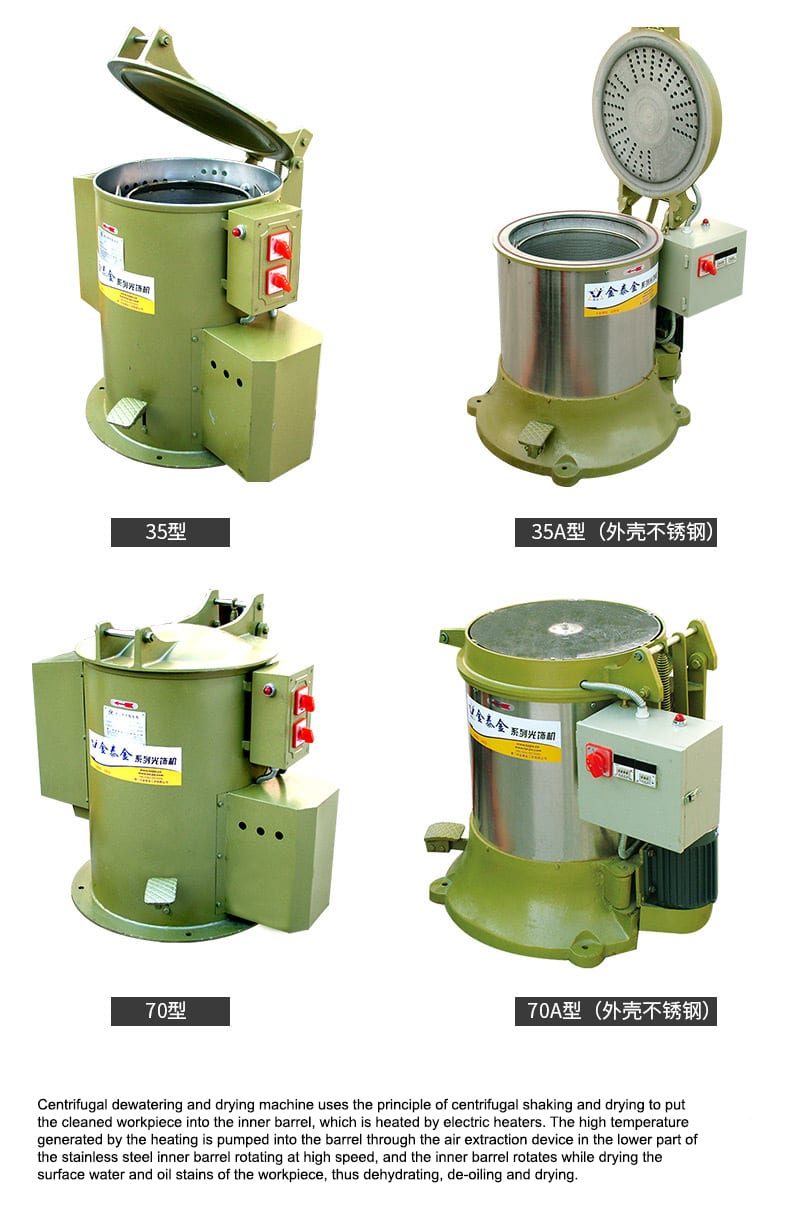
Flash Rust on Carbon Steel and Cast Iron Between Stages
Freshly cut mild steel and cast iron expose hyper-reactive bare metal the moment oxide scale and oil come off. Leaving wet steel parts sitting in wire baskets waiting for air drying produces orange flash rust before lunch. High-risk steel lines must include immediate rust-inhibiting rinse protection and rapid heated spin-drying.
Water Spotting on Polished Aluminum, Brass, and Stainless Steel
Hard tap water evaporating slowly on bright brass cases, anodized-prep 6061 aluminum, or mirror 304 stainless leaves stubborn mineral rings inside recesses. Planning a heated dryer or warm cob-drying bowl right beside the main finishing unit is far cheaper than paying technicians to hand-wipe parts with solvent rags.
Wastewater Filtration and Settling Capacity
Wet mass finishing generates fine suspended metallic mud and worn ceramic slurry. Dumping raw vibratory effluent straight into floor drains clogs shop plumbing rapidly and triggers municipal discharge violations. Always pair wet production lines with simple multi-baffle settling tanks or centrifugal sludge separation before drain discharge or water reuse.
Geometry and Process Limits Mass Finishing Cannot Fix
One of the biggest financial risks occurs when buyers expect mass finishing to solve upstream manufacturing problems it was never meant to handle.
[DESIGN: Part defect boundary chart contrasting uniform edge deburring against deep CNC gouges, blind-hole shadows, and flatness requirements]
Massive Primary Slag, Flash, and Deep Tool Gouges
Mass finishing excels at removing fine machining burrs, light stamping edges, and uniform surface roughness—it cannot economically grind away thick die-cast parting-line gates, heavy torch slag, or deep end-mill gouges without severely eroding surrounding precision dimensions. Fix dull stamping dies and excessive CNC burrs upstream first.
Zero-Access Deep Blind Bores and Tight Capillary Passages
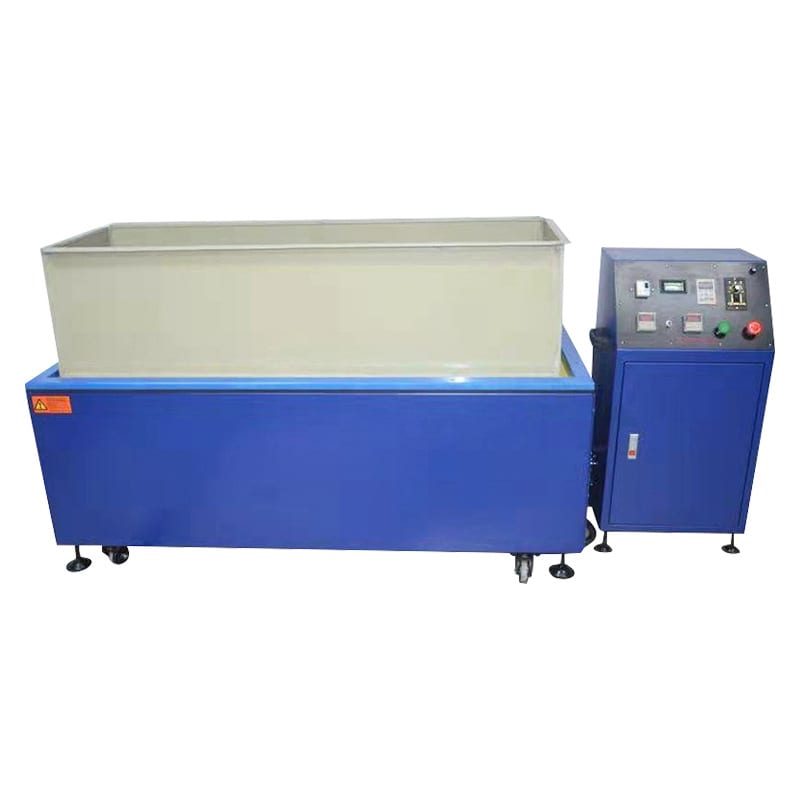
Because media relies on physical contact and fluid circulation, deep dead-end blind bores with tiny openings experience almost zero media flow inside the bottom pocket. If internal bore finishing is mandatory, test whether fine-pin magnetic tumbling reaches the depth—or accept that mass finishing only addresses external profiles and shallow cross-holes.
Tight Flatness and Thin-Wall Distortion Risks
Long unsupported sheet-metal panels and thin-walled rings deflect under heavy tumbling loads. Never commit capital to bulk tumbling for distortion-sensitive frames until sample testing confirms flatness stays within tolerance—or switch directly to fixtured drag finishing or divided compartments.
How to De-Risk Your Purchase Before Signing a PO
Smart buyers follow a structured validation sequence that forces every hidden risk into the open before money changes hands.
[DESIGN: Step-by-step pre-purchase validation workflow from part photo audit to wet sample trial and throughput sign-off]
Step 1: Send Unretouched Parts With Real Production Burrs
Never test with hand-filed prototypes. Ship representative parts straight off your CNC lathe, stamping press, or laser table—carrying realistic cutting oil, heat tint, and worst-case burrs—so the trial replicates daily shop reality.
Step 2: Require Documented Cycle Conditions and Media Sizing
During sample trials, demand clear documentation of the exact machine type, media shape and composition, compound product (LC10, MC8, PL10), media-to-part ratio, and drying method used to achieve the sample finish. This prevents vendors from "hand-touching" samples or using exotic one-off recipes that fail at production scale.
Step 3: Verify Non-Lodging Media Across Every Hole and Slot
Inspect returned trial parts under bright inspection lighting inside every blind pocket, thread root, and cooling slot. Confirm zero broken ceramic tips or steel pins remain wedged inside critical passages, and confirm whether parts require simple screen separation or manual un-nesting.
Step 4: Inspect Spare-Parts Availability and Lining Serviceability
Ask upfront how polyurethane linings, vibratory drive weights, springs, and screen decks are serviced and replaced. Standardized industrial platforms built around proven components minimize multi-week downtime years after installation.
Honest Boundaries: What We Do and Do Not Supply
At Xiamen Jin Tai Jin Grinding Technology Co.,Ltd. (brand: Jings Polish), our workshop roots date back to 1996 and our company was formally established in 2009, delivering over 200,000+ sets of grinding and polishing solutions worldwide. Across our catalogue, we manufacture 21 machine platforms backed by 24 granted Chinese IP rights (1 invention patent, 15 utility model patents, and 8 design patents), under ISO 9001 certification 00726Q01571R001 (valid 2026-06-03 to 2029-06-02) and CE certifications M.2023.206.C88121 (Vertical, 8 models) and M.2023.206.C88120 (Horizontal, 13 models), valid until 2028-07-24.

Factory-Direct Equipment, Media, and Compounds—No Contract Job-Shop Work
We engineer and manufacture vibratory bowls, rectangular troughs, rotary barrels, centrifugal disc finishers, drag finishers, magnetic tumblers, dryers, media, and compounds for installation in your own plant. We do not run a contract part-finishing job shop. Standard machines ship in 25–35 days, while custom divided troughs and drag-finishing fixtures require 45–60 days.
No Upstream Machining, Blasting, Electroplating, or Hand-Held Tools
We do not supply CNC machine tools, abrasive sandblasting cabinets, electroplating lines, acid passivation tanks, heat-treatment furnaces, or hand-held angle grinders. If your bottleneck is heavy primary weld grinding, thermal stress relief, or decorative electroplating, address those upstream or downstream processes with specialized suppliers. For comparisons with abrasive blasting media, see our glass bead vs aluminum oxide media guide and superfinishing guide.
Honest Engineering Assessment Before Any Purchase Commitment
If our engineering review shows that your part geometry causes unavoidable media lodging, unacceptable edge rounding on knife-sharp sealing lands, or excessive cycle times, we will tell you upfront rather than selling a machine that sits idle on your floor. Because alloy family, burr thickness, and slot clearance govern chamber and media selection, we do not promise free sample trials by mail or guarantee cycle times before inspecting your workpiece—send clear photos and part dimensions via our custom polishing solution page for a candid engineering assessment.
Alloy Segregation and Dedicated Media Storage Planning
Shops investing in mass finishing equipment for mixed production—such as 6061 aluminum housings alongside 304 stainless brackets and carbon-steel stampings—often underestimate the risk of media cross-contamination. Running aluminum inside a ceramic charge previously used on carbon steel embeds rust-prone iron fines into soft aluminum skins. Plan separate labeled media drums, dedicated plastic totes, and clear color-coded compound lines from day one.
Operator Safety, Noise Enclosure, and Electrical Readiness
Large vibratory bowls and high-energy centrifugal disc units generate steady mechanical noise and draw heavy three-phase starting current. Before finalizing floor placement, confirm plant voltage compatibility, bolt-down or anti-vibration pad clearance, acoustic lid options if the cell sits near assembly stations, and ergonomic hoist clearance above the bowl for loading heavy media bags safely.
Validating Throughput With Realistic Load-Unload Handling Time
Buyers frequently calculate hourly output solely from machine cycle duration while ignoring rinsing, screen separation, basket transfer, and spin-drying time. A fast finishing cycle still falls behind quota if operators spend just as long manually sorting nested parts or wiping wet pockets. Always time the complete end-to-end loop—load, cut, rinse, separate, dry, and inspect—before signing off on plant capacity.
Buyer Checklist & FAQ for De-Risking Mass Finishing Capex
Review these practical questions before approving your next mass finishing equipment purchase.
Should I buy one oversized machine or two smaller specialized chambers?
If you process mixed alloys (such as aluminum and carbon steel) or run two-stage cut-plus-burnish workflows, two smaller dedicated chambers dramatically reduce daily media changeover labor and eliminate cross-contamination risks compared to one oversized tub.
What is the fastest way to tell if media will lodge in my parts?
Measure the narrowest slot, cross-hole, and thread pitch on your drawing, then compare those dimensions against the smallest cross-section of candidate ceramic, plastic, or steel media—keeping media either comfortably larger than every opening or small enough to pass straight through without jamming.
Why do mass finishing trials sometimes look great in the lab but fail on my shop floor?
Lab trials often use clean pre-washed parts, fresh clean media, and exact water-to-compound ratios, whereas shop floors dump oily parts straight from CNC machines into dirty recirculated tank water. Always pre-degrease oily parts and maintain steady fresh compound flow-through.
Can a single mass finishing line handle both heavy steel deburring and delicate jewelry polishing?
No. Heavy carbon-steel deburring leaves iron fines and coarse ceramic wear debris that stain precious metals and bruise soft parts. Always isolate ferrous cutting from non-ferrous or decorative polishing.
How long does a cast polyurethane chamber lining typically last in daily production?
Lining service life depends directly on media abrasiveness, part edge sharpness, and whether parts run continuously with proper LC10 lubrication. Heavy sharp ceramic cutting wears linings faster than gentle plastic cones or steel ball burnishing—inspect lining thickness at regular maintenance intervals so bare steel shell walls are never exposed.
Is a centrifugal disc finisher always better than a vibratory bowl because it runs faster?
Not necessarily. Centrifugal disc machines generate intense high-energy shear that cuts burrs rapidly on compact, rigid parts like thick stamped brackets, precision gears, and small stainless fasteners—making them ideal for high-throughput cells with tight floor space. However, that same high-energy spin violently slams long brackets, heavy castings, or thin-walled aluminum housings against the chamber wall and adjacent parts. If your mix includes fragile, oversized, or collision-sensitive workpieces, a cushioned vibratory bowl, divided rectangular trough, or fixtured drag finisher delivers far lower scrap rates despite longer cycle times.
How can a job shop or OEM avoid buying a machine that becomes obsolete when part designs change?
Design flexibility comes from matching your primary machine platform to your worst-case envelope and most collision-sensitive alloy rather than optimizing purely for today's easiest bracket. A wide-channel vibratory bowl or modular divided rectangular trough accommodates shifting part lengths by adjusting divider spacing and swapping media grades—from heavy ceramic cut to soft resin plastic cones or porcelain spheres—without replacing the base machine.
What hidden utilities and floor infrastructure should be ready before delivery day?
Beyond three-phase electrical power matched to the motor nameplate, verify compressed air supply for pneumatic separation flaps, dedicated fresh-water piping with flow-control valves, floor drainage routed through a multi-baffle sludge-settling tank, and overhead hoist or forklift clearance to lift media drums safely. Preparing utilities before machine arrival turns commissioning into a smooth startup instead of a multi-week facilities delay.
Why do cheap used vibratory bowls often cost more over two years than a new industrial unit?
Used bowls frequently arrive with thinned or cracked polyurethane linings, fatigued isolation springs, worn eccentric drive bearings, and missing separation decks. Re-pouring cast polyurethane, rebuilding unbalanced drives, and retrofitting compound dosing pumps quickly erases any upfront purchase savings—while risking sudden unscheduled downtime during peak customer deliveries.
What information should I prepare before requesting a sample trial or equipment quote?
Send clear close-up photos of your parts showing worst-case burrs, overall part dimensions and weight, alloy grade, narrowest slot or hole size, target surface finish, and required hourly batch output. Our engineers can flag geometry risks early, recommend the right chamber and non-lodging media, and outline a realistic commissioning plan before you commit capital.
 +86-592-2381506


 IPv6 network supported
