
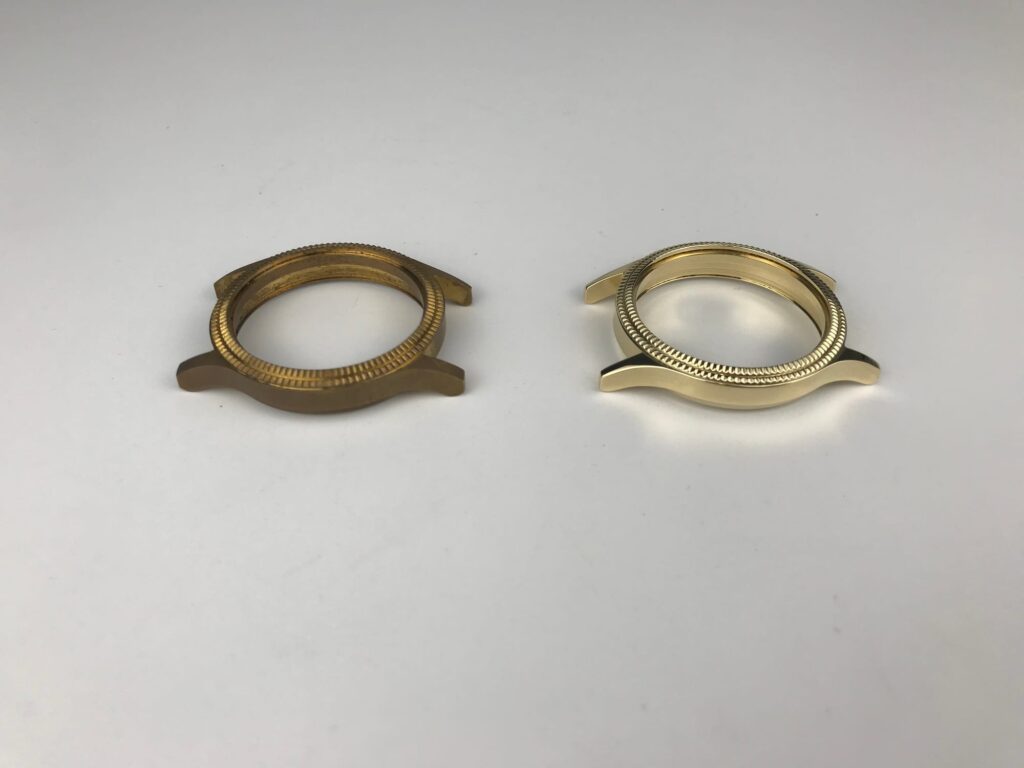
Stainless steel and aluminium each grow their own protective skin and stop there. Copper does not. It keeps reacting with the air after you have finished with it, and the colour changes — which means for copper alloys the hard part is not reaching the finish, it is keeping it.
That also makes "my copper has gone dark" a much less useful sentence than it sounds, because copper goes dark in four different ways. Three of them you can fix. One of them you must not touch.
How this hub connects to our copper-alloy guides: This page is the diagnostic hub for copper, brass, and bronze. For cross-metal context, see metal finishes. For specific part workflows, see surface polishing of copper products and copper alloy bathroom fixture polishing. For precision fluid fittings, read how to finish brass valves and fittings without damaging threads or sealing surfaces.
When a shop moves from finishing stainless brackets to finishing copper busbars, brass valves, or bronze hardware, operators quickly learn that cutting is only half the job.
When you abrade stainless steel or aluminum in clean air, both alloys form a thin, transparent, self-sealing passive oxide skin and stop reacting. Stainless steel relies on chromium to generate an impervious passive film within milliseconds, while aluminum generates a stable alumina barrier. Once mechanical abrasion stops, their surfaces become chemically dormant under ambient shop conditions. Copper alloys have no self-sealing barrier; bare copper, brass, and bronze keep reacting continuously with oxygen, moisture, and trace airborne sulfur in ordinary air.
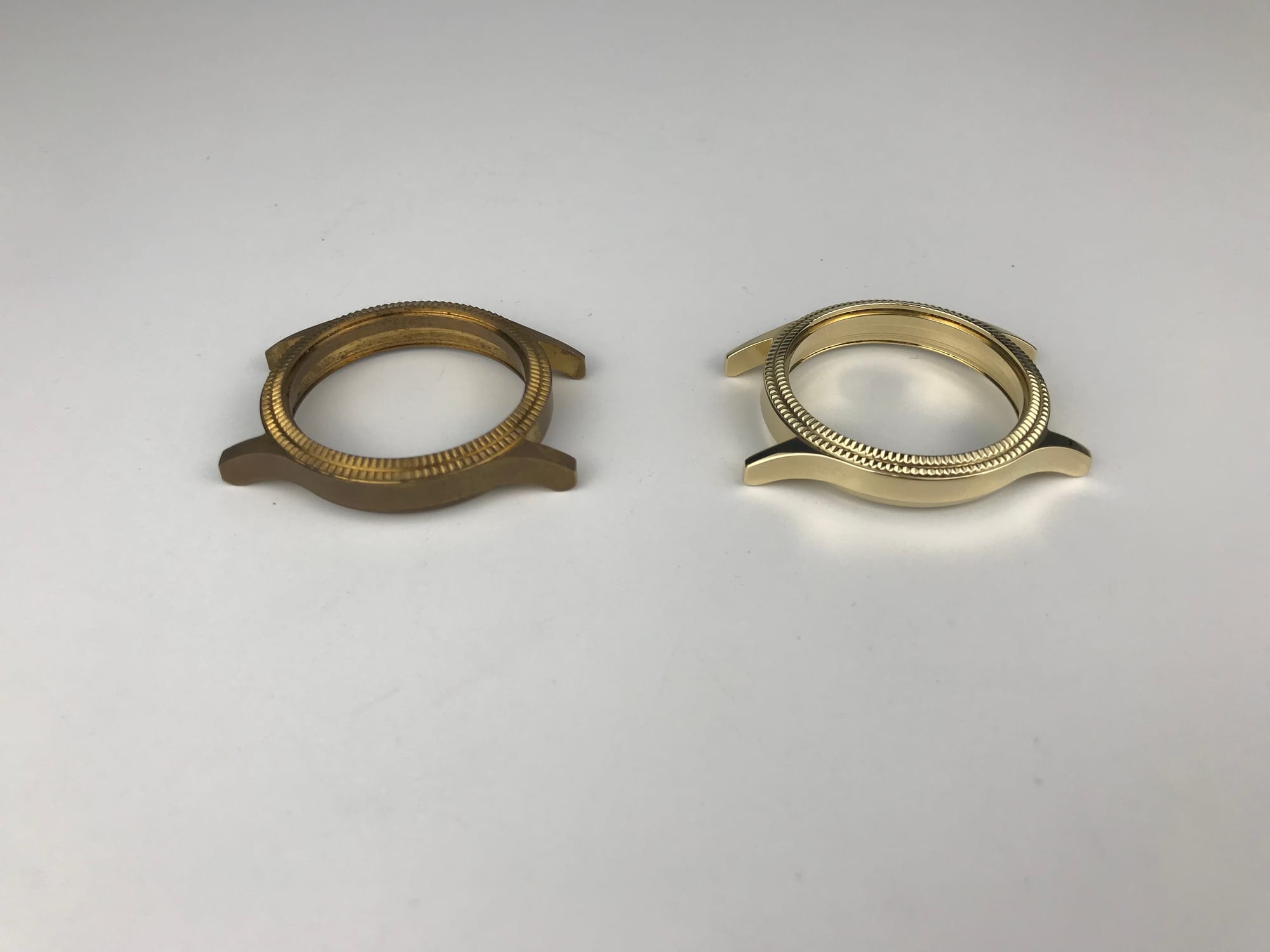
Because copper alloys are relatively soft, bringing tumbled brass or polished copper up to a satin or bright finish in a vibratory bowl is mechanically simple. The real challenge starts when the unload gate opens. Because copper atoms migrate easily through loose surface oxides, mechanical processing delivers bare, hyper-reactive metal that bonds instantly with ambient moisture and skin oils. In a humid workshop or warehouse, a freshly burnished brass fitting or copper busbar left unprotected on an open bench begins shifting color within hours, turning dull gold and then mottled brown. The manufacturing bottleneck on copper alloys is never how to achieve luster; it is how to hold that exact color across storage and assembly.
Many people treat darkened brass or bronze as if it were surface dirt that soap can wash away. In reality, copper discolouration is an irreversible chemical conversion where surface atoms turn into copper oxides, sulfides, or carbonates. You cannot wash it off; you can only abrade it away.
Because bare copper keeps reacting with air, its process chain requires an extra step that steel never needs: a "lock" step (a passivating inhibitor or a clear coat/lacquer). On stainless steel and aluminum, the question is whether you can reach the finish; on copper alloys, the question is how long that finish will hold.
When a customer complains of brass discoloration or asks for a bronze cleaner because parts "turned dark," they are using one phrase for four different surface conditions.
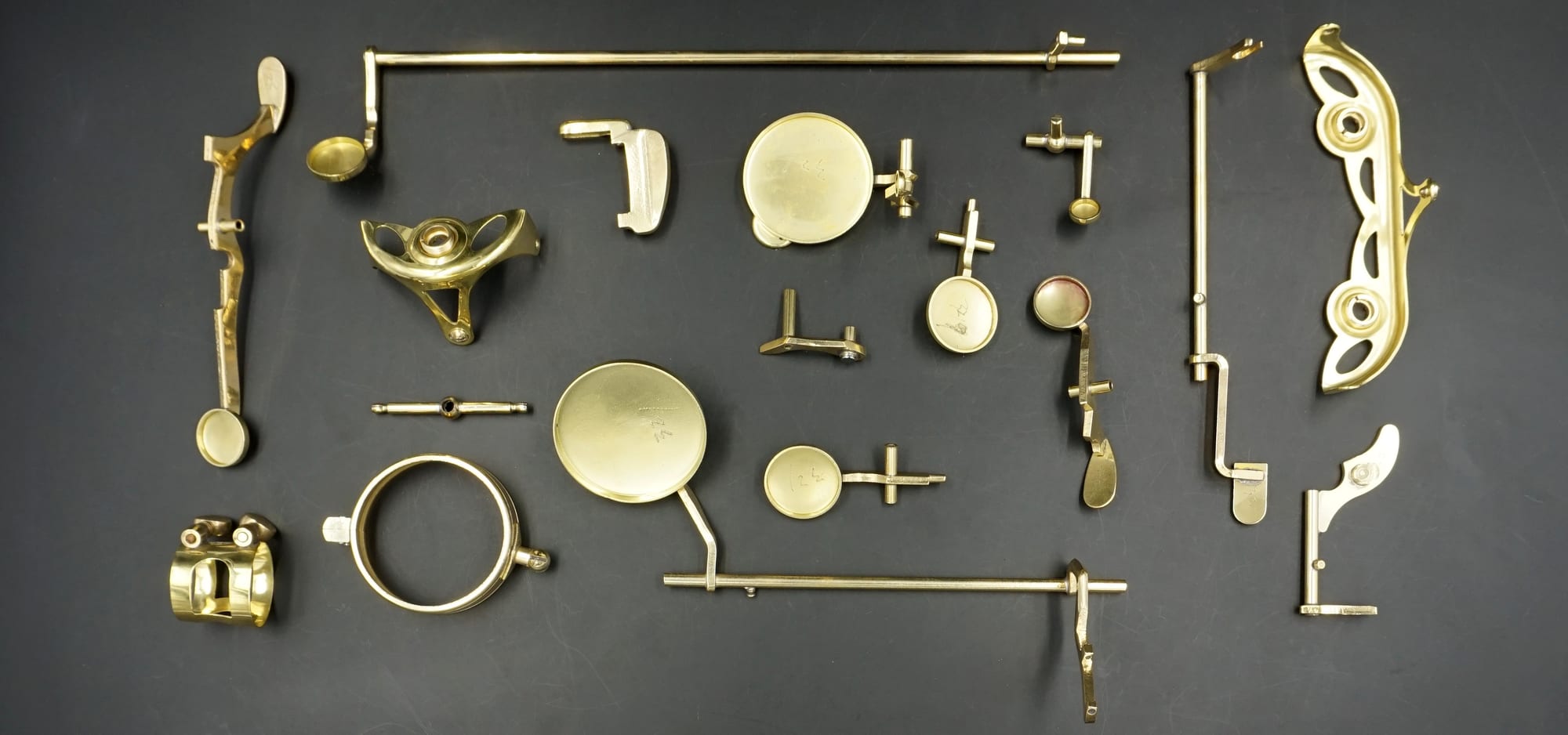
Separate these four conditions before touching any darkened copper, brass, or bronze part:
- First, Tarnish (Normal Oxidation): A uniform dull brown or smoky film across the whole part caused by oxygen and sulfur in air. It is normal aging, and gentle polishing restores bright metal cleanly.
- Second, Red Stain (Process Defect): Blotchy, streaky reddish-purple patches that follow water drip lines. Red stain is a shop process defect caused by residual polishing compound or dissolved copper/iron ions reacting with moisture.
- Third, Dezincification (Structural Brass Damage): Specific to brass, corrosive liquids leach zinc out of the alloy and leave a porous, brittle copper sponge. It looks chalky pink or dull red, feels rough or powdery, and is irreversible structural damage.
- Fourth, Intentional Patina (Design Asset): A deep, even, stable brown or green oxidized skin created deliberately on architectural copper, bronze hardware, or art castings. Patina is what the designer paid for — never polish it off.
Cross coverage pattern against surface texture on the bench:
- Uniform coverage across the whole part + smooth, solid metal: Normal tarnish (recoverable).
- Localized blotches or directional drip tracks + smooth metal: Red stain (process defect).
- Localized pink/red patches + spongy, rough, or powdery feel: Dezincification (irreversible structural damage).
- Uniform, deep, stable dark layer on bronze or architectural work: Intentional patina (do not touch).
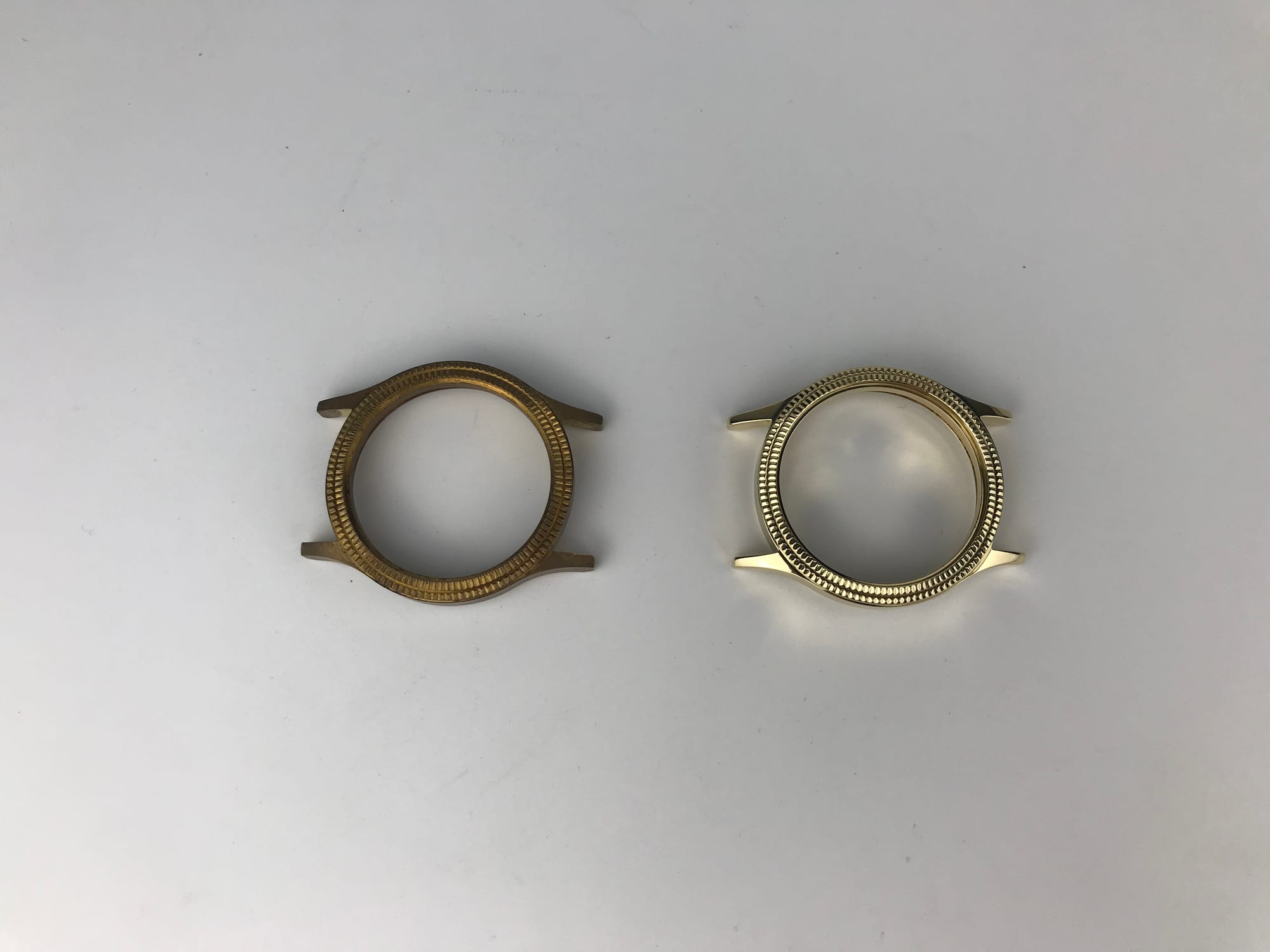
Wipe a small hidden area firmly with a soft white cloth dampened in warm water:
- Wipes off slightly but does not vanish completely: Ordinary tarnish.
- Does not wipe off at all and looks redder when wet: Red stain or dezincification.
- Sheds powdery dust and feels rough or spongy under the cloth: Dezincification.
- Polishes brighter on the rubbed spot while the surrounding dark layer stays deep and rich: Intentional patina — stop immediately, because you are ruining it.
Enforce this rule before starting any machine: if a customer says "my copper or bronze parts turned dark, polish them bright," never polish them without checking which of the four dark states you have.
If the darkness is ordinary tarnish, mechanical polishing restores the metal cleanly. If the darkness is an intentional architectural or artistic patina, polishing strips away a valuable finish that took decades or skilled chemistry to build. And if the darkness is dezincification, polishing cannot save the alloy and only tears open the fragile, porous copper sponge. Always judge the surface state first, then act.
Pure copper, yellow brass, and tin bronze behave very differently inside a finishing chamber.
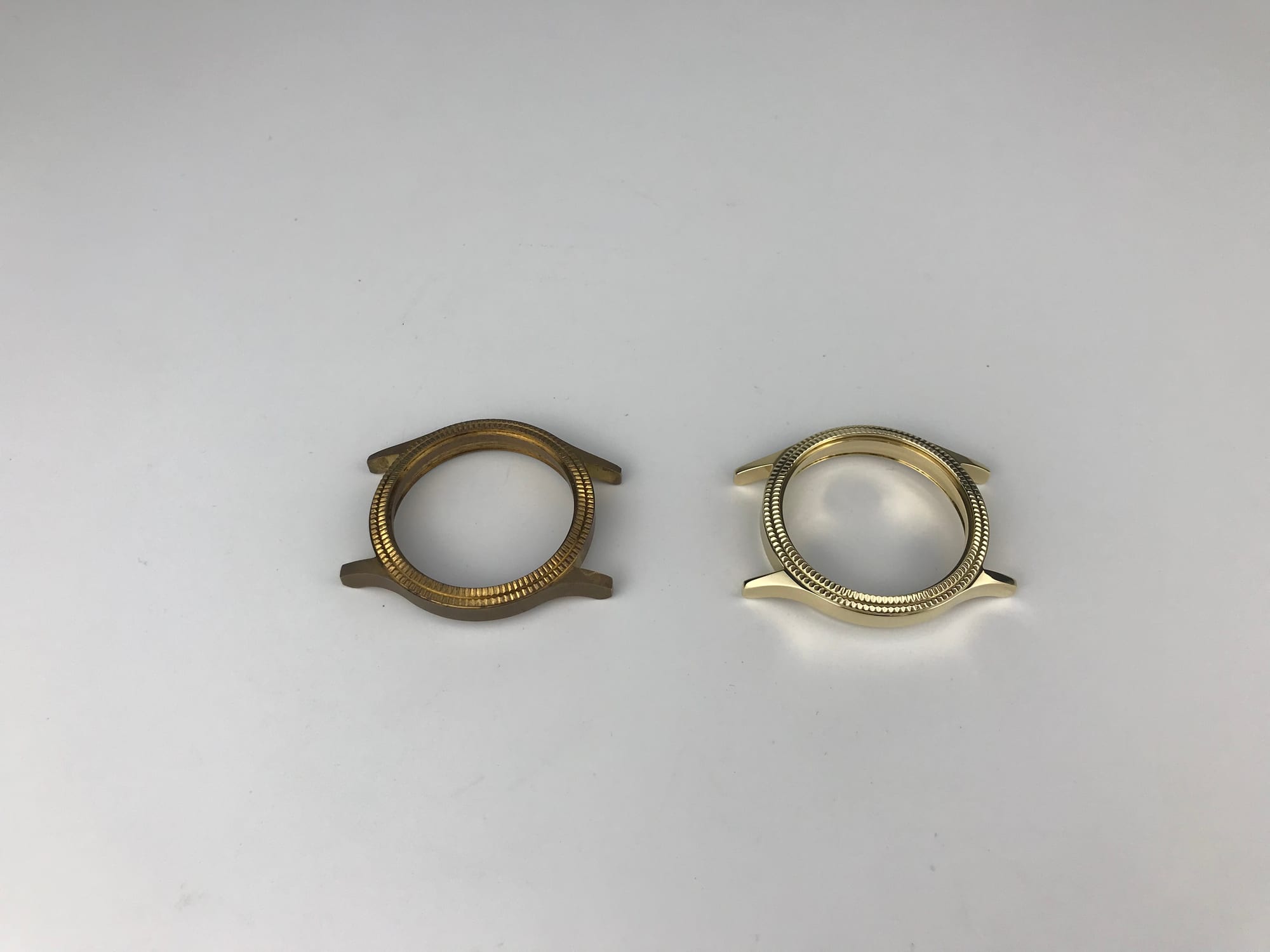
Pure copper is the softest of the three, conducts heat fastest, and oxidizes rapidly when warm. Because unalloyed copper is exceptionally ductile and gummy, abrasive media and buffing wheels tend to push and plow the ductile metal across adjacent crystalline planes rather than shearing crisp chips. When producing polished copper, aggressive dry tumbling or dry buffing smears the soft skin and traps abrasive grit, while friction heat accelerates discolouration. Tumbling pure copper demands low machine amplitude, generous liquid surfactant lubrication, and continuous fluid circulation to draw away frictional heat. Operators must never let parts dwell under stationary tools. For ultra-smooth electrical or thermal parts, shops use copper isotropic superfinishing (or copper superfinishing / copper superfinish) with gentle, cool chemistry that levels asperities without mechanical smearing.
Brass is harder and machines cleaner than pure copper, but its zinc content creates a unique hazard: dezincification. Workshop personnel frequently misdiagnose early dezincification because it resembles harmless surface tarnish or blotchy red stain. In truth, dezincification is a severe structural degradation where acidic rinse water or trapped compounds selectively leach zinc atoms from the alloy, leaving a fragile, porous honeycomb of copper sponge. Operators can verify this condition on the bench with a simple scratch check: while normal tarnish scratches clean to bright brass, a dezincified patch sheds powdery red crumbs under a fingernail or wooden scribe. Brass parts must never soak in stagnant rinse tubs or harsh acidic baths, and wet tumbling cycles must transfer immediately to thorough rinsing and hot-air drying.
Bronze is the hardest, most stable alloy, widely chosen for bearings, marine hardware, bells, architectural castings, and sculpture. Because bronze naturally develops a protective, stable oxide patina over decades—or receives an intentional chemical patina from skilled artisans—bronze is the alloy you must never polish blindly. Stripping a rich, deep patina off an architectural bronze casting or marine fixture degrades a valuable, intended living finish into a raw yellow-brown surface that cannot be easily reconstructed. Always inspect prints and customer work orders to verify whether the specification calls for a freshly burnished bronze polish or the strict preservation of an untouched historic patina.
| Alloy | Hardness | Oxidation Tendency | Signature Failure Mode | Can You Polish It Blindly? |
|---|---|---|---|---|
| **Pure Copper** | Softest | Highest | Surface smearing and rapid heat tint | **Caution** — needs gentle, cool, lubricated cycles |
| **Brass (Copper + Zinc)** | Medium | Medium-to-High | **Dezincification** (irreversible porous sponge) | **Check first** — confirm it has not dezincified |
| **Bronze (Copper + Tin)** | Harder | Lowest | Accidental removal of valuable **patina** | **No** — confirm it is not an intentional patina first |
| **Architectural Bronze** | Medium-Hard | Controlled | Blotchy raw spots from over-cleaning | **No** — living finish meant to age naturally |
Buyers constantly search for a bronze cleaner or brass cleaning solution hoping to wipe tarnish away without mechanical work.
Because tarnish is a chemically bonded oxide/sulfide skin, restoring a bright reflection requires gentle mechanical abrasion — wet tumbling in fine media, dry tumbling in organic granules, or wheel buffing for polishing bronze and brass. Polishing physically removes the thin reacted crust to expose fresh metal.
Household pastes, vinegar, salt, lemon, or an acidic brass cleaning solution only dissolve loose surface oxide while leaving a microscopically etched, dull skin that tarnishes faster next time. Atmospheric sulfur and moisture do not stop at the surface; they penetrate microscopically along metallic grain boundaries. Acidic cleaning wipes and chemical dips dissolve only the outermost oxidized layer, leaving sub-surface corrosion untouched while etching bare grain boundaries. Because this chemical stripping removes the natural passive film without mechanically smoothing the surface, the etched metal re-oxidizes exponentially faster in workshop air. Within days of chemical cleaning, the part tarnishes again, often darker and more blotchy than before. Cleaning removes dirt; polishing removes reacted material to restore luster. Even a combined bronze cleaner and polish relies on fine abrasive particles to level the surface, close microscopic pores, and brighten the metal.
Here is a counter-intuitive shop truth: over-cleaning is worse than not cleaning at all.
When a copper or brass piece is repeatedly scrubbed with polishing paste or harsh cleaners, the surface wears thin and uneven. High spots turn glaringly raw while low spots trap residue and darken faster, leaving a blotchy, patchy surface called *over-cleaning* that looks far worse than uniform natural tarnish.
Red stain is a chemical contaminant, not simple air oxidation. Because red stain comes from polishing compound residue and metallic ions reacting with moisture, buffing or re-tumbling over it without washing first fails — the red spots simply return. You must strip the residue in a clean wash before re-polishing.
Reliable batch finishing on copper alloys requires a strict six-step chain.
- Step One (Diagnose): Separate tarnish, red stain, dezincification, and patina.
- Step Two (Strip Residue): Degrease oils and remove old polishing paste or copper dust.
- Step Three (Mass Finish): Tumble or polish to the target satin or bright grade.
- Step Four (Thorough Rinse): Flush all compound and metallic fines from holes and recesses.
- Step Five (Immediate Dry): Spin-dry with hot air or tumble in heated corn cob until bone-dry.
- Step Six (The "Lock" Step): Apply a clear coat, lacquer, or protective seal.
Skipping residue removal causes red stain; skipping immediate drying leaves water spots and triggers overnight tarnishing. That is the main reason parts look bright at unloading and turn blotchy by the next morning.
- From polishing to drying: Leaving wet brass or copper sitting in a tote between the rinse and the dryer lets oxidation start before the water even evaporates.
- From drying to sealing: If bare bronze polishing parts wait days in cardboard boxes while shipping to an outside clear-coater, they tarnish in transit and arrive needing to be polished again.
Copper alloys require two more mandatory steps than steel (residue stripping and immediate sealing/locking). Higher per-piece cost on copper and brass comes from those extra process steps, not from machine price.
| Step | What It Does | Consequence If Skipped | We Build It? |
|---|---|---|---|
| **One — Diagnose** | Separate the four dark states | Destroying patina or tumbling ruined brass | **No** (human check) |
| **Two — Strip Residue** | Clean old compound and copper dust | Causes streaky **red stain** | **Partial** (wash stage) |
| **Three — Mass Finish** | Polish to target satin or bright grade | Tool marks or tarnish remain | **Yes** |
| **Four — Thorough Rinse** | Flush all soap and fines from holes | Water spots and subsequent staining | **Yes** (rinse decks) |
| **Five — Immediate Dry** | Leave zero water droplets on metal | Water rings and rapid overnight tarnish | **Yes** (spin / cob dryers) |
| **Six — Lock / Coat** | Clear coat, lacquer, or seal | Polished copper darkens again in air | **No — we do not build** |
Buyers searching for brass tumbling media, tumbling media for brass, tumbler media for brass, or the best tumbling media for brass need a gentle, uncontaminated setup.
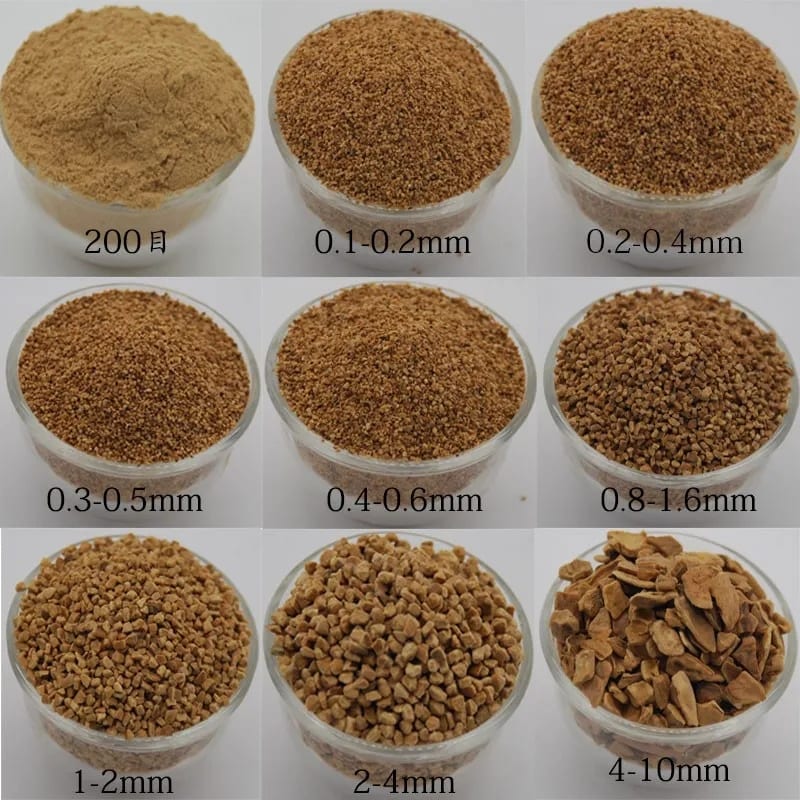
Because copper alloys are soft, heavy coarse stones push and bruise the metal. Use low-density plastic media, fine porcelain ceramic, or organic dry granules (see how to choose ceramic vs plastic media for aluminum, brass, and steel parts). Treated walnut shell and corn cob serve as ideal water-free brass cleaning media and brass polishing media. Never use steel media on copper alloys — steel scratches soft copper and causes chemical/galvanic contamination.
Copper, brass, and bronze must run in a dedicated media batch — never mix them with steel or aluminum loads, and never share media. Copper ions and dust shed into media pores and galvanically stain steel or aluminum, while steel burrs imbed into soft brass. Read the full rules in our guide on brass tumbler media and why the contamination rule comes first.
Dedicated copper soaps in our finishing compounds line provide high lubricity to stop smearing alongside active tarnish inhibitors. Using a standard steel compound on brass or copper attacks the metal and accelerates darkening.
| Media Type | Best Suited For | Not Suited For | Key Rule |
|---|---|---|---|
| **Plastic Media** | Gentle deburring and satin smoothing | Deep grinding marks | Keep a dedicated copper/brass batch |
| **Fine Ceramic** | Bright wet burnishing and even sheen | Thin walls and delicate filigree | Run at low vibration energy |
| **Organic Dry (Walnut / Cob)** | Fine brightening on **tumbled brass** | Burr removal | **Best for copper** because it is water-free |
| **Steel Media** | **Do not use on copper alloys** | Scratches and contaminates copper | Use non-metallic media only |
At Xiamen Jin Tai Jin Grinding Technology Co.,Ltd., certified under ISO 00726Q01571R001 and CE standards, we build mass finishing systems backed by 21 machine platforms and 24 IP rights across six product lines. See our full scope in what we build and what we do not.
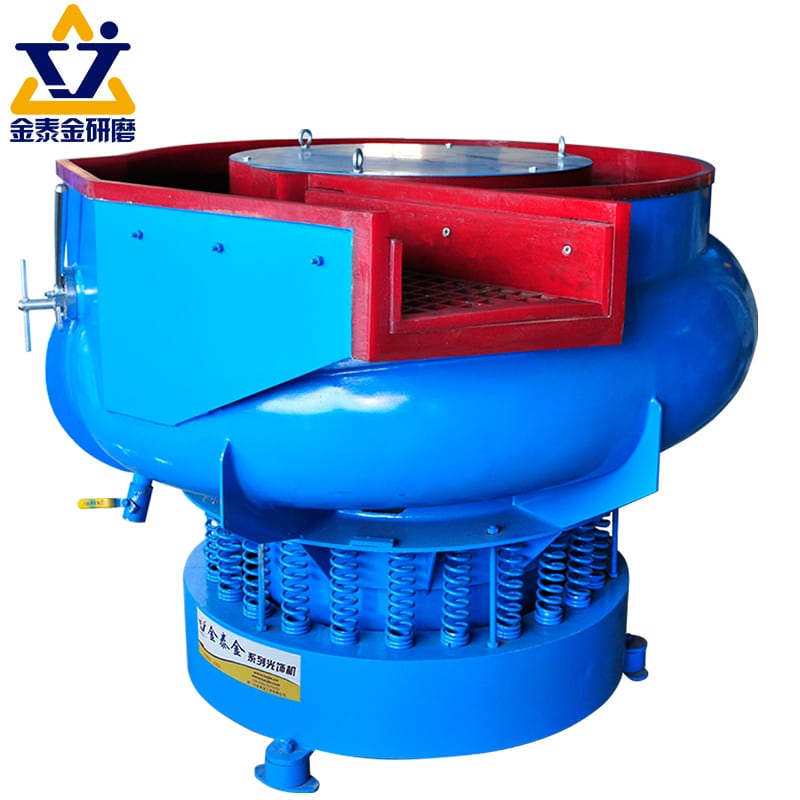
Across our machines catalog, we build bowl vibratory finishing machine units, tub vibrators, rotary barrels, centrifugal and magnetic finishers, and dryers. We also supply dedicated grinding media, organic dry finishing media (including media for tumbling brass), and inhibiting compounds.
Step Six — sealing with a clear coat or lacquer — is what keeps copper bright long-term, and we do not build coating lines. That is the natural division of labor between our mass finishing machines (which deliver parts polished, rinsed, and bone-dry) and your coating vendor or paint line. We also do not offer electroplating, patina coloring, hand tools, or contract job-shop refurbishment.
If we did not state this boundary plainly, a buyer might assume that buying a tumbler alone keeps bare copper gleaming forever. In reality, unsealed copper will eventually darken again in open air.
What we guarantee is that your copper, brass, and bronze parts leave our finishing and drying line bright and clean; whether they stay bright depends on what you do next. For an initial assessment of your parts, send a clear part photo and target note via our contact page.
Tarnish is uncontrolled, uniform atmospheric darkening that can be polished back to bright metal. Patina is a deep, stable, intentional oxidized layer on bronze or architectural copper that gives the piece its design value and must never be polished off.
No. Cleaning removes surface dirt, whereas polishing removes the reacted tarnish layer to restore reflection. Scrubbing repeatedly with harsh chemical cleaners or pastes causes over-cleaning, leaving a thin, blotchy surface that looks worse than uniform tarnish.
Localized, directional red spots are "red stain" — a process defect caused by residual polishing compound or dissolved copper/iron ions reacting with moisture when parts are not washed thoroughly and dried immediately.
No. Dezincification leaches zinc out of brass and leaves a weak, porous, powdery copper sponge. It is irreversible structural damage, and polishing cannot restore the alloy.
Use gentle media — low-density plastic, fine ceramic at low energy, or water-free walnut shell and corn cob — in a dedicated copper-only batch to prevent cross-contamination. Never use steel media on copper alloys.
No. Because copper actively reacts with air and lacks a self-sealing passive film like stainless steel, bare polished copper will darken again over time unless sealed with a clear coat, lacquer, or protective enclosure.
Email : info@surface-polish.com


 IPv6 network supported
 +86-592-2381506
