
Crankshaft and Camshaft Polishing: Achieving Isotropic Journal Smoothness in Mass Finishing
Precision crankshaft and camshaft polishing directly governs hydrodynamic oil-film stability, bearing friction loss, and lobe fatigue life in high-performance automotive, diesel, and motorsport engines. Even after precision cylindrical grinding and superfinishing tape passes, microscopic directional grinding peaks still protrude through thin engine oil films and accelerate early journal wear. SurfacePolish (Xiamen Jin Tai Jin Grinding Technology Co.,Ltd.) applies 200,000+ verified finishing trials to help engine builders and aftermarket shops achieve smooth, isotropic journal and cam-lobe surfaces without rounding critical timing shoulders.

Why Crankshafts & Camshafts Require Isotropic Mass Polishing
Standard grinding wheels leave tiny directional circumferential ridges across main journals, rod pins, and cam lobes. Under high-RPM boundary lubrication, those microscopic peaks shear oil films and generate localized heat spikes. Isotropic mass finishing levels peak crests uniformly in every direction while preserving microscopic oil-retaining valleys that support hydrodynamic lubrication.
Reducing Friction & Bearing Wear Beyond Directional Grinding
Micro-finishing tapes and abrasive stones smooth journals along one axis, whereas non-directional vibratory tumbling removes protruding peak burrs across the entire 360-degree circumference simultaneously. That smoother plateau profile lets engine oil maintain continuous film separation under heavy combustion loads, lowering friction losses and extending main and rod bearing life.
Preserving Oil-Hole Chamfers & Critical Dimensional Geometry
Crankshaft oil feed cross-holes and camshaft keyways require clean, stress-relieved radii without losing journal roundness, taper control, or lobe lift profiles. Controlled isotropic finishing removes microscopic grinding fuzz cleanly from oil-hole exits while holding dimensional tolerances intact across high-value forged steel shafts.
Eliminating Manual Crocus-Cloth & Belt-Polishing Variance
Hand-polishing crankshaft journals with emery cloth or narrow abrasive belts risks creating uneven flat spots, heat discoloration, or inconsistent Ra between throws. Automated ZXL straight-wall troughs apply uniform media shear along every throw and lobe simultaneously, replacing manual variance with documented process repeatability.
| Powertrain Component | Incoming Surface State | Primary Finishing Objective | Recommended SurfacePolish Equipment | Media & Compound Sequence | Critical Quality Check |
|---|---|---|---|---|---|
| Forged steel crankshaft | Ground journals + oil holes | Isotropic plateau + chamfer blend | ZXL straight-wall trough (L1300–L1800) |
High frequency ceramic + LC10 -> plastic media + JTJ50 |
Journal roundness & Ra/Rz |
| Billet steel camshaft | Ground cam lobes & bearing seats | Lower lobe friction & scuffing | ZXL trough with divider fixtures |
Fine ceramic media + LC10 -> plastic media + JTJ50 |
Lobe lift profile preservation |
| Motorsport forged crank | Heat-treated + ground throws | Ultra-low Rq mirror-satin |
ZXL / LLB50 controlled cycle |
High frequency ceramic -> 304 ball + JTJ60 |
Zero stray Stage 1 cutting grit |
| Cast ductile iron crank | Turned & ground journals | Deburr oil holes + smooth plateaus | ZXL straight-wall trough |
Medium plastic media + LC10 -> JTJ50 |
Clean oil-galley flush + dry |
| Small single-cylinder shaft | CNC turned & hardened | Edge break + low-friction journal | LLB50 centrifugal / ZL bowl |
Fine ceramic media + LC10 -> JTJ50 |
35A/70A dry + inhibitor |
Selecting ZXL Troughs, Dividers & Media for Long Shafts
Long, heavy forged crankshafts and slender billet camshafts can never be tumbled loose together in a standard round vibratory bowl—shaft-on-shaft collisions would dent ground bearing surfaces and bend lobe tips within seconds. Machine architecture and compartmentation are essential for damage-free polishing.
Using ZXL (L1300–L1800) Divided Troughs to Prevent Collision Dings
SurfacePolish ZXL straight-wall troughs—spanning L1300 through L1800 wide-channel chambers—accommodate long powertrain shafts cleanly with removable polyurethane-lined compartment dividers. Isolating each crankshaft or camshaft inside its own cushioned pocket guarantees zero part-on-part contact while dense media flows steadily around every counterweight, journal, and cam lobe.
Stage 1 Leveling with High Frequency Ceramic & Resin Plastic Media
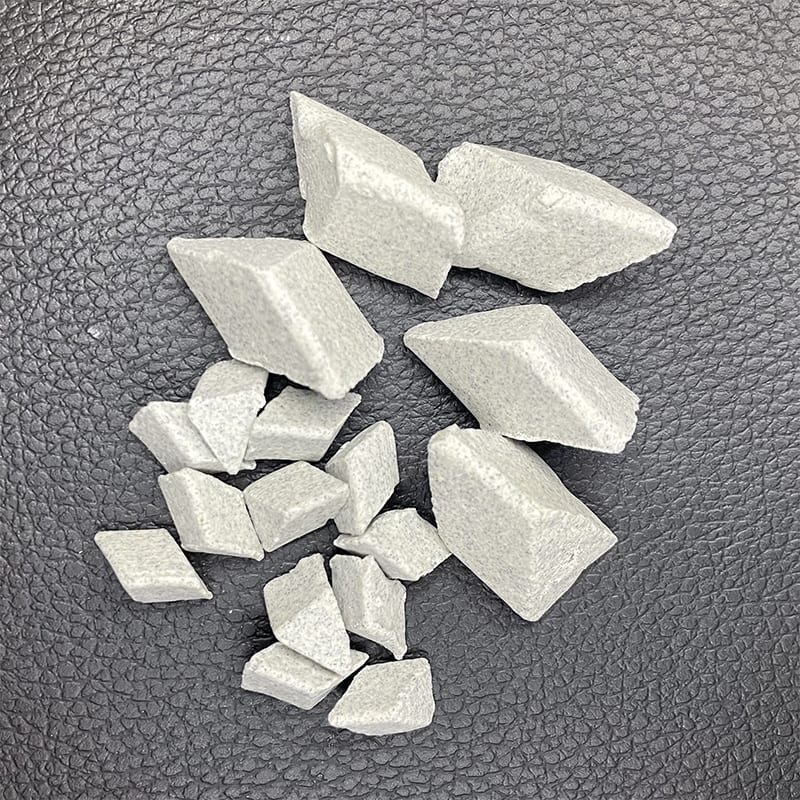
For hardened alloy steel crankshafts carrying faint grinding ridges, dense high frequency ceramic media or fine ceramic angles dosed with LC10 shear micro-peaks evenly without gouging. Moving into cushioned resin plastic media cones with JTJ50 refines surfaces down into an ultra-smooth isotropic satin plateau. Always validate non-lodging media sizing against oil-hole diameters so ceramic tips never wedge inside lubrication passages.
Optional Stage 2 304 Stainless Ball Burnishing for Motorsport Gloss
Racing teams and performance engine builders seeking extreme mirror-plateau smoothness follow Stage 1 plastic leveling with a clean 304 stainless steel ball and JTJ60 burnishing pass. Maintaining strict separation between Stage 1 cutting stones and Stage 2 ball beds ensures zero stray grit scratches across mirror-finished journals.
Compound Chemistry, Water Control & Oil-Galley Cleanliness
Isotropic crankshaft and camshaft polishing depends heavily on clean chemical lubrication and active fine flushing. Dirty recirculated sump water deposits metallic grinding silt back onto lobes and inside cross-drilled oil galleries, causing premature bearing wear on initial engine startup.
Dosing LC10, MC8, JTJ50 & JTJ60 via Peristaltic Pumps
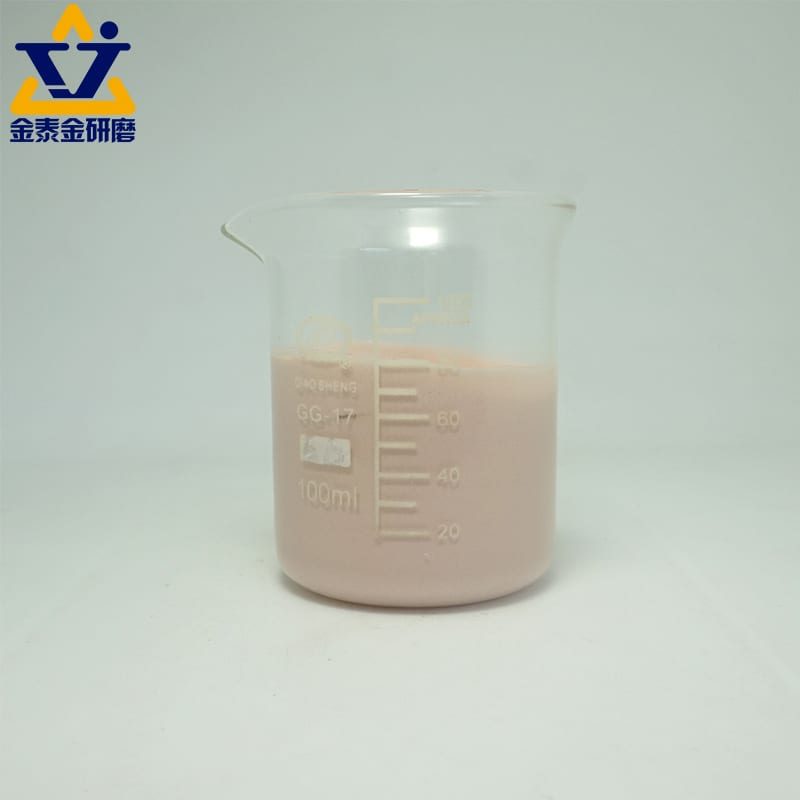
Use LC10 during Stage 1 ceramic leveling to keep stone pores open and inhibit flash rust on exposed steel throws. If forged counterweights carry residual heat-treat scale before final machining, MC8 strips stubborn oxide cleanly ahead of polishing. During Stage 2 refinement and ball burnishing, automated peristaltic compound dosing feeds exact JTJ50 or JTJ60 drops so thin lubricating films protect hardened bearing surfaces without thick foam dampening.
Flow-Through Rinsing & Upstream Ultrasonic Oil-Galley Degreasing
Machining coolants, grinding fluids, and rust-preventive oils cling inside cross-drilled crankshaft oil galleries and quickly foul porous media beds. Pre-cleaning shafts in an ultrasonic cleaner flushes internal passages clean before parts enter the trough. Pairing pre-cleaned shafts with continuous flow-through rinsing and softened water per our water hardness in mass finishing checklist prevents mineral spotting across precision journals.
Preventing Ceramic Glazing & Foam Cushioning in Long Troughs
Under-dosed or oil-contaminated troughs glaze ceramic media faces, halting Ra improvement mid-cycle while wasting energy. Checking ceramic media glazing symptoms and maintaining clean flow-through drainage keeps isotropic shear consistent from throw one to throw eight.
Drying, Rust Prevention & Metrology Verification on Powertrain Shafts
Steel crankshafts and camshafts exit wet mass finishing with freshly exposed, chemically active metal surfaces that flash-rust within minutes in humid engine plants. Rapid drying, corrosion protection, and multi-parameter stylus audits complete the workflow.

Immediate 35A/70A Drying, Air-Knife Flushing & Rust Inhibition
Smaller shafts and camshaft components transfer straight into heated 35A or 70A centrifugal dryer baskets, while long automotive crankshafts undergo clean air-knife blowing through every oil gallery followed by immediate inhibitor coating per our rust inhibition after wet tumbling protocol. Never allow wet ferrous journals to air-dry slowly on shop racks.
Auditing Ra, Rz, Rq & Bearing-Area Ratio Before Engine Assembly
Checking only nominal Ra can miss isolated grinding valleys or stray grit scratches that compromise high-load cam followers. Pair standard Ra traces with surface roughness measurement audits for Rz and RMS surface finish Rq across multiple journal positions to verify uniform plateau smoothness.
Inspecting Polyurethane Divider Liners & Media Fill Ratios
Worn divider pads allow crankshaft counterweights to strike trough walls or neighboring shafts during high-amplitude vibration. Inspect compartment pads via our polyurethane bowl liner replacement guide and keep generous media-to-part volume ratio fill depths so shafts stay suspended in active media throughout the cycle.
| Shaft Polishing Defect | Shop-Floor Root Cause | Immediate Corrective Action | Long-Term Preventive Standard |
|---|---|---|---|
| Crescent impact marks on lobes | Torn divider pad or low media fill | Replace divider pad; top up media | Weekly divider & liner inspection |
Ra stalls above isotropic target |
Glazed ceramic media or residual oil | Ultrasonic degrease; MC8 media clean |
Pre-wash shafts + flow-through water |
| Random circumferential scratches | Stray Stage 1 cutting grit in Stage 2 | Purge Stage 2 trough; wash 304 balls |
Dedicated Stage 1/2 troughs + screen QA |
| Flash rust inside oil-feed holes | Slow air-drying after wet LC10 rinse |
Inhibitor flush + 35A/70A / air-knife |
Mandatory heated/air-knife drying |
| Foam buildup stalling trough shear | Excess compound or soft-water over-dose | Dial down pump; flush trough drain | Calibrated peristaltic compound dosing |
Standardizing Multi-Shift Powertrain Finishing Cells
Engine remanufacturers and Tier-1 powertrain plants require identical journal topography across every shift and batch lot. Clear setup documentation, scheduled media screening, and clean segregation turn crankshaft and camshaft polishing into a repeatable production asset.
Mounting Laminated Setup Cards Beside Every ZXL Trough
Post weatherproof setup cards beside every ZXL (L1300–L1800) and LLB50 unit specifying shaft family, divider slot spacing, media grade, peristaltic compound dosing dial setting, water flow rate, cycle duration, and Ra/Rz/Rq acceptance limits.
Scheduling Weekly Media Screening & Replenishment
Worn ceramic wedges lose mass and risk lodging inside oil-feed cross-holes if left unscreened. Following a strict media screening and replenishment schedule keeps cutting rate and media clearance locked within spec.
Keeping Dry Corncob & Walnut Shell (8#-80#) Strictly Dry-Only
If dry corncob or walnut shell (8#-80#) beds are used for final oil-absorption or light luster buffing on dried small shafts, ensure components enter completely dry—moisture or wet LC10 turns organic media into clumped mud immediately.
Integrating First-Article Journal Checks With Upstream Grinding
Tracking first-article Ra and Rz incoming vs. outgoing numbers lets finishing leads spot worn cylindrical grinding wheels upstream before rough journals force extended polishing cycles.
Troubleshooting Crankshaft & Camshaft Polishing Issues on the Shop Floor
Even carefully configured ZXL divided troughs and LLB50 centrifugal barrels occasionally experience surface anomalies when incoming grinding fluids change, divider pads wear thin, or municipal water hardness shifts seasonally. Systematic diagnostics keep high-value forged shafts moving smoothly without rework delays.
Eliminating Hazy Film & Soap Smear on Ground Cam Lobes
A dull cloudy film over polished cam lobes almost always points to hard shop water reacting with JTJ50 or LC10 inside a starved rinse stream. Checking water hardness in mass finishing and increasing clean flow-through water flush restores crisp metallic clarity immediately.
Fixing Un-Leveled Directional Grinding Lines on Main Journals
If faint circumferential grinding tracks survive full cycle time, either incoming shafts arrived with coarse feed marks or ceramic media stones glazed over from residual honing oil. Degreasing shafts in an ultrasonic cleaner upstream and refreshing media via ceramic media glazing steps restores cutting bite cleanly.
Stopping Cross-Hole Edge Rounding & Keyway Burring Drift
Overlong Stage 1 ceramic cycles on soft cast-iron shafts can round crisp timing keyways beyond blueprint limits. Splitting heavy deburring into a short ceramic pass followed by cushioned plastic media smoothing protects keyway geometry while still hitting isotropic journal targets.
Preventing Post-Tumble Rust Bleeding From Oil Galleries
Steel crankshafts with deep blind oil passages bleed trapped rinse water onto ground journals hours after finishing unless blown dry thoroughly. Immediate heated air-knife purging paired with rust inhibition after wet tumbling protects every internal gallery cleanly.
Engineering Best Practices for Multi-Shift Powertrain Finishing Cells
Standardizing fixture loading, media replenishment, and metrology sampling across day and night crews turns isotropic shaft polishing into a dependable profit center for OEMs and racing engine shops alike.
Documenting Divider Spacing & Media Fill Depths Per Shaft SKU
Record exact polyurethane divider spacing, media-to-part volume ratio fill lines, and counterweight amplitude settings on laminated setup cards for each crankshaft or camshaft part number.
Auditing 304 Stainless Ball Hygiene Between Motorsport Runs
Periodic LC10 wash cycles strip oxidized steel paste from 304 stainless ball beds so Stage 2 mirror-plateau cycles stay bright and streak-free across consecutive racing builds.
Verifying Zero Stray Stage 1 Cutting Grit in Stage 2 Troughs
Enforce color-coded transfer racks and weekly screen checks so fractured Stage 1 ceramic shards never migrate into fine plastic or steel-ball polishing chambers.
Retaining Sealed Master Journal Coupons Beside Inspection Benches
Pairing stylus Ra/Rz/Rq traces with sealed physical journal master samples gives operators instant visual confirmation before authorizing engine assembly.
Coordinating Trial Cycles Before Full-Rate Engine Launch
Running complimentary sample trials on actual production ground shafts validates exact cycle duration, oil-hole chamfer smoothness, and fixture clearance prior to full-line deployment. Measuring both incoming cylindrical-grinding baselines and post-tumble Ra/Rz/Rq traces across every throw ensures process engineers lock in repeatable parameters before high-volume engine blocks hit the assembly floor. Early trial documentation also confirms exact non-lodging media sizing clearance across diagonal crankshaft oil holes so no ceramic or plastic wedge ever hides inside lubrication passages.
Protecting Finished Shafts With VCI Sleeves During Staging
Once dried and inhibitor-coated, rack polished crankshafts and camshafts inside clean VCI sleeves so shop humidity never dulls freshly finished isotropic journals before final assembly. Operators handling finished journals should wear clean powder-free nitrile gloves rather than bare hands or oily shop rags, preventing acidic fingerprint etching on mirror-plateau bearing seats. Paired with sealed master journal coupons at final inspection, clean staging preserves hydrodynamic oil-film readiness from the finishing trough all the way to engine dyno testing.
Scheduling Routine Divider Pad, Screen & Pump Calibrations
High-amplitude ZXL troughs processing heavy forged steel crankshafts place steady mechanical wear on polyurethane divider pads, bowl ribs, and peristaltic chemical tubing. Inspecting divider pads weekly via our polyurethane bowl liner replacement guide, screening worn ceramic chips before they fracture further, and verifying peristaltic compound dosing drop rates ensures every shift delivers identical plateau smoothness. Proactive hardware maintenance prevents unexpected counterweight collision marks and protects long-term capital equipment uptime across multi-shift powertrain plants.
Integrating Upstream Ultrasonic Flushing With Post-Tumble Oil-Galley Inspection
Even microscopic honing grit or grinding swarf trapped inside blind crankshaft oil galleys can score main bearings during initial engine startup if not purged before polishing. Combining upstream ultrasonic cleaner degreasing with clean flow-through rinsing and post-cycle air-knife plus borescope inspection guarantees spotless internal lubrication passages alongside smooth isotropic external journals.
Controlling Media Circulation Around Counterweights, Fillets & Thrust Faces
Forged V8 crankshafts and multi-lobe billet camshafts present complex geometric transitions between broad journal flats, tight undercut fillets, and heavy irregular counterweights. If media size is too large, stones bridge across narrow thrust faces and leave fillet roots unpolished; if media is too dense without proper divider support, heavy counterweights can bruise adjacent lobes during deceleration. Selecting balanced high frequency ceramic or resin plastic media shapes paired with tuned ZXL (L1300–L1800) counterweight amplitude ensures uniform media flow around every fillet radius while holding crisp thrust-wall squareness.
Measuring Bearing-Area Curve (Rpk, Rk, Rvk) Improvements After Isotropic Polishing
While shop-floor quality teams track Ra, Rz, and Rq daily, powertrain tribologists also examine bearing-area parameters to confirm that protruding grinding peaks (Rpk) are leveled off without erasing deep oil-retaining valleys (Rvk). Controlled two-stage ceramic and plastic tumbling strips sharp Rpk asperity spikes down into flat, load-bearing plateaus that support hydrodynamic oil wedges at cold startup and peak combustion pressure. Lowering friction across main journals, rod pins, and cam lobes translates directly into cooler oil sump temperatures, reduced valvetrain scuffing, and measurable durability gains on endurance dynos.
Planning Batch Cadence Between Cylindrical Grinding, Trough Polishing & Engine Balancing
Scheduling ZXL trough polishing smoothly between final cylindrical grinding and dynamic crankshaft balancing eliminates handling bottlenecks across engine-rebuilding and OEM machining cells. Because isotropic mass finishing removes microscopic surface peaks uniformly around every journal without disturbing counterweight balance pads, shafts move cleanly from heated air-knife drying and VCI rust protection directly onto precision balancing cradles. Standardized fixture loading and documented peristaltic compound dosing keep batch cycle times synchronized with upstream grinding output so high-value shafts never wait exposed to shop humidity. Integrating automated ZXL trough polishing with inline ultrasonic oil-galley flushing and clean VCI staging gives engine builders higher bearing reliability, lower valvetrain friction, and consistent multi-shift throughput without relying on unpredictable hand-polishing labor. Documenting every trial parameter beside the machine ensures repeatable isotropic quality across consecutive OEM and racing production campaigns. Consistent journal topography, clean internal oil galleries, and protected dry storage work together to maximize engine longevity, lower valvetrain parasitic losses, extend bearing fatigue endurance, prevent scuffing failures, reduce oil sump heat, stabilize hydrodynamic lubrication films, and boost customer satisfaction on every rebuild or high-volume OEM assembly run.
Factory Capabilities & Verified Mass Finishing Supply
Achieving repeatable crankshaft and camshaft polishing across forged, billet, and cast shafts demands rigid trough engineering, clean media grading, and reliable chemical dosing from SurfacePolish (Xiamen Jin Tai Jin Grinding Technology Co.,Ltd.). Backed by 200,000+ practical finishing trials, our engineers configure divided ZXL troughs and auxiliary cleaning/drying lines tailored to your exact shaft lengths and journal tolerances.
Integrated ZXL Troughs, Media, Dryers & Ultrasonic Cleaning
Across 21 machine platforms—spanning ZXL (L1300–L1800) straight-wall troughs, ZL vibratory bowls, LLB50/LLF120 centrifugal barrels, rotary barrel tumbler lines, 35A/70A centrifugal dryers, and ultrasonic cleaner systems—SurfacePolish provides matched ceramic media, plastic media, 304 stainless steel balls, organic corncob/walnut shell (8#-80#), and LC10/MC8/JTJ50/JTJ60 compounds from one verified source.
Quality Certifications, IP Rights & Complimentary Shaft Trials
SurfacePolish operates under ISO 00726Q01571R001 quality management alongside CE M.2023.206.C88121 and CE M.2023.206.C88120 machine certifications, supported by 24 granted Chinese IP rights. Ship sample shafts or test sections together with your target Ra/Rz callout to our laboratory for complimentary isotropic polishing trials and documented process setup sheets.
 +86-592-2381506


 IPv6 network supported
