

125 Ra Surface Finish Guide: Achieving Standard Machined Smoothness Through Vibratory Finishing

A 125 Ra surface finish (ISO N7) is the workhorse specification of modern industrial manufacturing—smooth enough for sealing flanges, bracket mating faces, and uniform powder or plating adhesion, yet economical to hold across high-volume production. Unlike mirror-grade specifications that require three sequential stages, N7 standard machined smoothness can often be achieved consistently inside a single well-tuned vibratory deburring and leveling cycle. SurfacePolish (Xiamen Jin Tai Jin Grinding Technology Co.,Ltd.) draws upon 200,000+ verified finishing trials to help shops hit N7 targets cleanly without over-tumbling or rounding critical part features.
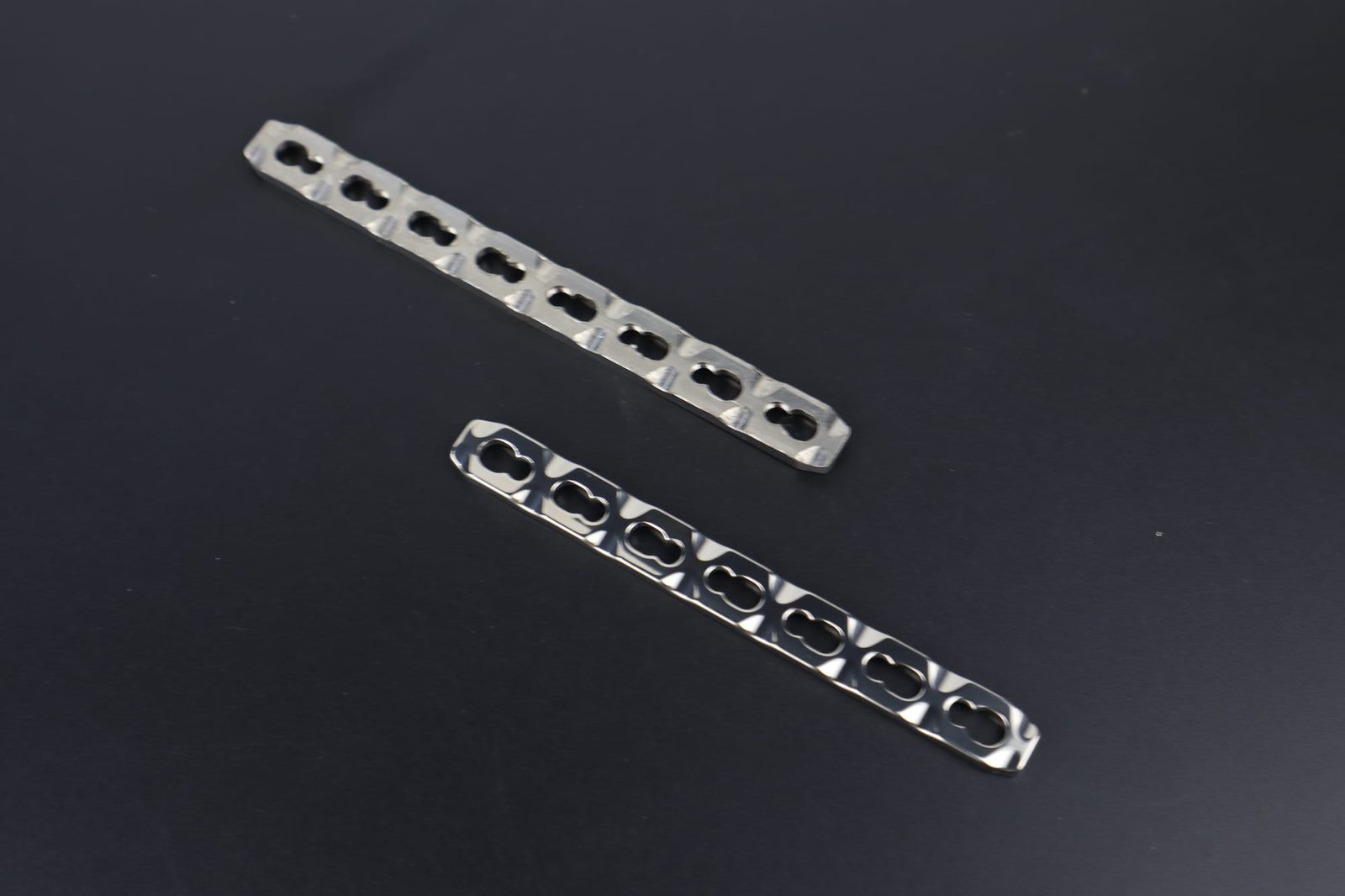
What 125 Microinch (ISO N7) Means in Industrial Manufacturing
Understanding why designers call out N7 on structural brackets, hydraulic manifolds, and commercial housings keeps finishing shops from wasting cycle time chasing unnecessary mirror gloss. This tier represents a crisp, non-reflective matte-satin texture produced by medium-fine milling, turning, or controlled mass finishing. When achieved through vibratory tumbling rather than directional machining alone, it delivers isotropic surface uniformity that eliminates sharp feed-mark stress risers.
Visual Appearance vs. Tactile Uniformity at N7
A properly finished N7 surface feels smooth under a clean fingernail check and shows faint, uniform non-directional micro-facets rather than deep parallel lathe grooves. Directional CNC cutter arcs often pass nominal stylus checks yet still snag O-rings or show telegraphing lines through thin anodizing. Vibratory leveling replaces those directional ridges with an even isotropic matte sheen across every face and internal corner.
Why 125-Class Callouts Dominate Structural & Fluid-Power Blueprints
Aerospace structural gussets, automotive transmission covers, pneumatic valve bodies, and industrial pump housings frequently carry N7 general block tolerances because tighter finishes escalate CNC feed-rate costs rapidly. Mass finishing lets machine shops run faster rough-to-medium CNC feeds upstream and rely on vibratory finishing machine batching to pull the whole part cleanly into compliance while deburring every cross-hole simultaneously.
Holding Dimensional Edges While Leveling Tool Marks
Many engineers worry that tumbling rough CNC parts down to N7 will wash out bearing chamfers or datum corners. Pairing the right media density with controlled cycle timing breaks sharp wire burrs cleanly while removing negligible stock across broad machined flats. Checking surface finish conversion chart targets alongside raw blank tolerances keeps dimensional specs completely safe.
| Incoming Part Condition | Alloy Family | Primary Defect to Remove | Recommended SurfacePolish Media | Compound & Process Note | Target Exit Result |
|---|---|---|---|---|---|
| Medium CNC milled flats | Carbon steel / 304 stainless |
End-mill stepover cusps & exit burrs | Medium-cut ceramic media triangles |
LC10 + flow-through water |
Uniform N7 isotropic matte |
| Stamped sheet brackets | Mild steel / galvanized | Sheared edge rollover & die burrs | Fast-cut or medium ceramic media |
LC10 + 35A/70A dry + inhibitor |
Clean radiused edges, N7 face |
| Laser-cut steel plates | Carbon / alloy steel | Hard heat-affected oxide dross | Fast-cut ceramic media + MC8 |
MC8 acid purge then LC10 rinse |
Oxide-free matte ready for paint |
| CNC machined extrusions | 6061 aluminum / brass |
Feed ridges & fragile thread burrs | Resin plastic media cones |
HM3 neutral brighten + rinse |
Smooth N7 without ceramic dimpling |
| Die-cast industrial housings | Zamak zinc / cast aluminum |
Parting-line flash & mold scale | Resin plastic media pyramids |
HM3 or JTJ50 gentle circulation |
Even pre-coat N7 surface |
Selecting Ceramic vs. Plastic Media for N7 Compliance
Choosing between ceramic media and resin plastic media depends directly on alloy hardness and the severity of incoming machining marks. Ceramic stones cut aggressively on steel, cast iron, and titanium, whereas lighter resin cones protect soft aluminum, brass, and zinc from peening craters.
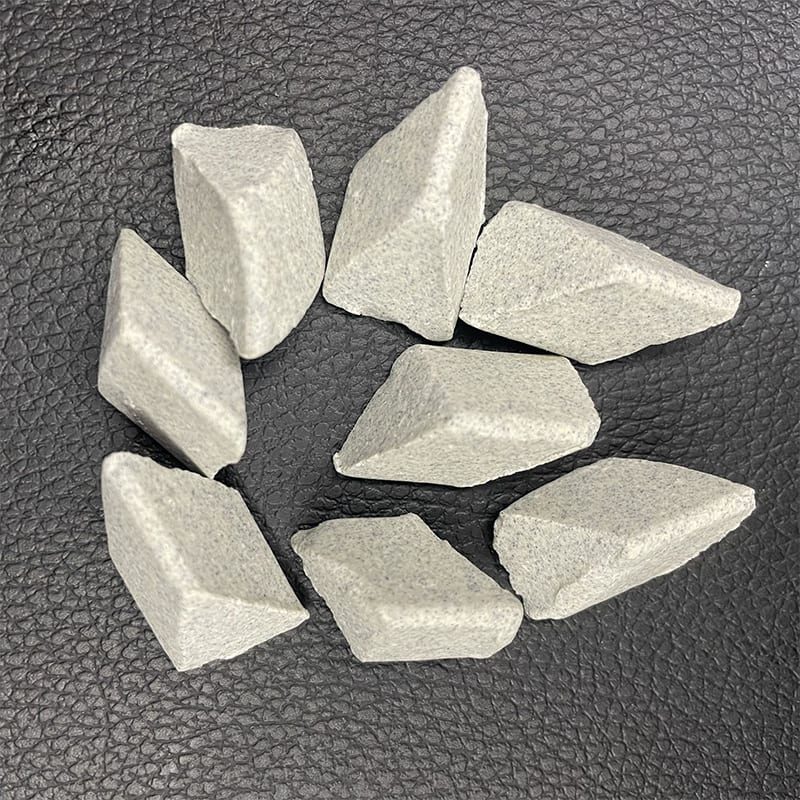
Medium-Cut Ceramic Media for Steel, Stainless & Cast Iron
Hard ferrous alloys resist soft resin abrasives, making dense aluminum-oxide ceramic media essential for economical N7 leveling. Select medium-cut triangle or angle-cut cylinder shapes sized carefully via our non-lodging media sizing rules so media bridges smoothly over slots and tapped holes without wedging. Maintain steady media screening and replenishment to keep active cutting faces sharp across every shift.
Resin Plastic Cones for Aluminum, Brass & Zamak Parts
Running heavy ceramic stones on 6061 aluminum or brass brackets quickly trades CNC tool marks for orange-peel peening dimples that look worse than raw machining. Resin-bonded plastic media weighs roughly half as much as ceramic and cushions impacts gently, erasing milling ridges down to a clean N7 satin finish without edge battering. Adding a short final JTJ50 smoothing pass refines visual uniformity even further prior to anodizing or chromate conversion.
Why Dry Corncob & Walnut Shell (8#-80#) Cannot Level N7 Tool Marks
Dry organic corncob and walnut shell (8#-80#) beds excel at moisture absorption and light luster buffing on already smooth parts, but they lack the abrasive mass needed to cut metal peaks down to N7. Trying to fix rough CNC feed lines in dry walnut shell wastes hours while leaving raw ridges intact. Reserve dry organic beds strictly for final luster touch-ups after wet ceramic or plastic leveling and heated 35A/70A drying.
Machine Selection, Compound Dosing & Water Control for N7 Batches
Once media selection matches your alloy, stable machine energy and chemical cleanliness govern batch-to-batch repeatability. Dirty recirculated water or starved compound pumps glaze abrasive stones and stall N7 reduction halfway through a shift. Disciplined dosing turns N7 finishing into an unattended, predictable line operation.
ZL & ZXL Vibratory Bowls vs. LLB50/LLF120 Centrifugal Barrels
ZL round vibratory bowls and ZXL straight-wall tubs handle the vast majority of N7 production parts cleanly thanks to built-in separation decks and gentle rolling circulation. When deep roughing marks on hard alloy steels or compact sintered parts require faster stock removal, LLB50 and LLF120 centrifugal barrel finisher machines multiply abrasive pressure dramatically to compress cycle times. Delicate thin-wall rings or long precision shafts also run smoothly inside cushioned rotary barrel tumbler drums without collision nicks.
Calibrating LC10, MC8, HM3 & JTJ50 with Peristaltic Pumps
Chemical lubrication keeps abrasive pores open and suspends metal fines out of the cutting zone. Pair steel deburring with LC10, heavy forging or laser-scale stripping with MC8, non-ferrous brightening with HM3, and fine smoothing with JTJ50. Automating feed rates through peristaltic compound dosing keeps chemical concentration locked steady across long runs, eliminating operator over-dosing foam or under-dosed glazing.
Flow-Through Water Control & Upstream Ultrasonic Degreasing
Shop machining coolants and stamping lubricants coat porous ceramic media and starve LC10 wetting action during the critical first minutes of tumbling. Pre-washing oily blanks inside an ultrasonic cleaner strips hidden grease out of tapped bores so abrasive cutting starts cleanly on bare metal. Pairing clean blanks with steady flow-through rinsing and softened water per our water hardness in mass finishing guide keeps N7 finishes crisp and spot-free.
Post-Tumble Drying, Rust Prevention & Metrology Verification
Pulling parts out of a wet N7 vibratory cycle without proper drying and verification invites flash corrosion, water spotting, and inconsistent stylus checks. Clean post-finishing handling protects surface quality all the way to paint booths, plating racks, and assembly benches.

Heated 35A/70A Centrifugal Drying & Rust Inhibition
Carbon steel, cast iron, and sintered powder metal components flash-rust rapidly if left damp in open shop baskets after wet LC10 deburring. Transfer freshly rinsed parts immediately into a heated 35A or 70A centrifugal dryer to spin moisture clean out of blind threads and counterbores without watermarks. When humid staging demands extended indoor shelf life before coating, follow our rust inhibition after wet tumbling dosing steps cleanly.
Checking Both Ra and Rz on N7 Production Lots
Because N7 allows moderate surface texture, handheld profilometers occasionally pass Ra averages while deep isolated cutter scratches remain visible to the naked eye. Pair standard Ra stylus sweeps with spot Rz checks per our surface roughness measurement guide so incomplete leveling or stray grit scratches never slip into customer shipments. Posting sealed master witness coupons beside each machine lets operators compare texture visually between formal stylus audits.
Preventing Part-on-Part Impingement & Media Glazing
Heavy machined blocks or sharp stamped brackets strike neighboring parts whenever the media-to-part volume ratio drops too low, leaving crescent dings that spike Rz above N7 limits. Maintain generous media fill depth, inspect bowl ribs via our polyurethane bowl liner replacement guide, and purge glazed stone loads promptly via our ceramic media glazing protocol.
Alloy-Specific N7 Finishing Recipes Across Steel, Aluminum, Brass & Zinc
Holding an N7 surface finish consistently across mixed-metal job shops requires adjusting media weight, compound pH, and cycle energy to match each substrate. Applying a heavy carbon-steel recipe to soft 6061 aluminum or zamak zinc castings produces orange-peel dimpling and dark surface smut within minutes. Tailoring parameters by alloy protects surface metallurgy and cosmetic uniformity.
Carbon Steel, Alloy Steel & 304 Stainless Brackets
Hard ferrous parts rely on sharp aluminum-oxide ceramic media triangles or angle-cut cylinders dosed with LC10 to break laser dross and level CNC milling cusps down to N7. Forged or heat-treated brackets carrying heavy black scale benefit from an initial MC8 acid descaling pass before switching into clean LC10 rinsing and heated 35A/70A centrifugal drying with rust inhibitor.
6061/7075 Aluminum Extrusions & Machined Housings
Soft aluminum alloys deform rapidly under heavy ceramic stones, trading cutter scallops for peened craters. Switch directly into cushioned resin plastic media cones or pyramids paired with neutral HM3 brightening compound so sharp machining burrs shear cleanly while flat datum faces reach a bright, uniform N7 satin anchor ready for clear or black anodizing.
Brass, Copper & Zamak Die Castings
Non-ferrous brass fittings and zamak zinc die castings tarnish quickly in overly alkaline or stagnant closed-sump baths. Pair HM3 or JTJ50 with fine plastic media inside a steady flow-through ZL bowl to level parting-line flash and gate marks cleanly down to N7 without dezincification or porous pitting exposure.
Sintered Powder Metallurgy & Additive Manufactured Parts
Porous sintered iron gears and DMLS printed titanium brackets trap liquid soap inside surface-connected voids if compound concentrations run too high. Use small non-lodging media sizing ceramic or plastic cones with controlled LC10 flow-through rinsing, followed by extended 35A/70A centrifugal drying so residual moisture never bleeds rust out after packaging.
Comparing N7 Mass Finishing Costs Against Manual Grinding & Fine CNC Turning
Many manufacturing engineers default to slow finishing passes on CNC lathes or manual abrasive belts to meet N7 blueprint callouts, unaware of how dramatically batch mass finishing lowers unit cost. Moving surface leveling out of spindle time and into unattended vibratory or centrifugal cells unlocks higher machine-tool throughput across the entire plant.
Reclaiming CNC Spindle Hours with Faster Upstream Feeds
Instead of running fine, low-feed finishing passes on expensive 5-axis mills just to hold N7 flatness, shops can program faster roughing stepovers and let ZL, ZXL, or LLB50 vibratory and centrifugal cycles smooth tool cusps across hundreds of parts simultaneously. Shorter CNC cycle times often boost spindle utilization significantly without sacrificing final surface compliance.
Eliminating Manual Belt Grinding & Operator Variance
Hand-held abrasive belts and flap wheels create directional scratch streaks, inconsistent edge radii, and high ergonomic labor costs that vary wildly from operator to operator. Vibratory ceramic media and plastic media process every exposed contour, pocket, and cross-hole uniformly in one automated batch, turning variable manual rework into repeatable process control.
Reducing Downstream Paint, Powder & Plating Reject Rates
Un-deburred edges and directional machining grooves cause thin powder coatings to pull away from sharp corners and electroplating baths to blister over oily scale. Delivering clean, stress-relieved isotropic N7 parts straight from heated 35A/70A dryers slashes downstream finishing rejects and warranty claims.
Standardizing Shop-Floor N7 Setup Cards & Multi-Shift Audits
Turning a validated N7 trial into reliable year-round production depends on clear operator documentation and proactive media maintenance. Locking down incoming inspection, media screening, and pump calibration keeps day and night shifts producing identical results.
Mounting Laminated N7 Recipe Cards Beside Every Machine
Post weatherproof setup sheets at every ZL, ZXL, LLB50, and LLF120 station specifying raw part alloy, exact media grade, peristaltic compound dosing dial setting, flow-through water rate, cycle duration, and Ra/Rz release limits.
Scheduling Weekly Media Screening & Liner Inspections
Worn media wedges lodge in part slots and slow mass circulation, while torn polyurethane bowl ribs trap abrasive chips. Enforce weekly media screening and replenishment audits alongside liner rib checks so cutting efficiency stays constant across every lot.
Auditing First-Article Stylus Traces & Visual Master Coupons
Verify the first basket of every new machining lot with multi-directional stylus traces and side-by-side comparison against sealed physical N7 master coupons. Early detection catches dull upstream CNC tooling or dosing drift before an entire shift slips out of spec.
Segregating Ferrous & Non-Ferrous Totes to Prevent Cross-Contamination
Never mix carbon steel and aluminum or stainless lots inside the same transfer baskets or un-rinsed ceramic bowls, as embedded iron fines cause galvanic rust spotting on aluminum and stainless hardware downstream.
Controlling Water Hardness & Preventing Foam Dampening in N7 Bowls
Seasonal municipal water hardness shifts react with LC10 and HM3 compounds to glaze porous ceramic media stones or whip up thick foam blankets that cushion cutting shear. Monitoring water hardness in mass finishing alongside calibrated peristaltic compound dosing keeps N7 leveling rates predictable across every shift.
Validating N7 Edge Break & Corner Radius Under Optical Magnification
While flat-land stylus traces confirm Ra compliance, high-load fluid manifolds and aerospace brackets also demand controlled edge radii without washing out precision chamfers. Pairing stylus audits with quick optical edge-radius checks during first-article inspection ensures both surface roughness and edge geometry stay inside drawing tolerances.
Keeping 35A/70A Centrifugal Dryers Clean & Thermally Calibrated
Residual soap mist or lint inside 35A/70A dryer baskets transfers streaks onto freshly leveled parts right before inspection. Schedule weekly basket rinses and verify blower temperatures so ferrous and non-ferrous N7 parts emerge bone-dry and spotless. Pairing clean centrifugal drying with immediate inhibitor protection on carbon steel eliminates storage corrosion between finishing and assembly.
Coordinating N7 Metrology Settings Between Supplier & Customer QA Labs
Disagreements over N7 compliance frequently trace back to mismatched stylus cut-off filters, evaluation lengths, or sampling orientations between shop-floor gauges and customer incoming inspection labs. Lock down identical traverse lengths and filter settings on every setup sheet, and verify curved flanges or turned diameters perpendicular to machining feed arcs so both labs measure identical surface topography. Retaining calibrated reference specimens beside every finishing cell ensures daily gauge repeatability before authorizing full-lot shipment releases across high-volume automotive, fluid-power, aerospace hardware, and commercial metal fabrication shifts.
N7 Process Issue |
Root Cause on Shop Floor | Rapid Corrective Fix | Preventive Standard |
|---|---|---|---|
Finish stays too rough (> N7) |
Glazed ceramic stones or oily incoming blanks | Ultrasonic degrease; MC8 media purge |
Pre-wash oily lots + flow-through rinse |
| Crescent impact dings on flats | Low media-to-part volume ratio |
Raise media fill; slow discharge ramp | Post standard load weights per machine |
| Orange-peel dimples on aluminum | Over-heavy ceramic media on soft 6061 |
Switch to resin plastic media + HM3 |
Lock alloy-to-media chart on line cards |
| Flash rust inside tapped holes | Slow air-drying on wet steel parts | Spin in 35A/70A dryer + inhibitor |
Mandatory heated centrifugal drying |
| Thick bowl foam stalling cut | Excess compound or soft-water over-dose | Cut pump rate; flush bowl clean | Calibrated peristaltic compound dosing |
Factory Capabilities & Verified Mass Finishing Supply
Hitting N7 standard machined smoothness across high-mix production lots requires matched hardware, consistent media grades, and reliable chemical dosing from SurfacePolish (Xiamen Jin Tai Jin Grinding Technology Co.,Ltd.). Backed by 200,000+ practical finishing trials, our engineers configure cost-effective vibratory, centrifugal, and drying cells tailored to your exact part geometry and blueprint tolerances.
Integrated Machines, Media & Compounds Under One Roof
Across 21 machine platforms—spanning ZL and ZXL vibratory bowls, LLB50/LLF120 centrifugal barrels, rotary barrel tumbler lines, 35A/70A centrifugal dryers, and ultrasonic cleaner stations—we supply matched ceramic media, plastic media, 304 stainless balls, dry corncob/walnut shell (8#-80#), and LC10/MC8/HM3/JTJ50/JTJ60 compounds engineered to work together seamlessly. Unified sourcing removes compatibility guesswork and stabilizes multi-shift finishing throughput.
Quality Certifications, IP Rights & Complimentary Part Trials
SurfacePolish operates under ISO 00726Q01571R001 quality management alongside CE M.2023.206.C88121 and CE M.2023.206.C88120 machine certifications, supported by 24 granted Chinese IP rights. Send your raw machined, stamped, or cast parts to our laboratory for complimentary N7 finishing trials, complete stylus measurement verification, and documented line setup parameters before scaling up.
 +86-592-2381506


 IPv6 network supported
