

Ceramic Triangle Media Guide: Straight vs. Angle-Cut Geometry, Slot Clearance, and Ferrous Deburring
Among all preformed tumbling shapes, the ceramic triangle remains the most widely specified workhorse in industrial mass finishing—and the shape most frequently mis-sized by inexperienced buyers. Because a three-sided prism carries sharp edges and pointed vertices, a properly sized high-frequency ceramic triangle penetrates tight ninety-degree CNC pockets, keyways, and stamped notches that round spheres and cylinders skip over completely. Yet if that same triangle wears down without weekly screening—or is ordered slightly too small for a cooling fin or lug bore—broken corner tips wedge into part slots and force expensive manual picking.
The central thesis of this guide is clear: getting fast, jam-free deburring from ceramic triangle media depends on selecting vitrified high-frequency straight or angle-cut triangles matched to ferrous steel, 304/316 stainless, and titanium (never soft aluminum or brass), sizing fresh stone width cleanly using bridging-or-pass-through rules, running continuous single-pass LC10 or MC8 wet flow-through into multi-baffle settling tanks, screening out worn wedge tips weekly, and transitioning to high-alumina spheres before 35/35A/70/70A centrifugal drying. For related media guides, see our ceramic tumbler media guide, ceramic grinding media guide, and vibratory finishing supplies guide.

high-frequency ceramic triangle media for ferrous and titanium deburringStraight vs. Angle-Cut Ceramic Triangle Geometry
Choosing between a straight-cut 90-degree prism and an oblique angle-cut ceramic triangle changes both corner reach and slot-lodging behavior.
Straight-Cut Ceramic Triangles: Broad Flat Edge Contact
A straight-cut ceramic triangle has perpendicular end faces (90-degree corners along all six edges). It delivers broad, stable sliding contact across flat stamped plates, thick forged brackets, and open outer edges while wearing evenly across shifts.
Angle-Cut Ceramic Triangles: Acute Point Penetration
An angle-cut ceramic triangle slices the extruded prism obliquely, creating sharp acute points at opposing vertices. Those acute points reach deep into acute internal corners, gear roots, spline grooves, and tight chamfers—shearing stubborn exit burrs far faster than blunt straight cuts.
Matching Vitrified Bond Grades to Part Hardness
Hardened tool steel, 304/316 stainless, and forged carbon steel require tough, high-density vitrified high-frequency bonds that hold sharp edges without shattering into brittle splinters inside ZL circular bowls or LLF120 centrifugal barrels.

high-frequency ceramic triangle media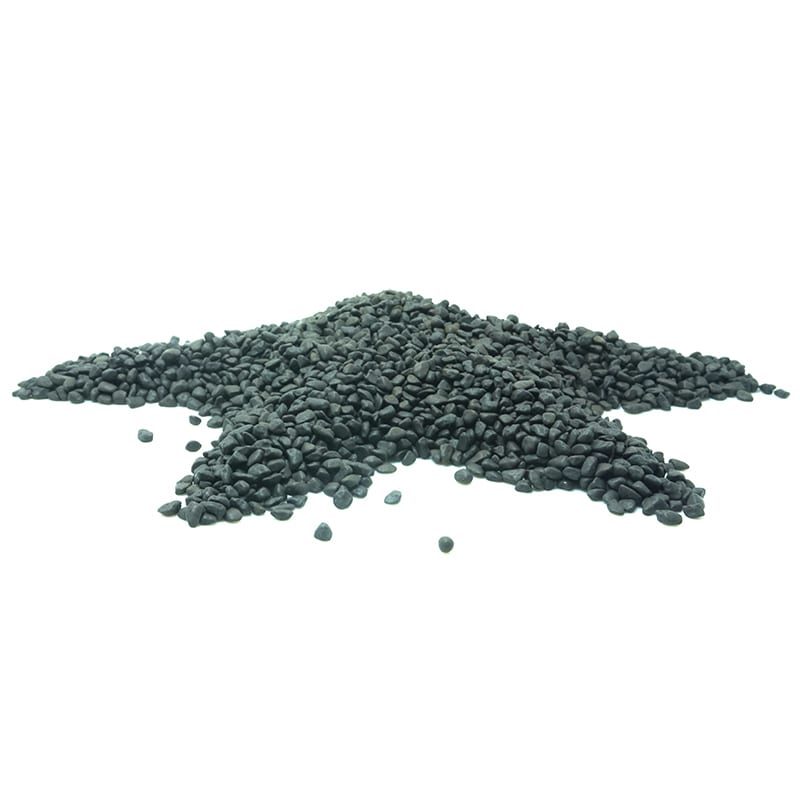
high-frequency ceramic triangle stones engineered for consistent wear and non-lodging slot clearanceNon-Lodging Sizing Rules for Ceramic Triangles
A ceramic triangle has three distinct dimensions—side width, thickness, and diagonal point-to-point length—making slot-clearance audits essential before loading production tubs.
Rule 1: Bridge Widest Slots Cleanly Even After Partial Wear
Never size a ceramic triangle right at the edge of a slot width; after several shifts of normal wear, a stone that barely bridged on day one shrinks enough to drop halfway into the groove and wedge diagonally. Size fresh triangles generously above the widest slot—or small enough to pass cleanly all the way through without touching walls.
Rule 2: Weekly Screening to Purge Worn Wedge Tips
Even the best vitrified ceramic triangle eventually wears into thin triangular wafers and rounded slivers. Screening out undersized fragments weekly across your vibratory separator screen removes wedging culprits before they jam inside bolt holes or gear teeth. See our pneumatic separation screen deck guide.
When to Switch From Triangles to Angle-Cut Cylinders or Tri-Stars
If your part features narrow blind slots or delicate spring coils where even freshly screened triangle vertices snag occasionally, switch to angle-cut cylinders or tri-stars in high-frequency ceramic. Compare shapes in our aluminum oxide tumbling media guide.

high-frequency ceramic triangle media with automated pneumatic separation| Triangle Spec / Decision | Best Part Geometry | Cutting Speed & Reach | Lodging Risk Over Time | Maintenance Action |
|---|---|---|---|---|
| Angle-Cut Ceramic Triangle | Acute CNC corners, gear roots, splines | Highest corner penetration | Moderate as acute tips wear thin | Strict weekly screening & top-up |
| Straight-Cut Ceramic Triangle | Flat brackets, forged flanges, open edges | High broad edge shear | Low-to-moderate on open parts | Weekly chip screen & fill check |
| Angle-Cut Ceramic Cylinder | Slotted valves, blind bores, springs | Smooth balanced cut | Lowest (no sharp vertex tips) | Routine screening at media swap |
| Resin-Bonded Plastic Cone | Soft 6061 aluminum, brass, zinc |
Gentle bruise-free smoothing | Low (match cone height to bore) | Weekly screen & LC10/HM3 flow |
Alloy Boundaries and Two-Stage Polishing Progression
Knowing when not to run a ceramic triangle protects soft alloys and cast polyurethane liners alike.
Ferrous Steel, Stainless, and Titanium vs. Soft Aluminum and Brass
Heavy high-frequency ceramic triangle stones excel on carbon steel, alloy steel, 304/316 stainless, and titanium. Conversely, throwing 6061 aluminum die castings, brass fittings, or Zamak zinc hardware into dense ceramic triangles immediately bruises corners, creates peened "orange-peel" walls, and turns parts dark grey. Route non-ferrous soft alloys to lightweight resin-bonded plastic cones and pyramids instead. Read our deburring plastic guide and compound for aluminum guide.
Stage 1 Triangle Cutting Followed by Stage 2 High-Alumina Burnishing
A ceramic triangle cuts burrs and erases deep CNC valleys (Rz) cleanly, leaving a matte uniform finish. For bright cosmetic luster or low-Ra sealing smoothness, flush parts thoroughly and transition to non-abrasive, iron-free high-alumina spheres or 304 stainless balls (HM3/JTJ60) in Stage 2. See our surface finish Ra vs Rz guide and steel shot burnishing media guide.
Single-Pass Wet Chemistry (LC10, MC8, HM3, JTJ) and Settling Control
Never run ceramic triangle media dry—dry tumbling destroys polyurethane bowl linings, glazes stones, and blankets parts in dark dust.

LC10, MC8, HM3, JTJ, JTS5) sustaining clean ceramic triangle cuttingLC10 Flow-Through Deburring vs. MC8 Heavy Scale Removal
compound-LC10: Universal single-pass wet deburring lubricant suspending ceramic wear dust and abraded metal fines cleanly out the bottom drain into a multi-baffle settling tank.compound-MC8: Aggressive ferrous descaler for heavily rusted or heat-treated carbon-steel forgings inZLbowls or octagonal rotary barrels (keep strictly isolated from aluminum and titanium tanks).compound-JTS5: High-lubricity compound protecting thin stamped steel parts from edge folding under ceramic triangle weight.
Protecting Cast Polyurethane Liners and Bottom Drain Screens
Always maintain wet LC10 lubrication and generous media-to-part cushion so sharp ceramic triangle edges do not gouge the cast polyurethane bowl bottom. Brush bottom drain screens at shift start and scoop multi-baffle settling tanks on schedule so ceramic bond dust never hardens in shop floor plumbing. See our polyurethane bowl liner replacement guide and multi-baffle settling tank guide.
Spray Rinsing and 35 / 35A / 70 / 70A Centrifugal Drying
Mount a clean-water spray rinse bar above the perforated separation screen to strip spent LC10/MC8 slurry off parts as triangles drop back into the bowl, then transfer rinsed steel and stainless batches straight into a heated 35, 35A, 70, or 70A centrifugal spin-dryer to prevent flash rust. Read our centrifugal dryer guide.
Troubleshooting Ceramic Triangle Deburring Defects
| Ceramic Triangle Issue | Likely Root Cause | Immediate Correction | Preventive Standard |
|---|---|---|---|
| Triangle tips wedged in bolt holes | Worn undersized chips not screened | Purge small fragments; step up triangle size | Screen charge weekly; test worn size |
| Glazed smooth stones & slow cut | Starved LC10 or oily un-washed CNC parts |
Pre-wash oily batch; boost LC10 + water |
Upstream alkaline wash + daily pump check |
| Bruised edges on aluminum/brass | Ceramic triangles used on soft non-ferrous | Switch Stage 1 to resin plastic cones | Match media density strictly to alloy |
| Dark grey film on stainless parts | Dirty static sump or clogged bottom drain | Brush drain screen; run single-pass water | Maintain clean multi-baffle settling tank |
| Premature liner grooving in bowl | Dry runs or low media-to-part volume | Restore wet LC10 flow & fresh media bed |
Keep working fill line topped up weekly |
Multi-Shift Inventory, Pre-Degreasing, and Color-Coded Segregation
Maintaining Working Fill Lines After Weekly Chip Screening
High-volume finishing rooms keep reserve bags of fresh high-frequency ceramic triangle media staged beside ZL circular bowls and ZXL linear troughs so operators top up working fill lines immediately after weekly chip screening. Allowing the media volume to sink reduces tumbling pressure and doubles cycle times across long production runs.
Enforcing Upstream Alkaline Pre-Degreasing on Oily Batches
Always pre-degrease oily CNC and stamped batches upstream so cutting coolants, tapping oils, and drawing lubricants never foul ceramic pores or create stubborn foam blankets that cushion cutting edges away from burrs.
Color-Coded Media Bins and Cross-Alloy Isolation
Keep carbon-steel ceramic bins strictly color-coded and separated from titanium or aluminum lines to prevent galvanic iron pitting and anodizing rejects. Dedicated scoops, rinse totes, and separator screens ensure zero cross-contamination between shifts.
Tuning Single-Pass Water Flow and Settling Tank Baffles
Continuous clean water paired with metered compound-LC10 flushes sheared swarf and worn ceramic silt straight through bottom drain grates into a multi-baffle settling tank, keeping stone faces sharp and parts free of grey oxide haze. Review our multi-baffle settling tank finishing guide for sump sizing principles.
Protecting Polyurethane Bowl Liners From Sharp Triangle Impact
Sharp ceramic triangle corners gradually abrade polyurethane bowl walls if operators run overly dry loads or ignore early liner grooving. Inspect bowl ribs around the discharge dam weekly and follow our polyurethane bowl liner replacement guide to schedule proactive relining.
Qualifying Triangle Loads on ZL Circular Bowls vs. ZXL Divided Troughs
Long stamped rails and heavy shafts ride more safely inside ZXL or L1300–L1800 divided troughs with ceramic triangle media, while compact brackets and fasteners roll efficiently inside ZL circular bowls fitted with pneumatic separation screen decks.
Eliminating Part-on-Part Impingement With Proper Media Ratios
When flat machined plates or threaded hubs bruise against neighbors inside the bowl, raise the proportion of ceramic triangle media relative to part volume and verify vibratory motor lead angles so parts stay suspended in flowing media.
Pairing Pneumatic Separation Screens and Heated Centrifugal Dryers
Set separator screen apertures just wide enough for full-sized triangles to drop back into the tub while finished steel or stainless parts ride across a clean-water spray bar into a heated 35A or 70A centrifugal spin-dryer to prevent flash rust.
Factory Capabilities & Verified Ceramic Triangle Supply
Founded in 1992, Xiamen Jin Tai Jin Grinding Technology Co.,Ltd. (SurfacePolish) engineers and manufactures 21 machine platforms backed by 24 granted Chinese IP rights and more than 200,000+ solutions across certified facilities (ISO 00726Q01571R001, CE M.2023.206.C88121, and CE M.2023.206.C88120). Alongside ZL circular bowls, ZXL/L1300–L1800 divided troughs, LLF120/LLB50 centrifugal finishers, OBD-30..100 magnetic polishers, and 35/35A/70/70A dryers, we supply precision-extruded high-frequency ceramic triangle media (straight and angle-cut), resin plastic cones, high-alumina spheres, corncob, walnut shell (8#-80#), and LC10/MC8/HM3/JTJ/JTS5 compounds. Standard machines ship in 25–35 days and custom lines ship in 45–60 days. Send sample raw parts to surface-polish.com for complimentary slot-clearance and process validation. Honest boundaries apply: we do not supply hobby rock-tumbler grit, dry sandblasting abrasive, or electroplating rectifiers.
Frequently Asked Questions About Ceramic Triangle Media
When should I choose an angle-cut ceramic triangle over a straight-cut triangle?
Choose an angle-cut ceramic triangle when parts contain acute ninety-degree CNC pockets, gear roots, or tight internal corners that blunt straight cuts cannot reach cleanly. Choose straight-cut triangles for broader flat edge deburring with slightly longer tip life.
Why do ceramic triangle tips sometimes lodge inside holes after a few weeks?
As triangles wear down across shifts, thinner triangular wafers shrink just enough to wedge diagonally inside bolt holes or slots. Screening out undersized worn fragments weekly and sizing fresh stones generously above slot width prevents lodging.
Can ceramic triangle media be used on 6061 aluminum or brass parts?
No—heavy high-frequency ceramic triangle media bruises soft aluminum, brass, and zinc corners and leaves an "orange-peel" texture. Use lightweight resin-bonded plastic cones and pyramids with compound-LC10 and HM3 instead.
What liquid compound works best with ceramic triangle media?
Use compound-LC10 in continuous single-pass wet flow-through for general deburring on steel, stainless, and titanium; use MC8 for heavy carbon-steel descaling (segregated from aluminum); and use JTS5 for thin stamped sheet metal.
Can ceramic triangle media achieve a mirror polish on stainless steel?
No. A ceramic triangle is an abrasive Stage 1 cutting medium that leaves a clean uniform matte finish. To achieve mirror luster and low Ra, transition parts into Stage 2 non-abrasive high-alumina spheres or 304 stainless balls with JTJ60.
How can I test the right ceramic triangle size before ordering bulk media?
Send sample raw workpieces containing your tightest holes, slots, and grooves to surface-polish.com. Our process engineers run physical non-lodging clearance tests in ZL and LLF120 machines and ship back finished sample parts along with an exact media, compound, and cycle specification.
Can worn ceramic triangles be reused in smaller machines or different jobs?
Only if the worn wafers are screened cleanly into a uniform smaller size grade that will not wedge inside any holes or slots on the secondary part family—and only on the exact same alloy class to avoid iron contamination.
How fast do angle-cut ceramic triangles wear compared to heavy cylinders?
Sharp triangle vertices naturally round down slightly faster than thick cylinder walls during initial break-in, after which wear stabilizes at a predictable rate; keeping fresh single-pass LC10 lubrication active slows unnecessary stone attrition while preserving crisp metal cutting.
What happens if I load ceramic triangles into an inline continuous vibratory system?
In inline pass-through troughs, ceramic triangle media delivers consistent edge-breaking across continuous part streams as long as overhead spray dosing stays balanced and bottom drain screens are brushed clean between shifts. See our inline vibratory deburring system guide for continuous-line setup details. Send representative raw production parts to surface-polish.com for complimentary lab trials; our engineers verify non-lodging slot clearance, Ra/Rz outcomes, and separation screen apertures before you order.
How do ceramic triangles compare with tri-star media in narrow slots and ribs?
While tri-star shapes offer three rounded lobes that resist pinching in certain curved pockets, ceramic triangle geometry presents broad flat faces and crisp vertices that shear stubborn stamping burrs cleanly along straight flanges and ninety-degree brackets. Testing both shapes side by side on sample parts quickly reveals which geometry delivers faster burr-free coverage without wedging.
Why is polyurethane bowl liner inspection critical when running sharp ceramic triangles?
Sharp triangular edges concentrate sliding abrasion along the lower outer curve and discharge ramp of a ZL circular bowl. If polyurethane ribs thin out unevenly, rolling velocity drops and parts risk contacting bare steel backing. Regular visual checks paired with proactive relining protect both dimensional tolerance and consistent cycle throughput across demanding shifts.
Can I switch from heavy cutting to satin finishing without changing ceramic triangle shape?
Yes, by pairing a finer-grit high-frequency ceramic triangle grade with clean single-pass compound-LC10 or HM3 water flow, shops can smooth rough CNC tool paths into a tight satin surface ready for powder coating or Stage 2 high-alumina sphere burnishing without redesigning separator screens or part fixtures.
What drying workflow prevents flash rust on carbon steel after ceramic triangle cutting?
Immediately after parts cross the vibratory separator screen under a clean-water spray rinse bar, transfer wet carbon-steel batches straight into a heated 35, 35A, 70, or 70A centrifugal spin-dryer. Rapid warm-air spin-drying evaporates trapped moisture inside blind threads and chamfers before ambient shop humidity triggers orange oxidation spots.
Why should shops track ceramic triangle wear rates by alloy family and machine type?
Hardened tool steels, rough laser-cut carbon plates, and high-energy LLF120 centrifugal barrels naturally consume ceramic triangle vertices faster than mild ZL vibratory deburring on clean machined brackets. Logging weekly top-up weights per machine line allows procurement teams to forecast pallet reorders accurately without starving bowls mid-month or running oversized fragments.
Can ceramic triangle media remove heavy EDM recast layers or heat-treat scale cleanly?
Yes. Vitrified high-frequency ceramic triangle media paired with compound-MC8 (for carbon steel) or LC10 (for stainless and titanium) strips stubborn heat-treat oxide, weld heat-tint, and thin EDM recast skins uniformly across complex contours when sufficient cycle time and clean single-pass water flow are maintained.
How do I prevent small stamped washers from sticking to ceramic triangle flat faces?
Flat stamped washers and thin shims can stick together or cling to broad ceramic faces via surface tension if the wet compound mixture runs too thick or overly dry. Increasing fresh single-pass water flow slightly alongside metered compound-JTS5 keeps thin parts separated cleanly inside the rolling ceramic triangle mass, prevents uneven edge rounding, and improves unloading speed across the vibratory separator screen. When in doubt, test a small sample batch first to dial in spray-bar flow and screen angle before scaling to multi-shift continuous runs.
 +86-592-2381506


 IPv6 network supported
