
Die Cast Part Surface Finishing: Smoothing Chill Skin Without Opening Subsurface Porosity
Die-casting plants searching for die cast part surface finishing or die casting surface finish control face a metallurgical trap that machined-billet shops never see. High-pressure aluminum (A380, ADC12) and zinc (Zamak) die-castings form a thin, dense, rapidly solidified chill skin on the outside, covering a core that often holds microscopic shrinkage and gas porosity underneath. Cut too aggressively with coarse ceramic triangles or run too long in a heavy rotary barrel, and you strip right through that protective skin—turning a smooth casting into a peppered, porous reject that blisters in electroplating or powder coating.
The central thesis of this guide is clear: successful die-cast mass finishing preserves the dense outer chill skin by using low-density resin-bonded plastic media for gentle flash removal and smooth high-alumina porcelain spheres with neutral chemistry for brightening—never coarse ceramic cuts or heavy steel peening. Respecting that metallurgical boundary stops plating blisters, gray aluminum staining, and flanged sealing failures before they start. For related aluminum casting workflows, see our aluminum polishing machine guide and propeller and turbo polishing guide.
Die-Cast Metallurgy: Why Chill Skin Dictates Tumbling Rules
Understanding how high-pressure die-castings solidify explains why aggressive deburring recipes fail so fast on cast parts.
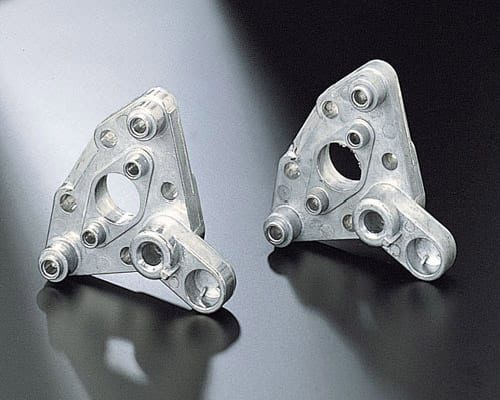
The Dense Chill Skin vs. Subsurface Gas Porosity
When molten aluminum or zinc hits a water-cooled steel die under high pressure, the outer layer freezes almost instantly into a fine-grained, low-porosity shell. Deeper inside the wall, trapped air and solidification shrinkage create tiny micro-voids. As long as mass finishing stays inside that outer skin, surfaces remain sealed, bright, and plateable. Cut past that skin, and every micro-void opens into a dark pinhole pit that traps soap, moisture, and electroplating salts—causing blisters when parts pass through heated paint ovens or plating baths.
Why Billet CNC Recipes Destroy Die-Castings
Machined 6061 billet aluminum has uniform grain density from surface to core, so operators can cut away deep milling scallops without exposing porosity. Applying a billet ceramic cut recipe to die-cast ADC12 or Zamak housings removes too much outer stock, exposing dark subsurface pepper spots and ruining gasket flatness across thin sealing flanges. Keeping cut times short and media density low protects that critical outer chill skin on every shift.
Zinc Zamak vs. Aluminum A380 Sensitivity
Zinc die-castings are softer and more chemically reactive than silicon-bearing A380 aluminum. Zinc darkens rapidly in high-pH alkaline compounds and pits easily under heavy steel balls. Both alloys demand neutral or mild-pH mass-finishing chemistry paired with soft, cushioned plastic media and clean flow-through rinsing to avoid blotchy surface discoloration.
| Die-Cast Alloy | Outer Skin Behavior | Primary Tumbling Failure | Controlled Mass-Finishing Rule |
|---|---|---|---|
Aluminum A380 / ADC12 |
Hard silicon-rich chill skin | Gray silicon smut & opened pinholes | Neutral compound + short plastic cone cut → porcelain polish |
Zinc Zamak alloys |
Soft, dense, chemically reactive | Alkaline blackening & impact dimples | Mild neutral soap + fine plastic cones; avoid heavy steel |
| Thin-wall magnesium / light housings | Low stiffness, rapid oxidation | Warped tabs & water-spot corrosion | Gentle vibratory roll + immediate spin-dry |
[DESIGN: Four-panel comparison showing intact die-cast chill skin, exposed subsurface porosity, alkaline darkening, and bruised edges]
Selecting Media for Die Cast Part Surface Finishing
Media bulk density and abrasive bond hardness determine whether parting-line flash disappears cleanly or the casting skin gets hammered and torn.
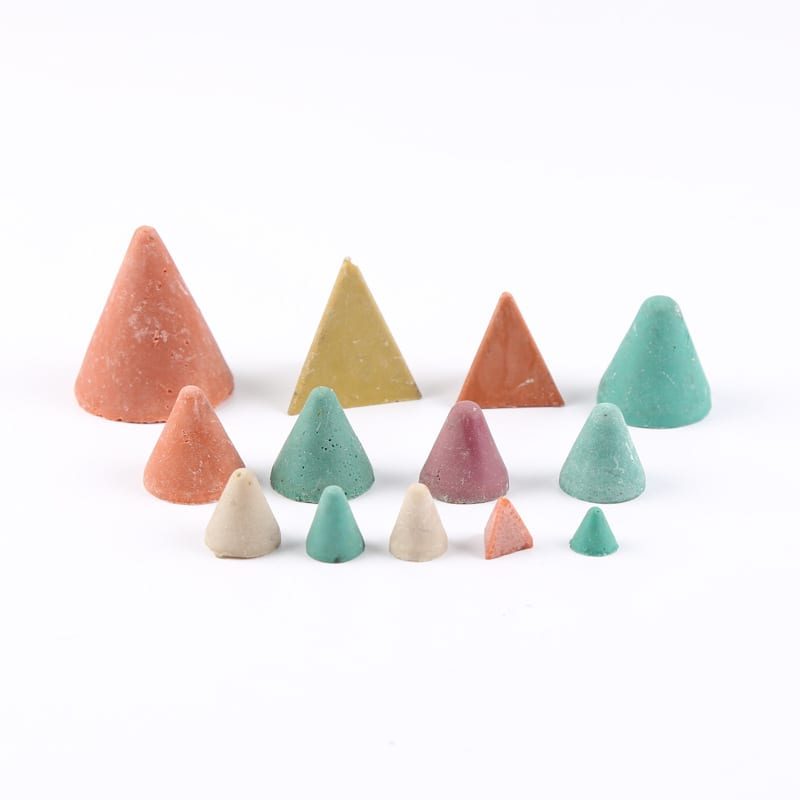
Resin-Bonded Plastic Cones and Pyramids for Safe Flash Removal
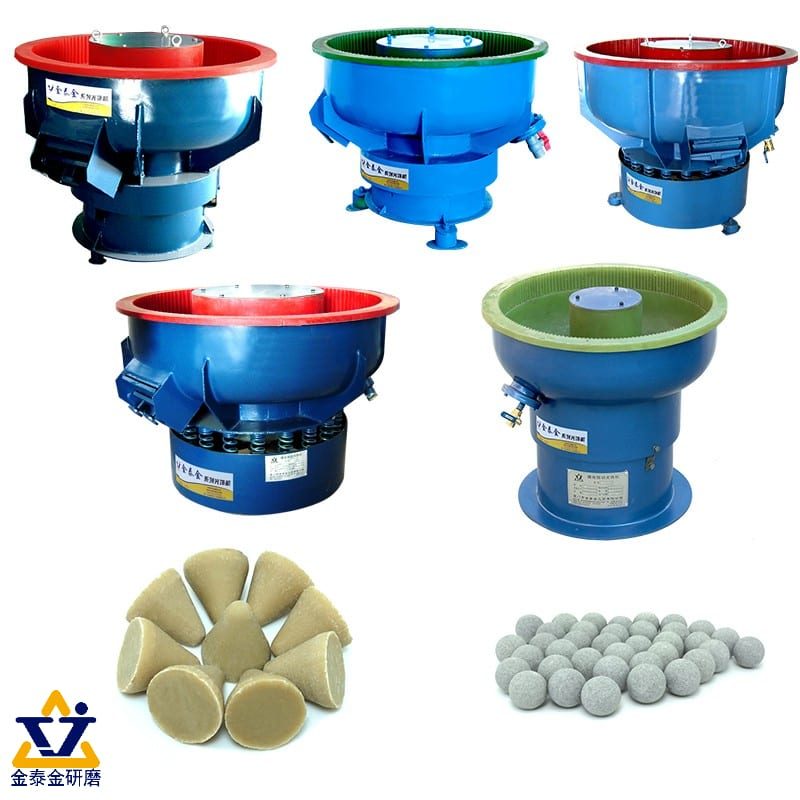
Plastic-bonded abrasive cones carry lower bulk density than sintered ceramic, cushioning fragile casting ribs and thin mounting bosses while steadily erasing light parting lines, gate stubs, and ejector-pin marks. Because resin-bonded plastic wears smoothly without shattering into sharp chips, it keeps flat faces free of deep random gouges. Compare media families in our tumbler media selection matrix.
High-Alumina Porcelain Spheres for Pore-Closing Burnish
Once light plastic media levels parting lines, transferring rinsed die-castings into smooth high-alumina porcelain spheres with JTS5 brightening compound develops a clean, uniform satin-to-bright finish. Smooth porcelain compresses surface micro-peaks gently without tearing into subsurface pores.
Why Coarse Ceramic Triangles and Steel Shot Ruin Die-Castings
Heavy preformed ceramic triangles chip delicate casting ears and cut too deeply into thin chill skins. Meanwhile, dense stainless steel burnishing media peens soft zinc and aluminum faces into "orange peel" dimples unless parts are thick-walled and heavily cushioned. Reserve coarse ceramic and heavy steel balls for hard stainless and carbon steel hardware.
Sizing Media to Clear Louvers, Bosses, and Blind Threads
Die-cast enclosures frequently include cooling louvers, cored mounting bosses, and tapped screw holes. Size plastic cones strictly larger than cored slots or smaller than one-third of the narrowest louver opening so cones never wedge inside housings, saving operators from manual picking before coating.
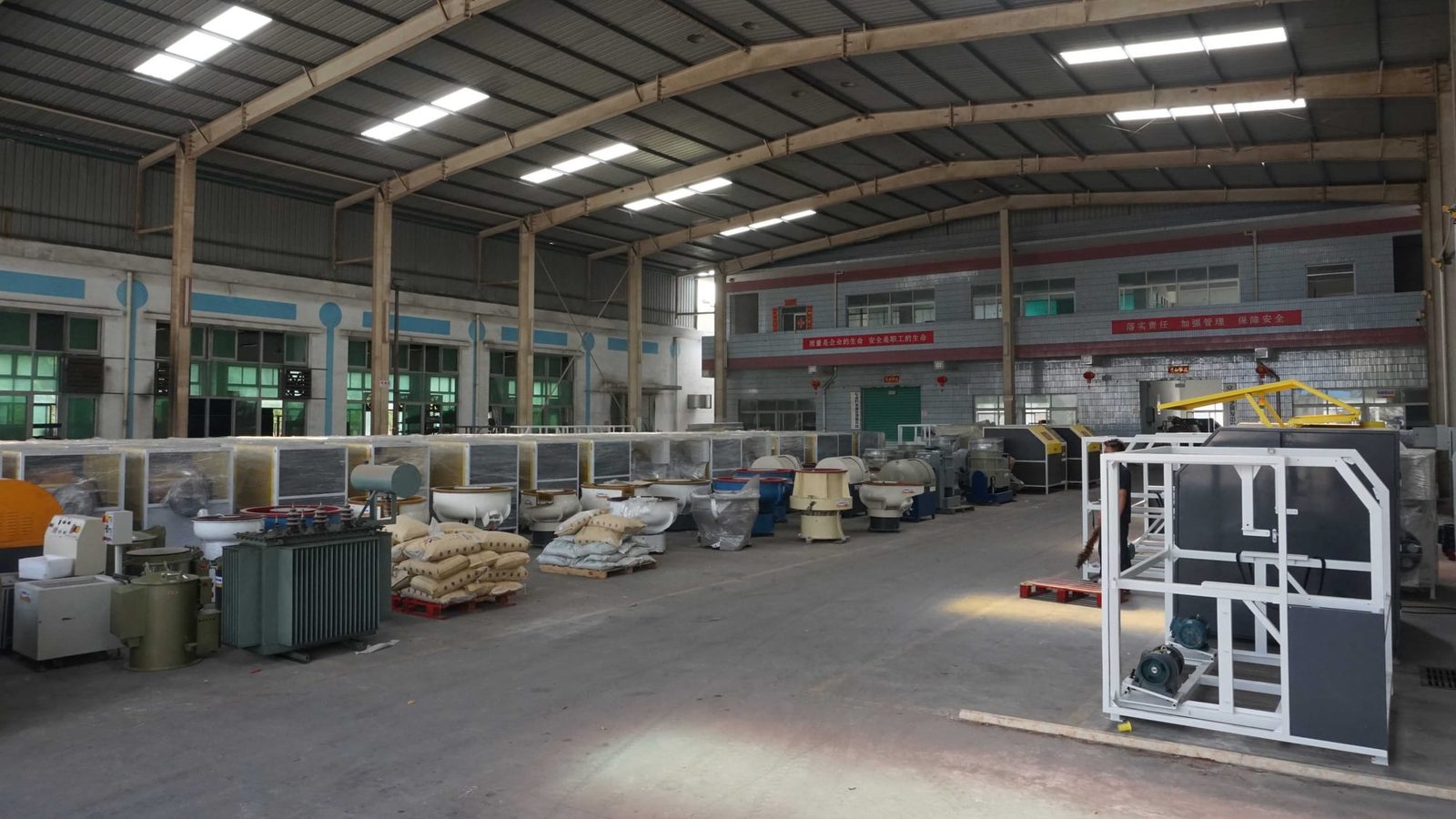
Choosing Chambers: Vibratory Bowls, Divided Troughs, and Barrels
Chamber motion controls whether die-cast housings glide safely in a supportive media bed or collide part-on-part and dent sealing lands.
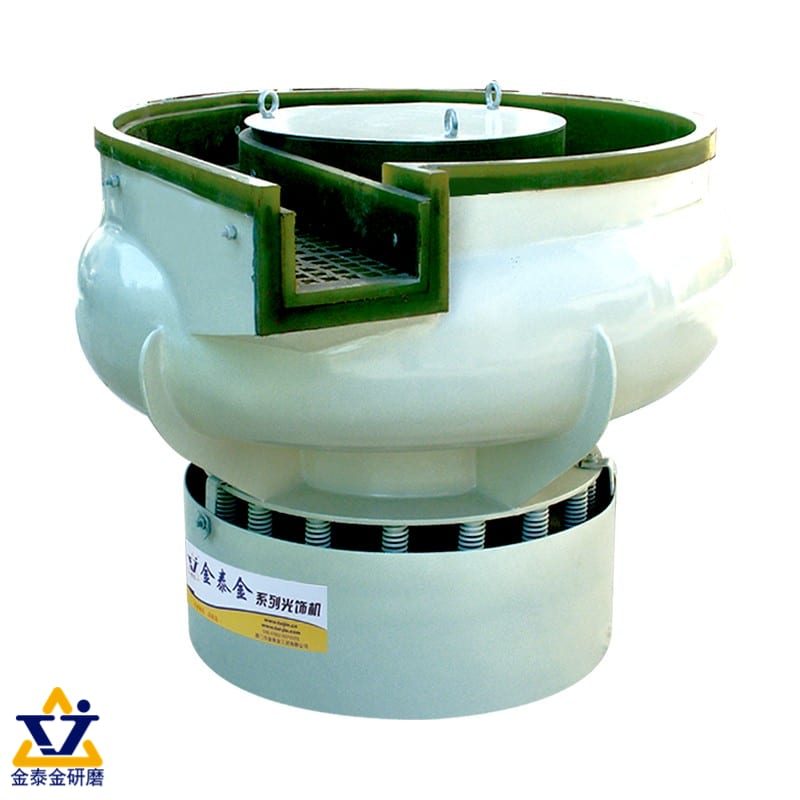
Polyurethane-Lined Vibratory Bowls for Medium Die-Castings
A polyurethane-lined vibratory grinder provides steady, low-impact toroidal circulation with continuous water and compound flow-through. Continuous flushing sweeps dark aluminum and zinc wear fines out of the bowl so castings never turn gray mid-cycle.
Rectangular Vibratory Troughs With Dividers for Large Enclosures
Large die-cast gearbox covers, lighting housings, and carburetor or intake bodies carry enough weight to dent each other inside open bowls. A divided rectangular vibratory trough isolates individual castings inside padded cells while letting plastic media circulate freely around every flange.
Wide-Table OBD Magnetic Polishers for Cored Pockets and Ribs
When die-castings have deep narrow pockets, cooling fins, or blind bosses that plastic cones bridge over, a magnetic tumbler spins fine stainless pins inside a wet bath to brighten tight corners without cutting through outer flat chill skins.
Why Dry Rotary Barrels Follow Wet Smoothing for Decorative Hardware
For decorative zinc hardware and small non-ferrous castings headed for clear lacquer or retail display, a dry rotary barrel charged with walnut shell or corncob media adds cool, streak-free final luster after wet smoothing and centrifugal spin-drying.
| Casting Size & Complexity | Recommended Chamber Format | Key Advantage for Die-Castings |
|---|---|---|
| Small-to-medium brackets & covers | Circular vibratory bowl | Continuous fine flush; gentle toroidal cushion |
| Heavy housings & flat sealing flanges | Divided rectangular vibratory trough | Prevents part-on-part flange denting |
| Deep fins, cored pockets & threads | Wide-table OBD magnetic polisher | Brightens tight corners without stripping chill skin |
| Decorative dry gloss on zinc/brass | Double-deck dry rotary barrel | Cool organic wipe with zero wet staining |
[DESIGN: Four-stage die-cast finishing workflow: trim heavy gate flash, wet plastic cut, clean flush, and heated spin-dry]
Chemistry, Flow-Through Water, and Preventing Aluminum/Zinc Staining
Even the gentlest plastic media produces ugly gray or white-spotted die-castings if liquid chemistry and rinse water are poorly controlled.
Neutral-pH Compounds vs. High-Alkaline Cleaners
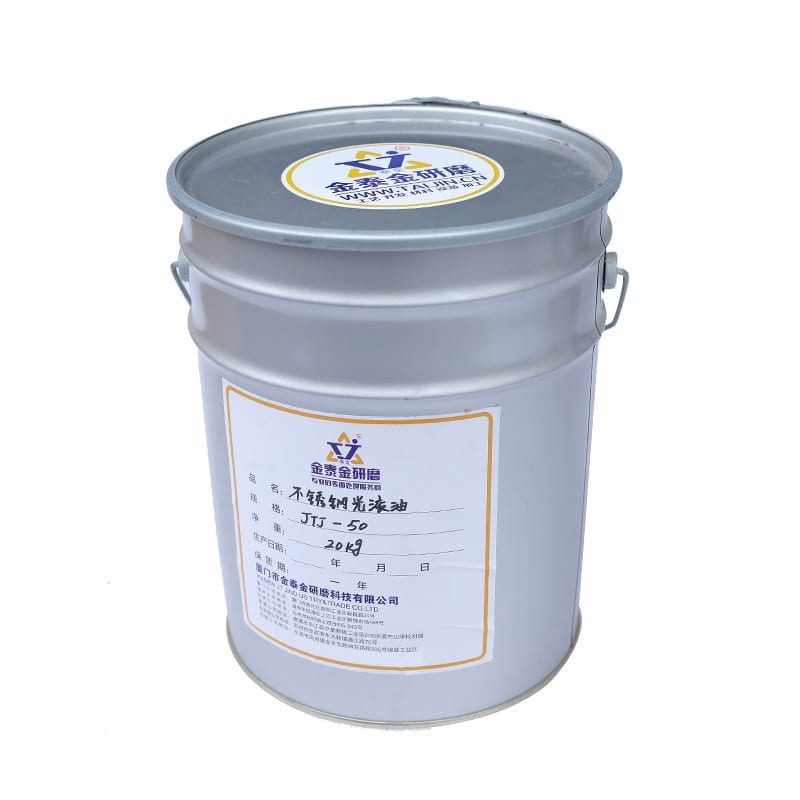
High-pH alkaline soaps etch aluminum and blacken zinc die-castings rapidly, leaving dark blotches that resist polishing. Always run neutral or dedicated non-ferrous brightening compounds (JTS5 or neutral-balanced LC10 dilutions) formulated to keep aluminum and zinc bright without chemical attack.
Why Recirculating Dirty Water Turns Die-Castings Gray
Aluminum and silicon wear fines suspended in closed-loop sump water act like dark dye, coating plastic cones and turning castings dull charcoal. Maintain steady fresh water flow-through with metered compound dosing so wear debris flushes out continuously and keeps every casting bright and clean.
Immediate Clean-Water Flushing and Centrifugal Spin-Drying
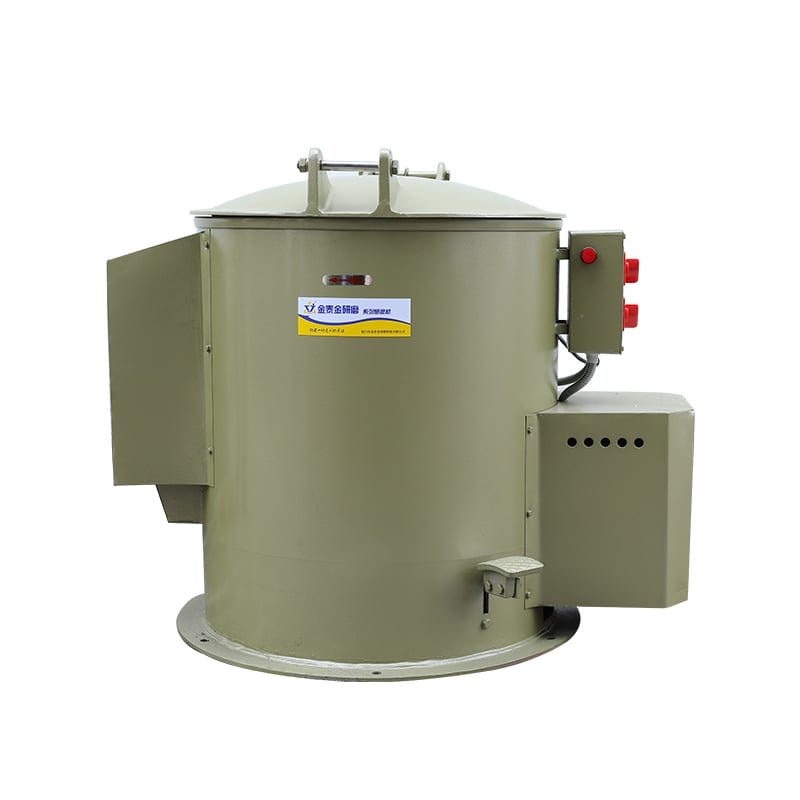
Die-castings corrode quickly if wet soap film dries inside cored pockets. Flush unloaded castings immediately in clean water and run them through a heated centrifugal spin dryer so warm air and centrifugal force clear every pocket cleanly.
Preparing Die-Cast Surfaces for Powder Coating vs. Electroplating
Not every die casting surface finish needs the same final texture. Castings headed for powder coating only need smooth parting lines, clean degreased skin, and a uniform satin anchor profile from fine plastic cones. Castings headed for decorative chrome or nickel electroplating require pore-free chill skin and smooth porcelain brightening—because electroplating magnifies every exposed subsurface pinhole. Always verify plating-grade surface smoothness under bright task lighting before transferring batches out of the porcelain burnish stage.
Four Common Die-Cast Finishing Failures and How to Diagnose Them
Failure Mode 1: Tiny Dark Pinholes Exposed Across Flat Castings
Castings looked smooth leaving the die, then developed pepper-like dark pits after tumbling.
Diagnostic rule: If tiny dark pinholes appear across previously smooth flat faces, the cut stage penetrated past the dense chill skin into subsurface porosity—shorten plastic cut time, switch to finer plastic grit, and inspect upstream die-casting venting.
Failure Mode 2: Uniform Dark Gray or Blackened Castings
Zinc or aluminum housings exit dull charcoal even with fresh media.
Diagnostic rule: If darkening covers the whole casting evenly, compound pH is attacking the alloy or dirty wear slurry is redepositing—switch to neutral aluminum/zinc-safe chemistry and raise clean flow-through water rate.
Failure Mode 3: Rolled Flange Corners and Crescent Edge Dents
Flat gasket faces show tiny crescent dings along perimeter edges.
Diagnostic rule: If crescent dings appear on exposed edges, parts are colliding part-on-part or media density is too high—reduce part load, raise media-to-part volume, or move heavy castings into a divided trough.
Failure Mode 4: White Corrosion Spots Appearing During Storage
Parts exit bright and clean, then show powdery white oxidation spots inside pockets days later.
Diagnostic rule: If white spots develop after unloading, rinse water left alkaline soap residue inside blind pockets or parts dried too slowly—add a clean rinse flush and immediate heated centrifugal spin-drying.
| Symptom Observed | Root Cause | Immediate Fix |
|---|---|---|
| Dark pepper pinholes on flats | Over-cut past outer chill skin | Shorten cut cycle; switch to finer plastic cones |
| Uniform charcoal/gray skin | High-pH chemical attack or dirty sump | Use neutral compound + steady fresh water flow |
| Crescent edge dings on flanges | Part collision or dense ceramic/steel | Lower part load; add trough dividers; use plastic media |
| White oxidation spots later | Slow drying or soap residue in pockets | Clean flush + immediate heated spin-drying |
[DESIGN: Troubleshooting matrix linking pinhole exposure, graying, flange dings, and white spots to skin, pH, and drying fixes]
Separating Die-Cast Trimming From Mass Finishing
Many shops expect a vibratory bowl to chew off thick gate runners and heavy die-parting flash that belong on a trim press.
Why Heavy Gate Stubs Must Be Trimmed Before Tumbling
Thick gate stubs and heavy parting fins require excessive tumbling hours in plastic media—and by the time a heavy gate stub wears flat, the surrounding chill skin on the casting body has already been stripped away. Always punch-trim or belt-blend heavy gate stubs cleanly before wet mass finishing. Treating trim-press maintenance as part of your surface-finishing control cuts vibratory cycle times substantially and keeps chill-skin thickness intact across flat cosmetic faces.
Protecting Cosmetic Faces on Thin-Wall Enclosures
Consumer electronics, lighting bezels, and automotive trim housings cannot tolerate deep scratches from rough handling baskets. Line discharge chutes and separator decks with soft polyurethane sheet, and stack dried castings in compartmentalized trays rather than dumping finished parts loose into deep wire bins. Gentle material handling preserves the uniform satin or bright sheen built inside the bowl.
Avoiding Cross-Contamination With Steel or Iron Charges
Never run aluminum or zinc die-castings in plastic or porcelain media previously used on carbon steel or brass. Embedded iron particles cause galvanic pitting on damp aluminum castings overnight. Dedicate clearly labeled media drums, screen decks, and centrifugal spin-dryer baskets strictly to non-ferrous die-castings.
Balancing Media-to-Part Ratio on Heavy Castings
High-pressure aluminum and zinc castings often carry thick boss clusters on one side and thin mounting tabs on the opposite edge. Loading too many castings into a small bowl lets heavy bosses slam into fragile tabs, bending ears and leaving crescent dents on mating flanges. Maintain a generous bed of resin-bonded plastic cones around every housing, and move oversized gearbox covers into a divided rectangular vibratory trough.
Screening Worn Plastic Cones Before They Wedge in Louvers
Even durable resin-bonded plastic cones wear smaller over weeks of multi-shift tumbling. As cone tips shrink, worn fragments eventually approach the width of cooling louvers, mounting slots, and cored pockets. Run a scheduled screen-deck purge to drop undersize tips out of the charge, and top up with fresh full-size plastic cones so cut speed and part separation remain consistent.
Comparing Wet Plastic Smoothing vs. Dry Organic Brightening
Not every die cast part surface finishing job stops at wet plastic smoothing. When decorative zinc hardware or aluminum trim bezels require an extra warm dry gloss before clear coating, transfer rinsed, spun-dry castings into a dry double-deck rotary barrel charged with walnut shell or corncob media. Separating wet cut and dry organic buffing keeps water spots off polished bosses and extends organic media life.
Managing Drain Settling Tanks for Aluminum and Silicon Fines
Wet tumbling of A380 and ADC12 aluminum die-castings generates fine gray silicon-aluminum slurry. Routing bowl discharge through a multi-baffle settling tank prevents fine metallic mud from plugging floor drains and keeps clarified overflow clean rather than recirculating gray sludge back onto fresh castings.
Honest Capability Boundaries and Production Standards
What Mass Finishing Can and Cannot Fix on Die-Castings
Mass finishing excels at die cast part surface finishing—removing light parting lines, smoothing ejector marks, brightening cored pockets, and preparing clean satin or burnished skins for coating. However, mass finishing cannot fill deep cold-shut defects, repair shrink cracks, remove heavy untrimmed gate runners without stripping chill skin, or provide electroplating, anodizing, or powder coating. For related hardware workflows, see our sheet metal deslagging guide and superfinishing guide.
What We Supply and What We Do Not Supply
At Xiamen Jin Tai Jin Grinding Technology Co.,Ltd. (brand: Jings Polish), our workshop roots date back to 1996 and our company was formally established in 2009, delivering over 200,000+ sets of grinding and polishing solutions worldwide. Across our catalogue, we manufacture 21 machine platforms backed by 24 granted Chinese IP rights (1 invention patent, 15 utility model patents, and 8 design patents), under ISO 9001 certification 00726Q01571R001 (valid 2026-06-03 to 2029-06-02) and CE certifications M.2023.206.C88121 (Vertical, 8 models) and M.2023.206.C88120 (Horizontal, 13 models), valid until 2028-07-24.
To keep boundaries clear: we supply industrial mass finishing machines (vibratory bowls, divided troughs, wide-table OBD magnetic polishers, rotary barrels, heated centrifugal spin dryers), tumbling media (resin-bonded plastic, high-alumina porcelain, ceramic, stainless pins, organic media), and neutral/brightening compounds; we do NOT supply die-casting machines, trim presses, electroplating/anodizing/powder-coating lines, sandblasting cabinets, or contract job-shop polishing services. Separating finishing machinery from upstream casting and downstream plating lines keeps expectations realistic from the first engineering conversation across busy production floors and quality teams.
Integrating Die-Cast Finishing Into Multi-Shift Production
High-volume die-casting foundries get the most consistent results by pairing a polyurethane-lined vibratory bowl (or divided trough for large covers) with an automated screen separator, clean-water rinse station, and heated centrifugal spin dryer. Keeping wet plastic smoothing, clean flushing, and heated drying in one continuous flow prevents castings from sitting damp in open baskets between shifts, cutting white-corrosion scrap and stabilizing surface quality for downstream paint or plating lines.
Honest Lead Times and Engineering Assessment
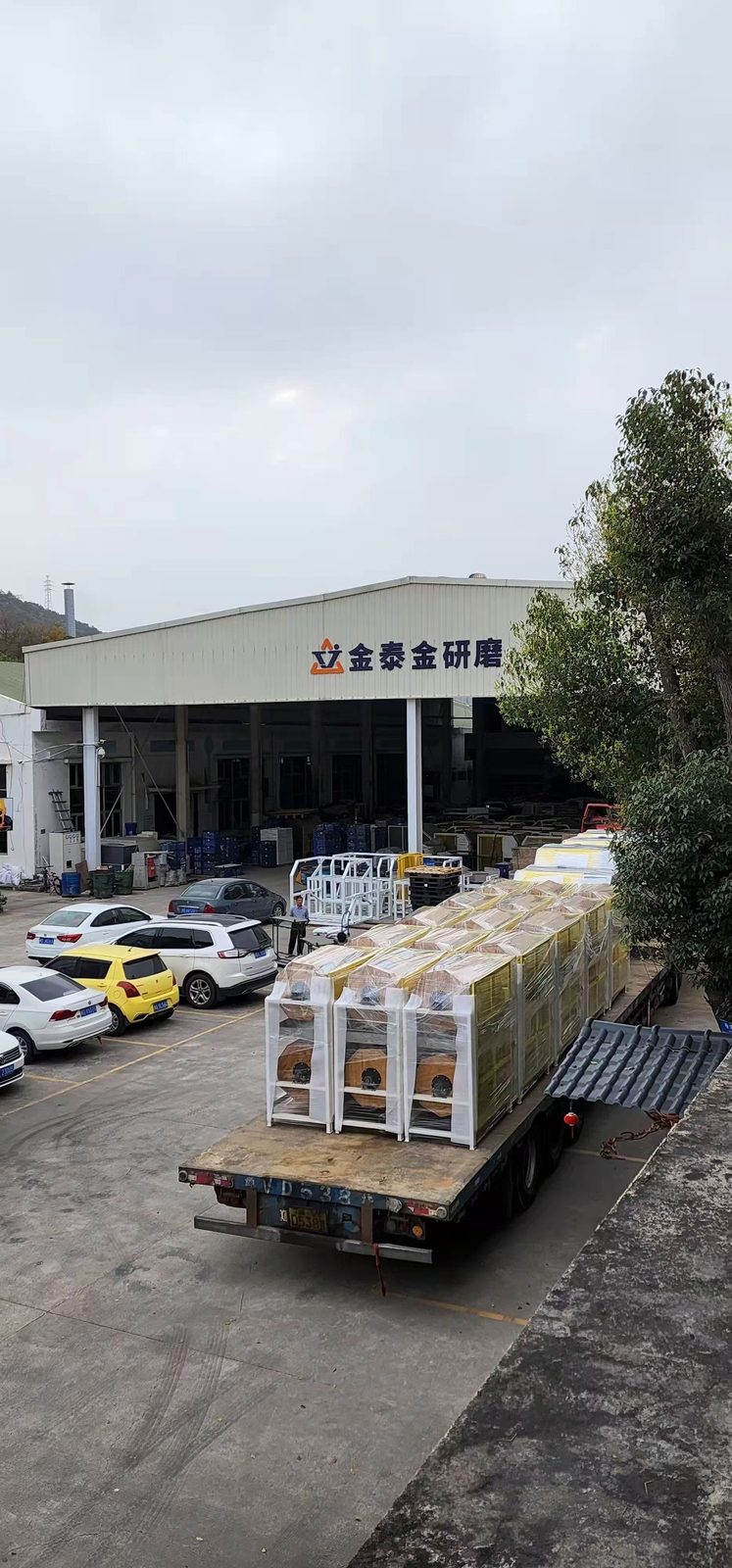
Standard machines ship in 25–35 days, while custom divided troughs and multi-stage die-cast lines require 45–60 days. Because alloy type (A380, ADC12, Zamak), wall thickness, and downstream coating specs vary widely, we do not promise free sample trials by mail or guarantee cycle times before inspecting your workpiece—send clear photos of your castings showing parting flash, cored pockets, and target finish via our custom polishing solution page for an engineering assessment. Close-up photos of gate stubs, mounting bosses, and cooling louvers help our engineers select non-lodging plastic shapes accurately on the first reply.
Frequently Asked Questions
Why do pinholes appear on aluminum die-castings after tumbling?
High-pressure die-castings have a thin, dense outer chill skin covering micro-porous core metal. Cutting too long or using overly aggressive ceramic media strips through that chill skin and exposes subsurface porosity.
What is the best media for die cast part surface finishing?
Resin-bonded plastic cones are the safest primary medium for removing light parting lines without bruising edges or stripping chill skin, followed by smooth high-alumina porcelain spheres if extra brightness is needed.
Why did my zinc or aluminum die-castings turn dark gray in the vibratory bowl?
Graying or blackening happens when high-pH alkaline compounds etch the alloy or when fine aluminum/zinc wear debris builds up in recirculated water. Use neutral non-ferrous compound with steady fresh water flow-through.
Can vibratory tumbling remove heavy gate stubs on die-castings?
No. Thick gate stubs must be trimmed on a press or belt-blended first. Trying to tumble off heavy gate stubs in a bowl strips the chill skin off the rest of the casting.
Should I use a circular bowl or a divided trough for large die-cast housings?
Small-to-medium castings run well in a circular vibratory bowl with generous media cushion. Heavy housings with flat gasket flanges run safer in a divided rectangular vibratory trough to prevent part-on-part collision dents.
What details should I share before requesting a quote for a die-cast finishing line?
Send clear photos of your castings showing parting lines, cored slots, and sealing flanges, along with alloy grade, part weight, downstream coating plan, and hourly throughput. Our engineers can recommend the right chamber, plastic media, and drying setup from photos and drawings.
[DESIGN: Annotated buyer enquiry checklist showing casting photos, parting-flash close-ups, alloy grade, and coating plan]
 +86-592-2381506


 IPv6 network supported
