
Aluminum Isotropic Finishing in Production: Lowering Roughness Without Chemical Etching or Bruising
Motorsport, aerospace, and optical-hardware engineers searching for aluminum isotropic finishing often assume they can borrow the same chemically accelerated isotropic recipe used on hardened steel transmission gears. Running active steel conversion chemistry against 6061, 7075, or cast A380 aluminum destroys the parts—etching soft aluminum grain boundaries dark gray, pitting sealing lands, and generating rapid gas inside closed chambers.
The central thesis of this guide is clear: true aluminum isotropic finishing replaces aggressive acidic conversion films with staged mechanical leveling—using low-density resin-bonded plastic cones and neutral chemistry to erase directional CNC scallops, followed by high-alumina porcelain burnishing inside cushioned vibratory bowls or drag fixtures. Separating soft-alloy mechanical leveling from steel chemical etching prevents dark smut, selective pitting, and edge bruising across high-precision aerospace, optical, and motorsport production batches. For steel-gear isotropic workflows, see our isotropic finishing guide and aluminum polishing machine guide.
Why Steel Isotropic Chemistry Fails on Aluminum Alloys
Isotropic finishing on alloy steel relies on forming a soft phosphate or oxalate conversion film on surface peaks so non-abrasive porcelain can wipe those peaks flat. Aluminum behaves completely differently in reactive baths.

High-pH Alkaline and Acidic Baths Etch Aluminum Unevenly
Unlike steel, aluminum is amphoteric—it corrodes rapidly in both strong acids and strong alkaline soaps. Static or aggressive conversion chemicals attack alloying elements (copper in 2024, zinc in 7075, silicon in A380) at different rates, leaving behind selective pitting and dark gray smut rather than a uniform plateau finish. Keeping chemistry strictly neutral protects alloy grain boundaries while letting plastic media smooth tool ridges cleanly.
Directional CNC Ball-Mill Ridges vs. Non-Directional Plateau Texture
Five-axis CNC milling leaves parallel step-over cusps across aerospace ribs, billet valve covers, and optical mounts. An aluminum isotropic finishing sequence erases those directional tool tracks cleanly into a smooth, multi-directional matte-to-bright skin without rounding thin structural webs. Removing those directional cusps also improves anodizing appearance and lowers friction on mating sliding surfaces.
Soft Aluminum Bruises Under Heavy Ceramic or Steel Balls
Because 6061 and 7075 aluminum have roughly one-third the density and far lower surface hardness than hardened bearing steel, dropping heavy ceramic triangles or dense stainless steel burnishing balls onto aluminum leaves severe "orange peel" dimpling before tool marks ever disappear. Low-density plastic cones and gentle porcelain spheres avoid that bruising completely.
| Process Factor | Hardened Steel Isotropic Finishing | Aluminum Isotropic Finishing |
|---|---|---|
| Primary Chemical Action | Controlled soft conversion film on peaks | Neutral lubricating/suspending chemistry (JTS5 / neutral LC10) |
| Stage 1 Cut Medium | Dense ceramic or fine plastic | Low-density resin-bonded plastic cones |
| Stage 2 Plateau Polish | Smooth high-alumina porcelain or steel balls | Smooth high-alumina porcelain spheres (avoid heavy steel) |
| Top Failure Mode | Incomplete film neutralization (dark gray) | High-pH etching or heavy-media "orange peel" bruising |
[DESIGN: Four-panel comparison showing CNC step-over ridges, chemically etched aluminum, bruised edges, and clean isotropic aluminum finish]
Equipment Platforms for Aluminum Isotropic Finishing
Chamber motion controls whether soft aluminum parts glide inside a supportive cushion or collide part-on-part and dent precision bores.

Fixtured Drag Finishing for Billet Aerospace and Motorsport Parts
When billet aluminum impellers, suspension uprights, or forged pistons cannot tolerate even a single edge nick, drag finishing clamps each workpiece onto a rotating planetary spindle and sweeps it through stationary plastic or porcelain media. Parts reach low isotropic roughness with zero part-on-part contact, keeping thin blade tips and precision bearing bores untouched by collision damage.
Rectangular Vibratory Troughs With Dividers for Large Plates and Brackets
Long CNC-milled aerospace ribs and wide billet valve covers collide violently inside open circular bowls. A divided rectangular vibratory trough isolates each part inside its own polyurethane-lined compartment while allowing neutral compound and plastic cones to circulate evenly around every pocket. Removable dividers let one trough adapt rapidly across varied part lengths.
Polyurethane-Lined Circular Vibratory Bowls for Small-to-Medium Batches
For compact CNC aluminum housings, sensor enclosures, and drone brackets, a vibratory grinder with thick polyurethane lining and continuous fresh water flow-through flushes suspended aluminum dust straight out of the chamber so parts stay bright rather than graying. Integrated screen decks also allow smooth, gentle separation without manual picking.
Centrifugal Disc Finishers (Speed-Controlled Only for Rigid Parts)
Rigid, compact 7075 aluminum blocks can run in a centrifugal disc finishing machine at dialed-back variable-frequency drive speed using lightweight plastic cones. Keep thin-walled sheet stampings out of gap-ring disc units to avoid perimeter seam jams, and keep pressurized seal flush water clean and steady across every shift.

Two- and Three-Stage Media Progression for Aluminum
Skipping the intermediate plastic smoothing step leaves deep CNC scallops showing straight through a shiny burnished surface.

Stage 1: Fine-to-Medium Resin-Bonded Plastic Cones
Resin-bonded plastic cones and pyramids provide the ideal density match for aluminum isotropic finishing. They hold sharp abrasive grain gently inside a resilient polymer matrix, cutting CNC cusp ridges steadily without hammering thin aluminum ribs or shattering into sharp splinters. Because plastic media is lightweight, parts stay cushioned evenly through the toroidal roll rather than sinking to the bowl floor and scraping bare polyurethane walls.
Stage 2: High-Alumina Porcelain Spheres for Non-Directional Burnishing
After Stage 1 turns CNC ridges into a tight, uniform satin matte finish, flush parts thoroughly and transfer them into smooth high-alumina porcelain spheres lubricated with JTS5 brightening chemistry. Smooth porcelain compresses micro-peaks cleanly into a reflective isotropic plateau without heavy steel dimpling. Keep porcelain spheres dedicated strictly to clean Stage 2 aluminum burnishing so coarse grit from Stage 1 never contaminates the polishing bed.
Why Coarse Ceramic and Pumice Stay Out of Precision Aluminum
Coarse sintered ceramic triangles leave deep random impact nicks on soft aluminum, while loose pumice abrasive turns into silica mud that packs inside blind tapped holes. Stick to engineered plastic cones followed by clean porcelain spheres. Engineered resin-bonded shapes also screen cleanly on vibratory decks, cutting operator sorting time dramatically compared to messy mineral slurries.
Sizing Media to Clear Lightening Holes and Pocket Fillets
Aerospace and motorsport aluminum parts are full of weight-reduction pockets and tapped bores. Size plastic cones and porcelain spheres strictly larger than pocket slots—or smaller than one-third of the narrowest bore—so media circulates through fillets without wedging. Always verify worn plastic cone dimensions during weekly screen-deck checks so shrinking tips never reach lodging size inside narrow cooling slots or M4/M6 tapped holes.
Multi-Grade Plastic Progression for Deep 5-Axis Tool Marks
When aerospace impellers or billet suspension uprights arrive with deep 5-axis ball-mill scallops, jumping straight from a coarse plastic cut into smooth porcelain leaves faint ghost tracks beneath the glossy skin. Insert a brief medium-to-fine plastic pyramid leveling stage between coarse plastic and porcelain burnishing so every directional cusp disappears completely before brightening begins.
Separating 2024, 6061, and 7075 Aluminum Batches
Although all three aerospace and motorsport grades respond to neutral plastic-plus-porcelain workflows, 2024 copper-bearing alloys and 7075 zinc-bearing alloys stain faster than 6061 if left sitting wet in stagnant soap. Keep dwell times tight and move rinsed 2024/7075 parts straight into heated centrifugal spin-drying upon unload.
[DESIGN: Four-stage aluminum isotropic sequence: degrease, wet plastic cut, porcelain burnish, and heated spin-dry]
Neutral Chemistry, Flow-Through Flushing, and Drying Discipline
With aluminum isotropic finishing, water and soap control matter just as much as media selection.
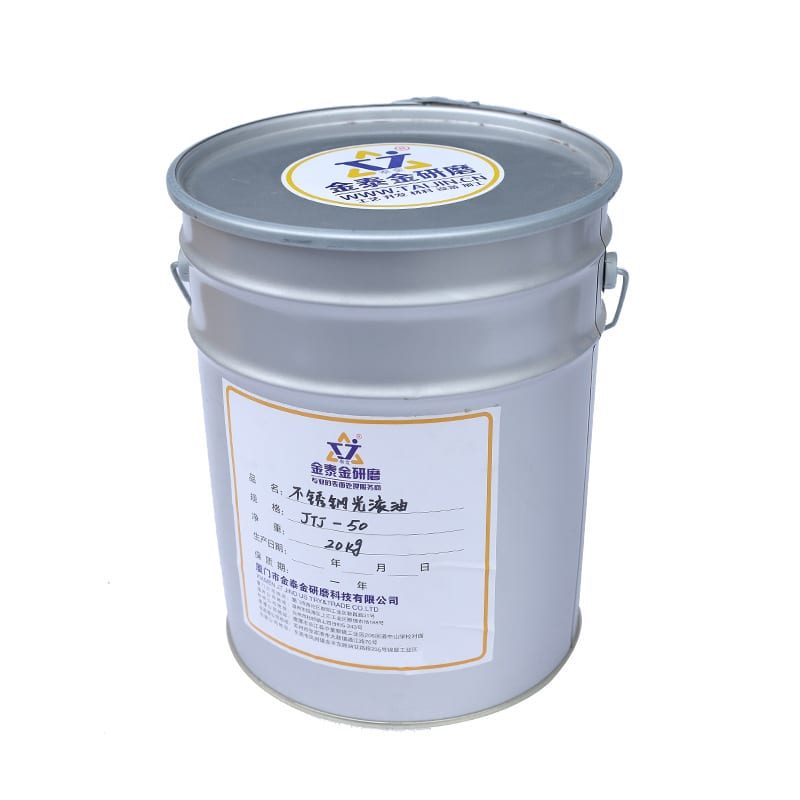
Why Continuous Fresh Water Flow-Through Is Mandatory
Recirculating dirty aluminum slurry in a closed sump turns the water dark gray with suspended aluminum oxide dust. That gray slurry coats plastic cones and dyes parts charcoal. Always run continuous fresh water flow-through with metered neutral compound (JTS5 or neutral-balanced LC10) so fines drain continuously.
Stripping Machining Coolant Before Entering Finishing Media
CNC milling coolants and tapping oils foul plastic media pores rapidly. Degrease oily machined aluminum parts in an aluminum-safe aqueous wash before loading them into Stage 1 plastic cones.
Immediate Heated Centrifugal Spin-Drying
Aluminum develops stubborn white water-spot rings rapidly if wet soap film evaporates slowly in shop air. Flush finished parts immediately in clean water and dry them inside a heated centrifugal spin dryer so warm air and centrifugal force clear every pocket cleanly.
Optional Dry Corncob Wipe for Show-Grade Billet Brightness
For exposed billet motorcycle parts, optical bezels, or cosmetic trim requiring maximum spot-free shine, pass spin-dried aluminum briefly through clean, dedicated corncob media inside a heated vibratory dryer—never sharing cob charges with steel or brass parts. Warm cob granules lift trace hard-water film without scratching soft aluminum.

Preparing Isotropic Aluminum for Anodizing vs. Bare Assembly
What happens after aluminum isotropic finishing determines how carefully you must control surface cleanliness and alloy integrity.

Anodize-Ready Surfaces Require Zero Smut and Zero Embedded Iron
Clear and Type-III hard anodizing magnify every surface flaw. If plastic media or rinse baskets carry trace iron dust from carbon steel, anodized aluminum develops dark pit streaks in the acid bath. Dedicate aluminum-only media drums, screen decks, and drying baskets, and confirm parts exit bright and smut-free before racking for anodizing. Inspecting random brackets under bright task lighting right after spin-drying catches faint water-spot rings before parts ever hit the anodizing tank.
Bare Motorsport and Aerospace Fatigue-Critical Components
Eliminating sharp CNC step-over ridges removes surface stress risers on suspension links, forged pistons, and connecting-rod caps. Always verify critical bore diameters and O-ring groove edges after Stage 1 cut-down before moving parts into final porcelain burnishing. Documenting repeatable cycle timers per part number ensures every shift hits the same smooth plateau without eroding bearing fits.
Avoiding Over-Cutting Die-Cast Aluminum Chill Skins
If your workpiece is die-cast A380 or ADC12 aluminum rather than 6061/7075 billet, keep Stage 1 plastic cut time short so you smooth parting lines without stripping past the dense outer chill skin into subsurface porosity—see our die cast surface finishing guide.
Measuring Surface Roughness Perpendicular to Machining Cusps
Never rely on visual gloss alone to approve aluminum isotropic finishing. Run a calibrated stylus profilometer perpendicular to the original CNC ball-mill feed direction at multiple points across flat webs and pocket floors. Only when directional peak-to-valley readings drop uniformly across every orientation has the batch achieved true isotropic leveling rather than shiny smeared ridges.
Managing Settling Tanks for Fine Aluminum Slurry
Continuous fresh water flow-through carries fine aluminum oxide and polymer wear dust out of the vibratory bowl. Route drain effluent through a multi-baffle settling tank before disposal or clarified overflow, and clean tank weirs on a fixed schedule so gray aluminum mud never backs up under the bowl screen deck.
Protecting Cosmetic Aerospace Parts During Unloading
Even the cleanest isotropic aluminum finish can be ruined in five seconds if heavy billet brackets drop onto bare stainless steel chutes or pile up in rough wire baskets. Line discharge chutes and separator decks with soft polyurethane sheet, and stack dried parts in compartmentalized foam-lined trays.
| Downstream Requirement | Stage 1 & 2 Focus | Critical Inspection Check |
|---|---|---|
| Clear or hard anodizing | Neutral flow-through + zero iron contamination | Bright smut-free skin; zero water-spot rings |
| Bare aerospace/motorsport fatigue life | Complete CNC cusp removal in Stage 1 | Zero directional feed lines under low-angle light |
| Die-cast aluminum housings | Short plastic cut + smooth porcelain polish | Intact chill skin; zero exposed pepper pinholes |
Four Common Aluminum Isotropic Finishing Failures and How to Diagnose Them
Failure Mode 1: Dull Charcoal Gray Aluminum Exiting the Bowl
Parts enter bright silver from the CNC mill and exit uniformly dark gray.
Diagnostic rule: If graying covers the entire part uniformly, compound pH is etching the aluminum or dirty wear slurry is recirculating—switch immediately to neutral compound (JTS5 / neutral LC10) and increase clean fresh water flow-through.
Failure Mode 2: Tiny "Orange Peel" Dimples Across Flat Billet Faces
Close inspection reveals hammered circular micro-dents rather than smooth satin texture.
Diagnostic rule: If flat faces look dimpled, media density or chamber impact energy is too high—remove heavy ceramic or steel balls, switch to low-density plastic cones, lower disc RPM, or raise media-to-part volume.
Failure Mode 3: CNC Step-Over Ridges Still Visible Through Shiny Finish
Parts look glossy under overhead light yet show parallel milling tracks at low angles.
Diagnostic rule: If milling ridges remain visible after porcelain burnishing, Stage 1 plastic cut time was too short—extend the plastic cut stage until CNC cusps vanish completely into uniform satin before brightening.
Failure Mode 4: White Corrosion Spots Appearing in Storage
Parts looked spotless at unload, then show powdery white spots inside pockets days later.
Diagnostic rule: If white spots appear after unloading, residual rinse water dried slowly inside pockets—add a clean flush and immediate heated centrifugal spin-drying.
| Symptom on Aluminum | Root Cause | Immediate Fix |
|---|---|---|
| Uniform dark charcoal skin | High-pH soap or dirty recirculated sump | Neutral compound + steady fresh water flow |
| "Orange peel" micro-dimples | Heavy ceramic/steel or low media cushion | Switch to plastic cones; raise media ratio |
| Milling tracks under bright sheen | Insufficient Stage 1 cut duration | Extend Stage 1 plastic cut before porcelain |
| White powdery spots in pockets | Slow air-drying or trapped soap | Clean flush + immediate heated spin-dry |
[DESIGN: Troubleshooting matrix linking gray etching, orange peel, visible CNC ridges, and white spots to chemistry and stage fixes]
Honest Capability Boundaries and Production Standards
What Aluminum Isotropic Finishing Can and Cannot Replace
Mass finishing excels at aluminum isotropic finishing—removing directional CNC scallops, rounding sharp burrs uniformly, and lowering surface roughness across complex geometries without manual hand-sanding. However, mass finishing does not replace precision CNC bore honing, cannot fix out-of-flat warped plates, and does not provide Type-II/Type-III anodizing, chromate conversion, or contract job-shop polishing services. Compare roughness-reduction strategies in our superfinishing guide. Keeping mass finishing aligned with upstream CNC precision and downstream anodizing prevents costly rework on flight and motorsport parts.
Training Operators on Neutral Chemistry and Bowl Inspection
Even the best aluminum isotropic finishing recipe drifts if operators eyeball soap scoops or run closed water sumps. Establish a clear shift-start checklist: verify neutral JTS5 or LC10 dosing flow, confirm clean drain water clarity, check plastic cone dimensions against slot clearances, and inspect the first batch under low-angle light before running full shift production.
What We Supply and What We Do Not Supply
At Xiamen Jin Tai Jin Grinding Technology Co.,Ltd. (brand: Jings Polish), our workshop roots date back to 1996 and our company was formally established in 2009, delivering over 200,000+ sets of grinding and polishing solutions worldwide. Across our catalogue, we manufacture 21 machine platforms backed by 24 granted Chinese IP rights (1 invention patent, 15 utility model patents, and 8 design patents), under ISO 9001 certification 00726Q01571R001 (valid 2026-06-03 to 2029-06-02) and CE certifications M.2023.206.C88121 (Vertical, 8 models) and M.2023.206.C88120 (Horizontal, 13 models), valid until 2028-07-24.
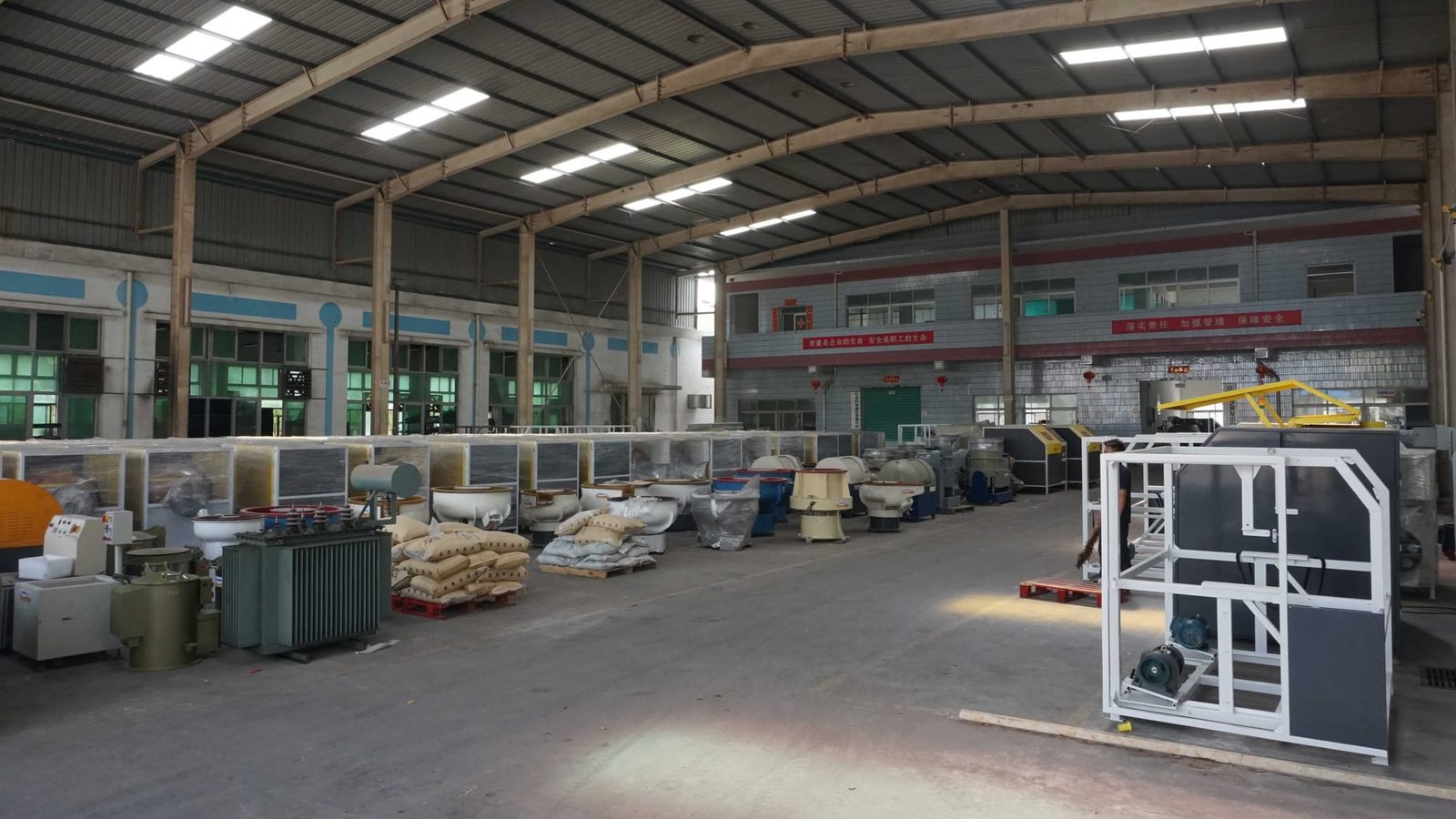
To keep boundaries clear: we supply industrial mass finishing machines (drag finishers, divided rectangular vibratory troughs, circular vibratory bowls, speed-controlled centrifugal disc finishers, heated centrifugal spin dryers), tumbling media (resin-bonded plastic, high-alumina porcelain, ceramic, organic media), and neutral/brightening compounds; we do NOT supply anodizing tanks, chemical etching/conversion baths, blasting cabinets, or contract job-shop aluminum polishing services.
Honest Lead Times and Engineering Assessment
Standard machines ship in 25–35 days, while custom drag-finishing fixtures and divided troughs require 45–60 days. Because alloy grade (6061, 7075, A380), CNC cusp depth, and anodizing requirements dictate media grade and chamber selection, we do not promise free sample trials by mail or guarantee cycle times before inspecting your workpiece—send clear photos of your aluminum parts showing tool marks, pocket openings, and overall dimensions via our custom polishing solution page for an engineering assessment. Close-up photos of 5-axis ball-mill cusps and pocket radii allow our engineering team to configure Stage 1 plastic and Stage 2 porcelain grades accurately on the first engineering reply.
Frequently Asked Questions
Can you use steel isotropic conversion chemicals on 6061 or 7075 aluminum?
No. Steel isotropic conversion chemistry etches aluminum alloying elements unevenly, causing dark gray smut and pitting. Aluminum isotropic finishing relies on neutral chemistry with staged resin-bonded plastic cutting and high-alumina porcelain burnishing.
Why did my aluminum parts turn dark gray during vibratory tumbling?
Dark graying happens when alkaline compounds attack aluminum or when fine aluminum wear dust builds up in recirculated sump water. Switch to neutral chemistry and run continuous fresh water flow-through.
Should I use ceramic media or plastic media for aluminum isotropic finishing?
Use low-density resin-bonded plastic cones for Stage 1 CNC-ridge removal on aluminum, followed by smooth high-alumina porcelain spheres for Stage 2 brightening. Heavy ceramic triangles bruise soft aluminum edges easily.
How do you avoid collision nicks on large CNC aluminum brackets?
Run heavy or cosmetic aluminum parts in a divided rectangular vibratory trough or a fixtured drag finisher so parts never collide against each other during the cycle.
Will aluminum isotropic finishing prepare parts for clear anodizing?
Yes, provided you use aluminum-dedicated media with zero iron contamination, neutral flow-through rinsing, and immediate heated centrifugal spin-drying so parts stay bright and free of water-spot rings.
What details should I share before requesting a quote for an aluminum isotropic line?
Send clear photos of your aluminum parts showing CNC tool marks, pocket sizes, and overall dimensions, along with alloy grade, anodizing plans, and hourly batch target. Our engineers can recommend the right chamber and media sequence from photos and drawings.
[DESIGN: Annotated buyer enquiry checklist showing aluminum part photos, CNC cusp close-ups, alloy grade, and hourly throughput]
 +86-592-2381506


 IPv6 network supported
