
Discoloration of Metal After Mass Finishing: Root-Cause Diagnosis for Dark Aluminum & Flash Rust
Shop-floor engineers troubleshooting discoloration of metal after vibratory bowl or rotary barrel finishing usually assume the metal alloy itself is defective—yet in nearly every case, dark charcoal aluminum, orange-spotted carbon steel, dull slate-gray gears, or tarnished brass traces directly to a specific chemical, water-flow, or media-contamination failure inside the finishing cell.
The central thesis of this guide is clear: metal discoloration in mass finishing is never random—each color and film pattern points to one exact root cause (high-pH etching or iron embedding on aluminum, dirty recirculated compound slurry, un-neutralized steel conversion film, or delayed drying causing flash rust and mineral spots). Matching the exact visual symptom to its chemical or drying fix restores bright, uniform metal without re-machining parts. For related chemistry and drying guides, see our compound for steel guide, mild and carbon steel finishing guide, and aluminum polishing machine guide.
Diagnostic Color Map: Reading Metal Discoloration Symptoms
Before draining tanks or blaming raw stock, inspect the color, texture, and location of the stain under bright task lighting.
[DESIGN: Four-panel diagnostic gallery showing dark charcoal aluminum, orange flash-rusted steel, dull gray un-neutralized gears, and white water spots]
Uniform Matte Charcoal or Black Smut on 6061 / 7075 Aluminum
When machined aluminum housings emerge uniformly dark gray or mottled black, two culprits dominate: either the compound pH was too alkaline or acidic (etching copper/zinc/silicon alloying elements unequally), or dirty recirculated water deposited fine dark aluminum-oxide mud back onto the parts.
Orange-Brown Haze or Pinpoint Spots on Carbon Steel
Freshly abraded carbon steel and cast iron expose hyper-reactive bare iron. Leaving wet steel parts sitting in rinse baskets without rust-inhibiting chemistry (JTJ50 / inhibitor rinse) or delaying heated centrifugal drying causes orange flash rust within an hour.
Slate-Gray Film Across Hardened Steel Isotropic Gears
If hardened transmission gears emerge dull slate-gray after chemically accelerated isotropic finishing, the soft conversion film formed by the accelerator was never fully wiped clean and neutralized with alkaline LC10 or PL10 burnishing rinse before unloading.
Powdery White Rings or Rainbow Tarnish on Brass and Stainless
Hard tap water evaporating slowly inside concave pockets leaves chalky white calcium rings, while ammonia-bearing cleaners or warm stagnant rinse water leave brownish-violet tarnish streaks across brass and copper fittings.
| Discoloration Symptom | Affected Alloy | Primary Root Cause | Immediate Corrective Fix |
|---|---|---|---|
| Uniform dark gray / black smut | 6061 / 7075 / A380 aluminum |
High-pH soap etching or dirty sump slurry | Switch to neutral LC10/JTS5 + steady fresh flow-through |
| Orange pinpoint rust or haze | Carbon steel / cast iron | Un-inhibited wet rinse or slow air drying | Add JTJ50 rust-inhibited rinse + immediate heated spin-dry |
| Dull matte slate-gray film | Case-hardened alloy steel | Incomplete isotropic conversion neutralization | Run thorough alkaline neutralizing burnish (LC10/PL10) |
| White mineral rings / rainbow stain | 304 stainless, brass, copper |
Hard rinse water drying slowly in pockets | Softened clean rinse + heated corncob or spin-dry |
[DESIGN: Color-coded diagnostic flowchart matching aluminum smut, steel flash rust, un-neutralized gray film, and hard-water spots to fixes]
Why Aluminum Turns Black or Dark Gray in Vibratory Bowls
Aluminum is uniquely vulnerable to discoloration of metal because it is amphoteric—meaning it reacts rapidly in both strong acids and strong alkaline cleaners.

High-pH Alkaline Degreasers Attack Alloying Elements
Standard heavy-duty steel soaps carry high alkalinity to cut machining oil. Running aluminum parts in high-pH compound dissolves aluminum unevenly around copper (2024), zinc (7075), or silicon (A380) inclusions—leaving dark charcoal smut that resists simple rinsing. Stick strictly to neutral LC10 or aluminum-safe JTS5 brightening chemistry.
Closed-Loop Recirculated Water Deposits Black Oxide Mud
As resin-bonded plastic cones abrade aluminum peaks, fine metallic aluminum dust suspends in the chamber water. In a closed recirculating sump without continuous fresh water bleed, that gray slurry concentrates and plates right back onto parts as a stubborn dark film. Steady fresh-water flow-through carries fines straight out of the drain screen.
Carbon-Steel Iron Cross-Contamination From Shared Media
Running 6061 aluminum brackets inside ceramic media previously used on carbon steel embeds microscopic free iron particles into soft aluminum skins. Those embedded iron specks rust and turn dark brown-black when parts hit damp air or downstream anodizing tanks. Always isolate aluminum media charges completely from ferrous steel runs.
Preventing Flash Rust and Dark Oxide Staining on Carbon Steel
Carbon steel, mild steel, and cast iron demand continuous corrosion protection from the moment ceramic cutting strips away mill scale and protective shop oil.

Running Plain Tap Water Without Rust Inhibitors
Tumbling mild steel in plain tap water with ceramic stones strips protective rolling oil and leaves bare iron submerged in oxygenated water—creating brown rust mud inside the bowl before the batch even finishes. Maintain proper LC10, MC8, or JTJ50 dosing throughout the wet cycle.
Leaving Wet Steel Sitting in Wire Baskets Between Stages
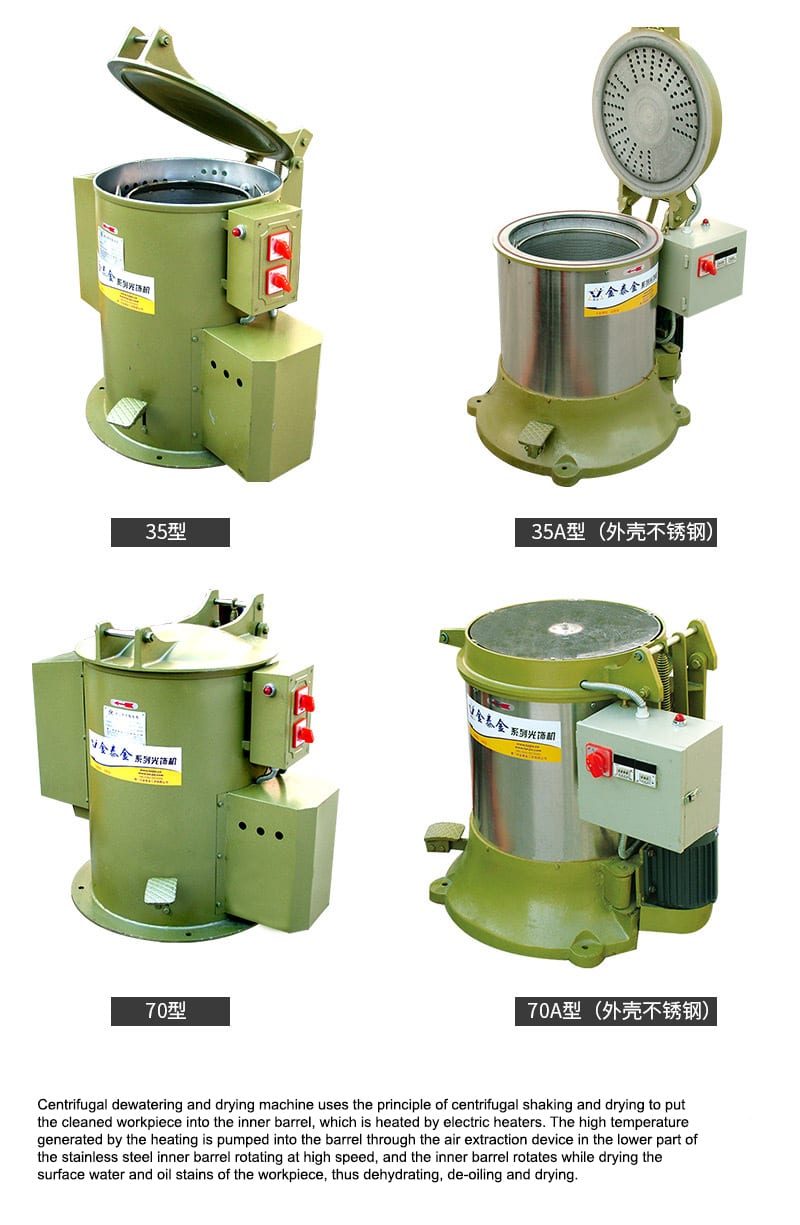
The most common cause of flash rust happens after the vibratory bowl: operators dump wet steel parts into open tote baskets and wait until break time to dry them. Move wet carbon steel straight from a rust-inhibited rinse into a heated centrifugal dryer immediately upon unload.
Reusing Dirty MC8 Descaling Slurry Across Multiple Batches
When stripping heavy mill scale or weld heat tint with MC8, spent acidic/descaling slurry turns dark and reactive. Flush parts thoroughly with clean alkaline LC10 or rust-inhibiting JTJ50 rinse water immediately after descaling so residual MC8 never stains bare steel overnight.
Avoiding Tarnish and Burnish Haze on Brass, Copper, and 304 Stainless
Non-ferrous brass and austenitic 304 stainless steel rarely rust, yet still suffer ugly haze and tarnish if burnishing chemistry or rinse water drifts.

Oil Carryover Turning PL10 Steel Burnishing Baths Gray
Dumping oily stamped brass cartridge cases or greasy 304 cutlery straight into stainless steel burnishing balls coats the steel shot in dark grime. That oily mud smears a dull gray haze across every part in the batch. Pre-degrease oily parts beforehand and flush steel media periodically in clean hot water with fresh PL10.
Ammonia-Bearing Cleaners Triggering Brass Dezincification & Cracking
Never add household ammonia-based brass brighteners into vibratory bowls or rotary barrels—ammonia selectively leaches zinc (pinkish-brown discoloration) and induces stress-corrosion cracking on cold-drawn brass fittings and cartridge necks. Use neutral LC10 or PL10 paired with dry walnut shell or corncob brightening.
Slow Air-Drying Leaving Hard-Water Mineral Rings
Even perfectly burnished 304 stainless spoons and brass valve bonnets develop milky white rings if hard rinse water evaporates slowly on shop tables. Always flush PL10 foam thoroughly with clean softened water and dry immediately inside a heated corncob media bowl or heated spin-dryer.
Media and Machine Hygiene: Stopping Discoloration Before It Starts
Preventing discoloration of metal is far cheaper than stripping stained parts afterward.

Dedicated Alloy-Segregated Media Bins and Polyurethane Chambers
Never share ceramic, plastic, or porcelain media between carbon steel, stainless steel, aluminum, and brass. Clearly label covered storage totes by alloy family, and scrub thick cast polyurethane bowl linings clean whenever switching alloys.
Pre-Degreasing Oily CNC Parts Before Loading
Thick CNC coolant and tapping oil turn any finishing compound into sticky gray paste. A quick hot alkaline pre-wash (followed by clean rinse) keeps ceramic pores open, prevents dark oil smut, and extends media life dramatically.
Checking Flow-Through Drain Screens and Settling Tanks
If drain screens clog with worn ceramic fines, dirty compound water backs up inside the vibratory bowl—drowning parts in suspended metallic mud. Clear drain screens at every shift start and clean settling-tank baffles regularly.
[DESIGN: Multi-baffle settling tank and clean flow-through drain screen keeping metallic sludge out of vibratory bowls]
| Prevention Step | Carbon Steel | 6061 / 7075 Aluminum |
304 Stainless Steel |
Brass / Copper |
|---|---|---|---|---|
| Pre-Wash Oily CNC Parts | Yes (alkaline wash) | Yes (neutral wash) | Yes (alkaline wash) | Yes (neutral wash) |
| Active Process Compound | LC10 / MC8 |
Neutral LC10 / JTS5 |
LC10 / MC8 / PL10 |
Neutral LC10 / PL10 |
| Post-Unload Protection | JTJ50 rust inhibitor |
Clean softened rinse | Clean softened rinse | Softened rinse (no ammonia) |
| Mandatory Drying Step | Immediate heated spin-dry | Heated spin-dry / cob | Heated corncob or spin-dry | Heated cob / spin-dry |
[DESIGN: Alloy-specific prevention matrix covering pre-wash, flow-through chemistry, rinse water, and heated drying]
How to Recover Discolored Batches Without Scrapping Parts
When a batch emerges stained, matching the recovery step to the stain type usually saves every part.
[DESIGN: Recovery decision tree for gray aluminum smut, flash-rusted steel, un-neutralized isotropic gears, and hazy burnished brass]
Fixing Dark Charcoal Smut on Aluminum
Run the stained aluminum batch briefly in clean fresh-water flow-through with neutral JTS5 or LC10 and clean resin-bonded plastic cones (or dry clean corncob if light surface dust) to wipe away loose smut—then verify zero iron contamination before downstream anodizing.
Stripping Light Flash Rust on Carbon Steel
A short wet pass in preformed ceramic media with MC8 or LC10 removes fresh surface flash rust cleanly, followed immediately by rust-inhibiting JTJ50 rinse and heated centrifugal spin-drying.
Clearing Slate-Gray Conversion Film on Isotropic Steel Gears
Return dull gray gears into non-abrasive porcelain media with fresh alkaline neutralizing compound (LC10/PL10) until the fragile conversion film wipes completely off and bright silver luster returns.
Removing Milky Water Spots or Cream Haze on Brass and Stainless
Tumble spotted brass or stainless parts briefly inside a heated vibratory bowl filled with clean, un-oiled dry corncob media to buff away mineral rings and dried compound film.
Honest Boundaries: What We Do and Do Not Supply
At Xiamen Jin Tai Jin Grinding Technology Co.,Ltd. (brand: Jings Polish), our workshop roots date back to 1996 and our company was formally established in 2009, delivering over 200,000+ sets of grinding and polishing solutions worldwide. Across our catalogue, we manufacture 21 machine platforms backed by 24 granted Chinese IP rights (1 invention patent, 15 utility model patents, and 8 design patents), under ISO 9001 certification 00726Q01571R001 (valid 2026-06-03 to 2029-06-02) and CE certifications M.2023.206.C88121 (Vertical, 8 models) and M.2023.206.C88120 (Horizontal, 13 models), valid until 2028-07-24.

Equipment, Media, and Compounds—Not Chemical Plating or Acid Pickling Baths
We manufacture and supply vibratory bowls, divided troughs, rotary barrels, OBD magnetic tumblers, heated centrifugal and corncob dryers, ceramic/plastic/porcelain/steel/organic media, and finishing compounds (LC10, MC8, PL10, JTJ50, JTS5). We do not supply nitric-hydrofluoric acid pickling lines, chromate conversion tanks, anodizing lines, electroplating baths, or contract job-shop polishing services. Standard machines ship in 25–35 days, while custom lines require 45–60 days.
Engineering Review for Discoloration Diagnostics
Because alloy chemistry, upstream coolant residue, water hardness, and drying flow all influence surface color, we do not promise free mail-in sample trials or guarantee cycle times before inspecting your workpiece—send clear photos of both stained and target-finish parts along with your current media and compound setup via our custom polishing solution page for an engineering assessment.
Buyer Checklist & FAQ for Preventing Metal Discoloration
Review these quick benchmarks to keep every finished batch bright and stain-free.
[DESIGN: Annotated metal discoloration troubleshooting enquiry checklist showing alloy, stain color, media, compound, and drying method]
Why did my 6061 aluminum parts turn black only after switching to a stronger degreasing soap?
Strong alkaline degreasing soaps carry high pH that rapidly etches 6061 and 7075 aluminum alloying elements black. Switch immediately to neutral LC10 or aluminum-safe JTS5 flow-through chemistry and pre-degrease heavy oil separately in an aluminum-safe wash.
How long can carbon steel parts sit wet after vibratory deburring before rusting?
Bare abraded carbon steel can begin flashing orange rust within minutes in humid shop air if rinsed only in plain water. Always finish carbon steel with rust-inhibiting JTJ50 rinse protection and transfer batches straight into a heated centrifugal dryer.
Can hard tap water cause discoloration even when my compound and media are correct?
Yes. High mineral content in tap water leaves chalky white rings inside pockets upon drying and can darken sensitive aluminum or brass during long closed runs. Using softened water for final rinsing and heated corncob or spin-drying eliminates mineral spotting.
Why did my stainless steel burnishing balls leave a gray film on 304 parts?
Residual oil from unwashed parts or leftover Stage 1 ceramic slurry turned the PL10 bath into dark metallic mud. Flush the steel ball charge in clean hot water with fresh PL10 and pre-wash oily parts before burnishing.
Can cast zinc (Zamak) die castings turn black in the same vibratory soap used for steel?
Yes. Zinc alloys (Zamak) are even more sensitive to high-pH alkaline cleaners than aluminum—developing ugly dark gray corrosion stains rapidly in heavy steel soaps. Run zinc die castings exclusively in neutral LC10 or mild JTS5 chemistry with smooth resin-bonded plastic cones and immediate heated spin-drying.
Why do brass fittings turn dull pink or brownish-red after tumbling?
Pinkish discoloration on brass indicates localized dezincification—where ammonia-bearing cleaners or overly acidic descaling solutions leached zinc out of the copper-zinc surface. Switch immediately to neutral LC10 or PL10 lubrication, rinse thoroughly with clean softened water, and dry immediately in warm corncob media.
How can I tell whether dark spots on aluminum came from iron contamination or high-pH soap?
High-pH soap etching usually darkens the entire exposed aluminum surface uniformly matte gray-black, whereas iron particles embedded from shared carbon-steel ceramic media produce scattered pinpoint rust-brown or dark specks—often blooming worse after moisture exposure or anodizing pretreatment.
Does deionized or softened rinse water really matter for preventing metal discoloration?
In shops with hard, mineral-rich municipal well water, softened or deionized final rinse water makes a dramatic difference—eliminating chalky white calcium rings inside recessed logos, bolt pockets, and concave spoon bowls without requiring manual solvent wiping.
How should I store carbon-steel parts after heated centrifugal drying to prevent overnight rust?
Once freshly dried carbon-steel brackets cool slightly after exiting the centrifugal dryer, mist or dip them lightly in a compatible rust-preventive oil or store them in sealed VCI-lined containers—especially in humid coastal plants or unheated winter warehouses.
Why do die-cast A380 aluminum parts stain darker than wrought 6061 billet housings?
High-pressure die-cast A380 aluminum contains elevated silicon and copper concentrations compared to wrought 6061 billet. Whenever an alkaline cleaner or high-pH soap strips the thin aluminum matrix around those silicon particles, the remaining silicon-rich surface reads dark charcoal gray. Running neutral JTS5 or LC10 flow-through with smooth resin-bonded plastic cones preserves natural bright die-cast color without selective silicon darkening.
Can residual laser-cutting oxide scale cause patchy discoloration after powder coating?
Yes. Oxygen-assisted fiber laser cutting leaves a thin brittle iron-oxide rim along cut edges. If Stage 1 ceramic cutting runs without MC8 descaling compound, patches of loose black oxide remain along the edge—causing uneven dark streaks before painting and flaking adhesion after oven cure. Pairing ceramic media with MC8 strips laser oxide cleanly before rust-inhibited rinsing.
How does a clogged drain screen inside a circular vibratory bowl trigger metal staining?
When worn ceramic fines or small stamping slugs block the vibratory bowl's drain screen, fresh-water LC10 flow-through stops evacuating dirty slurry. Parts keep tumbling inside stagnant, metal-loaded mud that plates dark gray residue onto aluminum, brass, and stainless alike. Inspecting and brushing drain screens at every shift start keeps flow-through clear.
Why do copper busbars and bronze bushings develop dark blotches after magnetic pin tumbling?
In a translating OBD magnetic tumbler, 304 stainless pins scrub copper and bronze rapidly—suspending fine metallic copper dust into the tank water. If the magnetic tank runs too long without refreshing dirty PL10 water, or if wet copper sits un-rinsed in shop air, dark copper-oxide blotches form quickly. Refresh tank solution regularly and dry copper parts immediately in heated corncob media.
Can dry walnut shell or corncob tumbling remove light tarnish on brass without wet chemicals?
Light surface dullness or faint handling tarnish buffs right off inside a dry rotary barrel or heated vibratory bowl charged with clean walnut shell or corncob media and a measured dose of fine polishing cream. Deep green verdigris or heavy heat-treat oxide scale, however, requires wet ceramic/plastic cutting (LC10/MC8) before dry brightening.
Why do stainless steel brackets sometimes show faint brown rust spots after ceramic tumbling?
Even austenitic 304 stainless steel can develop localized brown rust spots if tumbled inside ceramic media that was previously used on carbon steel, or if wet brackets sit in chloride-heavy rinse water next to mild steel parts. Dedicate separate media charges exclusively for stainless steel, keep flow-through LC10 clean, and dry parts promptly.
How does switching from a closed tank to fresh-water flow-through stop metal discoloration?
In a closed recirculating tank, every cycle concentrates worn metallic fines, residual stamping oil, and spent surfactant into a murky slurry that stains parts regardless of alloy. Continuous fresh-water and compound flow-through flushes suspended contamination straight out of the bowl so clean metal meets clean chemistry from start to finish.
What details should I share before requesting help with metal discoloration after tumbling?
Send clear close-up photos of the discolored metal surface, alloy grade (6061 aluminum, carbon steel, 304 stainless, brass), current media type and compound name, water flow setup (flow-through vs. closed tank), and drying method via our custom polishing solution page. Also note whether oily machining residue, laser oxide scale, or hard mineral tap water is present on your finishing line, and how long wet parts sit before drying. Our engineers will pinpoint the root cause and recommend the exact neutral or rust-inhibiting compound (LC10, MC8, PL10, JTJ50, JTS5), alloy-segregated media isolation, flow-through water rate, or heated centrifugal drying upgrade for your finishing plant to eliminate staining, flash rust, and water spotting permanently.
 +86-592-2381506


 IPv6 network supported
