

`Descaling Tumbling Compound` Guide (`compound-MC8`): Stripping Heat-Treat Scale Safely on Ferrous Lines
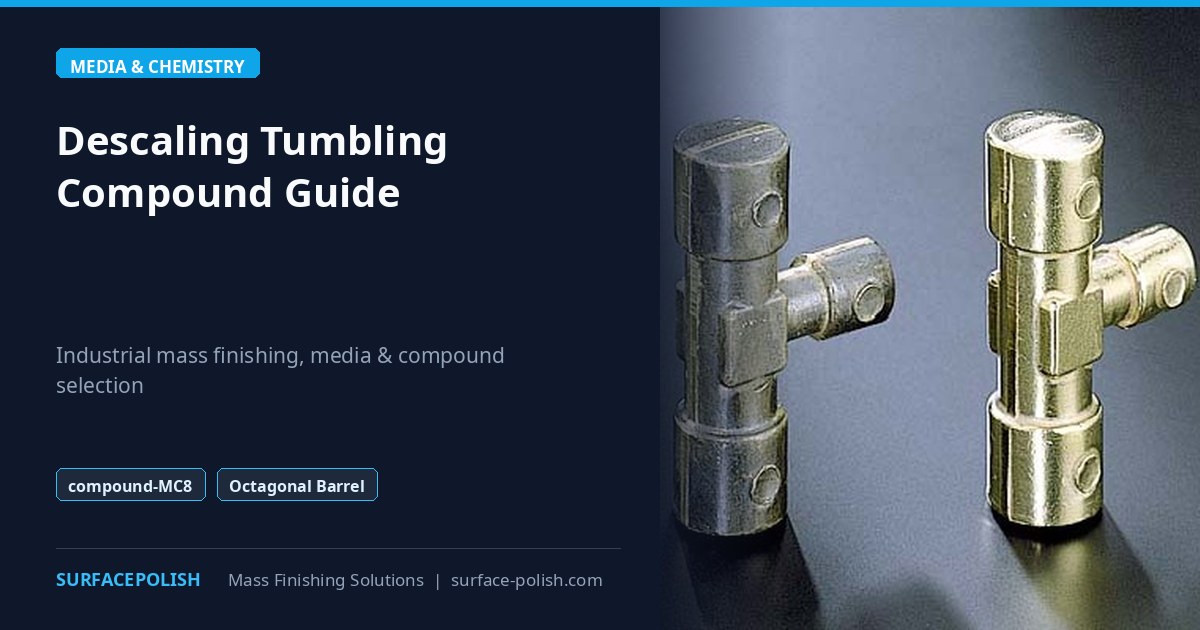
Forging shops, heat-treaters, and laser-cutting fabricators searching for a heavy-duty descaling tumbling compound quickly discover why standard neutral soap slows to a crawl on black mill scale and hard laser-cut oxide. When tough iron-oxide skins coat carbon-steel arms or quenched gears, even aggressive silicon-carbide ceramic stones skate over hard scale unless paired with an acidic descaler like compound-MC8 to soften and dissolve oxide layers continuously.
The central thesis of this guide is simple: getting fast, pit-free oxide removal from compound-MC8 descaling tumbling compound requires restricting use strictly to isolated carbon-steel and alloy-steel ferrous lines (never aluminum, brass, copper, or Zamak zinc), pairing MC8 with dense high-frequency ceramic stones inside dedicated bowls or octagonal barrels, neutralizing and rinsing parts thoroughly before Stage 2 burnishing, and transferring steel straight into heated 35A/70A centrifugal spin-dryers to prevent instant flash rust.
In this engineering guide, you will learn how compound-MC8 accelerates heavy ferrous scale stripping, compare MC8 against LC10, JTS5, and JTJ brighteners, and enforce ironclad non-ferrous chemical segregation across your finishing floor.
How Acidic Descaling Tumbling Compound (MC8) Strips Scale Faster
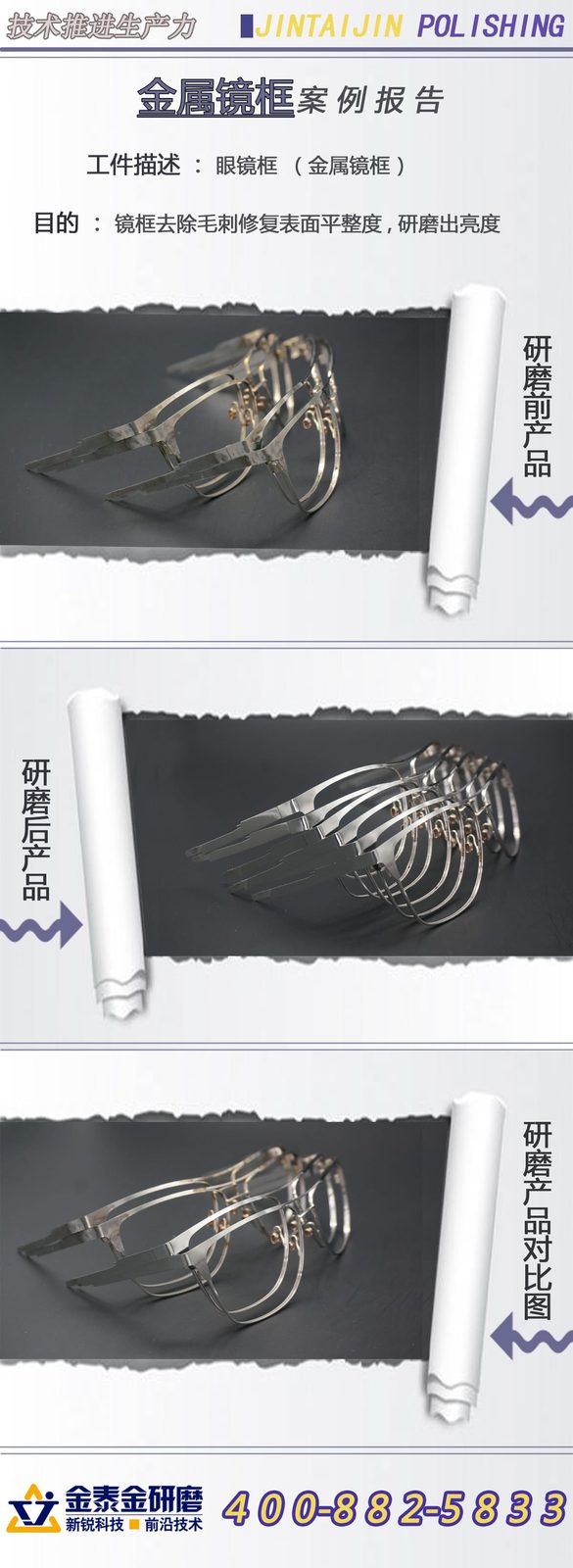
Breaking Hard Iron-Oxide Skins So High-Frequency Ceramic Bites Base Steel
Heat-treat quench scale, laser-cut edge slag, and deep red storage rust form brittle, hard-glazed skins over softer carbon steel. Running compound-MC8 descaling tumbling compound softens and chemically undermines that iron-oxide layer continuously during tumbling—allowing vitrified high-frequency ceramic stones to shear scale away cleanly and leave uniform bright grey base metal ready for plating, powder coating, or Stage 2 burnishing. Review our steel polishing compound guide and high-frequency ceramic media guide.
Critical Alloy Boundary: Carbon Steel Only (Never Aluminum, Brass, or Zinc)
Because compound-MC8 is formulated as an acidic ferrous descaler, letting even diluted MC8 touch 6061 aluminum, Zamak zinc die castings, or brass hardware etches soft alloys black, pits critical sealing faces, and attacks synthetic resin plastic media binders immediately. Keep MC8 chemical drums, hoses, catch baskets, and tubs locked in a dedicated ferrous zone completely isolated from non-ferrous cells! See our mass finishing compounds guide and compound for aluminum guide.
MC8 vs. LC10 vs. JTS5: Choosing the Right Stage 1 Ferrous Chemistry
If carbon-steel or stainless batches arrive cleanly CNC-machined without heavy black heat-treat oxide or laser scale, skip MC8 and run neutral compound-LC10 deburring compound in continuous single-pass flow; if thin stamped steel washers stick flat against media, choose JTS5. Reserve compound-MC8 specifically for heavy oxide, weld tint, forge scale, and rusted steel hardware. Explore our compound LC10 deburring guide.
| Compound Role | compound-MC8 |
compound-LC10 |
compound-JTS5 |
JTJ20 / JTJ25 / JTJ60 |
|---|---|---|---|---|
| Primary Function | Acidic heat-scale & rust descaling | Everyday single-pass cut & flush | Anti-cling sheet-metal release | Stage 2 mirror ball burnishing |
| Safe Alloy Scope | Carbon steel & alloy steel ONLY | Steel, stainless, titanium, non-ferrous | Thin stamped steel washers & shims | Stainless, brass, carbon steel |
| Paired Media Family | High-frequency ceramic stones |
High-frequency ceramic & plastic |
Tri-star & angle-cut ceramic | 304 stainless balls & ball-cones |
| Critical Shop Rule | Isolate strictly from aluminum/zinc | Pre-degrease oily CNC batches first | Keep steady spray flow for unload | Rinse MC8/Stage 1 cutting grit off cleanly first |
Machine & Media Pairing: ZL Bowls, Octagonal Barrels, and LLF120
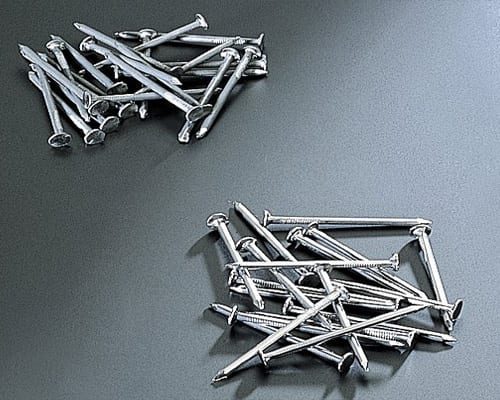
Dedicated Ferrous ZL Bowls and Sealed Octagonal Barrels
Inside dedicated ferrous ZL circular bowls (ZL250W, ZL900W, ZL900C) or heavy octagonal rotary barrels, compound-MC8 paired with fast-cut silicon-carbide high-frequency ceramic stones strips thick forge scale uniformly across complex contours. Inspect polyurethane bowl ribs, drain grates, and octagonal barrel rubber linings regularly so heavy oxide grit never abrades through to steel backing. Review our octagonal rotary barrel tumbler guide and polyurethane bowl liner replacement guide.
Choosing Non-Lodging Fast-Cut Ceramic Shapes for Forgings and Castings
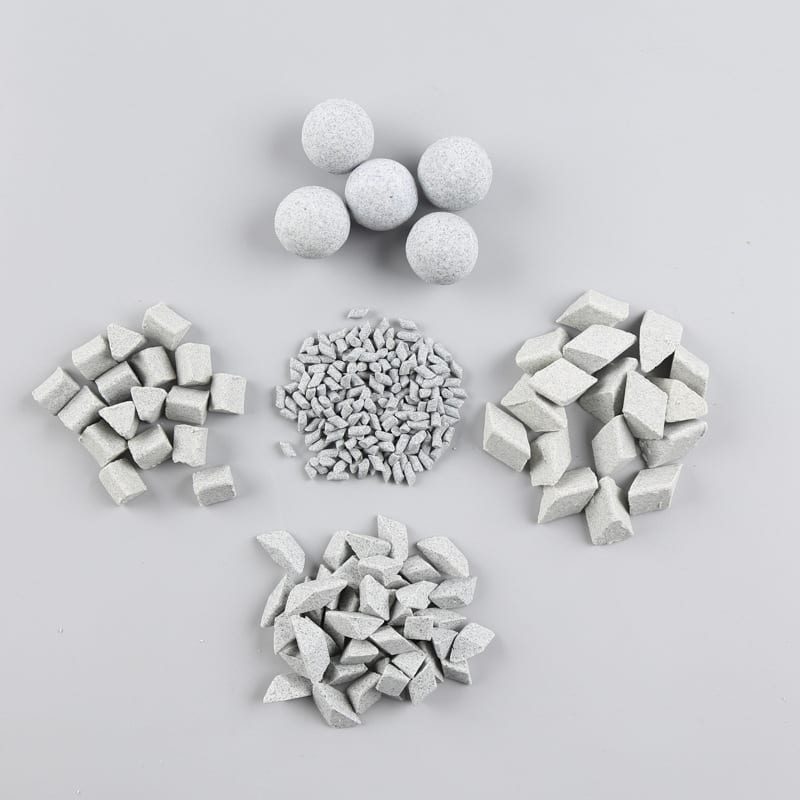
Match preformed ceramic geometry carefully to bolt holes and cross-bores: choose angle-cut cylinders when circular hydraulic bores dominate, angle-cut triangles for ninety-degree bracket corners, and tri-stars for scalloped ribs—screening out worn fragments weekly across your vibratory separator screen. Read our fast-cut vs fine-cut ceramic guide and non-lodging media sizing guide.
High-Energy Descaling Inside LLF120 Planetary Centrifugal Barrels
When hardened gears or thick laser-cut brackets carry stubborn scale inside tight teeth, LLF120 planetary centrifugal barrels multiply contact force cleanly with compound-MC8 and high-frequency ceramic—compressing heavy descaling cycles dramatically while keeping batch volumes compact. Explore our centrifugal barrel finishing machine guide.
Mandatory Pre-Degreasing, Neutralizing Rinse, and 35A/70A Drying
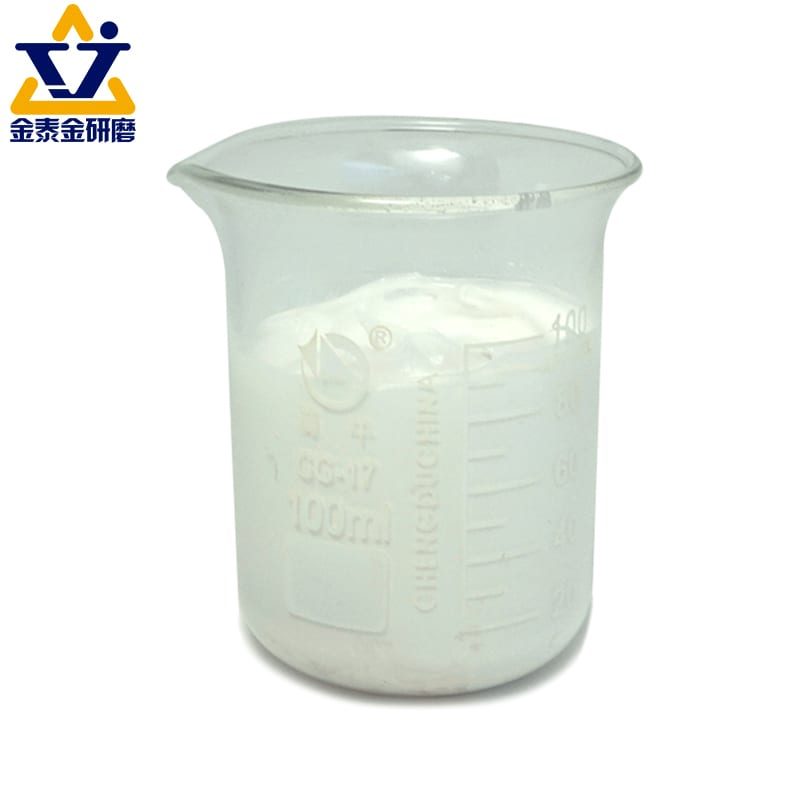
Why Quench Oil Must Be Removed Upstream Before MC8 Descaling
Heat-treated and forged steel parts frequently arrive coated in dark quench oil or rust-preventive grease. Acidic compound-MC8 cannot penetrate thick hydrocarbon oil film evenly—leading to patchy half-descaled spots and ceramic media glazing. Always pass oily batches through an upstream alkaline pre-degreaser before loading MC8. See our ceramic media glazing fix guide.
Clean-Water Spray Rinsing & Alkaline Neutralization Before Storage or Stage 2
Acid-descaled carbon steel oxidizes almost instantaneously if trace acidic MC8 film stays on parts! Pass unloaded steel parts beneath a generous clean-water (or mild alkaline neutralizing) spray bar across your vibratory separator screen, flushing all dissolved iron salts and loose ceramic silt straight into your multi-baffle settling tank. Review our pneumatic separation screen deck guide.
Immediate Heated 35/35A/70/70A Spin-Drying Stopping Flash Rust
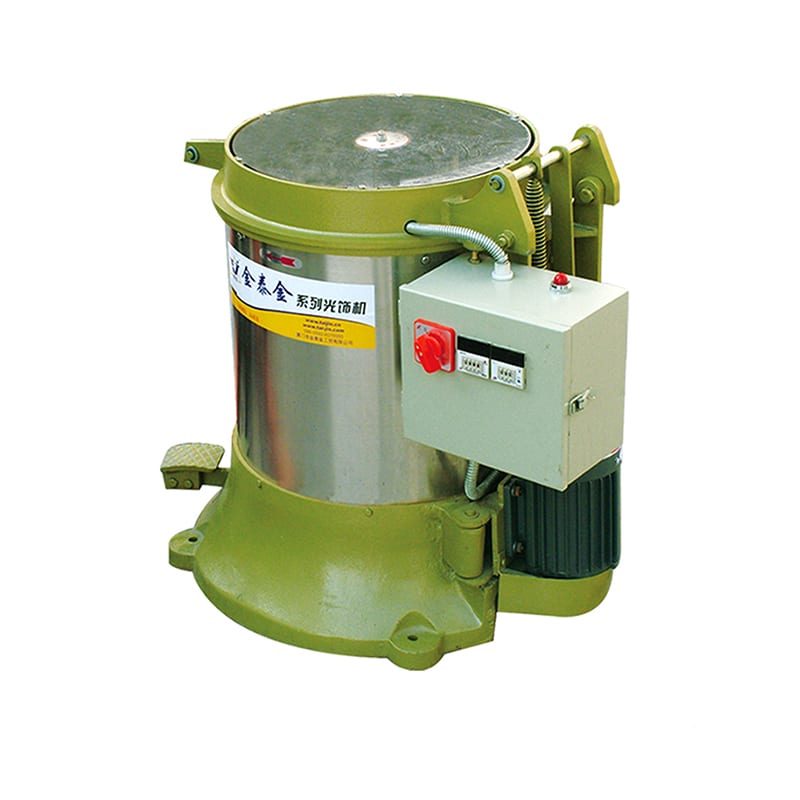
Transfer freshly rinsed, neutralized carbon-steel parts straight into a heated 35, 35A, 70, or 70A centrifugal spin-dryer with zero open-air staging delay. Rapid centrifugal spin-drying evaporates trapped moisture out of blind threads and chamfers before ambient shop humidity triggers orange flash rust. Read our centrifugal dryer guide.
Multi-Shift Safety, Drum Locks, and Troubleshooting
Color-Coding Chemical Drums, Scoops, and Operator PPE Discipline
Lock compound-MC8 drums on dedicated secondary-containment pallets labeled clearly for Carbon Steel Descaling Only, use dedicated acid-resistant dosing tubing and color-coded baskets, and require proper operator gloves and splash protection whenever handling concentrated descaler.
MC8 Descaling Issue |
Likely Root Cause | Immediate Correction | Preventive Standard |
|---|---|---|---|
| Instant orange flash rust post-unload | Residual acid film or slow air drying | Neutralizing spray rinse + 35A/70A spin-dry |
Stage neutralizing rinse + dryer at chute |
| Patchy un-descaled dark blotches | Quench oil / grease blocking MC8 contact |
Pre-degrease batch in alkaline wash first | Mandate upstream alkaline oil removal |
| Black pitting on aluminum or zinc parts | MC8 mistakenly dosed on non-ferrous tub |
Flush bowl immediately; quarantine parts | Lock & color-code MC8 strictly in ferrous zone |
Glazed slow ceramic stones despite MC8 |
Plugged bottom drain or starved water flow | Brush drain grates open; boost single-pass flow | Daily drain brush + settling tank cleanout |
| Etched or over-darkened steel surfaces | Excessive soak time or over-concentration | Shorten cycle time; calibrate dosing pump | Qualify MC8 concentration on sample parts |
Transitioning Descaled Steel Safely Into Stage 2 304 Ball Burnishing
If descaled steel hardware requires mirror shine, never move parts straight out of MC8 into a Stage 2 304 stainless ball tub! Neutralize and rinse every pocket thoroughly first so acidic carryover and loose Stage 1 cutting grit never dull bright JTJ20/JTJ25 burnishing beds.
Settling Tank Care, Drum Management, and Multi-Shift Control
Neutralizing and Clearing Sludge in Ferrous Multi-Baffle Settling Tanks
Acidic MC8 descaling strips heavy iron-oxide scale that settles rapidly inside downstream multi-baffle settling tank compartments. Inspect weir clarity weekly, clear settled iron sludge on schedule, and keep ferrous descaling drainage separated from non-ferrous waste streams where required.
Monitoring Polyurethane Liner & Drain Grate Durability Under Acidic Loads
Heavy silicon-carbide ceramic stones combined with acidic compound-MC8 accelerate wear along discharge ramps and drain grates if bowls run low on media fill. Inspect liner ribs weekly and brush drain slots open at every shift handover.
Checking Peristaltic Dosing Pumps and Spray Nozzles Daily
Verify acid-resistant pump tubing, drum suction strainers, and overhead spray-bar nozzles at every shift start so MC8 concentration stays steady without starved dry spots or accidental over-etching.
Tracking Weekly Ceramic Media Screening Alongside Descaling Runs
Purge undersized broken ceramic chips weekly across your vibratory separator screen and top up fresh high-frequency stones to the working fill line so descaling shear stays brisk and bolt holes stay jam-free.
Batch vs. Continuous MC8 Descaling Line Best Practices
Managing Sealed Octagonal Barrels for Heavy Heat-Treat Oxide
Sealed octagonal rotary barrels charged with compound-MC8 and coarse high-frequency ceramic stones tumble stubborn forged arms and heavy castings briskly with minimal splash—just rinse and neutralize parts immediately upon barrel unload.
Operating ZXL and L1300–L1800 Divided Troughs for Long Steel Bars
Long heat-treated steel rails and connecting rods ride safely inside ZXL or L1300–L1800 divided troughs equipped with lane dividers and even multi-nozzle MC8 spray bars along the channel.
Handling Thin Stamped Carbon Steel Without Nesting
When thin heat-treated carbon-steel washers stick together after MC8 oxide stripping, follow with a crisp LC10 or JTS5 rinse-cut cycle in curved tri-star ceramic before heated 35A/70A centrifugal spin-drying.
Documenting Safe Soak & Cycle Timers on Work-Order Travelers
Lock maximum MC8 cycle durations on every shop traveler so precision threaded steel fasteners never over-soak or suffer dimensional thread crest rounding.
Factory Capabilities & Verified Ferrous Descaling Supply
Founded in 1992, Xiamen Jin Tai Jin Grinding Technology Co.,Ltd. (SurfacePolish) engineers and manufactures 21 machine platforms backed by 24 granted Chinese IP rights and more than 200,000+ solutions across certified facilities (ISO 00726Q01571R001, CE M.2023.206.C88121, and CE M.2023.206.C88120). Alongside ZL circular bowls, heavy octagonal rotary barrels, ZXL/L1300–L1800 divided troughs, LLF120/LLB50 centrifugal finishers, and 35/35A/70/70A dryers, we supply compound-MC8 descaling tumbling compound, LC10, JTS5, HM3, JTJ20, JTJ25, JTJ50, and JTJ60 matched to high-frequency ceramic, 304 stainless balls, corncob, and walnut shell (8#-80#). Standard machines ship in 25–35 days and custom lines ship in 45–60 days. Send sample heat-treated or laser-cut steel parts to surface-polish.com for complimentary descaling validation. Honest boundaries apply: we do not supply open immersion pickling vats, chromate conversion baths, or dry sandblasting shot.
Frequently Asked Questions About compound-MC8 Descaling Compound
What is compound-MC8 descaling tumbling compound used for?
Compound-MC8 descaling tumbling compound is an acidic Stage 1 chemical formulated to soften and strip heavy black heat-treat mill scale, laser-cut oxide slag, forge scale, and red rust off carbon steel and alloy steel inside isolated ceramic tumbling lines.
Can compound-MC8 be used on 6061 aluminum, brass, or Zamak zinc?
Never. Acidic compound-MC8 etches aluminum, zinc, and brass dark black, pits sealing surfaces, and degrades resin plastic media binders. Keep MC8 strictly locked inside dedicated carbon-steel zones, using LC10 and HM3 for non-ferrous alloys.
Why do carbon-steel parts flash rust quickly after MC8 descaling?
Residual acidic film accelerates oxidation the moment wet steel meets open shop air. Always pass unloaded steel parts beneath a clean-water or mild alkaline neutralizing spray rinse bar and transfer them immediately into a heated 35, 35A, 70, or 70A centrifugal spin-dryer.
Do I still need high-frequency ceramic media when using compound-MC8?
Yes. Compound-MC8 softens hard oxide scale chemically, while dense vitrified high-frequency ceramic stones supply the mechanical sliding shear needed to scrub loosened scale away and break sharp CNC or stamping burrs cleanly.
Why did compound-MC8 leave patchy un-descaled spots on heat-treated gears?
Residual quench oil or rust-preventive grease blocks acidic MC8 from wetting the steel surface evenly. Always run oily heat-treated parts through an upstream alkaline pre-degreaser before loading the descaling bowl.
Can I run compound-MC8 in the same ZL bowl I use for 304 stainless mirror burnishing?
No. Keep Stage 1 acidic MC8 descaling strictly isolated from Stage 2 neutral/alkaline 304 stainless ball burnishing bowls so acidic residue and loose ceramic dust never dull bright mirror balls.
How does compound-MC8 differ from compound-LC10?
Compound-MC8 is an acidic ferrous descaler for heavy black heat-treat oxide and rust on carbon steel, whereas compound-LC10 is a daily single-pass cutting cleaner/lubricant safe for clean CNC steel, stainless, titanium, aluminum, and brass.
How can I test compound-MC8 descaling cycle times on my steel parts?
Send representative raw heat-treated, forged, or laser-cut steel blanks to surface-polish.com for complimentary lab testing; our engineers qualify safe MC8 concentration, ceramic media geometry, neutralizing rinse, and 35A/70A drying specs before you order.
What happens if someone runs compound-MC8 inside a 304 stainless ball burnishing bowl?
Acidic compound-MC8 strips the lubricating surfactant film needed by 304 stainless balls, dulls mirror contrast, and risks etching sensitive brass or zinc fittings. Keep MC8 strictly inside Stage 1 isolated carbon-steel ceramic lines.
Can compound-MC8 remove heavy weld spatter as well as heat-treat scale?
Yes. Pairing compound-MC8 with fast-cut silicon-carbide high-frequency ceramic stones softens stubborn weld oxide and laser slag while vigorous stone shear strips spatter cleanly off carbon-steel brackets.
Why should I neutralize steel parts before loading a heated 35A or 70A centrifugal dryer?
Even inside a heated 35A or 70A spin-dryer, residual acidic MC8 salt left inside blind threads pulls shop humidity and triggers orange rust spots within hours. A thorough clean-water or mild alkaline spray rinse over the separator deck stops flash rust completely.
How do I store spare drums of acidic compound-MC8 safely?
Keep sealed compound-MC8 drums on acid-resistant secondary containment pallets inside a locked, clearly labeled ferrous chemical zone away from aluminum, brass, and zinc lines.
Can compound-MC8 be used dry or inside corncob / walnut shell barrels?
Never mix acidic compound-MC8 or water with corncob, walnut shell (8#-80#), or hardwood pegs—organic media swells into sour clumps when wet, and dry ceramic friction ruins bowl liners.
How does compound-MC8 interact with polyurethane bowl liners over multi-shift runs?
While quality polyurethane liners handle controlled compound-MC8 exposure well when flushed with clean water at shift end, running under-filled ceramic beds or leaving stagnant acidic slurry sitting overnight accelerates liner aging. Inspect polyurethane ribs and drain grates weekly for early wear.
Can compound-MC8 remove black oxide scale inside blind tapped holes?
In ZL circular bowls and LLF120 centrifugal barrels, liquid compound-MC8 penetrates internal threads chemically, while external high frequency ceramic stones scrub exposed edges. Follow immediately with a pressurized clean-water neutralizing spray rinse and heated 35A/70A spin-drying so trapped acid never corrodes blind threads.
What is the best way to train operators on MC8 vs. LC10 chemical safety?
Post bold color-coded visual charts beside every dosing pump and drum rack, lock MC8 acid drums inside dedicated carbon-steel containment zones, and verify operator gloves and splash goggles at every drum changeover.
How do I know when MC8-treated steel parts are clean enough for powder coating or Stage 2?
Descaled carbon steel should show a uniform, bright matte-grey metal surface free of black mill scale, red rust streaks, or greasy water-break patches—ready immediately after 35A/70A spin-drying for coating or Stage 2 burnishing.
Can compound-MC8 be used inside LLB50 toroidal centrifugal disc machines?
Keep acidic compound-MC8 descaling inside dedicated ferrous ZL circular bowls, heavy octagonal rotary barrels, or LLF120 planetary centrifugal barrels equipped with acid-resistant seals; reserve LLB50 centrifugal discs primarily for neutral LC10, HM3, and JTJ50 non-ferrous or light stainless finishing.
Why does single-pass MC8 flow outperform stagnant closed-soak descaling tubs?
Continuous or controlled flow-through descaling prevents dissolved iron salts and detached mill-scale mud from redepositing as dark grey smut across freshly stripped steel parts, while keeping high-frequency ceramic cutting faces wide open across shifts.
How do I transition from MC8 descaling to LC10 fine-cut leveling on forged steel?
Pass MC8-descaled parts beneath a thorough clean-water neutralizing spray rinse bar across your vibratory separator screen, then load clean rinsed parts into a dedicated LC10 fine-cut ceramic bowl or JTJ25 stainless-ball burnishing line without cross-contaminating chemical sumps.
What happens if MC8 descaler sits idle inside a steel-lined bowl overnight?
Leaving acidic MC8 slurry sitting stagnant overnight accelerates corrosion on exposed drain fasteners and leaves rust-crusted media beds by morning. Always flush ferrous descaling bowls with clean water at shift end and neutralize unloaded parts promptly.
Can compound-MC8 strip mill scale off welded stainless steel exhaust manifolds?
While compound-MC8 is formulated primarily for carbon steel and alloy steel oxide removal, 304/316 stainless weld heat-tint should generally be tackled first with high-frequency ceramic stones and compound-LC10 in a dedicated stainless bowl—testing sample parts beforehand to confirm zero unwanted surface etching.
How does single-pass settling tank maintenance protect MC8 descaling lines?
Iron-oxide scale stripped by compound-MC8 settles rapidly as heavy dark sludge inside multi-baffle settling tank compartments. Emptying baffle sludge weekly prevents dirty overflow water from backing up and slowing descaling drainage, while preserving clean floor separation between acidic carbon-steel lines and neutral or alkaline finishing cells across high-volume shifts.
 +86-592-2381506


 IPv6 network supported
