
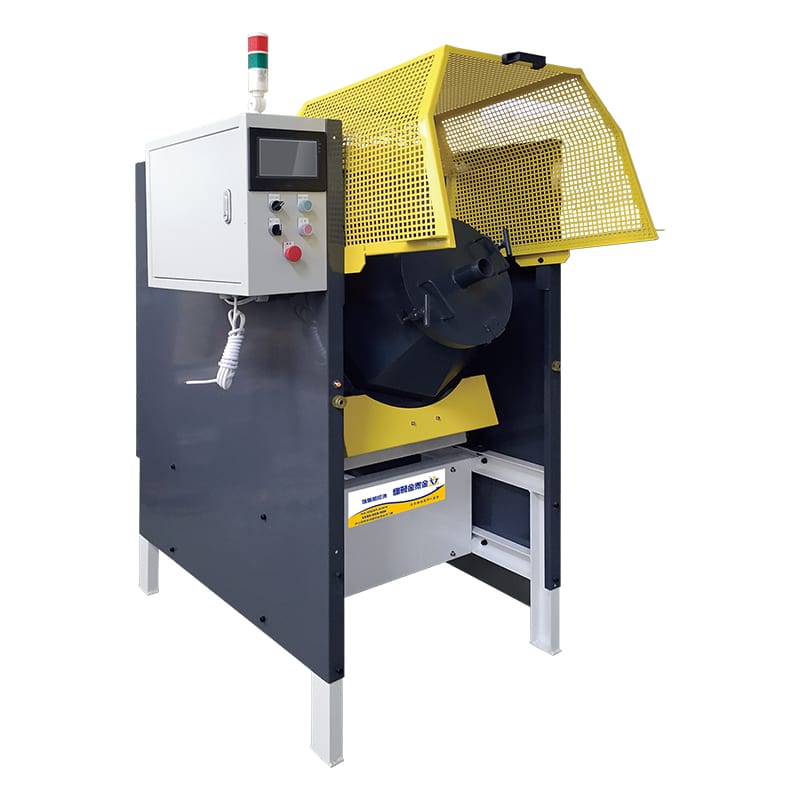
Buying the right machine is hard enough. Finding it is harder: one category goes by parts tumbler, tumbler machine, tumbling machine, mass finishing machine, surface finishing machine, finishing machine, barrel machine, tumbler drum, and part tumbler. Some of those names are synonyms. Some are much wider than the category. One of them usually means consumables.
This page sorts the names: which level each term sits on, which ones people get wrong, and which machines we actually build inside our machines catalog.
When a buyer types finishing machines, metal finishing machine, or surface finishing equipment into a search bar, the words they choose decide how close they land to the right factory. These terms sit on six different levels of one equipment tree.
At the top sits surface finishing (including surface finishing machine, surface finishing machines, and metal finishing equipment). This umbrella covers every process that alters a metal surface: grinders, belt sanders, shot blasters, plating lines, paint booths, and tumblers. Because most of this level is unrelated to free-abrasive media, searching here floods you with the wrong machinery.
One step down sits mass finishing — the exact term for loading a batch of parts into a media bed so every piece is deburred, smoothed, or brightened together. Searching for a mass finishing machine, mass finishing machines, or mass finishing equipment leaves single-piece grinders behind and lands squarely in our core category.
Inside mass finishing sits tumbling (searched as tumbling machine, tumbling machines, or barrel machine). Strictly speaking, tumbling refers to one specific branch where a closed barrel rotates so the load slides down an incline. In shop talk, however, people often use "tumbling" loosely for all mass finishing.
At the fourth level, engineers name the machine by how it transfers energy into the media bed. The four energy types are high-frequency vibration (vibratory), drum rotation (rotary barrel), high-speed planetary or disc rotation (centrifugal), and magnetic fields driving steel pins (magnetic).
At the fifth level, operators call the machine by the physical shape of its working chamber: a circular bowl, a rectangular tub, a multi-sided barrel or tumbler drum, or a spinning disc.
At the sixth level, buyers attach modifiers like automated metal finishing, automated finishing, batch, wet, or dry. The table below maps all six levels and shows where our production lines sit.
| Level | Common Search Terms | What It Points To | What It Includes | We Build It? |
|---|---|---|---|---|
| **First (Widest)** | **Surface finishing machine**, **metal finishing machines** | Any process altering a surface | Grinding, sanding, blasting, plating, coating, mass finishing | **Only the mass finishing branch** |
| **Second (Core)** | **Mass finishing machine**, **mass finishing equipment** | Batch processing parts in media | Vibratory, rotary barrel, centrifugal, magnetic, dry tumbling | **Yes — our core category** |
| **Third (Branch)** | **Tumbling machine**, **barrel machine** | Rotating a drum so media slides | Horizontal, oblique, and polygon barrel tumblers | **Yes — one main branch** |
| **Fourth (Energy)** | Vibratory, centrifugal, barrel, magnetic | How force drives media | Four mechanical energy-transfer families | **Yes — all four built** |
| **Fifth (Form)** | Bowl, tub, **tumbler drum**, barrel, disc | Chamber geometry | Circular bowls, tubs, drums, spinning discs | **Yes — all forms built** |
| **Sixth (Mode)** | **Automated metal finishing**, wet, dry, batch | Operating and handling mode | Standalone batch bowls up to automated cells | **Yes — per configuration** |
Stepping one level down from "surface finishing" to "mass finishing" filters out unrelated industries and connects you directly with batch media equipment builders.
On the shop floor and in purchasing departments, three popular search terms get misused constantly. Clearing up those three naming mistakes before you request quotes saves weeks of misdirected engineering emails.
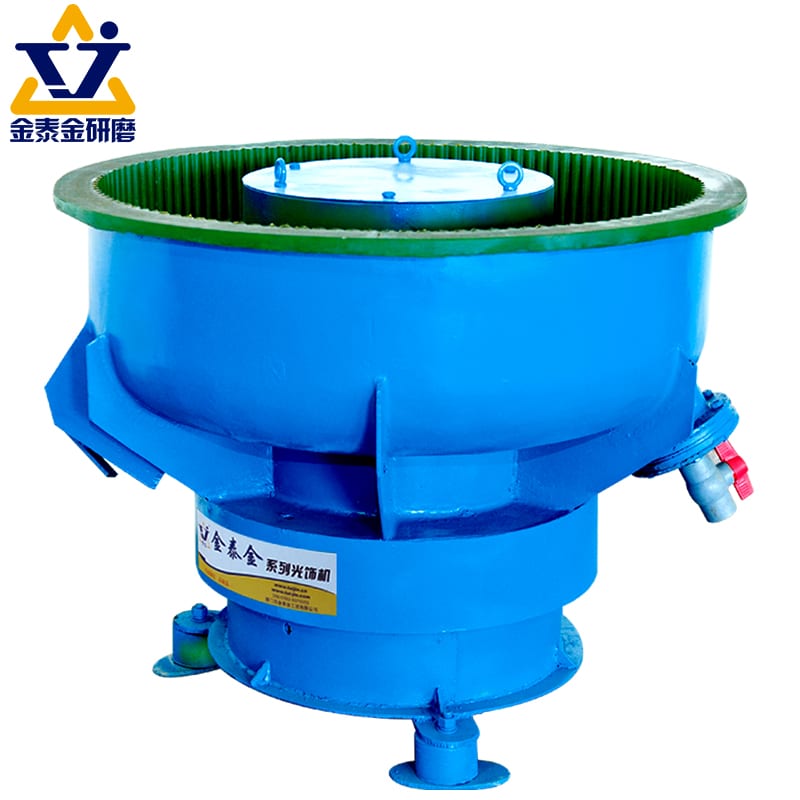
The most common terminology trap is treating tumbling machine (or tumblers machine) as a synonym for the entire mass finishing industry. In strict mechanical terms, tumbling means loading parts into a rotating barrel where gravity pulls the top layer of media down a sliding slope.
Vibratory bowls, rectangular tub vibrators, centrifugal disc machines, and magnetic pin polishers all belong to mass finishing, yet none of them tumble parts in a rotating drum. Why does this distinction matter when you call a supplier? Suppose you tell a vendor "I need a tumbling machine" when your parts are thin aluminum housings with delicate machined faces or internal holes. If the vendor simply sells you a literal rotary barrel tumbler, the tumbling cascade may bruise the corners or fail to reach inside the bores. A good application engineer will pause and check whether your part actually needs vibratory or magnetic action — correcting the word prevents you from buying the wrong machine.
When fabricators search for a parts tumbler or part tumbler, many assume the phrase refers strictly to a small benchtop rock-polishing drum or a hobbyist garage barrel for cleaning bolts. Conversely, some industrial buyers avoid the term because it sounds too informal for a factory capital request.
In reality, parts tumbler is simply colloquial shop shorthand for any batch media finisher, and the name says nothing at all about machine scale. A parts tumbler can be a compact benchtop unit sitting beside a CNC lathe for small prototype lots. It can also be a heavy industrial vibratory bowl with pneumatic unloading gates, sound enclosures, and automated compound dosing running continuous shifts. If you ask two suppliers for a "parts tumbler" without stating your part size and batch volume, one may quote a tabletop drum while the other quotes a factory line.
Here is a naming quirk that trips up purchasing agents every week: typing finishing products into a search engine almost never brings up industrial machinery.
In the metalworking supply chain, "equipment" or "machines" refers to the steel-and-polyurethane hardware bolted to your floor. By contrast, finishing products refers to the recurring consumables poured into the chamber. Those consumables include ceramic and plastic grinding media, liquid soaps and brighteners from our finishing compounds line, and treated walnut shell or corn cob granules. That is why online search results for "finishing products" are dominated by e-commerce catalogs selling buffing bars, abrasive wheels, and media bags rather than machine builders. Knowing whether you need capital machinery or daily consumables directs you to the right supplier immediately.
Here is the practical lesson from thousands of equipment inquiries: correcting a single word during the inquiry stage is far cheaper than correcting a mismatched machine on your shop floor.
When you use an overly broad word like finishing machine or a narrow word like "barrel tumbler" without context, single-product dealers will force your part into whatever frame they stock. Naming the right branch protects your capital budget from day one.
Work backward from your raw part problem to pick the exact equipment term you should use.
When baskets of stamped brackets, laser-cut plates, or milled housings need uniform edge deburring across the lot, ask for mass finishing — or specifically vibratory finishing.
- When NOT to use a broader term: Do not just ask for a surface finishing machine or metal finishing machine. Those broad terms route your inquiry to flat-belt sander dealers or shot-blasting cabinet makers.
When your goal is achieving specific surface finishes — such as turning machined parts into a uniform matte, satin, or bright sheen — ask for mass finishing paired with your target sheen tier. You can compare those tiers in brushed vs satin vs mirror finish.
- When NOT to use the wrong term: Do not simply ask for a "polishing machine." That phrase usually points to manual cotton buffing lathes or robotic wheel cells built for single-piece buffing.
When small fittings, manifolds, or valves carry micro-burrs inside deep bores, threads, or cross-holes, ask specifically for magnetic finishing.
- When NOT to use a tumbling term: Never ask for a rotary tumbler drum or ceramic tumbling machine for internal cross-hole burrs. Conventional media stones bridge across small holes and leave internal passages untouched.
Describing your part problem clearly is more important than getting the machine name right — but using the right machine name saves you a wasted round of quotes.
Inside mass finishing, every machine belongs to one of five core equipment families. For a deeper mechanical comparison, see our barrel polishing, rotary tumbling, and centrifugal buyer guide.
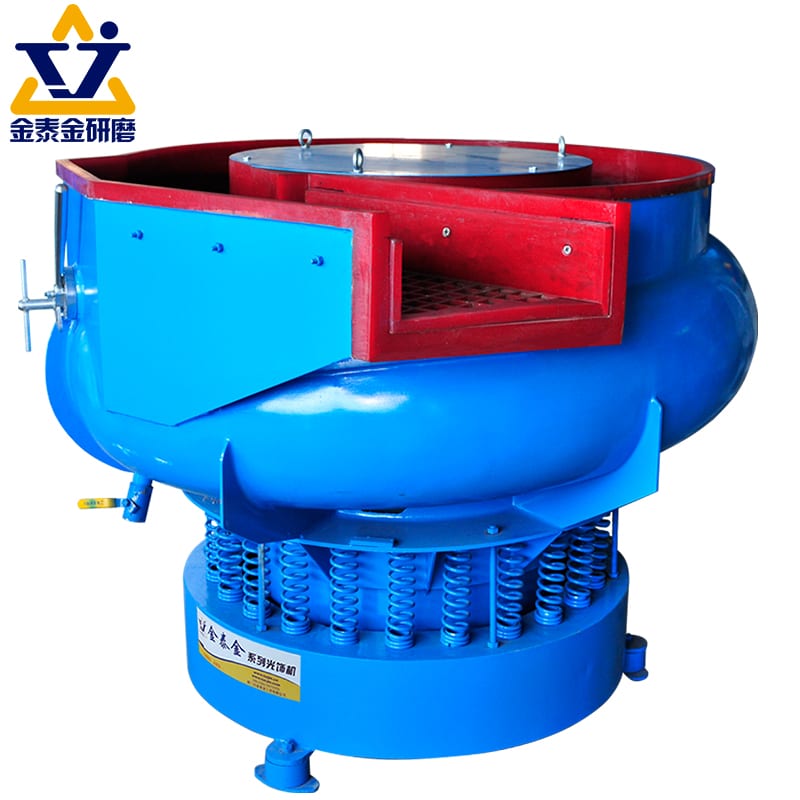
Vibratory finishers shake a spring-mounted polyurethane chamber so media and parts scrub in a continuous toroidal spiral. Circular bowls (vibratory finishing machine) handle general batch parts, while rectangular tubs (tub vibrators) handle long shafts and extrusions.
Rotary systems — under barrel finishing machines and rotary barrel tumbling machines — rotate a closed multi-sided drum slowly so parts slide down the top avalanche layer. They suit thin stampings or heavy long-cycle radiusing.
Centrifugal finishers use high-speed planetary barrels or a spinning bottom disc inside a stationary wall to pack media under multiplied force. They deburr and polish small-to-medium precision parts rapidly.
Our magnetic finishing machines use a spinning magnet disk to drive fine stainless steel pins across non-ferrous or stainless parts. The pins clean inside threads and cross-holes without altering outer dimensions.
Dry mass finishing runs treated walnut shell or corn cob granules in barrels or bowls to produce a warm satin or bright luster without water effluent.
| Family | Common Names | How Energy Transfers | Best Suited For | Where NOT to Use It | We Build It? |
|---|---|---|---|---|---|
| **Vibratory** | Vibratory tumbler, bowl, tub | High-frequency toroidal vibration | General deburring and satin smoothing | Oversized weldments; tiny deep bores | **Yes** |
| **Rotary Barrel** | Rotary tumbler, **barrel machine**, **tumbler drum** | Slow drum rotation and sliding layer | Thin stampings; heavy batch radiusing | Fast inline takt; internal hole burrs | **Yes** |
| **Centrifugal** | Disc finisher, planetary barrel | High-speed rotation multiplying pressure | Small gears, medical parts, fast polish | Large castings; thin bend-prone parts | **Yes** |
| **Magnetic Pin** | Magnetic tumbler, pin polisher | Magnetic field driving steel pins | Internal bores, threads, small valves | Carbon steel (sticks); heavy burrs | **Yes** |
| **Dry Organic** | Dry tumbler, walnut shell polisher | Gentle dry rubbing with treated cob/shell | Water-free final brightening | Heavy burrs or deep tool marks | **Yes** |
Notice a helpful rule across all five families: the English names in mass finishing almost always name the shape of the container — bowl, tub, barrel, drum, disc, and pin. Hearing the word tells you the chamber shape immediately.
Because buyers searching for a surface finishing machine come from many trades, we state our boundaries plainly in what we build and what we do not.
At Xiamen Jin Tai Jin Grinding Technology Co.,Ltd., certified under ISO 00726Q01571R001 and CE standards, we build mass finishing systems backed by 21 machine platforms and 24 IP rights across six product lines. We build all four energy families (vibratory, barrel, centrifugal, and magnetic), plus dry systems, dryers, media, and compounds.
- No metal-cutting machine tools: We do not build lathes, mills, or surface grinders.
- No belt sanders, hand tools, or blasters: We do not build belt sanders, angle grinders, buffing lathes, sandblasters, or shot blasters.
- No chemical, plating, or coating lines: We do not supply electropolishing, chemical polishing, plating, anodizing, passivation, powder coating, or PVD lines, nor do we run a contract job shop.
"Surface finishing" includes many machines we do not build. If you are looking for a surface grinder or shot blaster, stating plainly that we build *only* the batch mass-finishing branch saves your time and ours.
If you are unsure whether your part belongs in a mass finishing bowl or on a belt sander, reach out via our contact page.
You never need to know the machine name before talking to an application engineer.
Never just say "quote me a tumbler machine". Instead, state that you have stainless brackets with cross-holes needing weekly burr removal without rounding corners. Describing the part, defect, and batch flow beats any machine name.
- Part size: Decides between a circular bowl, a long rectangular tub, or compartment dividers.
- Geometry: Internal holes point to magnetic pins; thin flat stampings point to rotary barrels.
- Target outcome: Burr removal points to wet ceramic media; final dry luster points to walnut shell.
- Batch volume: Small lots suit simple batch units; high volume suits automated finishing with separation screens.
A clear part photo beside a ruler, paired with your alloy and target finish description, lets our engineers give an initial assessment of which equipment family and media type fit your job.
If your volume is tiny or a one-off run, sending parts to an outside job shop beats buying equipment. When outsourcing makes more sense, we will tell you straight.
Why do two quotes for the same parts tumbler often look completely different?
A complete system involves eight building blocks: frame and drive, polyurethane lining, control panel, parts-media separation screen, fixtures/dividers, starter media charge, starter compound, and a parts dryer.
| Component | Role in the Cell | In Base Quote? | What Changes the Configuration |
|---|---|---|---|
| **Frame & Drive** | Vibratory motor, barrel, or disc drive | **Yes** | Variable frequency speed drives |
| **Polyurethane Liner** | Protects chamber walls and workpieces | **Yes** | Standard vs extra-thick wear lining |
| **Control Panel** | Runs timers, speed, and water/soap pumps | **Basic yes** | Manual switches vs PLC automated dosing |
| **Separation Screen** | Screens parts out of media automatically | **Often optional** | Hand-picking vs pneumatic screen deck |
| **Fixtures & Dividers** | Holds parts or separates heavy castings | **Optional** | Needed for centrifugal/magnetic or heavy parts |
| **Media, Compound & Dryer** | Stones, soap, and post-rinse spin/cob dryer | **Separate** | Single-stage vs multi-stage media and drying |
The same word ("parts tumbler") can mean a bare manual bowl, or a full cell with pneumatic separation, PLC controls, starter media, and a dryer. Those configurations are not in the same price bracket, so always compare the configuration checklist before comparing totals.
Decide four points before requesting quotes: manual unloading vs separation screen, open bowl vs sound cover, air dry vs spin/cob dryer, and free tumbling vs chamber dividers.
They name the same category at different levels of formality. Mass finishing machine is the formal engineering term for batch media systems, while parts tumbler is the everyday shop nickname regardless of machine size.
No. Both belong to mass finishing, but a tumbling machine rotates a closed barrel so media slides down a slope, whereas a vibratory finishing machine shakes an open bowl or tub at high frequency.
In industrial purchasing, finishing products usually means consumables — ceramic and plastic media, liquid compounds, and polishing pastes — rather than machines. Search for "mass finishing equipment" when buying machinery.
A tumbler drum is the multi-sided rotating container on a rotary barrel machine. It sits on the same fifth naming level (chamber form) as a vibratory bowl, tub, or disc.
Use mass finishing machine as your general term, or vibratory finishing machine for the most common batch deburring workhorse. For internal cross-holes, ask for a magnetic finishing machine.
No. While "surface finishing" includes grinding and blasting in general industry, we build strictly the mass finishing branch — vibratory, barrel, centrifugal, and magnetic machines, dryers, media, and compounds.
Email : info@surface-polish.com


 IPv6 network supported
 +86-592-2381506
