
Weld Discoloration and Heat Tint Removal: When Mass Finishing Works and When It Does Not
Fabrication shops searching for weld discoloration or welding discoloration removal usually see two very different problems: small TIG-welded stainless brackets, hinges, and tubular fittings that need batch heat-tint cleanup, versus oversized welded frames, tanks, and railings that cannot fit inside any tumbling chamber. Treating mass finishing as a universal cure for every weldment leads to wasted enquiries and unrealistic expectations.
The central thesis of this guide is direct and honest: mass finishing cleanly removes light-to-moderate weld discoloration and heat tint on compact, batch-sized stainless and steel weldments using preformed ceramic or porcelain media with MC8 / LC10 chemistry, whereas oversized structural frames, deep unground weld beads, and electropolishing belong outside mass-finishing chambers. Matching chamber capacity and chemical descaling to compact weldments turns slow manual acid-wiping into repeatable batch finishing. For related stainless restoration details, see our repolish stainless steel guide and ss polisher guide.
What Causes Weld Discoloration and Why It Hurts Corrosion Resistance
Heat tint is not just a cosmetic rainbow stain—it marks a chemically altered zone on stainless and carbon steel.

Chromium-Oxide Heat Tint on Stainless Steel
When TIG or MIG welding heats 304 or 316 stainless steel in the presence of oxygen, iron and chromium oxidize into thin interference films showing straw, blue, purple, and dark gray bands along the weld-affected zone. Beneath that dark tint lies a chromium-depleted skin that rusts far more easily than surrounding parent metal if left untreated. Removing that oxidized band cleanly restores uniform corrosion performance across brackets, hinges, and fluid fittings.
Heavy Black Weld Scale vs. Light Straw Heat Tint
Light straw or blue TIG heat tint is only a microscopic oxide film that cleans rapidly with mild chemical activation (MC8) and light abrasive or porcelain contact. Heavy black MIG weld scale, spatter droplets, and flux crust are thick, brittle layers that require aggressive ceramic cutting—or prior mechanical spatter removal—before metal looks uniform across the entire assembly.
Why Wiping With Household Acid Never Matches Mechanical Scrubbing
Hand-wiping weld seams with harsh pastes or household acids is slow, inconsistent across complex corners, and creates hazardous fume and disposal headaches on production floors. On compact weldments that fit comfortably inside a vibratory bowl or rotary barrel, batch mass finishing removes heat tint uniformly across hundreds of parts at once while smoothing sharp laser or stamped outer edges in the same setup.
| Weld Condition | Typical Part Envelope | Mass Finishing Suitability | Recommended Approach |
|---|---|---|---|
| Light TIG straw/blue heat tint | Small brackets, hinges, clips | Excellent (fast batch cleanup) | Ceramic/porcelain + MC8 → JTJ50 brighten |
| Moderate dark weld scale | Compact tubular fittings & latches | Good (requires cut + brighten) | Preformed ceramic + MC8 / LC10 → porcelain |
| Heavy MIG weld beads & spatter | Any size | Poor for bead leveling alone | Grind/trim heavy spatter first, then tumble |
| Large welded frames, tanks, railings | Oversized structural weldments | Not suitable (won't fit chamber) | Outside mass finishing scope (not supplied by us) |
[DESIGN: Four-panel comparison showing straw heat tint, heavy black weld scale, spatter droplets, and clean mass-finished stainless]
When Mass Finishing Removes Weld Discoloration Effectively
Compact welded assemblies thrive in wet mass finishing when part size, weld accessibility, and chamber motion align.

Compact Stainless Brackets, Hinges, and Hardware Assemblies
Stamped stainless hinges, TIG-welded medical clips, latch assemblies, and compact marine hardware fit easily into polyurethane-lined vibratory bowls or octagonal rotary barrels. As preformed ceramic stones scrub across weld seams with MC8 derusting/descaling chemistry, heat tint lifts uniformly without leaving patchy brush marks.
Tubular Fittings and Welded Pipe Ends (Inside Divided Troughs)
Short welded stainless manifolds, exhaust hangers, and pipe-edge fittings fit cleanly inside rectangular vibratory troughs equipped with removable dividers. Dividers prevent heavy tubular weldments from slamming into each other while ceramic media scrubs weld-affected zones evenly.
Magnetic Pin Tumbling for Tight Inside Fillet Welds
Inside 90-degree fillet corners and narrow welded pockets where ceramic triangles bridge across the seam, a wide-table OBD magnetic tumbler drives fine 304 stainless pins directly into tight weld roots, stripping straw heat tint cleanly without rounding outer sheet edges.
Blending Heat-Affected Zones Without Creating Shiny Halo Rings
Hand-held abrasive flap discs leave bright swirl halos next to matte mill-finish sheet. Wet vibratory tumbling blends the heat-affected zone evenly into the surrounding parent surface so the finished weldment looks uniform from edge to edge without obvious manual rework marks.

Media and Chemistry Selection for Heat Tint Removal
Using plain tap water or pure burnishing balls against dark welding discoloration wastes hours—hard oxide tint requires chemical softening paired with controlled media contact.

Pairing MC8 Descaling Chemistry With Preformed Ceramic Media
MC8 derusting and descaling compound softens dark iron/chromium oxide layers so preformed ceramic triangles or angle-cut cylinders strip weld discoloration cleanly in a single cut stage. Keep continuous fresh water flow-through metered properly so lifted oxide sludge flushes straight out the drain rather than staining clean stainless faces.
LC10 Deburring + JTJ50 Brightening for Two-Stage Stainless Finish
If welded brackets also carry sharp laser-cut outer edges or stamping burrs, combine heat-tint removal with LC10 deburring in Stage 1, flush thoroughly, and run Stage 2 in high-alumina porcelain spheres or stainless steel burnishing media with JTJ50 compound to restore a bright, clean stainless luster.
Sizing Media to Reach Fillet Corners Without Lodging
Welded brackets often contain lightening slots, mounting holes, and narrow gusset gaps. Choose angle-cut cylinders or small ceramic triangles sized strictly smaller than one-third of the narrowest gusset gap—or strictly larger than the widest slot—so stones never jam inside welded corners.
Why Soft Plastic Media and Corncob Cannot Strip Dark Weld Scale
Resin-bonded plastic cones and dry corncob media lack the chemical and mechanical bite to cut baked-on weld oxide. Use plastic media only for light polishing after weld scale is gone, and use corncob strictly for spot-free drying after wet stages.
[DESIGN: Four-stage weldment finishing sequence: remove heavy spatter, MC8 ceramic descale, JTJ50 brighten, and heated spin-dry]
Post-Cycle Rinsing, Spin-Drying, and Honest Passivation Boundaries
Removing visible weld discoloration in a vibratory bowl is half the job; leaving parts clean, dry, and corrosion-safe is the other half.

Immediate Clean-Water Flushing After MC8 Descaling
Never let MC8 descaling solution dry inside overlapping spot-welded seams or blind gussets. Flush finished weldments immediately in clean running water upon discharge from the vibratory bowl or magnetic tumbler.
Heated Centrifugal Spin-Drying for Crevices and Spot-Welded Seams
Overlapping welded tabs trap water by capillary action. Loading rinsed weldments into a heated centrifugal spin dryer spins trapped water out of tight seams while warm air flashes off residual moisture cleanly before water-spot rings form.
Honest Boundary: Mechanical Descaling vs. Chemical Passivation & Electropolishing
Be clear about regulatory and process boundaries: wet mass finishing removes visible heat tint and surface oxide mechanically, yet it is NOT a certified nitric/citric acid passivation bath or an electrochemical electropolishing tank. If aerospace, pharmaceutical, or food-grade specifications mandate formal ASTM passivation testing or electropolishing, schedule those certified chemical baths downstream after mass finishing removes burrs and weld tint.
Preventing Iron Cross-Contamination on Stainless Weldments
Never run stainless steel weldments in ceramic media, rinse baskets, or spin dryers shared with carbon steel or mild steel parts. Free iron dust embeds into freshly cleaned stainless weld zones and triggers rust spots during humid storage.
Comparing TIG, MIG, and Spot-Welded Assemblies in Mass Finishing
Different welding processes leave completely different oxide thicknesses, spatter profiles, and crevice geometries—meaning welding discoloration removal must match how the part was joined.

TIG-Welded Stainless Brackets and Tubular Fittings
TIG welding produces clean, low-spatter seams with thin straw, blue, or purple heat tint. These assemblies respond rapidly in vibratory bowls or divided troughs using preformed ceramic or smooth high-alumina media paired with MC8 descaling compound, followed by JTJ50 brightening to restore uniform parent-metal luster.
MIG-Welded Brackets and Heavy Spatter Cleanup
MIG welding lays down heavier crowns and occasional fused spatter beads around the weld toe. While MC8 and ceramic media strip the surrounding dark heat tint cleanly, heavy fused spatter beads will not level flat in a tumbling bowl—knock off spatter droplets mechanically before loading parts into mass finishing.
Spot-Welded Sheet Assemblies and Overlapping Seams
Resistance spot-welded tabs and overlapping stainless brackets carry tight capillary gaps around each weld nugget. Always avoid strong un-rinsed acid entrapment inside spot-welded laps: keep MC8 cycles brief with steady flow-through water, flush aggressively in clean rinse water, and spin-dry immediately in a heated centrifugal dryer so moisture never lingers inside overlapping joints.
Laser-Welded Thin Stainless Housings
Laser-welded sensor housings and thin medical enclosures have narrow heat-affected tint bands and minimal distortion. Because walls are thin, avoid heavy coarse ceramic triangles that could dent flat walls; use small plastic or light ceramic shapes—or a wide-table OBD magnetic tumbler—to erase light laser tint without warping thin sheet.
| Welding Method | Typical Oxide & Surface Profile | Pre-Tumble Prep Required | Best Mass-Finishing Chamber |
|---|---|---|---|
| TIG welding | Thin straw/blue/purple tint, low spatter | Minimal (degrease oil only) | Vibratory bowl or divided trough + MC8 |
| MIG welding | Dark scale + occasional spatter beads | Mechanical spatter knock-off | Heavy vibratory bowl / barrel + ceramic + MC8 |
| Spot welding | Localized tint + tight lap crevices | None (strict rinse focus) | Vibratory bowl + clean flush + heated spin-dry |
| Laser welding | Narrow tint band on thin sheet | None | Light ceramic/plastic or wide-table OBD magnetic |
Managing Settling Tanks and MC8 Effluent Hygiene
Descaling dark weld oxide generates iron- and chromium-bearing rinse water. Route vibratory bowl discharge through a dedicated settling tank to capture ceramic wear fines and oxide sludge, and follow local wastewater neutralization rules before disposal rather than dumping spent descaling effluent straight into storm drains. Keeping settling weirs clean on a fixed schedule also keeps drain screens clear and stops dark oxide mud from backing up into the bowl.
Inspecting Weld Seams Before Releasing Finished Batches
Visual inspection under flat overhead lighting often misses faint straw tint inside deep 90-degree gusset corners. Set up a bright task-light inspection tray right beside the heated centrifugal spin dryer, check sample weld roots with a clean white cloth to verify zero dark oxide residue remains, and verify that overlapping spot-welded seams are bone dry before packing parts into lined totes. Catching missed fillet tint or damp seams at discharge prevents costly corrosion claims downstream and keeps quality control consistent across busy multi-shift fabrication floors.
Four Common Weld-Tint Finishing Failures and How to Diagnose Them
Failure Mode 1: Heat Tint Removed on Outer Edges, Still Dark in Weld Fillet
Outer sheet faces look clean and bright while the inner 90-degree weld corner remains straw-colored or blue.
Diagnostic rule: If heat tint survives inside inside corners while outer faces are bright, media shapes are too large to reach the fillet root—step down to smaller angle-cut ceramic shapes or run a brief cycle in a wide-table OBD magnetic tumbler with stainless pins.
Failure Mode 2: Heavy Weld Spatter Beads Still Standing Proud
Tint disappears, yet bumpy spatter droplets around the weld seam remain intact.
Diagnostic rule: Mass finishing cannot level heavy fused weld spatter without over-rounding thin sheet edges—remove heavy spatter droplets mechanically before loading weldments into the vibratory bowl.
Failure Mode 3: Dull Gray Etched Appearance Across Thin Stainless Sheet
The entire bracket turns uniform matte charcoal instead of bright stainless.
Diagnostic rule: If parent sheet metal turns dark matte gray, MC8 concentration is too strong or dwell time is too long without fresh water flow—dilute MC8, increase clean flow-through water, and finish with a JTJ50 porcelain brightening stage.
Failure Mode 4: Rust Spots Appearing Along Welded Seams Days Later
Brackets leave the shop bright, then develop orange rust specks right next to the weld.
Diagnostic rule: If rust spots appear days after unloading, media was contaminated with carbon-steel iron dust or dirty MC8 residue dried inside overlapping seams—dedicate stainless-only media and add thorough clean rinsing plus heated spin-drying.
| Symptom on Weldment | Root Cause | Corrective Action |
|---|---|---|
| Tint remains inside fillet root | Media too large for corner radius | Use smaller angle-cut ceramic or magnetic pins |
| Bumpy spatter beads untouched | Heavy fused spatter exceeds bowl cut | Trim/remove spatter mechanically before tumbling |
| Uniform dark gray parent metal | Over-concentrated MC8 / stagnant water |
Dilute MC8, raise water flow, add JTJ50 brighten |
| Delayed rust spots near weld | Iron-contaminated media or trapped residue | Use stainless-only media + clean flush + spin-dry |
[DESIGN: Troubleshooting matrix linking fillet tint, spatter, gray etching, and delayed rust to media, chemistry, and drying fixes]
Honest Capability Boundaries and Production Standards
What Weldments Do NOT Belong in Mass Finishing
Be realistic before requesting a machine quote: mass finishing cannot process oversized welded frames, large architectural handrails, pressure vessels, or multi-meter exhaust pipes. Likewise, we do not supply handheld grinders, TIG/MIG welding equipment, pickling-paste acid gels, electropolishing tanks, or contract job-shop weld cleaning services. For sheet-metal laser-cut parts prior to welding, see our sheet metal deslagging guide and tumble deburr guide. Keeping oversized structural weldments out of tumbling trials saves weeks of wasted testing and prevents damaged bowl linings.
Deburring Laser-Cut Blanks Before Welding vs. Finishing After Welding
Many fabrication shops finish twice as fast by running laser-cut stainless blanks through a brief vibratory deburr cycle before fixtured TIG welding, then running only a short MC8 + JTJ50 heat-tint cleanup cycle afterward. Pre-deburring flat blanks eliminates sharp slag edges before parts become bulky three-dimensional weldments, allowing tighter, gentler post-weld cleaning inside smaller bowls or wide-table OBD magnetic polishers.
Protecting Cosmetic Brushed Grain vs. Creating Uniform Satin Finish
When stainless brackets start with a directional brushed #4 mill grain, wet mass finishing erases localized weld tint while gradually blending the entire part toward a uniform, non-directional matte-satin or bright burnished texture. If a customer specification demands keeping an unbroken straight-line brushed grain right up to the weld seam, wet vibratory tumbling will blend the grain across the face; if a uniform all-around industrial finish is preferred, mass finishing delivers unmatched batch consistency.
What We Supply and What We Do Not Supply
At Xiamen Jin Tai Jin Grinding Technology Co.,Ltd. (brand: Jings Polish), our workshop roots date back to 1996 and our company was formally established in 2009, delivering over 200,000+ sets of grinding and polishing solutions worldwide. Across our catalogue, we manufacture 21 machine platforms backed by 24 granted Chinese IP rights (1 invention patent, 15 utility model patents, and 8 design patents), under ISO 9001 certification 00726Q01571R001 (valid 2026-06-03 to 2029-06-02) and CE certifications M.2023.206.C88121 (Vertical, 8 models) and M.2023.206.C88120 (Horizontal, 13 models), valid until 2028-07-24.
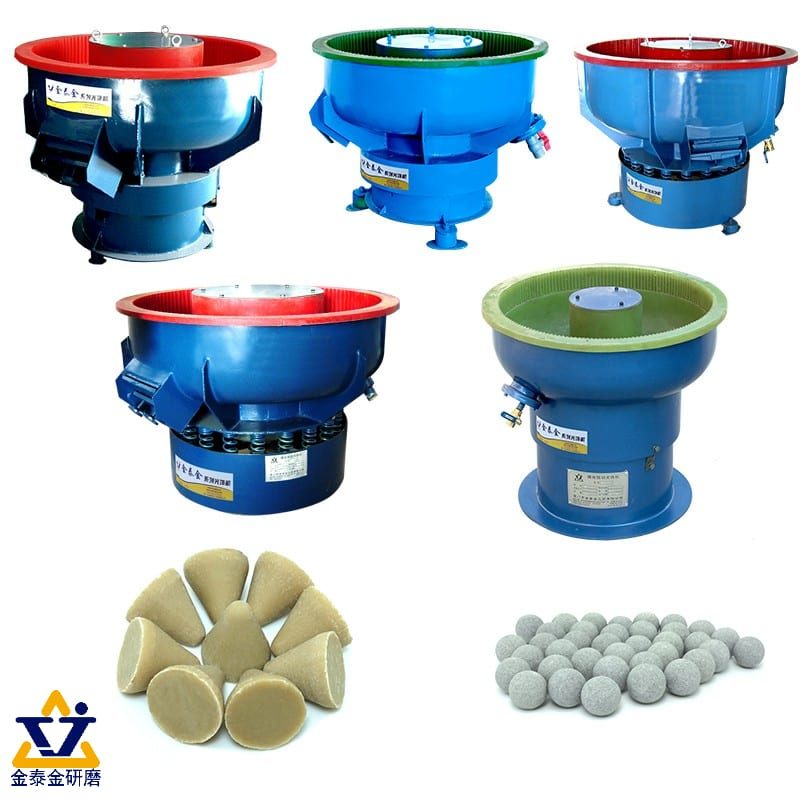
To keep boundaries clear: we supply industrial mass finishing machines (vibratory bowls, divided troughs, octagonal rotary barrels, wide-table OBD magnetic tumblers, heated centrifugal spin dryers), tumbling media (preformed ceramic, porcelain, plastic, stainless pins, organic media), and liquid compounds (MC8, LC10, JTJ50, JTS5); we do NOT supply electropolishing lines, acid passivation tanks, pickling pastes, handheld angle grinders, or contract job-shop weld-cleaning services.
Honest Lead Times and Engineering Assessment
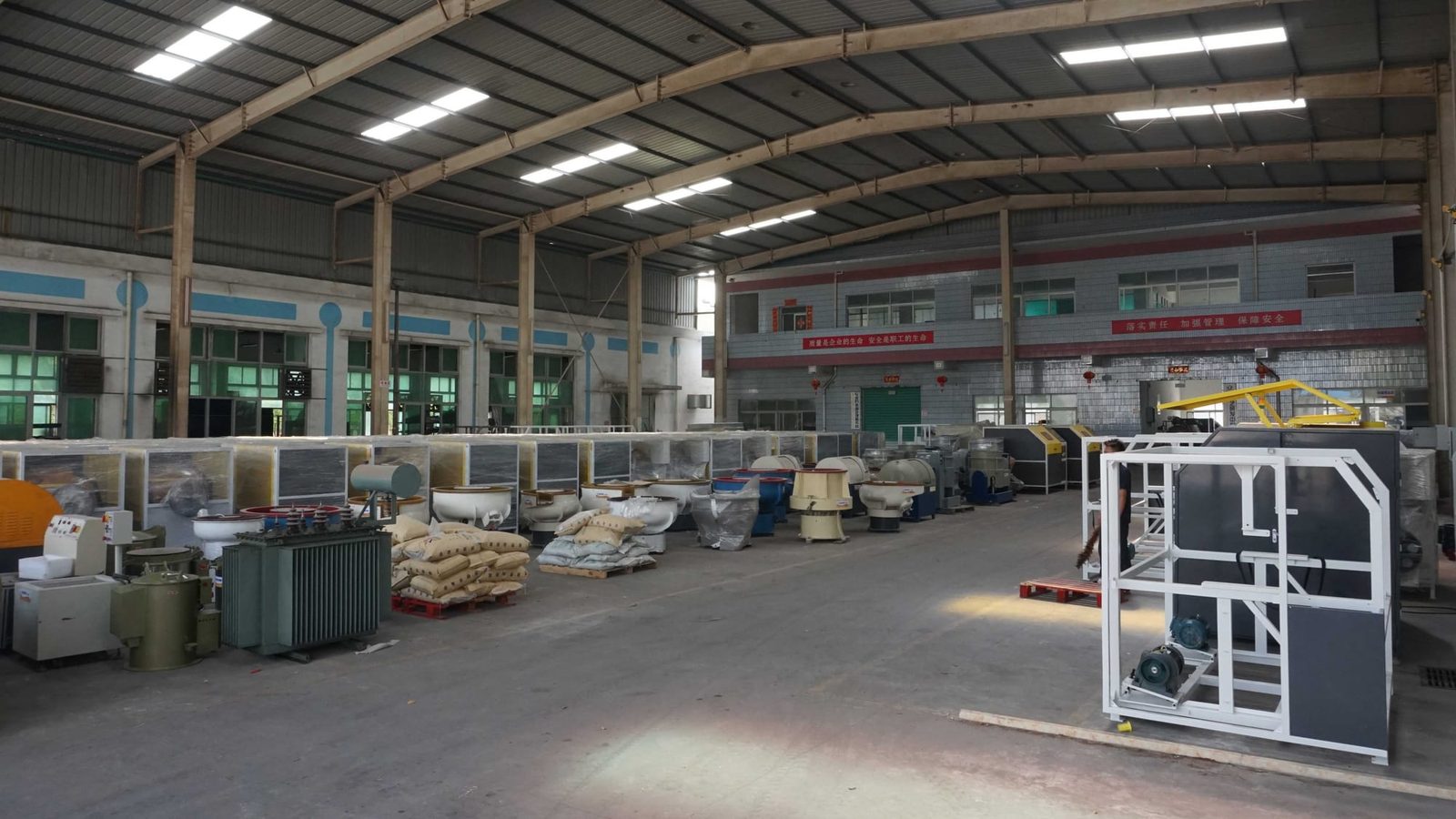
Standard machines ship in 25–35 days, while custom divided troughs and multi-stage finishing lines require 45–60 days. Because weldment overall dimensions, fillet accessibility, and heat-tint severity determine whether a vibratory bowl, divided trough, or magnetic tumbler works best, we do not promise free sample trials by mail or guarantee cycle times before inspecting your workpiece—send clear photos of your welded parts next to a ruler showing weld seams and overall size via our custom polishing solution page for an engineering assessment. Sharing photos of both the outside weld bead and any internal fillet corners lets our engineering team confirm feasibility and size the chamber accurately.
Frequently Asked Questions
Can vibratory tumbling remove TIG weld discoloration from stainless steel?
Yes, for compact stainless brackets, hinges, latches, and fittings that fit comfortably inside a vibratory bowl or divided trough. Pairing preformed ceramic media with MC8 descaling chemistry strips straw and blue heat tint uniformly.
Why won't ceramic media reach inside a tight 90-degree fillet weld?
Large ceramic triangles bridge across sharp inside corners. Switch to smaller angle-cut ceramic cylinders or run a wide-table OBD magnetic tumbler with fine 304 stainless pins to reach tight fillet roots.
Can mass finishing remove heavy MIG weld beads and spatter?
No. Heavy weld spatter and high weld crowns must be trimmed or ground mechanically beforehand. Mass finishing is designed for removing heat tint, light oxide scale, and sharp sheet edges—not heavy weld bead leveling.
Is mass finishing the same as stainless steel passivation or electropolishing?
No. Mass finishing removes heat tint mechanically and chemically via MC8 scrubbing, whereas certified passivation and electropolishing are specialized downstream chemical/electrochemical immersion processes that we do not supply.
How do I prevent rust spots after cleaning stainless weldments?
Keep carbon steel parts strictly out of stainless media charges, flush MC8 residue thoroughly with clean water immediately after unloading, and dry seams promptly in a heated centrifugal spin dryer.
What details should I send before requesting a quote for weld-tint finishing equipment?
Send clear photos of your welded parts showing overall dimensions, weld fillet locations, and current heat-tint severity, along with part weight and hourly batch volume. Our engineers can confirm chamber feasibility and recommend the right media setup from photos and drawings.
[DESIGN: Annotated buyer enquiry checklist showing weldment dimensions, fillet close-ups, alloy grade, and hourly volume]
 +86-592-2381506


 IPv6 network supported
