
Pipe Edge Finishing Equipment: Selecting Batch Chambers for Tube Deburring and Deslagging
Cut metal tube and pipe sections rarely leave a bandsaw, cold saw, or laser cutter ready for assembly. Internal and external burrs slice O-rings, snag wiring harnesses, and injure operators, while thermal cutting leaves brittle slag beads that flake off inside fluid lines. Choosing pipe edge finishing equipment starts with separating single-end mechanical bevelers from batch mass-finishing chambers that deslag and round edges across hundreds of parts per cycle.
This guide explains how industrial pipe edge finishing equipment handles cut pipe sleeves, long tube lengths, and laser-cut slag without manual file work. For broader chamber terminology, see finishing machine names and vibratory finishing.
Why Cut Pipe and Tube Edges Fail Assembly Inspection
Every pipe cutting method leaves a distinct defect profile along the inner and outer rim. Understanding what is actually sitting on the edge stops you from buying the wrong finishing stage.
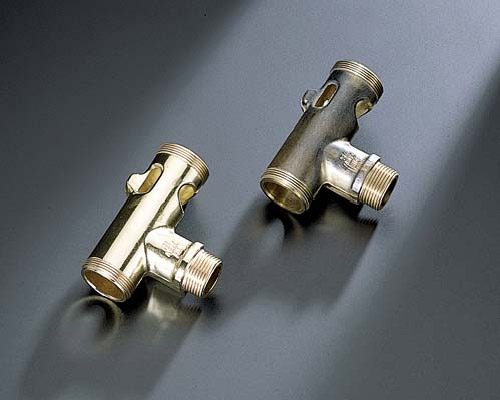
Saw-cut roll-over burrs on inner and outer walls
Cold saws and abrasive chop saws push ductile metal ahead of the tooth rather than shearing it cleanly, folding a sharp lip toward both the bore and the outer diameter. Even a thin roll-over burr prevents precision tube fittings from seating flush or cuts elastomer seals during insertion. Removing roll-over burrs uniformly around both edges requires media that reaches inside the bore as well as across the outside wall.
Laser-cut slag and dross beads on pipe slots
Laser tube cutters carve complex mitres, cross-holes, and mounting slots in seconds, but molten oxide droplets—often called slag or dross—freeze along the bottom kerf and inside the pipe wall. Unlike soft saw burrs, laser slag is hard, brittle, and tightly fused to the parent steel. Attempting to deslag laser-cut tube edges with soft plastic chips wastes hours because the media skates over the hard oxide bead.
Sharp sheared edges that fail safety and coating checks
Punching or shearing thin-wall tube leaves razor-sharp edges that cut workers' hands and cause powder coat or paint to pull back from the corner during curing. Mass finishing breaks those sharp corners into a smooth, uniform edge radius across every hole and end face simultaneously. Consistent edge rounding protects both assembly operators and downstream surface coatings.
Internal cross-hole burrs where handheld tools cannot reach
Drilling cross-holes or milling slots into hydraulic sleeves creates sharp exit burrs inside the main bore. An operator with a handheld deburring knife or belt sander can clean the outer rim easily, yet miss half the internal intersections. Batch mass finishing and magnetic pin chambers reach inside cross-holes without relying on operator eyesight.
Matching Pipe Edge Finishing Equipment to Tube Length and Shape
Not every tube fits inside a circular bowl. Selecting pipe edge finishing equipment depends first on part length, wall thickness, and whether external surfaces can tolerate tumbling contact.
| Tube / Pipe Geometry | Recommended Chamber Architecture | Media & Action | Key Selection Rule |
|---|---|---|---|
| Short cut sleeves, collars & fittings | Circular vibratory bowl (ZL series) with separation deck |
Ceramic triangles or angle-cut cylinders in spiral flow | Check bowl channel width against largest sleeve length |
| Long straight pipe & welded tube frames | Long rectangular vibratory trough (L1300, L1500, L1800) |
Heavy ceramic media in linear trough or divided bays | Use compartment dividers for heavy pipes to stop collisions |
| Thin-wall brass, copper & aluminium tube | Rotary barrel or gentle vibratory bowl with plastic cones | Resin-bonded plastic cones and neutral liquid compound | Cushion impacts so thin walls do not ovalize or dent |
| Precision threaded pipe fittings & bores | Magnetic precision polisher (OBD / HBPG series) |
Fine stainless steel pins driven inside bores and threads | Ideal for internal burr removal without rounding precision threads |
| Heavy high-value machined pipe ends | High-speed drag finisher | Clamped spindles dragged through stationary abrasive bed | Guarantees zero part-to-part nicks on heavy precision ends |

Circular vibratory bowls for short pipe collars and fittings
Short cut-to-length tube rings, valve sleeves, and stamped pipe brackets tumble freely inside a standard vibratory finishing machine such as our ZL150, ZL300C, or ZL600C models. The helical flow keeps parts separated in the media bed while rubbing both the outer diameter and accessible bore rims. Built-in separation screens unload finished sleeves cleanly from the media charge at the end of the cycle.
Rectangular vibratory troughs for long tubes and rails
Long pipe sections cannot turn around the centre dome of a circular bowl without jamming or banging end-to-end. Long rectangular troughs—such as our L1300, L1500, and L1800 models—accommodate extended tube lengths comfortably along a straight polyurethane-lined tub. Adding removable compartment dividers lets heavy pipes finish side by side without colliding.
Rotary barrels for uniform edge rounding on short pipes
When short thick-wall pipe couplings need heavy, quiet edge rounding without high-frequency vibration, a drum from our barrel finishing machines line delivers smooth cascading pressure. Because parts slide rather than bounce, rotary barrels produce clean, consistent edge radii on steel and brass fittings. Avoid overloading thin-wall tubes in large barrels where drop weight could flatten ends.
Magnetic and drag units for precision pipe assemblies
When a pipe fitting carries fine external threads alongside delicate internal cross-bores, loose ceramic tumbling can batter the thread crests. A magnetic precision polisher (OBD-30 through OBD-100 or OBD-HBPG series) spins fine stainless pins inside internal passages while leaving external threads crisp. For heavy machined manifolds that cannot touch each other, high-speed drag finishers hold each piece on a dedicated spindle.
How to Deslag Laser-Cut Tube and Sheet Parts
Thermal dross from laser or plasma cutting is one of the toughest jobs in metal fabrication. Knowing how mass finishing chambers deslag—and where they need upstream help—prevents unrealistic cycle expectations.
Why ceramic and angle-cut media are essential to deslag
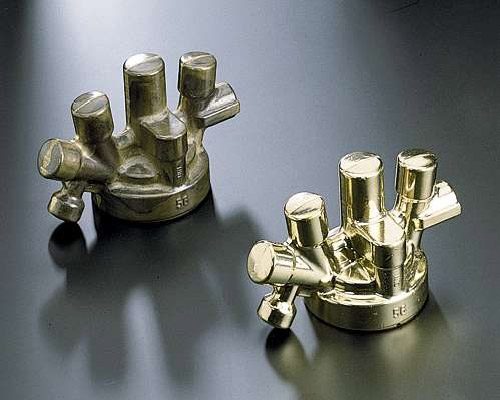
Brittle laser slag shatters and shears off only when struck repeatedly by dense, sharp-edged abrasive media. Lightweight plastic cones bounce off hardened oxide beads without dislodging them. Load dense ceramic triangles or angle-cut cylinders from our grinding media line so sharp media points strike the kerf line directly. For heavy laser slag, high-density cutting ceramic outperforms plastic media every time.
Compound support for oxide and scale removal
Plain water quickly turns into grey oxide mud when deslag cycles run on carbon or stainless tube. Using dedicated deburring and scale-cutting liquids—such as compound-LC10 for deburring, compound-MC8 for rust and oxide scale removal, or compound-JTJ20 for coarse stainless steel cutting—keeps ceramic pores open and suspends dislodged dross. Continuous drainage flushes fine slag grit out of the bowl before it scratches pipe walls.
Handling heavy weld spatter and thick plasma dross
Mass-finishing pipe edge finishing equipment removes light-to-medium laser dross and normal saw burrs reliably across whole batches. However, thick, golf-ball weld spatter or heavy plasma slag overhangs should be knocked loose mechanically upstream before loading the chamber. Trying to tumble off massive slag lumps in a vibratory bowl wastes media life and over-rounds clean edges elsewhere on the part.
Checking bore clearance after deslagging
As ceramic triangles wear down inside a deslag run, small broken chips can wedge inside narrow pipe bores or laser-cut slots. Always size media against the narrowest slot or internal diameter on your drawing, using worn-media dimensions rather than brand-new chip sizes. Never rely on a separation deck alone to pull a wedged ceramic triangle out of a tight tube bore.
[DESIGN: Gauge check comparing worn ceramic triangle media against narrow laser-cut tube slots and pipe bore diameters]
Media, Compounds, and Dryers for Pipe and Tube Lines
Running pipe edge finishing equipment smoothly requires pairing the right media geometry and liquid chemistry to your pipe alloy—whether carbon steel, stainless steel, aluminium, or copper.

Choosing media shapes that reach inside pipe bores
Straight cylinders and large balls only scrub the outer rim of a pipe, leaving internal burrs untouched unless the bore is wide enough for tumbling media to flow straight through. Angle-cut cylinders and acute-angle ceramic triangles slice into bore entrances at multiple angles without bridging across the opening. Confirm media-to-bore ratio on a sample drawing before ordering bulk media charges.
Protecting carbon steel tubes from flash rust
Carbon and mild steel pipe sections rust within minutes after wet deburring if left sitting wet in shop air. Run wet cycles with rust-inhibiting compound (compound-LC10, compound-MC8, or compound-JTJ25), rinse cleanly, and dry immediately. See our post-finishing separate wash and dry guide for preventing flash corrosion between stages.
Cushioning thin-wall aluminium and copper tubing
Soft non-ferrous tubing—like HVAC copper elbows and thin-wall aluminium tube—dents and scratches easily under heavy ceramic media. Switch to lightweight resin-bonded plastic cones with compound-JTJ60 or compound-JTS5 (for thin-sheet and delicate profiles), keeping media volume generous so tubes never bang together. Check our aluminum finishes and copper alloy finishing guides for alloy-specific tips.
Rapid drying inside bores using heat centrifugal spin dryers
Water trapped inside hollow pipe lengths and blind fittings drains slowly on open racks, leaving mineral rings and internal rust spots. A heat centrifugal spin dryer—such as our 35, 35A, 70, or 70A models—spins trapped water cleanly out of hollow bores while warm airflow finishes drying in one step. Fast centrifugal drying eliminates internal water staining on stainless and carbon pipe hardware.

Batch Mass Finishing vs Dedicated Pipe-End Chamfering Machines
Buyers researching pipe edge finishing equipment often compare vibratory or barrel chambers against rotary wire-brush machines or CNC tube-end bevelers. Both have clear places on the shop floor, and they solve different bottlenecks.
| Comparison Factor | Mass-Finishing Chambers (Vibratory / Barrel / Drag) | Dedicated Tube-End Beveler / Wire Brush Machine |
|---|---|---|
| Parts Per Cycle | Dozens to hundreds of cut pieces per batch | One pipe end at a time |
| Laser-Cut Side Slots & Cross-Holes | Deburrs and rounds all side slots simultaneously | Only reaches the open pipe end face |
| Wall & Outer Surface Effect | Uniformly cleans and smooths outer wall too | Leaves outer wall and side holes untouched |
| Longest Practical Tube | Limited by trough or barrel length (L1800 max trough family) |
Unlimited pipe length via feed-through chuck |
| Operator Labour | Batch load, timed run, automated separation | Continuous feeding or clamping per pipe |
[DESIGN: Side-by-side layout showing batch vibratory finishing of short slotted pipe sections versus single-end mechanical chamfering of long mill lengths]
When batch chambers beat single-end machines
If your shop cuts short pipe spacers, perforated exhaust sleeves, or laser-slotted tube brackets with multiple side holes, a single-end chamfering tool only touches two ends while leaving every side slot sharp. Batch pipe edge finishing equipment finishes both ends, every side slot, and the entire outer surface in one unattended cycle. The more holes and cutouts a tube carries, the faster batch finishing pays back.
When single-end bevelers or mill tools stay necessary
Full mill lengths of structural pipe requiring a steep weld-prep bevel or threaded pipe end must go to a dedicated pipe-end lathe or feed-through chamfering machine. Mass finishing rounds sharp edges cleanly; it does not machine deep geometric weld bevels. We do not build single-end pipe beveling lathes, handheld angle grinders, or abrasive belt sanders.
Combining rough cut-off with automated batch finishing
High-volume tube fabricators often pair automated cold saws or laser tube cutters directly with a vibratory bowl or trough cell. Cut parts drop into perforated baskets, run through ceramic deburring and compound rinsing, and exit through a centrifugal dryer ready for welding or coating. See our job shop finishing guide for organizing mixed-part cells.
[DESIGN: Integrated tube finishing workflow connecting cut-off baskets, vibratory deburring trough, rinse tank, and centrifugal spin dryer]
Avoiding surface mark surprises on decorative tube
When finishing visible stainless furniture tubing or polished handrails, remember that tumbling media rubs the entire exterior as well as the cut edge. If the outer wall already carries a directional brushed finish that must stay intact, loose tumbling will blend it into a non-directional matte. Review grinding and sanding marks and stainless steel finishes before tumbling pre-brushed tubing.
Common Mistakes When Buying Pipe Edge Finishing Equipment
Purchasing the wrong chamber size or media grade turns an automated deslag cell into a manual rework station. Avoid these four common buying errors.
[DESIGN: Troubleshooting board showing four pipe finishing errors: wedged ceramic media inside a tube bore, dented thin-wall ends, flash-rusted carbon pipe, and unremoved heavy weld spatter]
Ignoring part length relative to bowl channel width
Short pipe collars tumble smoothly in circular bowls, but longer tube sections wedge sideways between the outer rim and inner column. Once a tube bridges across the channel, media flow stops and parts bang together. Measure your longest part against the bowl channel width or step up to a rectangular trough (L1300, L1500, L1800).
Underestimating media wedging inside hollow bores
Ordering large media that barely fits inside a pipe ID—or small media that matches the bore diameter—guarantees jammed parts. Two triangular chips can lock together inside a hollow cylinder and block every subsequent washer or O-ring. Choose media either safely smaller than the bore so it flows straight through, or clearly larger so it never enters.
Expecting bright polish from a single deburring cycle
Ceramic triangles paired with compound-LC10 cut burrs and deslag kerfs aggressively, leaving a clean, uniform matte surface—not a mirror finish. If your drawing calls for bright lustre on stainless or brass fittings, plan a second brightening stage using high-alumina ceramic, steel media, or dry walnut/corn cob with compound-JTJ50 or compound-HM3. Never ask one coarse media charge to both strip heavy slag and mirror-polish the surface.
Skipping corrosion protection and rapid drying
Carbon steel pipe couplings pulled wet from a vibratory separator and left overnight in a tote bin will flash-rust before morning shift. Pair wet steel finishing with rust-inhibiting compounds and a dedicated heat centrifugal spin dryer from day one. Proper rinsing and drying protect the clean edges your machine just produced.
How Xiamen Jin Tai Jin Builds Pipe & Edge Finishing Lines
At Xiamen Jin Tai Jin Grinding Technology Co.,Ltd. (brand: Jings Polish), our workshop started in 1992 and our company was formally established in 2002, delivering over 200,000+ sets of grinding and polishing solutions to customers worldwide. Across our machines and catalogue offerings, we manufacture 21 machine platforms backed by 24 granted Chinese IP rights—including 1 invention patent, 17 utility model patents, and 6 design patents—under ISO 9001 certification 00726Q01571R001 (valid 2026-06-03 to 2029-06-02) and CE certifications M.2023.206.C88121 (Vertical, 8 models) and M.2023.206.C88120 (Horizontal, 13 models), valid until 2028-07-24.

Equipment, media, and compounds we manufacture
We manufacture circular vibratory bowls (ZL series with separation options), long rectangular vibratory troughs (L1300, L1500, L1800), rotary barrels, centrifugal disc and barrel units (LLF120, LX series), high-speed drag finishers, magnetic precision polishers (OBD and HBPG series), heat centrifugal spin dryers (35, 35A, 70, 70A), and media cleaners. We also manufacture ceramic, plastic, high-alumina, steel, walnut shell, and corn cob media alongside our HM3, JTJ20, JTJ25, JTJ50, JTJ60, JTS5, LC10, and MC8 compounds.
Clear boundaries on what we do not build or offer
In line with our choosing a mass finishing supplier standard, we state our scope plainly. We do not build handheld grinders, belt sanders, pipe-end beveling lathes, cloth buffing wheels, or solid wax bars; we do not supply sandblasting or shot-blasting equipment or blasting abrasives; we do not offer electropolishing, chemical polishing, plating, passivation, PVD coating, or heat treatment; and we do not operate a contract job-shop polishing or deslagging service.
Standard and custom machine lead times
Standard pipe edge finishing equipment ships within a 25 to 35 day build lead time. Custom-engineered long troughs, compartmented dividers, and specialized separation decks carry a 45 to 60 day build lead time.
Starting an engineering assessment with part photos
We do not promise free mail-in sample trials or guarantee cycle times without inspecting your workpiece. Instead, send clear photos showing your tube length, bore diameter, cut burrs or laser slag, and target edge finish via our custom polishing solution page—our engineers can evaluate your part photos and drawings to recommend the right chamber, media, and compound setup.
Frequently Asked Questions
What is the best pipe edge finishing equipment for short cut tubes?
For short cut-to-length pipe collars, spacers, and slotted sleeves, a circular vibratory finishing machine with an integrated separation deck (ZL series) processes large batches evenly and separates parts from media automatically at the end of the run.
Can vibratory machines deslag laser-cut pipe and sheet edges?
Yes. High-density ceramic triangles or angle-cut cylinders paired with deburring and scale-cutting compounds (LC10 or MC8) remove typical laser-cut dross and sharp kerf burrs across batches. Heavy weld spatter or thick plasma lumps should still be knocked off mechanically before loading.
How do I finish long pipe lengths without them jamming in a bowl?
Switch from a circular bowl to a long rectangular vibratory trough (L1300, L1500, or L1800). Rectangular troughs keep elongated tubes aligned along the tub, and removable dividers prevent heavy pipes from colliding with each other.
How do I keep tumbling media from getting stuck inside pipe bores?
Check the smallest internal diameter and side-slot width on your drawing against worn media dimensions, not brand-new chip sizes. Select media that is either small enough to pass cleanly through the bore or large enough never to enter it.
Will mass finishing remove internal cross-hole burrs inside a pipe?
Yes, provided the media or magnetic pins can enter the bore. For small precision bores and internal threads where ceramic chips cannot fit, a magnetic precision polisher drives fine stainless pins directly inside cross-holes without rounding outer threads.
What information should I send before asking for a tube finishing quote?
Send clear photos of the cut pipe ends or laser slag, overall tube length, outer and inner diameters, wall thickness, alloy type, and daily batch volume. Our engineers can provide an initial machine and media recommendation from photos and drawings before quoting.
[DESIGN: Annotated buyer enquiry checklist showing cut pipe end close-ups, bore measurements, and batch quantity notes]
 +86-592-2381506


 IPv6 network supported
