
Surface Treatment Line in Production: Integrating Pre-Wash, Multi-Stage Mass Finishing, Settling Tanks, and Heated
Plant managers and industrial engineers scoping a surface treatment line often hit an expensive bottleneck right after buying a standalone vibratory bowl or centrifugal disc finisher: the finishing machine itself cuts burrs cleanly, yet operators still shovel wet parts manually into wire baskets, carbon steel flashes orange rust before reaching the dryer, and fine ceramic slurry clogs floor drains within two weeks.
The central thesis of this guide is clear: a productive mechanical surface treatment line integrates four matched stations into one continuous material-handling flow—pre-degreasing, dedicated Stage 1/Stage 2 mass finishing chambers with built-in screen separation, multi-baffle wastewater settling, and immediate heated centrifugal or corncob drying. Treating those four stations as one coordinated line eliminates manual shoveling, flash rust, water spots, and drain blockages—while keeping mechanical mass finishing clearly separated from downstream chemical plating or powder-coat spray booths. For related workflow guides, see our surface finishing process guide, risks of mass finishing investment guide, and vibratory grinder guide.
Why Standalone Tumblers Create Bottlenecks Without Line Integration
Buying a single finishing chamber without upstream wash or downstream drying shifts labor bottlenecks from deburring to material handling.
Manual Basket Transfer and Shoveling Bottlenecks
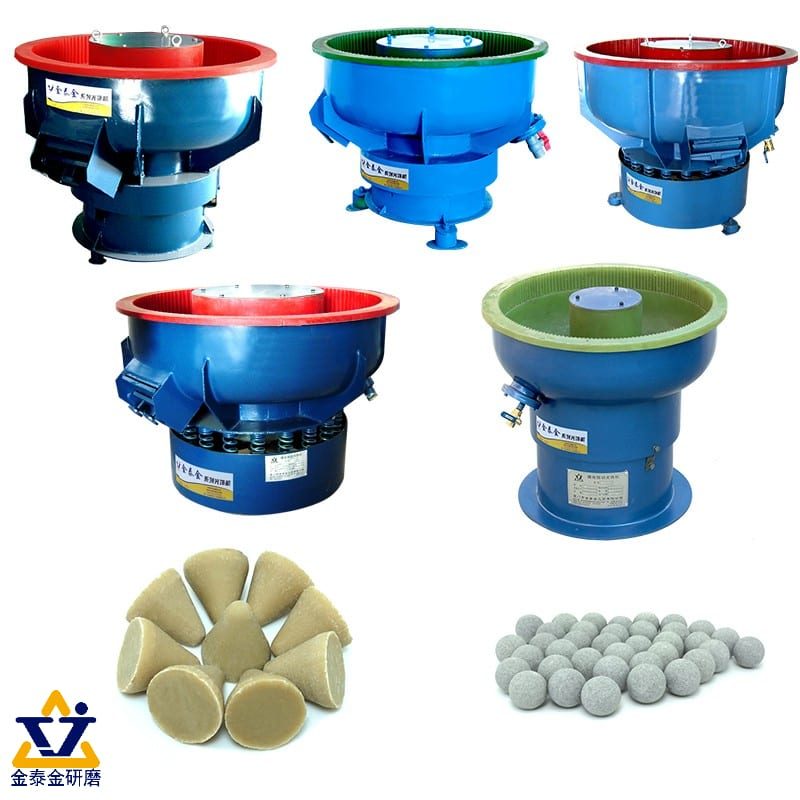
When a wet vibratory bowl or octagonal rotary barrel lacks an integrated separation deck and transfer chute, operators spend half the shift scooping heavy wet parts and stones by hand—negating the labor savings of automated mass finishing.
Flash Rust and Water Spotting Between Unconnected Stations
Freshly finished carbon-steel brackets sitting wet in open tote bins waiting for an undersized air dryer flash orange rust quickly, while aluminum and stainless components pick up stubborn calcium water rings if rinsing and heated drying are not coupled directly to the unload chute.
Unfiltered Slurry Clogging Shop Floor Drains
Dumping flow-through ceramic cutting water straight into facility drains deposits heavy abrasive mud inside underground piping. Every wet mechanical surface treatment line requires simple multi-baffle settling capacity right behind the machines.
| Line Bottleneck | Standalone Machine Symptom | Integrated Line Solution | Operational Payback |
|---|---|---|---|
| Oily part carryover | Ceramic stones glaze mid-shift | Upstream hot pre-degreasing station | Consistent cycle speed & longer media life |
| Slow manual unloading | Operators shovel wet media & parts | Built-in pneumatic separation deck & chute | Fast, low-labor batch changeover |
| Wet staging corrosion | Flash rust on steel; water spots on aluminum | Coupled rinse + heated spin/cob dryer | Spot-free, coating-ready part discharge |
| Floor drain clogging | Abrasive mud backs up shop plumbing | Multi-baffle settling tank behind bowls | Clean drain discharge & easy sludge cleanout |
[DESIGN: Four-panel bottleneck comparison contrasting manual basket shoveling, flash-rusted staging, clogged drains, and integrated continuous flow]
Designing the Four Core Stations of a Mechanical Surface Treatment Line
Sizing each station to match your slowest cycle keeps workpieces moving smoothly without pileups.
[DESIGN: Station-by-station diagram linking pre-degrease wash, divided trough/vibratory finishing, clean rinse, and heated centrifugal/cob drying]
Station 1: Upstream Pre-Degreasing for Oily CNC and Stamped Parts
Heavy CNC cutting coolant, tapping oil, and stamping press lubricants coat tumbling media and suppress LC10/PL10 compound performance. Placing a compact pre-wash basket station ahead of the finishing chamber ensures clean metal enters Stage 1 every time.
Station 2: Dedicated Stage 1 Cutting and Stage 2 Burnishing Chambers
Never force one vibratory bowl to swap between coarse ceramic cutting and mirror stainless steel ball burnishing every afternoon. Pairing a Stage 1 cutting chamber (vibratory bowl, centrifugal disc, or divided trough) with a dedicated Stage 2 burnishing or porcelain plateau chamber eliminates daily media swaps and stray-grit scratching.
Station 3: Automated Screen Separation and Clean-Water Flushing
Vibratory bowls equipped with air-operated separation flaps and vibrating screen decks retain media inside the bowl while discharging parts cleanly over a fresh-water rinse spray bar—stripping dirty LC10 or PL10 foam before parts enter the dryer.
Station 4: Heated Centrifugal Spin-Drying or Vibratory Corncob Drying
Compact hardware, fasteners, and brackets move straight into a heated centrifugal dryer for rapid spin-evacuation, whereas concave cutlery and bright decorative brass or 304 trim travel through a heated corncob media vibratory dryer that wicks away every trapped droplet.
Selecting Chamber Platforms Inside Your Surface Treatment Line
Line architecture adapts directly to whether your parts are compact stampings, long structural rails, or collision-sensitive CNC billets.

Circular Vibratory Bowl Lines for High-Volume Stampings and Castings
Wide-channel circular vibratory grinders with integrated screen decks form the highest-efficiency continuous line for medium brackets, die-cast housings, and commercial hardware—handling both LC10/MC8 cutting and PL10 burnishing smoothly.
Divided Rectangular Trough Lines for Long Rails, Shafts, and Forgings
When parts exceed circular channel widths or cannot collide—such as long metal edge rounding rails, connecting rods, or stainless wheels—divided rectangular troughs isolate one workpiece per polyurethane-lined compartment across the line.
Fixtured Drag Finishing Cells for High-Value Precision Components
For high-margin aerospace impellers, sequential dog rings, and precision medical plates, drag finishing stations sweep spindle-clamped parts rapidly through stationary media with zero part-on-part contact.
Centrifugal Disc and OBD Magnetic Stations for Compact or Cross-Bored Parts
Compact rigid parts run fastest in centrifugal disc finishers, while non-ferrous and 304 stainless blocks with deep internal cross-bores pair cleanly with wide-table OBD magnetic tumblers ahead of external smoothing.
| Line Architecture | Best Workpiece Mix | Separation & Handling Method | Floor Footprint & Scalability |
|---|---|---|---|
| Dual Vibratory Bowl + Heated Dryer | Medium stampings, castings, cutlery | Integrated pneumatic flap + screen deck | Compact inline or U-shape cell |
| Divided Trough + Spin/Cob Dryer | Long rails, rods, wheels, heavy shafts | Overhead hoist / manual bay unload | Modular length via removable dividers |
| Fixtured Drag Finisher + Rinse/Dry | High-value CNC gears, impellers, hubs | Quick-change planetary spindle racks | High throughput per square meter |
| Centrifugal Disc + Magnetic + Dryer | Compact rigid blocks with internal bores | Tilting bowl screen + pin separator | Fast cycle times for tight cells |
[DESIGN: Line architecture comparison table linking workpiece geometry to chamber combination, separation, and floor layout]
Alloy Segregation and Multi-Line Planning for Mixed-Metal Plants
Plants processing aluminum, carbon steel, and stainless steel under one roof cannot share wet media charges without risking cross-contamination.
Isolating Ferrous Steel From Aluminum and Titanium Lines
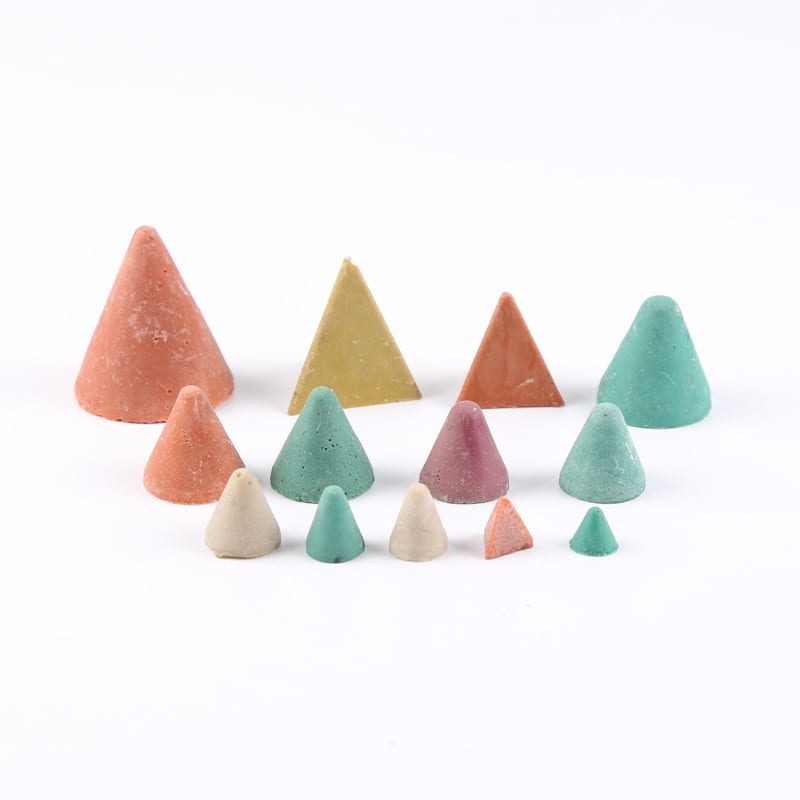
Running 6061 aluminum housings inside ceramic media previously used on carbon steel embeds rust-prone iron fines into soft aluminum skins. Maintain physically separate labeled media drums, dedicated chambers (or thorough washdowns with dedicated plastic-cone charges), and isolated neutral LC10/JTS5 chemical lines for aluminum.
Compound Dosing Pumps and Flow-Through Control
Automated peristaltic or diaphragm dosing pumps meter LC10, MC8, PL10, JTJ50, and JTS5 accurately into clean water lines—eliminating operator guesswork scoops and keeping surface finish repeatable across day and night shifts.
Multi-Baffle Settling Tanks and Water Reuse Discipline
A three-baffle settling tank behind wet vibratory bowls captures heavy ceramic and metallic sediment cleanly. Operators skim or shovel settled cake periodically rather than fighting clogged shop floor drains.
Utilities, Ergonomics, and Floor Layout Checklist Before Commissioning
Preparing shop infrastructure ahead of machine delivery turns commissioning into a smooth one-week startup.
[DESIGN: Shop-floor utility checklist showing three-phase power, clean water supply, compressed air, settling drain, and hoist clearance]
Three-Phase Power, Compressed Air, and Water Pressure
Confirm plant voltage and breaker capacity for drive motors and heated dryers, run dry compressed-air drops for pneumatic bowl separation flaps, and install regulated clean-water manifolds (softened water recommended for mirror rinse lines).
Overhead Hoist or Forklift Access for Media Drum Handling
Full drums of ceramic stones and stainless steel burnishing shot are heavy. Leave clear aisle width and overhead hoist clearance above vibratory bowls and rotary barrels so operators can top up or change media safely without back strain.
Acoustic Lids and Anti-Vibration Mounting Pads
If your surface treatment line sits close to quality inspection benches or assembly stations, specify acoustic noise-reduction lids on vibratory bowls and verify level concrete slab clearance around anti-vibration isolation feet.
Common Mistakes When Scaling Up a Surface Treatment Line
Avoiding these four planning traps protects line uptime and capital ROI.
[DESIGN: Troubleshooting matrix showing undersized dryers choking line throughput, mixed-alloy contamination, and clogged settling tanks]
Undersizing the Heated Dryer Relative to Bowl Unload Batches
A large vibratory bowl unloading heavy batches every shift quickly floods a tiny benchtop spin-dryer—forcing wet steel parts to wait in baskets and flash-rust. Always match dryer basket capacity and thermal power to peak bowl discharge weight.
Skipping Rust-Inhibited Rinse Protection on Carbon Steel Lines
Even a fast heated centrifugal dryer cannot save carbon-steel parts if operators skip rust-inhibiting JTJ50 rinse protection between Stage 1 cutting and drying.
Assuming One Standalone Bowl Can Run Four Different Alloys Daily
Swapping media and scrubbing polyurethane bowls four times a day destroys machine utilization. Either group production campaigns cleanly by alloy or run parallel dedicated chambers.
Forgetting Undersized Media Re-Screening in the Line Routine
As ceramic triangles wear down, undersized chips slip into mounting holes and jam downstream assembly. Schedule regular screen-deck re-classification to purge worn chips before they reach critical slot widths.
Running Incompatible Water Hardness Across Rinse Stations
Hard municipal tap water with elevated mineral content leaves white calcium rings inside concave pockets and anodized housings during heated drying. Adding a simple water softener ahead of final Stage 2 rinsing keeps mirror flatware and machined aluminum spotless.

Honest Boundaries: What We Do and Do Not Supply
At Xiamen Jin Tai Jin Grinding Technology Co.,Ltd. (brand: Jings Polish), our workshop roots date back to 1996 and our company was formally established in 2009, delivering over 200,000+ sets of grinding and polishing solutions worldwide. Across our catalogue, we manufacture 21 machine platforms backed by 24 granted Chinese IP rights (1 invention patent, 15 utility model patents, and 8 design patents), under ISO 9001 certification 00726Q01571R001 (valid 2026-06-03 to 2029-06-02) and CE certifications M.2023.206.C88121 (Vertical, 8 models) and M.2023.206.C88120 (Horizontal, 13 models), valid until 2028-07-24.

Mechanical Mass Finishing & Drying Lines—Not Electroplating, Anodizing, or Paint Booths
We engineer and manufacture mechanical mass finishing equipment (vibratory bowls, divided rectangular troughs, drag finishers, centrifugal disc finishers, octagonal rotary barrels, OBD magnetic tumblers, heated centrifugal and corncob dryers), tumbling media, and flow-through compounds (LC10, MC8, PL10, JTJ50, JTS5). We do not manufacture electroplating rectifier tank lines, Type-II/Type-III anodizing lines, automated powder-coating spray booths, curing ovens, sandblasting rooms, or contract job-shop finishing services. Standard machines ship in 25–35 days, while custom multi-unit lines and divided troughs require 45–60 days.
Engineering Assessment Before Line Configuration
Because part envelope, alloy mix, hourly quota, and downstream coating specs govern line sizing, we do not promise free mail-in sample trials or guarantee cycle times before inspecting your workpiece—send clear photos of your parts, slot dimensions, and target hourly output via our custom polishing solution page for an engineering assessment.
Buyer Checklist & FAQ for Surface Treatment Lines
Use these benchmarks when planning your mechanical surface treatment line.
[DESIGN: Annotated surface treatment line enquiry checklist showing alloy mix, hourly quota, floor space, and downstream coating]
How many operators are needed to run a dual-bowl vibratory surface treatment line?
With integrated pneumatic separation flaps, flow-through compound dosing pumps, and an adjacent heated centrifugal or corncob dryer, a single operator can load, monitor, rinse, and dry multiple parallel batches per shift—cutting manual deburring labor dramatically.
Should wastewater from a wet mass finishing line go straight into a municipal sewer?
Never discharge unfiltered ceramic slurry directly into drains. Route rinse effluent through a multi-baffle settling tank to trap heavy abrasive sediment, verify pH complies with local discharge rules, and clean settled sludge out periodically.
Can I add a second vibratory bowl and heated dryer later as production grows?
Yes. Modular vibratory bowls, divided troughs, and heated dryers scale cleanly—start with one Stage 1 cutting bowl plus dryer and settling tank, then add a dedicated Stage 2 burnishing bowl alongside it when volume justifies continuous two-stage flow.
What is the best line setup if we finish both 304 stainless steel and 6061 aluminum?
Run two physically separated media and compound stations—ceramic + 304 steel balls with LC10/PL10 for stainless, and resin-bonded plastic cones + porcelain with neutral LC10/JTS5 for aluminum—so zero carbon/ferrous contamination ever touches aluminum surfaces.
How do I size a heated centrifugal dryer or corncob dryer to keep pace with a vibratory bowl?
Match the dryer's working basket volume and thermal airflow capacity to the maximum single-batch unload weight of your vibratory bowl or rotary barrel. If your vibratory bowl discharges large batches every shift into an undersized benchtop dryer, wet carbon-steel parts will pile up in holding baskets and flash-rust before reaching the drying chamber.
Can an existing standalone vibratory bowl be upgraded into a full surface treatment line?
Yes. Most existing polyurethane-lined vibratory bowls with pneumatic separation flaps integrate smoothly into a complete line simply by adding an upstream hot pre-degreasing wash station, a peristaltic compound dosing pump, a multi-baffle wastewater settling tank behind the drain hose, and a matched heated centrifugal or corncob dryer at the discharge chute.
Why is pre-degreasing mandatory ahead of Stage 1 ceramic cutting on CNC production lines?
CNC machining coolant and tapping oils coat ceramic stones on contact, filling abrasive pores with sticky sludge that slashes deburring speed and leaves dark oil smut on finished housings. A simple pre-wash basket station protects media sharpness, reduces compound consumption, and keeps drain water clean.
How often does a multi-baffle wastewater settling tank need sludge cleanout?
Cleanout frequency depends directly on daily hours of ceramic cutting and metal removal volume—typically checked at weekly maintenance intervals so settled ceramic and metallic cake never builds up high enough to carry over into shop floor drains.
Should long stamped rails and small fasteners share the same surface treatment line?
No. Small fasteners and compact brackets run most efficiently inside circular vibratory bowls with automatic screen separation and centrifugal spin-dryers, whereas long stamped rails bridge across circular channels and belong inside divided rectangular vibratory troughs with overhead hoist handling.
How does automated compound dosing keep surface finish consistent across day and night shifts?
When operators scoop powder or pour liquid compound by hand, early batches run over-concentrated while late-shift runs starve for lubrication—causing glazed ceramic stones or flash rust. Peristaltic or diaphragm dosing pumps meter LC10, MC8, PL10, JTJ50, and JTS5 into clean water supply lines at steady ratios throughout every shift.
Can a mechanical surface treatment line feed directly into a downstream powder-coat or anodizing line?
Yes. Grouping pre-wash, Stage 1 cutting/descaling (LC10/MC8), clean softened rinsing, and immediate heated spin-drying right ahead of powder coating or anodizing eliminates manual handling delays and prevents flash rust or hard-water mineral rings from spoiling coating adhesion.
What safety and ergonomic features should operators expect on a modern finishing line?
Look for acoustic noise-reduction lids on vibratory bowls near inspection stations, pneumatic separation flaps that eliminate heavy manual shoveling, clean hoist clearance above media drums, and slip-resistant drainage grating around wet rinse stations.
How do I keep 304 stainless steel burnishing balls clean inside a continuous two-stage line?
Never transfer parts straight from Stage 1 ceramic cutting into Stage 2 steel ball burnishing without a thorough clean-water flush over the separation screen. Keeping stray ceramic chips and oily slurry out of the burnishing bowl preserves bright mirror reflectivity across hundreds of batches.
Can an automated surface treatment line handle both laser-cut steel deslagging and final rust protection?
Yes. Running dense preformed ceramic triangles with MC8 descaling compound inside a Stage 1 circular vibratory bowl or divided trough strips brittle laser oxide scale cleanly, while an inline clean-water flush followed by rust-inhibiting JTJ50 rinse and heated centrifugal spin-drying delivers clean, dry, rust-free brackets ready for powder coating or assembly.
How do I prevent small stamped parts from nesting or sticking together across an automated line?
Flat stamped hardware sticks face-to-face when dumped in thick piles onto wet media beds. Use a steady vibratory feeder or controlled batch loading onto the moving media crest, keep the media-to-part volume ratio generous, and avoid excessive soap foaming so ceramic or plastic media separates every piece individually.
What maintenance checks keep a multi-station surface treatment line running without unscheduled downtime?
Inspect polyurethane chamber linings periodically for wear, brush drain screens clear at every shift start, screen working ceramic media to purge undersized chips before they lodge in part holes, and clean settled sludge out of multi-baffle settling tanks on a regular weekly schedule.
How does a heated corncob dryer integrate with a stainless steel or brass burnishing line?
Right as freshly burnished 304 stainless cutlery, brass valves, or decorative trim exit the Stage 2 separation deck and softened-water rinse bar, parts drop straight onto the vibrating bed of a heated corncob dryer. Warm dry cob granules absorb trapped water droplets inside recessed grooves and buff away faint soap film—discharging spotless, dry parts ready for immediate packaging without manual wiping.
What details should I share before requesting a quote for a surface treatment line?
Send clear photos of your parts showing raw burrs or scale, alloy family, part dimensions and weight, narrowest hole or slot size, downstream process (powder coat, anodize, plating, or bare assembly), and required hourly or daily output via our custom polishing solution page. Also note available floor dimensions, three-phase electrical supply, and whether parts arrive oily from CNC machining or dry from laser/stamping presses. Our engineers will configure the right vibratory, divided-trough, or drag machines, non-lodging media, flow-through compounds, settling tank, and heated centrifugal or corncob drying equipment tailored reliably to your shop floor and daily throughput.

 +86-592-2381506


 IPv6 network supported
