
Metallic Shot vs. Ceramic Media in Mass Finishing: When to Burnish With Steel Shot and When Ceramic Must Cut First
Plant engineers and buyers researching metallic shot often confuse two completely different industrial products: dry air-blasting / shot-peening steel grit (cast steel shot fired at high velocity inside blast cabinets) versus wet mass-finishing metallic shot (304 stainless steel balls, pins, cones, and satellites tumbled inside vibratory bowls, rotary barrels, or magnetic pin tumblers). Even within wet mass finishing, buyers regularly make the mistake of ordering stainless steel shot hoping it will cut burrs faster than ceramic stones.
The central thesis of this guide is clear: in wet mass finishing, 304 stainless metallic shot is a zero-wear, non-abrasive burnishing medium engineered strictly to compress smooth metal surfaces into mirror luster under PL10 lubrication—whereas preformed ceramic media is a high-mass abrasive cutting medium required whenever burrs, weld heat tint, or CNC tool marks must actually be ground away. Using metallic shot to chase raw burrs fails completely, while running heavy steel shot inside an under-powered vibratory bowl stalls motors and crushes springs. For related media guides, see our stainless steel tumbler media guide, steel shot burnishing media guide, and tumbler media guide.
Mass Finishing Metallic Shot vs. Blasting Shot vs. Ceramic Media
Clarifying these three media families prevents ordering the wrong material for your equipment.
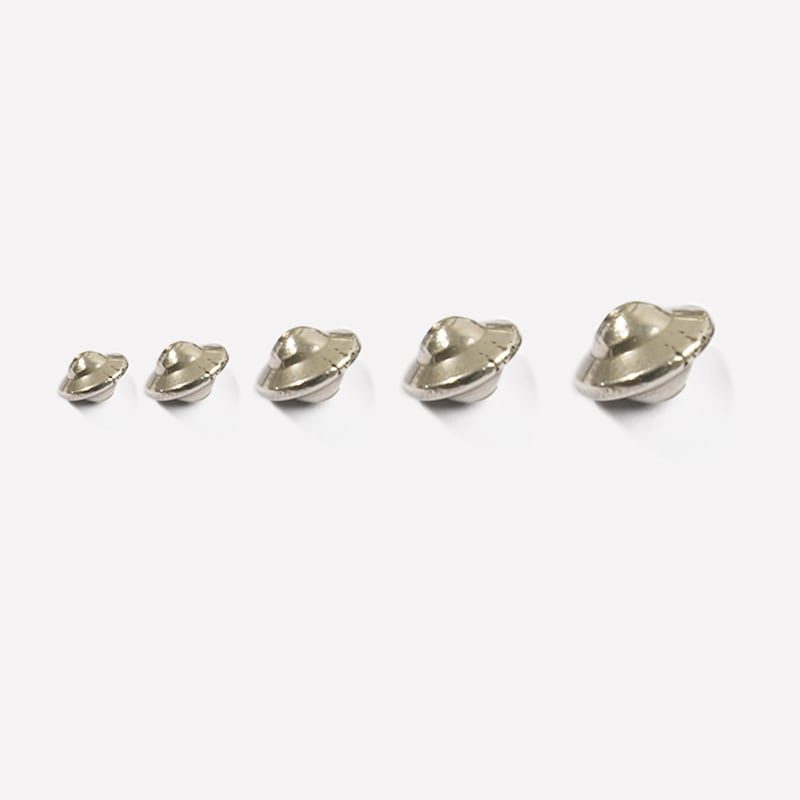
Wet Mass-Finishing 304 Stainless Metallic Shot (Balls, Pins, Cones, Satellites)
Smooth, work-hardened 304 stainless steel burnishing media contains zero abrasive grit and resists corrosion inside wet PL10 compound baths. It compresses surface micro-peaks plastically to create dense, bright mirror reflectivity across stainless cutlery, brass valves, copper fittings, and jewelry.
Preformed Ceramic Media (Triangles, Angle-Cut Cylinders, Tri-Stars)
Ceramic tumbling media embeds sharp abrasive mineral grains inside a vitrified clay-alumina binder. As ceramic stones tumble in wet LC10 or MC8 flow-through, they shear off stamping rollover burrs, strip laser oxide scale, and level directional tool lines into a uniform matte satin finish.
Dry Air-Blasting / Shot-Peening Steel Shot (Out of Scope)
Cast carbon-steel blasting grit and aerospace peening shot are fired pneumatically or by centrifugal wheel blasters to create matte anchor profiles or compressive fatigue layers. We do not supply dry blasting grit, shot-peening cabinets, or wheel-blast machines—our scope is wet and dry mass finishing inside lined vibratory, barrel, centrifugal, and magnetic chambers.
| Media Type | Physical Action | Removes Heavy Burrs? | Equipment Compatibility | Surface Outcome |
|---|---|---|---|---|
304 Stainless Metallic Shot (Balls/Cones) |
Non-abrasive cold-worked compression | No | Heavy-duty vibratory bowl / rotary barrel + PL10 |
Bright reflective mirror luster |
304 Stainless Magnetic Pins |
High-speed magnetic micro-peening | Light feather burrs only | Wide-table OBD magnetic tumbler | Bright internal cross-bores & crevices |
| Preformed Ceramic Media | Abrasive grinding & edge shear | Yes (fast cut) | Vibratory bowl, centrifugal disc, barrel, trough | Uniform matte satin & rounded edges |
| Blasting / Peening Cast Steel Shot | High-velocity impact peening | Scale strip (line-of-sight) |
Dry blast / peening cabinets (we do NOT supply) | Dimpled matte anchor / peen profile |
[DESIGN: Four-panel comparison of raw stamped edge, ceramic-cut matte satin, metallic-shot mirror burnish, and soft-alloy dimpling]
Weight, Drive Torque, and Lining Limits When Running Metallic Shot
Because stainless steel is nearly three times denser per liter than ceramic stones, switching an existing bowl from ceramic to metallic shot changes mechanical loads dramatically.

Motor Torque and Suspension Spring Ratings
Filling a standard light-duty vibratory bowl with dense 304 stainless steel balls can stall the eccentric drive motor on startup, overheat windings, or bottom out isolation springs—stopping toroidal media circulation completely. Always verify that your vibratory grinder or grinding barrel is structurally rated for steel-media density.
Thick Cast Polyurethane Lining Prevents Noise and Iron Contamination
Tumbling heavy stainless shot inside unlined carbon-steel tubs generates deafening noise and sheds rusty iron contamination onto 304 stainless and brass workpieces. Thick poured-cast polyurethane chamber linings absorb heavy shot impacts quietly while keeping non-ferrous and stainless batches spotless.
Why PL10 Water Cushioning Is Mandatory With Metallic Shot
Never run 304 metallic shot dry or in plain water. High-lubricity PL10 burnishing compound and a higher buoyant water level create a slick hydrodynamic cushion that keeps heavy steel contacts gliding smoothly across flat faces without hammering "orange peel" dimples into thin stampings.
Choosing Between Metallic Shot and Ceramic Media by Production Goal
Every shop-floor decision between metallic shot and ceramic media comes down to starting surface condition and alloy hardness.
[DESIGN: Two-stage workflow diagram showing Stage 1 ceramic cut bowl, clean flush, Stage 2 metallic shot bowl, and heated cob dryer]
When Ceramic Media Must Cut First (Deburring, Descaling, Tool Marks)
Whenever parts arrive with sharp stamping burrs, mill scale, weld discoloration, or visible CNC milling ridges, ceramic media (with LC10 or MC8) must run first. Metallic shot cannot level rough scratches—it only shines the rough surface brighter.
When Metallic Shot Shines (Stage 2 Mirror Burnishing & Cutlery/Trim)
Once ceramic cutting produces a smooth, burr-free matte satin skin, transferring clean parts into blended 304 metallic shot (balls, cones, satellites) with PL10 compresses peaks into deep showroom gloss on cutlery, stainless wheels, and brass hardware.
When Neither Ceramic Nor Metallic Shot Fits (Aluminum & Precision Gears)
Soft 6061 and 7075 aluminum alloys bruise under heavy ceramic and steel shot alike—relying instead on lightweight resin-bonded plastic cones and neutral LC10/JTS5 chemistry, optionally followed by smooth high-alumina porcelain spheres. Likewise, hardened motorsport gears use non-abrasive porcelain with controlled conversion chemistry rather than heavy steel shot.
| Workpiece & Starting Condition | First Stage Choice | Second Stage Choice | Why This Order Matters |
|---|---|---|---|
Stamped 304 cutlery / hardware with burrs |
Ceramic triangles + LC10 |
304 Metallic shot + PL10 |
Ceramic removes burrs; shot creates mirror |
| TIG-welded stainless with heat tint | Ceramic + MC8 descaler |
304 Metallic shot + PL10 |
MC8 + ceramic strips oxide before shine |
| Smooth forged brass fittings | Optional fine plastic + LC10 |
304 Metallic shot or dry walnut |
Compresses clean metal to bright luster |
6061 / 7075 Aluminum CNC brackets |
Plastic cones + neutral LC10/JTS5 |
Clean porcelain spheres (no steel shot) | Prevents orange-peel dimpling & dark etch |
[DESIGN: Decision matrix mapping alloy and starting defect to ceramic cutting, plastic smoothing, or metallic-shot burnishing]
Separation, Flushing, and Storage Discipline for Metallic Shot
Unlike disposable ceramic mud that flushes down settling tanks, 304 stainless metallic shot is a multi-year capital consumable that must be separated cleanly and kept oil-free.
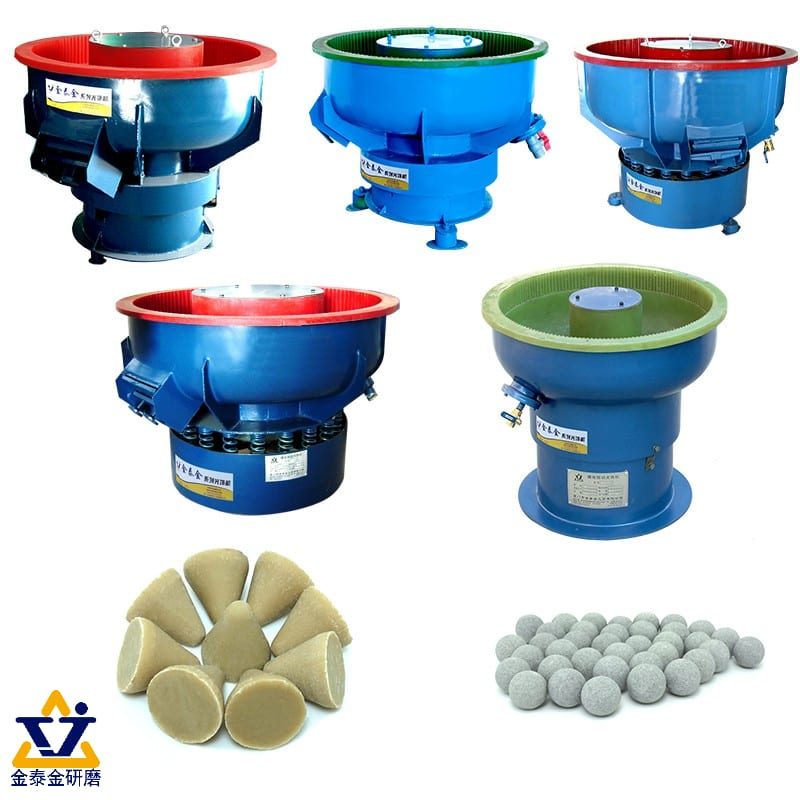
Screen Separation for Non-Magnetic 304 Parts vs. 304 Shot
Because both 304 stainless workpieces and 304 stainless shot are non-magnetic, magnetic belt separators cannot separate them. Size your vibrating screen deck opening cleanly between the shortest workpiece dimension and the largest metallic shot diameter so steel balls drop back into the bowl while finished parts travel forward.
Flushing Oil Carryover With Hot Water and Fresh PL10
Residual stamping oil coats steel shot rapidly and turns mirror batches gray. Pre-degrease oily parts before loading, and run the empty shot charge in hot clean water with fresh PL10 whenever burnishing foam darkens.
Immediate Softened Rinsing and Heated Drying Upon Unload
Flush PL10 foam off finished parts with softened water upon unload and move batches straight into a heated centrifugal dryer or warm corncob media bowl so hard-water spots never mar mirror metal.
Common Failure Modes With Metallic Shot and Ceramic Media
Recognizing these four shop errors prevents scrap batches and premature machine wear.
[DESIGN: Troubleshooting gallery showing orange-peel dimpling, stray ceramic scratches, jammed steel pins, and magnetic carbon-steel clamping]
Stray Ceramic Chips Scratching Mirror Metallic-Shot Batches
A single chipped ceramic triangle carried inside a hollow part into the steel-shot bowl carves fresh scratches across the entire batch. Never swap ceramic and metallic shot in one shared tub without thorough washdowns; keep Stage 1 and Stage 2 in dedicated chambers.
"Orange Peel" Wavy Dimples on Thin-Gauge Stampings
Oversized steel balls running with low PL10 lubrication hammer tiny craters across thin sheet metal. Step down ball size, raise PL10 concentration, and raise buoyant water level.
Loading Ferromagnetic Carbon Steel Into Magnetic Pin Tumblers
In wide-table OBD magnetic tumblers, strongly magnetic carbon-steel parts distort magnetic flux—clamping 304 stainless pins directly onto the part wall instead of sweeping internal bores. Reserve magnetic pin tumblers for non-ferrous alloys and non-magnetic 304 stainless.
Undersized Ceramic Chips Wedging in Cooling Slots
As ceramic triangles wear down, broken tips jam inside narrow mounting holes. Screen ceramic charges regularly to purge undersized fragments before they match slot widths.

Non-Lodging Sizing Rules and Multi-Stage Line Integration
Selecting the right metallic shot or ceramic media shape ensures every part emerges burr-free without manual pin-picking or cross-contamination.
[DESIGN: Non-lodging sizing diagram matching media cross-section to slot width, cross-bores, and thread pitch]
Matching Ball, Cone, and Triangle Dimensions to Narrowest Part Slots
Before ordering ceramic triangles or 304 stainless steel shot, measure the narrowest cooling louver, obround slot, and counterbore on your part drawing. Keep media strictly larger than every vulnerable opening—or small enough (fine magnetic pins) to pass straight through freely without wedging.
Dedicated Stage 1 Ceramic and Stage 2 Steel-Shot Chambers
Swapping heavy steel shot and abrasive ceramic back and forth inside one vibratory bowl wastes shift hours and guarantees stray ceramic grit scratches mirror parts. Dedicated Stage 1 (LC10/MC8) and Stage 2 (PL10) chambers keep every finish repeatable.
Multi-Baffle Settling Tanks for Ceramic Slurry vs. Zero-Mud Steel Burnishing
Stage 1 ceramic cutting generates fine gray abrasive mud that requires a multi-baffle settling tank behind the drain hose, whereas Stage 2 304 steel shot burnishing produces zero abrasive mud—needing only clean PL10 rinse flow and heated drying.
Honest Boundaries: What We Do and Do Not Supply
At Xiamen Jin Tai Jin Grinding Technology Co.,Ltd. (brand: Jings Polish), our workshop roots date back to 1996 and our company was formally established in 2009, delivering over 200,000+ sets of grinding and polishing solutions worldwide. Across our catalogue, we manufacture 21 machine platforms backed by 24 granted Chinese IP rights (1 invention patent, 15 utility model patents, and 8 design patents), under ISO 9001 certification 00726Q01571R001 (valid 2026-06-03 to 2029-06-02) and CE certifications M.2023.206.C88121 (Vertical, 8 models) and M.2023.206.C88120 (Horizontal, 13 models), valid until 2028-07-24.
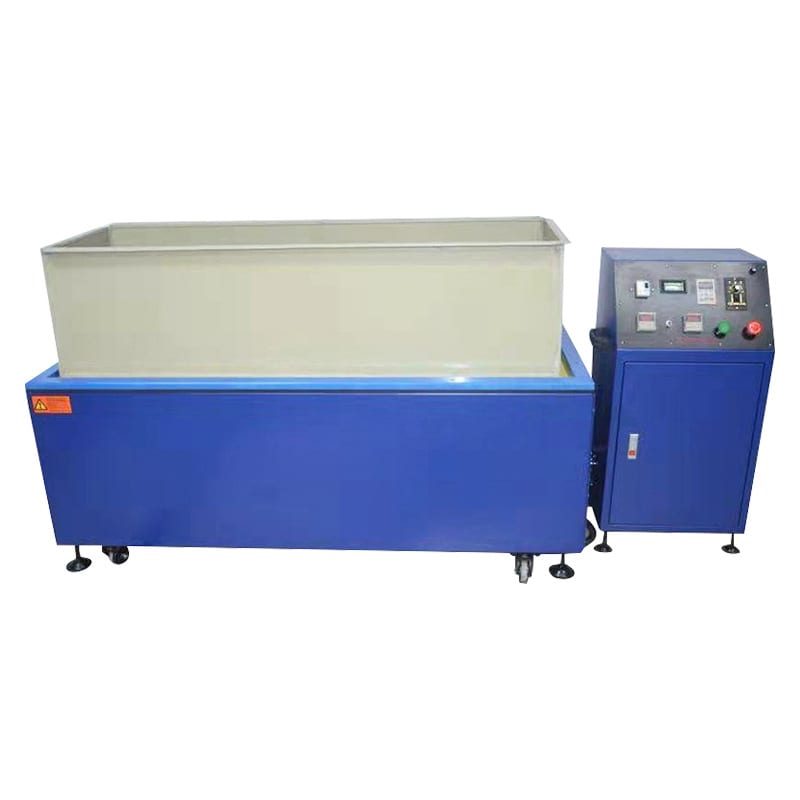
Wet/Dry Mass Finishing Shot & Machines—Not Air-Blast Grit or Peening Booths
We manufacture and supply heavy-duty vibratory bowls, divided troughs, octagonal rotary barrels, OBD magnetic tumblers, heated dryers, 304 stainless metallic burnishing shot (balls, pins, cones, satellites), ceramic/plastic/porcelain/organic media, and PL10/LC10/MC8/JTJ50/JTS5 compounds. We do not supply dry sandblasting/wheel-blasting steel grit, shot-peening equipment, electroplating lines, or contract job-shop polishing services. Standard machines ship in 25–35 days, while custom lines require 45–60 days.
Engineering Review Before Ordering Metallic Shot or Ceramic Media
Because alloy hardness, narrowest hole/slot width, part thickness, and existing machine motor/spring ratings govern media sizing, we do not promise free mail-in sample trials or guarantee cycle times before inspecting your workpiece—send clear photos of your parts and dimensions via our custom polishing solution page for an engineering assessment.
Buyer Checklist & FAQ for Metallic Shot vs. Ceramic Media
Review these practical benchmarks before ordering metallic shot or ceramic tumbling media.
[DESIGN: Annotated metallic shot vs ceramic media enquiry checklist showing alloy, burr severity, slot width, and machine rating]
Is metallic shot cheaper long-term than ceramic media because it never wears out?
304 stainless metallic shot experiences negligible wear loss over years of lubricated PL10 operation, making it very economical for mirror burnishing—yet it cannot replace ceramic media when burrs, laser scale, or CNC tool tracks must be cut away first.
Can my existing vibratory bowl switch from ceramic triangles to stainless metallic shot?
Only if the bowl's drive motor, eccentric weights, heavy-duty suspension springs, and poured-cast polyurethane lining are rated for high-density steel shot; otherwise heavy steel media stalls the roll and risks spring fatigue.
Why should I blend steel balls with cones and satellites instead of running round balls alone?
Round spheres bridge over 90-degree weld fillets, embossed lettering, and tight lug pockets. Blending tapered steel cones or oval satellites into round balls reaches sharp corners while spheres flatten broad faces.
Can 304 metallic shot remove flash rust from carbon steel brackets?
Light surface tarnish wipes off with clean PL10 and JTJ50, yet stubborn rust scale or mill scale requires Stage 1 ceramic cutting with MC8 descaling compound first, followed by immediate rust-inhibited rinsing and heated centrifugal spin-drying.
Why do 6061 aluminum housings suffer "orange peel" dimples when tumbled with stainless metallic shot?
Because 6061 aluminum is far softer and lighter than hardened 304 stainless steel balls, heavy steel impacts dent flat aluminum faces into wavy micro-craters before smoothing any CNC ridges. Always finish aluminum with lightweight resin-bonded plastic cones and neutral LC10/JTS5 chemistry, followed by smooth high-alumina porcelain spheres if brighter satin gloss is required.
How do I keep 304 stainless metallic shot from turning dull gray over months of production?
Two habits keep steel shot bright indefinitely: pre-degrease oily stamped or CNC parts completely before loading so machining oil never coats the steel balls, and drain dirty PL10 solution whenever foam darkens—running the empty shot charge briefly in clean hot water with fresh PL10 until drain water runs clear.
Can metallic shot and ceramic media ever be mixed together in one chamber?
Never. Mixing abrasive ceramic stones with smooth 304 metallic shot defeats both stages—ceramic chips continuously scratch the mirror finish that steel balls are trying to compress, while heavy steel shot fractures brittle ceramic triangles into slot-lodging splinters.
What happens if wet carbon-steel parts are left sitting in baskets after metallic shot burnishing?
Bare abraded carbon steel flashes orange rust rapidly when exposed to damp air. Immediately flush finished carbon steel with rust-inhibiting JTJ50 rinse water and move parts straight into a heated centrifugal spin-dryer before applying protective assembly oil or packaging.
How do I choose between ceramic triangles and angle-cut ceramic cylinders for Stage 1 cutting?
Preformed ceramic triangles offer rugged flat cutting faces for broad stamped brackets and heavy burrs, whereas angle-cut cylinders slip more cleanly into narrow corner notches, obround slots, and angled flanges without bridging.
Can 304 metallic shot be used inside an octagonal rotary barrel as well as a circular vibratory bowl?
Yes, provided the rotary barrel's drive motor, gearbox, and thick cast polyurethane drum lining are rated for dense stainless steel media weight. Keep PL10 water level buoyant inside the barrel so heavy steel balls cascade smoothly over curved parts without bruising thin edges.
Why do small stamped brass washers stick together inside wet metallic shot burnishing?
Flat stamped washers trap soapy PL10 water between mating faces and ride through the bowl as stacked pairs, leaving inner faces untouched. Raise the steel shot-to-part volume ratio, avoid overloading batch weight, and feed flat stampings evenly onto the moving media crest so steel balls wedge pieces apart.
What happens if 410 or 430 magnetic stainless cutlery is run in 304 metallic shot without rust inhibition?
Unlike austenitic 304, ferritic and martensitic 410/430 knife alloys flash-rust rapidly if left damp in open tote trays between wet burnishing and drying. Always follow PL10 burnishing on 410/430 stainless with a clean rust-inhibiting JTJ50 rinse and immediate heated corncob drying.
How does dry corncob drying protect mirror finishes after wet metallic shot burnishing?
After flushing PL10 foam with clean softened water, dropping wet burnished cutlery or brass fittings directly into a heated vibratory bowl filled with dry corncob media wicks away trapped droplets from tines and recesses while buffing away faint mineral film cleanly.
When should a shop choose resin-bonded plastic cones instead of ceramic or metallic shot?
Choose lightweight resin-bonded plastic cones whenever finishing soft 6061 aluminum, zinc die castings, or delicate brass housings where heavy ceramic or steel shot would dent flat faces, round fragile ribs, or leave rough matte pitting prior to anodizing.
How does high-alumina porcelain compare with 304 stainless metallic shot for non-abrasive finishing?
Both high-alumina porcelain spheres and 304 stainless metallic shot are non-abrasive, yet they serve different roles: lighter porcelain spheres excel at chemically accelerated steel isotropic gear plateauing and gentle aluminum brightening without motor overload, whereas dense 304 metallic shot excels at high-mass cold-worked mirror compression on stainless cutlery, trim rings, and brass fittings.
Can a divided rectangular vibratory trough run metallic shot on heavy welded stainless parts?
Yes. When welded stainless frames or heavy valve bonnets would dent each other in an open circular bowl, a heavy-duty divided rectangular trough isolates one workpiece per polyurethane-lined compartment while circulating 304 metallic shot and PL10 compound smoothly around every contour.
How much PL10 burnishing compound should I run with metallic shot compared with LC10 ceramic cutting?
Metallic shot relies on a slicker, slightly richer PL10 hydrodynamic cushion than standard LC10 ceramic cutting so heavy steel balls glide across flat metal without peening micro-craters. Calibrate dosing pumps to maintain steady, thin protective foam while flushing dark metallic fines cleanly out of the drain screen.
What details should I share before requesting a quote for metallic shot or ceramic media?
Send clear photos of your parts showing raw burrs or target gloss, alloy grade, overall part dimensions and weight, narrowest slot or hole size, and existing machine model (if retrofitting) via our custom polishing solution page. Also note whether parts already arrive smooth from machining or still carry stamping burrs and weld scale, and whether heated drying equipment is needed. Our engineers will size the exact ceramic cut or 304 metallic shot blend, PL10/LC10 compound dosing, heated drying station, and steel-rated chamber tailored reliably to your shop floor and daily production output.

 +86-592-2381506


 IPv6 network supported
