

How to Polish Stainless Steel Flatware and Finishing Pewter in Batch Mass-Finishing Lines
Tableware and decorative hollowware factories face a sharp divide between two popular metals: hard, work-hardening 304/430 stainless cutlery versus soft, low-melting tin-alloy pewter. Buyers searching how to polish stainless steel flatware, how to polish stainless flatware, how to polish stainless steel silverware, or finishing pewter often get handed household baking-soda tips or aggressive steel-cutting instructions that ruin both lines—leaving stainless spoons dull and pewter castings melted or smeared.
The core thesis of this guide is direct: stainless flatware requires high-density burnishing pressure and rapid spin drying to lock in bright lustre, whereas finishing pewter requires low-friction, cool plastic and dry organic stages so soft tin alloy never smears or warps. This guide maps out batch machine selection, media pairing, and failure modes for both production lines. For broader machine naming, see finishing machine names and stainless steel finishes.
Why Stainless Flatware and Pewter Need Opposite Mass-Finishing Rules
Even though spoons, forks, and pewter goblets look similar on a dining table, their metallurgy demands opposite media weights and friction limits.

Work-hardening stainless flatware needs heavy burnishing pressure
Stamped 18/8 (304) and 18/0 stainless steel flatware arrives from blanking and coining presses with sharp tine edges, press marks, and matte rolled skin. Soft organic media alone skates across hard stainless without changing surface texture. Learning how to polish stainless steel flatware at scale starts with ceramic or plastic edge smoothing followed by heavy high-alumina or hardened steel burnishing.
Soft pewter smears and heats rapidly under heavy media
Modern lead-free pewter is predominantly tin alloyed with small amounts of antimony and copper—far softer and lower-melting than steel or brass. Heavy steel balls or aggressive ceramic triangles peen pewter into an orange-peel skin, and high-speed dry friction smears the soft alloy into dull, dragged streaks. Finishing pewter requires gentle resin-bonded plastic cones and cool, well-lubricated cycles.
Why fork tines and spoon bowls trap parts together
Stamped spoons nest inside one another like stacked bowls, while fork tines interlock into bundles inside slow rotary barrels. Once flatware nests or tangles, media cannot touch the inner bowl or tine gaps. Open circular vibratory bowls with steady spiral motion break nesting and keep flatware circulating individually.
Separating household chemical dips from factory mass finishing
Household searches for how to polish stainless steel silverware often point to vinegar soaks, toothpaste, or acid silver dips. Those consumer tricks never remove stamping burrs or level rolling marks across thousands of pieces per shift. We do not sell household polishes, chemical dips, plating baths, cloth buffing wheels, or solid wheel wax bars—we build batch mass-finishing equipment.
Choosing the Right Machines for Flatware and Pewter Batches
Across our machines portfolio, four chamber architectures handle stamped cutlery and cast pewter hollowware without manual piece-by-piece buffing.
| Part Family | Recommended Chamber | Media & Compound Action | Key Production Advantage |
|---|---|---|---|
| Stainless Spoons, Knives & Forks | Vibratory bowl (ZL series) + spin dryer (35/70) |
Ceramic/plastic edge smooth → steel/high-alumina burnish | Breaks spoon nesting; automated screen separation |
| Stamped Cutlery Handles & Ferrules | Centrifugal disc (LLF120) or rotary barrel |
High-density burnishing or dry corn cob brightening | Rapid batch lustre on compact hardware |
| Cast Pewter Figurines, Cups & Badges | Polyurethane vibratory bowl (ZL) or slow rotary barrel |
Lightweight plastic cones → dry walnut/corn cob barrel | Gentle low-impact smoothing without denting soft tin |
| Engraved Silverware & Filigree Hollowware | Magnetic precision polisher (OBD/HBPG) (non-magnetic) |
Fine stainless steel pins inside water + JTJ50/JTJ60 |
Cleans engraved crests and tine roots cleanly |
[DESIGN: Four-panel equipment overview showing a ZL vibratory bowl for flatware, LLF120 centrifugal disc, double-barrel dry cob tumbler, and centrifugal spin dryer]
Circular vibratory bowls for stainless spoons and forks
A vibratory finishing machine (ZL series) with a smooth cast polyurethane lining is the workhorse for how to polish stainless flatware. Continuous three-dimensional spiral flow separates nested spoons and rubs fork tine edges evenly without operator handling. Models with built-in separation screens (ZL100C through ZL900C) unload clean cutlery automatically at cycle end. See our vibratory finishing guide for spiral bed control.
Double-barrel dry tumblers for final flatware and pewter sheen
After wet smoothing and thorough drying, a double-barrel or double-deck dry polishing tumbler from our barrel finishing machines line buffs stainless cutlery and cast pewter in conditioned walnut shell or corn cob dressed with polishing paste. Dry tumbling lifts a warm, clean sheen across curved spoon bowls and engraved handles without directional wheel streaks.
Slow rotary barrels and vibratory bowls for finishing pewter
Cast pewter badges, tankard handles, and decorative figurines carry parting-line flash and soft surface porosity. A gentle vibratory bowl or slow rotary barrel loaded with lightweight resin-bonded plastic cones smooths flash without hammering soft corners flat. Keep barrel drop height conservative when finishing pewter so heavy castings never dent each other.
Magnetic polishers for non-magnetic 304 silverware and pewter
For non-magnetic 304 stainless steel flatware with deep stamped handle patterns—or intricate pewter filigree—a magnetic precision polisher (OBD and HBPG series) spins fine stainless pins inside engraved recesses where ceramic or steel balls cannot reach. Remember that magnetic 430 (18/0) stainless flatware clings straight to the magnet plate, so route 430 cutlery strictly to vibratory or barrel chambers.

Alloy Grades & Surface Prep: 304 vs 430 Cutlery and Lead-Free Pewter
Understanding alloy differences before loading your chamber stops rust blooms, smeared pewter reliefs, and uneven fork-tine lustre.
| Alloy Grade | Magnetic Behaviour | Key Finishing Constraint | Best Brightening Route |
|---|---|---|---|
| 304 (18/8) Stainless Flatware | Non-magnetic | Work-hardens rapidly; resists light abrasive | Steel or high-alumina balls + JTJ50; magnetic pins for deep patterns |
| 430 (18/0) Stainless Flatware | Strongly magnetic | Flash-rusts faster if left wet; cannot enter magnetic bowl | Vibratory bowl (ZL) with steel/alumina + JTJ50 → fast spin dry |
| Lead-Free Pewter (Tin-Antimony) | Non-magnetic | Extremely soft; smears under friction heat or heavy media | Plastic cones (JTJ60/JTS5) → cool dry corn cob barrel |
| Silver-Plated Base Flatware | Base-metal dependent | Plating wears through under cutting media | Only gentle dry corn cob or clean magnetic pin refresh (no cutting) |
304 (18/8) austenitic stainless cutlery
High-nickel 304 stainless steel flatware offers strong corrosion resistance and takes a deep, bright burnished lustre when rubbed with hardened steel balls or high-alumina spheres and compound-JTJ50. Because 304 is non-magnetic, ornate handle patterns also respond cleanly to brief magnetic pin polishing inside OBD or HBPG chambers. Keep carbon steel media completely out of 304 cutlery bowls.
430 (18/0) ferritic stainless cutlery
Lower-cost 430 stainless flatware is strongly magnetic and slightly less corrosion-resistant than 304. Never load 430 spoons into a magnetic tumbler—they clamp straight to the magnet plate and scratch the bowl floor. Run 430 cutlery strictly in polyurethane-lined vibratory bowls with rust-inhibiting compound (JTJ50 / JTJ60) and spin-dry immediately after rinsing.
Modern lead-free pewter castings
Cast pewter goblets, badges, and decorative plates carry delicate surface reliefs that blur instantly under heavy ceramic triangles. Smooth parting lines with lightweight resin-bonded plastic cones and neutral compound-JTJ60 / JTS5, then move bone-dry parts into a cool dry corn cob barrel for warm satin sheen. Short, cool cycles protect fine pewter relief detail.
Pre-plated or silver-plated hollowware limits
If flatware or hollowware is already silver-plated or nickel-plated, aggressive ceramic cutting strips thin plating straight off exposed edges. We do not offer silver plating, electroplating, or clear-coat sealing—only use gentle dry corn cob or brief non-abrasive burnishing on plated parts after testing a single sample.

Media and Compounds for Stainless Flatware vs Pewter
Pairing the right media from our grinding media and dry finishing media lines—plus verified liquid compounds—keeps stainless bright and pewter cool.
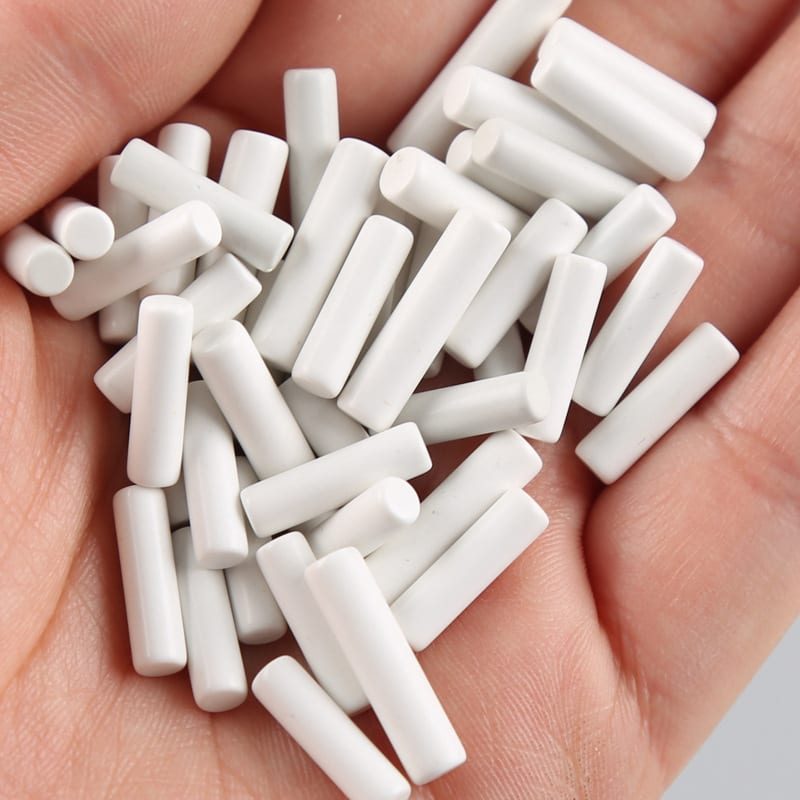
Ceramic and plastic cut-down before burnishing
Before you can brighten stainless flatware, sharp blanking burrs around spoon rims and fork tines must be smoothed flat. Use fine ceramic triangles or resin-bonded plastic cones with compound-JTJ20 or compound-LC10 to erase stamping burrs cleanly. For finishing pewter, skip ceramic completely and use only smooth resin-bonded plastic cones so soft tin never bruises.
Hardened steel and high-alumina balls for bright flatware
Once stainless flatware edges are smooth, switch to non-abrasive hardened steel burnishing media or high-alumina ceramic balls paired with compound-JTJ50 (stainless brightening). High-density balls roll microscopic surface peaks flat into a crisp, reflective lustre across spoon bowls and handles. Burnishing media never cuts away stamping burrs—smooth the edges first.
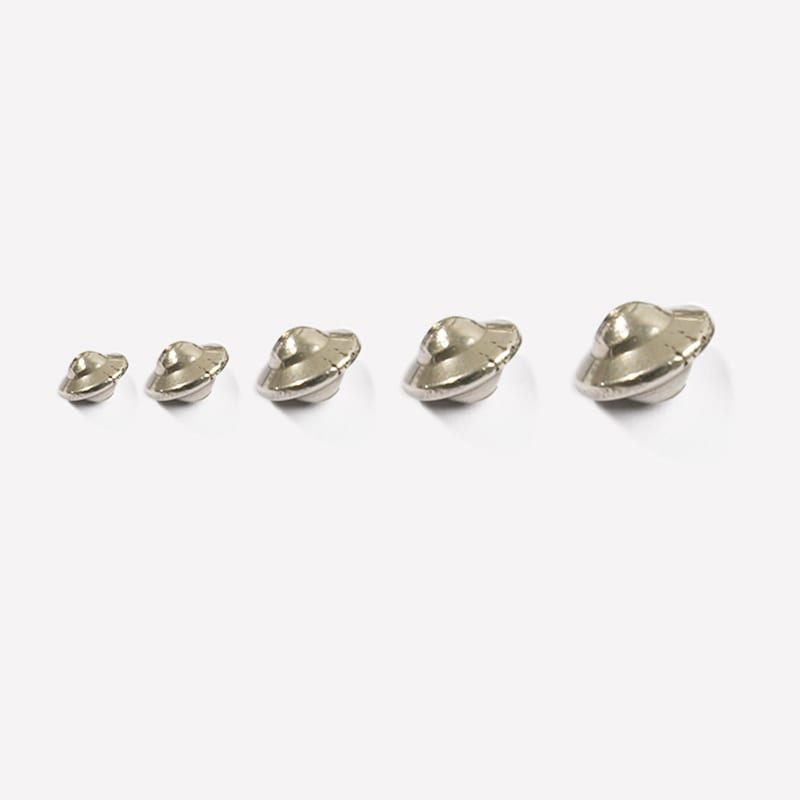
Walnut shell and corn cob for dry final brightening
Dry organic tumbling in crushed walnut shell and corn cob dressed with fine polishing paste removes trace water-film haze and adds a warm, clean presentation finish on both stainless cutlery and pewter gifts. Confirm corn cob mesh grade when ordering, and always pre-blend polishing paste into the dry media alone before loading parts.
Verified Jings Polish compounds for cutlery and pewter
Never run stainless flatware or pewter in plain tap water, which causes dull staining and rust on steel tooling. Match our verified chemical codes:
compound-JTJ20&compound-LC10: Coarse cutting and heavy deburring on stamped stainless flatware.compound-JTJ50: Brightening and lustre development on stainless steel cutlery and silverware.compound-JTJ60&compound-JTS5: Neutral fine metal polishing and thin-section support ideal for finishing pewter and delicate stamped handles.compound-HM3: Final polishing support for clean, uniform sheen.compound-MC8: Rust and scale removal strictly on ferrous tooling or carbon steel (never on pewter).
We supply liquid compounds for wet media systems and select pastes for dry tumbling, while never designing custom chemical cleaning formulas.
Step-by-Step Workflow: Flatware Polishing & Pewter Finishing
Follow this four-stage sequence to take stamped stainless steel silverware or cast pewter from raw blank to clean, spot-free presentation.
| Stage | Stainless Flatware Route | Finishing Pewter Route | Inspection Gate |
|---|---|---|---|
| 1. Pre-Clean & Flash Trim | Degrease stamping oil; inspect blanking burrs | Trim heavy casting gates; degrease mould release | Zero oil slicks or heavy gate stubs |
| 2. Edge Smooth & Cut-Down | Fine ceramic or plastic + JTJ20 / LC10 |
Lightweight plastic cones + JTJ60 / JTS5 |
Smooth tine/rim touch; zero orange-peel bruising |
| 3. Bright Burnish / Dry Polish | Steel or high-alumina balls + JTJ50 (or dry cob) |
Clean rinse, spin-dry, then dry cob + fine paste | Uniform sheen across bowls, handles, and reliefs |
| 4. Clean Rinse & Spin Dry | Clean rinse + heat centrifugal spin dryer (35/70) |
Clean rinse + spin dryer (35/70) |
Spot-free, dry pieces with zero water rings |
[DESIGN: Four-stage flatware progression showing stamped stainless spoon moving from raw blank through edge smoothing, steel-ball burnishing, and spin-dried mirror lustre]
Degreasing stamping lubricants before loading
Stamping presses coat stainless cutlery in heavy drawing oils that foul burnishing media within minutes. Wash oily blanks clean before loading any vibratory bowl so media pores and steel balls stay bright and active.
Preventing fork tine tangling and spoon nesting
Load spoons and forks gradually into an already-running vibratory bowl filled with generous media volume rather than dumping a full basket in one pile. Keeping media-to-part ratio high stops spoons from nesting cup-to-cup and keeps fork tines from locking together.
Controlling heat and friction when finishing pewter
Because pewter softens easily under dry friction, monitor dry barrel warmth closely during final corn cob brightening. Keep barrel loads cushioned with generous organic media and stop immediately if the drum feels overly warm to the touch. Cool, gentle tumbling preserves crisp pewter relief details.
Rapid centrifugal spin drying to stop water spots
Stainless spoons and cast pewter cups develop cloudy mineral water spots within minutes if left wet in open baskets. Rinse finished loads promptly in clean water and dry them inside a heat centrifugal spin dryer (35, 35A, 70, or 70A models). See our post-finishing separate wash and dry guide for clean cell layout.

Failure Modes and Common Shop Mistakes
Avoid these four shop-floor pitfalls when running how to polish stainless steel flatware and finishing pewter production lines.
[DESIGN: Troubleshooting matrix showing four tableware defects: nested unpolished spoon bowls, peened orange-peel pewter surface, rusted 430 flatware from plain water, and mineral water-spot rings]
Expecting burnishing balls to remove sharp stamping burrs
Dumping raw stamped forks straight into hardened steel balls with compound-JTJ50 polishes the sharp stamping burrs shiny without removing them. Always run a ceramic or plastic edge-smoothing stage first before switching to burnishing media.
Running magnetic 430 (18/0) flatware in a magnetic tumbler
While 304 (18/8) stainless flatware is non-magnetic and runs cleanly in magnetic pin baths, ferritic 430 stainless cutlery is strongly magnetic and clamps straight to the magnet plate. Check alloy magnetism with a hand magnet before loading magnetic bowls.
Using steel-grade ceramic or alkaline soap on pewter
Dropping soft pewter castings into heavy steel-cutting ceramic triangles or alkaline steel compound dents corners and turns the tin alloy dark grey. Keep finishing pewter strictly on resin-bonded plastic cones and neutral JTJ60 / JTS5 / HM3 chemistry.

Letting wet cutlery air-dry in stacked tote bins
Water trapped between stacked spoons leaves stubborn mineral rings that force manual hand-wiping on the packing line. Pair every wet flatware and pewter cell with a dedicated heat centrifugal spin dryer (35 or 70 series) from day one.
How Xiamen Jin Tai Jin Builds Tableware & Pewter Finishing Lines
At Xiamen Jin Tai Jin Grinding Technology Co.,Ltd. (brand: Jings Polish), our workshop started in 1992 and our company was formally established in 2002, delivering over 200,000+ sets of grinding and polishing solutions to customers worldwide. Across our catalogue, we manufacture 21 machine platforms backed by 24 granted Chinese IP rights—including 1 invention patent, 17 utility model patents, and 6 design patents—under ISO 9001 certification 00726Q01571R001 (valid 2026-06-03 to 2029-06-02) and CE certifications M.2023.206.C88121 (Vertical, 8 models) and M.2023.206.C88120 (Horizontal, 13 models), valid until 2028-07-24.

Machines, burnishing media, and compounds we manufacture
We manufacture circular vibratory bowls (ZL series with built-in separation decks), barrel finishing machines, double-barrel dry polishing tumblers, centrifugal disc units (LLF120), magnetic precision polishers (OBD and HBPG series), heat centrifugal spin dryers (35, 35A, 70, 70A), and media cleaners for automated tableware cells. We also manufacture ceramic, plastic, high-alumina, steel burnishing balls, walnut shell, and corn cob media alongside our verified JTJ20, JTJ50, JTJ60, JTS5, HM3, LC10, and MC8 compounds.
Honest boundaries on what we do not offer
In line with our choosing a mass finishing supplier and job shop finishing standards, we state our boundaries plainly before quoting any equipment. We do not operate a contract job shop or polish customer flatware or pewter for hire; we do not offer silver plating, electroplating, PVD coating, clear-coat lacquers, or chemical dip baths; we do not sell cloth buffing wheels, handheld buffers, or solid wheel wax bars; and we do not design custom chemical cleaning formulas.
Standard and custom build lead times
Standard vibratory, dry barrel, and centrifugal drying machines ship within a 25 to 35 day production lead time once specifications are confirmed. Custom-engineered multi-stage flatware finishing, separation, and spin-drying lines carry a 45 to 60 day build lead time to manufacture and test.
Requesting an initial assessment from part photos
We do not promise free mail-in sample trials or guarantee cycle times before inspecting your workpiece. Send clear close-up photos of your stainless flatware or pewter castings showing blanking burrs, engraved patterns, alloy grade, overall dimensions, and daily batch volume via our custom polishing solution page—our engineers can evaluate your photos and drawings to recommend the right machine and media setup, including alongside copper alloy finishing and buffing stainless steel.
Frequently Asked Questions
What is the best machine for how to polish stainless steel flatware in batches?
A polyurethane-lined circular vibratory bowl (ZL series) with an integrated separation deck is the standard choice for how to polish stainless steel flatware, because spiral vibration prevents spoons from nesting and separates finished cutlery from burnishing media automatically at cycle end.
How to polish stainless flatware from raw stamped blanks to bright shine?
Follow three steps: first, smooth sharp blanking burrs with fine ceramic or plastic media and compound-JTJ20 / LC10; second, burnish surfaces bright using hardened steel or high-alumina balls with compound-JTJ50; third, rinse clean and dry immediately in a heat centrifugal spin dryer (35 or 70 series) before packing.
Can I polish pewter in the same vibratory media used for stainless steel?
No. Heavy steel balls and steel-cutting ceramic media dent soft pewter castings and embed iron dust into tin alloy surfaces. Use dedicated resin-bonded plastic cones with neutral compound-JTJ60 / JTS5 for wet smoothing, followed by cool dry corn cob tumbling when finishing pewter.
Why do my fork tines tangle or spoon bowls stay dull in a rotary drum?
Slow rotary barrels let spoons nest cup-to-cup and fork tines interlock in bundles so media cannot reach inner surfaces. Switch to an open vibratory bowl (ZL series), load parts gradually into a running media bed, and maintain a generous media-to-part cushion.
How to polish stainless steel silverware without leaving water-spot rings?
Never let finished cutlery air-dry in wet baskets or stacked tote trays. Rinse batches promptly with clean water right after burnishing and dry them inside a heat centrifugal spin dryer (35, 35A, 70, or 70A models) for spot-free presentation.
What photos should I send before ordering flatware or pewter finishing equipment?
Send clear close-up photos of your stamped spoons, forks, or cast pewter pieces showing blanking burrs, tine gaps, engraved reliefs, overall part dimensions, alloy grade (304 vs 430 vs pewter), and daily piece output. Our engineers can recommend the right machine and media sequence from photos and drawings.
[DESIGN: Annotated buyer enquiry checklist showing flatware blanking burrs, tine spacing, and daily batch volume notes]
 +86-592-2381506


 IPv6 network supported
