
Isotropic Finishing Chemicals in Production: Pairing Conversion Accelerators With Porcelain and Keeping Aluminum Safe
Gear manufacturers, motorsport transmission builders, and precision machine shops searching for isotropic finishing chemicals often assume isotropic finishing is just a magic liquid you pour into any vibratory bowl to turn rough metal into a mirror plateau. In reality, running active steel conversion chemistry on the wrong alloy—or skipping alkaline neutralization at the end of a steel gear cycle—destroys expensive components in one shift.
The central thesis of this guide is clear: chemically accelerated isotropic finishing chemicals work strictly as a two-part system for hardened alloy steels—first forming a fragile microscopic conversion film on surface peaks so non-abrasive porcelain can wipe them flat, then flushing thoroughly with alkaline neutralizing compound (LC10/PL10) to restore bright luster and prevent rust—whereas aluminum, brass, and titanium require purely neutral mechanical chemistry (JTS5 / neutral LC10) with zero acidic conversion. Separating steel chemical-mechanical conversion from soft-alloy neutral leveling prevents pitted aluminum, dark gray steel smut, and ruined bearing fits. For related drivetrain and alloy workflows, see our isotropic finishing guide, motorsport isotropic finishing guide, and aluminum isotropic finishing guide.
How Steel Isotropic Conversion Chemistry Works Step by Step
Hardened bearing steel, case-carburized 8620 gears, and forged 4340 crankshafts are far too hard for non-abrasive porcelain media to level quickly by mechanical rubbing alone.
[DESIGN: Two-stage chemical-mechanical isotropic action showing peak conversion film formation, porcelain wiping, and alkaline neutralization]
Step 1: Controlled Acidic Conversion Softens Only Exposed Asperity Peaks
Inside a polyurethane-lined vibratory grinder or divided rectangular trough loaded with smooth high-alumina porcelain spheres, acidic isotropic conversion accelerator reacts gently with the outer steel skin—creating a soft, fragile phosphate or oxalate conversion coating strictly a few atomic layers deep.
Step 2: Non-Abrasive Porcelain Wipes Softened Peaks Flat Without Touching Valleys
As thousands of smooth porcelain spheres or cylinders rub continuously against the gears, they wipe the soft conversion film strictly off high protruding peaks while leaving low oil-retention valleys untouched. Fresh bare steel peaks immediately re-react and wipe flat again until the entire gear flank converges into a non-directional, low-friction plateau.
Step 3: Mandatory Alkaline Neutralization and Burnishing Rinse
Once target surface roughness is reached, operators must drain the acidic accelerator completely and run a thorough neutralizing burnish using alkaline brightening compound (LC10 / PL10 + rust inhibitor JTJ50). Neutralization strips any remaining dark gray conversion film and leaves bright, rust-protected silver steel.
| Process Phase | Chemical Role | Media Type | Visual Appearance on Steel | Failure if Skipped |
|---|---|---|---|---|
| Pre-Wash | Strip CNC coolant & quench oil | None (clean wash) | Bare clean steel | Patchy uneven conversion spots |
Active Conversion (Stage 1) |
Form fragile soft film on peaks | Non-abrasive high-alumina porcelain | Uniform dull matte charcoal-gray | Slow or zero peak leveling |
Neutralizing Burnish (Stage 2) |
Wipe remaining film & neutralize pH | Same clean porcelain + LC10/PL10 |
Bright silver mirror plateau | Parts stay dull dark gray & rust |
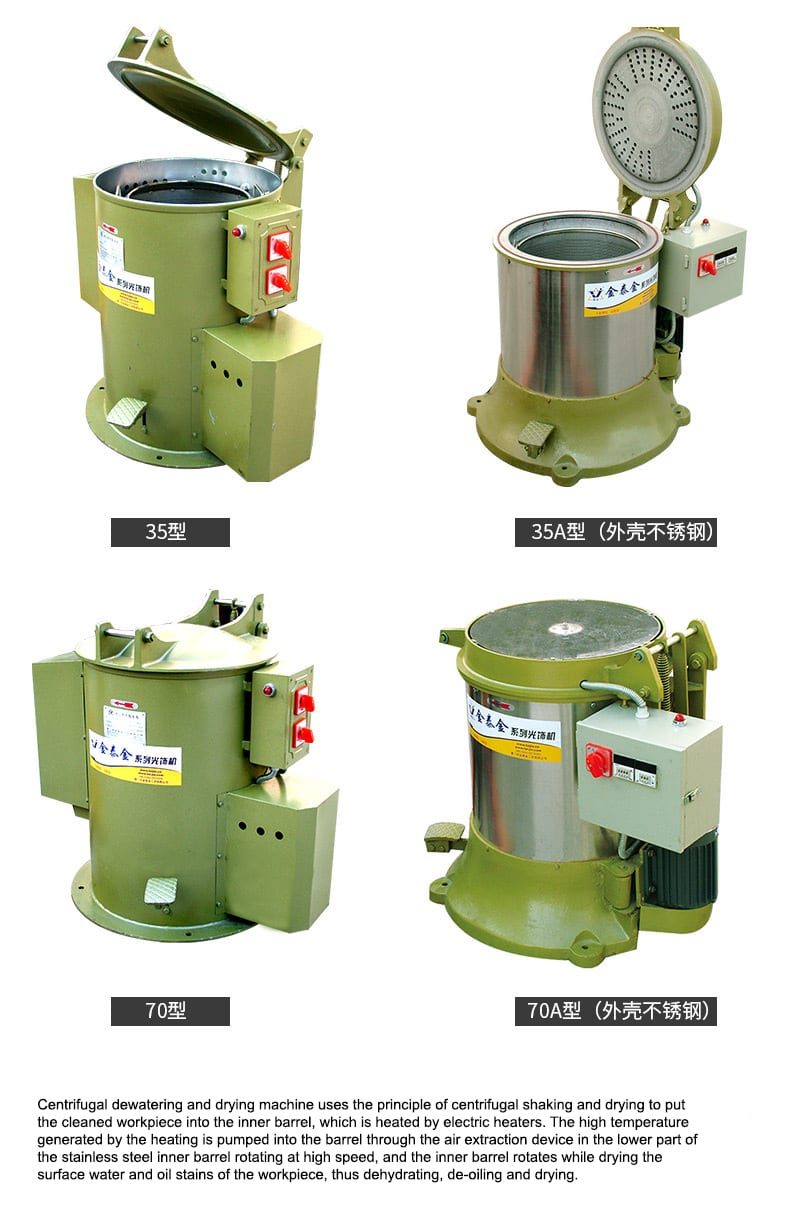
| Rust-Inhibited Spin-Dry | Prevent flash oxidation in oil holes | Heated centrifugal dryer | Dry spotless bright steel | Orange flash rust inside bores |
[DESIGN: Four-stage visual sequence showing raw ground gear, matte dark conversion stage, bright neutralized plateau, and oiled assembly state]
Why Aluminum, Brass, and Titanium Must Never Touch Steel Conversion Acids
One of the most expensive errors in mixed-alloy machine shops is running billet aluminum uprights or brass fittings through steel isotropic finishing chemicals.
Amphoteric Aluminum Pits Black in Reactive Conversion Baths
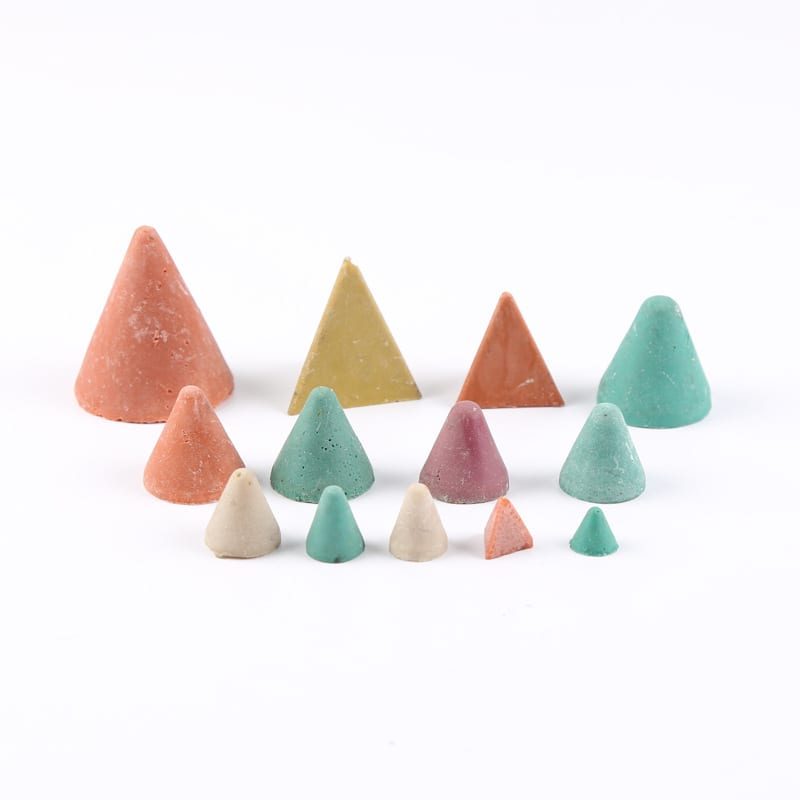
Unlike alloy steel, 6061, 7075, and cast A380 aluminum are amphoteric—corroding aggressively in acidic accelerators and strong alkaline soaps alike. Reactive conversion chemistry attacks copper and zinc grain boundaries unevenly, leaving deep micro-pitting and black smut across sealing grooves. Aluminum isotropic smoothing relies exclusively on lightweight resin-bonded plastic cones and clean porcelain spheres lubricated by neutral LC10 or JTS5.
Copper and Brass Suffering Dezincification and Dark Tarnish
Acidic accelerators leach zinc from brass alloys and tarnish copper fittings dark brown within minutes. Process brass and bronze exclusively with neutral LC10 / PL10 burnishing chemistry or dry walnut shell brightening.
Titanium Work-Hardening and Hydrogen Embrittlement Risks
Aerospace and motorsport titanium components should never sit in unverified acidic steel conversion baths due to hydrogen embrittlement and surface-contamination risks. Level titanium mechanically using alloy-segregated ceramic/plastic media and clean neutral flow-through.
| Workpiece Alloy | Can Use Steel Conversion Accelerator? | Correct Isotropic Chemistry | Recommended Media Route |
|---|---|---|---|
Case-hardened 8620 / 4340 steel |
Yes | Conversion accelerator + alkaline LC10/PL10 neutralization |
Non-abrasive high-alumina porcelain |
Austenitic 304 stainless steel |
Caution / Selective | Mild ceramic cut (LC10) + PL10 steel ball burnishing (preferred) |
Preformed ceramic -> 304 steel balls |
6061 / 7075 / A380 aluminum |
NEVER | Strictly neutral LC10 or aluminum-safe JTS5 |
Resin-bonded plastic cones -> porcelain spheres |
| Brass, bronze & titanium | NEVER | Neutral LC10 / PL10 mechanical flow-through |
Fine plastic / ceramic -> porcelain / walnut |
[DESIGN: Alloy compatibility matrix separating steel conversion chemistry from neutral aluminum, brass, and titanium recipes]
Controlling Concentration, Water Flow, and Chamber Compatibility
Isotropic chemical performance depends on steady metering and chemically resistant chamber hardware—not guesswork scoops.

Flow-Through Dosing vs. Static Closed Sumps
During active steel conversion, controlled slow flow-through keeps fresh accelerator wetting peaks evenly while flushing away wiped conversion mud—preventing spent gray sludge from redepositing inside gear tooth roots. Closed static sumps exhaust active chemistry unevenly and leave blotchy streaks.
Why Cast Polyurethane Chamber Linings Matter Under Acidic Chemistry
Bare carbon-steel bowls corrode rapidly when exposed to acidic steel conversion accelerators, dumping rusty iron sludge into your porcelain charge. Thick poured-cast polyurethane chamber linings and stainless-steel hardware resist mild process chemistry while protecting precision gear teeth from impact chipping.
Preventing Gas Pressure Buildup in Sealed Rotary Barrels
Never run reactive acidic conversion accelerators inside tightly sealed wet rotary barrels. Chemical reaction against steel generates mild gas buildup that can pressurize closed drums—always run chemically accelerated steel isotropic finishing inside open-top vibratory bowls, divided rectangular troughs, or ventilated drag finishers.
Pre-Cleaning and Post-Neutralization: Protecting Bearing Journals and Oil Holes
Even perfect isotropic finishing chemicals fail if cutting oil blocks chemical wetting or residual acid lingers inside blind bores.
Stripping Quench Oil and Grinding Coolant First
Residual heat-treat quench oil and CNC grinding coolant create hydrophobic barriers on steel surfaces—blocking conversion chemistry locally and producing patchy, zebra-striped gear flanks. Always pre-degrease oily parts cleanly before entering the porcelain chamber.
Thorough Flushing of Cross-Drilled Oil Galleries
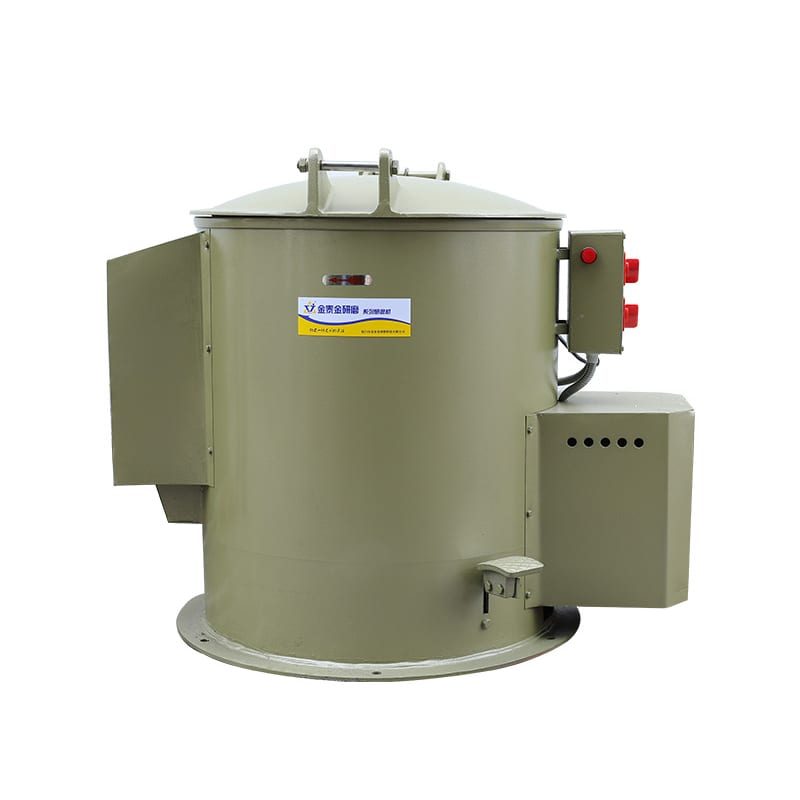
Acidic accelerator trapped inside crankshaft oil passages or hollow spline bores continues etching steel after unloading if rinsed only superficially. Flush hollow shafts and gear bores vigorously during alkaline LC10/PL10 neutralization, followed by a dedicated JTJ50 rust-inhibiting rinse and immediate heated centrifugal drying.
Masking Critical Press-Fit Journals Before Pre-Cut Stages
Non-abrasive porcelain plateauing removes microscopic peak height only, keeping involute gear geometry intact—yet if rough ceramic pre-deburring precedes porcelain, mask tight bearing races and cap oil holes with snug plugs beforehand.
Common Failure Modes With Isotropic Finishing Chemicals
Diagnosing these four chemical errors prevents ruined transmission batches.
[DESIGN: Troubleshooting gallery showing dark un-neutralized gears, zebra-striped oily teeth, pitted aluminum, and rusted splines]
Parts Emerge Uniform Dark Charcoal Gray (Incomplete Neutralization)
Operators ended the cycle while the soft conversion film was still intact, or skipped fresh alkaline LC10/PL10 burnishing inside clean porcelain. Return parts to clean porcelain with fresh alkaline neutralizing compound until bright silver luster returns.
Zebra-Striped Patchy Conversion on Gear Flanks
Uneven wetting caused by residual grinding oil or clogged compound dosing lines left bare spots untouched alongside etched patches. Pre-degrease parts thoroughly and verify steady pump flow before starting the batch.
Microscopic Pitting Along Sharp Tooth Tips
Leaving gears soaking too long in stagnant acidic accelerator without continuous mechanical porcelain wiping lets acid over-etch exposed tooth crests. Always keep vibratory amplitude or drag rotation active throughout the entire conversion stage, and flush immediately when target roughness is achieved.
Flash Rust Inside Splines Within Hours of Unload
Incomplete acid neutralization or slow air-drying leaves bare, chemically active steel exposed to humid air. Run a full alkaline neutralization flush, apply rust-inhibiting JTJ50 rinse, and spin-dry hot immediately.
Wastewater Treatment, pH Neutralization, and Shop-Floor Safety
Running chemically accelerated isotropic finishing chemicals reliably requires simple effluent discipline and basic operator safety habits.
[DESIGN: Multi-baffle settling tank and pH-neutralization holding sump for spent isotropic rinse water]
Multi-Baffle Settling Tanks for Porcelain Fines and Conversion Mud
Flow-through isotropic lines discharge suspended porcelain wear particles and wiped iron-phosphate mud. Routing the drain hose through a multi-baffle settling tank traps heavy sediment cleanly before wastewater enters municipal pH-neutralization sumps or shop drains.
Neutralizing Spent Acidic Effluent Before Drain Discharge
Never dump spent acidic steel conversion rinse water straight into floor drains without checking facility pH rules. Simple alkaline neutralization in a holding tank brings effluent safely into compliant neutral range before discharge.
Dedicated Personal Protection and Ventilation Around Chemical Drums
Operators handling concentrated conversion accelerators and alkaline neutralizing compounds (LC10, PL10) should wear chemical-resistant gloves and eye protection, keep metering pumps sealed, and maintain clean shop ventilation around open-top vibratory troughs.
Honest Boundaries: What We Do and Do Not Supply
At Xiamen Jin Tai Jin Grinding Technology Co.,Ltd. (brand: Jings Polish), our workshop roots date back to 1996 and our company was formally established in 2009, delivering over 200,000+ sets of grinding and polishing solutions worldwide. Across our catalogue, we manufacture 21 machine platforms backed by 24 granted Chinese IP rights (1 invention patent, 15 utility model patents, and 8 design patents), under ISO 9001 certification 00726Q01571R001 (valid 2026-06-03 to 2029-06-02) and CE certifications M.2023.206.C88121 (Vertical, 8 models) and M.2023.206.C88120 (Horizontal, 13 models), valid until 2028-07-24.
Equipment, Porcelain/Plastic Media, and Flow-Through Compounds—Not Chemical Acid Plants
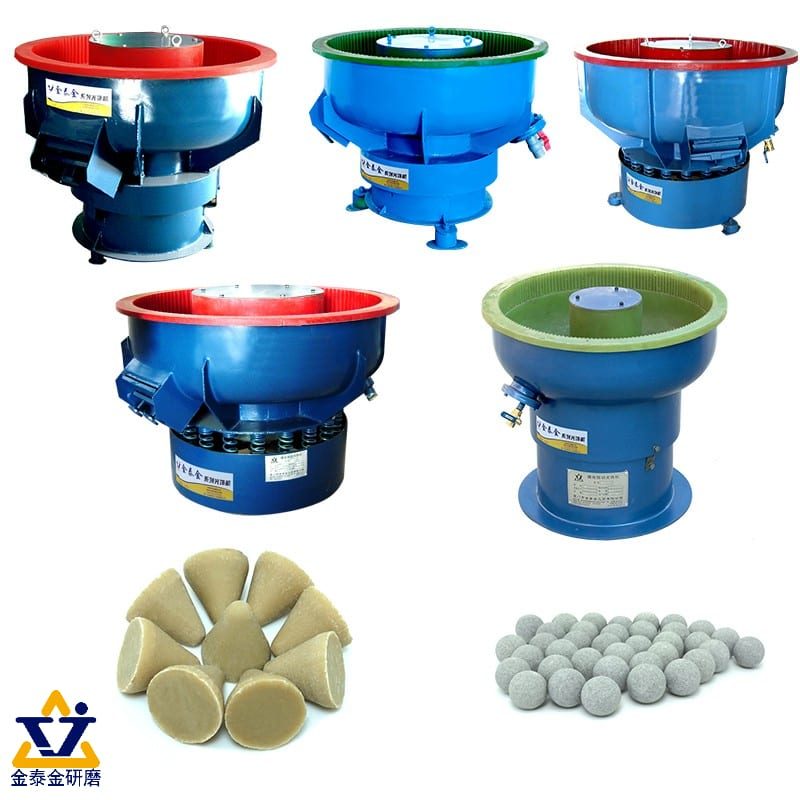
We manufacture and supply polyurethane-lined vibratory bowls, divided rectangular troughs, fixtured drag finishers, heated dryers, non-abrasive high-alumina porcelain media, resin-bonded plastic cones, and flow-through compounds (LC10, PL10, JTJ50, JTS5, MC8). We do not manufacture bulk strong-acid pickling tanks, electroplating baths, anodizing lines, or contract job-shop gear finishing services. Standard machines ship in 25–35 days, while custom divided troughs and drag fixtures require 45–60 days.
No Shot Peening, Cryogenic Stress Relief, or Surface Coatings
Isotropic finishing mechanically levels directional grinding peaks—it does not replace fatigue shot peening, heat treating, or DLC/PVD surface coatings. Coordinate isotropic smoothing cleanly ahead of downstream special processes per your engineering spec. For related steel scale and roughness guides, see our superfinishing guide and metal edge finishing guide.
Engineering Review Before Recommending Chemistry & Chambers
Because alloy steel grade, starting grinding roughness, oil-hole geometry, and weekly throughput dictate porcelain shape, divided-trough vs. drag-finisher selection, and neutralizing flow, we do not promise free mail-in sample trials or guarantee cycle times before inspecting your workpiece—send clear photos and part dimensions via our custom polishing solution page for an engineering assessment.
Buyer Checklist & FAQ for Isotropic Finishing Chemicals
Use these practical benchmarks when specifying chemistry and equipment for isotropic finishing.
[DESIGN: Annotated isotropic chemistry enquiry checklist showing alloy grade, starting Ra, oil-hole dimensions, and chamber type]
Can I run steel isotropic conversion chemicals inside a standard bare-steel vibratory tub?
No. Mild acidic conversion accelerators corrode bare carbon-steel chamber walls and contaminate porcelain media with rust sludge. Always use thick cast polyurethane-lined vibratory bowls, divided troughs, or fixtured drag finishers.
What happens if I use non-abrasive porcelain media with plain LC10 soap on hardened steel without conversion chemistry?
The parts will clean up and brighten slightly, yet hard case-carburized grinding peaks will take far longer to flatten because non-abrasive porcelain cannot shear hardened steel peaks quickly without conversion softening.
How do I dispose of spent isotropic chemical rinse water safely?
Route flow-through drain water through a multi-baffle settling tank to trap inert porcelain and metallic sediment, neutralize pH within local municipal limits, and follow your facility's standard industrial wastewater discharge rules.
Why must aluminum gears or housings never enter the same porcelain charge used for steel isotropic runs?
Even trace acidic accelerator residue and embedded steel iron fines left inside a shared porcelain charge will pit and stain soft aluminum alloys dark gray. Keep aluminum strictly in dedicated plastic-cone and clean porcelain charges with neutral LC10/JTS5 chemistry.
Can isotropic finishing chemicals smooth out deep CNC chatter marks or heavy forging flash?
No. Chemically accelerated isotropic conversion only levels microscopic surface peaks left after precision grinding or fine machining. Heavy forging parting flash, deep milling chatter, and coarse burrs must be removed mechanically first using preformed ceramic or plastic media before running non-abrasive porcelain isotropic plateauing.
How do I know when the steel conversion stage is finished and ready for alkaline neutralization?
Inspect a representative gear or shaft briefly under shop lighting: the surface should show a uniform, dull matte charcoal-gray conversion texture free of shiny directional grinding streaks. Once directional peaks are gone, drain the acidic accelerator and run alkaline LC10/PL10 neutralization until bright silver luster returns across every flank.
What happens if operators forget to pre-degrease quenched transmission gears before isotropic finishing?
Residual quench oil and machining coolant block the acidic conversion chemistry locally—creating uneven zebra-striped patches where oil-coated zones remain raw and un-leveled while clean zones convert rapidly. Always pre-wash oily gears cleanly before loading the porcelain chamber.
Can fixtured drag finishers use isotropic conversion chemistry on billet steel camshafts?
Yes. Open-top fixtured drag finishers equipped with corrosion-resistant stainless and cast-polyurethane tanks run steel conversion chemistry cleanly while clamping each camshaft or dog ring individually on a planetary spindle—cutting cycle duration sharply with zero tooth-on-tooth collision.
Does isotropic finishing change heat-treat case depth on carburized 8620 gears?
Because the conversion film and porcelain wiping action remove only microscopic asperity peak height—leaving valley floors untouched—carburized case hardness and effective case depth remain completely intact across gear flanks and root fillets.
Why do some shops struggle when switching a single vibratory bowl between conversion acid and alkaline burnish?
If operators fail to drain the acidic conversion accelerator completely or leave spent gray conversion sludge trapped under the polyurethane drain screen, adding alkaline LC10/PL10 compound creates localized foaming surges and patchy neutralization across gear roots. Always flush the bowl thoroughly with clean water while the vibration drive runs briefly before starting the alkaline burnishing stage.
Can isotropic finishing chemicals be used on sintered powder-metal steel gears?
Porous powder-metal (PM) steel components absorb acidic conversion liquids deep inside open surface pores—making complete alkaline neutralization nearly impossible and causing delayed internal bleeding and rust spots days after unloading. Unless powder-metal parts are resin-impregnated or sintered to full density beforehand, rely strictly on dry or neutral mechanical cutting and burnishing rather than reactive acidic conversion chemistry.
How does water temperature and hardness affect isotropic neutralization quality?
Overly hard mineral-rich municipal water reacts with alkaline burnishing soaps and leaves faint chalky residue inside gear splines after drying, while icy winter shop water slows chemical conversion reaction rates unevenly. Using clean, moderated-temperature water for active conversion and softened water for final PL10 neutralization yields crisp, repeatable plateau brightness year-round.
What happens if you run abrasive ceramic triangles together with steel isotropic conversion chemicals?
Adding abrasive ceramic stones into an active conversion bath defeats the entire purpose of isotropic plateauing: instead of wiping only high peaks flat while preserving oil-retention valleys, aggressive ceramic grit scratches fresh valleys across the tooth flank and wears away involute profile tolerances. Always pair steel conversion accelerators exclusively with smooth, non-abrasive high-alumina porcelain media.
How do I keep large ring gears from chipping each other during multi-hour isotropic cycles?
Never place multiple heavy ring gears loose inside an open circular vibratory bowl. Process heavy drivetrain gears inside a divided rectangular vibratory trough with one gear per polyurethane-lined compartment, or clamp precision gears individually onto fixtured drag-finishing spindles so zero tooth-on-tooth contact occurs.
Can LC10 or PL10 neutralize isotropic steel gears if the porcelain media still holds acidic residue?
If the drain screen was clogged or clean-water flushing was skipped, acidic accelerator trapped in the porcelain bed fights the alkaline neutralizing compound—leaving patchy dull spots across gear teeth. Always flush the porcelain media charge with clean water while vibrating briefly before dosing fresh LC10 or PL10 for the final neutralization stage.
Why should shops avoid running bare-metal steel isotropic chemistry in unlined rotary barrels?
Closed unlined rotary barrels trap gas pressure generated by mild acid-metal reactions and corrode bare carbon-steel drum walls into rusty sludge. Open-top polyurethane-lined vibratory bowls, divided rectangular troughs, and ventilated drag finishers vent cleanly and protect both media purity and gear tooth geometry.
How can I verify that neutral JTS5 aluminum isotropic smoothing will not affect downstream anodizing?
Because JTS5 and neutral LC10 contain zero strong acids or high-pH caustic etchants, they leave 6061 and 7075 aluminum surfaces clean, uniform, and free of selective copper/zinc pitting—allowing downstream Type-II or Type-III anodizing lines to produce consistent, streak-free oxide coatings once parts are rinsed and dried cleanly.
What details should I share before requesting a quote for isotropic finishing equipment and compounds?
Send clear photos of your gears, shafts, or billet components along with alloy grade (8620, 4340, 304, 6061), overall part dimensions and weight, smallest oil-hole width, starting grinding finish, and weekly batch target via our custom polishing solution page. Also note whether parts arrive coated in quench oil or grinding coolant and whether bearing journals require masking. Our engineers will recommend the right divided rectangular trough, fixtured drag finisher, non-abrasive porcelain or resin-bonded plastic media, and alkaline neutralizing compound workflow matched directly to your production line and floor space to eliminate dark smut, tooth chipping, and flash rust reliably.

 +86-592-2381506


 IPv6 network supported
