
Metal Edge Finishing and Deburring in Production: Controlling Edge Radius Without Oversize Shrinkage
Manufacturing engineers searching for metal edge finishing or deburr metal workflows rarely want an arbitrary rounded corner—they need to remove sharp stamping rollover, CNC exit burrs, and laser-cut micro-slag while keeping edge radiusing strictly inside blueprint limits. Over-tumbling turns crisp mating shoulders into rounded ramps that fail assembly fits, while under-tumbling leaves razor-sharp burrs that cut operators and shred O-ring seals.
The central thesis of this guide is clear: predictable metal edge finishing depends on matching media cut-rate and chamber energy to burr root thickness—shearing brittle burrs cleanly rather than folding them over, and stopping the cut stage the moment edge radius reaches target tolerance. For related sheet-metal and general deburring fundamentals, see our tumble deburr guide and sheet metal deslagging guide.
Four Burr Types and Why Each Responds Differently to Tumbling
Not every sharp edge enters a vibratory bowl with the same metallurgy or root strength.
Stamping Rollover Burrs vs. Sheared Breakaway Edges
Blanked sheet-metal stampings carry a ductile, work-hardened rollover burr on the die-break side. If hit too gently with soft plastic media or smooth steel balls, thin rollover burrs simply bend back and forth instead of snapping off cleanly. Stamped steel and stainless burrs need firm ceramic stone cutting (LC10 compound) to shear the burr root away.
CNC Milling and Turning Exit Burrs
Milling cutters and lathe inserts push thin feather burrs along slot edges and cross-drilled bore exits. Feather burrs break off easily in resin-bonded plastic cones (for aluminum and brass) or medium ceramic triangles (for steel), provided media shapes are sized to contact inside slot corners without bridging.
Laser-Cut and Plasma Oxide Dross
Laser cutting leaves a thin, brittle, heat-hardened oxide rim along the kerf edge. Unlike soft ductile burrs, laser dross fractures rapidly under high-density preformed ceramic triangles paired with LC10 or MC8 descaling chemistry—though heavy plasma slag must be knocked off mechanically before tumbling.
Forging Flash and Die-Cast Parting Fins
Thick forging flash and heavy die-cast gate stubs require far more material removal than thin machining burrs. Trying to tumble off heavy untrimmed flash destroys surrounding chill skin and over-rounds nearby holes—always trim heavy flash on a press first.
| Burr Source | Burr Metallurgy & Geometry | What Happens if Under-Powered | Controlled Mass-Finishing Fix |
|---|---|---|---|
| Sheet stamping | Ductile work-hardened rollover | Burr folds over instead of breaking | Dense ceramic shapes + LC10 cut |
| CNC milling / drilling | Thin feather burrs in slots/holes | Missed inside cross-bores | Properly sized cones + OBD magnetic pins |
| Laser cutting | Brittle heat-hardened oxide rim | Uneven chipping / dark edge tint | Preformed ceramic + MC8 / LC10 |
| Die-casting / forging | Thick parting fins & gate stubs | Over-rounds part before flash clears | Trim heavy flash first, then plastic/ceramic |
[DESIGN: Four-panel comparison showing stamping rollover, CNC feather burrs, laser oxide rim, and clean radiused edge]
Choosing Chambers for Edge Radius Control
Chamber energy determines how fast edges break—and whether fragile mating shoulders stay flat.

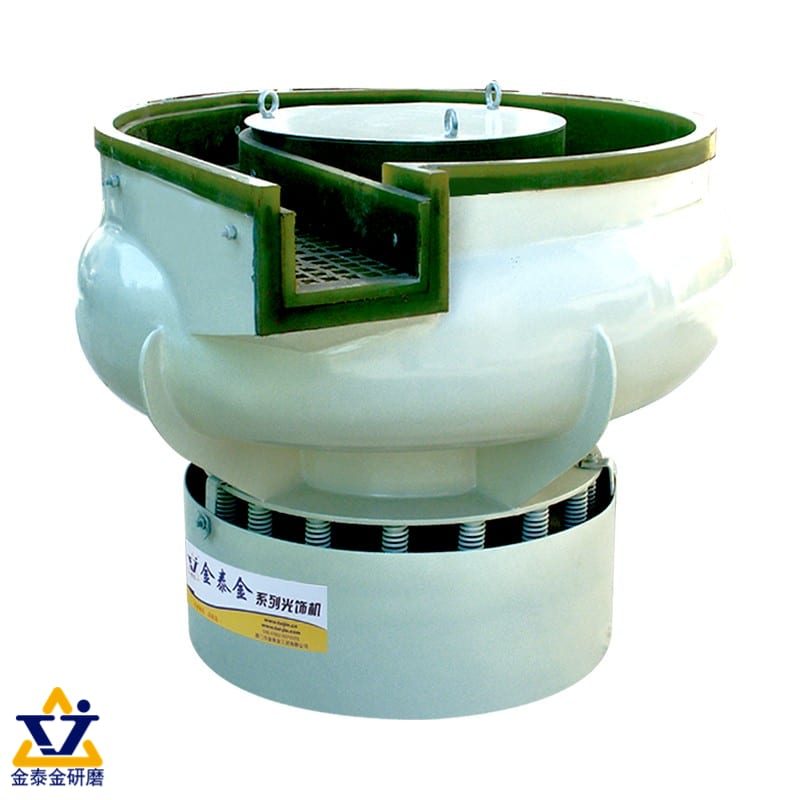
Polyurethane-Lined Vibratory Bowls for Repeatable Edge Radiusing
A vibratory grinder circulates parts and media smoothly in a continuous toroidal stream, allowing operators to pull sample parts mid-cycle and check edge radius without stopping the whole batch. Steady flow-through water and LC10 compound keep ceramic stones sharp so edge-radius curves stay repeatable shift after shift.
Centrifugal Disc Finishers for High-Speed Small-Part Deburring
When hardened steel clips, surgical blades, or small sintered gears require crisp, rapid metal edge finishing, a centrifugal disc finishing machine multiplies shear velocity over standard vibratory bowls—cutting tough burrs rapidly while keeping edge radius uniform across compact batches.
Octagonal Rotary Barrels for Heavy Forgings and Quiet Rolling
Heavy steel forgings and thick stamped brackets tolerate the cascading weight of an octagonal rotary barrel. Because rotary barrels roll parts down an inclined slope, outer corners experience slightly higher relative impact than flat recesses—useful for fast corner breaking on rugged parts, yet risky on delicate precision threads.
Wide-Table OBD Magnetic Polishers for Internal Bore Edges
External ceramic stones never reach cross-drilled internal hole intersections. A magnetic tumbler drives fine 304 stainless steel pins inside internal bores and cross-holes to strip feather burrs without rounding external blueprint chamfers.

Selecting Media Shape, Size, and Bond Hardness
Media selection governs both how cleanly burrs break and whether stones wedge inside holes and slots.
[DESIGN: Preformed ceramic triangles, angle-cut cylinders, and resin-bonded plastic cones]
Preformed Ceramic Shapes for Steel, Stainless, and Iron
Hard alloys require sintered ceramic media to cut tough burrs without rapid stone breakdown. Triangles scrub flat faces and outside edges cleanly; angle-cut cylinders reach inside circular holes and angled pockets; tri-stars reach narrow stepped grooves. Compare media families in our tumbler media selection matrix. Selecting the right ceramic bond hardness prevents stones from either glazing over too quickly or fracturing into hole-lodging chips mid-shift.
Resin-Bonded Plastic Cones for Aluminum, Brass, and Precision Shoulders
When deburr metal jobs involve soft 6061 aluminum, brass, zinc die-castings, or tight-tolerance shoulders that dense ceramic would bruise, resin-bonded plastic cones cut feather burrs gently without leaving impact dings. See our die cast surface finishing guide for chill-skin protection. Plastic cones also cushion thin-walled enclosures so flat faces stay smooth and dent-free during continuous vibratory circulation.
Why Steel Burnishing Balls Never Replace Abrasive Cutting
Never load raw, un-deburred stampings into stainless steel burnishing media expecting burrs to disappear. Steel balls have zero cutting edge—they simply peen sharp burrs flat against the part wall, creating folded metal flaps that break loose later in service. Always cut burrs away in ceramic or plastic first, then burnish afterward if bright shine is needed. Keeping cutting and burnishing strictly separated eliminates hidden burr flaps on hydraulic and medical hardware.
Non-Lodging Sizing Rules for Slots, Holes, and Threads
Measure the narrowest slot and widest hole on your drawing before ordering media. Every ceramic or plastic shape must stay comfortably larger than the widest opening (so stones bridge safely across) or smaller than one-third of the narrowest slot (so stones pass straight through without jamming two-abreast). Running a quick physical fit test against your part's tightest slot before loading a full bowl prevents hours of manual picking later.
Comparing Wet Ceramic Cut vs. Dry Organic Wiping on Finished Edges
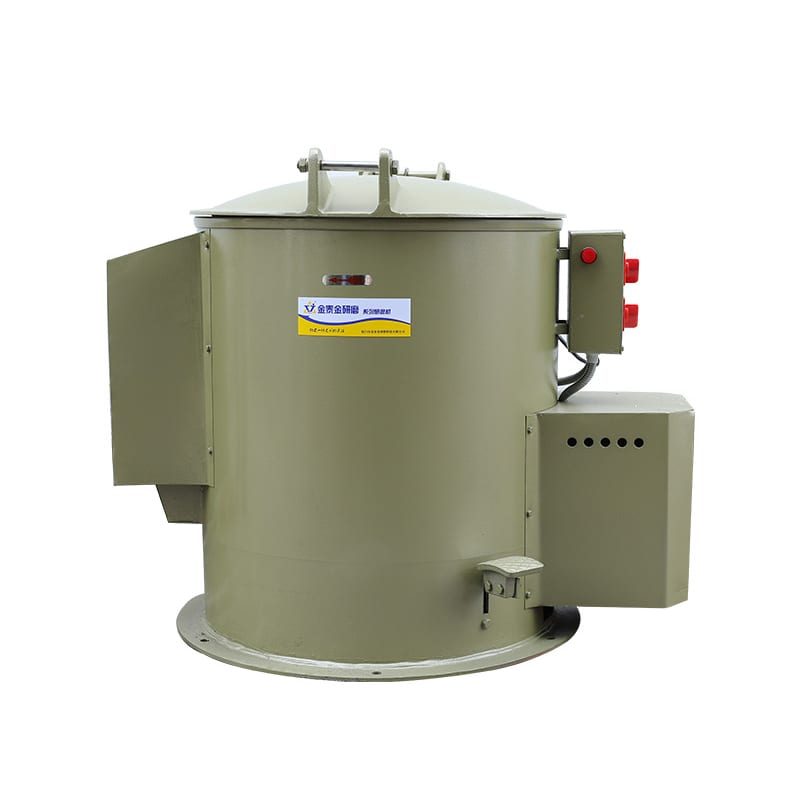
Once wet ceramic or plastic deburring completes and parts are flushed clean, spin-drying in a heated centrifugal dryer clears moisture out of threads and slots. For decorative brass or stainless hardware where even faint rinse-water spots must be removed, a brief dry wipe in warm corncob media polishes outer flats cleanly without altering edge radius.

Chemistry, Separation, and Spot-Free Drying After Deburring
Clean edge deburring fails if spent metal fines glaze the stones or wet parts flash-rust after unloading.

Flow-Through LC10 and MC8 Dosing Keep Stones Free-Cutting
LC10 deburring compound emulsifies light cutting oils and flushes abraded metal fines straight out the bowl drain, keeping ceramic pores open and sharp. When incoming parts carry heat-treat scale or laser oxide, MC8 descaling compound softens the brittle oxide skin so stones shear dross cleanly. See our compound for steel guide for dosing discipline.
Vibratory Screen Decks Purge Undersized Worn Media
As ceramic triangles wear down over weeks of running, shrinking chips eventually reach hole-lodging size. Discharging batches across a vibratory separator with a dedicated undersize purge deck drops worn pebbles out before they jam inside precision bores.
Heated Centrifugal Spin-Drying Prevents Flash Rust and Spotting
Immediately flush deburred batches in clean water (with rust inhibitor for carbon steel) and dry them inside a heated centrifugal spin dryer. Rapid centrifugal drying clears water out of blind holes and thread roots before orange flash rust or soap spots form.
Optional Brightening Stage After Edge Radius Targets Are Met
If parts need bright cosmetic appearance as well as burr-free edges, transfer rinsed, deburred parts into smooth high-alumina porcelain spheres or stainless steel balls with JTJ50 / JTS5 brightening compound—closing surface roughness without further edge rounding.
[DESIGN: Heated centrifugal spin dryer removing moisture from freshly deburred metal hardware]
Controlling Edge Radius Within Tolerance Without Over-Tumbling
Precision aerospace, medical, and hydraulic components specify strict minimum and maximum edge-break limits.

Measuring Edge Radius on First-Article Samples
Never set batch timers by guesswork on precision parts. Run controlled time checks on first-article samples, inspecting edge-break growth under an optical comparator or tactile radius gauge until you establish the exact cycle window that clears burrs without exceeding maximum radius tolerance.
Why Exposed Corners Round Faster Than Recessed Slots
In any tumbling chamber, outer 90-degree perimeter corners receive far more media impacts per minute than sheltered internal slots or deep pocket corners. If an internal corner burr requires aggressive ceramic cutting while outer edges sit near maximum radius tolerance, combine a shorter outer cut with an OBD magnetic pin cycle for internal recesses.
Protecting Flat Sealing Lands and Precision Bores
If a part carries lapped hydraulic sealing lands or tight dowel-pin bores right next to rough outer edges, mask critical bores with fitted urethane plugs, isolate heavy parts inside a divided rectangular vibratory trough, or schedule final bore honing after rough vibratory deburring. Separating rough deburring from final bore finishing protects precision tolerances while keeping edge-break quality consistent across shifts.
Controlling Media-to-Part Volume Ratios on Heavy Stampings
Thick steel brackets and heavy machined blocks carry high momentum when tumbling. If operators overload a vibratory bowl with too many parts relative to ceramic stones, parts strike each other along the outer polyurethane wall and dent exposed flanges. Maintaining a generous media bed cushions every workpiece, keeping edge radiusing uniform across flat plates and recessed slots alike.
Managing Settling Tanks and Effluent Hygiene
Deburring steel, stainless, and aluminum generates fine abrasive and metallic slurry. Route vibratory bowl drains through a multi-baffle settling tank so heavy mud settles out before wastewater disposal or clarified overflow, and clean tank weirs on a regular schedule so drain screens never back up mid-shift.
Training Operators on Visual vs. Gauge Edge Inspection
A sharp micro-burr folded over by worn media often feels smooth to a gloved finger yet fails assembly fitment or cuts O-ring seals. Train inspectors to check first-article and periodic shift samples under bright low-angle light with a calibrated radius gauge or optical comparator rather than relying on bare touch alone.
Separating Ferrous and Non-Ferrous Deburring Charges
Never run carbon steel stampings in the same ceramic or plastic media charge used for stainless steel, brass, or aluminum. Free iron particles embedded in soft aluminum or stainless edges cause galvanic pitting and rust spots during humid storage. Dedicate labeled drums, screen decks, and centrifugal spin-dryer baskets strictly by alloy family.
Balancing Cycle Economics: Single-Stage Cut vs. Two-Stage Polish
Not every metal edge finishing job needs a second brightening stage. Parts headed for powder coating or industrial e-coat only need clean, uniform edge radiusing and spot-free spin-drying from Stage 1 (LC10 ceramic). Parts headed for bare retail display, food equipment, or decorative plating justify Stage 2 brightening in smooth porcelain or stainless burnishing media (JTJ50).
| Tolerance Scenario | Risk in Standard Batch Tumbling | Controlled Process Solution |
|---|---|---|
| Tight max edge radius on outer corners | Over-rounding before internal burrs clear | Shorten Stage 1 cut; finish internal burrs via magnetic pins |
| Heavy parts colliding on sealing lands | Crescent dings on mating faces | Divided rectangular trough or fixtured drag finisher |
| Thin-walled stampings in disc finisher | Jammed/bent tabs in perimeter rotor gap | Move thin stampings to gap-free vibratory bowl |
| High-precision lapped hydraulic bores | Micro-rounding on valve metering edges | Deburr body first, then hone/lap metering bores last |

Four Common Metal Edge Finishing Failures and How to Diagnose Them
Failure Mode 1: Folded-Over Burrs Instead of Cleanly Sheared Edges
Edges feel smooth to a quick finger swipe yet show rolled metal flaps under magnification that break off in assembly.
Diagnostic rule: If burrs fold flat instead of shearing away, media cutting bite is too weak or steel balls were run before abrasive cutting—upgrade to sharper preformed ceramic shapes with LC10 deburring compound.
Failure Mode 2: Over-Rounded Corners Exceeding Blueprint Limits
Burrs are gone, yet outer corners rounded past tolerance before flat faces smoothed.
Diagnostic rule: If outer corners round too fast, media size is too aggressive or cycle time ran too long—step down to smaller ceramic/plastic shapes and shorten Stage 1 cut duration.
Failure Mode 3: Wedged Media Tips Inside Slots and Holes
Operators spend minutes manually picking broken triangle tips out of part holes.
Diagnostic rule: If media wedges inside holes, initial sizing matched hole width or worn undersize fragments stayed in the bowl—screen out undersize media and resize fresh media strictly larger than openings.
Failure Mode 4: Mid-Shift Drop in Deburring Speed
Morning batches deburr cleanly, while afternoon batches come out with sharp burrs still intact.
Diagnostic rule: If cut speed drops mid-shift, ceramic stones are glazing from oil carryover or closed-sump mud—pre-degrease oily parts and verify steady fresh water + LC10 flow-through.
Honest Capability Boundaries and Production Standards
What Mass Finishing Can and Cannot Do for Metal Edges
Mass finishing excels at metal edge finishing and batch deburr metal workflows—removing stamping rollover, CNC feather burrs, and laser oxide dross uniformly across hundreds or thousands of parts per shift. However, mass finishing cannot remove heavy plasma-cut slag globules, cannot replace CNC chamfer milling on thick structural weldments, and cannot maintain sharp knife-edge cutting blades exposed unprotected in tumbling media. For high-precision surface roughness lowering, see our superfinishing guide.
What We Supply and What We Do Not Supply
At Xiamen Jin Tai Jin Grinding Technology Co.,Ltd. (brand: Jings Polish), our workshop roots date back to 1996 and our company was formally established in 2009, delivering over 200,000+ sets of grinding and polishing solutions worldwide. Across our catalogue, we manufacture 21 machine platforms backed by 24 granted Chinese IP rights (1 invention patent, 15 utility model patents, and 8 design patents), under ISO 9001 certification 00726Q01571R001 (valid 2026-06-03 to 2029-06-02) and CE certifications M.2023.206.C88121 (Vertical, 8 models) and M.2023.206.C88120 (Horizontal, 13 models), valid until 2028-07-24.
To keep boundaries clear: we supply industrial mass finishing machines (vibratory bowls, divided troughs, centrifugal disc finishers, drag finishers, octagonal rotary barrels, wide-table OBD magnetic tumblers, heated centrifugal spin dryers), tumbling media (preformed ceramic, resin-bonded plastic, high-alumina porcelain, stainless steel balls/pins, organic media), and liquid compounds (LC10, MC8, JTJ50, JTS5); we do NOT supply handheld angle grinders, belt sanders, laser/plasma cutting tables, or contract job-shop deburring services.
Honest Lead Times and Engineering Assessment
Standard machines ship in 25–35 days, while custom divided troughs and automated deburring cells require 45–60 days. Because alloy hardness, burr root thickness, hole sizes, and edge-radius limits vary widely across parts, we do not promise free sample trials by mail or guarantee cycle times before inspecting your workpiece—send clear photos of your parts showing burrs, slots/holes, and edge-break requirements via our custom polishing solution page for an engineering assessment.
Frequently Asked Questions
How do I deburr metal parts without over-rounding tight tolerances?
Establish cycle time on first-article samples using smaller, finer ceramic or resin-bonded plastic shapes with LC10 compound, checking edge radius after short intervals rather than running long unmonitored cycles.
Why do stamping burrs sometimes fold over instead of breaking off cleanly?
Soft steel burnishing balls or worn, glazed stones lack cutting bite, so ductile rollover burrs bend flat instead of shearing off. Switch to sharp preformed ceramic media with steady LC10 flow-through.
What media removes laser-cut edge slag best?
High-density preformed ceramic triangles or angle-cut cylinders paired with LC10 (and MC8 if heavy oxide scale is present) fracture brittle laser oxide dross cleanly.
How do I deburr internal cross-holes without rounding external edges?
Use a wide-table OBD or circular magnetic tumbler with fine 304 stainless pins. Magnetic flux drives pins through internal bores to strip feather burrs while barely touching outer tolerances.
Why did my deburring speed slow down halfway through the shift?
Oil carryover or dirty recirculated water glazed the ceramic stones. Pre-degrease oily parts beforehand and maintain steady fresh water and LC10 flow-through.
How do I keep flat sheet-metal stampings from sticking together like wet cards in a vibratory bowl?
Thin, flat stampings with smooth sheared faces trap a thin film of compound water between adjacent parts and ride as doubled-up stacks rather than tumbling individually. When two stampings stick face-to-face, only their outer perimeters see media impact, while the trapped inner faces emerge completely untouched. Solve this by raising the media-to-part volume ratio so heavy ceramic triangles stay wedged between parts, lowering water flow slightly to reduce surface tension lock, or feeding parts gradually onto a vibrating bowl deck rather than dumping stacked bundles all at once.
When should a fabrication shop move from manual flap-disc grinding to automated mass edge finishing?
Manual grinding stays economical only for oversized structural weldments that cannot fit into a finishing chamber or for one-off prototype brackets. The tipping point arrives as soon as a shop spends more labor grinding repetitive laser-cut, punched, or CNC-milled batches than cutting them, or when customer incoming-inspection teams start rejecting inconsistent hand-beveled chamfers. Automated vibratory troughs, rotary barrels, and magnetic pin systems deliver uniform, repeatable edge radiusing across every bracket in the batch while freeing skilled fabricators for welding and assembly.
What details should I share before requesting a quote for metal edge finishing equipment?
Send clear close-up photos of your parts showing burrs, slot/hole widths, and edge-radius specs, along with alloy grade, part weight, and hourly batch target. Our engineers can recommend the right chamber and non-lodging media from photos and drawings.
[DESIGN: Annotated buyer enquiry checklist showing burr close-ups, hole dimensions, edge-radius limits, and hourly throughput]
 +86-592-2381506


 IPv6 network supported
